


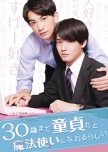
Cherry Magic! Thirty Years of Virginity Can Make You a Wizard?!
1 people found this review helpful
by lmiller5100
Sincerity Stuck in "Practice" Mode
“Cherry Magic” is a series with a profound heart that unfortunately gets bogged down by its own hesitation. While the lead actors bring a beautiful sincerity to their roles, the production often undermines that maturity with a frustratingly slow pace and severe tonal whiplash.
Nowhere is the show's inconsistency more glaring than in the secondary couple subplot. While Adachi and Kurosawa operate with quiet, "serious person" sincerity, the friend’s secondary romance descends into over-the-top, slapstick caricature. This frantic, "Jerry Lewis" style of comedy feels like it belongs in a completely different genre, creating a jarring experience that disrupts the delicate emotional atmosphere the main couple works so hard to build.
This lack of maturity extends to the narrative structure itself. The show’s reliance on "practice dates" rather than genuine progression artificially lowers the stakes. By keeping the characters in a state of romantic "rehearsal" for the majority of the series, it often feels like "drama for drama’s sake"—a way to stretch the premise without allowing the relationship to evolve naturally.
For a story centered on the intimacy of literally hearing another person's thoughts, the show is remarkably hesitant to explore actual physical or romantic union. By delaying their official commitment and physical intimacy until the final episodes, much of the middle section begins to feel like filler. The profound mental connection the characters share is often at odds with the "hands-off," almost sterile approach to their actual partnership.
When “Cherry Magic” leans into its quiet moments of character growth, it is a lovely exploration of vulnerability. However, the combination of exhausting slapstick and a narrative that refuses to "get on with it" makes for a fragmented viewing experience. It is a show with a beautiful soul that is too often afraid to grow up.
Nowhere is the show's inconsistency more glaring than in the secondary couple subplot. While Adachi and Kurosawa operate with quiet, "serious person" sincerity, the friend’s secondary romance descends into over-the-top, slapstick caricature. This frantic, "Jerry Lewis" style of comedy feels like it belongs in a completely different genre, creating a jarring experience that disrupts the delicate emotional atmosphere the main couple works so hard to build.
This lack of maturity extends to the narrative structure itself. The show’s reliance on "practice dates" rather than genuine progression artificially lowers the stakes. By keeping the characters in a state of romantic "rehearsal" for the majority of the series, it often feels like "drama for drama’s sake"—a way to stretch the premise without allowing the relationship to evolve naturally.
For a story centered on the intimacy of literally hearing another person's thoughts, the show is remarkably hesitant to explore actual physical or romantic union. By delaying their official commitment and physical intimacy until the final episodes, much of the middle section begins to feel like filler. The profound mental connection the characters share is often at odds with the "hands-off," almost sterile approach to their actual partnership.
When “Cherry Magic” leans into its quiet moments of character growth, it is a lovely exploration of vulnerability. However, the combination of exhausting slapstick and a narrative that refuses to "get on with it" makes for a fragmented viewing experience. It is a show with a beautiful soul that is too often afraid to grow up.
Was this review helpful to you?


