



Started Strong but Lost Its Direction
Another drama where we get to the halfway point and it completely shifts into something else. I really liked the beginning because it had an intense mystery element that kept me engaged and wanting to know what would happen next. The early episodes balanced suspense, emotion, and time travel in a way that actually felt exciting. There was tension, there were stakes, and it felt like the story was building toward something meaningful.But somewhere along the way, the drama lost focus. Instead of developing the plot and its themes further, it became almost entirely centered around Ryu Seon Jae and Im Sol being in love with each other. The problem is that both characters seem to have no identity outside of that relationship. If you remove the romance from their personalities, there's barely anything left. They don't really feel like fully realized individuals with their own ambitions, struggles, or inner worlds. Both characters seem to exist solely for the purpose of loving and protecting each other, and after a while that became repetitive and emotionally shallow to me.
For people saying this is one of the best dramas out there, I honestly don't get it. The story goes in all sorts of directions and feels increasingly inconsistent as it progresses. The tone shifts constantly, plot points get dragged out or repeated, and some developments feel more convenient than well written. I understand that the drama was trying to sell this destined love story, and to be fair, both actors did a good job portraying longing, devotion, and emotional attachment. Their chemistry carried a lot of scenes, and I can see why many viewers became emotionally invested in them as a couple. Maybe that's ultimately what people connected with the most. But strong chemistry alone isn't enough for me to call something a great drama. What started as a compelling mystery with emotional depth slowly turned into a repetitive cycle of sacrifice, separation, and reunion. Instead of building momentum, it felt like the drama kept resetting itself emotionally and narratively.
I wanted more from the characters individually and more coherence from the story overall. The drama had a strong premise and a genuinely engaging start, but for me it couldn't maintain that same level of quality all the way through. In the end, it felt like the romance overshadowed everything else, and once the mystery and tension faded, there wasn't enough substance left to keep me fully invested.
Was this review helpful to you?
This review may contain spoilers
Finding Their Way Back
This drama is a slow burn, and I felt like we were overwhelmed with their history because the first ten episodes focused so heavily on their past. I think the story would’ve benefited from showing glimpses of their history as they reunited and allowing the audience to slowly understand what happened between them. A drama that executed this approach well through flashbacks was The First Frost. If this drama had been condensed to around 25 episodes, many of the slower parts could have had a stronger pace and emotional impact.I really liked seeing Miao Jing return as a strong and confident woman. I appreciated that the writers showed she had dated after Chen Yi because it proved she genuinely tried to move forward instead of simply waiting for him. Her life continued after their separation, and she grew into someone independent. I think this was important because many dramas tend to write female characters as if they are only defined by their first love. When Miao Jing reunited with Chen Yi, it was clear her feelings for him had never truly disappeared.
Chen Yi was a character I found especially interesting because his biggest conflict was never whether he loved Miao Jing. His feelings were always clear through his actions. His struggle was whether he believed he deserved a future with her. He carried so much guilt and responsibility from his past that he convinced himself he was holding Miao Jing back from the life she deserved. His growth was not about becoming a different person, but about learning that he did not have to carry everything alone.
I don't know if I'm one of the few people who feels this way, but I liked how the drama ended because it showed Chen Yi's growth. Leaving Teng City represented him finally letting go of his past instead of allowing it to define what he deserved. He was no longer running away or letting it control his future. Chen Yi telling Miao Jing, "I love you," was one of the biggest moments of growth for his character. His love was always shown through his actions, and he often hid behind the excuse that they were "family" instead of admitting his true feelings. Hearing him say those words meant he was finally allowing himself to be vulnerable and accepting that he deserved to love and be loved in return. While a proposal would have been nice, what Miao Jing truly wanted was certainty. She needed to know that Chen Yi was choosing her and choosing a future with her.
My favorite scene was when they had to follow the red thread through the obstacle course and meet in the middle. The way they looked at each other throughout the scene said so much without words. To me, the red thread represented their connection and how, despite the misunderstandings, pain, and years apart, they still found their way back to each other. Miao Jing choosing to tie the thread felt symbolic of her choosing Chen Yi and moving forward with him.
Song Wei Long and Zhang Jing Yi had such great chemistry. Their performances carried the emotional weight of Chen Yi and Miao Jing's relationship, especially the tension between their unresolved feelings and the years they spent apart. They were able to portray two people who still cared deeply for each other but had so much history and hurt between them. Their chemistry was not only shown through romantic moments, but also through their quiet interactions, lingering looks, and the way they understood each other without needing many words.
Was this review helpful to you?
This review may contain spoilers
Doh Kyung Soo!
I can appreciate what this drama tackled topics that most dramas at the time avoided, and I can respect the effort to normalize conversations around trauma, mental illness, and healing. You can tell the drama wanted to say that people struggling mentally still deserve love, understanding, and support instead of being treated like they’re broken. Some moments genuinely handled loneliness, trauma, and emotional isolation really well.Gong Hyojin’s acting...there were moments where her performance felt too exaggerated for the tone the drama was aiming for, especially in emotional arguments or scenes that were supposed to feel intimate and vulnerable. Instead of feeling natural, some reactions came across as theatrical, which pulled me out of certain scenes. I also felt like the execution of Ji Haesoo’s intimacy issues wasn’t handled as carefully as the writers probably thought it was. At first, it seemed like they were setting up a deep exploration of trauma and emotional fear, but later on it felt inconsistent and rushed. If anything, it sometimes came across like the writers overdid her avoidance of intimacy just to create a bigger contrast between her being “pure” and Jang Jaeyeol being known as a player and womanizer. Instead of naturally developing her healing process over time, the drama suddenly acts like she’s able to overcome years of fear almost overnight once romance fully kicks in. It made her progression feel more plot convenient than emotionally earned. I think the storyline would’ve worked better if they spent more time showing gradual trust, setbacks, discomfort, and realistic healing instead of resolving it so quickly.
The standout performance for me was easily Doh Kyung Soo as Han Kang Woo. He completely stole every scene he was in. The scenes where he had to portray pain, fear, loneliness, and emotional suffering were done incredibly well and felt effortless on his part. His expressions alone carried so much emotion without needing exaggerated dialogue. There was a naturalness to his acting that made his scenes hit harder than a lot of the main storyline for me. It’s honestly hard to believe this was one of Doh Kyung Soo’s earlier acting roles because he already showed so much control and emotional depth. He never looked like an idol trying to act. He felt fully immersed in the role from beginning to end.
Honestly, I found myself way more invested in Han Kang Woo’s scenes than the main romance. Doh Kyung Soo brought a level of sincerity and emotional realism that made his storyline unforgettable, and by the end, he was the main reason I kept watching.
Was this review helpful to you?
This review may contain spoilers
Great Action but a Weak Story
The K2 had all the ingredients to be an engaging action thriller, but outside of the fight scenes, I found very little to actually care about. The biggest issue for me was the complete lack of chemistry between Ji Chang Wook and Lim Yoon A. Their relationship never felt believable or emotionally compelling, which is a problem when the drama pushes their romance as such an important part of the story. Every emotional scene between Kim Je Ha and Go An Na felt flat because there wasn't any natural tension, spark, or emotional pull between them.Go An Na as a character was also incredibly underwritten. She was basically your typical damsel in distress with almost no depth beyond being vulnerable and needing protection. Her entire role in the story seemed to revolve around giving Kim Je Ha opportunities to show that beneath his cold, mysterious, emotionally closed off exterior, he can actually be gentle and caring toward the woman he loves. Outside of serving that purpose, she barely felt like an active participant in the narrative. She spends most of the drama reacting to things rather than driving the story herself, which made her hard to invest in.
What made this even more frustrating is that the political side of the drama and the power struggles had far more potential than the romance did. In fact, I found myself much more interested in Choi Yoo Jin than the actual female lead. She had presence, ambition, intelligence, and complexity, which made every scene involving her more engaging. The drama seemed unsure whether it wanted to be a political thriller, a revenge story, or a romance, and because of that it never fully committed to any one direction.
Honestly, I didn't care much for the story overall. A lot of the plot felt messy or dragged out, and many emotional moments failed to land because the character writing wasn't strong enough. The pacing could also feel uneven, especially whenever the drama shifted focus onto the romance. Instead of adding emotional weight, those scenes often slowed the momentum down.
The main reason I stayed until the end was for the action scenes. That's where the drama genuinely delivered. Ji Chang Wook carried the physical side of the role extremely well, and the choreography, intensity, and energy of the fight sequences were easily the strongest part of the show. The action felt stylish, brutal at times, and entertaining enough to keep me watching even when the story itself wasn't holding my interest.
Was this review helpful to you?

Skip unless you like Byeon Woo Seok
First and foremost, the breakout star of the drama is Byeon Woo Seok. I found myself watching only his scenes and skipping much of the rest. His portrayal of Ryu Si O is particularly well executed, especially in terms of facial expression and emotional control. In scenes with Kang Nam Sun, he conveys genuine warmth and care, showing a softer side for the right person, which adds depth to his character. I also appreciated the complexity of Ryu Si O, as the narrative offers insight into his background and personal struggles.In contrast, most of the other performances feel overly performative, making them difficult to take seriously. I was especially uninterested in the grandmother’s romantic storyline, which felt unnecessary and poorly paced. The screen time devoted to this subplot could have been used more effectively elsewhere. The lack of strong performances also made it difficult to root for the protagonists, who lacked both depth and complexity. Moreover, the ending was unsatisfying; Ryu Si O, who had consistently been calculated and intelligent, suddenly acted in ways that felt contrived, as if the writers simply rushed to conclude the story.
The main character also suffers from weak chemistry with others on screen, resulting in interactions that feel forced and awkward. Interestingly, Lee You Mi displays stronger chemistry with Byeon Woo Seok, though not in a way that enhances the overall narrative.
Ultimately, the only standout elements besides Byeon Woo Seok are the special appearances by Park Bo Young and Park Hyung Sik.
Was this review helpful to you?

When Love Compromises Too Much
This story explores the dynamic between a woman who is already settled in her career and a young man who is about to graduate from college and is just beginning to navigate the real world. Their age gap is ten years, and both characters learn to compromise within an unconventional relationship.I really liked the chemistry between Victoria Song and Song Wei Long, but what became frustrating was the constant push and pull between their characters. Yuan Song was extremely serious about the relationship and felt there was no need to hide it or worry about what others thought, while He Fan Xing was deeply concerned with public opinion. Every time their relationship hit a roadblock, Yuan Song was the one making the compromises. Honestly, if Yuan Song hadn’t been willing to compromise as much as he did, their relationship would have ended before it truly began. It was frustrating how immature He Fan Xing was despite being ten years older, while Yuan Song was realistic in his view of their relationship. The offhanded comments she made caused me to question her emotional intelligence, such as when she said something along the lines of, “You’re still rather young, I’ll just be one of your many milestones in life.” Uh, what? I felt that was extremely disrespectful, and there were times when she made comments that basically suggested a breakup was inevitable. I feel like anyone dating someone who made comments like that wouldn’t have stayed around for long.
I get He Fan Xing’s insecurities, but Yuan Song has never once given her a reason not to trust him or think he would leave her. One of the first things he did when they started dating was set up her fingerprint on his phone. At some point, it’s not really about Yuan Song’s age or maturity. It’s about He Fan Xing’s own issues, and there’s nothing he could do to fix that no matter how much he tries. This was something He Fan Xing had to figure out on her own.
Song Wei Long’s portrayal of Yuan Song was perfect. He captured the character’s mischievous and humorous side effortlessly. My favorite scene was when He Fan Xing’s brother, He Can Yang, found out Yuan Song was dating his sister and confronted him. In that scene, Yuan Song was hilarious even though he was angry. He was overly dramatic, and I really enjoyed every scene featuring Yuan Song and He Can Yang together.
I also didn’t think it was necessary for the story to stretch across forty one episodes. The plot dragged on far longer than it needed to, which weakened the overall impact of the drama. I don’t have the desire to rewatch the drama in its entirety, but I will rewatch my favorite scenes.
Was this review helpful to you?
This review may contain spoilers
A Visually Stunning but Flawed Drama
I love the side characters, especially the ones who worked in the palace. They were so warm, loving, funny, and friendly. I'm such a sucker for side characters who bring so much heart and warmth into a drama because they make the world feel alive instead of just existing for the main plot. They added so much charm to the story, and honestly, some of my favorite scenes involved them more than the main plot itself. I love Choi Hyeon, Grand Prince Yi An's assistant. He was extremely loyal and funny. I found him so endearing.This is the first drama I've ever watched from Gong Seung Yeon, and she did an absolutely amazing job as Yun I Rang. To be quite honest, besides the side characters, she definitely carried the drama for me. She brought so much emotional depth and elegance to the role without overdoing it. Her expressions alone told you exactly what her character was feeling. I also liked that Yun I Rang didn't feel one dimensional. She could be vulnerable, intelligent, composed, and emotional all at once, which made her feel fleshed out and human instead of just another typical villain.
I also seem to fall into the minority regarding IU's performance as Seong Hui Ju. I don't necessarily know if it was outright miscasting, but I often felt as though the performance was straining too hard toward authority and charisma instead of naturally embodying those qualities. As a result, Seong Hui Ju frequently came across as performatively arrogant rather than genuinely commanding. The moments where IU softened her performance were the moments where Seong Hui Ju became significantly more believable and emotionally grounded.
As for Byeon Woo Seok as Grand Prince Yi An, I thought he performed well within the limitations of the material, though I ultimately found the character somewhat underwritten. Grand Prince Yi An often felt less like a fully realized person and more like an idealized construct of nobility, intelligence, and emotional restraint. Personally, I like characters defined by contradiction, vulnerability, and internal conflict, so I found myself wishing the writers did more. I also disagree with criticisms that Byeon Woo Seok's acting was stiff. To me, the restraint in his performance felt intentional and entirely consistent with the realities of royal life within the drama's political environment. A figure in Grand Prince Yi An's position can't afford emotional transparency because vulnerability immediately becomes exploitable. In that sense, the emotional distance in his characterization made thematic sense.
Steve Noh as Min Jeong U did a really great job too, but I seriously hate when writers make a character's entire identity revolve around loving the male or female lead. That's exactly what happened with Min Jeong U. If you remove the fact that he was in love with Seong Hui Ju, what character do you really get underneath all of that? Not much. That's frustrating because Steve Noh clearly brought enough charisma and presence to make the character more interesting, but the writing never allowed him to fully stand on his own. He constantly felt trapped in the role of emotional support and longing rather than being given his own ambitions, motivations, or storyline outside of romance. Characters become way more compelling when they exist as individuals first instead of just being a plot device, because when you remove Min Jeong U from the story, Yun I Rang realistically could've fulfilled the same narrative role he did.
My favorite scene in the entire drama had to be the fan scene where Grand Prince Yi An used the fan to cover the lower half of his face. You could immediately tell it was an incredibly intimate scene even before the meaning behind it was revealed. It felt subtle, restrained, and emotionally charged. And for those who don't know, in Victorian era fan language, covering the lower half of the face with a fan symbolized "I love you," which made the callback even more romantic and meaningful. What I loved most was that the drama didn't need a huge confession or dramatic dialogue. That scene alone was enough for me.
Was this review helpful to you?
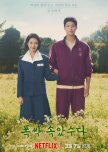
Heartfelt, Realistic, Unforgettable
This drama beautifully portrays the power of love and dedication in the face of hardship. Despite living in poverty, Oh Ae-sun and Yang Gwan-sik raise their family with extraordinary care, sacrifice, and support. They provide their child not just with material needs, but with a nurturing environment full of love, a depiction that feels both authentic and deeply moving.What makes this drama particularly resonant is its portrayal of Asian parenting, where love is often shown through actions rather than words. For viewers who grew up in Asian households, the emphasis on acts of service as demonstrations of affection...cooking for family, doing laundry, taking care of daily needs...feels profoundly relatable.
Many scenes resonated with me, but one stood out in particular: when Yang Geum Myeong and her family meet Park Yeong Bum's family. In this moment, Oh Ae-sun says, "I wasn't able to teach her. She was so precious to us. We cherished her dearly. So I chose not to teach her." This line encapsulates the quiet, steadfast love that defines her parenting, reflecting my own experiences and the way my parents raised me.
Moon So Ri and Park Hae Joon deliver exceptional performances, portraying a couple who has loved each other since childhood. The way they look at each other brings their love story vividly to life, adding depth and authenticity to the narrative.
While I would rate this drama a one-time viewing for myself, that does not reflect its quality. The storytelling, performances, and emotional depth are exceptional. The intensity of the emotions and the heartache it evokes made it a deeply affecting experience, but one that I could only endure once. That said, I would absolutely recommend it to anyone who appreciates heartfelt, realistic family dramas.
In summary, When Life Gives You Tangerines is a tender, poignant exploration of love, family, and sacrifice. Its themes are universal, yet its cultural specificity allows it to resonate especially with viewers familiar with the nuances of Asian family dynamics.
Was this review helpful to you?
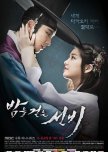
Gwi Stole Every Scene
Honestly, the main reason I watched The Scholar Who Walks the Night was for Lee Soo Hyuk. He completely owned that role from start to finish. Out of the entire cast, he was easily the most memorable presence onscreen. The character perfectly suited his visuals, voice, and overall aura. Lee Soo Hyuk naturally has that cold, sharp, intimidating energy, so playing a seductive and terrifying vampire villain felt like the ideal role for him.Every time Gwi appeared, the drama instantly became more interesting. Even when the story started dragging or the romance lost my attention, his scenes kept me invested. He had this calm but unsettling presence that made him genuinely feel dangerous without needing to overact. His facial expressions, the way he spoke, and even the way he carried himself made Gwi stand out way more than the actual main characters for me.
I also liked that Lee Soo Hyuk made Gwi charismatic instead of just purely evil. There was something strangely captivating about him, which made it easy to understand why so many viewers ended up more interested in the villain than the heroes. Visually, he fit the gothic vampire concept perfectly too. Honestly, some scenes felt like they were designed specifically for him because of how naturally he embodied the dark fantasy atmosphere of the drama.
As for the overall story, I wasn’t nearly as invested. A lot of the plot felt overly dramatic and dragged out at times, and I didn’t feel strongly connected to the romance or the main couple. The pacing could also be inconsistent. But anytime Lee Soo Hyuk appeared as Gwi, the energy completely changed. He was easily the highlight of the drama and the main reason I kept watching until the end.
Was this review helpful to you?

This review may contain spoilers
The Ending Didn’t Feel Earned
I really couldn’t get into drama because I never bought the main relationship between Jang Heetae and Kim Ilri. Knowing they started off as teacher and student immediately made the relationship uncomfortable for me, and the drama never fully convinced me to see it as romantic in the way it clearly wanted viewers to. Even when the story moved forward and they were older, that dynamic still lingered in the background and made it hard for me to become emotionally invested in them as a couple.The drama tried to present their relationship as deep, passionate, and complicated, but I just found it difficult to connect to emotionally because the foundation of it already felt inappropriate to me. Instead of rooting for them, I spent most of the drama questioning the relationship itself. I also felt like the emotional decisions the characters made were supposed to come across as meaningful and poetic, but a lot of it just felt frustrating or unrealistic instead.
On top of that, I really couldn’t believe the ending either. After everything the characters went through, the resolution didn’t feel convincing or emotionally satisfying to me. It felt like the drama wanted the audience to accept certain choices and outcomes without properly earning them through the storytelling. By the end, I just couldn’t fully buy into the relationship or the conclusion the drama never worked for me.
Was this review helpful to you?
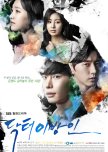
Lee Jong Suk and Kang So Ra!
Doctor Stranger had so much potential, but it felt like the writers couldn’t tighten the story up in a way that fully delivered on its premise. The setup is strong and the medical thriller angle with North Korea had a lot of room to be gripping, but the execution often felt uneven and scattered, which made it hard to stay fully invested throughout.Lee Jong Suk as Park Hun was one of the highlights of the drama. He did a great job and his delivery as a doctor felt convincing and natural, especially in high pressure surgical scenes. One of my favorite moments was when he was saving a baby, it really showed his intensity and skill as a dctor and stood out as one of the most emotional and engaging parts of the drama.
The chemistry between Lee Jong Suk and Jin Se Yeon was completely lacking. I couldn’t even root for them as a couple, and their scenes together felt flat and forced.
Lee Jong Suk and Kang So Ra had great chemistry and their dynamic felt more natural and believable on screen. You can see the admiration she has for him as a doctor which I felt turned into a crush, but I liked the way it was played out.
Jin Se Yeon’s portrayal of a North Korean spy didn’t work for me either. I couldn’t take her seriously in the role, especially in scenes where she was supposed to appear threatening, tough, or mysterious. It just didn’t land emotionally or convincingly, which made her storyline less engaging.
Overall, the drama had a strong concept and a solid cast, but the writing and character chemistry issues kept it from reaching its full potential.
Was this review helpful to you?
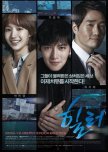
Great action scenes!
What really made the drama stand out though was how naturally it blended action, comedy, romance, and suspense together. A lot of dramas struggle when trying to juggle so many different tones, but Healer managed to make everything flow seamlessly. The suspense worked extremely well because the story constantly gave you something to anticipate. There was always another secret, another connection between the characters, or another piece of the past waiting to be uncovered. The pacing kept things engaging from beginning to end without feeling dragged out.The comedy added a lot of charm as well and never felt forced. The lighter moments balanced out the darker and more serious parts of the drama perfectly. Instead of ruining the tension, the humor made the characters feel more human and gave the story personality. The interactions between the characters, especially during quieter moments, helped create a strong emotional connection with the audience.
Overall, Healer felt like a complete drama. The action was exciting, the romance was convincing, the comedy was entertaining, and the suspense kept the story engaging the entire way through. It never felt like one element overshadowed the others. Everything worked together to create a drama that was both fun and emotionally satisfying to watch.
Was this review helpful to you?
This review may contain spoilers
Seo Jung Woo for the win!
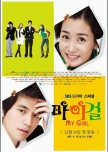
My Girl is a light, fast paced romcom that mixes fake identity chaos with romance and comedy. The drama itself works best when it leans into comedy and misunderstandings, especially the fake cousin identity setup and the messy situations that follow. The pacing is quick and the tone stays light, so it is easy to watch even when the plot gets a bit exaggerated. That said, some of the conflict feels stretched out and relies a bit too heavily on miscommunication, which can get repetitive after a while.What really holds the story back for me is Seol Gong Chan. His character was often quite mean to Joo Yoo Rin, and not just in a teasing way, but in a way that felt dismissive and emotionally harsh. Because of that, it was difficult to naturally root for their romance, since a lot of their early dynamic is built on him being cold, suspicious, or even unnecessarily strict towards her. Instead of feeling like a slow burn romance, it sometimes felt like Yoo Rin was constantly trying to earn basic kindness and understanding, which made the emotional side of the story less enjoyable and at times more frustrating than romantic. Even when the story tries to soften him later, it does not fully balance out how he treated her at the beginning.
On the other hand, Seo Jung Woo was a much more enjoyable character to watch, especially in relation to Joo Yoo Rin. He felt warmer, more expressive, and more naturally supportive in a way that made his presence feel comfortable rather than tense. Although he was portrayed as a playboy, his actions around Yoo Rin showed genuine care and emotional sincerity, and he rarely made her feel small or judged. That consistency made his character feel more trustworthy and easier to emotionally invest in, especially compared to Seol Gong Chan, who often shifted between cold control and sudden vulnerability.
The contrast between the two male leads also made the romance feel uneven, because Jung Woo’s affection felt more natural and consistent, while Gong Chan’s relationship with Yoo Rin felt more like it relied on narrative obligation and forced proximity rather than emotional compatibility. Even their interactions highlight this difference, since Jung Woo tends to communicate more openly while Gong Chan often shuts down or reacts harshly, which affects how believable the romantic progression feels overall.
Overall, My Girl is still fun and entertaining, but for me it is carried more by its comedic energy and Seo Jung Woo’s warmth than by Seol Gong Chan’s romantic presence, which never fully worked for me emotionally.
Was this review helpful to you?

This review may contain spoilers
The Quiet Realism
Sa Hye Joon and Ahn Jung Ha grow a friendship through their perseverance and love for their craft, both being in the infancy of their careers. Sa Hye Joon is doing random modeling and acting gigs, something small, nothing really warranting the public's attention. Ahn Jung Ha is just one of many makeup artists at a makeup company. The drama spends a lot of time showing how hard both of them work to chase careers that don't guarantee success. Their struggles feel realistic, especially when they constantly have to deal with rejection, financial pressure, and people looking down on their dreams.The beginning of the drama focuses on their friendship soon turning romantic. Prior to Sa Hye Joon's career taking off, the two had great communication, but once his career starts taking off, their communication slowly falls apart because of his busy schedule. Then the two learn to navigate their relationship while dealing with fame, busy schedules, and growing emotional distance. I actually liked how grounded their relationship felt. Ahn Jung Ha was extremely understanding, and despite the hurt she felt, she remained a positive light in Sa Hye Joon's world.
In the beginning, Ahn Jung Ha lets us know that the things she dislikes most are people who don't keep their promises or make her anxious, and we eventually see her experience exactly that with Sa Hye Joon, qualities he didn't really have until his career took off. It made their relationship feel more realistic because neither of them were necessarily wrong. They were just slowly growing apart because of the changes happening in their lives.
The drama doesn't try to make everything overly dramatic all the time. Instead, it focuses more on how success can slowly change people and the relationships around them, even when both people still care for each other. Despite the two genuinely loving each other, Sa Hye Joon eventually accepted Ahn Jung Ha's decision to break up. It felt mature and realistic for both characters. Honestly, it was one of the most beautiful breakups I've seen in dramas. The ending was also quite open ended, and I really liked that. It leaves room for interpretation while still feeling emotionally satisfying.
I found Won Hae Hyo's character rather interesting. In the beginning, he basically had everything, but then we learn he only reached his level of success because of his mother's influence, and he begins questioning himself as an actor and his craft. I thought his insecurity and jealousy were handled pretty well because it never felt completely malicious. Won Hae Hyo finally understood how Sa Hye Joon felt when he was at the height of his career while his best friend watched from the sidelines. In some ways, his storyline ended up being one of the more emotionally interesting parts of the drama because a lot of his growth came from mending the relationship with his mother and learning to separate his own worth from the success she tried to create for him.
Overall, I think the drama shines most when it focuses on youth, ambition, and the pressure of trying to build a life for yourself while everyone around you has different expectations. It has a calm and realistic tone compared to a lot of other dramas, which might not work for everyone, but I appreciated that about it. Even when the pacing slows down, the characters and their personal struggles kept me invested.
Was this review helpful to you?

This review may contain spoilers
Lighter and Princess love despite the scars
First off, the two leads Arthur Chen and Zhang Jing Yi had incredible chemistry. From the very beginning, the way they looked at each other made it impossible not to feel the longing and quiet affection between them. Their eye contact alone carried so much emotion, and it felt natural. You could really see their feelings slowly building over time, from curiosity to trust to deep love. It made every shared scene feel intimate and meaningful, even when nothing dramatic was happening.As for the story itself, I didn’t care for it that much. It wasn’t bad, but it also wasn’t particularly memorable. I found myself more invested in the romance than in the actual events unfolding. That said, the chemistry between the leads completely carried the drama for me. It was strong enough that it kept me watching even when the story lagged. I’ll admit I skipped scenes that didn’t involve them because I didn't care about anyone else besides them and their coworkers from the company.
Another major highlight for me, besides the leads, was their coworkers. They were absolutely hilarious and so endearing. I genuinely adored them. The dynamic within the group felt warm and natural, like a found family. They were caring, observant, and always subtly aware of what was going on between Li Xun and Zhu Yun. I loved how they would make little comments or tease Li Xun in ways that were clearly meant to push him to wake up and confront his own feelings. They understood him better than he understood himself at times. His past trauma constantly reminded him that he didn’t deserve happiness, especially not with someone like Zhu Yun, and the coworkers often served as that quiet support system nudging him toward growth.
What I didn’t like, though, was how Li Xun would often say incredibly hurtful things to Zhu Yun. My mouth would literally drop when I heard some of the words he threw at her. They were harsh and uncalled for, and it was painful to watch. Zhu Yun would walk away in tears, clearly hurt, yet she always came back to him. When Li Xun thought Zhu Yun was moving on, even after everything he had said to her, he had absolutely no right to be upset. It highlighted how selfish and emotionally unaware he could be. While he did become better once he learned to let go of his past and move forward, the damage he caused still lingered for me especially when Zhu Yun did nothing, but remained loyal to him.
Was this review helpful to you?


