


This review may contain spoilers
Creative but Gets Hard to Stay Invested In
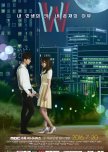
W Two Worlds started off really interesting, funny, and cute. The whole setup of jumping between the real world and a webtoon felt fresh and had a lot of potential, and the early episodes were genuinely fun to watch. There was a nice balance of romance, humor, and mystery that made it easy to get invested in Kang Chul’s story and the strange connection between the two worlds.But after Kang Chul finds out his life isn't real and that he is a character in a manhwa, the drama takes a turn that just lost me. Instead of deepening the story in a satisfying way, it started feeling more complicated and less engaging. The emotional weight didn’t fully land, and I eventually lost interest and dropped it because it stopped feeling as fun or compelling as it was in the beginning.
That said, Lee Jong Suk and Han Hyo Joo had great chemistry. Their scenes together were one of the strongest parts of the drama and really helped carry the emotional side of the story, especially in the earlier episodes when the romance felt more natural and light.
Was this review helpful to you?

This review may contain spoilers
Leads couldn't keep me
Kim You Jung and Song Kang had really great chemistry that felt very natural throughout the drama. Their interactions were easily the strongest part of the series, and they carried many of the emotional scenes well.Kim You Jung as Do Do Hee portrayed the character extremely well. She perfectly embodied a confident and powerful career woman while still showing elegance and vulnerability when needed. Her screen presence was strong, and she made Do Do Hee feel mature and believable without overdoing the cold CEO personality.
Song Kang as Jung Gu Won definitely portrayed the mysterious aura of the character really well in the beginning. He had the charm, coldness, and supernatural presence expected from a demon character, especially during the earlier episodes when the drama focused more on the darker fantasy and thriller elements.
I never read the webtoon and so I don't know how it was for that, but I felt the comedy aspect didn’t work well with this drama. The humor often felt out of place and didn’t blend naturally with the darker and more serious tone of the story. Whenever the drama focused on the suspense, romance, or supernatural elements, it was much more engaging. The tonal shifts between comedy and seriousness sometimes made the pacing feel inconsistent.
One of my biggest issues was Jung Gu Won’s character development. He was introduced as this cold blooded and intimidating demon, but then suddenly became overly soft and completely blinded by love. The problem wasn’t necessarily the romance itself, but how fast the transition happened. It didn’t feel gradual or naturally developed, which made the character shift feel unbelievable. It almost felt like the writers changed his personality overnight rather than slowly building emotional growth over time.
I also felt the drama started taking a different direction around the halfway point. The earlier episodes had a stronger balance of mystery, fantasy, and tension, but later on the story leaned much more heavily into romance and melodrama. Because of that, some of the intrigue and excitement from the beginning started fading away for me. I ended up dropping the drama after episode 11 because the later direction just wasn’t as engaging as the earlier episodes.
Was this review helpful to you?

This review may contain spoilers
A Love Built on Trust and Choice
First off, the chemistry between Zhang Linghe and Tian Xiwei was amazing. The way Yan Zheng looks at Fan Changyu is filled with restraint and admiration, while she matches that energy with quiet strength and emotional control. It never feels one sided. Instead, it feels like they’re continuously choosing each other through subtle actions. Even when circumstances force them apart or make them act distant, you can still feel how deeply connected they are underneath it all. Their longing for each other was intense in the best way. You could feel their love building, especially in the quieter moments. The separation and restraint only made their romance feel more meaningful because their connection felt earned.This drama is refreshing because both characters develop feelings for each other relatively early. Their emotions are obvious even before either of them openly admits them, which makes their relationship feel different from the usual slow burn. There’s no need for an overly dramatic confession because their care for each other is already clear through their actions. Yan Zheng falls in love with Fan Changyu because of her kindness, courage, and unwavering loyalty. Although he initially enters her life while hiding his identity and carrying the burden of revenge, his feelings gradually become genuine because Fan Changyu sees him as a person rather than someone defined by his past or status. What truly solidifies his feelings is realizing that she isn’t someone who only says she cares about him. She’s someone who will put herself in danger for him. When she returns to save him after ensuring her sister’s safety, he understands that her love comes from genuine concern rather than obligation. Fan Changyu falls in love with Yan Zheng because of his understanding and support. Despite being a pig butcher’s daughter, Yan Zheng never looks down on her background or sees her work as beneath him. Instead, he respects her strength and accepts the parts of her that others might judge. Fan Changyu takes longer to recognize her feelings because she has spent most of her life in survival mode. She’s always been the one protecting her family and carrying burdens alone. When Yan Zheng enters her life, she finally has someone who shares that responsibility instead of leaving everything on her shoulders.
The scene at the start of episode 17 perfectly shows how differently they approach love. Yan Zheng claims he’ll marry a gentle, domestic woman, while Fan Changyu says she would rather have someone warm and scholarly. Neither statement is true. They’re both describing the opposite of each other because admitting they want one another feels too vulnerable. They say hurtful things because they’re trying to hide how much they actually care. Yan Zheng has always been someone who keeps his emotions controlled. He carries the weight of his revenge, identity, and responsibilities without allowing himself to be vulnerable. The kiss isn’t just about romance. It’s his desperate attempt to express feelings he can’t put into words. Instead of saying “I love you,” he tries to show her how much she means to him before leaving. The second time Yan Zheng kisses her shows his internal change. At first, he believes protecting her means walking away. But after seeing her reaction to him leaving, he realizes he doesn’t simply want to protect her from afar. He wants a future with her. He finally begins to see Fan Changyu not as someone fragile who needs protection, but as someone strong enough to stand beside him. Asking her to wait a year shows that he knows he must resolve the danger surrounding him, but it also shows that he’s finally admitting he wants her in his life.
This moment highlights how differently Yan Zheng and Fan Changyu view love. Yan Zheng believes loving someone means protecting them, even if that means leaving them behind. Because of his revenge and the danger around him, he thinks the most loving thing he can do is separate himself from her so she can have a peaceful life. Fan Changyu, however, doesn’t see love that way. She doesn’t want to be protected from a distance. She wants to stand beside him and face difficulties together. From her perspective, Yan Zheng isn’t giving her a choice. He refuses to tell her the full truth, decides for her that she’s better off without him, kisses her while leaving her confused, and asks her to wait without giving her certainty.
Fan Changyu was a truly special female character: strong, dependable, and compassionate. What I appreciated most was that her strength never came from being cold or invincible. She worked hard, carried the responsibility of supporting her family, and never hesitated to step up when the people she loved needed her. Even though she started as an ordinary pig butcher with no status or influence, she earned everything through her determination, resilience, and willingness to keep moving forward. She wasn’t waiting for someone to save her or define her worth. She made her own choices, stood by her convictions, and fought for the life she wanted while remaining kind and caring toward those around her. She was capable without losing her compassion and confident without overshadowing the people beside her. It was refreshing to see such a well written strong female character whose strength felt natural and authentic rather than forced. The line, “I’ll slaughter pigs to take care of you,” was simple but surprisingly powerful. It shows her devotion in such a grounded way and fits her character perfectly. Although she doesn’t have the same status or resources as him, especially since he kept his identity hidden, she never holds back. She gives everything she can to build a life with him and stand beside him, making their relationship feel even more sincere.
Was this review helpful to you?

This review may contain spoilers
A Story of Brotherhood, Love, and Ambition
Twin of Brothers starts off fun and adventurous, but the deeper you get into the story, the more emotional and serious it becomes. The drama had a really good balance of comedy, martial arts, romance, politics, and friendship, which made it hard to stop watching once everything started picking up.What really carried the drama for me was the relationship between Kou Chong and Tsui Ling. They were complete opposites in personality, but their brotherhood was what made the series so entertaining. Kou Chong was ambitious, reckless, and charismatic, while Tsui Ling was calmer, smarter, and more level headed. Even though they constantly argued and got themselves into trouble, you could tell they genuinely cared about each other. Their bond felt natural, and a lot of the emotional moments worked because of how believable their friendship was.
The martial arts world in this drama was chaotic because everyone wanted the Changsheng Formula. The moment Kou Chong and Tsui Ling got their hands on it, their lives completely changed. Suddenly every sect, every powerful fighter, and every political force was after them. Half the time they were just trying to outsmart people far stronger than them, which was honestly how they survived in the beginning. Watching them slowly grow from street kids into feared martial artists was one of the most satisfying parts of the story because it felt earned rather than rushed.
One of the biggest emotional driving forces in the drama was Kou Chong’s relationship with Li Sau Ning. Li Sau Ning came from a wealthy and respected background, while Kou Chong started off as nothing more than a street kid trying to survive. Kou Chong fell in love with her at first sight, and despite the huge difference in their status, his feelings for her became one of the main reasons he pushed himself so hard to become stronger and make a name for himself. He wanted to become someone worthy enough to stand beside her.
You could also see how much Li Sau Ning influenced Kou Chong’s growth as a character. In the beginning, Kou Chong was carefree and immature, but his love for her pushed him to become more ambitious and determined. At the same time, his experiences throughout the drama slowly changed him into someone more hardened and emotionally mature. Their relationship had a bittersweet feeling because even when they were together, there was always something pulling them apart.
What made their relationship frustrating was the constant miscommunication, which slowly led to its downfall. Li Sau Ning definitely loved Kou Chong, but her loyalty to her family and responsibilities constantly got in the way. There were so many moments where you could tell she wanted to choose him, but she could never fully let go of the expectations placed on her. Kou Chong valued freedom and followed his heart, while Li Sau Ning was tied down by duty, status, and family obligations. No matter how much they loved each other, it always felt like the timing was against them.
I actually liked that their relationship wasn’t written as a simple romance because it felt more realistic for the world they lived in. Love alone wasn’t enough to overcome politics, family loyalty, and ambition. Kou Chong spent so much of the drama trying to prove himself worthy of her, but at the same time, the higher he climbed and the more powerful he became, the more complicated their relationship got.
I also liked how Kou Chong’s character eventually became more than just his love for Li Sau Ning. The influence of the Changsheng Formula slowly changed the way he thought and viewed the world, even if it was temporary. It added another layer to his character and made his development feel more interesting and unpredictable.
Overall, Twin of Brothers is one of those classic TVB wuxia dramas that had a little bit of everything: action, comedy, romance, heartbreak, political conflict, and strong character relationships. It wasn’t perfect, and some parts definitely dragged, but the chemistry between the main cast and the emotional weight of the story made it memorable.
Was this review helpful to you?

This review may contain spoilers
Hilarious chaos and romance
One thing I can’t ignore is the fact that Jung Soo Young was dating Lee Min Suk when he was still in high school. I get that he was about to graduate, but still, it felt a little off. It made me raise an eyebrow more than once, especially since Lee Min Suk is a high school student and often acted very immature whenever he encountered Yoo Jin Woo. That said, it was hilarious whenever he tried to come at Yoo Jin Woo. His awkward overconfidence made for some genuinely funny moments.Seo In Guk and Lee Ha Na had amazing chemistry. They were constantly up to shenanigans together, and I always knew I would get a laugh whenever they shared a scene. Their playful teasing, awkward moments, and genuine support for each other made their relationship feel fun and realistic. They really fed off each other, and it was impossible not to smile whenever they were on screen.
The dynamic between Lee Min Suk, Kim Chang Su, and Han Yeong Suk was absolutely hilarious. Honestly, they were the highlight of the drama for me. Their constant bickering, over the top antics, and occasional moments of surprising insight made them incredibly entertaining. I loved how their interactions broke up the romantic tension and added a layer of comedy that kept the story from feeling too heavy.
Lee Soo Hyuk as Yoo Jin Woo was perfectly cast. He played a confident CEO really well and approached Jung Soo Young with bad intentions. He was so mean to Jung Soo Young despite what he has done to her, she continued to show him nothing but kindness. My only critique is that I wished his character growth was built more slowly. It felt like his feelings for her appeared overnight, and I would have loved a more gradual, believable transition.
Was this review helpful to you?
Funny Detective interesting cases
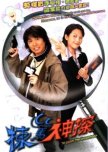
First off, the chemistry across the entire cast is simply perfect. When a drama has a cast that genuinely clicks, everything else naturally falls into place, and To Catch the Uncatchable is a prime example of that. It is one of those classic TVB dramas you can always go back to, and it somehow still gives you the same feelings you had the first time around. Curiosity and laughter never fade.Even though it is a detective drama, the cases are not the main focus. They are interesting enough to keep the story moving, but if you are expecting something similar to Untraceable Evidence or Detective Investigation Files, you might be disappointed. The drama is much more focused on Mok Jok Dung as a character and how he is an exceptionally skilled detective working in a department where the rest of the team is clearly lacking. That is not meant as an insult. In fact, it is one of the biggest sources of comedy in the series. The contrast between Mok Jok Dung’s intelligence and his team’s incompetence creates many of the show’s funniest and most memorable moments.
Dayo Wong absolutely owns this role. His delivery is sharp, his timing is flawless, and his performance never feels forced. The pairing with Ada Choi is what truly elevates the drama. Their chemistry is on another level, and their constant banter feels natural. You can see their relationship slowly build over time, creating a strong foundation that makes their interactions both entertaining and emotionally engaging.
This drama is also a reminder of how special TVB productions from the 90s and early 2000s really were. If you ever have the chance to watch dramas from that era, you should take it. You will not regret it. There was clearly more care put into casting back then, and it shows in how well the actors worked together on screen. The chemistry felt intentional and effortless.
Was this review helpful to you?

This review may contain spoilers
Law, Humor, and Growth
Homer is the heart of HK Firm. As the owner, his law practice is struggling due to ongoing issues and the suspension of his license, which leaves him in no position to be selective about hiring. This situation leads him to take in four fresh graduates with very different personalities. What I really appreciate about Homer is his leadership style. He gives the lawyers freedom instead of micromanaging them, but still steps in to offer guidance, advice, and the occasional push when they need it most. He mentors through trust rather than control, which allows each of them to grow at their own pace.Raymond Lam as Ben is perfectly cast. This role suits him incredibly well and highlights his natural charm. Ben is family-oriented, loyal, funny, and emotionally intelligent. He brings much of the humor to the drama, which keeps the tone light even when cases become intense. His easygoing personality sets him apart from typical lawyer characters, and his willingness to use unconventional and sometimes ethically questionable methods makes his cases entertaining to watch while still feeling true to his character.
Myolie Wu as Ling is the emotional counterbalance to Ben. Ling is extremely straightforward and honest, often speaking her mind without filtering her thoughts. Her bluntness can be jarring at times, but it also makes her reliable and sincere. She represents integrity and discipline within the firm, which contrasts nicely with Ben’s relaxed and creative approach.
Sammul Chan as Vincent is a character driven by ambition and a desire to become a renowned lawyer, which eventually turns into arrogance as the series progresses due to a case pertaining his dad. His values clash with the core purpose of the firm, which is to help those in need, whereas Vincent is more interested in serving the wealthy. Because of this, he never truly feels like he belongs in HK Firm. Unfortunately, Sammul’s performance does not help the character. In scenes meant to be humorous, his acting feels forced, and in serious moments it is difficult to take him seriously. While Vincent has narrative potential, the execution feels uneven and weak.
Bernice Liu as Jessica is well suited to her role. Her demeanor is not traditionally feminine and instead leans toward a tomboy personality, which gives her character a distinct presence within the group. She is naive and overly trusting, which often places her at a disadvantage, but it also makes her genuine and easy to sympathize with. Bernice portrays this vulnerability naturally without making Jessica appear weak.
Overall, Survivor’s Law works because of its character-driven storytelling and strong ensemble dynamics. The legal cases provide structure, but the true appeal lies in watching these very different personalities grow, clash, and evolve together. I also I have my reasons for giving the story a 9, watch the drama and you'll understand why. Something happens and it makes no logical sense, but definitely a must watch as the entire cast had great chemistry.
Was this review helpful to you?

This review may contain spoilers
Smart Cases Compelling Characters Lasting Impact
One of the things I miss most about TVB in the 90s is the quality of the scripts from that era and Untraceable Evidence is a strong example of why that period remains so memorable. The detective cases were carefully constructed and genuinely intriguing keeping viewers invested from beginning to end. The pacing was steady and deliberate and the twists felt logical rather than sensational which made the investigative process satisfying to follow.The chemistry among the cast is another major reason the series works so well. Flora Chan and Bowie Lam share a natural and understated chemistry that adds emotional depth to the story without overpowering the procedural elements. Their interactions feel mature and restrained built on trust and mutual respect rather than dramatic declarations. This makes their relationship believable and emotionally resonant.
Tsang Ka Yuen and Pauline Lip Bo Yin are especially compelling because of their professional dynamic. Working in different departments, their paths cross naturally through investigations which allows their relationship to develop organically. Their teamwork is based on shared intelligence professionalism and a mutual desire for the truth. As they collaborate on cases their connection deepens which makes the emotional stakes of the story more impactful.
One things I didn't like is the love triangle involving Tsang Ka Yuen Pauline Lip Bo Yin and Choi Siu Tong. The tension created by this storyline relies heavily on misunderstanding and emotional restraint rather than open communication. Choi Siu Tong feelings for Tsang Ka Yuen create discomfort and instead of addressing her own emotions Pauline Lip Bo Yin chooses to step aside. The reappearance of her ex boyfriend gives her an additional reason to suppress her feelings and avoid confronting the situation directly. This is particularly frustrating because Pauline Lip Bo Yin is portrayed as an extremely intelligent and capable woman. In her professional life she is observant ,logical, and confident yet her emotional decisions don't reflect the same level of clarity. I understand, were all humans, but her ex boyfriend repeatedly lies and displays clear warning signs yet she continues to forgive him.
Despite these flaws Untraceable Evidence remains a compelling and memorable drama. Its well written cases strong direction and layered character relationships leave a lasting impression. The frustrations surrounding the romantic subplot do not erase the strengths of the series but instead emphasize how invested viewers become in the characters. Untraceable Evidence stands as a reminder of an era when TVB dramas trusted the audience intelligence and prioritized thoughtful storytelling over convenience.
Was this review helpful to you?

Detective Investigation Files Season 3
0 people found this review helpful
This review may contain spoilers
Humor, Chemistry, and Classic Cases
One of the things I miss most about TVB in the 90s is the quality of the scripts from that era. The detective cases were written so well and felt genuinely intriguing, keeping viewers invested from start to finish. Each case was carefully thought out, with strong pacing and clever twists that made the investigations exciting to follow. The cast also had incredible chemistry, which added depth to both the professional and personal dynamics between the characters. Another thing I loved about 90s TVB dramas is that when they made new installments, the original cast always returned, something I really miss today.In this installment, a few new characters were introduced, and they meshed perfectly with the original cast, bringing both humor and drama to the story. The cases in this series are just as engaging as in the previous two installments.
I didn’t like Cheung Dai Yong’s character in this series. He was extremely secretive about his past with Jesse. Jesse had lost her memory due to an incident in the previous installment and would occasionally get flashbacks in pieces. When she asks Cheung Dai Yong about these memories to gain clarity, he either delays answering or brushes it off with lines like, “You were so stubborn and wanted to know if I cared, so you would find reasons to start arguments with me.” These actions understandably made Jesse feel insecure in their relationship, as she could not completely trust him. I couldn’t blame her for feeling this way, and it made sense that she continued taking birth control, bringing a baby into a relationship full of uncertainty would have been complicated and unfair.
Liu Kai Chi as Jap Wing Tin was absolutely hilarious. Despite his unconventional methods for solving cases, he is a good cop with a good heart, though often misunderstood.
Law Koon Lan as Chu Sau Kwan, Jesse’s aunt, was also fantastic. Her character is desperate to find love, and she eventually finds her forever person. She was a bit annoying at first, often being inconsiderate of Jesse and Cheung Dai Yong’s life and sometimes causing arguments between the couple.
Jap Wing Tin and Chu Sau Kwan truly stole the show. Their constant banter was hilarious, and their chemistry as a couple felt natural and charming. They added a wonderful comedic and emotional balance to the series, making their interactions some of the most memorable moments of the show.
Overall though, this is a drama you have to watch.
Was this review helpful to you?
Detective Investigation Files Season 2
0 people found this review helpful
This review may contain spoilers
Great cases! Great cast!
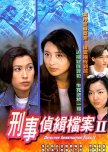
One of the things I miss most about TVB in the 90s is the quality of the scripts from that era. The detective cases were written so well and felt genuinely intriguing, keeping viewers invested from start to finish. Each case was carefully thought out, with strong pacing and clever twists that made the investigations exciting to follow. The cast also had incredible chemistry, which added depth to both the professional and personal dynamics between the characters.This series is an all time classic for me, though it is the installment I watch the least. I did not particularly enjoy the Carmen storyline, mainly because I preferred the dynamic between Cheung Dai Yong and Jesse. Still, Detective Investigation Files remains a strong example of why 90s TVB dramas are so memorable.
One of the things I didn't like was how Jesse was written in this installment. She was extremely jealous and stubborn, nothing like the Jesse we knew in the first series. She would find every little reason to argue with Cheung Dai Yong, which I found quite frustrating.
Amy Kwok as Lam Ka Man did an absolutely fantastic job. Her portrayal of a character with an alter ego was impressive. Given her upbringing and circumstances, it was hard to dislike her, since she didn’t actually do anything wrong. Her biggest mistake wasfalling in love with a man who was already spoken for which set off a chain of events that drove the story forward, making her character both compelling and sympathetic.
Highly recommend to watch this. You won't regret it.
Was this review helpful to you?

Why 90s TVB Detective Dramas Still Hold Up
One of the things I miss most about TVB in the 90s is the quality of the scripts from that era. The detective cases were written so well and felt genuinely intriguing, keeping viewers invested from start to finish. Each case was carefully thought out, with strong pacing and clever twists that made the investigations exciting to follow. The cast also had incredible chemistry, which added depth to both the professional and personal dynamics between the characters.This series is an all time classic for me and one I often rewatch. Although Detective Investigation III is my personal favorite, the first installment still holds up remarkably well and remains a strong example of why 90s TVB dramas are so memorable.
One of the highlights of the series is the dynamic between Cheung Dai Yong and Jesse. They start off on the wrong foot due to Cheung Dai Yong’s bad encounter with a reporter, which causes him to develop a strong dislike toward journalists. Because of this, his initial interactions with Jesse are tense and dismissive. However, as the two continue to run into each other, their relationship slowly develops in a natural and believable way. This gradual buildup adds an emotional layer to the series and makes their interactions more engaging to watch.
Also, I love Kenix Kwok and Michael Tao's chemistry. Their interactions felt effortless and added warmth to the story, balancing out the darker and more serious nature of the cases. Similarly, the partnership between Michael Tao and Joey Leung, Cheung Dai Yong and Lee Chung Yee, was natural and compelling, making their teamwork feel both believable and engaging.
The cases written during the 90s feel especially strong when compared to more recent TVB productions. When watching TVB detective dramas nowadays, the stories often do not leave the same lasting impact. The older cases had more weight and originality, and they trusted the audience to follow complex storytelling. I also appreciated how every character had chemistry with one another, making the team feel cohesive and realistic. This natural interaction between the cast is one of the key reasons why the series continues to hold up so well over time.
Highly recommend to watch this. You won't regret it.
Was this review helpful to you?
This review may contain spoilers
A Timeless Tragedy of Love, Fate, and Loss
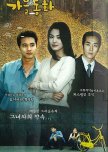
What makes Autumn in My Heart a classic even after all these years isn’t just its sadness, but how deliberately it explores fate, sacrifice, and emotional inevitability. The switched at birth trope isn’t used simply as a cliche. Instead, it becomes a way to question whether love is shaped by blood, upbringing, or choice. Honestly the writers did a great job at this because I question this all the time when I watch this drama.Yun Eun Seo grows up surrounded by privilege and affection, yet once her true origins are revealed, she’s stripped of both stability and identity. Her decision to leave the life she knows and return to her biological mother isn’t framed as heroic, but as deeply human. It’s driven by guilt, empathy, and a sense of responsibility that defines much of her character throughout the series.
Yun Jun Seo’s character is equally tragic. From childhood, he unintentionally becomes the catalyst for nearly every turning point in Yun Eun Seo’s life. As an adult, this burden manifests as guilt and emotional restraint. His love for her feels like inevitability, as if loving her is something he was never able to escape. This is why their relationship, while romantic, is also heavy and painful. They aren’t just fighting societal boundaries or family expectations, they’re fighting years of shared history and unresolved guilt.
The romance itself is uncomfortable by design. Having grown up as siblings, their transition into lovers is meant to unsettle the audience, forcing viewers to confront the gray area between emotional bonds and social norms. I remember watching this and just finding it very weird. The drama doesn’t try to justify or romanticize this conflict easily. Instead, it lets the discomfort linger, which adds to the emotional weight and realism of their struggle.
Han Tae Suk stands out precisely because he represents an alternative path. Initially introduced as a stereotypical wealthy playboy, he undergoes the most visible growth. His love for Yun Eun Seo is active and intentional. He offers stability, presence, and honesty, yet ultimately loses because love in this drama isn’t about who is better or healthier, but about who is emotionally inevitable. Yun Eun Seo’s inability to fully see Han Tae Suk isn’t a failure of judgment, but a reflection of how deeply her past with Yun Jun Seo defines her present.
The illness plot, often criticized as melodramatic, serves a crucial purpose. It removes the possibility of a clean or logical resolution. Yun Eun Seo’s decision to live selfishly near the end isn’t selfish at all. It’s her first and only attempt to reclaim agency over her life after years of having her fate decided by accidents, family, and circumstance. Choosing Yun Jun Seo becomes less about romance and more about choosing familiarity, comfort, and emotional truth in the face of limited time.
Ultimately, Autumn in My Heart doesn’t offer emotional relief. It leans fully into longing, regret, and unresolved love. The chemistry between the three leads amplifies this, making every interaction feel loaded with unspoken emotion. Rewatching it as an adult reveals how layered the story truly is. It’s not just a tragic love story, but a meditation on how some relationships are formed not by choice, but by fate, and how those bonds can shape a person for life, even when they lead to heartbreak.
Song Seung Heon as Yun Jun Seo was a character I personally struggled with. I disliked how emotionally reserved he was, especially toward Eun Seo. It often felt like his guilt over her circumstances convinced him that he didn’t deserve happiness, which caused him to hold back when it mattered most. I wanted him to be more open and expressive with his love for her. That said, Song Seung Heon did a great job portraying Jun Seo’s internal conflict and emotional restraint, which ultimately made the character feel believable, even if frustrating.
Song Hye Kyo as Yun Eun Seo, also known as Choi Eun Seo, is especially impressive when you consider how young she was at the time. It’s almost unbelievable that she was only around 19 during filming. Despite her age, she delivered a deeply affecting performance. Her portrayal of Eun Seo is emotionally raw and fragile, and her scenes are absolutely heartbreaking. You don’t just see her pain, you feel it alongside her.
Won Bin as Han Tae Suk is another standout. It’s fascinating to think about how reserved and private he is in real life, considering how expressive and emotionally transparent Han Tae Suk is as a character. Yet he makes the role feel completely natural, almost as if he’s playing himself. His performance adds warmth and sincerity to Han Tae Suk, making it easy to understand why so many viewers were drawn to him and rooted for him despite being the second lead.
Was this review helpful to you?

This review may contain spoilers
An awesome story with an awesome cast!
I felt the two leads had great chemistry and felt very natural. The female lead, Zhang Miao Yi , definitely carried the show and the role suited her very well. I can't imagine a more fitting actress for the role of Xiao Tu. Her comedic timing was just perfect. As for the male lead, Jun, I wish we were able to see more expression from him. I still liked his portrayal though and his expression when he's awkward is hilarious. I really would like to see Zhang Miao Yi and Jun in another drama.Xiao Tu and Ling Chao aren’t related, but they grew up together. Both of their parents are each other’s godparents. Ling Chao has always been very smart and studious, while Xiao Tu is carefree and overly dramatic. I loved how oblivious and dense Xiao Tu is. She often sees things at face value, while Ling Chao is more observant and constantly protects her from the shadows. No matter what, Xiao Tu always somehow finds a way to drag Ling Chao into one of her shenanigans. For example, there’s a scene where they try to take Xiao Tu’s friend’s cellphone back from a teacher, only to get caught. Ling Chao manages to get away, while Xiao Tu gets into trouble. Xiao Tu accuses him of being disloyal. Later in the episode, we find out that Ling Chao went back to retrieve the phone anyway. Although he succeeds, he gets into trouble for lying to the teacher and saying the phone was his, which results in him having to write a two page essay. We see a lot more of Ling Chao’s inner feelings in the exclusive epilogue.
I actually enjoyed the drama more when they were in high school, perhaps because of the buildup of Ling Chao’s feelings. We see that Ling Chao develops feelings for Xiao Tu quite early on, and I liked how he never openly expresses them, instead showing his affection through subtle actions. Ling Chao’s mother bought them matching rabbit themed clothing. Xiao Tu received an undergarment, while Ling Chao had a shirt with a pom pom on the back. Xiao Tu wanted them to wear the matching items together, but Ling Chao refused, which upset her. The next day at school, Xiao Tu gets hit on the head by a basketball, and the boy who threw it laughs. To defend her, Ling Chao agrees to play basketball, which reveals that he is wearing the rabbit shirt. Ling Chao often does things like this, and I found it very endearing. Another sweet detail is that Xiao Tu dislikes carrots, so whenever there are dishes with carrots, she picks them out and gives them to Ling Chao, and he eats them without complaint. The second half of the drama is when they're in college and basically is them navigating their relationship, it was also enjoyable as well.
The reason why Ling Chao fell in love with Xiao Tu is because he does not need to perform or protect an image. He can exist quietly, even invisibly, and still feel seen by Xiao Tu. Ling Chao is surrounded by admiration. At school, his intelligence, looks, and reputation as a model student place him on a pedestal. Xiao Tu, however, has known him long before any of that mattered. To her, he is just Ling Chao, the person who gets dragged into her schemes, eats the carrots she does not like, and silently cleans up after her messes. When she is upset, happy, or frustrated, she expresses it openly and without pretense. This transparency is what makes her heart feel pure. Her obliviousness also plays an important role. Xiao Tu does not overanalyze Ling Chao’s actions or search for deeper meanings behind his words. She accepts what is in front of her.
Xu Ling Long is someone who has had a crush on Ling Chao since they were kids and is very upfront about her feelings for him. She often finds reasons to get close to him, only to get shot down by Ling Chao. Despite being a love rival, I couldn’t hate her. She was adorable and funny, and she was never malicious, although she would be passive aggressive toward Xiao Tu, it was never as negative as you would think. She is one of the very few love rivals you actually end up liking. Although she was mainly there for comedic purposes, she was lovely.
Yin Xin Lan is Ling Chao’s classmate and also has a crush on him. Although she appears soft spoken and nice, she isn’t, as she makes offhanded remarks about Xiao Tu and has no issue using others to get close to Ling Chao. I think Ling Chao saw right through Yin Xin Lan from the start, which is why he was very blunt with her. In contrast, he was much softer when turning down Xu Ling Long’s advances.
One unfortunate thing is that if you don't understand or speak Chinese, you miss out on some funny moments. Several times, Xiao Tu speaks to Ling Chao using old fashioned terms, which sounds much funnier in Chinese and subtitles doesn't do it justice
I have watched this drama a few times already, starting a few years ago. This is one of those lighthearted dramas you can always rewatch, and it gives you the same feelings as the first time. There are no unnecessary third parties, as the leads’ relationship is solid, and there is no miscommunication that lasts longer than an episode. The entire cast was extremely perfect. Both leads had awesome friends as well. I really liked the friends Ling Chao made in college. They were hilarious and often got into all kinds of shenanigans. I think one of the highlights for me would Xiao Tu's relationship with her dad. Their chemistry together was amazing and I knew if I saw them together on screen, I would get a great laugh. Xiao Tu's dad was extremely funny as well, but I loved both their families dynamic with one another. It was very nice to see two kids being raised in a happy and loving home.
Was this review helpful to you?

Looks Better Than It Acts
I couldn’t even finish it. The cliché tropes were overwhelming. Usually I can tolerate or even enjoy predictable plot points if the story or chemistry between the leads is strong, but here, neither aspect worked.The storyline is painfully formulaic. Two rich lead falls in love with a plain, relatable girl. The female lead being in love with the second male lead, but he didn't appreciate her as he was still hung up with his ex. There is always the ex who cannot let go of the past, creating conflict that feels recycled rather than compelling. Once the second male lead wakes up and smells reality, he wants the female lead who is on the process of getting over the second male lead. None of these arcs bring anything fresh, and the pacing struggles because the drama stretches minor conflicts far too long.
Jiang Coco as Bai Ji Qing was… something else. Her acting was cringe worthy and over the top. She constantly seemed to be trying too hard to appear sexy and intimidating, which came across as forced rather than natural. There were moments where her expressions and tone were so exaggerated that it pulled me out of the story entirely.
Supporting characters are largely underdeveloped, serving as plot devices rather than fully realized people. There is little emotional depth, and comedic or dramatic moments often land awkwardly instead of naturally. The dialogue does not help either, it swings between melodrama and forced quirkiness, leaving scenes feeling artificial.
Overall, The Queen of SOP is a textbook example of style over substance. Between over the top acting, tacky costumes, and an entirely predictable plot, the drama fails to engage. Unless you are watching purely for background entertainment, there is little here worth investing your time in.
Was this review helpful to you?
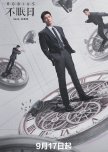
Would’ve been better as a movie!
I saw the trailer for Mobius and found it quite interesting, so I gave it a shot. The first case was executed beautifully and immediately hooks the viewer. The tension, pacing, and mystery are handled well, making the opening feel sharp and purposeful. However, as the story moves forward, the narrative begins to drag.Bai Jing Ting as Ding Qi delivered a solid performance. That said, this role does not reveal anything new about his acting abilities. His emotional control and intensity are already well known, and he delivers them competently here. His reactions during key investigative moments feel natural, and the action scenes are particularly well done, adding weight and urgency to the cases.
Janice Man as An Lan was less convincing. I have not seen her previous work, but her performance felt underwhelming and miscast. The character is written as important to both the investigation and Ding Qi’s personal life, yet her presence never truly leaves an impression. There is little emotional depth or nuance in her portrayal, making her feel more like a plot device than a fully realized character. Honestly, the role could have been played by almost anyone without changing the overall outcome.
There was absolutely zero chemistry between the two leads. The romantic subplot felt forced and unnecessary, adding very little to the main narrative. The drama would have worked just fine without any romance, as the core mystery and psychological elements were strong enough on their own. Watching the two leads interact was boring, and their relationship lacked believable emotional progression. This is not entirely the fault of the actors, but rather the writing, which failed to convincingly explain why these two characters were drawn to each other in the first place. Since this aspect was never properly developed, they should have left the romance out entirely. Their relationship could have remained platonic if the writers were adamant on keeping her character, and the time spent on their scenes could have been used to further develop the story.
Overall, Mobius would have benefited greatly from being a movie rather than a drama series. Stretching the story across multiple episodes resulted in unnecessary subplots and filler that diluted the main narrative. There was simply too much happening without enough focus. If this had been a film, the writers would have been forced to streamline the plot, resulting in a tighter, more cohesive, and more impactful story.
Was this review helpful to you?


