
 K-Drama




This review may contain spoilers
Simply Put: Nothing Beats Healer
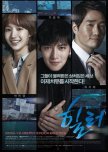
Healer is, without question, the drama that sets the bar for me — and no series since has managed to clear it. It is the show I use to introduce friends to K-dramas because it has everything: heart, suspense, romance, humor, mystery, social commentary, and characters so vividly constructed they feel permanently etched into your memory. It’s a unique series that seems to get everything right — tone, pacing, dialogue, chemistry, acting, and above all … ✨the writing.
The premise alone is unforgettable: a clandestine night courier who moves like a shadow, a brilliant hacker ajumma supporting his every step, an eager detective hot on their trail, a star reporter wrestling with old ghosts and determined to uncover the truth, a scrappy entertainment journalist hustling for scoops until compassion pulls her into a case she never expected… and a conspiracy buried beneath decades of corruption, broken ideals, and long-silenced voices. It’s a clever blend of action, thriller, crime, conspiracy, investigative journalism, romcom, hacktivism, found family, and political intrigue — yet the series ties ALL these tones together with absolute precision.
~~~
Ji Chang-wook’s performance as Healer / Seo Jung-hoo is one of the most compelling character portrayals I’ve ever seen. He moves effortlessly between hardened, apathetic loner; vulnerable, wounded survivor; shy and awkward rookie reporter; and fierce protector. His growth — from someone who avoids human connection at all costs to someone who chooses love, justice, and community — is portrayed remarkably well.
Park Min-young’s spunky, warm-hearted Someday News reporter, Chae Young-shin, is equally phenomenal. A young woman shaped by childhood trauma yet raised with fierce devotion by the most unexpectedly wholesome adoptive family of reformed ex-criminals. Goofy, principled, bright, wily, resilient, endlessly empathetic — she’s full of that grounded, everyday courage that makes her impossible not to root for. Easily one of the best female leads ever rendered.
And her adoptive father? A gentle bear of a man whose protective love and gentle strength warm the heart. Part-time lawyer, part-time café owner, and full-time gem of a dad.
And then there’s Hacker Ajumma, one of the most iconic supporting characters in all of K-dramaland. 💅🏻 Brilliant, cynical, strangely maternal in her own chaotic way — her scenes elevate the ENTIRE show. She gives Healer an anchor and the audience a source of constant delight.
Equally unforgettable is Master … or Jung-hoo’s deeply ridiculous, deeply lovable martial arts teacher and mentor, whose arc ends in a punch of genuine heartbreak.
~~~
The chemistry between the main leads is 🔥 electric, tender, and deeply rooted in vulnerability and trust. This isn’t a couple built on tropes — it’s a relationship forged through unshakable loyalty, shared wounds, and shared defiance. The romance is as unforgettable as the series itself.
One of the most unexpectedly delightful parts of that romance is Healer’s undercover alter ego — his Clark-Kent-esque “rookie reporter” persona. Ji Chang-wook plays this duality with such 🤌🏼 mastery that you genuinely believe you’re watching two different versions of the same man trying (and frequently failing) to keep his worlds from colliding.
Watching Jung-hoo slip from lethal night courier to awkward, wide-eyed intern is pure gold. His shy stammering, his exaggerated politeness, the way he keeps sneaking glances at Young-shin while pretending to be invisible — it’s hilarious, disarming, and heartbreakingly sweet.
In this timid, bumbling alter ego, he gets to know Young-shin up close — without the usual armor, and she opens up to him in ways she never would with the mysterious courier she idolizes — and hilariously, she even turns him down for… well, him.
This dynamic sparks countless delightful little moments: the way he protects her in both identities without her knowing; the way he “plays along” with his own disguise, using it to shield her and ease her fears; the smirk he can’t quite hide when she charges in to “rescue” him from a scheme he himself orchestrated to help them both escape. These scenes are not just amusing — they’re some of the most romantic beats in all of drama-land, showcasing a timeless love story built on observation, fidelity, mutual healing… and just the right amount of undercover mischief.
>>>
The larger conspiracy — involving old friends, buried truths, corrupt media moguls, and the generational consequences of silence — is woven expertly in this script. Every subplot carries weight; there are no throwaway threads, no hollow detours. Even minor characters become crucial hinges in the larger narrative, each holding a fragment of the truth that reshapes everything when revealed.
What begins as a scattered set of mysteries slowly coheres into a single story fractured across decades, rooted most poignantly in the tragedy of Young-shin’s mother: a woman trapped in her own body and grief. Her accident, her paralysis, and the dangerous truth surrounding her daughter and past become the quiet axis around which every adult character turns. The friendships broken by loss, the betrayals born of fear, and the guilt carried in silence all bleed forward into the next generation.
What makes it remarkable is how the show grows outward and inward at the same time. The world expands — media corruption, political cover-ups, organized crime — yet the show never loses sight of the human cost: a mother frozen in sorrow, old friends fractured by tragedy and betrayal, and children unknowingly growing up inside the fallout of a war they never knew existed. As the conspiracy widens, the focus sharpens on the people trapped inside it. Somehow, the series manages to be both sprawling and intimate, a thriller rooted in love, loss, regret, and moral courage.
It’s the kind of storytelling that rewards you for paying attention — layered, deliberate, poignant, and haunting in all the right ways.
<<<
Now — I do have one lingering criticism, and it’s the same every rewatch: the ending deserved a bit more runway. The ending ultimately delivers the emotional satisfaction it promises, though it feels slightly rushed and would have benefited with more time to **fully** develop its final resolutions. I don’t normally petition for MORE (especially when the majority of k-drama scripts tend to drag something out unnecessarily), but because this world is so rich and these characters are so layered, a few additional episodes would have actually given certain arcs the space to resolve with the weight they deserved.
Specifically: Kim Moon-ho. His arc is powerful — the principled younger brother fighting against the very corruption that raised him — but his resolution feels undercooked. Especially considering how crucial his role was from the beginning.
Then add insult to injury by ultimately pairing him romantically with a female character who lacks spine, integrity, and any real moral courage? It never fit. Moon-ho deserved a partner whose values matched his own, someone who shared his conviction instead of shrinking from it.
But this flaw doesn’t dent the series in any meaningful way. It’s a minor bruise on an otherwise flawless work.
Because everything else? Basically perfect.
The concept is fresh and unique, without losing entertainment value.
The world-building is textured and immersive.
The action sequences are choreographed with care.
The emotional beats land with depth.
The humor is natural.
The dialogue is sharp and full of heart.
The themes — truth, justice, legacy, healing — are timeless.
The romance is grounded, intimate, and tender.
The chemistry is effortless.
The arcs are satisfying and thoughtfully constructed.
The acting is layered and memorable.
The storytelling is gripping and complex, without losing clarity.
The vibe is retro and classic, with *just* enough camp to capture a nostalgic charm.
It remains my #1 for a reason.
Nothing has matched its balance of intrigue, romance, world-building, and emotional payoff. If someone asks me where to begin their drama journey, my answer is always the same: start with Healer — just prepare to chase that high for years!!
The premise alone is unforgettable: a clandestine night courier who moves like a shadow, a brilliant hacker ajumma supporting his every step, an eager detective hot on their trail, a star reporter wrestling with old ghosts and determined to uncover the truth, a scrappy entertainment journalist hustling for scoops until compassion pulls her into a case she never expected… and a conspiracy buried beneath decades of corruption, broken ideals, and long-silenced voices. It’s a clever blend of action, thriller, crime, conspiracy, investigative journalism, romcom, hacktivism, found family, and political intrigue — yet the series ties ALL these tones together with absolute precision.
~~~
Ji Chang-wook’s performance as Healer / Seo Jung-hoo is one of the most compelling character portrayals I’ve ever seen. He moves effortlessly between hardened, apathetic loner; vulnerable, wounded survivor; shy and awkward rookie reporter; and fierce protector. His growth — from someone who avoids human connection at all costs to someone who chooses love, justice, and community — is portrayed remarkably well.
Park Min-young’s spunky, warm-hearted Someday News reporter, Chae Young-shin, is equally phenomenal. A young woman shaped by childhood trauma yet raised with fierce devotion by the most unexpectedly wholesome adoptive family of reformed ex-criminals. Goofy, principled, bright, wily, resilient, endlessly empathetic — she’s full of that grounded, everyday courage that makes her impossible not to root for. Easily one of the best female leads ever rendered.
And her adoptive father? A gentle bear of a man whose protective love and gentle strength warm the heart. Part-time lawyer, part-time café owner, and full-time gem of a dad.
And then there’s Hacker Ajumma, one of the most iconic supporting characters in all of K-dramaland. 💅🏻 Brilliant, cynical, strangely maternal in her own chaotic way — her scenes elevate the ENTIRE show. She gives Healer an anchor and the audience a source of constant delight.
Equally unforgettable is Master … or Jung-hoo’s deeply ridiculous, deeply lovable martial arts teacher and mentor, whose arc ends in a punch of genuine heartbreak.
~~~
The chemistry between the main leads is 🔥 electric, tender, and deeply rooted in vulnerability and trust. This isn’t a couple built on tropes — it’s a relationship forged through unshakable loyalty, shared wounds, and shared defiance. The romance is as unforgettable as the series itself.
One of the most unexpectedly delightful parts of that romance is Healer’s undercover alter ego — his Clark-Kent-esque “rookie reporter” persona. Ji Chang-wook plays this duality with such 🤌🏼 mastery that you genuinely believe you’re watching two different versions of the same man trying (and frequently failing) to keep his worlds from colliding.
Watching Jung-hoo slip from lethal night courier to awkward, wide-eyed intern is pure gold. His shy stammering, his exaggerated politeness, the way he keeps sneaking glances at Young-shin while pretending to be invisible — it’s hilarious, disarming, and heartbreakingly sweet.
In this timid, bumbling alter ego, he gets to know Young-shin up close — without the usual armor, and she opens up to him in ways she never would with the mysterious courier she idolizes — and hilariously, she even turns him down for… well, him.
This dynamic sparks countless delightful little moments: the way he protects her in both identities without her knowing; the way he “plays along” with his own disguise, using it to shield her and ease her fears; the smirk he can’t quite hide when she charges in to “rescue” him from a scheme he himself orchestrated to help them both escape. These scenes are not just amusing — they’re some of the most romantic beats in all of drama-land, showcasing a timeless love story built on observation, fidelity, mutual healing… and just the right amount of undercover mischief.
>>>
The larger conspiracy — involving old friends, buried truths, corrupt media moguls, and the generational consequences of silence — is woven expertly in this script. Every subplot carries weight; there are no throwaway threads, no hollow detours. Even minor characters become crucial hinges in the larger narrative, each holding a fragment of the truth that reshapes everything when revealed.
What begins as a scattered set of mysteries slowly coheres into a single story fractured across decades, rooted most poignantly in the tragedy of Young-shin’s mother: a woman trapped in her own body and grief. Her accident, her paralysis, and the dangerous truth surrounding her daughter and past become the quiet axis around which every adult character turns. The friendships broken by loss, the betrayals born of fear, and the guilt carried in silence all bleed forward into the next generation.
What makes it remarkable is how the show grows outward and inward at the same time. The world expands — media corruption, political cover-ups, organized crime — yet the show never loses sight of the human cost: a mother frozen in sorrow, old friends fractured by tragedy and betrayal, and children unknowingly growing up inside the fallout of a war they never knew existed. As the conspiracy widens, the focus sharpens on the people trapped inside it. Somehow, the series manages to be both sprawling and intimate, a thriller rooted in love, loss, regret, and moral courage.
It’s the kind of storytelling that rewards you for paying attention — layered, deliberate, poignant, and haunting in all the right ways.
<<<
Now — I do have one lingering criticism, and it’s the same every rewatch: the ending deserved a bit more runway. The ending ultimately delivers the emotional satisfaction it promises, though it feels slightly rushed and would have benefited with more time to **fully** develop its final resolutions. I don’t normally petition for MORE (especially when the majority of k-drama scripts tend to drag something out unnecessarily), but because this world is so rich and these characters are so layered, a few additional episodes would have actually given certain arcs the space to resolve with the weight they deserved.
Specifically: Kim Moon-ho. His arc is powerful — the principled younger brother fighting against the very corruption that raised him — but his resolution feels undercooked. Especially considering how crucial his role was from the beginning.
Then add insult to injury by ultimately pairing him romantically with a female character who lacks spine, integrity, and any real moral courage? It never fit. Moon-ho deserved a partner whose values matched his own, someone who shared his conviction instead of shrinking from it.
But this flaw doesn’t dent the series in any meaningful way. It’s a minor bruise on an otherwise flawless work.
Because everything else? Basically perfect.
The concept is fresh and unique, without losing entertainment value.
The world-building is textured and immersive.
The action sequences are choreographed with care.
The emotional beats land with depth.
The humor is natural.
The dialogue is sharp and full of heart.
The themes — truth, justice, legacy, healing — are timeless.
The romance is grounded, intimate, and tender.
The chemistry is effortless.
The arcs are satisfying and thoughtfully constructed.
The acting is layered and memorable.
The storytelling is gripping and complex, without losing clarity.
The vibe is retro and classic, with *just* enough camp to capture a nostalgic charm.
It remains my #1 for a reason.
Nothing has matched its balance of intrigue, romance, world-building, and emotional payoff. If someone asks me where to begin their drama journey, my answer is always the same: start with Healer — just prepare to chase that high for years!!
Was this review helpful to you?


