

 2
2 25
25


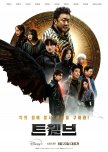
Twelve, was it really that bad?
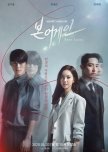
Twelve is a tribute to a vintage, nostalgic style reminiscent of traditional series, fighting games, and especially Power Rangers, which originated from tokusatsu. The first season was meant to lay the groundwork for three more, which gives a lot of meaning to its structure. The ending twist was amazing!The angels were meant to look like ordinary humans while still remaining unique. Their activites, the loss of the other angels, the tired “father” figure—Taesan, who has lost faith in humanity—the contrast between the Crow Ogwi (my favorite) and the Tiger Taesan, as well as the presence of the main villain, the priest.
Regarding the twelve zodiac signs, the characters are well thought-out (the symbolic of the healer Snake, the quiet geeky Rat, the solitary Dragon who is key to the story, the slightly goofy Monkey, the loyalty and sense of duty of the Dog and the Horse, the grumpy, epicurean and protective Pig) and the human chosen for the angels highlights the more vicious aspects of humanity. From their first look, I found them perfect. I'll add a comment about their names in the comments too.
The acting, the music and the visuals were all strong points. However, the reception was disastrous, so I’ve almost lost hope. And to be honest, Disney didn't help at all because of the poor release (not available in many countries).
It’s a shame, because it would only have improved, and the drama deserved recognition. Critics may say it was slow and weak despite its touching subtext (example the old shopkeeper who acts as Taesan’s emotional support) but this drama isn’t meant to be watched superficially—the style simply didn’t find its audience.
Moreover, Bon Appétit Your Majesty started airing at the same time so it didn't help either. We all know KBS isn’t known for massive budgets, yet I personally find this drama beautiful. Everyone has different points of view, but I genuinely have no flaws to point out, because of how much I appreciated the drama in its entirety.
In the end, I enjoyed the action and the story. It was a fun time and I got attached to these characters, so if you think this drama might resonate with you, then don't worry and simply watch it.
Quote from Ma Dong Seok:
“In Twelve, besides myself, the angels who appear in the form of the twelve zodiac signs each display actions that reflect their own characteristics. They all have distinct traits. Rather than carrying the burden of the action alone, I tried to harmonize everything and find balance with them, so I ask for your generous support.”
The actor also revealed the effort invested in creating this K-drama:
“Even a simple story is difficult in its own way, but building the universe of a more complex narrative is even harder. I spent months staying up late working on it, to the point that my hair was falling out in clumps. The diverse and interesting character stories, along with the action, are the drama’s strengths.”
A small detail: The drama even had merchandise! You can find the drama's account on Twitter. (https://x.com/TWELVE_drama)
Adding some behind the scenes pics: https://ibb.co/album/Lnw607 (added them on MDL too)
Was this review helpful to you?
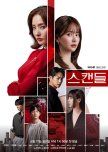
A bold take on a classic!
"That woman must die. This isn't revenge. This is destiny."Faithful to the original story (even references it visually with the apple at some points of the story) with its own modern makjang twist inside the setting of the entertainment industry and drama writing within the drama, Seol Ah being a screenwriter. Of course it is better, because the characters are far more complex. Clever storytelling (the beginning's narration really pulled me in), intertwined fates, emotional and crazy entertaining characters, insane twists and turns, great comic relief and a beautiful ending.
Seol Ah (literally means Snow White, born on a snowy day with a dramatic reinterpretation of her birth which is said to be the original in the drama's universe) was the perfect vengeful Snow White (soft on the outside, burning inside), Jeong In the perfect evil queen, and Jin Ho the perfect corrupted prince (instead of Snow White falling asleep, something happens to him instead, and he kinda becomes a villain). Ju Yeon was an amazing character too as the semi-villain. (And great side characters overall.)
Tae Chang was disgusting, but he's part of the entertainment. It's interesting the role he plays in the villain's story, and he brings out a rather sad topic. In a way, Jin Ho was at the center of this revenge as he was treated like a puppet and went through a lot.
At the end, everyone got their own version of karma - not Seol Ah of course, because she remains a saint. The characters' endings weren't random, they were fitting. It's a makjang, so without the absurdity there would be no drama, and the outrageous storylines are what makes it fun.
I rate the acting a 10 because even if you could judge it a bit at first (and the villain's actress seemed to have a problem with her lips), I figured it was that kind of theatrical melodrama and I grew to enjoy it more and more as it got better. My opinion at the end was that everyone was actually really good, but not everyone will enjoy it, for sure. The music, definitely a 10. And it's not here, but I must mention the sets, because I really liked the colorful aesthetic. This drama felt fresh and fitting for a younger audience considering the cast too.
Other than that, I was surprised to see how high-budget the beginning looked (many artistic shots! even when Seol Ah enters her low-budget house lol), because my first daily didn't have this, and it's been proven now that they really started to up their game. And yes, I seriously rate the story a 10, because at worst it was dragged at places but you could easily forget it as long as you're hooked, so it's all about personal preference, and it shows as people who are into revenge dramas didn't necessarily like this one because the drama is full of romance (plus, it's not revenge in the conventional sense, since it's the villain's story, but I found it really symbolic overall).
I don't agree with Seol Ah being called "weak", but I guess we have different perspectives. Personally, she was my favorite. Anyway, I'd rather praise the screenwriter because writing over 100 episodes (30 minutes each, still very long) is obviously insane and I really loved her story. For those who need it, I'll add a comment to help you watching it in a good quality if you don't have Kocowa.
There are many daily dramas that others might prefer, but I don't think I will ever enjoy a daily drama as much as this one. I disliked Man in a Veil (every KBS2 daily is a revenge drama) which others rated well and felt very disappointed, while this drama was dragged down but I've recommended it to my friends and they loved it.
Also, just a story time - I went on the tiktok live of the main actor Choi Woong and commented "Seo Jin Ho!" to which he replied "You know me, SunOh?" and we had multiple interactions afterwards 😭 He's awesome!
P.S. They also did titles like Miss Monte Cristo, Cinderella Game and Queen's House. (The Korean title of SWR is Scandal.)
Opening (sadly never included for us) : https://www.youtube.com/watch?v=DND2T36Z7F4
Was this review helpful to you?
This review may contain spoilers
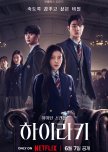
Romantic thriller about privileged teenagers — an intense work beyond appearances.
Review with images and spoiler marks: https://www.reddit.com/user/_sunoh/comments/1ljwqtb/hierarchy_review_an_intense_work_beyond/This drama fascinated me, unlike all the criticism. Rather than being impressed by the drama’s budget, what truly struck me in the end was the talent and golden heart of the screenwriter, along with the skill of the director and actors.
---
Hierarchy is a drama that, behind an apparent classic structure — elite school, bullying, revenge — stands out precisely through its ability to go further, delivering a human, emotional, and above all, resolved story. And that is its strength.
The story doesn’t need a sequel because it is complete. Kang Ha gets the truth he seeks, and justice is served. No blind revenge, no spectacular payback, but a quest for meaning, understanding, and repair. The drama doesn't dwell on the brutality of bullying as often seen elsewhere, it chooses a more subtle, mature, realistic tone. And that makes all the difference.
Kang Ha, as a central figure, disrupts the established order through his academic excellence, courage and emotional intelligence. The way he prevents the sharing of the video, or his heartbreaking line to Ri An — “Learn to live with your guilt because I will never accept your apology” — gives the whole story its meaning: a life lesson, not a revenge tale.
Every line of dialogue matters, every word carries weight, and it’s in these exchanges that Hierarchy finds its full scope. The final episode is especially striking: intense, accomplished, and deeply moving.
Jae I herself embodies the ambivalence that makes the characters so human. Both victim and witness, stoic yet wounded, she perfectly illustrates the emotional complexity the drama aims to convey. Her performance, subtle and restrained, makes her a memorable character, just like Kang Ha, whose portrayal literally carries the drama. Moreover, all the main characters—and many others—add depth and nuance to the story.
Far from being a simple “aesthetic” drama, Hierarchy knows exactly where it’s going. It doesn’t seek consensus perfection — it seeks resonance. And it succeeds, because every episode is dense, every emotion measured, every transformation believable. Even Ri An benefits from a complex and realistic character arc. And that’s precisely what makes this work memorable: nothing is black or white, and above all, everything is said.
The settings themselves play an equally interesting role. They depict a school of unreal beauty, which makes the contrast with the darkness of the drama all the more striking. It evokes certain dystopian films: a seemingly perfect world where the worst seeps into every crack. This visual dissonance is no accident — it reinforces the drama’s atmosphere and underlines its tensions. And clearly, I’ve rarely seen such beautiful color grading.
It's easy to criticize the drama for a lack of originality, but that's a misreading. Hierarchy doesn’t overplay elitism or corruption — it deconstructs them with finesse. And above all, it highlights a powerful message: the importance of change, awareness, and education — even in the most closed environments.
All in all, Hierarchy is a short but impactful drama. Not because of its spectacular aspect, but because of its sensitivity, accuracy, and its ability to evoke emotion without relying on gimmicks. The drama doesn't aim to shock — it aims to heal, to bring growth, and it does it well.
The post-credits scene (there is another at the end of Episode 5, though nothing important) teases a Season 2 despite the story being over, but I would gladly accept it in all honesty. At least for now, the cast got reunited in Crushology 101. (Lee Chae Min, Roh Jeong Eui and Kim Min Chul)
Extras -
FMVs: https://www.youtube.com/playlist?list=PLVlEiYP-9el422JsLuJ8Gy_rmUqEzKdN0
Name symbolism in the comments
Was this review helpful to you?
This review may contain spoilers
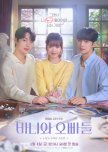
Yeol and Bani are my comfort.
It’s a beautiful and fun love story. I don’t have any issue with love triangles (plus they’re part of the history of Korean dramas and the reason they aren’t just short stories), so I loved it.Neither was Yeol or Bunny easy to handle, but they were lovely and Yeol's final growth was the best. Yeol carried as the male lead; because he was a rather bold and complicated character, not a "perfect" and soft, almost decorative male lead everyone can easily like such as Ji Won.
It's a cute college romcom, but it’s also a genuinely strong story, something the drama keeps proving right up until the final episode. It’s beautifully directed too, with a fresh soundtrack (that French song at the start—awesome, haha) and really creative visual choices: shifting from simple shots to dynamic collages, full cinematic frames, warmer color palettes, and even black-and-white flashbacks in reduced framing, all used deliberately to serve each scene.
The original webtoon (Bunny and her Oppas, also the drama's Korean title) is a reverse harem - however, there is no endgame and of course I prefer the drama. Here you have a love story with a clear ML, but each of them had a purpose and intervened at some point.
Bani's self-esteem issues, Yeol's vulnerability and trauma from his family and heightened abandonment issues from his ex (contrast to Bani's ex and her other experience), the physical distance between him and Bani compared to Won who worked in the same department as Bani and started his relationship with her more naturally, these are the kind of things that draw me in.
By the end of episode 4, I knew it but I can't reveal it here. This whole episode ending was one of the most beautiful things I'd seen. I knew from the first episode that this story would stay with me.
The cast was a great ensemble where everyone felt necessary to the plot - Bani's parents (so rare to see a loving couple like this and get to see their own story), Yeol's friends and especially his best friend Dong Ha (reunion with his brother from Hierarchy), Bani's friends with the funny names, Ji Won and Yeol's growing funny friendship, Won's sister, Yeol's mother and his ex, the male leads, Bani's ex. Honestly, I was a little scared when I saw which webtoon they were adapting, as I thought it was a waste of potential for their romance to make some reverse harem romcom, and I'm not into that. Turns out, this is only a 12-episode drama, their romance more than satisfied me and I loved how the concept was handled.
It wasn't cliché just for the sake of it; it felt nostalgic and it made me appreciate old-school tropes again. (Fantasy scenes too, like in True Beauty.)
The ending montage of them walking past all the leads. Perfect.
One last thing: There were actual parallels to Hierarchy, and the inspiration from Nevertheless was pretty clear (art setting, Bani and Yeol; take the beginning of Episode 4 for example, the opening, and more that's obvious). I don't care that it's a "flop", because what matters is they knew this drama would find its quiet audience. It's obvious that such dramas are necessary, but it's never of help when the international release is so weak (I'm in France and our Viki doesn't have it), since it's a Viu original.
Extras -
One of my favorite shots: https://i.ibb.co/B2kNGbPj/image.png
Favorite edit: https://www.tiktok.com/@gapthedits/video/7500693967957183750
Was this review helpful to you?
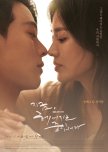
A romantic story about life beautifully told in a slow-breathed and melodic narrative.
Now, We Are Breaking Up is a melodrama with a makjang intrigue, both mature and modern, which creates an interesting contrast to the more traditional storyline. The focus on the women is really good, and the friendships along with the work scenes add dynamism to the drama.While the drama may not be conventionally entertaining, it captivates in an impressive way. Why? Because it's poetic and relatable, because of its mature and philosophical dialogue, because of its title meaning so much more, because of its cast/OST/cinematography, because of its setting, the opening, and the leads being the first to speak French so well in dramas.
It's not a drama focused on cheesy lines, butterflies, or surface-level moments. The chemistry here reflects how professional adults with such personalities genuinely connect with each other.
Even though it's slow-paced, if you want to watch something adult, melancholic and classy, you can have a great time with this drama. And some of the tracks were so good that I still listen to them, like Tangle Destiny, Tempest and 10 Years Ago.
To end on a good note, I will share my opinion on the ending in the comments. What I can say is that even though it's a melodrama, it leaves you with a warm feeling.
Favorite scene: https://www.reddit.com/user/_sunoh/comments/1ph4gcy/now_we_are_breaking_up_episode_12/
Was this review helpful to you?
This review may contain spoilers
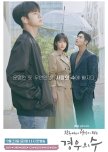
More Than Friends, a melancholic and memorable rom-com.
Lee Soo is one of the best male leads ever written, overall great and unique drama. Fairy tale metaphors, landscapes, discovery of Seoul through teamwork and different jobs (photography and calligraphy), stages of life and love (school, adults), beautiful quotes, timing, coincidences and missed opportunities, family relationships, FL's own issues (in the end it was more about her, but Soo stayed patient and worked on himself, but that never means he has to change his whole personality and I hate when people think that way - he is not bad, and they are also just ignoring the lonely cocoon he's created for himself - what he lacked was self love and the vision he had of relationships was from his divorced parents), complex SFL, great contrast with the SML (simple, kind CEO character, his job had to do with literature), his own backstory and his relationship with FL being sort of a contract, creating new opportunities despite being too late, both halves of the drama divided by a turn of tables, fresh take on tropes, 3rd couple and overall "group of friends" story. The best part was the ML's story because of how real it is. I got insanely attached to him, the way he cared about Woo Yeon (her name literally means destiny) for her dreams and I loved how The Little Mermaid was referenced through him. Ong Seong Wu is also my favorite actor since then, I love the OST titles here and he did a song for his character that's so sentimental, the OSTs were always perfectly placed in the drama."I don't take photos of people and myself", this was the beginning of his story. He actually gave me inspiration to take photos on my trip at the time I started watching it, haha. Overall, this drama is a slow-burn character study so it's important to be patient.
The moment I fell in love with this drama was the end of Ep 6, where my disappointment turned into fascination and crying my heart out because of Lee Soo. Afterwards, he really became the star of the drama. What I thought was a ridiculous cliché was just so beautifully done and thought-out. I was literally still on my trip, and I barely slept that night. I also remember I watched his short movie "Seong Wu is Alright" and loved it.
P.S. Ong Seong Wu actually likes photography, so of course he took the role.
Quotes:
"But life is a series of exchanges. No one can control them. The only thing that should have been different is not what happened. It's this feeling that I became aware of far too late."
"A missed opportunity turns into regret. If there are no more opportunities to miss, I will make sure to create them myself."
"In a world of misunderstandings, it's dangerous to make assumptions about others. So you should ask the question yourself. You should hear the answer directly."
"Love must touch someone's inner confidence. Then, love will not be dragged away by the other person, but will draw the other person towards you." - from a book's quote at the end
Lee Soo's father to him: "(When couples break up) A man becomes friends when feelings remain, but a woman becomes friends when they have no feelings left."
When Lee Soo asked his divorced mother to consider getting back together with his dad: "Son, do you know what is the most important thing in a long-term relationship? The memories. Your dad and I had good memories, but we have more painful ones. I have no confidence in overcoming those bad memories."
Was this review helpful to you?
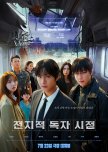
Praying for an actual Netflix release soon!
I loved Dokja’s personality in the movie, so it annoyed me to see people saying the original version is “cooler.” The characters and their stories might not be the same, and sure, they don’t use firearms in the original—but so what? The movie was incredible and diverse as it was (and honestly, I’ll take a sniper over yet another sword any day). The overall storyline stayed the same according to a friend (yes fans who loved it exist, they are just not the noisy crowd), and the CGI is insane, which they claimed to be bad when I've never seen something that good. Many of them either didn't watch it or in a bad quality, because there is literally no way you can say that. I downloaded it in 1080p so it was perfect.On top of that, the entire cast was amazing. Their performances were genuinely strong, yet the criticism started the moment the actors were announced. At that point, it feels less like criticism and more like bias.
People also forget that the novel is huge. You can’t adapt 2,000 pages to the screen just like that—there are limits. Honestly, it’s better if the adaptation is different because it offers a new perspective, and this is only the first movie out of five. It would be such an amazing journey if the live-action were to continue as planned.
The video-game-like elements and style (even first-person angles), the psychology, the camaraderie, the concept of rewriting the ending you didn't like (and why), the whole “this character wasn’t important and I changed that” mindset—at what point was any of that bad?
And the final fight? Pure adrenaline.
I've rarely had so much fun and it had strong emotional parts too. This was a dream come true for me (especially as an SAO fan, but it also reminded me of As the Gods Will). Loved how it was cosmology mixed with Korean mythology, haha.
P.S. My favorite characters were Dokja, Sangah (she was so cute and I love healers/supports), Jihye (always been a fan of snipers) and Bihyung the Streamer Dokkaebi.
Was this review helpful to you?
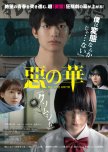
"and if you gaze long into the abyss, the abyss also gazes into you."
It’s definitely not a film for everyone, but it expressed something I deeply relate to and that was cathartic for me. Anyone who dismisses it as merely weird or perverted is missing how profound it truly is. It touches on everything — from the struggles of adolescence and mental health to a subtle critique of Japanese society with the lack of mental health support, stigma, detached overworking parents, etc. It’s raw, powerful, and honest. The opening line even states it’s meant for those who have suffered through puberty, which sets the tone perfectly. Of course, Baudelaire's Les Fleurs du Mal is part of the film.The symbolism is brilliant — I especially loved the “other side” theme. It’s probably this impactful because it condenses a massive, masterful manga into just two hours, making the experience intense and overwhelming in the best way. Honestly, this movie found me rather than the other way around.
My personal highlight was Takao's actor — his performance resonated with me like no one else’s could. And the cinematography? Absolutely stunning — every frame was thoughtful, beautiful, and full of meaning.
Was this review helpful to you?
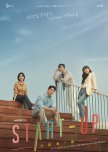
This review may contain spoilers
Very emotional and sometimes, very painful too.
If you want to watch a great romance drama, I highly recommend Start-Up. The love triangle is very original, the story is amazing because it breaks stereotypes on top of the symbolism, and most importantly you see how they rise to success together. The episodes might be long, but it's super addictive. I love the female lead and the male lead too because he's the nerdy/socially awkward type. And well all the characters honestly. Truly an amazing love story but also about life, relationships and dreams. (And the setting is actually so entertaining and interesting.)Lastly, two things:
- When she said, “I like you because of your hands,” it symbolized everything he gave her — kindness, reassurance, comfort, warmth. Through his gestures and the way he was always there for her, his hands became a metaphor for the emotional support he consistently offered. Of course, Dal-mi thought he was the Do-san from the letters, so when he asked what she liked about him other than being him that's what she answered. So at the end, she says "You're the reason."
- The “first love” argument doesn’t really hold up, because the entire letter situation was orchestrated by her grandmother and Ji-pyeong to comfort her.
Was this review helpful to you?
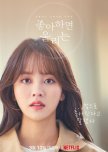
Love Alarm, a metaphor beyond a concept.
It’s quite well known that Love Alarm is disliked by many people because of the final choice in the love triangle. But I saw something much more human in it (and yes, I happened to be on the “winning side,” but honestly by season 2 I had a huge soft spot for the characters anyway).Of course, the girl receives backlash for her personality and her choices, but people too often ignore what she went through and what she endured. Her character is crucial to the drama — the symbolism of the story as a parallel to our own reality, its development, the psychology, the relationships between the characters, the quotes… and how could I not mention the cinematography? The whole thing feels like a living painting (in addition to the way the story unfolds through the seasons, starting in autumn), then completely surreal scenes, even metaphorical or animated drawings.
To be honest, I loved this drama so much that I even made an edit of it. I also posted this music on YouTube: https://youtu.be/HiyN85Nly7A?is=PHxrHng7yxqgRLTy (and another one from season 1).
All of that to say: Love Alarm isn’t a bad drama at all. It’s a masterpiece of the sublime, and I wholeheartedly recommend it. Out of all the romances I’ve watched, it’s my favorite — and it will remain so.
Favorite shot: https://kisskh.at/photos/Lw0qJL_3
P.S. Please don't mistake my username as being team Song Kang lol.
Was this review helpful to you?
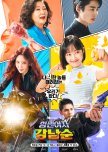
Great spin-off!
Best cartoon drama - loved it, the couple, particularly Ong Seong Wu (love his jackets!), and just about everything such as the scenes in Mongolia, secretive/rich environment (along with Penthouse-like OSTs) and play on capitalism, female empowerment with the mother, the grandma (who had their own backstories) and Nam Soon of course, great comedy like with the lazy brother (he was so funny kind of like the sloth in Zootopia), making fun of misogyny without being offensive like the Barbie Movie (we know some losers complained about it), little moments like Nam Soon looking at Hee Sik dancing from afar thanks to her super vision (iconic scene) or the rain falling above him with the rainbow and when he disguised himself as a woman, Nam Soon keping a picture of Eunwoo in her journal in Mongolia saying she wants to date a good-hearted Korean guy and then fate happens in a really fun way, open-minded take on old couples, contemporary issues, vulnerable people, family relationships (some more complicated than others), adoptive parents/finding your biological family back, teamwork, side characters (the homeless couple, Mr. Bread and his OST, the semi-villain Hwa Ja who impersonated the real daughter, the detective Yeong Tak), etc. I liked how it was a big fight revolving around drugs and Russian mafia, and Nam Soon had bigger superpowers (and the "link" they had in their family). The production quality was high, the ending was great (satisfying conclusion and then surprise), and Season 2 is apparently coming out! (https://kisskh.at/798770-strong-woman-jang-chung-dong)I didn't think it was poorly written, and there wasn't too much content either. It was all tied together and there was 16 episodes of 1 hour each, which is more than enough.
People hated it because "the villain was hot" (he has a terrible backstory, so yeah). I'll never forgive them for insulting the leads, saying the male lead is ugly and hating on them, the whole cast and story (even saying, "who cares about an old couple, I skip their scenes, only watching for the villain"), saying the prequel was much better and this is the worst drama that nobody with taste should enjoy, even shipping Nam Soon with that massive murderer (I always feared their interactions because she was pretending and past some point I was even disgusted when he showed her affection, I started to really hate him when he did one specific thing, I'll write it in spoilers in the comments). The villain had small appearances at first but although I thought he was really good and a fitting casting choice, it's absolutely untrue that he carried the drama. Everyone did - it's an ensemble cast. (Unlike the prequel.)
"there are too many characters/storylines so we can't get attached to them except for the villain" this makes no sense. Even the music and acting would be rated a 1 because "everything was annoying and cringe except Ryu Si Oh". About the music, it had kpop songs because it was exactly what the drama needed.
The prequel: focus on romcom/CEO romance (Hee Sik and Nam Soon had great chemistry too, it was just different), typical love triangle, popular male lead who acted all cutesy... And while the girl was childlike there too oh let's complain about Nam Soon even though you see how she grew up and her personality and also complain about Hee Sik because he's "boring"??? Well yes, the romance here was more mature if anything. I loved his acting all the time, he always improves and showed his range the best here, I was glad he got a role in a big drama like this, it was popular in Korea too (JTBC is a paid channel and it got high ratings) and I've seen the reels of him in the military with his mates holding fan items, which was lovely (he watched the drama with them). At the time a dance contest of Seong Wu actually got viral in Korea, and if you don't know about him he was part of Wanna One. Anyway just to give an example of his acting here, the fear in his eyes when he was about to lose another loved one was very impressive. Seong Wu is a goated person with a big heart and this cruel world doesn't deserve him. For his next drama where he's second lead there was even a comment saying they hoped he wasn't main lead, don't tell me they deserve an ounce of respect. They were always making fun of him saying he's the main lead but no one cares.
A last thing, the romance isn't bad simply because Hee Sik got attached to her quickly. He was just a kindhearted policeman and I loved how they got entangled. Their relationship was so cute, how she found her dream thanks to him. And just so you know, the prequel is also one of my favorite dramas and I loved the contrast between them.
By the way, you can watch it without having seen the prequel but Bong Soon and Min Hyuk do have a cameo, Nam Soon is Bong Soon's distant cousin.
P.S. There was a Parasite and Nevertheless reference too, that was awesome.
Was this review helpful to you?
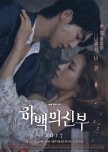
If something gets bathed in the moonlight, it becomes a myth. I guess our story will become a myth.
~ Why do you think you're the water god?~ What sort of question is that? Then you, why do you think you are human?
The Bride of Habaek has a lot of meaningful subtext that many viewers seem to overlook. Beneath the surface, it’s actually a beautiful fantasy — a bit unconventional, quietly layered, and laced with gentle humor that gives it its own charm. Not everything has to be about high-budget showcases of flashy superpowers.
The icing on the cake: Saekyeong has a fear of water and Joohyuk is afraid of heights, so they really had to push themselves and supported each other.
The Bride of Habaek starts with a little girl talking to an old man, introducing its universe as a balance between both realms, the Gods serving to maintain the nature, a symbolic scene of So Ah's story, an unfinished painting of Habaek. The Gods simply appeared many years ago, with no such thing as growing up. Ironically, they aren't much different from us. With their own complicated stories, sometimes immature, sometimes selfish, sometimes clueless. The story is the journey of a psychiatrist who sees Habaek as another of her patients, and they grow to be more human together. Why Habaek lost his powers? Why did he get them back only to save her? Remember his conversation with the old man when he asked why he had to go the human world to deserve his future title.
A fun detail: Habaek is actually part of Korean mythology, and there is a sequence where So Ah tells him what she read on the Internet, which was false.
P.S. I haven't read the manhwa, and I'm not interested in the historical genre. But if you like sageuks and a more serious, darker story then read the manhwa. The drama adaptation was advertised as a modern spin-off named "The Bride of Habaek 2017" where their relationship is one of a servant and her God. If you liked The Bride of Habaek, I highly recommend The Heavenly Idol, which is about a depressed fan who used to work in the industry but retired due to a tragic event, and her favorite idol whom she first met by chance and brought light to her world, but who she thinks turned crazy because of the pressure.
About the ending: (in the comments)
Was this review helpful to you?
An ode to Wuthering Heights.
I thought it was the perfect moment to shine a light on this highly underrated drama now that the new adaptation of Wuthering Heights is in theaters. And yes, even though this drama isn’t an adaptation, it’s truly a beautiful tribute to Wuthering Heights! The book is central to the story—it’s directly referenced, and the main character is even compared to Heathcliff.It’s a very complex, dark, and sometimes hard-to-watch drama, but definitely one of the most impressive ones I’ve seen. In the novel there’s a kind of supernatural atmosphere, and here the plot is literally supernatural. The continuity between the two lives is really well thought out, and every character—both main and secondary—fits into the story like pieces on a psychological chessboard, showing different facets of humanity.
So if you love symbolic stories, intricate plots, and unforgettable romance (and if you enjoy suffering like I do), go for it!
Was this review helpful to you?


