
 Celebrity


 1
1 1
1 1
1


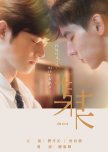
Finding that one person who truly understands us is enough to transform the entire world
There are series that exist simply to entertain for a few hours and then disappear from memory just as quickly as they arrived. And there are those that stay with you. The On1y One clearly belongs to the second category. The Taiwanese production, based on the novel Mou Mou, begins with a seemingly familiar premise in which two teenagers are forced to live together when their parents start a new life as a couple. However, it quickly reveals that its ambitions go far beyond a simple coming-of-age romance. What unfolds throughout the episodes is a delicate portrait of youth, first love, and the quiet loneliness that often accompanies growing up.
At the center of the story are Sheng Wang and Jiang Tian, two young men who seem like complete opposites at first glance. Sheng Wang arrives as the new student: charismatic, sociable, and seemingly carefree. Jiang Tian, on the other hand, is the model student, reserved and carrying a melancholy he rarely allows anyone to see. The series finds its strength precisely in this contrast. Like magnetic poles, the two begin on a collision course, but soon discover they share something essential: both carry wounds they have never truly learned to name.
Their forced coexistence under the same roof could easily have fallen into melodramatic clichés. Instead, The On1y One chooses a quieter and more human path. Rather than emotional outbursts or grand declarations, the story is built through small gestures: lingering glances, interrupted conversations, and silences that say more than words ever could. It is within this subtle territory that the series finds its identity.
Much of the show’s charm comes from its deliberately slow pacing. The romance unfolds as a true slow burn, the kind that develops millimeter by millimeter. For viewers accustomed to faster stories, this choice may seem risky. Yet it is precisely this patience that turns every shared moment between the protagonists into something almost tangible. A casual brush of hands, a protective gesture, or a simple exchange of glances begins to carry an unexpected intensity.
The relationship between Sheng Wang and Jiang Tian grows into something neither of them fully understands. The feeling is never openly declared but gradually seeps into everyday life: in silent worries, in the small decisions made for the sake of the other, and in the way each begins to see the world through the other’s presence. Love here is not announced; it is discovered.
This emotional construction is supported by remarkably sensitive performances. Liu Dong Qin and Benjamin Tsang display a rare kind of chemistry, built far more on microexpressions than on dramatic gestures. Jiang Tian, in particular, emerges as a character of striking depth: a young man who has learned to hide his emotions as if they were dangerous secrets. When his defenses begin to crack, even for a moment, the emotional impact is immediate.
Sheng Wang, meanwhile, works as the perfect counterpart. More open and spontaneous, he brings lightness to the story while gradually revealing his own vulnerabilities as the plot unfolds. Little by little, we realize that his apparent carefreeness hides a deep longing: the desire to find someone who truly understands him. When that connection finally appears, the narrative takes on an almost poetic dimension.
Another strength of the series lies in its atmosphere. The school is not merely a setting but a vital part of the experience. Exams, academic competitions, school festivals, and rivalries between classmates create a convincing portrait of adolescence. At the same time, the script weaves small literary reflections and metaphors throughout the episodes, turning simple situations into moments filled with meaning.
Visually, The On1y One also stands out. The cinematography embraces a naturalistic style, with delicate framing that captures the characters’ intimacy without exaggeration. The soundtrack follows the same sensibility, appearing at the right moments to amplify emotions that often remain unspoken. The result is a narrative that feels as if it breathes alongside its characters.
Perhaps the most interesting aspect of the series is its refusal to reduce everything to a conventional romance. Although the bond between Sheng Wang and Jiang Tian is the heart of the story, The On1y One ultimately speaks about belonging. About finding someone who understands your words when the rest of the world seems unwilling to listen. About realizing that, among the millions of encounters we experience throughout life, a few rare ones have the power to change everything.
The ending, deliberately open, may leave the feeling that there are still chapters to come and, in a way, there truly are. The series ends more like a pause than a full stop, like a sentence interrupted by an ellipsis that promises to continue someday. Even so, what remains is the impression of having witnessed something rare: a story that understands that love, especially first love, is not born in dramatic explosions but in the almost invisible details of everyday life.
In the end, The On1y One is one of those works that warms the heart without relying on excess. A gentle, melancholic, and deeply human story about two young people who, in the midst of life’s uncertainties, discover something precious: sometimes, finding that one person who truly understands us is enough to transform the entire world.
At the center of the story are Sheng Wang and Jiang Tian, two young men who seem like complete opposites at first glance. Sheng Wang arrives as the new student: charismatic, sociable, and seemingly carefree. Jiang Tian, on the other hand, is the model student, reserved and carrying a melancholy he rarely allows anyone to see. The series finds its strength precisely in this contrast. Like magnetic poles, the two begin on a collision course, but soon discover they share something essential: both carry wounds they have never truly learned to name.
Their forced coexistence under the same roof could easily have fallen into melodramatic clichés. Instead, The On1y One chooses a quieter and more human path. Rather than emotional outbursts or grand declarations, the story is built through small gestures: lingering glances, interrupted conversations, and silences that say more than words ever could. It is within this subtle territory that the series finds its identity.
Much of the show’s charm comes from its deliberately slow pacing. The romance unfolds as a true slow burn, the kind that develops millimeter by millimeter. For viewers accustomed to faster stories, this choice may seem risky. Yet it is precisely this patience that turns every shared moment between the protagonists into something almost tangible. A casual brush of hands, a protective gesture, or a simple exchange of glances begins to carry an unexpected intensity.
The relationship between Sheng Wang and Jiang Tian grows into something neither of them fully understands. The feeling is never openly declared but gradually seeps into everyday life: in silent worries, in the small decisions made for the sake of the other, and in the way each begins to see the world through the other’s presence. Love here is not announced; it is discovered.
This emotional construction is supported by remarkably sensitive performances. Liu Dong Qin and Benjamin Tsang display a rare kind of chemistry, built far more on microexpressions than on dramatic gestures. Jiang Tian, in particular, emerges as a character of striking depth: a young man who has learned to hide his emotions as if they were dangerous secrets. When his defenses begin to crack, even for a moment, the emotional impact is immediate.
Sheng Wang, meanwhile, works as the perfect counterpart. More open and spontaneous, he brings lightness to the story while gradually revealing his own vulnerabilities as the plot unfolds. Little by little, we realize that his apparent carefreeness hides a deep longing: the desire to find someone who truly understands him. When that connection finally appears, the narrative takes on an almost poetic dimension.
Another strength of the series lies in its atmosphere. The school is not merely a setting but a vital part of the experience. Exams, academic competitions, school festivals, and rivalries between classmates create a convincing portrait of adolescence. At the same time, the script weaves small literary reflections and metaphors throughout the episodes, turning simple situations into moments filled with meaning.
Visually, The On1y One also stands out. The cinematography embraces a naturalistic style, with delicate framing that captures the characters’ intimacy without exaggeration. The soundtrack follows the same sensibility, appearing at the right moments to amplify emotions that often remain unspoken. The result is a narrative that feels as if it breathes alongside its characters.
Perhaps the most interesting aspect of the series is its refusal to reduce everything to a conventional romance. Although the bond between Sheng Wang and Jiang Tian is the heart of the story, The On1y One ultimately speaks about belonging. About finding someone who understands your words when the rest of the world seems unwilling to listen. About realizing that, among the millions of encounters we experience throughout life, a few rare ones have the power to change everything.
The ending, deliberately open, may leave the feeling that there are still chapters to come and, in a way, there truly are. The series ends more like a pause than a full stop, like a sentence interrupted by an ellipsis that promises to continue someday. Even so, what remains is the impression of having witnessed something rare: a story that understands that love, especially first love, is not born in dramatic explosions but in the almost invisible details of everyday life.
In the end, The On1y One is one of those works that warms the heart without relying on excess. A gentle, melancholic, and deeply human story about two young people who, in the midst of life’s uncertainties, discover something precious: sometimes, finding that one person who truly understands us is enough to transform the entire world.
Was this review helpful to you?


