
 Celebrity


 1
1 1
1 1
1


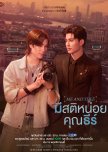
A romcom that knows its limitations as well as its strengths
Exaggerated and loudly romantic, Me and Thee is a series that is fully aware of its own theatrical nature. At a time when Thai BL often swings between realism and heavy drama, this production chooses a different path by embracing laughter and emotional fantasy. The result is a romantic comedy that is unafraid of being sentimental, finding its identity in its own high-energy approach.
The premise follows a classic dynamic where a wealthy heir with the flair of a soap opera lead falls for a down-to-earth photographer. Khun Thee lives as if he is constantly in a grand declaration of love, while Peach approaches life with logic and caution. When these two universes collide, the story gains its own shape, supported less by narrative originality and more by the specific, heightened way the story chooses to tell itself.
The series relies heavily on Pond Naravit, who delivers a confident performance by finding the balance between the ridiculous and the endearing. Thee is impulsive and often immature, yet he is written with a sincerity that makes his over-the-top personality work. Peach serves as the essential axis that keeps the narrative grounded, with Phuwin building a restrained and observant character. While the script doesn't always give Peach the same depth it offers Thee, their chemistry remains the driving force of the show.
From a narrative standpoint, the series moves between moments of sharp focus and mild dispersion. While the secondary characters are charismatic, not all are given enough room to fully develop, leaving some subplots feeling more like sketches than complete stories. The "mafia" element also works mostly as visual flavor rather than a true source of conflict, as the real obstacles are emotional rather than external. This keeps the tone light, though it does make some of the world-building feel a bit ornamental.
Technically, the show is polished, with cinematography that stands above the usual standard. However, the frequent reliance on exaggerated sound effects to guide the humor can occasionally feel unnecessary, as the performances are often strong enough to carry the scenes on their own. The final chapters also feel somewhat rushed, trying to resolve several threads in a limited amount of time.
Ultimately, Me and Thee does not aim to be deep or revolutionary; it wants to be a comforting escape. It is an uneven but sincere romantic comedy that knows its own limitations. While it may be excessive at times, it succeeds in being an easy, lighthearted watch that prioritizes affection and laughter over complex drama.
The premise follows a classic dynamic where a wealthy heir with the flair of a soap opera lead falls for a down-to-earth photographer. Khun Thee lives as if he is constantly in a grand declaration of love, while Peach approaches life with logic and caution. When these two universes collide, the story gains its own shape, supported less by narrative originality and more by the specific, heightened way the story chooses to tell itself.
The series relies heavily on Pond Naravit, who delivers a confident performance by finding the balance between the ridiculous and the endearing. Thee is impulsive and often immature, yet he is written with a sincerity that makes his over-the-top personality work. Peach serves as the essential axis that keeps the narrative grounded, with Phuwin building a restrained and observant character. While the script doesn't always give Peach the same depth it offers Thee, their chemistry remains the driving force of the show.
From a narrative standpoint, the series moves between moments of sharp focus and mild dispersion. While the secondary characters are charismatic, not all are given enough room to fully develop, leaving some subplots feeling more like sketches than complete stories. The "mafia" element also works mostly as visual flavor rather than a true source of conflict, as the real obstacles are emotional rather than external. This keeps the tone light, though it does make some of the world-building feel a bit ornamental.
Technically, the show is polished, with cinematography that stands above the usual standard. However, the frequent reliance on exaggerated sound effects to guide the humor can occasionally feel unnecessary, as the performances are often strong enough to carry the scenes on their own. The final chapters also feel somewhat rushed, trying to resolve several threads in a limited amount of time.
Ultimately, Me and Thee does not aim to be deep or revolutionary; it wants to be a comforting escape. It is an uneven but sincere romantic comedy that knows its own limitations. While it may be excessive at times, it succeeds in being an easy, lighthearted watch that prioritizes affection and laughter over complex drama.
Was this review helpful to you?


