


 1
1 1
1



A light sculpted in a hurry, never quite bright enough to truly shine
Sculpted Light arrives like a whisper when it promised at least a full sentence. The Chinese BL leans into classic melodrama, dysfunctional families, inheritance disputes, abuse, money, and an unlikely romance in the middle of chaos, but delivers everything in such tiny doses that each episode feels more like a trailer than a story. The overall feeling is that of a fever dream: fragmented scenes, sudden jumps, and a plot that asks the viewer not for attention, but for imagination, filling in far too many gaps. There is an idea there, even the outline of an elegant tragedy, but almost never enough time for it to breathe.Still, it would be unfair to say there is no spark at all. The cast, especially the two leads, holds a certain visual chemistry that draws the eye, and the romantic styling, paired with the sculpture concept, creates images that feel interesting, almost symbolic. Amid rough editing and confusing narrative choices, some moments become unintentionally funny, turning the series into a strange guessing game. The infamous “conflict” involving a butter knife, for instance, ends up as a shared joke rather than a dramatic climax, which says a lot about the production’s uneven tone.
In the end, Sculpted Light feels more like potential than a finished work. It is too short to be deep, too confusing to be simple, and too bold to go unnoticed. What it lacks is consistency, development, and above all, time; time for the characters, for the romance, and for the drama to be more than just hinted at. What remains is a curious, almost disposable experience, quickly watched, laughed about, and forgotten just as fast. A light sculpted in a hurry, never quite bright enough to truly shine.

There is beauty in choosing to love, again and again, even when it leaves scars
Love in the Big City is not just a series; it is a state of mind. One of those rare encounters between a work and its audience in which fiction stops being a shelter and becomes a mirror. Released in 2024, the KBL, even though this label is not enough to fully contain it, presents itself as a queer coming-of-age drama that understands, from its very first minute, that loving in a big city is not romantic by nature. It is exhausting, contradictory, sometimes cruel. And yet, deeply human.Set in Seoul, the series follows the journey of Ko Yeong, a young gay man who moves through life as if walking on exposed wires: driven by desire, fear, impulsiveness, and a loneliness that never fully goes away. He drifts through bars, clubs, other people’s beds, and conversations that make no promises about tomorrow. At first glance, he may seem like just another bohemian protagonist. But Love in the Big City quickly reveals that this constant movement is, in fact, a desperate attempt to avoid standing still with himself for too long.
The series’ greatest strength lies in its radical honesty. Here, love does not appear as salvation, nor as a final destination. It appears as experience, sometimes bright, sometimes devastating. Each relationship Ko Yeong lives through works as a distinct chapter in his emotional growth: the love that comes too early, the one that hurts in silence, the one that promises healing but also carries weight, the one that could have been, and the one that simply cannot last. There are no easy villains, nor absolute heroes. There are people, with very clear limits.
Nam Yoon-su delivers one of the most impressive performances in recent Korean audiovisual works. His Ko Yeong is contradictory without being inconsistent, selfish without ever losing his humanity. He loves poorly because he has not learned how to love himself, and the series never tries to soften this fact. On the contrary, it observes, with care and seriousness, how family trauma, social rejection, repeated losses, and living with HIV shape his view of affection, belonging, and the future. Nothing is treated as shock for its own sake; everything is absorbed as a natural part of life.
The direction, divided into blocks that follow different phases and relationships, reinforces this feeling of existential chapters. Each arc has its own rhythm and emotional tone, as if the series respects the idea that no one loves in the same way throughout life. The concise format of only eight episodes is used with precise intelligence: there is no rush, but there is also no waste. Every silence matters. Every scene stays long enough to hurt.
Visually, Love in the Big City carries a melancholic beauty. The cinematography turns Seoul into more than just a setting: the city pulses, watches, oppresses, and embraces at the same time. Neon-lit clubs contrast with silent rooms, empty streets speak to suffocating interiors. There is something almost lyrical in the way the camera follows Ko Yeong, as if it were always one step behind, respecting his intimacy while never leaving him.
Another fundamental pillar of the series is friendship. Mi Ae, his best friend and roommate, represents something many queer narratives try to show but rarely achieve: the strength of chosen family without caricature. Their relationship is built on everyday affection, small loyalties, mistakes, and constancy. When Ko Yeong’s romantic world falls apart again and again, it is within this friendship that the series finds its emotional ground.
This sense of belonging expands through his wider group of friends, who form a loose but vital network of support. They are not idealized or endlessly patient, and conflicts, misunderstandings, and emotional distance are part of their dynamic. Still, these relationships offer Ko Yeong moments of relief, laughter, and recognition, reminding him that intimacy does not exist only in romantic form. Together, they create a space where love is expressed through presence rather than permanence, and where being seen, even imperfectly, becomes a way to survive the city.
Love in the Big City also stands out for its precise social commentary. Without didactic speeches, it addresses structural homophobia, religion, feminism, abortion, prejudice against people living with HIV, and mental health as inseparable parts of the queer experience in a conservative context. Nothing is resolved easily. Some wounds remain open. And this is a gesture of respect: the series understands that not every pain needs to be explained, much less healed within the limits of a narrative.
Perhaps that is why its impact lasts for so long. It is not a work made for comfort, nor for light consumption. It is the kind that leaves the viewer slightly unsettled at the end, like someone who has just left an important conversation and still does not know what to do with everything they felt. The open ending is not a lack of answers, but coherence: life goes on, even when we wish it would pause to give us meaning.
Throughout its runtime, Love in the Big City reaffirms something simple and devastating: growing up means learning that love does not always save, but it always transforms. That loneliness is not the absence of people, but often the absence of acceptance. And that, amid loss, mistakes, and imperfect new beginnings, there is still beauty in moving forward, even without guarantees.
In the end, the series does not promise happiness. It promises truth. And perhaps that is exactly why it stands so strongly as one of the great works of contemporary queer audiovisual storytelling. Because loving, in the big city or anywhere else, is rarely easy. But as long as stories are told with this level of care, courage, and sensitivity, there will still be love, even if it hurts.

It is not irrelevant, but it never reaches the weight it seems to aim for
Love Alert leans on an old formula: the romance between an emotionally open young man and a man who turns affection into a power game. The premise itself is not the problem. Melodrama thrives on archetypes. What weighs it down is the uneven execution, shifting between moments of genuine intensity and rushed, underdeveloped narrative choices. There is a good story buried in the concept, but it rarely finds the right way to express itself.Toh is written as the embodiment of vulnerability. His devotion is absolute, almost reckless, and the script repeatedly places him in a cycle of hope and disappointment. At times, this creates empathy; at others, it feels repetitive. The series touches on emotional dependency and manipulation, yet it uses them more as immediate dramatic fuel than as themes to explore with psychological depth. Even so, there is an internal consistency to the way Toh loves. He is not inconsistent, just painfully constant.
Jimmy, on the other hand, drives the conflict and also represents the show’s biggest weakness. His personality blends charm, arrogance, and impulsiveness, but the line between complexity and caricature is often crossed. The script seems interested in portraying him as a wounded man unable to face his own feelings. However, his actions pile up so aggressively that his redemption arc loses credibility. When his emotional shift finally arrives, it lacks the groundwork needed to feel convincing.
The supporting characters offer the most stable moments in the narrative. Fah serves as a rational counterbalance to the central storm, while Teh moves between flaws and loyalty with more nuance than the main lead. In these parallel interactions, the series shows it can handle conflict with greater balance and less exaggeration. It is in these moments that the drama finds some emotional stability.
Technically, Love Alert has clear limitations. The direction favors simple, almost overly television-like framing, and the editing sometimes disrupts the flow. Scenes do not build tension; they simply follow one another. The soundtrack serves its basic purpose but rarely enhances the emotional weight of the scenes. Nothing is disastrous, yet there is no technical element that truly elevates the material either.
The acting is serviceable. There is visible effort and commitment, especially in confrontation scenes, but the script rarely allows the actors to explore more subtle layers. When intensity is required, the writing leans toward exaggeration; when introspection is needed, it offers little subtext. Even so, the cast manages to maintain a basic level of credibility, despite the script’s weaknesses.
The repeated focus on intimate scenes stands out. The physical chemistry is present, but repetition weakens its impact. Instead of deepening emotional connection, the series often uses physical closeness as a substitute for character development. The result feels excessive: there is bodily proximity, but limited emotional growth.
Overall, Love Alert is a drama that provokes more frustration than catharsis. It has an interesting premise and occasional impactful moments, yet it stumbles over predictable choices and storytelling that prioritizes immediate shock over emotional construction. It is not irrelevant, but it never reaches the weight it seems to aim for. It remains in between: intense enough to hold attention, yet too inconsistent to become truly memorable.

When love hurts and heals
There are shows that announce their intentions from the very first scene, and then there’s I Told Sunset About You, a series that doesn’t need to raise its voice to leave a mark. It moves gently, almost cautiously, as if inviting you to lean in closer. Before you even realize it, the story has slipped under your skin, setting the tone for something far more thoughtful than a typical coming-of-age romance. What unfolds is a portrait of emotion handled with a rare kind of honesty, the sort that most series aim for but almost never reach.Teh and Oh-aew’s journey starts small: two childhood friends, separated by a fight neither fully understood, thrown back together years later in a Mandarin course. What begins as a reunion quickly becomes something far more complicated. Old memories resurface, yes, but so do new, overwhelming feelings that neither boy is prepared to name. The series doesn’t rush any of this. It lets their emotions simmer, unfold, trip over themselves. It gives the story time to breathe.
And that pacing is exactly what makes the narrative feel so intimate. I Told Sunset About You understands that real life isn’t made of big speeches. Sometimes the loudest confession is a glance that lingers a second too long, or the silence between two people who suddenly don’t know how to act around each other. The show leans into those small moments, treating them with the same importance as any plot twist, maybe even more.
What truly sets the series apart is its honesty. These characters aren’t idealized. They mess up. They contradict themselves. They hurt each other and then scramble, awkwardly and imperfectly, to repair the damage. Their mistakes aren’t framed as dramatic plot devices but as the natural fallout of being young, scared, and desperately trying to understand yourself. Teh and Oh-aew are not heroes; they’re teenagers navigating feelings too big for the vocabulary they have. And that vulnerability is what makes them so relatable.
Billkin and PP Krit deserve every compliment that’s ever been thrown their way. Their performances are so lived-in you forget you’re watching actors. They carry entire conversations with a flicker of doubt in the eyes, a shaky breath, a smile that doesn’t quite reach. Their chemistry is magnetic, not flashy, not exaggerated, just true. It’s rare to see emotional precision captured with this level of sincerity on TV.
Visually, the show is stunning. Not in the glossy, overly polished sense, but in a way that feels intentional and emotional. Every frame seems to have been designed to echo whatever’s happening inside the characters: those gentle blues that hover around uncertainty, the warm gold of connection, the deep reds of discovery and desire. The cinematography turns feelings into color. And paired with a soundtrack that’s soft, aching, and unforgettable, the atmosphere becomes almost hypnotic.
But perhaps the most remarkable thing about I Told Sunset About You is how fearlessly it explores identity. The confusion, the guilt, the pressure to fit into someone else’s expectations, the series doesn’t shy away from any of it. Instead, it sits with the discomfort and lets it exist. It shows that self-discovery is messy, and sometimes painful, but also necessary. And in the end, that honesty is what makes the story resonate so deeply.
When the final episode ends, it leaves behind a familiar ache, the kind that only appears when something has genuinely moved you. I Told Sunset About You isn’t just a love story; it’s a gentle, sometimes brutal, always beautiful reminder that growing up means learning to forgive, to choose, to understand yourself, and to love without apology. It’s a series that changes you just a little, and stays with you long after the sunset fades.

An average drama that shines in its small details, yet fails to deliver a solid narrative backbone
In the world of Thai dramas, the promise of a “second love” usually carries the weight of nostalgia and the comfort of destiny. Reloved, however, walks a fine line between lyrical sensitivity and narrative fatigue. The series presents itself as a study of wounds that never fully heal, using the presence of children, little Nene and Marwin, as bridges of purity in an adult world stained by secrets and a lack of communication. It succeeds in its visual tone and in the sweetness of its young cast, but it stumbles badly when trying to sustain its central conflict through sheer misunderstanding.The production’s greatest strength lies in its aesthetic choices and the maturity of certain performances. Peter and Golf deliver protagonists whose eyes reflect the exhaustion of years apart; there is a palpable melancholy in the flashback scenes that contrasts painfully with the emotional distance of the present. The warm, cozy cinematography gives the series an almost embracing quality that nearly makes us forget the script’s shortcomings. It is in the domestic moments, between caring for the children and exchanging stolen glances, that Reloved finds its poetry, suggesting that love can be rebuilt even when its foundations have been reduced to dust.
However, the narrative structure suffers from a modern flaw: the artificial prolonging of conflict. The audience is asked to watch ten years of wasted lives caused by a misunderstanding that a five-minute conversation could have resolved. Akin, in his poorly planned “sacrifice,” often crosses the line between noble and frustratingly stubborn, testing viewers’ patience. Than, on the other hand, borders on saintly as he forgives so quickly that the dramatic weight of a decade of absence feels diminished. Communication, or rather the lack of it, stops being an organic obstacle and becomes merely a plot device to stretch the story beyond what it can sustain.
The secondary couple, who for many became the true source of energy in the series, brings a refreshing dynamic but is also at the center of one of the season’s most controversial decisions. While their chemistry is vibrant and their intimate scenes feel more grounded, the tragic fate of one of them in the fateful episode 8 struck many as a cheap blow. Killing a beloved character to force an epiphany in the main couple, reinforcing the idea that life is short, is an old narrative trick that here feels rushed and disrespectful to the development that had been carefully built.
The series also struggles with abrupt tonal shifts. We move from deep mourning to gym photo shoots and loud comic relief that seem to belong to a completely different production. Supporting characters, though they offer genuine moments of familial support, sometimes get lost in repetitive dialogue or sudden personality shifts, such as the unexpected hostility of figures who were once pillars of understanding. It is a mosaic in which some pieces shine brightly, but the overall image feels slightly misaligned.
Still, there is beauty in Reloved. The series touches on important themes such as nontraditional parenthood and the endurance of affection. The intimate scenes are handled with commendable naturalness, avoiding pure fetishization and focusing instead on emotional connection, even if the surrounding context is questionable. For those seeking refined visuals and tender moments with adorable children, the experience can be enjoyable, as long as they are willing to suspend disbelief when it comes to the protagonists’ questionable decisions.
The ending, filled with weddings and promises of eternity, attempts to seal the cracks of a story that wandered down winding roads. What remains is the feeling of a beautiful melody played on a slightly out-of-tune instrument. The potential to become a masterpiece about forgiveness was there, but it got lost amid an excess of episodes and a stubborn refusal to let the characters simply tell each other the truth before time carried everything away.
Reloved is not a disaster, but it is not the classic its visuals might suggest either. It is an average drama that shines in its small details, a child’s smile, a longing glance, a well-placed soundtrack, yet fails to deliver a solid narrative backbone. It is a series best watched with an open heart and a quiet critical mind, appreciating the journey without questioning too much the map that led us to the end.

A series that may have wanted to say more than it managed to organize
The Boy Next World enters the Thai BL universe with a tempting promise: to blend romance, fate, and the always appealing idea of parallel worlds. At first glance, the series seems eager to move away from the comfort of university settings and straightforward love stories, choosing instead a narrative where emotions cross realities, memories, and different versions of the self. The result is a drama that does not always explain everything it proposes, but that, interestingly, finds its strength more in what it makes us feel than in what it tries to rationalize.The plot revolves around Phu, a sweet and introspective young man surrounded by protective friends, and Cir, a charismatic boy shaped by a strict upbringing and a mother who confuses love with control. When Cir appears claiming to be Phu’s boyfriend from another world, the series plays its main card: what if love were inevitable, able to repeat itself across any timeline? From that point on, the story flirts with fantasy, psychological drama, and melodrama, even if it does not always balance these elements with clarity.
This is exactly where The Boy Next World both stumbles and shines. The idea of parallel universes, while intriguing, is rarely explored with the depth it deserves. There are gaps, unfinished explanations, and subplots that seem to ask for more screen time. A sense of an unfinished story follows much of the journey, especially when family conflicts and unclear rules of this “in-between world” come into play. Even so, the script succeeds in turning confusion into atmosphere. The audience shares the same emotional uncertainty as the characters, never fully sure of what is dream, projection, or reality.
Where the series truly holds its ground is in the relationship between its leads. Boss and Noeul show a familiar chemistry, now more relaxed and mature. Boss portrays Cir as someone caught between tenderness and intensity, a character who watches, protects, and loves with almost silent devotion. Noeul, as Phu, delivers a fragile character without making him childish, someone learning how to desire while dealing with guilt and the fear of taking a place that may not truly be his. Even when the writing falters, their connection carries the story and gives truth to the most intimate scenes, both emotional and physical.
Visually, The Boy Next World knows exactly what it wants to convey. The cinematography works with distinct color palettes, small symbols, and costumes that help translate emotional states. Phu’s cardigans, for example, say as much about him as his silences. The soundtrack, while not groundbreaking, works as emotional glue, reinforcing the melancholic and romantic tone of the story. There is a clear aesthetic care that elevates the series and gives it a more mature feel than many contemporary BLs.
The supporting characters move between charm and underuse. Friends steal scenes with lightness and humor, while the side couple sparks curiosity and affection but suffers from limited development. Cir’s family storyline is the most controversial aspect of the series. The controlling mother and the idea of “possession” can feel excessive and, at times, out of step with the tone the story aims to build. Still, these conflicts help reinforce the central theme: the struggle between imposed fate and personal choice.
In the end, The Boy Next World is a series that may have wanted to say more than it managed to organize. There are questionable narrative choices, missing explanations, and an ending that feels like it lacks one final emotional chapter. Yet there is also courage in taking risks, beauty in accepting what is unfinished, and sensitivity in treating love as something that endures, even when the world, or worlds, seem to fall apart.
It is not a perfect romance or a strict sci-fi story. Above all, it is a story about people who find each other again and again, in different versions of themselves, because love here seems to be the only constant. And perhaps that is enough for The Boy Next World to remain in memory as an imperfect, confusing, but surprisingly engaging experience, one that is not fully understood, only felt.

A story about trust, shedding masks, and accepting that beauty and success don’t heal old wounds
Adapted from a webtoon and set in a university film program, Blueming follows Cha Si-won and Hyeong Da-un, two young men who, at first glance, seem to fit perfectly into ideals of beauty and success, while carrying deep fractures beneath that polished image. Rather than leaning on major plot twists, Blueming favors the everyday, silences, and small moments of awkwardness, building a romance that grows less from spectacle and more from the mutual recognition of vulnerability.Si-won is a protagonist marked by insecurity. Once an overweight child, bullied in his youth and emotionally shaped by a complicated family relationship, he learned early on that being flawless was a way to survive. Da-un, by contrast, appears to have everything effortlessly: beauty, talent, an almost untouchable aura. The series, however, is careful to dismantle this impression. What gradually emerges is a young man just as lonely, raised at an emotional distance from his parents and accustomed to hiding emptiness behind a gentle smile. Blueming is less interested in who they seem to be and more in what they try to conceal, and it is there that it finds its strength.
The romance between the two avoids the genre’s most obvious formulas. There are no grand declarations, nor a chain of artificial conflicts. Affection is built through discomfort, misunderstandings, lingering glances, and the slow development of trust. For some, this restraint may feel cold or underwhelming; for others, it is precisely what lends the relationship its sense of truth. Blueming embraces the idea that intimacy is not born from excess, but from allowing oneself to be imperfect in front of another, and it sustains this choice with consistency.
Visually, the series is a small triumph. Hwang Da-seul’s direction turns Blueming into something close to an indie film, with natural lighting, delicate framing, expressive use of shadows, and a warm color palette that mirrors the characters’ emotional states. There is clear pleasure in playing with cinematic language, which feels especially fitting given that we are following film students, and visual metaphors such as the recurring notion of “the time between dog and wolf” enrich the narrative without tipping into pretension. Even with budget limitations, the result is elegant and memorable.
The performances follow the same line of subtlety. Kang Eun-bin delivers a Si-won who shifts between defensive arrogance and almost childlike vulnerability, while Jo Hyuk-joon crafts a quiet Da-un, at times perhaps too enigmatic. Here lies one of the series’ most frequent criticisms: it demands an attentive, almost active viewer. Not everything is explained, and not every motivation is made explicit. For some, this deepens realism; for others, it creates emotional gaps that make full connection more difficult, especially in Da-un’s case, whose story could have been further developed.
Another point that divides opinions is how the series approaches sexuality. Blueming chooses to treat it as a non-issue: there are no social acceptance conflicts or major external struggles. For many, this normalization feels liberating, a breath of fresh air within narratives often defined by queer suffering. For others, it comes across as overly idealized, almost erasing issues that are still very real. The choice works within the show’s intimate framework, but it leaves the sense that an additional layer might have further enriched the drama.
In the end, Blueming is less about romance and more about growing up. It is a story about learning to trust, shedding masks, and accepting that beauty and success do not heal old wounds. It is not a series made for everyone; those seeking constant intensity or explicit conflict may find it muted, even forgettable. But for viewers willing to settle into its calm, observant, almost contemplative rhythm, Blueming blooms into a sensitive portrait of youth’s quiet pains. A work that does not shout, does not rush, and perhaps for that very reason, remains.

A story shaped by rivalry and affection, brushed with the soft shadow of the supernatural
Head 2 Head slipped into the Thai BL landscape without fanfare, almost quietly, yet with a peculiar ability to linger. At first glance, it presents itself as another familiar university-set enemies-to-lovers story. As the episodes unfold, however, the series reveals a gentler, deeper ambition: to speak of love as a conscious choice, of futures weighed down by uncertainty, and of the quiet terror of losing someone before learning how to hold on. It is a story shaped by rivalry and affection, brushed with the soft shadow of the supernatural.Its premise is modest but steady. Jerome and Jinn grow up locked in competition, children of close families who, without intent, allow shared warmth to harden into rivalry. Time moves forward, yet the pattern remains. As university students in the same program, they continue circling each other through taunts, challenges, and sharp words that often mask something more tender beneath the surface. The narrative shifts when an accident forces proximity, and fractures entirely when Jerome begins to see Jinn’s future in his dreams, visions of loss, injury, and the looming presence of death. What once felt like youthful noise gradually settles into something heavier and more deliberate.
The series finds its strongest footing in the space between its two leads. Sea and Keen do not rely on grand romantic declarations; instead, they let silence, timing, and restraint carry the weight. Jerome and Jinn move around each other like celestial bodies, drawn together by forces they barely understand. Their arguments feel charged, their distance temporary, their returns inevitable. The evolution from rivalry to intimacy unfolds without rupture, allowing love to emerge not as a twist, but as a quiet realization.
When Head 2 Head darkens its tone, it often does so with surprising restraint. Jerome’s visions are not shocks meant to jolt the viewer, but slow accumulations of dread. Fear does not scream; it lingers. It settles into glances held too long, words left unsaid, and the suffocating weight of knowledge carried alone. Jerome’s silence becomes its own form of sacrifice, revealing that the true threat is not fate itself, but the loneliness of believing one must face it alone.
Some of the series’ most resonant moments arise when it allows emotion to breathe. The hospital scene following Jinn’s injury stands as one of its most quietly devastating passages. Here, love is stripped of fantasy and examined as responsibility. There is no glorification of martyrdom, only a fragile plea: that loving someone should not mean losing oneself. In moments like these, Head 2 Head steps beyond genre convention and touches something achingly human.
Music plays an essential role in shaping this emotional landscape. The soundtrack does not merely accompany the narrative; it echoes it. Each song feels like a private confession, mirroring the characters’ inner lives. “Turns Out It’s You” captures the emotional arc of the central couple with disarming honesty, while the solo tracks deepen the sense of internal conflict and longing. It is a score that listens as much as it speaks.
The supporting cast adds texture to this world, particularly through Van and Farm. Their storyline carries a rougher, more uneasy tone, exploring insecurity, emotional imbalance, and the quiet damage of self-sabotage. While the performances, especially Java’s, bring sincerity and emotional weight, the arc occasionally overstays its welcome, pulling focus from the main narrative. Even so, its presence signals a willingness to portray love not as ideal, but as fragile and, at times, deeply flawed.
On a technical level, Head 2 Head wavers. The direction excels in intimate exchanges and emotional warmth but struggles with pacing, particularly in its latter stretch. While earlier episodes take time to sit with discomfort and ambiguity, the final arc feels noticeably rushed. Conflicts that once unfolded with patience are resolved with surprising ease, as if emotional knots carefully tied over many episodes were suddenly undone in a single motion. The effect is less cathartic than disorienting, giving the impression that hard-won tensions dissolve almost by narrative convenience rather than emotional inevitability.
This haste is felt most sharply in how conversations and consequences are handled near the end. Where silence and avoidance once carried meaning, resolutions arrive too quickly, smoothing over fractures that seemed to demand deeper reckoning. The supernatural thread, though emotionally potent, also suffers here; without clearer internal rules, its final function leans toward a near-magical solution, weakening the sense of risk the series so carefully built earlier on.
Even with these shortcomings, the series leaves a lasting impression. Sea offers a layered portrayal of Jerome, balancing softness with restrained despair, while Keen gives Jinn a vulnerability that quietly breaks through his volatility. Together, they anchor the story, transforming simple exchanges into moments heavy with meaning, ensuring that even when the narrative stumbles, the emotional core remains intact.
In the end, Head 2 Head is neither flawless nor revolutionary. What it offers instead is sincerity. It understands comfort not as escape, but as recognition. Though its final steps may falter in their haste, the journey itself remains tender and thoughtful. The series closes not with perfect resolution, but with a lingering warmth, the sense of having shared something intimate and fragile, and the quiet wish that the story had trusted its own patience just a little longer.
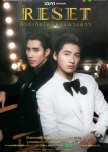
A story about second chances, rebuilding gently, and loving someone deeply enough to cross lifetimes
Some shows win us over with their story, others with their visual charm, and a few ones with a kind of chemistry that feels almost alive, something that slips through the screen and lands right in the viewer’s chest. Reset, the Thai BL led by Pond and Peterpan, belongs to that last category. The premise may sound familiar: a man is given the chance to go back in time and fix the mistakes that led him to a tragic end. However, Reset isn’t interested in complicated sci-fi; it wants to talk about love, and it does so with such clear sincerity that resisting it becomes almost impossible.The setup is simple, almost deceptively so: Armin, an actor undone by the people closest to him, is given a second chance to rebuild himself after a “reset”. On this new path, he crosses Tada’s orbit once more, a CEO who could have easily been just another cold, unreachable archetype; but he isn’t. Tada moves differently, at his own rhythm. He loves through details and bold gestures alike; he observes before speaking; he protects long before admitting it out loud. He is the kind of character who quietly restores one’s faith in romance, perhaps the series’ greatest triumph.
And if the story draws its strength from the bond between its leads, it’s the cast that gives this connection its heartbeat. Pond and Peterpan deliver one of the most natural, luminous chemistries Thai BL has offered in recent years. There is something unpretentious, almost magical, in the way they lock eyes, respond instinctively, improvise without forcing the moment. Pairing Pond, an experienced actor who rarely repeats co-stars, with Peterpan, a newcomer whose emotional openness is genuinely disarming, results in a duo that glows. It’s the kind of dynamic that makes the audience forget they’re watching fiction at all.
The series also succeeds beautifully in placing romance at its emotional center. Every confession, every small act of affection, every quiet moment between them is crafted with almost artisanal care. The more intimate scenes avoid empty explicitness, and instead, lean into emotion, guided by a direction that understands how to balance sensitivity and poetry. Reset handles these moments with such grace that the result often feels unexpectedly, dazzlingly romantic, the kind of tenderness that wells up not from sadness, but from the sheer beauty of witnessing love portrayed with such honesty.
But Reset isn’t carried by its couple alone, and the show knows it. Veynai, Tada’s secretary, could easily have faded into the background, yet he never does. Loyal, softhearted, and always precise, he brings warmth to the workplace and lightness to the drama. He becomes emotional support when needed, but also a steady presence that enriches the world around the leads. And alongside him stands Janine, Armin’s manager, who steals scenes with the same ease he protects his artist. Grounded, intuitive, and fiercely devoted, Janine adds heart to Armin’s journey, offering both guidance and genuine affection. His presence rounds out the emotional core of the series.
Of course, Reset isn’t without flaws. The first half, responsible for building the mystery around the reset and the threats surrounding Armin, falters. The pacing hurries where it should breathe and lingers where it should move on, creating a sense of imbalance that slightly blurs the emotional throughline. Some plot threads feel introduced only to be abandoned later, and the tonal shifts between suspense and romance aren’t always as smooth as they could be, making the early episodes feel less cohesive than the story ultimately deserves.
But the biggest issue is undeniably Thiwthit, the antagonist. Tada’s brother, reworked into the main villain for the adaptation, becomes the show’s weakest link, not only because the writing stretches his motivations thin, but because the performance never fully lands. Emotional moments that should feel tense or unsettling often come across as exaggerated or disconnected, pulling the narrative away from its intended weight. His scenes can be genuinely difficult to sit through, creating spikes of discomfort that clash with the emotional subtlety the rest of the series works so carefully to build.
Still, there is something almost generous in the way the script resolves its heaviest conflicts at the very beginning of the final episode, giving the entire last chapter over to what truly matters: peace. Reset understands the value of letting the audience exhale with its characters, without rushing to tie every loose thread. It’s rare to see a series treat its ending as a quiet celebration rather than frantic damage control; and that choice elevates its finale to something tender and deeply emotional.
And what a finale it is. The hospital scene, the proposal, the lucky necklace carrying whole lifetimes of meaning, and the quiet certainty that their love survived time itself, literally and metaphorically. Armin and Tada finish their journey hand in hand, exchanging words that brush the edge of poetry while never losing the everyday warmth that makes them real. Their happiness feels genuine, almost radiant, and the show embraces it without irony or hesitation. It stands as one of the most moving proposals ever portrayed in a BL drama, a closing chapter that lingers long after the final frame.
In the end, Reset succeeds because it keeps its heart exactly where it should be. It refuses to drown itself in complicated time-travel theories. It answers what needs to be answered and leaves the rest suspended in mystery, the way life often does. Its heart lies not in changing the past but in choosing how to live when given the chance to begin again. And Armin, retracing his steps, finds exactly what had been missing: a love steady enough to guide him back, honest enough to ground him, and strong enough to transform him.
The result is a BL that, even with its imperfections and despite its missteps, emerges as one of the year’s most memorable, standing just a step behind Khemjira in both impact and emotional resonance. A story about second chances, about rebuilding gently, and about loving someone deeply enough to cross lifetimes. Reset isn’t just beautiful, it’s deeply felt. The sort of series that settles softly in the heart and glows there for a while, reminding you of why romance, when done with care, still matters.

The unexpected charm of a sweet story
Only Boo arrived quietly, almost as if asking for permission before stepping in, but it quickly became one of GMMTV’s most talked-about and beloved BLs of 2024. What seemed at first like just another school romance turned into a surprisingly mature series, balancing lightness and sensitivity with themes that go far beyond the usual teenage clichés. There’s something honest in the way the story deals with love, dreams, and responsibility, and maybe that’s why it resonated so strongly with viewers.The strongest part of the show is the main couple. Moo and Kang are opposites that simply work: Moo is outgoing, sweet, and determined, while Kang is shy, reserved, and realistic. Their dynamic never feels forced. The show builds their relationship in an organic, almost everyday way that makes every gesture meaningful. Moo lights up the screen with his effortless charm, and Kang brings balance with his quiet steadiness. They complement each other in a simple but remarkably effective way.
Throughout the episodes, Only Boo manages to evoke that same warm, comforting feeling that shows like My School President delivered so well. It’s the kind of story that hugs you, makes you smile without realizing it, and turns romance into something genuinely tender. It’s not a copy, far from it, but it shares the same heart: a narrative that feels good, which is rare.
The series also shines by avoiding the typical rush into romance. Kang refusing to date Moo right away so he could prioritize school is a rare decision in this genre and shows how much care went into the characters’ growth. The breakup, which divided a lot of fans, follows that same logic. It’s painful, yes, but coherent for where both of them were in life. Moo needed to stand on his own without relying on Kang’s approval for everything, and Kang needed to realize he wasn’t responsible for every choice Moo made.
The time apart works as a turning point, even if some plot decisions stretched the drama a bit more than necessary. This is actually the biggest flaw of the final stretch. Episodes that could have deepened the conflicts end up stuck in the usual BL slow-burn tropes, only to be resolved in a rush in the finale. It’s nothing that ruins the experience, but it’s enough to leave the sense that certain elements deserved more space, especially the secondary couples, who only get to breathe near the end.
Even so, the young cast carries the show with freshness. Sea and Keen are one of GMMTV’s best recent pairings, delivering chemistry, naturalness, and surprisingly solid performances. Moo in particular stands out, vulnerable without losing his sparkle and sweet without being infantilized. Kang grows at the right pace, finding a balance between caring and respecting boundaries. Among the supporting cast, Potae and Payos are charismatic, and TaeYos works well as a quieter counterpoint, even if underused.
The OST adds to the atmosphere beautifully, soft, warm, and comforting, helping shape that cozy Sunday vibe that so many viewers mentioned. Only Boo is the kind of series that softens your week, turning small moments into scenes full of affection and creating a sweet little universe even when the plot leans into hurt and growth.
In the end, Only Boo stands as one of 2024’s nicest surprises. It isn’t a perfect series, but it’s sincere, charming, and heartfelt enough to secure a special place among the year’s releases. It’s the kind of BL you finish with a gentle smile and a sting of longing, wishing for just a few more episodes with these characters.
GMMTV nailed the casting, the chemistry, and the overall tone. And if there is one certainty after the final scene, it’s that Sea and Keen still have a lot of great work ahead of them. Until then, Only Boo remains a little refuge, a story that doesn’t try to reinvent the genre but delivers beautifully on its promise to enchant and remind us that sometimes that is exactly what we need.

Survives on the charisma of its stars but stumbles under the weight of its genre ambitions
Dare You to Death arrived with the promise of raising the bar for Boys’ Love productions by pairing one of the fandom’s most beloved duos, Joong and Dunk, with a suspense-driven police investigation. The premise is undeniably intriguing: a group of university friends burdened by dark secrets begins to be hunted by a serial killer who leaves behind “Truth or Dare” cards. What unfolds on screen, however, is a series struggling with a severe identity crisis, wavering between a grim psychological thriller and a sugary romantic comedy, never fully committing to either path.The show’s greatest point of friction is its tonal imbalance. While the plot attempts to build an atmosphere of real danger, complete with brutal deaths and rising tension over who will be next, the narrative is constantly interrupted by extended flirtation scenes between the leads, Jade and Kamin. It is commendable that Joong and Dunk’s chemistry remains “smooth as butter,” but it becomes difficult for viewers to stay immersed when the investigators in charge of the case seem more invested in seaside banter and leisurely bath scenes than in solving the murders happening around them.
On the investigative front, the series falters with a glaring lack of plausibility. The police department borders on amateurish, with procedures that ignore even basic protocol, such as detectives taking entire episodes to interview victims’ families. Clues often appear out of nowhere or conveniently serve the script’s needs rather than emerging from sharp deduction. For viewers seeking a solid crime thriller in the vein of Manner of Death, Dare You to Death offers little beyond easy solutions and dialogue that occasionally underestimates its audience’s intelligence.
Despite its structural flaws, the series finds moments of brilliance in its supporting cast and its portrayal of villainy. Puifai stands out as one of the most complex and compelling characters, carrying psychological weight and trauma that justify her actions in a far more engaging way than the central arc. Her dynamic with Dr. Ruth delivers the kind of “fascinating strangeness” one expects from suspense, hinting at the denser, more provocative story the show might have been had it not centered so heavily on fan service for the main couple.
Technically, the production is uneven. The soundtrack effectively underscores moments of tension, yet the cinematography and editing fail to craft impactful action sequences. Some fight and chase scenes lack urgency, and the emotional continuity of the characters is frequently disrupted. Watching a group of friends continue attending university as usual after the violent deaths of two members, without displaying the expected grief or fear, creates a detachment that makes it hard to genuinely care about their fate.
The finale also suffers from poor time management. The last episode rushes to resolve the mystery while wrapping up romantic arcs, resulting in scenes that strain credibility, such as villains passively observing executions without meaningful intervention. The excessive focus on “cute” moments at the expense of a more detailed explanation of the survivors’ futures and the legal consequences of the crimes reinforces the impression that the series was shaped more like an extended fan meeting than a cohesive work of fiction.
Joong and Dunk’s performances show clear growth compared to their previous projects, and their effort to bring new layers to their characters is evident. Yet they seem constrained by a script that does not allow them to fully explore this different facet. For devoted fans of the pair, the series delivers exactly what they want: constant interaction and endearing moments. For viewers searching for a suspense narrative capable of standing on its own, however, the experience may feel frustrating, occasionally veering into secondhand embarrassment when serious moments are undercut by gratuitous sweetness.
In the end, Dare You to Death survives on the charisma of its stars but stumbles under the weight of its genre ambitions. It is serviceable weekend entertainment, unlikely to leave a lasting mark on Thai suspense drama. The series ultimately serves as a reminder that, even within the BL sphere, strong chemistry cannot replace the need for a tightly constructed script and direction that honors the tone of the story it sets out to tell.

First impression: not particularly memorable so far, but it’s also an easy watch
The opening episodes of Love Like a Bike deliver exactly the kind of experience you’d expect from a more easygoing BL: a mix of romance, exaggeration, and narrative chaos that doesn’t always work, but also doesn’t fully push you away. The series starts with an intriguing premise, even if it’s built on a not-so-convincing foundation, using an unlikely encounter between the leads as its starting point. It’s not the strongest opening, but it does a good job of setting the light and slightly absurd tone that guides the story.The writing, however, is quite uneven. There’s a clear reliance on genre clichés, and many of them aren’t handled with much care. Transitions between conflict and romance happen too quickly, making some scenes feel rushed or underdeveloped. At the same time, the series doesn’t fall apart completely, working better when it leans into this faster pace and doesn’t try too hard to take itself seriously.
When it comes to character development, the results are just as inconsistent. Sailom stands out as a central figure, but his portrayal shifts between moments of genuine vulnerability and others where the exaggeration takes over. The attempt to explore heavier themes, like trauma, adds an interesting layer, but it isn’t always well integrated into the rest of the narrative, creating a tonal contrast that can feel a bit jarring at times.
The presence of multiple couples brings some variety, but it also highlights the lack of depth. With limited screen time for each storyline, many relationships end up feeling either rushed or surface-level. Still, there are small moments of chemistry that work and help keep things engaging, especially when the series slows down and lets interactions breathe a little more.
Overall, Love Like a Bike starts off as a fairly average drama, with clear issues in structure and pacing, but still manages to be entertaining within its own scope. It’s not particularly memorable so far, but it’s also an easy watch, especially for viewers already familiar with the genre’s usual excesses and conventions.


