


 1
1 1
1


A light entertainment meant to be enjoyed without heavy emotional demands
By the time Duang With You reaches its finale, what initially presents itself as a simple, chaotic university romcom reveals a surprising emotional core beneath its bright and playful surface. The early episodes establish a tone that feels intentionally exaggerated, full of awkward encounters, comedic timing, and almost cartoonish reactions, but as the story unfolds, that lightness becomes the foundation for something more grounded. The series never abandons its cheerful identity, but it gradually allows quieter, more vulnerable moments to take space, creating a balance between humor and emotional sincerity that feels earned rather than forced.Much of the show’s charm comes from Duang, a protagonist whose expansive personality drives much of the story. Optimistic, impulsive, and completely transparent about his feelings, he turns his pursuit of Qin into a constant stream of awkward yet surprisingly endearing moments. Qin, in contrast, serves as the perfect counterbalance. More reserved and seemingly cold at first, he occasionally lets small reactions slip through, hinting that there is far more going on beneath his composed exterior. The contrast between them creates a romantic dynamic that is simple but effective, keeping the story engaging even when it follows familiar paths.
A large part of why Duang works so well lies in TeeTee’s performance. Characters this energetic can easily become exhausting, but he gives Duang a charm that keeps the character consistently endearing. His bursts of excitement, exaggerated reactions, and playful high-pitched tones feel natural rather than forced. What stands out most, however, is how smoothly he shifts between moods. When scenes turn serious, his voice lowers and his energy changes, revealing a more grounded side of the character. In emotional moments, that shift becomes even more noticeable, with Duang’s usual brightness giving way to a heavier, more vulnerable presence.
What truly elevates the series, however, is Qin’s development. If the beginning frames him as distant and emotionally guarded, the later episodes carefully peel back those layers, revealing a character shaped by past pain and unresolved trauma. His journey is not rushed; instead, it unfolds through small, meaningful changes, including lingering glances, hesitant honesty, moments of jealousy, and eventually open affection. By the final episodes, Qin is no longer simply reacting to Duang’s presence; he actively chooses him, and that shift carries significant emotional weight. His growth transforms the title itself into something more meaningful, as “with you” becomes less about proximity and more about emotional safety, trust, and the ability to love without fear.
Their relationship benefits greatly from this progression. What starts as one-sided persistence evolves into a partnership where both characters support and heal each other. Duang’s role as a steady, almost unwavering emotional anchor becomes especially important during the series’ more dramatic conflicts. Episodes that introduce misunderstandings or external interference, particularly the arc that places strain on their relationship, push both characters into uncomfortable emotional territory. Duang, usually so bright and confident, is allowed to feel insecure and lost, while Qin is forced to confront his fears of vulnerability and abandonment. These moments, while at times frustrating, ultimately strengthen the narrative by giving the romance real stakes.
The series also deserves credit for how it handles intimacy. Rather than feeling like a superficial addition, the romantic and physical moments between Duang and Qin are carefully built and emotionally grounded. When they finally come together, those scenes carry a mix of tenderness, longing, and vulnerability that reflects how far both characters have come. It is not just about attraction, but about trust and emotional openness, which makes their connection feel believable and rewarding.
Beyond the main couple, the supporting cast continues to play an important role throughout the series. The friends remain active participants in the story, adding humor, warmth, and occasional chaos, while also reinforcing the sense of community within the university setting. Their presence helps maintain the lighter tone even during heavier narrative arcs, preventing the series from becoming overly dramatic.
From a production standpoint, Duang With You remains consistent in its strengths. The soft visual palette, steady direction, and cohesive soundtrack create a comfortable atmosphere that complements both the comedic and emotional beats. While the music may not be particularly experimental, it supports the tone effectively and reinforces the series’ identity. The direction, in particular, deserves recognition for maintaining a clear vision: even when the plot follows familiar tropes, the execution keeps it engaging.
That said, the series is not without flaws. Some comedic elements, especially the exaggerated sound effects, can feel overused, particularly in the earlier episodes. Certain side storylines, such as the exploration of Qin’s family, could have benefited from more depth and nuance. Additionally, one of the mid-series conflicts leans heavily on miscommunication, which may feel frustrating to some viewers. However, these issues rarely overshadow the overall experience, especially as the emotional core of the story becomes more prominent.
By the end, Duang With You proves that it never needed a complex or groundbreaking plot to leave a lasting impression. Its strength lies in execution: in the chemistry between its leads, in the gradual and believable emotional growth, and in the way it balances lighthearted charm with genuine feeling. What begins as a fun, slightly chaotic romcom ultimately becomes a story about healing, emotional courage, and the quiet but powerful act of choosing someone, and being chosen in return.

An uneven experience: sometimes frustrating, but still engaging enough to keep you watching
Never Forget Your Enemy starts with a premise that immediately grabs your attention, but over the course of its eight episodes, it becomes clear just how much that initial idea is both its greatest strength and its biggest limitation. The combination of rivals to lovers and amnesia works well as a starting point, creating an engaging emotional conflict between past and present. The reveal that the protagonists were never truly enemies, but rather victims of misunderstandings and poor communication, adds a more human layer to the story. Even so, the development doesn’t always live up to its potential, and what begins as something compelling gradually becomes uneven as the series progresses.The non-linear structure, shifting between different moments in the characters’ lives, is an ambitious choice that adds depth but also creates confusion. At times, the flashbacks genuinely enrich the narrative, showing how the relationship evolved and giving more emotional weight to the present. At others, the execution struggles to clearly distinguish between timelines, which hurts the flow and requires more effort to follow. This sense of disorganization becomes even more noticeable toward the final stretch, when the series expands into thriller elements, introducing more extreme conflicts that clash with the original tone and feel exaggerated or underdeveloped.
The writing is, without a doubt, the most problematic aspect. There is a solid foundation built around themes like memory, identity, and emotional reconnection, but the way these ideas are handled raises several issues. Amnesia, which should be the emotional core of the story, is treated inconsistently, both in how characters react to it and in how the protagonist’s journey unfolds. On top of that, the series tries to juggle too many subplots for its limited runtime, including stalking, revenge, unresolved secrets, and family conflicts, without giving any of them the depth they need. As a result, the narrative often feels rushed, messy, and at times even illogical.
The acting delivers mixed results, but not without clear strengths. The leads have strong chemistry, especially in more intimate scenes, which end up being some of the most convincing moments in the series. There is a natural ease in their physical interactions and an emotional sincerity that helps carry the relationship even when the script falters. However, technical limitations become more noticeable in heavier scenes, where the emotional delivery doesn’t always reach the depth required. One actor shows more confidence, while the other can feel a bit stiff at times, with a more limited range of expression. Even so, considering these are relatively early leading roles, there is clear potential for growth.
In the end, Never Forget Your Enemy comes across as an ambitious series that doesn’t always manage to support everything it sets out to do. There are undeniable strengths, such as the engaging premise, the chemistry between the leads, a memorable soundtrack, and well-executed intimate moments. At the same time, issues with the writing, narrative inconsistencies, and uneven execution keep it from reaching its full potential. It works best when approached as a romantic drama with touches of mystery, without expecting strict realism. It may not stand out as one of the most memorable entries in the genre, but it’s far from forgettable. Ultimately, it’s an uneven experience, sometimes frustrating, but still engaging enough to keep you watching until the end.

Bound by fate, kept by love, strengthened by never giving up
Khemjira stands as one of 2025’s most unexpected triumphs, not only within the BL sphere but across Thai television as a whole. What appears at first glance to be a mere romance quickly reveals itself as something far more layered, weaving love, destiny, forgiveness, and spirituality into a production guided by impeccable direction and elevated by unforgettable performances. It’s rare to encounter a series so complete, where every frame has purpose and every choice resonates beyond what the eye can see.From the opening episode, it becomes clear that Khemjira is committed to charting its own path. By blending horror, drama, and romance, the series crafts an atmosphere both gripping and deeply moving. The story of Khem and Peem, or Pharan, unfolds with a tenderness that feels disarmingly genuine. Their love grows in cautious steps, shaped by hesitation and longing, and it’s precisely this slow burn that grounds their relationship in something recognizably human. Watching the master finally yield to love after so much resistance is profoundly rewarding. And when both characters find peace at last, granting themselves permission to love freely, the experience delivers a relief as tangible as a breath you didn’t realize you were holding.
But Khemjira’s strength extends far beyond its central romance. The writing gives every character depth and intention. Jet and Charn, for instance, form one of the most thoughtfully crafted secondary couples the genre has seen in years. Their easy, playful connection serves as a gentle pause amid the narrative’s emotional weight. Every storyline flows naturally into the next, building toward a conclusion that is as cohesive as it is moving.
And what a conclusion it is. Nearly two hours of uninterrupted storytelling, and not a moment feels superfluous. Every farewell, every reunion, every gesture of forgiveness lands with purpose. Ramphueng’s redemption, her long-awaited reconnection with her son, emerges as one of the year’s most affecting scenes. A character shaped by grief and rage finally finds peace. Khem’s act of forgiveness, more than symbolic, breaks a cycle of hatred and reminds us that love, at its most sincere, is inseparable from compassion.
DMD’s direction deserves particular praise. A company often acknowledged for technical competence but not necessarily for narrative strength, it surpasses expectations here. Pacing, performances, visuals, sound, everything aligns with striking precision. The series treats Thai spirituality and cultural elements with a level of respect and intentionality that elevates each moment, transforming the entire production into something quietly profound.
KengNamping and TleFirstOne prove themselves perfectly cast. Keng’s portrayal of Pharan commands every scene with a calm power, while Namping infuses Khem with tenderness, courage, and a steady emotional depth. Their chemistry is undeniable, but more compelling still is the sincerity with which they portray vulnerability. Tle and FirstOne, as Charn and Jet, deliver warmth and charm that balance the narrative beautifully.
Visually, Khemjira is nothing short of breathtaking. Each shot is composed like a painting, every interplay of light and shadow deliberate. Costumes, makeup, and visual effects are exceptional, especially when you consider that we’re talking about a Thai production, where technical polish is still far from the norm. The spiritual sequences, in particular, are impressively executed, elevating the narrative without ever feeling excessive. The soundtrack ties everything together with emotional precision, enriching the story without overwhelming it. At its core, Khemjira is a meditation on love and destiny, on bonds that outlast time, death, and even karma. It’s a story about forgiveness, renewal, and the courage to choose love despite the pain that often comes with it.
Watching Khemjira becomes an experience rather than a simple viewing. It invites you to feel everything, fear, longing, joy, ache, and few series manage to offer something so complete or so lasting. It’s one of those rare stories that ends but refuses to leave you, filling the heart while leaving a quiet, familiar ache of missing it already. A gift for anyone who still believes in stories that reach the soul.
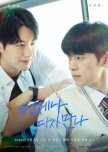
Warms the heart while playing with the possibilities of fate
In a year where short-format K-BLs continue to dominate the scene, Always Meet Again arrives with the ambition of feeling like something more complete, more polished, more emotionally grounded, and at times more daring than its peers. Reuniting Jeong Shin and Myung Kim after A Breeze of Love, the series leans heavily into what made that pairing work in the first place: an effortless chemistry that doesn’t need grand declarations to resonate. There’s a quiet intimacy in the way they share the screen, where glances linger just long enough and emotions surface in restrained, almost delicate ways. It’s the kind of dynamic that feels lived-in, and it ends up carrying much of the series on its shoulders.What initially presents itself as a familiar time-travel romance gradually reveals a more introspective core. Rather than focusing purely on mechanics or spectacle, the narrative is more interested in grief, regret, and the desperate human urge to rewrite what was lost. The direction supports this approach beautifully, contrasting the muted tones of the present with the softer, almost glowing warmth of the past. There’s a consistent sense of longing woven into the visuals, reinforced by a carefully chosen soundtrack that elevates even the quieter moments. As the story progresses, it finds a stronger emotional rhythm, with later episodes delivering a more cohesive and impactful payoff than the somewhat tentative beginning might suggest.
That said, not everything on this canvas is painted in vibrant colors (tsk). For all its emotional strengths, the writing often struggles to keep up with its own ambition. The time-travel logic is, at best, loosely defined, and at worst, frustratingly inconsistent, leaving key plot points feeling underexplained or even contradictory. The subplot involving color blindness is perhaps the clearest example of this: introduced as something significant, it never quite finds a meaningful resolution or clear purpose within the narrative. Similarly, certain conflicts, especially those built around the idea of “pushing someone away for their own good”, feel more like familiar genre obligations than fully justified character choices, occasionally breaking the story’s emotional immersion.
There are also moments where the series hints at deeper layers, whether through supporting characters or secondary tensions, only to resolve them too quickly or abandon them altogether. This creates a sense of narrative imbalance, as if the story is constantly choosing between being intimate and being complex, without fully committing to either. The short episode format doesn’t help in this regard, often making developments feel rushed or undercooked when they needed just a bit more space to breathe.
And yet, despite these flaws, Always Meet Again remains an undeniably engaging watch. There’s a sincerity at its core that makes it easy to forgive its rough edges. When the series leans into its emotional beats, when it allows its characters to simply exist together without the weight of convoluted plotting, it becomes genuinely affecting. The performances, especially from the central duo, bring a level of nuance that elevates even the weaker scenes, grounding the story in something that feels real even when the logic falters.
By the time it reaches its conclusion, the series feels less like a tightly constructed narrative and more like an emotional journey, one that doesn’t always make perfect sense, but still manages to leave a lasting impression. It’s not flawless, and it doesn’t fully realize all the ideas it introduces, but there’s enough heart, atmosphere, and chemistry here to make it worthwhile. In the end, Always Meet Again may not be the best one out there, but it reminds us why stories about love, loss, and second chances continue to resonate: not because they are perfect, but because, at their best, they feel honest.

First impression: unafraid of heavy themes, yet filled with warmth and tenderness
The long-awaited return of PerthSanta in Love You Teacher really couldn’t have come in a more vibrant way. GMMTV finally seems to be having fun with its visuals, leaning into a color palette that actually matches the energy between the leads. The premiere mixes that familiar light, school-life humor with a surprising emotional weight, and it works better than you’d expect.One of the highlights of the episode is the art direction. The details in the sets and costumes are not merely decorative, but help build a sense of warmth that welcomes the audience from the very first minute. It’s nice to see the studio investing in stories that, while keeping the beloved clichés of the genre, dare to explore more refined visual and emotional textures.
The performances are another big win. Perth delivers a beautiful portrayal, proving that his dramatic instincts remain as sharp as ever. His moments of vulnerability and tears are genuinely heartbreaking and convey the exhaustion of someone trying to balance the roles of boyfriend and caretaker. Santa, meanwhile, moves with a magnetic gentleness between the different shades of Solar and his seven-year-old self. The duo’s chemistry carries the rhythm of the episode, allowing the shifts between laugh-out-loud moments and waves of emotional distress to feel organic rather than forced, like fragments of a life shared in all its complexity.
Of course, the premise of age regression (Solar’s mental “reset” after the accident) requires a certain suspension of disbelief from the audience. The show’s neurological logic may feel somewhat creative to more skeptical viewers, but the script makes the smart decision of establishing that the relationship already existed before the trauma. That choice protects the integrity of the narrative, steering clear of uncomfortable questions about consent and instead focusing on what truly matters: the resilience of love in the face of adversity and the emotional toll of caregiving. Some details surrounding Solar’s personality shifts still feel a bit hazy, and in typical GMMTV fashion the editing occasionally flirts with mild confusion. Even so, none of it diminishes the appeal of the story that is beginning to unfold.
In the end, Love You Teacher premieres with the promise of becoming one of the highlights of the 2026 season. It is a series unafraid to touch on sensitive topics such as mental health and the weight of adult responsibility, yet it does so without losing the tenderness and bright warmth its protagonists radiate. If the remaining nine episodes maintain this same level of technical and emotional commitment, we may be looking at a new classic of the genre. For anyone searching for a story with heart and polished visuals, the show’s very first Saturday already proves the wait was more than worth it.

First impression: a exploration of desire and the consequences of following it blindly
The opening episodes of Only Friends: Dream On reveal a series that is very aware of its own appeal. Rather than softening the emotional chaos that made the franchise popular, the new season dives even deeper into it. The result is an intense start, filled with tension, provocation, and questionable decisions that always seem on the verge of setting the characters’ relationships on fire. There is a clear enjoyment in watching this game of messy emotions and poorly calculated impulses unfold, and the direction knows exactly how to make the most of that unstable atmosphere.Much of this strength comes from the cast. The chemistry between the actors is the true engine of the narrative, and the camera often relies more on glances, pauses, and teasing than on long stretches of dialogue. The interactions carry a constant energy of attraction and conflict, creating a sense of unpredictability that keeps the viewer engaged. Some pairings thrive on the almost provocative friction between strong personalities, while others build a softer, slower tension. This variety helps prevent the drama from feeling repetitive, even when the story fully embraces its more exaggerated side.
Another strong point lies in how the series treats its characters as flawed people. No one appears entirely right or wrong, and much of the dramatic interest comes precisely from that moral ambiguity. Jealousy, insecurity, and desire are presented with very little filtering, giving the conflicts a raw and spontaneous tone. At the same time, the production maintains an engaging rhythm, balancing moments of intensity with pauses that allow emotions to build before eventually erupting.
On the other hand, the series occasionally stumbles over stylistic habits that attempt to add a level of sophistication that is not always necessary. The cuts to testimonial-style interviews, while intended to provide depth, sometimes interrupt the natural flow of scenes that would stand perfectly well on silence and subtle expressions alone. By over-explaining the characters' internal worlds, the script risks insulting the audience's intelligence, trading organic tension for a structured commentary that feels more like a safety net than a narrative leap.
There is also a slightly risky sense of comfort in the casting. By relying on pairings whose dynamics are already well known to fans, the narrative loses some of the “who will end up with whom” mystery, making the script feel a bit too dependent on the actors’ charisma rather than the unpredictability of the plot. Some musical transitions also feel somewhat dated, with a soundtrack that occasionally tries to dictate the emotional tone more loudly than the performances themselves.
Even so, these details rarely undermine the overall experience. Technical issues in mixing and pacing are easily forgiven thanks to the series’ willingness to present characters who are flawed, possessive, and delightfully human. Only Friends: Dream On does not try to be a philosophical treatise on love, but rather a vibrant exploration of desire and the disastrous consequences of following it blindly.

First impression: stands out more for its ambition than for consistently polished execution
In its opening episodes, Sammy’s Children’s Day presents itself as an ambitious entry within the BL genre, leaning less on the comfort of idealized romance and more on a narrative shaped by contrast. Setting the story in the 1980s Kowloon Walled City is not just an aesthetic choice, as it defines the entire viewing experience. The environment is chaotic, violent, and unpredictable, and that energy carries directly into the tone, which blends crime, humor, and melodrama in ways that aren’t always perfectly balanced, but are almost always engaging.The narrative structure stands out for its relatively brisk pacing. Unlike many slow burns that take their time laying the groundwork, the first episodes here quickly introduce conflicts, relationships, and even major turning points. This creates a double-edged effect: on one hand, it keeps the viewer engaged and avoids any sense of stagnation; on the other, it weakens the emotional impact of certain developments, which arrive before the audience has fully connected with the characters. Even so, there’s a clear intention to develop the central relationship gradually, building a steady tension that keeps the story compelling.
It’s in the dynamic between He ChuSan and Xia LiuYi that the series finds its strongest footing. Their contrast isn’t treated as a simple trope, but as a driving force of the narrative, exploring differences in personality, social standing, and worldview. Their chemistry works from the start, largely supported by performances that balance intensity with lightness. Even within a violent setting, the series allows space for humor and more spontaneous interactions, which humanize the characters and keep the story from becoming overly heavy.
From a technical standpoint, Sammy’s Children’s Day shows above-average care in certain areas. The cinematography and production design play a key role in immersion, with framing that enhances both action and quieter, more intimate moments. In contrast, the fight scenes reveal clear limitations, whether in the lack of polish in the choreography or in editing choices that disrupt the flow. The dubbing can also be distracting at times, creating a disconnect between dialogue and performance that undercuts some of the more emotionally charged scenes.
Overall, the opening episodes build a series that stands out more for its ambition than for consistently polished execution. There’s a strong identity taking shape, supported by a striking setting and characters with real dramatic potential. At the same time, issues with pacing, tonal balance, and technical finish suggest a production still searching for its footing. If it manages to better align these elements as the season progresses, Sammy’s Children’s Day has all the potential to move beyond a strong first impression and establish itself as one of the more interesting entries in the genre.

A place to inhabit when the outside world feels too heavy
Amid the flood of BLs built around big twists and intense conflicts, Cat for Cash moves in a different direction. It’s smaller in scale, more intimate in its approach, and, above all, focused on making the audience feel, even if that means slowing things down and leaning into everyday moments. The premise, which could easily come off as quirky (a debt collector who can understand cats and a reluctant heir to a cat café), is handled with surprising emotional sincerity. The result is a series that begins as a light romantic comedy but gradually reveals deeper layers about grief, affection, and reconciliation.Right from the first episode, the tone is clear: there is humor, but it never comes without emotional weight. JeMeow’s death acts as the turning point that drives the entire story, and it’s also where the series shows its greatest strength: its ability to translate complex feelings into simple yet meaningful scenes. Lynx’s grief isn’t idealized; instead, it feels messy, contradictory, and at times even uncomfortable, especially when shaped by unresolved resentment.
Within this context, the relationship between Lynx and Tiger becomes the true core of the narrative. Unlike many BLs that rely on external conflicts or prolonged misunderstandings, the development here feels more direct and emotionally honest. Their connection grows through silence, lingering glances, and small acts of care, creating a dynamic that may feel slow to some but ultimately finds its strength in that very softness. It’s a slow burn that values the journey as much as the destination.
Much of this impact comes from the chemistry between First and Khaotung, who once again show an impressive command of emotional nuance. There’s a natural ease in the way they interact that gives even the simplest moments real weight. Tiger, in particular, stands out as an unconventional lead: a debt collector who, far from being cold and ruthless, reveals a quiet sensitivity, especially when it comes to cats or Lynx. Meanwhile, Lynx carries the emotional weight of the story, and his journey toward reconciling with his mother’s memory is easily the most solid arc in the series.
Visually, Cat for Cash leans into a warm and comforting aesthetic, with soft lighting and intimate framing that turn the café into a kind of safe haven. There’s a clear effort to make this space feel symbolic rather than just functional, a place where memories, affection, and unresolved pain coexist. The soundtrack supports this atmosphere well, enhancing emotional moments without overwhelming them and helping to maintain immersion.
Even so, the series still has its shortcomings. The writing sometimes hesitates to fully develop its own conflicts, resolving situations too quickly and without meaningful consequences. This weakens certain narrative arcs, making them feel somewhat shallow or repetitive. On top of that, the show’s most unique element, Tiger’s ability to communicate with cats, is surprisingly underused. What could have been a defining narrative device often feels like a minor detail instead.
Another aspect that stands out, though not in a positive way, is how Tiger’s cat allergy is portrayed. In theory, it should be a significant limitation, almost a natural barrier to his presence in the café. In practice, however, it only seems to matter when the plot needs it to. Tiger spends hours, sometimes even days, in a closed space filled with fur and airborne particles without showing consistent reactions. The allergy ends up feeling selective, more like a character trait than a real condition, which slightly breaks the suspension of disbelief in a series that otherwise tries to ground its fantasy elements in emotional realism.
The pacing can also be divisive. By choosing a more contemplative approach, Cat for Cash sometimes risks feeling stagnant, especially for viewers expecting clearer narrative progression. There are episodes where very little seems to move forward, which may affect overall engagement. Added to this are a few inconsistencies, both in the internal logic and in certain character choices, that, while not entirely damaging, are still noticeable.
And yet, it’s interesting how Cat for Cash still works despite these imperfections. That’s likely because its greatest strength doesn’t lie in the plot itself, but in how it makes the audience feel. There’s an emotional honesty running through the series, a genuine attempt to explore loss, imperfect love, and second chances. Lynx’s relationship with his mother, even after her death, is a perfect example of this: complicated, painful, and deeply human.
In the end, Cat for Cash isn’t about grand events, but about small, quiet gestures, the kind that slowly but surely change everything. It may not be the most tightly structured or consistently engaging BL out there, but it is, without a doubt, one of the most sensitive. And for those willing to meet it at its own pace, it offers something rare: a safe, almost therapeutic space where even the hardest emotions can soften just a little.
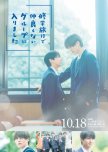
Sometimes all we really need is a simple story, told with care
Sometimes, you start a show almost without thinking, with no expectations at all, assuming they’ll be just another high school story to fill a quiet Sunday. And then, suddenly, you realize you’re far more emotionally invested than you meant to be. School Trip is exactly that kind of BL.At first glance, its long title and simple premise don’t suggest anything groundbreaking: an awkward boy slowly finding his place within the most popular group in class during a school trip. What the series actually does, however, is soften this familiar setup and turn it into something unexpectedly warm and comforting, as if gently untangling emotional knots many of us have carried since our teenage years.
At the center of the story are Hioki, shy, polite, and slightly out of sync with his classmates, and Watarai, tall, admired, and seemingly confident from the outside. There are no big twists or dramatic revelations here. Instead, the narrative unfolds through shared silences, lingering glances, and small moments whose importance only becomes clear with time. This quiet simplicity is where the show finds its strength. By focusing almost entirely on this single relationship and avoiding unnecessary side romances, the story allows their connection to develop naturally, at its own pace.
One of the series’ most striking qualities is its emotional gentleness. School Trip moves against a genre that often equates drama with suffering, choosing tenderness instead. The conflicts exist, insecurity, jealousy, fear of rejection, but they’re handled through conversation rather than cruelty. Hioki reflects before reacting. Watarai feels deeply, sometimes crosses a line with his protectiveness, but learns to recognize his limits. The love portrayed here isn’t polished or idealized. It’s uncertain, awkward, and deeply human.
This balance is supported by performances that feel more mature than the premise might suggest. Kan Hideyoshi brings Watarai to life with a blend of visible confidence and quiet vulnerability, while Fujimoto Kodai portrays Hioki as gentle yet quietly steadfast. Much of what matters is communicated without words, in pauses, glances held a second too long, and the way the two share space. Their chemistry doesn’t rely on grand declarations. Often, a hesitant touch or restrained smile says more than enough.
The world surrounding the couple also deserves praise. Rather than falling into the usual tropes of toxic popularity, the friend group becomes a genuine source of warmth and support. These boys welcome Hioki without judgment and accept Watarai without turning his feelings into something to be scrutinized. In a genre often filled with shallow antagonists and casual cruelty, this kindness feels refreshing and deeply comforting.
That said, the series does have its limitations. Its predictability, while soothing, may disappoint viewers hoping for bolder storytelling or more layered conflicts. At times, the world feels slightly too idealized, with social reactions softened beyond what feels fully grounded in reality, especially in how outsiders involve themselves emotionally in the couple’s relationship.
There are also moments where the writing feels a bit too transparent. Some lines explain more than necessary, and a few situations seem designed mainly to push the leads closer together more quickly. Watarai’s jealousy and possessiveness, although acknowledged by the narrative, aren’t always explored as deeply as they could be. These issues don’t break the show’s charm, but they do reveal its preference for emotional safety over narrative risk.
And then there are the kisses, or rather, the careful journey toward them. Nothing feels rushed or included for effect. Each step is guided by a clear understanding of where Hioki and Watarai are emotionally. The series allows anticipation to build through shared looks, hesitant closeness, and unspoken understanding, until physical intimacy feels like a natural continuation of their bond.
By waiting until that bond is fully formed and mutually recognized, these moments gain a quiet weight. They feel tender rather than performative, intimate rather than decorative, standing out even within the expectations of a Japanese high school BL. This isn’t fanservice. It’s emotional payoff, grounded in trust, timing, and honesty, and because of that, it feels earned.
In the end, School Trip never aims to be grand, and that restraint is precisely what makes it work. It’s a story about belonging, about being seen without having to reshape yourself to fit in, and about how adolescence can be painful but also gently rewritten, even if only through fiction. Soft, sincere, and gently luminous, it reminds us that sometimes all we really need is a simple story, told with care.

Finding that one person who truly understands us is enough to transform the entire world
There are series that exist simply to entertain for a few hours and then disappear from memory just as quickly as they arrived. And there are those that stay with you. The On1y One clearly belongs to the second category. The Taiwanese production, based on the novel Mou Mou, begins with a seemingly familiar premise in which two teenagers are forced to live together when their parents start a new life as a couple. However, it quickly reveals that its ambitions go far beyond a simple coming-of-age romance. What unfolds throughout the episodes is a delicate portrait of youth, first love, and the quiet loneliness that often accompanies growing up.At the center of the story are Sheng Wang and Jiang Tian, two young men who seem like complete opposites at first glance. Sheng Wang arrives as the new student: charismatic, sociable, and seemingly carefree. Jiang Tian, on the other hand, is the model student, reserved and carrying a melancholy he rarely allows anyone to see. The series finds its strength precisely in this contrast. Like magnetic poles, the two begin on a collision course, but soon discover they share something essential: both carry wounds they have never truly learned to name.
Their forced coexistence under the same roof could easily have fallen into melodramatic clichés. Instead, The On1y One chooses a quieter and more human path. Rather than emotional outbursts or grand declarations, the story is built through small gestures: lingering glances, interrupted conversations, and silences that say more than words ever could. It is within this subtle territory that the series finds its identity.
Much of the show’s charm comes from its deliberately slow pacing. The romance unfolds as a true slow burn, the kind that develops millimeter by millimeter. For viewers accustomed to faster stories, this choice may seem risky. Yet it is precisely this patience that turns every shared moment between the protagonists into something almost tangible. A casual brush of hands, a protective gesture, or a simple exchange of glances begins to carry an unexpected intensity.
The relationship between Sheng Wang and Jiang Tian grows into something neither of them fully understands. The feeling is never openly declared but gradually seeps into everyday life: in silent worries, in the small decisions made for the sake of the other, and in the way each begins to see the world through the other’s presence. Love here is not announced; it is discovered.
This emotional construction is supported by remarkably sensitive performances. Liu Dong Qin and Benjamin Tsang display a rare kind of chemistry, built far more on microexpressions than on dramatic gestures. Jiang Tian, in particular, emerges as a character of striking depth: a young man who has learned to hide his emotions as if they were dangerous secrets. When his defenses begin to crack, even for a moment, the emotional impact is immediate.
Sheng Wang, meanwhile, works as the perfect counterpart. More open and spontaneous, he brings lightness to the story while gradually revealing his own vulnerabilities as the plot unfolds. Little by little, we realize that his apparent carefreeness hides a deep longing: the desire to find someone who truly understands him. When that connection finally appears, the narrative takes on an almost poetic dimension.
Another strength of the series lies in its atmosphere. The school is not merely a setting but a vital part of the experience. Exams, academic competitions, school festivals, and rivalries between classmates create a convincing portrait of adolescence. At the same time, the script weaves small literary reflections and metaphors throughout the episodes, turning simple situations into moments filled with meaning.
Visually, The On1y One also stands out. The cinematography embraces a naturalistic style, with delicate framing that captures the characters’ intimacy without exaggeration. The soundtrack follows the same sensibility, appearing at the right moments to amplify emotions that often remain unspoken. The result is a narrative that feels as if it breathes alongside its characters.
Perhaps the most interesting aspect of the series is its refusal to reduce everything to a conventional romance. Although the bond between Sheng Wang and Jiang Tian is the heart of the story, The On1y One ultimately speaks about belonging. About finding someone who understands your words when the rest of the world seems unwilling to listen. About realizing that, among the millions of encounters we experience throughout life, a few rare ones have the power to change everything.
The ending, deliberately open, may leave the feeling that there are still chapters to come and, in a way, there truly are. The series ends more like a pause than a full stop, like a sentence interrupted by an ellipsis that promises to continue someday. Even so, what remains is the impression of having witnessed something rare: a story that understands that love, especially first love, is not born in dramatic explosions but in the almost invisible details of everyday life.
In the end, The On1y One is one of those works that warms the heart without relying on excess. A gentle, melancholic, and deeply human story about two young people who, in the midst of life’s uncertainties, discover something precious: sometimes, finding that one person who truly understands us is enough to transform the entire world.

How long someone can delay a “yes” that already exists within them?
Countdown to Yes begins like many great friends-to-lovers stories: with a lingering glance, a silence heavy with meaning, and that almost tangible feeling that something is already there, even if no one dares to name it. From the very first episode, the series leans less on big events and more on atmosphere. Its clean cinematography, delicate use of lighting, and restrained direction create an intimate space that invites the viewer to simply watch, almost like flipping through a photo album. It’s a promising start, hinting at a careful and emotionally grounded journey.The show’s greatest strength lies in this sense of intimacy. Minato and Wataru work well as a pair because they embody opposite sides of the same feeling. On one side, there is the clarity and courage of someone who loves openly; on the other, the paralyzing fear of someone who understands their emotions but chooses denial to avoid risking everything. This dynamic carries much of the narrative, creating a steady tension that, at its best, feels deeply human. There is something very recognizable in this emotional push and pull, in a love that already exists but hasn’t yet found the space to fully emerge.
However, what begins as delicacy soon starts to drift into repetition. The contemplative pacing, often effective in JBLs, becomes a drawback here. The story keeps revisiting the same conflicts, frequently through flashbacks that add little to what has already been established. Instead of deepening the narrative, these moments dilute its emotional impact, making it feel as though the story is moving in circles. The promised slow burn loses momentum when progress becomes almost imperceptible across entire stretches of the series.
This issue becomes even more apparent in Wataru’s character arc. His hesitation is understandable and even well grounded, since the fear of losing such an important friendship is a strong dramatic foundation, but the constant repetition of “we’re just friends” grows tiring. At a certain point, the conflict stops feeling complex and starts feeling frustrating. Still, there is value in how the series tries to humanize this indecision, showing that emotional growth is rarely linear or quick. The discomfort the audience feels is, in part, a reflection of that realism.
Minato, in turn, carries the story with a patience that borders on painful. His persistence isn’t idealized; it comes with exhaustion, doubt, and moments where he is clearly hurt. This helps the narrative avoid falling into easy clichés. At the same time, some of the criticism toward the series centers on the character’s more restrained, sometimes stiff portrayal, which can make it harder to connect in scenes that call for stronger emotional expression. The couple’s chemistry, while present in quieter moments, doesn’t always fully support the emotional weight the story aims for.
Even so, it would be unfair to overlook what Countdown to Yes does right: the small moments. The series shines when it lets go of the need to “move forward” and simply observes its characters being together, through absent-minded hand-holding, casual conversations about the future, and quiet gestures that say more than any confession. There is a genuine beauty in this focus on the everyday, reinforced by the recurring use of photography as a metaphor. Here, loving someone means learning to truly see them, with attention and care.
The final episode, in particular, ties everything together with a quiet kind of grace. It doesn’t rely on dramatic twists, but on emotional payoff. After so much hesitation and back-and-forth, the long-awaited “yes” lands with a softness that feels earned. It’s a gentle, beautiful conclusion that reframes the entire journey, making the wait feel, at least in part, worthwhile. Still, it’s hard not to wonder how much stronger the series could have been with a tighter structure. With eight episodes instead of eleven, much of the repetition could have been trimmed, allowing the story to maintain its emotional impact without losing momentum.
In the end, Countdown to Yes is a divisive experience. For some, it will feel slow, overly repetitive, and too emotionally restrained. For others, that same softness, almost stubborn in its quietness, is exactly what makes it special. Rather than telling the story of how love begins, the series is more interested in something subtler: how long someone can delay a “yes” that already exists within them. And even if that journey feels too drawn out at times, there is something sincere, and even beautiful, in the waiting.

A story about youth, trauma, growth and the courage to love in a world that often discourages it
Some works seem to know, from their very first frame, that they have no interest in pleasing on a surface level. Our Youth is born from that quiet certainty. The 2024 Japanese BL unfolds with the confidence of a story that understands not only what it wants to say, but how it must be said. This is not simply a romance between two boys; it is an excavation of the emotional debris left behind by a youth shaped by repression, silence, and expectations imposed rather than chosen. Here, affection is treated as something fragile and precious, and at times profoundly risky.The series follows Minase Jin and Hirukawa Haruki, two young men whose paths cross while still in a school setting. At first glance, they resemble familiar archetypes: the sensitive, introspective boy and the one who appears more self-assured, though reserved. Yet Our Youth resists the comfort of these early impressions. As the story unfolds, those surfaces begin to crack, revealing characters molded by deep-seated trauma, inherited fears, and an almost structural inability to believe they are entitled to happiness.
What sets the script apart is the patience with which these truths are allowed to emerge. There is no urgency to define who these characters are. Instead, the series shows and suggests, trusting the viewer to listen closely and fill in what remains unsaid. Each episode stands firmly on its own, yet gains greater meaning when viewed as part of a larger whole. The writing avoids easy explanations, favoring intimate dialogue that can feel unsettling precisely because of its emotional sincerity.
One of the adaptation’s most thoughtful choices is its decision to center the narrative conflict on Haruki’s experience with domestic violence. By shifting the focus away from bullying, a familiar shortcut in school-based narratives, and relocating the trauma to the family space, Our Youth widens its emotional horizon. The home, traditionally framed as a place of safety, becomes a site of fear and constraint, lending the story a heavier and more unsettling weight. This choice grounds the drama in a reality that is harder to name and even harder to escape, reinforcing the idea that some wounds are formed long before the outside world ever has a chance to intervene.
Haruki’s father is not simply an antagonist, but the origin of a fracture that quietly reorganizes how Haruki moves through life. The violence depicted is stripped of spectacle. It repeats itself in gestures, silences, and routines that erode from within. What lingers is not the act itself, but its residue: a body that stays alert, a voice that hesitates, a boy who learns to disappear in order to survive. The series is less interested in shock than in tracing the long shadow of abuse, showing how it distorts intimacy and teaches love to feel conditional, fragile, and perpetually at risk.
Against this backdrop, Jin does not arrive as a romantic rescuer. He offers something far more modest and far more powerful: presence. He watches, hesitates, falters, and still chooses to stay. Their bond is built through small, deliberate gestures such as letters exchanged, films shared, silences given room to breathe, and glances that communicate what words cannot. The symbolic exchange between the letter left behind and the novel written in response becomes one of the narrative’s most resonant moments, not only for its lyricism, but for what it represents: two young people trying to reach each other when language no longer suffices.
Visually, Our Youth is marked by restraint and precision. The cinematography mirrors the characters’ inner lives, shifting between softer and colder tones as emotions deepen. Ordinary settings such as classrooms, streets, and homes are charged with meaning, reflecting confinement, shelter, or the longing to escape. There is an almost handcrafted care in the composition of each scene, a constant reminder that form and content move together; and that how a story is told matters as much as what is told.
The performances elevate the material even further. The cast approaches their roles with evident vulnerability, especially in moments of emotional collapse. Their tears, for instance, never feel performative. They emerge as an accumulation, something that can no longer be contained. The chemistry between the leads is immediate but unforced, allowing desire, fear, tenderness, and pain to coexist in the same space. It is this balance that sustains the show’s emotional tension and keeps the viewer deeply invested.
Romantically, Our Youth avoids comforting illusions. It does not suggest that love alone can heal every wound. Instead, it recognizes that love demands growth, distance, and sometimes painful reckoning. The separation between Jin and Haruki is not a convenient dramatic twist, but a necessary pause. Both must confront their own histories before they can return to each other honestly. Their reunion carries weight not simply because it happens, but because of who they have become along the way.
Also, there is something deeply moving in the way Our Youth portrays a relationship grounded in respect, communication, and attentive listening. There is no romanticized toxicity here, no power struggles disguised as passion. What remains is a love that learns patience, compromise, and care. A love that does not announce itself loudly, but endures quietly. Perhaps that is why the series lingers so powerfully. It reminds us that the extraordinary often resides in the simplest act of being truly seen.
The special episode serves as a quiet yet essential epilogue, shifting the focus from youthful survival to the subtler and no less painful negotiations of adulthood. By portraying Jin and Haruki’s life together years later, the series makes clear that time does not erase obstacles; it reshapes them. Their routine is marked by affection and hard-won stability, but also by constant calculation. Love is present and deeply rooted, yet carefully managed, measured against what can be revealed, what must remain hidden, and who can be trusted with the truth.
The episode’s emphasis on how their relationship remains concealed, even from close friends, is especially telling. This secrecy is not born of shame, but of self-preservation. The series captures the exhausting vigilance of editing one’s own life. Pronouns are avoided, stories are softened, gestures restrained in public spaces. Intimacy here is both profound and constrained, lived fully in private and cautiously fragmented in the outside world.
The legal impossibility of formalizing their relationship deepens this sense of suspension. The series’ understated engagement with same-sex marriage laws in Japan is not treated as an abstract political issue, but as a quiet force shaping everyday life. It seeps into conversations about the future, limits the language available to define their bond, and reinforces the feeling that their love, no matter how real, exists without institutional recognition. What should be ordinary, introducing a partner, making plans openly, claiming a shared life, remains fraught with risk. Fear and caution are not dramatic interruptions, but constant companions.
Yet within these constraints, the episode also reveals a quiet resilience. The desire to live freely does not vanish. It adapts, finding meaning in small acts of care, shared routines, and the mutual understanding that neither is truly alone. In presenting this tension without bitterness or spectacle, Our Youth offers a sobering truth: for some, adulthood does not bring liberation, only a different kind of endurance, sustained by love, patience, and the fragile hope of being seen someday without having to hide.
By the end, Our Youth stands as a work that surpasses the boundaries of the BL label. It is a story about youth and trauma, emotional growth and the courage required to love in a world that so often discourages it. Sensitive, deliberate, and emotionally honest, it leaves a lasting imprint. It does not ask to be celebrated loudly; it asks to be remembered. And it is in that soft afterimage that the series reveals itself as something rare, intimate, and quietly unforgettable.

A journey of redemption beneath the light of a thousand stars
The landscape of Thai television, often associated with breezy university tropes and repetitive formulas, found in A Tale of Thousand Stars not just a point of departure, but an artistic elevation. This GMMTV series, directed by Noppharnach Chaiwimol, delivers a narrative that pulses with the stillness of rural life and the intensity of a heart searching for a new purpose. It is, above all, a story about humanity, privilege, and the beauty of imperfection.The plot introduces us to Tian, a wealthy and reckless young man whose life is saved by a heart transplant. The donor, Torfun, was a volunteer teacher in a remote village. Driven by a curiosity bordering on obsession and a guilt-ridden gratitude, Tian decides to take over Torfun’s post in the mountains of Pha Pun Dao. The contrast is immediate and necessary: the city boy, accustomed to luxury and existential emptiness, is confronted with the rawness and purity of a community that survives on the essentials.
The great strength of this work lies in its refusal to be "just another romance." While the chemistry between Tian and Captain Phupha is magnetic, the series dedicates generous time to Tian’s personal development. Watching him trade designer clothes for traditional fabrics and gambling for teaching children is an exercise in sensitivity. The narrative makes it clear that Tian’s feelings are his own, not a cellular memory residue of the heart he received, validating his journey of self-discovery and growth.
Regarding the performances, it is hard to believe this is Mix Sahaphap’s debut work. His portrayal is layered with subtleties; he manages to convey the weight of guilt and the blossoming of joy with a single look. Beside him, Earth Pirapat delivers the finest performance of his career, personifying a Phupha who is both a stern protector and a man capable of silent tenderness. The dynamic between the two is the pinnacle of slow burn: a tension that needs no constant touch to make itself felt.
The technical production is another pillar supporting the masterpiece status attributed by many. The cinematography escapes the sterile feel of studios and embraces natural landscapes, using mountain light and mist to create an almost dreamlike atmosphere. The soundtrack, punctuated by the melancholy sound of the flute, is not merely background music but an emotional extension of what the characters cannot put into words.
However, not all is a perfect constellation. For viewers accustomed to a frantic pace, the slowness of certain middle episodes, especially the eighth, might cause a slight weariness. Some political or action-oriented subplots occasionally feel less polished than the emotional core of the village. Furthermore, the excessive restraint in physical affection between the protagonists, though justified by the show’s respectful tone, might leave a bittersweet taste for those expecting a more passionate release after such a long wait.
Nevertheless, these minor setbacks do not eclipse the work's brilliance. A Tale of Thousand Stars is a lesson in how happiness can be found in simplicity and how past mistakes can be the soil for a generous future. It is a series that respects the audience's intelligence by handling themes like social inequality and organ donation with the sobriety they demand, without losing the characteristic sweetness of the genre.
In the end, as the village lights merge with the stars in the sky, the feeling is that we have witnessed something historic. It is an impeccable production proving that to tell a great love story, you don't need haste, only truth. For those seeking a narrative that warms the chest and provokes deep reflection on the value of life, Pha Pun Dao is a mandatory destination.

First impression: a high-quality entertainment that is both fun and emotionally engaging
The premiere episodes of My Romance Scammer make the show’s intentions clear from the very beginning: to tell a romance built on lies, but with a tone that feels light, playful, and fully aware of its own style. The premise alone is enough to spark interest: two scammers become romantically involved with heirs of a powerful billionaire family. The story wastes no time stretching out the introduction. Instead, it starts with energy, jumping straight into the central conflict and creating a dynamic opening that immediately draws the viewer in.One of the biggest strengths of these early episodes is the pacing. Rather than following the more traditional structure of romance dramas, which often spend several episodes building the relationship, the series moves quickly through these stages. In a short amount of time we see meetings, shared routines, and even major relationship decisions. At first this speed might feel a bit exaggerated, but within the logic of the story it makes sense. When a scam is unfolding, the romance also needs to move quickly enough to feel convincing to the person being deceived. This narrative choice shifts the focus to something more compelling: the moment when a carefully calculated plan begins to collide with feelings that may never have been part of the strategy.
The cast also plays a key role in making this opening work. The chemistry between the leads is evident and helps make the relationships believable, even when they are built on manipulation and secrets. The interactions between the couples move naturally between humor, tension, and tenderness, creating an emotional rhythm that keeps the episodes enjoyable to watch. While one storyline leans more heavily into drama and emotional intensity, the other brings a lighter and slightly awkward energy, helping balance the overall tone of the series.
From a technical standpoint, the production also stands out for its visual care. The series features elegant settings, well-designed costumes, and cinematography that reinforces the atmosphere of wealth and status surrounding the characters. At times, however, this polished aesthetic can feel a little too perfect, creating a slight sense of artificiality for a story centered on deception and manipulation. Even so, the refined visual style makes the series engaging to watch and strengthens its entertainment appeal.
Despite a few exaggerated situations and some narrative choices that require a bit of suspension of disbelief, the premiere of My Romance Scammer works very well as an introduction to the story. The opening episodes manage to balance romance, humor, and tension effectively, creating a narrative that is easy to follow and difficult to stop watching. The result is an engaging start that sparks curiosity not only about the characters’ feelings, but also about the inevitable moment when all the lies finally come to light.

A sweet, honest, and comforting portrait of late adolescence
In Hi by My Luck, the opening of GMMTV’s MuTeLuv anthology, the intention is clear: to tell a small story, but tell it well. Across just four episodes, this SeaKeen-led BL finds a rare balance between narrative precision and emotional sensitivity. There is no rush and no excess. This kind of narrative economy is increasingly uncommon in the genre, and it places the series a few steps ahead of longer titles that often lose themselves in repetitive side plots.The story centers on a simple yet effective conflict. Err is a brilliant student who has always seen himself as the class’s "racehorse" until Mawin arrives. Quiet and unassuming, Mawin is the "dark horse" whose natural talent for mathematics threatens Err’s academic standing and his self-confidence. The setting of an intensive math camp provides the perfect pressure cooker for these teenage insecurities, yet the series wisely treats this environment as a space for internal growth rather than mere spectacle.
The addition of an online fortune teller adds a quirky, almost absurd edge to the premise. However, the script shows great restraint by not letting mysticism take over. Instead, the predictions serve as a narrative trigger, opening the door to reflections on choice and the fear of failure without replacing genuine emotional development.
One of the show’s greatest strengths is its focus. Hi by My Luck is, above all, Err’s story. The series closely follows his anxiety and gradual maturation, allowing Mawin to remain an enigma that we discover alongside him. This patient approach lets the romance emerge naturally from shared experiences rather than genre conventions. It is an honest portrait of first love, driven by self-doubt and communication struggles rather than artificial villains.
Sea and Keen carry this journey with performances that show clear growth. Keen moves confidently between Err’s public assurance and private vulnerability, while Sea finds a perfect fit in Mawin’s shy, disarming intelligence. There is something deeply human in the way Mawin observes and cares, making him a particularly gentle and empathetic lead.
Technically, the miniseries stands out for its visual care. The cinematography and lighting give personality to ordinary settings, and the direction avoids unnecessary subplots, giving supporting characters purpose without pulling focus from the core story. While themes like academic pressure could have been explored more deeply and some might find the physical intimacy too restrained, these feel like minor trade-offs for such a concise format.
Ultimately, Hi by My Luck knows exactly what it wants to be: a sweet, honest, and comforting portrait of late adolescence. It is brief in length but feels complete, leaving the audience with a genuine wish to see where Err and Mawin’s story goes next.


