

 1
1 1
1



First love, the insecurity of revealing your feelings, and the quiet joy of being loved back
There is something almost magical about simple stories told with genuine care. In a television landscape saturated with school romances, where the formula is often repeated until it loses its sparkle, My School President feels like a reminder that a genre doesn’t need to be reinvented to become memorable. Sometimes, all it takes is a deep understanding of what makes certain stories universal: first love, the insecurity of revealing your feelings to someone, and the almost childlike joy of realizing that someone feels the same way.At first glance, the premise seems familiar. A model student, the son of the school’s principal, secretly harbors feelings for the leader of the music club, whose existence is threatened by the school’s strict rules. In order to save it, he becomes the student council president. It is a classic starting point, almost modest in its simplicity. Yet what transforms this narrative into something special is not the plot itself, but the delicacy with which every step of this journey is crafted.
The heart of the series undoubtedly lies in the relationship between Tinn and Gun. Portrayed by Gemini Norawit and Fourth Nattawat, the two characters bring to life one of the most charming teenage romances Thai BL has produced. There is a natural quality in their exchanged glances, their awkward silences, and their playful teasing that makes every gesture feel genuine. It is not just about chemistry; it is about the feeling of watching two people discovering, for the first time, what it means to truly like someone.
This feeling is amplified by the way the series embraces sweetness without slipping into excess. Many productions try to create tension through artificial conflicts, endless misunderstandings, or forced rivalries. Here, a different path is chosen. The romance develops gradually and in a healthy way, built through honest conversations, mutual support, and small moments of complicity. The result is a relationship that grows before the audience with rare authenticity.
If the central couple is the heart of the story, the world around them gives the narrative its body. The friends, especially the members of the band Chinzhilla, bring lightness and humor, creating an atmosphere of camaraderie that feels reminiscent of those school groups where every personality finds its place. Tinn’s best friend, with his talent for romantic advice and witty remarks, quickly becomes one of the most beloved characters in the series.
Another remarkable aspect is how My School President understands that a coming-of-age story is not built only through relationships between classmates. Family dynamics are treated with care, especially in the way parents deal with their children’s dreams, insecurities, and identities. The two mothers, each in her own way, represent different expressions of parental love. One is more spontaneous and open, while the other is initially cautious, yet both feel deeply human.
The tone of the series moves between lighthearted humor and moments of reflection without ever losing its balance. There is room for laughter, for the shyness of first encounters, and even for the small frustrations typical of youth. When conflicts arise, whether within the band or in the expectations imposed by the school, they are never artificially prolonged. The narrative favors sincere resolutions, keeping the pacing fluid and emotionally satisfying.
But perhaps the most striking element of the series is its music. Because the story revolves around a music club, each episode incorporates performances and songs that not only embellish the narrative but also deepen what the characters feel. Rather than functioning merely as background soundtrack, the songs become an emotional extension of the story, translating into melody what the characters themselves often still struggle to express in words.
Visually, the production also demonstrates a level of care that is rare for a school drama. The direction finds beauty in everyday moments such as a band rehearsal, a walk by the sea, or an improvised dance, turning small scenes into almost nostalgic memories. It is the kind of series that seems to capture the feeling of looking back at adolescence and realizing that the moments that once felt insignificant were, in fact, the most important ones.
It is true that the story does not attempt to be revolutionary. Some narrative paths are predictable, and certain conflicts could have been explored more deeply with additional time. Still, these small imperfections become almost irrelevant in light of the show’s overall charm. When a series can make its audience smile constantly and occasionally move them in unexpected ways, it has already achieved something valuable.
In the end, My School President works as a love letter to youth. It is a story about growing up, making mistakes, dreaming, and, above all, finding someone who can turn the ordinary routine of school life into something extraordinary. Few productions manage to convey this sense of comfort with such sincerity.
Perhaps that is why, when the series reaches its conclusion, the predominant feeling is not just satisfaction, but also a gentle sense of longing. For a few weeks, it feels as if the viewer has returned to high school, not to relive exams or school rules, but to remember how the heart used to beat faster when love still felt like a completely new discovery.

Beautiful and engaging at its best, emotionally strong, but overreaches and stumbles
There is something deliberately ambitious about The Next Prince. From the very first episode, the series makes it clear that it does not want to be just another comfortable Thai BL set in sunny cafés. Here, romance is born under the weight of the crown, shaped by protocol, political disputes, and the constant watch of a kingdom that must decide who will rule it. The premise is simple and alluring: a prince raised far from his origins is forced to return and compete for the throne, while falling in love with the man who was meant only to protect him. What follows is a modern fairy tale that is luxurious, sometimes uneven, but hard to ignore.Visually, the series is a spectacle. Few BLs invest as heavily in sets, costumes, and cinematography as The Next Prince. Every outfit seems designed to express power, tradition, or change, and every palace hall carries an almost theatrical sense of grandeur. The art direction turns the fictional kingdom of Emmaly into a believable, almost tangible place, while the cinematography supports this fantasy with elegant framing and surprisingly well choreographed action scenes. It is a production that understands the power of imagery and knows how to use it to create mood and impact.
At the heart of this world are Khanin, a prince torn between the life he lived and the destiny forced upon him, and Charan, the royal guard whose loyalty soon goes beyond duty. Zee and NuNew share a rare sense of intimacy, built not only through grand gestures but through silences, lingering looks, and a physical closeness charged with emotional tension. When the series leans into romance, it succeeds. The intimate scenes are filmed with care and sensitivity, avoiding vulgarity and aiming for a near solemn intensity, as if love itself were a political act.
The issue is that The Next Prince tries to say many things at once. There are succession battles, environmental concerns, reflections on gender inequality, family trauma, and ancient traditions being challenged by a younger generation. All of these ideas are interesting and powerful on their own, but the script does not always weave them together with the same precision it gives to the visuals. Some storylines appear promising but are resolved too quickly, while others linger longer than needed, resulting in episodes that feel more like transitions than true narrative progress.
The supporting characters highlight this imbalance. Ramil and Paytai, for instance, share an intense dynamic marked by obsession, emotional violence, and extreme loyalty, often rivaling the main couple’s impact. Calvin and Jay are introduced as hints of something greater but remain confined to suggestion rather than development. Ava, the only princess among the contenders, represents meaningful change within the kingdom, yet she is underused, fading from the story just when she could have deepened the debate about power and tradition. These are strong pieces on a board the script does not always know how to move.
The pacing also wavers. The early episodes are engaging, clearly establishing the world and its central conflicts. Midway through, however, the narrative loses momentum. Conflicts repeat, revelations land without the expected weight, and certain decisions feel overly convenient. Even so, moments of genuine dramatic strength remain. Scenes of grief, family confrontations, and small emotional victories remind us why it is still worth seeing the story through to the end.
Musically, the series reinforces its sense of grandeur. The soundtrack, with classical influences and recurring themes, enhances the epic tone and helps carry the emotional weight, even when the writing falters. There is a clear awareness that The Next Prince wants to be remembered as something bigger and more refined, almost a prestige BL, and that ambition is reflected in its technical choices.
In the end, The Next Prince is a work of contrasts. It is beautiful, engaging, and emotionally effective at its best, but it stumbles when it tries to handle more than it can fully develop. Still, its charm is undeniable. Between excess, well placed silences, and flashes of true inspiration, the series stands as an imperfect yet memorable royal romance, one that may not be entirely satisfying on paper, but lingers in the mind because of how it feels. A modern fairy tale that shines brightest when it chooses emotion over strategy.

Excessive, at times chaotic, but also intense, magnetic, and emotionally honest at its best
The Wicked Game enters the Thai BL landscape as a risky invitation: trading the comfort of light romance for a dive into a corporate drama shaped by violence, revenge, and family ties eaten away by ambition. Instead of sunny campuses or shy first dates, the series places its focus on boardrooms, power struggles, and a past that refuses to stay buried. It is a bold and imperfect choice, but one that often results in something gripping and deeply engaging.The story centers on Pheem, the rejected heir of a hospital empire whose childhood was brutally shattered by family betrayal. His return is driven not by longing, but by reckoning. What could have been just another revenge plot gains weight as each episode reveals how greed can turn siblings into enemies and parents into executioners. There is an almost tragic echo here, reminiscent of classic tales about dynasties that destroy themselves in the pursuit of power, and this heavy atmosphere carries much of the show’s emotional impact.
The series’ greatest strength lies in the way Pheem is written and portrayed. Offroad delivers a layered performance, shaping a character who is both cruel and deeply wounded. Every silence speaks as loudly as his most calculated attacks. Trauma is not merely mentioned; it shapes his gestures, his gaze, and his choices. Pheem is hard to love, yet impossible to ignore, and the show understands this well, using his coldness as a shield rather than an empty pose.
It is on this unstable ground that Than appears, played by Daou, as an almost luminous counterbalance. A former police officer, honest and emotionally open, he serves as the moral axis of the story and the viewer’s emotional anchor. The chemistry between Daou and Offroad is undeniable and perhaps the most consistent element of the series. Even when the script falters, the relationship between Than and Pheem keeps the narrative alive, fueled by tension, desire, and a constant sense of emotional danger. The romance is not comfortable, nor should it be, and that is precisely why it stands out.
The supporting cast also strengthens this web of conflict. Thanet, the father, embodies a toxic and cruel patriarchy, the kind that provokes instant discomfort because it feels painfully real. Risa and Chet move between victimhood and villainy, showing how the hunger for recognition can easily turn into cruelty. Even secondary characters, such as Jason or Chet’s bodyguard, carry a tension that suggests more depth than the script sometimes fully explores.
Not everything, however, works with the same precision. The series leans too heavily on gun violence, with frequent shootouts and an internal logic that stretches believability. Characters are shot, fall, and return almost unharmed, while the police seem to exist only as background figures. Uneven CGI and certain directorial choices weaken scenes that needed stronger impact. The ten-episode format also weighs heavily, as some characters and conflicts clearly needed more time to breathe.
The finale gathers many of these weaknesses. While it brings closure to the main arcs, it feels rushed and less emotionally charged than it promises. Some reunions call for more silence, more collapse, more release. Even so, the ending preserves the story’s tragic core, reinforcing the idea that wicked games rarely allow truly happy conclusions.
Taken as a whole, The Wicked Game is not an easy BL, nor a polished or perfectly balanced one. It is excessive, at times chaotic, but also intense, magnetic, and emotionally honest at its best. Carried by strong performances and a central chemistry that cuts through technical flaws, the series proves that the genre can flirt with darkness without losing its power to captivate. Imperfect yet memorable, it is the kind of story that leaves you exhausted at the end and, strangely enough, wanting to remember it.
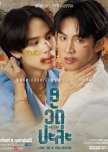
Agile, romantic, and surprisingly mature for its short runtime
Within the anthology project MuTeLuv, the arc Love Me if You Swear proves that sometimes four tightly written episodes can say more than long seasons filled with detours. The series embraces a lean, straightforward structure, centering on a classic enemies-to-lovers trope without getting lost in excessive dramatics. The result is a story that feels agile, romantic, and surprisingly mature for its short runtime.The premise may sound familiar: two proud rivals, constant bickering, ongoing competition, and tension that practically spills off the screen. Still, the script finds freshness by focusing less on “bad luck” or external obstacles and more on the organic development of Tum and Oh’s bond. The story avoids artificial conflicts and instead highlights the emotional growth of its leads, making every step closer feel earned rather than forced.
Much of the series’ impact comes from the chemistry between Surf and Java. Even though this was the first project they filmed together, their connection is striking. There’s intensity in their teasing, lightness in the comedic moments, and genuine depth in the more serious scenes. When the story slows down to explore themes like family, regret, and vulnerability, their dynamic moves beyond physical attraction and gains real emotional weight. It’s in this balance that the series truly shines.
The direction leans into a romantic comedy tone while maintaining a certain level of maturity. The humor works most of the time, even if it may not land for everyone. A few physical confrontations or exaggerated moments reveal minor technical limitations, but nothing that undermines the overall experience. On the contrary, when comedy gives way to drama, the cast shows enough confidence and charisma to carry the heavier scenes with ease.
Another highlight is how the romantic tension is handled. The show doesn’t waste the chemistry it carefully builds. When the characters finally cross the line from rivalry to intimacy, it happens naturally and consensually, reinforcing a sense of authenticity. There are no grand speeches or unnecessary melodrama, just two young men acknowledging their desires and vulnerabilities, which makes their relationship feel honest and real.
Visually, the production embraces a light atmosphere, almost with a comfortable summer vibe that matches its heartfelt and unpretentious tone. The soundtrack supports the emotions without overpowering them. In such a short format, every aesthetic choice feels intentional, reinforcing the idea of a story that is simple, yet sincere.
Ultimately, Love Me if You Swear works because it knows exactly what it wants to be. It doesn’t try to reinvent the genre, but instead executes a timeless formula with confidence and, at times, real spark. It’s short, sweet, and effective, leaving behind that feeling that sometimes, less truly is more.

A song of love, growth, and second chances
From its very first episode, ThamePo pulls you in with a quiet confidence that feels almost disarming. At a glance, the premise might seem like familiar territory, a romance set against the backdrop of the entertainment industry, but the series wastes no time proving it has far more on its mind. What begins as a seemingly simple story quickly reveals layers of emotional depth, exploring love, ambition, self-doubt, and the complicated dance between who you are and who the world expects you to be. It’s the kind of narrative that reminds you how much richness can come from small moments handled with intention.What elevates ThamePo is its warmth, a quality that threads through every episode. There’s a gentleness to the way the story unfolds, as if the series knows how heavy its themes can be and chooses, instead of dramatizing them, to hold them with care. Scenes are infused with tenderness, sometimes quiet, sometimes playful, always sincere. Even when the show dives into anxiety, guilt, or the crushing demands of fame, it never loses sight of its heart. It maintains a sense of emotional safety, the feeling that the series understands its characters and wants the audience to understand them too.
Much of that emotional connection comes from William and Est, whose performances anchor the entire narrative. Their chemistry is the kind that doesn’t need grand gestures to convince you; it lives in the subtle things. A look held for a beat too long. A silence that speaks louder than an entire monologue. A brush of a hand that carries more tension than any dramatic confession. Their relationship grows in the way real feelings often do: slowly, quietly, almost without permission. By the time you realize how deeply invested you are, the show has already wrapped its fingers around your heart. They’re the kind of couple who make you root for them instinctively, who can make you smile in one scene and leave you aching in the next.
But ThamePo doesn’t rely solely on its leads to build emotional resonance. The other members of MARS, the idol group around which the story orbits, are more than background figures; they’re an essential part of the show’s soul. Each character has a distinct arc, complete with insecurities, ambitions, and personal battles that enrich the main storyline. Their friendship feels lived-in, full of banter, tension, affection, and the unspoken understanding that comes from sharing countless hours of rehearsals, stages, and dreams. Their dynamic is one of the show’s strongest assets, creating the sense of a world that extends beyond the central romance.
The series also approaches the idol industry with an honesty that feels refreshing. It exposes the pressure to maintain a flawless public image, the fear of disappointing fans, the emotional exhaustion of constant scrutiny. Yet it does so without cynicism. Instead of painting the industry as inherently cruel, it highlights how easily the pursuit of perfection can erode individuality. It shows the toll of being watched, judged, and expected to embody an ideal, while still recognizing the beauty and passion that draw artists to the stage in the first place.
On a technical level, ThamePo is a visual and auditory standout. The cinematography is crafted with precision: delicate framing, soft lighting, and a color palette that enhances the emotional temperature of each scene. The show knows how to linger, not unnecessarily, but intentionally, letting the audience fully absorb the feeling of a moment before moving on. The soundtrack is equally thoughtful. Every song seems chosen not just to complement the scene but to deepen it, adding an emotional undercurrent that stays with you long after the episode ends. The MARS songs are genuinely catchy, but more importantly, they help ground the narrative in its musical world, giving authenticity to the characters’ careers and dreams.
Ultimately, what makes ThamePo so unforgettable is its ability to comfort. It’s a series that feels safe to return to, even when tackling difficult themes. It’s light without ever becoming shallow, emotional without slipping into melodrama, and introspective without feeling heavy. At its core, it’s a story about second chances, about forgiving yourself, about choosing love even when it scares you, about finding your place in a world that constantly tries to shape you into something else.
And when the final episode fades out, ThamePo leaves you with that rare kind of warmth: the sense of having witnessed a story that was honest, tender, and deeply human. The kind of story that lingers, not because of plot twists or shock value, but because of the quiet truth it carries. The kind that reminds you why we fall in love with stories like this in the first place.
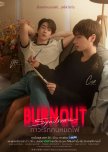
Dense, textured, and at times suffocatingly real in its emotional weight
The new Thai drama Burnout Syndrome is far from the radiant love story many might expect from the genre. Under the meticulous direction of P’Nuchy, the series unfolds like a slow-drying oil painting: dense, textured, and at times suffocatingly real in its emotional weight. The story immerses us in an ocean of chronic fatigue, where burnout is not an explosive event but a gray haze that slowly consumes the characters’ identities and dictates the rhythm of their relationships.At the center of this triangle of “red flags” are Jira, an artist whose ethical principles seem as volatile as his colors; Koh, a cold capitalist who views humanity as a resource; and Pheem, the man who cleans up other people’s wreckage in exchange for validation that never truly comes. What makes the series compelling is not a search for redemption, but the brutal honesty with which it portrays broken people. These are characters who do not apologize for their toxicity and move through an emotional chessboard where desire and power outweigh conventional affection.
Off and Gun reach a new level of maturity in their performances. Off sheds vanity to embody Koh’s physical thinness and emotional coldness, while Gun delivers a Jira who walks the fine line between vulnerability and manipulation. Their chemistry does not explode in fireworks; it burns quietly through shared silences and restrained gestures. Dew Jirawat surprises as Pheem, perhaps the character with the most visible arc, balancing charm and resentment with growing nuance. The supporting cast, especially Ing and Mawin, serves as a moral anchor in a sea of inflated egos. Emi, as Ing, becomes a true moral compass, almost a possible home amid the protagonists’ psychological chaos.
Visually, the series is a feast for the senses. The cinematography is superb, using the contrast between Jira’s warm, floral bedroom and Koh’s sterile, clinical apartment to tell a story that words alone cannot capture. The soundtrack and production design elevate the work to something nearly artisanal, turning each episode into an aesthetic experience that justifies the time invested, even when the script chooses to tread thorny paths.
However, Burnout Syndrome hesitates at crucial moments. The narrative flirts with deeper critiques of automation, artificial intelligence, and the dehumanization of modern labor, but seems to pull back before delivering a decisive blow. These themes, though symbolically rich, remain at the margins and function more as a backdrop for personal drama than as a fully developed sociological debate. It is a show that aspires to be subversive but sometimes prefers the safety of metaphor over the bluntness of confrontation.
The ending is, without question, the most divisive point and, interestingly, the most realistic. By avoiding a magical cure for deep trauma, the series offers an ambivalent resolution. Jira and Koh’s reunion is not a celebration of romantic love, but an acknowledgment of mutual dependence, a symbiosis between an artist who needs a patron, even an oppressive one, and a narcissist who needs to feel through someone else’s art. It is a “happy for now,” burdened with emotional baggage neither of them seems willing to let go of.
Although its slow pace may alienate viewers seeking dramatic twists, there is a melancholic beauty in watching these individuals crumble and slowly rebuild themselves. The series reminds us that, in the marketplace of emotions, art and capital often share the same bed, and that inspiration can emerge from the most unhealthy places. It lingers, provoking discomfort and reflection long after the final credits roll.
In the end, Burnout Syndrome is an artistic chaos that deserves contemplation. It may not be the drama we wanted, the kind where everyone learns valuable lessons and becomes a better person, but it is certainly the drama that mirrors the complexity and selfishness of contemporary relationships. It invites us to stare into the abyss and perhaps find a trace of poetry in the darkness.

One of those rare gambles that seems fully aware of the risks it is taking
Goddess Bless You from Death presents itself as one of those rare gambles that seems fully aware of the risks it is taking. In a landscape saturated with comforting BLs and crime dramas that promise much and deliver little, the series chooses a more unstable path and, precisely because of that, a more compelling one. Here, romance, supernatural horror, and police investigation do not merely coexist; they strain against each other, collide, and at times enter into direct conflict. The result is an imperfect work, yes, but one that feels alive, ambitious, and deeply memorable.Where Goddess Bless You from Death shines most is in its horror, a horror that asserts itself from the very first moment. The atmosphere is dense, oppressive, and genuinely unsettling, crafted through a powerful combination of elements: the makeup of the dead, bodies marked by ritual and mutilation, dark cinematography, and religious iconography reimagined as an instrument of violence. Nothing here feels like mere aesthetic ornamentation or cheap shock. Fear is born from silence, from repetition, from the grime that seems to seep into every frame, creating images that linger long after the episode ends.
The supernatural, far from being just a visual device, is treated as something intrusive and suffocating, accumulating throughout the narrative. With each new crime, the sense that something is profoundly wrong in this world intensifies, offering no relief and no easy answers. What unsettles is not only what is shown, but what gradually becomes accepted as normal within that distorted reality. When the series leans into terror, it does so with conviction, personality, and a maturity rarely seen in traditional BL.
The investigation, while engaging, is also where the first cracks begin to show. The story is rich in details, symbols, and spiritual rules, but it does not always manage to organize them with clarity. At times, the excess of information, combined with breaks in airing, makes the experience confusing to follow. Even so, the mystery holds because it moves forward with its own internal logic and because its twists, even when predictable, function as narrative rewards. The issue is not the complexity of the plot, but the choice to leave important questions unanswered, especially in the final episodes, which rush conclusions and leave gaps that deserved more time and care.
If horror forms the backbone of the series, its characters are what give it humanity. Singha, played by Pavel, is an inspector who oscillates between professional rigidity and an almost uncomfortable vulnerability. There is something profoundly human in his stubbornness, his mistakes, and in the way he insists on doing what he believes is right, even when it puts him at risk. Thup, portrayed by Pooh, is the emotional heart of the narrative. His sensitivity, constant fear, and ambiguous relationship with the spiritual world make him more than a simple “chosen one”; he is someone condemned to witness pain that no one else can see. The aesthetic choice to give him heterochromia, and to treat it as something natural, without didactic explanations, reinforces this sense of quiet otherness.
The romance between Singha and Thup is both delicate and controversial. It develops organically, as a bond forged in the midst of chaos, sustained by small gestures, glances, and a silent intimacy that slowly takes shape. When it works, it is surprisingly restrained for a BL set in such an extreme context, offering moments of genuine tenderness and humanity that directly counterbalance the brutality of the crimes.
However, the series seems uncertain about how much space it wants to give the couple. The relationship carries imbalances that are hard to ignore, especially Thup’s emotional and physical dependence on Singha, and it often feels suspended in time to make room for the main plot. As a result, its development is interrupted midway through the narrative and hastily resumed at the end, making some emotional declarations feel abrupt, almost out of place, in a universe where violence and death are still very much present.
The supporting characters are another strong point. King, in particular, stands out for his well-defined psychological arc. Torn between pleasing his father and doing what he believes is right, he evolves from an irritating presence into one of the most compelling figures in the series. The same can be said of the antagonists, whose performances manage to be genuinely frightening. There is a clear awareness that true horror does not lie in ghosts, but in people who use faith as justification to sacrifice others. The central idea, killing a few to prolong the life of a chosen one, resonates so powerfully precisely because it is not treated as distant fantasy, but as a reflection of deeply human logic.
From a technical standpoint, the production is impressive. Cinematography, lighting, and soundtrack work together to create a strong visual and emotional identity, especially in moments of horror. The music knows when to guide emotion and when to step back, allowing silence to do its work. On the other hand, the excessive and poorly integrated use of product placement breaks immersion at crucial moments, reminding the viewer, in an unwelcome way, that this is still a product being sold.
The series’ biggest misstep lies in its final episodes. The closing stretch accelerates decisions, simplifies conflicts, and forces behaviors that clash with earlier character development. Even so, despite questionable choices and rushed resolutions, the emotional impact remains. The ending does not attempt to erase the violence endured or offer artificial comfort; it acknowledges the human cost of the story it has told, and that makes a difference.
In the end, Goddess Bless You from Death is not a work that seeks to please everyone, and perhaps that is precisely why it works so well. It is a BL that refuses to be just a romance, a horror story that does not rely solely on the grotesque, and a police drama that understands not every answer needs to be clean. Between structural flaws and bold creative triumphs, the series makes it clear that there is still room for audacity within the genre, and that sometimes it is precisely in imperfection that a story finds its most enduring strength.
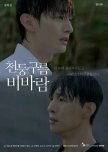
A gripping emotional ride, slightly rough around the edges but hard to ignore
Thundercloud Rainstorm arrives as one of those KBLs that immediately demand attention. From the outset, the series presents itself with a dense atmosphere, shadowed cinematography, and a promise of emotional intensity that, in its early episodes, is fulfilled with rare conviction. There is a clear aspiration toward narrative, aesthetic, and emotional maturity, one that lifts the drama above the ordinary and explains why so many viewers were quickly drawn in.The story revolves around Jeonghan and Iljo, two young men bound by ambiguous family ties, an unresolved past, and an attraction that never found room to exist openly. Its starting point, a relationship shaped by debt, shelter, and a visible imbalance of power, establishes a tense emotional game where affection and control stand dangerously close. This is a romance born out of line, fully aware of its own impropriety, and it turns that flaw into its central source of conflict.
The series’ greatest strength lies in its dialogue, particularly in the moments when outward silence gives way to inner turmoil. Jeonghan, a closed-off and emotionally repressed character, gains depth precisely when the narrative allows us access to his thoughts. Rather than relying on didactic explanations, Thundercloud Rainstorm trusts in words that carry weight, that reveal and sometimes wound. There are moments when a single confession, perhaps spoken too late, holds more power than any grand gesture.
Jeonghan, in fact, is the kind of protagonist who divides opinion, and that works in the drama’s favor. He begins as a harsh, possessive figure, at times frankly unpleasant, but gradually reveals himself as a true “loser in love,” someone incapable of handling his feelings without resorting to control. His journey from rigidity to emotional exposure is among the most carefully constructed arcs in the series. Iljo, by contrast, is more luminous but also more erratic. His passivity and poor decisions sustain much of the conflict, even if not always in the most organic way.
The chemistry between the leads is undeniable and keeps the drama afloat even when the script begins to stumble. Yoon Ji Sung and Jeong Ri U commit fully to their roles, delivering performances that balance vulnerability and desire without slipping into caricature. There is a constant sense of ease between them, an essential quality that makes their relationship, with all its excesses and gray areas, feel at least plausibly real. The result is an intensity that holds the viewer’s attention, even when narrative logic falters.
And falter it does. After an explosive beginning, Thundercloud Rainstorm seems to lose its sense of direction in the latter half. What was once focused anguish dissolves into repetitive misunderstandings, questionable choices, and subplots introduced without sufficient development. Some antagonists verge on the absurd, and certain conflicts are resolved too hastily, as if the series knows exactly where it wants to end up but lacks the time to properly build the road there.
There is also a deliberate discomfort in the way the series engages with unbalanced power dynamics. At times, this tension is provocative and narratively compelling. At others, the boundary of consent becomes too blurred to ignore. Thundercloud Rainstorm treats this moral ambiguity as an aesthetic choice, but it does not always manage to examine it critically, leaving part of its audience caught between fascination and unease.
The finale, while emotionally satisfying for many, carries the weight of revelations delivered too late. The clarification of the protagonists’ family connection, for instance, arrives as a narrative relief but also as a rushed solution to a dilemma that had sustained the entire story. Even so, the ending succeeds in seeking a circular closure, reframing earlier scenes and reaffirming the idea of a love that had always existed, even if misunderstood.
From a technical standpoint, the series stands out with confidence. The soundtrack is striking and carefully placed, the sound design is precise, and the direction shows a clear understanding of how to use bodies, glances, and silence as narrative tools. Visual composition and pacing work together to heighten emotional tension, often saying more through atmosphere than through dialogue. Even when the script feels excessive or unfocused, a consistent aesthetic care sustains interest and gives the drama a distinct, recognizable identity.
In the end, Thundercloud Rainstorm may not be as cohesive as it could have been, but it is difficult to overlook. Imperfect, provocative, and emotionally charged, it rests on the strength of its characters, the compelling chemistry of its central couple, and its willingness to take narrative risks. It is not a work meant to please everyone, and perhaps it does not want to, but it is undoubtedly one of the most talked-about and intriguing KBLs of 2025.
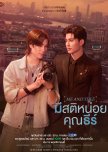
A romcom that knows its limitations as well as its strengths
Exaggerated and loudly romantic, Me and Thee is a series that is fully aware of its own theatrical nature. At a time when Thai BL often swings between realism and heavy drama, this production chooses a different path by embracing laughter and emotional fantasy. The result is a romantic comedy that is unafraid of being sentimental, finding its identity in its own high-energy approach.The premise follows a classic dynamic where a wealthy heir with the flair of a soap opera lead falls for a down-to-earth photographer. Khun Thee lives as if he is constantly in a grand declaration of love, while Peach approaches life with logic and caution. When these two universes collide, the story gains its own shape, supported less by narrative originality and more by the specific, heightened way the story chooses to tell itself.
The series relies heavily on Pond Naravit, who delivers a confident performance by finding the balance between the ridiculous and the endearing. Thee is impulsive and often immature, yet he is written with a sincerity that makes his over-the-top personality work. Peach serves as the essential axis that keeps the narrative grounded, with Phuwin building a restrained and observant character. While the script doesn't always give Peach the same depth it offers Thee, their chemistry remains the driving force of the show.
From a narrative standpoint, the series moves between moments of sharp focus and mild dispersion. While the secondary characters are charismatic, not all are given enough room to fully develop, leaving some subplots feeling more like sketches than complete stories. The "mafia" element also works mostly as visual flavor rather than a true source of conflict, as the real obstacles are emotional rather than external. This keeps the tone light, though it does make some of the world-building feel a bit ornamental.
Technically, the show is polished, with cinematography that stands above the usual standard. However, the frequent reliance on exaggerated sound effects to guide the humor can occasionally feel unnecessary, as the performances are often strong enough to carry the scenes on their own. The final chapters also feel somewhat rushed, trying to resolve several threads in a limited amount of time.
Ultimately, Me and Thee does not aim to be deep or revolutionary; it wants to be a comforting escape. It is an uneven but sincere romantic comedy that knows its own limitations. While it may be excessive at times, it succeeds in being an easy, lighthearted watch that prioritizes affection and laughter over complex drama.

Century of Love and the charm of being deliberately old-fashioned
There is something deliberately old-fashioned about Century of Love, and precisely for that reason deeply appealing. In a landscape crowded with school and university BLs, the Thai series chooses a romance that stretches across a century, flavored with mysticism, melodrama, and a generous dose of lakorn-style excess. The premise is both simple and grand. San, a man condemned to live for one hundred years while waiting for the reincarnation of his lost great love, sees his fate unravel when that love returns not as a woman, but as a young man named Wee. From there, the series unfolds as a story about time, loss, and the difficult art of learning how to live in the present.The opening is, without a doubt, one of the narrative’s strongest elements. The foundational tragedy, which includes an interrupted love, a pact with the goddess, and prolonged suffering, is presented with emotional clarity and dramatic weight that immediately draws the viewer in. There is an almost antiquated romanticism in the idea of someone waiting a hundred years for another person, and the series embraces this concept without irony. San’s pain feels believable. He is a man hardened by time, surrounded by memories and by the certainty that love, for him, has always meant loss.
Daou builds this protagonist with an intriguing mix of rigidity and vulnerability. His San is cold, gruff, and often morally outdated, which makes sense for someone shaped by values from another century. The series could have explored the internal conflicts created by this clash between past and present more deeply, especially regarding sexuality, but there is still a clear arc of transformation. When San begins to open up, it is not because the script demands it, but because the weight of solitude becomes unbearable. Offroad, in contrast, brings a completely different energy to Wee. He is bright, impulsive, sometimes overly naive, yet essential in breaking down San’s emotional defenses. The chemistry between them is undeniable and carries much of the series, even when the writing falters.
The central relationship, however, is also where some of the show’s weaknesses emerge. The development of the romance shifts between moments of strong emotional tension and hurried narrative leaps. At times, San moves from rejection to attachment too quickly, as if important moments of shared experience were left offscreen. In other instances, once the couple is finally established, the story seems more interested in rituals, chases, and external threats than in allowing the relationship to breathe. Even so, when the series gets it right, through glances, silences, and restrained intimacy, it delivers genuinely touching scenes.
If romance is the heart of the story, the supporting characters are its warm soul. San’s found family, especially Ju, Chu, and the ever-present Tao, brings humor, affection, and humanity. They prevent the series from sinking entirely into melodrama and add lightness to its heaviest moments. The female characters, in particular, avoid easy stereotypes. They are not merely romantic obstacles, but complex figures who are practical, ambiguous, sometimes selfish, and sometimes unexpectedly supportive. Even when they cause chaos, they are rarely disposable.
The antagonists, on the other hand, represent the weakest point of the script. Overly caricatured, underdeveloped, and at times unintentionally comical, they function more as narrative devices than as real threats. They lack depth and clear motivation, while convenience often takes their place. The same can be said of some worldbuilding elements. Mystical rules appear and disappear as the episode requires, coincidences accumulate, and important questions are left unanswered. The series openly asks the viewer to suspend logic, and those who accept this pact are likely to enjoy it more.
Visually and technically, Century of Love is uneven. There are strong aesthetic ideas, especially in the past sequences and sacred spaces, but the execution suffers from limited CGI, overuse of slow motion, and a soundtrack that does not always match the tone of the scene. Still, the pacing rarely drags. Even when it leans too heavily on repetition, particularly flashbacks, the series maintains a sense of emotional urgency that encourages viewers to keep watching.
In the end, Century of Love is neither polished nor narratively flawless. It is chaotic, excessive, and at times illogical. Yet it is also sincere in its ambition to speak about love that endures through time, the burden of living trapped in the past, and the courage required to choose the present. Between unexpected laughter, genuine tears, and questionable decisions, the series finds its charm precisely in its imperfections. It does not portray an idealized love, but a stubborn, noisy, deeply human one, and perhaps that is why, despite everything, it lingers.

A door into a world where danger and desire collide
They say the city changes people, but sometimes it exposes them. Jack & Joker: U Steal My Heart! opens like a door into a world where danger and desire collide, where every choice is a gamble and every glance carries weight. Here, romance isn’t a soft escape; it’s a pulse beating amid chaos, a promise that even in darkness some sparks refuse to die. From the very first scene, the series sets a rhythm of tension and unpredictability, pulling viewers into a game where loyalty, love, and power are always at stake.The show plunges the audience into a tangled world of underworld romance, high-stakes power plays, blackmail, and carefully plotted schemes, all underpinned by a social critique sharper than it seems at first glance. Every confrontation and plot twist feels deliberate, as if the series is daring the viewer to anticipate the next move. Risk runs through every scene, chaos lurks around every corner, and despite occasional rough edges, the story pulses with energy, tension, and life.
The drama’s atmosphere blends suspense, tension, and humor with a stubborn kind of courage, whispering to the audience that they can trust the journey. At times, the series itself isn’t entirely sure where it will go next, and paradoxically, that uncertainty works in its favor. There’s a genuine freshness in the way the story moves, shifting locations, escalating conflicts, and showing with a touch of irony how absurd and ruthless power games can be. The Four Horsemen, the elite group controlling more of Thailand than they probably should, are the clearest example of this elegant cruelty.
It is in this world of disproportionate forces that Jack and Joke find room to flourish. Yin and War form an emotional axis so solid it carries the entire series. Their connection is more than chemistry; it is understanding, commitment, and a shared sense of where their characters come from and where they are trying to go. Together, they make the screen ignite, while apart, the story feels suspended, waiting for their return. Few duos hold the backbone of a story so firmly.
The romance is handled with great care. There is no melodramatic excess, no overnight passion. Love grows amid danger, blossoms in vulnerability, and asserts itself through quiet, unspoken loyalty. The scene in which they declare this love in the face of death, ready to confront the end together, is one of the most powerful images in a BL drama last year. Courage, love, and stubbornness are compressed into a gesture that feels undeniably true.
When the series expands its universe beyond the central duo, Jack & Joker demonstrates bold ambition, though it does not always follow through on execution. Tattoo, Aran, Hope, Save, Hoy, and Rosé appear as sparks of potential, each carrying layers of tension, hints of backstory, and the promise of complex relationships. Some suggest unspoken alliances, others flirt with romance or rivalries that could have enriched the narrative, yet the series rarely grants them the space to develop fully. Their moments on screen feel fleeting, flickering like embers that could ignite into something substantial but instead vanish before taking root.
This leaves a lingering sense of untapped possibilities, particularly in the realm of romance, where glimpses of connection, subtle chemistry, and emotional stakes hint at stories that remain just out of reach. The secondary romances are suggested with care, offering tantalizing intimations of passion and heartbreak, but are never allowed to breathe long enough to leave the impact they promise, reinforcing the bittersweet feeling that Jack & Joker’s world is much larger and richer than what we are ultimately shown.
Missteps are most visible in the finale, perhaps the series’ most uneven episode. Long, audacious, packed with twists, and marked by narrative disorder, it juggles the ring saga, the Boss’s maneuvers, and the actions of the Four Horsemen. All elements are entertaining but not always coherent. The ideas are strong, yet the consistency falls short. Even so, the care poured into the project softens the impact of these flaws.
The conclusion restores the sensitivity that has accompanied the series from the start. The school finally opens its doors, Joke’s family offers the embrace he needed, Jack finds his rightful place, and the future hints at possibilities for both characters. Everything is delivered with care, like a farewell that refuses to be bitter. The ending may not resolve every plot detail, yet it secures what matters most: the emotional core.
And that is what lingers. The empty days without new episodes, the lump in the throat during the credits, and the warmth toward a nearly independent project daring to step beyond comfort zones. This is more than a technically competent series; it is a work made with soul, with tangible emotional investment. It is easy to see why so many ended up hugging a pillow while War sings “One Hundred Ways.”
Ultimately, Jack & Joker does more than tell a story. It immerses the viewer in a world where danger, love, and chaos collide, leaving them both shaken and exhilarated. It is a drama that invites audiences to replay scenes, dissect choices with friends, or simply sit in silence and let its weight settle. Imperfect? Absolutely. Bold beyond measure? Without question. But alive, daring, and unforgettable, that is what it is. It is a rare spark in a genre often satisfied with repetition, and it is exactly the kind of story that makes Thai BL feel vibrant, unpredictable, and alive.

Love that breaks all the rules
Bad Buddy is one of those series that you finish with a silly smile on your face and an empty feeling in your chest because it’s over. It’s the kind of story that sticks with you, not just because of the plot or the characters, but because of the way everything is handled with so much care, sensitivity, and love. Directed by Noppharnach Chaiwimol, or simply P’Aof, this work stands out as one of the most genuine and revolutionary BLs from GMMTV and honestly, one of the best ever made.The premise seems simple: two boys from rival families who grew up hating each other, but end up falling in love. A classic “enemies to lovers,” right? But Bad Buddy takes this cliché and breaks every stereotype. Here there is no submission, no “husband and wife” role, and no toxic love disguised as passion that many dramas still insist on romanticizing. What the series delivers is a balanced, mature relationship built on communication and respect. Pat and Pran are two characters who tease each other, challenge each other, but above all understand each other and that is beautiful to watch.
Ohm Pawat and Nanon Korapat, who play the main couple, are simply flawless. The chemistry between them is tangible, so natural that many times it doesn’t even need words. There are moments where they say everything just with a look, a subtle smile, or the silence that fills the scene. It’s rare to see such sincere and expressive acting, where every touch and glance carries more emotion than any love speech. They can be intense, funny, and incredibly tender, and that makes Pat and Pran more than just a BL couple; they are a real couple, alive, with flaws and dreams, fears and courage.
P’Aof’s direction is another high point. Every scene seems to have been thought out with heart. The cinematography is light, the settings are symbolic, and the editing gives space for the viewer to feel, not just watch. There is an absurd delicacy in the choice of shots, pauses, and metaphors that run through the whole narrative. One example is episode 11, where Pat talks about “quitting the bar,” a metaphor for the breakup. These subtleties make Bad Buddy an almost poetic experience, where everything is there for a reason, and every detail has weight.
The soundtrack deserves special mention. There are only three original songs, but each has an important emotional role in the series. “Just Friend” marks the first episodes, symbolizing Pran’s suppressed feelings. “Secret” represents Pat’s awakening and recognition of love. And “Our Song,” used in the final episodes, is practically the couple’s anthem, the celebration of the love that faced the world and won. Each track appears at the exact moment, and it’s impossible to hear them without remembering the scenes that made you cry, laugh, or just sigh.
The script is also surprisingly smart. It doesn’t need forced plot twists or caricatured villains. Even the secondary characters are treated with respect and lightness, like the couple Pa and Ink, who completely avoid the idea of female rivalry that ruins so many other stories in the genre. In Bad Buddy, women are not used as tools to generate jealousy or drama, and that is such a relief.
The ending is exactly what the story deserved. No tragedies, no melodrama, no unnecessary suffering. Pat and Pran choose love, even if it means living part of it in secret. And that’s not cowardice, it’s a conscious choice of those who have already suffered enough trying to please others. They understand that their relationship only concerns themselves, and that message is powerful. It’s about protecting love without hiding from yourself.
Bad Buddy is an ode to the freedom to love. A series that shows true love doesn’t need to be loud or perfect, it just needs to be sincere. It makes you laugh, cry, fall in love, and believe again that love can really be beautiful and light. So, I have to say thank you, P’Aof, Ohm, Nanon, and the whole team for this masterpiece. Bad Buddy is not just a series, it’s a feeling, and it will keep warming the hearts of those who watched it for a very, very long time.
“You may think that someone like me cannot change the world, but I want you to know that this world cannot change someone like me either.”

A shout of color, authenticity and truth
Gelboys is one of the most sincere and touching series ever to come out of the BL universe. Under the direction of Boss Kuno, already known for shaping emotionally rich stories like I Told Sunset About You, the series feels like a deep breath in the middle of an industry crowded with repetition. From its very first moments, it becomes clear that Gelboys is not satisfied with simply entertaining. It wants to linger. It wants to stir memories, awaken feelings, and guide us through the emotional highs and lows of adolescence, with all its confusion, intensity, and quiet beauty.As in Kuno’s previous works, the magic of Gelboys lies in its sense of truth. Nothing feels staged. Nothing feels forced. The characters make mistakes, choose poorly, embarrass themselves, fall too hard, cry too much, and regret what they were not ready to understand. Watching them feels painfully familiar, the kind of familiarity that makes you pause and think, I’ve lived this before. The writing and direction approach teenage emotions with tenderness and honesty, never romanticizing the pain, never dismissing it either. This is a story about love, but also about identity, insecurity, growth, and learning how to accept yourself in a world that rarely offers clear answers. Growing up here is messy, loud, fragile, and deeply human.
Boss Kuno’s direction once again proves how powerful restraint can be. Feelings are translated into images through careful framing, gentle lighting, and colors that seem to breathe alongside the characters. The 90s-inspired aesthetic, blended with a modern sensibility, never overshadows the story. It simply exists, quietly enhancing every moment. The use of social media feels just as organic. It is not decoration, but an extension of the characters’ inner worlds, reflecting how young people today connect, perform, retreat, and protect themselves, often all at once.
At the center of it all are Fourmod, Baabin, Chian, and Bua, four boys navigating love and self-discovery with unsteady hands. Each one carries their own fears, contradictions, and imperfect ways of loving. None of them feel hollow or disposable. Even when their actions frustrate you, the story offers enough emotional honesty to make those choices understandable. You might get angry with them, but you never stop caring. Among these connections, Bua and Baabin stand out with a relationship that is tender and bittersweet, delicate in a way that stays with you long after their scenes end.
Beyond its characters and plot, Gelboys also shines through its creativity. The idea of gel nails goes far beyond visual charm. It becomes a soft but powerful symbol of self-expression, of choosing color, vulnerability, and freedom in a world that often demands restraint. It gently reminds us that being different, sensitive, intense, and open is not a weakness, but something worthy of celebration. And yes, those nails become unforgettable, carrying emotion and meaning in every detail.
Perhaps what resonates most deeply, though, is the nostalgia. Even if those years are far behind you, the series quietly pulls you back into that emotional space where everything felt urgent, overwhelming, and endlessly important. The mix of excitement and fear, the desire to live everything all at once, the certainty that every feeling might be the last or the biggest. Gelboys whispers that it is okay to be confused, okay to make mistakes, okay to feel too much. That message lands softly, but it lingers, because we all recognize ourselves in it.
At its heart, Gelboys is about youth, freedom, and the courage to exist honestly before the world knows how to respond. It captures both the discomfort and the tenderness of growing up, offering a love letter to one of life’s most chaotic and sincere phases. When the final credits roll, what remains is a quiet ache, the kind that follows the end of something that truly mattered.
With Gelboys, Boss Kuno delivers not only one of Thailand’s strongest BLs, but also one of the most emotionally truthful series of recent years. He reminds us that the most powerful stories are not built on grandeur, but on intimacy, on small moments told with care and empathy.
This is the kind of series that stays with you. It lingers long after the screen fades to black, echoing memories of a time when everything felt raw and unresolved. Tender, chaotic, funny, frustrating, and full of heart, Gelboys captures the essence of growing up with rare sincerity. Watching these boys stumble, learn, and love feels like meeting a version of yourself you thought you had left behind. And once Gelboys finds its way into you, it quietly refuses to leave.
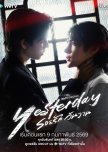
At what point does this dynamic stop functioning as romance at all?
Yesterday enters the Thai BL scene with a premise that makes it clear it has no interest in playing it safe. Instead of following a traditional romance, the series dives into darker territory, where relationships are shaped by trauma, power, and deep emotional imbalance. The result is a narrative that grips through its intensity, but also demands patience and a willingness from the viewer to engage with its more challenging choices.One of the show’s biggest strengths lies in its central duo. The chemistry between the leads is undeniable and often serves as the main thread holding everything together, even when the writing starts to falter. There is a constant emotional charge in their interactions, especially in the more tense scenes, which keeps the audience invested. Kelvin, in particular, stands out as a deeply unsettling presence, a character built on obsession and emotional distortion whose impact is both captivating and uncomfortable.
That discomfort is very much intentional. Yesterday leans into a “dark romance” dynamic that openly pushes against moral boundaries, and that choice defines the entire experience. The central relationship is far from romanticized and, at times, feels more focused on control, dependency, and emotional harm than on genuine affection. This can be seen as a bold creative direction, but it also raises an inevitable question: at what point does this dynamic stop functioning as romance at all?
The show’s biggest weakness, however, is in how it tells its story. Its fragmented structure, constantly jumping between timelines, ends up doing more harm than good. Rather than building intrigue, these shifts often disrupt the pacing and blur the emotional progression. There are moments where you understand what is happening on a surface level, but struggle to actually feel its weight due to the lack of continuity.
This narrative inconsistency also affects the characters. Kelvin and Veir go through significant changes, but not all of them feel properly developed, which makes some of their actions seem driven more by plot convenience than organic growth. Even so, there is an interesting foundation there, especially in how the series attempts to tie these shifts to past trauma and dysfunctional family dynamics.
As the story progresses, the focus expands beyond the central relationship and leans heavily into power struggles and corporate intrigue. This shift is interesting because, while it adds depth to the world, it also dilutes the emotional core of the romance. At times, Yesterday feels less like a story about two people and more like a thriller about ambition and control.
These different layers do not always come together smoothly. The script frequently relies on rushed or underexplained developments, creating gaps that break immersion. On top of that, the handling of more sensitive themes, such as mental health, can feel somewhat superficial, as if they are used to heighten the drama without being fully explored.
At the end of the day, Yesterday is a deeply contradictory experience, that impresses more for its intention than its execution. There is a strong idea at its core, along with a clear desire to break away from familiar formulas and challenge the audience, and that in itself has value. However, its difficulty in organizing the narrative and fully developing its own conflicts prevents that potential from being fully realized. Even so, it is the kind of story that stays with you, not necessarily for what it gets right, but for what it almost managed to be.

A comfort drama in the truest sense: emotionally open, imperfect, and deeply felt
There is something quietly disarming about how Revenged Love settles into the viewer’s life. It doesn’t announce itself as an event or demand immediate devotion; instead, it seeps in gradually, building familiarity before you realize how attached you’ve become. What begins as a light, almost mischievous romantic premise slowly reveals itself as a story driven less by plot mechanics than by emotional accumulation. By the time the series finds its footing, the investment is no longer optional. You are already there, watching not to be surprised, but to feel.The premise is familiar and unapologetically so. Wu Suo Wei, wounded by abandonment, chooses revenge as a form of proximity, inserting himself into the life of Chi Cheng, the man who replaced him. The plan is flawed from its conception, bends under its own contradictions, and inevitably collapses once genuine feeling takes hold. Revenged Love never pretends this outcome is unexpected. Its confidence lies in accepting the shape of this story and inhabiting it fully, finding humor, tension, and warmth within a structure that prioritizes emotional truth over narrative surprise. The series understands that what sustains a romance is not novelty, but resonance.
The opening episodes lean comfortably into comedy and deliberate exaggeration. Absurd situations, broad timing, and a near-theatrical lightness establish a tone that refuses to overexplain itself. This works because the characters themselves are compelling enough to carry it. Wu Suo Wei is impulsive and emotionally transparent, someone who reacts before he reflects, and his vulnerability is never framed as something to be fixed. Chi Cheng enters as his counterbalance: confident, affluent, self-possessed, wrapped in a dominance that might veer into caricature if not for Tian Xuning’s controlled, precise performance. Their collision generates a tension rooted not only in attraction, but in pride, status, and the uneasy negotiation of power.
That tension is allowed to mature slowly. Episode by episode, the initial performance of control and provocation loses its effectiveness, giving way to something more exposed and emotionally dangerous. When this shift occurs, Revenged Love pivots quietly. Revenge fades into irrelevance, replaced by questions of endurance. Who stays when the premise collapses, who yields first, who loves without knowing how to protect themselves from it. The series treats this emotional realignment with notable sensitivity, resisting the urge to label feelings too quickly or reduce them to explanation.
At the center of it all is the chemistry between Zi Yu and Tian Xuning, which functions less as spectacle and more as evolution. It deepens, shifts, and fractures in believable ways. Meaning lives in lingering glances, in silences that stretch uncomfortably, in gestures so restrained they feel almost accidental. Chi Cheng’s progression from rigid control to hesitant surrender is shaped with patience and respect for his internal rhythm. Wu Suo Wei’s journey is even more exposed, moving from impulsive attachment to a love lived openly, without calculation, shame, or retreat. Few recent BLs have articulated this transition with such emotional clarity.
Some images, once seen, refuse to fade. The fireworks sequence, underscored by a resonant and carefully chosen soundtrack, stands as the emotional emblem of the series. Its power lies not only in its visual beauty, but in the meaning it carries: a deliberate choice to remain, to stay present, even when love becomes confusing, exhausting, and painfully incomplete. In that moment, spectacle gives way to vulnerability, and what could have been simple romantic flourish becomes a quiet emotional statement. It is a scene that slips beyond the boundaries of its episode, lingering in the viewer’s memory as an unspoken farewell, the kind that says everything precisely because nothing is said aloud.
The supporting cast brings a necessary sense of balance to the series, most clearly embodied in Cheng Yu and Xiao Shuai. Although they occupy less screen time, their relationship unfolds with a calm assurance that feels deliberate. Rather than relying on declarations or dramatic turns, their bond grows through familiarity: shared looks, easy presence, and moments of quiet understanding. This lived-in quality gives the series a steadier emotional ground, allowing the protagonists’ volatility to feel sharper by contrast. While revenge and desire drive the central romance forward in sweeping motions, this second relationship moves at a gentler pace, anchoring the narrative without ever lessening its emotional weight.
Xiao Shuai, especially, stands out for the care with which he is written and performed. He resists the easy categorization of the “comic friend” and instead emerges as Suo Wei’s most reliable emotional anchor, someone who listens more than he speaks, who supports without intruding, who loves without seeking validation. His presence subtly reshapes the emotional balance of the series, suggesting that care does not need to be loud or performative to be meaningful. Through this secondary couple, Revenged Love resists turning inward on itself, opening space for a broader, more generous understanding of intimacy. Their quiet steadiness reads as a form of grace, reinforcing the idea that love can be patient, undramatic, and still profoundly affecting.
Not everything, however, withstands the test of time. From its second half onward, Revenged Love seems to lose some confidence in its own simplicity. The script becomes entangled in repetitive conflicts, leaning too heavily on miscommunication between adult characters and persisting in storylines that drain more energy than they add emotional depth. The recurring return of Chi Cheng’s ex illustrates this wear particularly well: his prolonged presence tests the viewer’s patience and softens the impact of moments that could have been narratively explosive. What once felt like dramatic tension begins to edge toward exhaustion.
When the pacing softens, the series reaches its most affecting terrain. Scenes of care, grief, and emotional repair, especially those shared between Wu Suo Wei and his mother, unfold with a tenderness that feels carefully measured. The emotion is undeniably heightened, as it must be when confronting loss, but never excessive. Instead of tipping into overwrought melodrama, the series allows feeling to breathe, trusting silence, proximity, and small gestures to carry the weight of grief. These moments broaden the story’s emotional register and remind us that beneath the romantic turbulence lies a meditation on belonging, mourning, and familial love. It is precisely in this controlled, humane balance that Revenged Love feels most enduring, grounding its romance in something deeper and more universal than desire alone.
Viewed within the realities of its production, shaped by budget constraints, noticeable cuts, and an ending briefer than the story seemed to demand, the series’ cohesion remains striking. Revenged Love arrives at its conclusion without diluting its intentions or softening its emotional core, maintaining a clear sense of purpose to the very end. It refuses to frame its romance as tentative, compromised, or apologetic, and within such a restrictive creative environment, that steadfastness reads not as defiance, but as a quiet, resonant triumph.
In the end, this may not be the most technically polished or structurally rigorous BL of the year. But it is undeniably one of the most inviting. Revenged Love operates as a comfort drama in the truest sense: emotionally open, imperfect, and deeply felt. It arrives without grand promises and leaves behind a gentle ache, and few series manage to make departure feel this personal. Perhaps that is why letting go feels heavier than expected.


