


 2
2


This review may contain spoilers
I came for the hype, stayed for the hush between notes
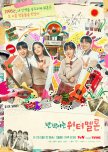
I almost didn’t pick this up. The title, the poster, the vibes — everything screamed slice-of-life, and that genre and I have a long-standing cold war. But the internet wouldn’t shut up about it. “Best thing since sliced bread,” they said. I caved. And while I won’t echo that sentiment (and don’t get me started on the word masterpiece — it’s been diluted to the point where it’s lost all meaning --- even my 10/10 favorites don’t get that crown), I’ll concede: Twinkling Watermelon is quite good.
The beginning is slow, yes, but it earns its pace by laying out Eun Gyeol’s family dynamic with care. Ryeo Un, whom I hadn’t seen before, delivers a quietly compelling performance — a son caught between sound and silence, duty and dream. He doesn’t overplay it, and that restraint makes his emotional beats land harder. Seol In Ah, usually relegated to supporting roles, gets to stretch here. Playing two distinct characters, she’s versatile and surprisingly grounded.
On the other hand, I was less convinced by Choi Hyun Wook. I couldn’t decide if he was overacting or if the writing forced his hand, but the disconnect between his youthful portrayal of I-chan and the subdued adult version (played by Choi Won Young) was jarring. It stood out even more when compared to that with Yun Cheong A — a character, played by two actresses and yet they somehow kept the character’s essence intact across timelines. That consistency made her arc more emotionally resonant.
Now about the time travel mechanics? Just suspend your disbelief. The drama isn’t about that. It’s about perspective — how seeing someone’s past can reshape your understanding of them. Eun Gyeol learns to see his parents not as obstacles, but as people with their own silent battles. The theme of communication runs deep, especially in a story where three characters are deaf/mute. Their condition forces effort, while others (like Cheong A’s stepmother) weaponize silence. The older I Chan’s outburst — “How will I know if you don’t tell me your dreams?” — hits like a gut punch, because it tells you that communication IS important.
Then there’s warmth too: I Chan’s grandmother feeding a band of teenagers despite her humble means, grounding the show in small acts of love. I wasn’t here for the romance, and honestly, I wanted more closure on Eun Gyeol’s parents — how I Chan and Cheong A found each other again after the timeline shift. And the ending? I wish it leaned into earned understanding rather than rewriting their lives into glossy success. A return to their humble beginnings, with Eun Gyeol choosing to communicate and pursue music anyway, would’ve been more honest. The “magic eraser” ending felt too clean.
Still, if you overlook the shortcuts, Twinkling Watermelon is a warm, thoughtful drama. Not a masterpiece — let’s retire that word for a while — but a story that understands the power of perspective, and the quiet revolution of being truly heard.
The beginning is slow, yes, but it earns its pace by laying out Eun Gyeol’s family dynamic with care. Ryeo Un, whom I hadn’t seen before, delivers a quietly compelling performance — a son caught between sound and silence, duty and dream. He doesn’t overplay it, and that restraint makes his emotional beats land harder. Seol In Ah, usually relegated to supporting roles, gets to stretch here. Playing two distinct characters, she’s versatile and surprisingly grounded.
On the other hand, I was less convinced by Choi Hyun Wook. I couldn’t decide if he was overacting or if the writing forced his hand, but the disconnect between his youthful portrayal of I-chan and the subdued adult version (played by Choi Won Young) was jarring. It stood out even more when compared to that with Yun Cheong A — a character, played by two actresses and yet they somehow kept the character’s essence intact across timelines. That consistency made her arc more emotionally resonant.
Now about the time travel mechanics? Just suspend your disbelief. The drama isn’t about that. It’s about perspective — how seeing someone’s past can reshape your understanding of them. Eun Gyeol learns to see his parents not as obstacles, but as people with their own silent battles. The theme of communication runs deep, especially in a story where three characters are deaf/mute. Their condition forces effort, while others (like Cheong A’s stepmother) weaponize silence. The older I Chan’s outburst — “How will I know if you don’t tell me your dreams?” — hits like a gut punch, because it tells you that communication IS important.
Then there’s warmth too: I Chan’s grandmother feeding a band of teenagers despite her humble means, grounding the show in small acts of love. I wasn’t here for the romance, and honestly, I wanted more closure on Eun Gyeol’s parents — how I Chan and Cheong A found each other again after the timeline shift. And the ending? I wish it leaned into earned understanding rather than rewriting their lives into glossy success. A return to their humble beginnings, with Eun Gyeol choosing to communicate and pursue music anyway, would’ve been more honest. The “magic eraser” ending felt too clean.
Still, if you overlook the shortcuts, Twinkling Watermelon is a warm, thoughtful drama. Not a masterpiece — let’s retire that word for a while — but a story that understands the power of perspective, and the quiet revolution of being truly heard.
Was this review helpful to you?


