


 2
2


This review may contain spoilers
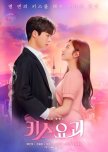
Ten kisses, one logic fail—goblin drama with more loopholes than lipstick
This drama had a premise that could’ve been fun—a century old- goblin who needs to kiss ten humans to become human himself. Cute, right? Except the execution felt like someone wrote the outline, spilled coffee on it, and said “eh, good enough.” The pacing was rushed, the emotional beats barely landed, and the whole thing screamed “we had twelve episodes and five bucks.”Let’s talk about Oh Yeon Ah, the female lead. She’s supposed to be strong-willed, but ends up tagging along while Ban Sook kisses other women like it’s a sport. What woman in her right mind agrees to be the emotional support buddy while her crush locks lips with strangers? Unless she’s a masochist with a martyr complex, this setup makes zero sense. And don’t get me started on the exorcist subplot—apparently, a regular human can protect a supernatural being from a trained assassin. Sure, dude.
The show tries to sell us on romance, but it’s hard to feel invested when the logic keeps tripping over itself. Loopholes everywhere—characters teleporting between emotional states, plot threads dropped like hot potatoes, and a goblin queen who shows up just to be cryptic and leave. It’s painfully obvious the budget was tighter than Ban Sook’s jeans.
In the end, Kiss Goblin is a meh watch. Not offensively bad, but not good enough to recommend. It’s the kind of drama you put on when you’re folding laundry and don’t want to commit to actual storytelling. Watch it if you’re curious, but don’t expect it to kiss your brain with brilliance.
Was this review helpful to you?
This review may contain spoilers
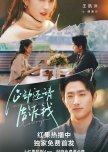
From meh to magnetic—Lin Qian outpaces the plot and earns your heart.
I went into this drama with low expectations, but surprise surprise—it actually hit hard. The ratings were meh, but this one proved you can’t trust the numbers.The noble idiocy here? For once, it works. Lin Qian hiding her illness didn’t feel like a tired trope—it felt real, painful, and kind of brave. No over-the-top self-sacrifice, just quiet heartbreak done right. Lin Qian’s character comes alive once she finds out she’s dying. Before that, she’s just going through the motions. After? She’s magnetic. Her choices finally feel her own, and watching her live like she’s running out of time makes you root for her.
Romance-wise, it’s slow but solid. She and Fu Yu Chuan don’t explode into love—they inch into it. Lots of awkward quiet, soft stares, and finally, some real feeling that doesn’t feel forced. This is understandable since they’re dating with death looming (granted, only one of them knows about it), but somehow this works.
Bittersweet’s the name of the game. Sure, it has some issues, and forgets about side characters now and then, but it delivers. Unexpectedly tender, just enough hurt, and a lead who finally gives us something to feel. Glad I didn’t skip it.
Was this review helpful to you?
This review may contain spoilers
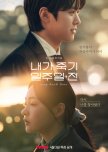
Short drama, long sob. Came for word-of-mouth, stayed for emotional devastation
Full disclosure: I wasn’t planning to pick this drama up, but positive word-of-mouth and its short runtime convinced me to watch it. But boy, I didn’t know it would be this heavy. I know dying was involved; it’s right there in the synopsis. Usually, when a drama begins with a dead character, I have already prepared my mind to accept this death as final. What I was not ready for was the avalanche of tears that accompanied me on this brief journey.I have to commend Kim Min Ha as an actress. Despite not fitting the mold of a flashy romantic heroine, she delivered a standout performance in this drama, particularly in her portrayal of teenage Jung Hui Wan. She’s as brass and bold at school, and pretty much arm wrestles Ram U into an unconventional friendship that started out from a prank.
Not so shabby keeping up with the lead actress is Gong Myung, who played the introverted Ram U like a deer caught in the headlights when being steam-rolled by Hui Wan. As a Grim Reaper, Ram U surprisingly forsakes his responsibility of leading Hui Wan to the afterlife and instead convinces her to continue living. And it’s this message that is at the heart of this short drama.
The production team’s execution is superb; the muted tones, tranquil background, and somber music all contribute to the drama’s melancholic mood. The flashbacks intertwined seamlessly with the present moments, with both Hui Wan and Ram U reminiscing about their time spent, and about the loss of time not spent together.
Perhaps it’s because of the regrets of both main characters that lead them to this path. We can never know what would have happened if Hui Wan decided alternatively to join Ram U at that moment of his death, or what would have happened if Hui Wan went to the observatory instead of Ram U. Their running joke of exchanging their names since that fateful day seems to have backfired, if we are to believe Hui Wan’s insistence that it was her fault that Ram U died.
The drama makes us realize that there’s no rhyme or reason to anyone’s death. No matter how you turn it over your head, when it’s someone’s time to depart, it’s final. Mulling over what ifs would not bring them back to life. Though it’s easier said than done, the best way to honor their existence is to move on and live a fruitful life.
Was this review helpful to you?
This review may contain spoilers
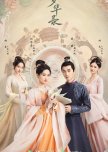
Class warfare, emotional manipulation, and skirts that don’t crease under pressure
I am not a feminist by any means but I do like dramas with strong female leads, and I usually stay away from ones where the FL’s sole purpose in life is to chase a guy around, which, thank God, this isn’t the case here. The premise where three down-on-their-luck women, who strive to succeed in a traditional, mostly patriarchal society, appealed to me, and this didn’t disappoint.Only recalling her as “Mulan,” I was not exactly surprised by Liu Yi Fe’s acting skills. Crystal balances both elegance and determination as Zhao Pan Er, a business-savvy teahouse owner who has been jilted by her ex-fiance who ditched her for a more favorable marriage. Throughout the drama, Pan Er devices ways to bring this person to “justice,” although I wasn’t quite sure what the intention was behind this aside from getting her hands back on a highly sought-after painting that seemed to be left in his possession. Unless there was a legal contract binding Pan Er and Ouyang Xu together, I don’t see why he owed her anything else, except perhaps an explanation. Though he’s no saint in the beginning, I feel others didn’t need to show much malice towards him until later, perhaps when his true colors were revealed. (More on this later).
But no, she has to go to another city, dragging along with her three friends and hunt this guy down and demand some sort of reparation. Granted, the other two ended up in the same place may be coincidence: San Niang, floating in the water, after realizing she married a jerk, and Yin Zhang, shackled in her own house, because she married an even bigger a$$hole. So Pan Er’s duty, as the loyal and dedicated friend she is, to save both of them from their disastrous circumstances wearing a flowy cape.
She does all this while carrying on a mild flirtation with some guy named Gu Qian Fan, because you never know, she may need him in the future, even though she absolutely abhorred where he works/where he came from because of past events, that he had no knowledge of. Well, this worked in Pan Er’s favor because Qian Fan saved her ass countless of times. But she insists on repaying his kindness by rubbing her ex’s name in his face. Yes, yes, Qian Fan gets it: “We are just friends, and you’re just bitter, but I’m so okay with this because I’ve never seen another woman in my life who I don’t consider my mother or sister or the kitchen help. I just like coming here for the tea you brew.”
Now, speaking of brewing, this woman can sure brew. Pan Er can brew up several storms at the same time and still keep her skirt tidy. Competitors try to outwit, outsmart, outbid, outflank her, but Pan Er sticks to her guns, the ones that she keeps close to her breasts, I mean, chest. But she eventually loosens up around Qian Fan, because of course, he might prove useful on another occasion.
In the meantime, shady dealings are going everywhere else. It seems that somebody is out to get somebody by using somebody else who is, in turn, using someone else to their nefarious deeds. So everyone’s looking over their shoulder, especially Gu Qian Fan, who has to keep deflecting daggers out of his back. Meanwhile, Pan Er is also busy swatting flies, but does so with a curved pinky, so it’s not surprising that one vermin or two invades her life.
Qian Fan magically disappears from a few episodes, and Pan Er has a second string waiting in the wings. Her falling out with Yin Zhang also stressed her out, because she realizes her friend could do other things aside from playing the Pipa. It’s not entirely for show. (Although it looked liked, it really is). Pan Er realizes that she’s not the only one that Yin Zhang can rely on. She also has her scripted partner, because God damn it, everyone needs to be coupled up, whether or not they like it. It’s part of the story.
The only miserable people really are those who ended up single, like Ouyang Xu, who I still think was driven to madness by his own ambition, with a generous prodding from Pan ER. In the end, it was his desperation to survive in a world that heavily favors people who have a good social standing, that failed him. Ouyang Xu lost sight of his initial dream, which is to pass the imperial exam, so he can marry well. Perhaps, we would see a different story if Pan ER let him be. He could have probably led a decent family life with Gao Hui who genuinely liked him. His moral compass was broken anyway when he started doing questionable things. Like a cornered mouse, he didn’t see a way out except to resort to violence.
As the drama goes, this was way more interesting than I expected. The characters are not perfect but are multidimensional. The three women, in particular, have a natural character development that wasn’t contrived. There was an engaging plot and side arcs that didn’t feel too out of place, except perhaps for the gaping hole that Gu Qian Fan left with his absence towards the end. Acting from both leads were A+, and the rest of the cast were very good in their own right. The few times where I felt frustrated are when Pan Er displays some sort of self-righteousness. I’m not saying that women SHOULDN’T rely on men to be independent. Anyone could use some help, and still be successful in their own right, but just don’t dismiss it as if it’s ALL your effort. Give credit where credit is due. And it’s true what Qian Fan said or implied at one point, that being in a relationship means that you CAN depend on each other, that one didn’t need to take all the problems upon oneself. This does not make you weak. But other than that, this is a decent drama about female empowerment in a Class-based society, and can teach a thing or two on how NOT to be hoodwinked into a disastrous marriage.
Was this review helpful to you?

This review may contain spoilers
Story: Two best friends sleepover where one tries to extend his stay and did not want to go home yet as it says in the title.Acting: Nothing to write home about.
Music: Not memorable.
Rewatch Value: Eh.
Overall impression: Typical closet gay story about one friend crushing on another who is straight. We know where this would go. But even so, Jhih Wei did not get the memo and probably hopes that he would get a chance at love. It ain't happening dude.
Was this review helpful to you?

This review may contain spoilers
If you are expecting a Prince Charming and a Cinderella-story from this drama, don’t count on it. I get it that not all heroes wear capes, because this one just flicks a lighter but doesn’t smoke. Yes, Li Xun is a genius in his own right, but he could be less cocky and I would have been fine with it. Right at his heels, Zhu Yun attempts to tame this golden retriever by chasing after him, like she’s herself a dog that won’t let go of a bone. The pacing is choppy, but manageable to watch. Cinematography and choice of music are good. The cast is diverse, so are the secondary characters, but all these good points do not negate the fact that I struggled to finish the show due to various factors. For instance, the inconsistent re-introduction of some characters who show up at odd times in the drama. I feel some characters are even under utilized (ahem, Tian Xiu Zhu) and just serve as props to the main leads, which is a sad fact because other stories could have been more developed.
For example, I would have been interested in how Ren Di’s band went from obscurity to popularity, or how her relationship with Xiao Liu evolved. Or even how Shu Miao took a legal path in her career, when she was a major part of Zhu Yun’s college days. Instead, we see such as useless POS like Zhi Jing be part of L&P board of directors and living prosperously, as if he weren’t the one tormenting Li Xun and Zhu Yun in their early days. Instead, Li Xun and his group were prohibited from joining competitions for years, while Zhi Jing could still pull strings despite being exposed in public.
Another case in point is that both male and female protagonists are unfailingly stubborn, sometimes to the point of infuriating, hardly giving leeway to anybody except to each other. They do this awkward dance where they are hot/cold towards each other, but with other people, they are self-righteous, if not selfish. I get it that Li Xun had a tough childhood, and Zhu Yun an over-protected one, but I wasn’t buying the cool-aid that because of their backstory, they expect the world to owe them something.
Yes, tenacity is good, ambitions are even better, but there’s a limit to which these things are met where it doesn’t adversely affect other people. Good news is, both Li Xun and Zhu Yun learned their lessons, over the course of their journey, to be more forgiving of others. Whereas Jian Hong failed, and in a karmic joke, life serves him an eff you, but Li Na, to her credit, stood by his side despite being given a reason to run for the hills.
Another case that baffled me is the fact that, Zhu Yun’s helicoptering mother, for all her scrutiny and apparently above-exceptional monitoring skills, failed to learn how her daughter ditched to study/work abroad to be with Li Xun, not once but twice is beyond me. I am not saying that I agree that the mother should control a full-grown adult who has her own right to choose, but I find this comically inconsistent. And how Zhu Yun, who is normally pushy when it comes to her boyfriend’s welfare, is suddenly timid at the sight of her mother. Also, the way Zhu Yun manipulates Tian Xiu Zhu to cover her whereabouts, without the latter getting anything in return but a “thank you”, wasn’t really supposed to be how “an innocent young lady” behaves.
The ending for me was anti-climactic, especially in the case of Zhi Jing. Are we supposed to forget how his behavior drove his ex-girlfriend to suicide? How his deplorable actions indirectly caused the death of Li Xun’s sister? Though granted, he did not inflict the final blow, and her death was more a result of a string of coincidental events. Still, he had malicious intent and his lack of remorse didn’t justify the punishment he got, but fully deserved.
For all its flaws, the drama isn’t bad, but not that great either. I only finished this show because of the rave reviews, but I didn’t love it as much as I probably should have.
Was this review helpful to you?
This review may contain spoilers
Story: A teenage boy suffers from panic attacks every time his girlfriend wants to be intimate. He is not sure whether the reaction comes from his distaste of girls’ bodies or something else, as he finds himself being fascinated with a naked boy lounging on the rooftop. But almost the same thing happens when the other boy tries to touch him. The short film presents a backstory of trauma suffered by the MC at the hands of his father, but it was unclear whether the father sexually abused his son, or whether the boy was being punished for having impure thoughts and acts of pleasure are heavily reprimanded. Acting/Cast: Mediocre at best.
Music: Mediocre at best.
Rewatch Value: If only to analyze why the MC hyperventilates with the thought of impeding physical contact as there maybe differing interpretations.
Overall: The film leaves a lot for improvement, and poses more questions than answers, like how brazen are the two boys cuddling almost naked a few feet from another group of boys ogling at girls. Or how the girls, knowing that they were being spied on, still tried to put on a show in the hopes of catching the perverts in the act. The inclusion of this latter part seemed off-tangent and unnecessary in such a short film. At the end, nothing is resolved but only offer up more confusion.
Was this review helpful to you?

This review may contain spoilers
THIS REVIEW IS FOR BOTH PART 1&2. I almost passed on this drama because I thought it would be gory and senseless like "My Name," which I dropped, but I'm glad I didn't. Although I did not find this "super amazing" like most people, The Glory, as a story of revenge and redemption, was quite good. I had trouble stomaching the violence that was shown in the first few episodes, and the scenes where Moon Dong Eun was subjected to a curling iron, but this made me so angry that I really wanted to see the comeuppance due to the perpetrators.
Song Hye Kyo is great as the long-suffering victim who is intent on bringing hell on Park Yeon In and her band of bullies. It was oddly satisfying to see how the FL calculates through her revenge plot, not by directly going after the bullies, but by infiltrating those who are around them for years. We see Dong Eun's practiced patience as she waits for opportunities like she does in the game of Go. But sometimes, this waiting gives way to frustration, especially when her plans are thwarted by the very people who are supposed to have your back (ahem, your mother-phuker).
As a thriller, melodrama, The Glory delivers, but if you are expecting romance, it falls flat. Despite the presence of Lee Do Hyun as a romantic partner for Song Hye Kyo's character, Joo Yeo Jung is at most a love-sick puppy following after the woman of his dreams. They are only lumped together for convenience's sake and their kiss was underwhelming. Moon Dong Eun had better chemistry with Yeon Jin's husband, Ha Do Young, but of course, the plotline won't allow such a scandalous pairing. In the end, the perpetrators' supposedly got their just deserts, but I can't help feeling that somewhere down the line, the vicious cycle of revenge will continue again.
Was this review helpful to you?
This review may contain spoilers
I genuinely thought this drama will end tragically, judging by the title, playlist, and the beginning episodes. The summary didn't help either as we know that the FL was in a serious accident and many, many years passing. And this show indeed had a lot of sad moments; the only happy ones where in the past and in someone's memories, but I still end up watching the show anyway, because I am a sucker for tearjerkers. I must say I loved two things about this drama: Satoh Takeru's acting and Utada Hikaru's songs. Those were enough to propel this drama into better than mediocre. There's very little chemistry between the adult FL/ML since they were mostly apart, but the younger versions of the couple more than make up for the lack of romance between Yae and Namiki. I'm not sure if I buy into the "fate" that they keep talking about in this show; there's too many coincidences that happened for me to consider them believable. Also the flashbacks were kind of confusing, but watching Satoh's pining away for his first love was worth it.
Was this review helpful to you?
This review may contain spoilers
I am not a big fan of time travel dramas but this one surprised me. Lin Bei Xing inexplicably travels back in time after breaking up with her fiancé. Thinking that this was her chance for a re-do, she jumps at the opportunity to alter her future fate so that she will end up with Zhan Yu. Coincidentally, Bei Xing was brought back into an alternate universe where a stranger dies by apparent suicide. Each instance of her time travel seems to end at this point and after subsequent visit back to the past or alternate universe, Bei Xing gets to know that stranger before his death. Unbeknownst to Bei Xing, the stranger is a schoolmate of hers, Wan Sen, who has been in love with her for ages, but was too timid to approach her and can only look at her from afar. Bei Xing does not realize that Wan Sen has been by her side, protecting her while she was oblivious with her obsession with Zhan Yu. This drama is about letting go of the past, and you cannot change the future by spending your time wallowing in regrets. This show is bittersweet and give poignant reminders that we must live life to the fullest before it's too late.
Was this review helpful to you?
Was this review helpful to you?
This review may contain spoilers
The first half started out strong. I liked a lot of the characters (both main and supporting), then the FL Jin Mi started grating on my nerves. She blames all her actions on others despite apologizing for them and people keep making excuses for her. If she weren't the main FL, she would probably be the same as the villainous 2nd FL. It just depends on perspective. Surprisingly, I liked the good-turned-bad, illegitimate-prince-turned-heavenly-emperor the most. Run Yu is a very complex character and Luo Yun Xi delivers as the long-suffering, eldest brother who was always expected to do the right thing yet his step mother keeps assuming the worse of him. He's like Cinderella, if Cinderella were to exact revenge on those who hurt them. We can't all be perfect. I thought this drama would equal or even surpass TMOPB/EL but it suffered from being too ambitious on the back end of the story and it is no fault of the cast because most of them are amazing. Was this review helpful to you?
This review may contain spoilers
I truly enjoyed this forbidden love story. From the intricate plot, to the cinematography to the acting prowess. Deemed as the "rebellious" Zhou Sheng Chen, Ren Jia Lun was perfect as the emotionally-stunted Master/warrior. While Bai Lu played the mute heroine with controlled grace and avoided becoming the clingy damsel in distress. Both leads effortlessly portrayed the pining and longing between them with subtle yet impactful gestures as they maneuver the political climate that prevented them from acknowledging their feelings for each other. Other characters gave credence in their roles as support or as obstacle to the lead characters' journey. The twists and turns in this drama, that culminated in its ending, were so well-woven that the sequel to this was unnecessary. Was this review helpful to you?
This review may contain spoilers
Psychological Warfare Wrapped in Crime Fiction’s Finest Silk
This drama came at me like a slow-burn crime thriller with its finger on a psychological trigger—and despite walking in blind, it pulled me in with surgical precision. I hadn’t read The Silent Reading, skipped the 2023 release, dodged fan theories like landmines. Just me, the short MDL synopsis, and Zhang Xin Cheng’s face staring back like it knew my brain was about to be turned into a moral Rubik’s Cube. I expected moody vibes, vague plotlines, maybe a queer-coded bromance dusted with plausible deniability. Instead, I got the kind of storytelling that grips your chest and whispers, “You’re not getting out of this sane.”The first three cases weren’t exactly diabolical. I pegged the culprits early on—suspiciously easy—but that didn’t kill the tension. In fact, it sharpened it. The show wasn’t playing for shock value; it was slow-dripping psychological decay. Each case framed guilt less as an act and more as a symptom—of trauma, of pressure, of a broken system. Watching Pei Su move through each unraveling was like peeling back the skin of human behavior layer by raw, bloody layer. He didn’t solve crimes; he dissected them. And when cases four and five hit? My ego got taken out back and got shot. Since episode 8 or 9, I was convinced Pei Su’s mentor—the one hiding behind the shadows—was the Janitor. The signs were textbook. But the story zagged instead of zigged, and it was glorious. That rare moment when a drama outsmarts you without cheating? Chef’s kiss.
Zhang Xin Cheng doesn’t just play Pei Su—he IS Pei Su. The man radiates control, damage, and repressed anguish so tightly wound you’re afraid blinking might break him. His performance doesn’t ask for sympathy—it commands understanding. And Fu Xin Bo’s Wei Zhao is the perfect foil: calm, grounded, quietly loyal. Their dynamic walks the tightrope between emotional intimacy and unresolved tension, but the show doesn’t queerbait—it lets their bond simmer in the ambiguity of shared pain. What blossoms isn’t romance, but a kind of moral codependency forged in fire. And the result is compelling as hell.
But even masterpieces have cracks. Let’s talk loopholes—because this drama expects a lot from your suspension of disbelief. Pei Su, initially not part of the official task force, strolls in and out of crime scenes like he’s got diplomatic immunity. The rest of the team breaks protocol like it’s a group hobby—no reprimands, just moody lighting and ominous music. And the bomb scene? Peak absurdity. A live explosive, no bomb squad, just Wei Zhao casually defusing death while everyone else stands around like they're waiting for fireworks. Add to that the team’s baffling tendency to abandon suspicion the moment someone looks mildly pitiful, and the cracks start to widen. Oh, and remember that burning question Wei Zhao asked Pei Su? Yeah. Never answered. Just... ignored. Narrative silence where catharsis should have been.
Then came the ending—the soft dismount after a track paved with tragedy cues. Everything about the finale screamed sacrifice: the tone, the symbolism, the emotional escalation. The show wanted you to believe Pei Su wouldn’t make it. And honestly, that would’ve been the narratively consistent choice. Not because I crave death, but because the story had earned it. But instead of catharsis, we got a hesitant pivot into safe territory. A finale that blinked when it should’ve stared us down. That kind of emotional bait-and-switch doesn’t just miss the mark—it undermines the entire arc. I didn’t need blood. I needed resolution that meant something.
And yet, somehow—it’s still perfect. Not in the flawless, pristine sense. Perfect in the way only something raw, jagged, and emotionally loaded can be. Justice in the Dark doesn’t hand out answers. It weaponizes them. It challenges your empathy, your judgment, your belief in redemption. It lingers in your chest like a moral hangover. No, the logic isn’t always airtight. Yes, the climax fumbled the ball. But the ambition? The performances? The sheer emotional weight? Unmatched. It didn’t just sneak into my top 10—it carved its place there with blood, guilt, and a very quiet, very devastating scream. If you can stomach the mess, the brilliance is undeniable.
Was this review helpful to you?

So what else should I say about it:
Story: Simple enough, two boys got the groove on.
Acting: Horrible. You can clearly tell they are just reciting the lines. Monotonous expressions.
Music: None to speak of
Re-watch value: Even 6 minutes was too long for this short film.
Watching a hamster go around in circles for 5 minutes would be more interesting than watching this POS.
And don't tell me that 6 min is not enough to do justice for a movie. Other equally short films have done better. "SummerDaze" is one example.
Was this review helpful to you?


