


 2
2


When profiling meets pencil‑precision
This drama works because it anchors its narrative on two performances that feel lived‑in and emotionally precise. Tan Jian Ci’s Shen Yi carries a quiet, wounded stillness that never tips into melodrama; trauma is written into the way he moves, observes, and withdraws. In contrast, Jin Shi Jia’s cop is open, reactive, and unfiltered—wearing every frustration and flicker of empathy on his sleeve. Watching these two energies collide is half the appeal, especially as their early prejudices gradually give way to a reluctant, then genuine, understanding. Their differences aren’t just personality quirks—they drive the story forward and make the partnership’s eventual cohesion feel earned.The procedural side of the drama is equally compelling. Each case is crafted with enough detail to keep the tension sharp, and Shen Yi’s active involvement adds a unique spin to the usual crime‑drama formula. I’ll admit, sometimes I questioned the feasibility of an illustrator being so hands‑on at crime scenes; most portrayals have them in offices, working from witness statements. But the show leans into this premise convincingly enough that it never pulled me out of the story, and it adds a layer of forensic intrigue that became my main draw—bromance, if any, is just icing on the cake.
I also love how the drama handles its ensemble. The leads are magnetic, yes, but they don’t overshadow the supporting cast. Each secondary character has a purpose, a moment, or a small emotional beat that adds depth and texture to the world. That balance keeps the series grounded and prevents it from turning into a one‑man or one‑woman show, which can be rare in procedural dramas.
Overall, Under the Skin is a grounded, engaging crime drama that succeeds both as a character study and as a forensic thriller. The slow‑burn partnership between Shen Yi and his cop counterpart, the intricate casework, and the careful attention to ensemble dynamics make it a standout. I’m genuinely excited for the second season to see how the characters—and their dynamic—evolve from here.
Boundaries? What a concept!
I’m currently deep in a step-sibling/adopted-sibling/fake-sibling romance binge, and yes, before anyone gasps, I am perfectly capable of separating fiction from real life. I know this trope is eeky to many, but the psychology of proximity, loyalty, and blurred family dynamics honestly fascinates me. Usually, though, I only “approve” of these setups when the relationship leans nurturing or protective. Once the vibe shifts into manipulative territory, I’m out—unless the show itself acknowledges the danger instead of trying to romanticize it.Enter this drama. There’s a tag about manipulation, and let’s be real: there are layers to that word. A little assertiveness? Fine. But Lin Zhou is clearly parked in the toxic lane with no intention of signaling left. And while 99% of sibling-adjacent dramas insist that obsessive, all-consuming “you’re my whole world” love is destiny, this drama actually pushes back. I don’t buy that obsessive love is the only route, and shockingly, the narrative agrees with me for once.
Honestly, I would’ve rated this way lower if the show suddenly did a 180 and tried to redeem the red flag just because he’s the male lead. Thankfully, the story commits to its trajectory. Yun Lu choosing to walk away instead of capitulating to a toxic dynamic? A revolution compared to many female leads who practically gift-wrap themselves for the problematic man.
No, this isn’t groundbreaking television; it’s a Chinese vertical drama in 2025, not a thesis on modern relationships. But the simple decision not to reward toxic obsession is enough to give me hope that writers can—and occasionally do—circumvent the usual mess.
The ghosts were fine. It’s the feelings that attacked me.
This drama was a weird little cocktail — equal parts ghostly hijinks, heartfelt moments, and existential chaos — and somehow, it worked. I went in expecting a quirky mystery with some mild horror, not a full emotional ambush. I didn’t think a show tagged with ghosts and supernatural chaos would make me cry that much, but here we are — ugly-crying over what was supposed to be a spooky comedy. It’s genuinely funny, surprisingly touching, and sneakily profound beneath all the absurdity.Then came that ending. Surviving a two- or three-story fall with a bloodied head? Sure, miracles happen, but this one felt like it skipped medical realism entirely. And the second coma? At that point, it was less “tragic fate” and more “the universe needs new material.” Coming out of two comas before thirty without a hint of brain damage is... impressive, if not scientifically sound. So when he finally woke up again, I didn’t know whether to laugh, cry, or send flowers to his poor neurons.
Still, I get why they went for a hopeful close, even if part of me wished they’d let the story rest where it naturally wanted to. I know most viewers crave happy endings, but I’ll always choose an honest one over a convenient miracle. It’s how I write too — I follow where the story leads, not where it’s comfortable.
Despite my issues with the finale, this drama remains funny, heartfelt, and strangely moving. It’s messy in logic but rich in feeling — the kind of show that sneaks up on you, makes you laugh, and somehow leaves you crying anyway.

When the judge is this sexy, who needs due process?
Ji Sung has always been good, but this drama unlocks something dangerously magnetic in him. I remember him from Kill Me, Heal Me and Protect the Boss — charming, intense, sure — but here, he’s pure smolder. The kind of gaze that could burn through courtroom robes and power suits alike. His Yo Han is the definition of “don’t stand too close, you might catch fire.”Unfortunately, the women on the so-called “good side” don’t get the same electricity. Su Hyeon and Jin Ju barely register — written like moral wallpaper, existing only to react to men’s turmoil. Meanwhile, Seon A and Cha Gyeong Hui steal every scene they enter. One’s chaos in couture, the other ambition in a tailored suit — and together, they make the “good” women look like extras in their own story.
Narratively, the story is gripping. It asks the right questions: who gets to decide what justice looks like, and at what cost? Can you burn down corruption without becoming the arsonist? You want these monsters punished, but halfway through you realize the heroes are flirting with monstrosity themselves. The writing doesn’t excuse the moral rot; it forces you to look at it and ask, “Would I do the same?” It’s disturbingly satisfying, and that’s exactly why it works.
Then came the last five minutes. Why??? The finale could’ve sealed Kang Yo Han’s tragic brilliance with a full-circle ending — an atonement through death, poetic and earned. Instead, we get a ghostly farewell scene where Yo Han, presumed dead, casually strolls visits Ga On like he’s not the most recognizable face in the country. I’m not saying I’m not happy he’s alive, but if he is, where’s the consequence? Where’s the trial for blowing up a building, even if the occupants were human garbage? The show that questioned moral hypocrisy ends by committing it.
Still, even with that stumble, The Devil Judge delivers a rare blend of emotional tension, ethical chaos, and sheer charisma. It’s a courtroom dystopia that dares to ask who gets to decide what justice really means.
This drama tried to speak truth but settled for safe.
This is one of those dramas that quietly nudges the boundaries of mainstream Japanese television. Asia is still behind when it comes to trans representation, so seeing a story centered on a lesbian trans woman felt quietly groundbreaking. But if you’re looking for raw, emotionally honest portrayals of gender dysphoria, this isn’t the place to find it. For that, you’ll need to dig into indie films or smaller projects that aren’t afraid to be messy, vulnerable, and unfiltered.That said, Shison Jun’s performance as Ogawa Mikio genuinely surprised me. He completely disappeared into the role—I didn’t even recognize him, despite having seen him in Fermat’s Cuisine and Glass Heart with Machida Keita. His portrayal was sincere and convincing, and while the drama doesn’t push hard on emotional depth, it doesn’t trivialize it either. I don’t hold Japanese dramas to Western standards when it comes to LGBTQ+ storytelling, so I gave this a passable score — not because it’s flawless, but because at least it’s trying.
The drama does acknowledge that bias runs deep in traditional societies, and ironically, just as much in cities that claim to be progressive. But Miki’s avoidance of confrontation—especially when asked if she’s a man and she says yes—felt like a narrative betrayal. After all the emotional effort of transitioning, why default to a label that contradicts her identity? She’s not a cross-dresser. She’s a woman. That moment undercut a lot of the empathy the story had built.
For me, the saving grace was Miki’s relationship with Goto. Their dynamic felt genuine, but I couldn’t shake the suspicion that his loyalty had strings— maybe practicality more than pure kindness. His defense of her, while admirable, might not be entirely selfless – he relied on Miki for shelter, after all. Still, the one truly redemptive moment came from Miki’s father, whose quiet wish for his child’s happiness landed with sincerity. It was a small, heartfelt gesture in a drama that means well but never quite finds its emotional fluency.
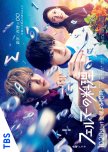
Math meets meals. Feelings optional, flavor mandatory
Fermat’s Cuisine isn’t trying to be prestige television, and Takahashi Fumiya isn’t here to win Oscars—but he is here to deliver, and he absolutely does. His performance has that raw, earnest quality that makes you believe in Gaku’s journey from math-obsessed recluse to culinary prodigy. Watching him apply formulas to food could’ve been a gimmick, but instead it’s clever, oddly satisfying, and surprisingly moving. His transformation is, dare I say, chef’s kiss—a quiet triumph that sneaks up on you.What elevates the drama beyond its premise is the palpable camaraderie. The cast clicks in a way that feels lived-in, and the standout dynamic is between Gaku and Asakura Kai, the enigmatic chef who recruits him into the culinary world. Their bond is layered with mentorship, tension, and mutual respect, grounding the story in something deeper than just kitchen theatrics. It’s about people—about building trust, finding purpose, and learning to communicate through flavor.
And speaking of flavor, the food is practically its own character. Every dish is shot with reverence, sizzling and gleaming like it’s auditioning for a five-star review. You’ll want to pause and rewind just to admire the plating. The multicultural cast and global influences add richness to the world, making it feel inclusive and refreshingly modern.
For those hoping for a BL angle—this isn’t that dish. At best, Gaku might lean gay-coded or asexual, given his obliviousness to the affections of his female friends. But that’s not the story Fermat’s Cuisine is telling. It’s about heart, growth, and the quiet magic of finding your place—served with warmth, sincerity, and just the right dash of spice.

They broke hearts, broke swords, then broke the laws of physics
I went into this drama thinking it would be perfect background noise while I folded laundry—inoffensive, mildly moody, and ultimately forgettable. A couple of episodes in, I was still waiting for the leads to spark something—anything. It was like watching water refuse to boil. But then around episode four, it started to simmer. And when it did, it cooked. The pacing sharpened, the fight scenes stopped looking like rehearsal footage, and the emotional stakes finally hit their stride. I did a double take. Was this… good now?To its credit, the drama kept building. Characters grew more layered (okay, most of them), and the story struck a satisfying balance between political intrigue, swordplay, and genuine emotional resonance. Somewhere around episode fifteen, I was cautiously optimistic that this might sneak into my top five of the year. But alas—it didn’t quite stick the landing. Not because the actors dropped the ball (they didn’t), or the production values dipped (they stayed strong), but because the script tripped over its own ambition. Between the brooding monologues and sudden plot pivots, it forgot how gravity works.
Yes, I’m talking about that cliff fall. I don’t care how skilled you are in martial arts—if you plummet from that height, your bones don’t just politely rearrange themselves on impact. I’m all for narrative hope, but let’s not hand out happy endings like party favors just to appease the masses. A good ending should feel earned, not airlifted in by last-minute plot convenience. And while we’re here, kudos to the writers for resisting the urge to throw in that hinted amnesia arc. One more tired trope and I’d have thrown hands.
So no, it didn’t make my top five. But this drama still surprised me, entertained me, and reminded me that sometimes, it’s worth waiting for the water to boil—even if the pot wobbles at the end.
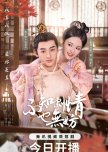
When therapy gets a costume department
This is the kind of drama where you just have to shrug, suspend disbelief, and roll with the madness. I mean, who has the funding to recreate an entire period drama as part of a psychiatric treatment plan? Are we sure this isn't some kind of experimental influencer rehab program? With a snap of a finger or two, suddenly they are able to secure a full-blown historical film set, and apparently, every hospital staff member—from doctors to nurses—is fully committed to the bit. No one's treating other patients. It's giving “method acting” meets “medical malpractice.”Once you buy into the absurd premise, the unraveling begins—and not in the usual narrative arc sense. The real fun kicks in when the internal logic of the "costume therapy" starts to fray. Watching characters switch gears between acting out ancient court drama and remembering they're supposed to be caretakers? Comedy gold. It’s more chaotic than it is tragic, and honestly, the awkward transitions and misplaced grandeur only made me laugh harder.
For what’s clearly a low-budget production, the acting felt surprisingly natural. No one’s trying to win awards, but they all knew the assignment—and delivered it with heart. The plot dances with transmigration tropes, but there's a sneaky twist I didn’t expect, and it kept me guessing without going off the rails. This is duanju done right: inventive, self-aware, and just the right level of quirky. It pushes boundaries without feeling bloated or desperate.
If you’re in the mood for something that juggles absurdity and sincerity with equal flair, A Lucid Dream serves it up with a wink and a side of institutional cosplay.

Plot threads held together with vibes and mascara
I picked this during a casual scroll through the chaotic jungle of microdramas, hunting down a Yu Long title like it was part of a personal mission dossier: watch at least one drama from every actor in the top 20 micro-drama pantheon. A noble effort, maybe. But what this choice exposed—again—is that I am, without shame, a plot-over-people viewer. I’ll drop a drama mid-second kiss even if it stars someone I allegedly stan. Emotional logic beats pretty faces every time. If the story doesn't earn my attention, I bounce.Yu Long, thankfully, made that bounce a bit slower. He’s one of the few in this condensed drama format who actually knows what he’s doing—or at least convinced me he did. His performance had some weight, some presence, even when the script was flailing. Then enters Yang Mie Mie, and with her, the slow unraveling of whatever goodwill I had left. I wish I could put it gently, but her crying scenes made me laugh out loud. There's just something tonally off about her delivery—like she’s starring in a melodrama no one else signed up for. Watching her act through ten layers of eyeliner while playing a 23-year-old psychology grad who looks 13 with a blush filter? The dissonance was louder than the actual plot.
SPOILERS BELOW:
.
.
.
.
.
.
.
.
And oh, the plot. Another victim of the classic duanju syndrome: trying to cram a 40-episode arc into three hours and change. We got kidnapping (on repeat), vigilante justice, family secrets, trauma bonding, and criminal profiling—all poorly stitched together in a frenzy of "Look! Drama!" The puzzle pieces never clicked. One moment she’s sobbing in a basement, the next she’s a crime-solving prodigy with a degree and zero credibility. The romance? Eek. The pacing? Unhinged. I finished it, forgot it, and promptly purged every other title with this pairing from my list.
Me and My Rose isn’t the worst I’ve seen—it just didn’t deserve to be seen at all
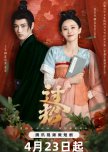
The Criminally Funny Drama That Shouldn’t Have Worked—But Kinda Did
If I’d stuck to my usual drama protocol—no shows under a certain rating, no exceptions—I would’ve missed this chaotic gem entirely. But I’ve seen Smile Hu and Wang Xuan pull off magic in other mini-dramas, so I broke my own rule. And thank the drama gods I did. The Love Duel is the kind of guilty pleasure that should be criminally charged for inducing uncontrollable laughter in public. I wasn’t just entertained—I was borderline delirious.Between the tragic wigs, the plot that felt like it was written during a sugar rush, and Shen Juan Juan’s (Hu Dandan) comedic timing that borders on performance art, this drama had no business being this funny. It’s self-aware in the best way—mocking its own tropes while doubling down on them. The transmigration setup is textbook, and yes, the return to the modern world was as predictable as a drama breakup at episode 20. But watching them cough up increasingly ridiculous excuses to justify their actions? That was half the fun.
By the time the finale rolled around, my laughter had mellowed into polite chuckles, punctuated by a few cringes—especially during the ugly crying scenes that felt like someone was auditioning for a tissue commercial. Still, I didn’t regret the ride. It’s not deep, it’s not polished, but it’s got heart and humor in spades.
So if you’ve got a free afternoon and a tolerance for wigs that look like they were borrowed from a Halloween bin, give this drama a shot. It might surprise you. Or at least make you snort into your tea.

AKA: The Drama I Shouldn’t Have Stuck Around to See
This review is for both Seasons 1 and 2 combined.Season 1 was a masterclass in setup. Watching it felt like witnessing the perfect pool break—transmigration, layered court intrigue, and two leads playing emotional chess while pretending not to know the rules. The suspension of disbelief? Automatic. After dozens of soul-swap dramas, logic is a luxury. What mattered was the tension: both leads hiding their true identities, yet somehow earning each other’s trust through mutual deception. It was riveting, deliberate, and emotionally earned.
But Season 2? That’s where the table started warping. The hypocrisy wasn’t between couples—it was between the leads themselves. Leng Li kept her hidden identity under wraps for most of the series, yet turned around and judged He Lian Xuan for not revealing his alter ego, Qing Ru, sooner. The irony was loud, and the emotional logic started to crack. Qing Ru, who was magnetic and layered in Season 1, faded into the background in Season 2. His presence was diluted, his complexity flattened. Apparently, he was only lovable when he was clueless and harmless. Once he stepped into awareness? He became narratively disposable.
Midway through Season 2, I was ready to throw hands. The clean geometry of Season 1’s setup—where every shot felt intentional—gave way to narrative scratches. I expected bank shots and clever reversals. Instead, I got missed opportunities and emotional regression. The romance, once sharp and sly, started giving sibling energy: more bickering and emotional babysitting than actual heat.
And the worst part? I didn’t walk away. I stayed, hoping the drama would pull off a miracle jump shot and redeem itself. It didn’t. What started as a smart, emotionally grounded story turned into a slow unraveling of its own premise. This drama had the setup, the stakes, and the spark. But by the end, it forgot how to play the game it taught us to love.
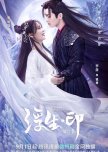
I came for romance, stayed for the hemorrhaging
This drama — also known as How to Waste Potential and Test Viewer Masochism in 24 Episodes — is a masterclass in ignoring your instincts and paying dearly for it. I don’t know what I was thinking when I didn’t drop this disaster of a show. My gut begged me to run. My screen time protested. But no, I had to play drama martyr and stick it out, like a glutton for punishment who mistook suffering for loyalty.Let’s address the blood-soaked elephant in the room. I’ve never seen a show weaponize hemoptysis with such frequency and so little emotional payoff. Every argument, every dramatic pause—cue blood geyser. I wasn’t moved; I was medically concerned. By the fifth time someone hacked up a lung mid-sentence, I was ready to join them just to escape the chaos. This wasn’t a drama—it was a blood donation campaign with delusions of grandeur.
Then there’s Hyde (Qing Chen), the actual emotional anchor who got treated like an NPC in his own subplot. For most of the series, everything—from narrative tension to emotional payoff—suggested he was the lead. His chemistry with Ming Jia Jia wasn’t just better; it was the only thing remotely coherent. Meanwhile, the actual male lead felt like a last-minute executive decision, like suddenly Richard LI had free time so let’s pencil him in. Hence, we got baited into a whiplash-inducing love triangle that collapsed into a final pairing so poorly handled, it felt like someone in production just changed their mind halfway through and hoped we wouldn’t notice.
But I did notice; everything feels contrived. From the emotional arcs that didn’t develop—they got stapled together in post with a malfunctioning stapler. To the dialogue that meandered like lost philosophy students. My FFWD button was basically the main character by the halfway mark. It’s tragic, really—because this show could’ve been something. It had glimpses of heart, even promise. But instead of digging into its emotional core, it opted for melodrama cosplay with third-hand costumes dredged up from the dry cleaners.
In the end, Seal of Love didn’t just waste potential—it buried it in a shallow grave of chaos, blood, and bad decisions. I watched it. I endured it. I regretted it.
Final verdict: Seal of Love should’ve stayed sealed.

Not bad enough to mock, not good enough to love
This drama sits awkwardly between almost-great and nearly-forgettable, choosing instead to loiter in a weird limbo. It’s your classic prince-and-pauper story—except instead of royal identities, it’s K-pop glitz versus café grunge. The switch happens, things get mildly chaotic, and the story hums along in a very “web drama budget” kind of way.The female lead, Seo Ji Soo, tries her best with what she's given. Her performance isn’t groundbreaking, but hey—it’s her first time leading, and the show’s runtime barely gives her room to breathe. For a short series, it’s forgivable. The dual roles are cute on paper, but the execution? A little too rushed to leave much impact.
There’s a romance simmering, but it never boils. Emotional moments come and go before they stick, and by the final episode, I was hoping for resolution with actual weight. Instead, the ending limps toward closure like it forgot there’s no guarantee viewers will watch the sequel (especially since the reviews scream “Don’t bother”).
Overall, it’s not a terrible watch. It’s light, mildly entertaining, and occasionally sweet—but don’t expect it to sweep you off your feet. This is drama purgatory: not bad enough to roast, not good enough to rave. Watch it if you’re curious, but prepare for a finish that fizzles.

The only mystery: how they forgot to cram in an evil twin or alien abduction
Wow, this short drama is a hot mess!!! It looks like somebody trying to heat up a quick snack in the microwave and it ended up exploding. This show tried to cram in as many tropes as it could in half an hour: there’s the jealous bitch, the mean parents, the CEO BF, the blackmailing, the backstabbing, the hidden identity, the nasty ex, and to top it all off – the demure damsel in distress turns to be a gifted healer, a kick-ass martial arts master, a demonic speed racer, an ingenious hacker – like I’m surprised that they didn’t include a long-lost brother and sister forbidden romance, coupled with an amnesia trope.I guess the scriptwriters didn’t learn the lesson that usually, “less is more” in short-run dramas. In this case, more was actually too much.
Rom-com meets Groundhog Day. It’s like déjà vu, but make it adorable
Despite its lackluster ratings, I quite enjoyed this drama. It’s reminiscent of “Business Proposal,” or WWWSK, but throw in a time loop and you have SBWTRE. I know it’s cliché and predictable, but watching the characters creatively and ridiculously escape the time warp each reset is genuinely fun. For a short web drama, do not expect that they bring out the big guns. Recognizing its resource, budget, and time constraints, this drama smartly avoids overstuffed plots, a frequent downfall of similar short dramas.What I like about this drama is its simplicity, and how it does not take itself so seriously. The banter between the leads shows their natural chemistry. It’s a very bingeable, bite-sized drama that tickles the funny bone and might make you say “Awwww.”


