

 2
2


Self-contained arcs, mildly cursed visuals, and one wholesome demon bromance
This drama is a decent attempt to incorporate fantastical, mysterious, modern, historical, comedic, tragic elements into one big pot. Who would have thought that a Demon and a Demon Hunter could be besties, and change each other’s perception of human or demonic nature? The concept of this drama was certainly intriguing. The arcs are all self-contained, with a well-managed transition between past and present narratives. I don’t expect the best CGI, makeup, or props, and yes, some of the acting could be improved, but for a low-budget production, I believe it maximized its limited resources.
Acting/Cast: With such a short time to digest, I couldn't distinguish who's who.
Music: Nothing worth noting.
Rewatch Value: Re-watch only if you are seeking more answers to your unanswered questions.
Overall impression: The main focus of the show is the jarring procedure of venesection, practiced by one of the protagonist. It's brutal and bloody, and showcases the extremes that some people take in order to avoid going into the military.
This ordeal is not lost on the men as the threat of being "exposed" looms over their head.
While the short film started out as Heartbreaking, the final scenes became horrendous and unnecessary.
I stayed for the soundtrack, not the stunts
I’m trying to figure out how to review a touching drama with subpar acting. Don’t get me wrong, I enjoyed this show immensely, with its message of going after your dreams and never giving up. What detracted me from the show is the contrived conflict that they produced, as an excuse to dismantle the band.The start was encouraging, especially given Bloom’s supposedly low popularity as a boy group, so it makes absolute sense if their performances were lack luster. By the show’s end, I thought they would have improved, but they flashed the same old choreo and some of the wardrobe choices that should have been left inside the closet.
The friendly family feel between Asuka and the group was nice, but I’m unsure how Yuri living in the dorm advanced the story. Is that even allowed? What gives Asuka the right to let her sister stay on company property without prior consent from the boys or management? Why even bother adding the sister’s backstory? It served no purpose, just as the last-minute addition of an ex-member did to the plot.
I think it’s the ear-worm soundtrack that saved this drama. The songs were stuck in my head for weeks. I also appreciated how delicately the drama handled the age-gap and teacher-student relationship. It was sweet and not bordering on creepy or icky territory. One might even call it understated romance, as Dan clearly felt stronger romantic feelings for Asuka, but it’s unclear if Asuka reciprocated those feelings to the same degree. Her feelings for Dan might simply be those of a mentor towards a mentee. It was very vague, and perhaps Asuka’s fondness had no further meaning beyond encouragement. While some people were clamoring for a kiss between Dan and Asuka, I’m content with a hug as a conclusion to their relationship.
A love story with more casualties than actual battles
The premise of a badass female assassin, coupled with an equally formidable leader of the opposing nation -- this is a rivals-turned-lovers plot that is right up my alley. Initially, their relationship was captivating, a passionate, even aggressive game of cat and mouse, with Ru Yi claiming Yuan Zhou as the father of her unborn children. Talk about brash and bold, with a not-subtle hint of non-consent. Why the writers decide to ruin such a character with this character flaw is beyond me, but I guess this is her shortcoming. Otherwise, Ren Ru Yi is unbeatable.For his part, Ning Yuan Zhou was supposedly indestructible as well, that is, until he succumbs to the offensive charms of Ru Yi. Trying to get away from a life in the court, did not last long as he had been called to task by the Prime Minister to go into basically a suicide mission. Because he had nothing better to do, Yuan Zhou complies and brings along his comrades who have been equally withering away due to the lack of exercise.
We see all the pomp and circumstance of dressing all of them in dashing blue uniforms, so women (or perhaps men, too) can have their pick. The drama regales us with their backstories, so we all can be emotionally attached when they venture into enemy territory, because their unworthy king’s ass needed to be saved.
Everything was going as well as it should, despite many setbacks. With a traitor, ten or more, an inexperienced prince, and a hidden assassin amongst them, it’s a miracle Wu’s delegation made it halfway without killing each other—internal conflict was inevitable.
Meanwhile, we see that the State of An has their own unsavory characters, beginning with the Emperor and his unruly sideburns, and of course, the man-child Li Tong Guang who has an obsession with his master and with a curling iron. One would expect that seeing Ru Yi and Yuan Zhou’s affection so often would discourage him, but it only intensifies his anger. Like dude, you have zero chance. How many times should they tell you? You want them to have sex in front of you? On second thought, Li Tong Guang might enjoy it. Scratch that.
While most of the secondary cast were adorable, there were some that were underutilized. For example, Chu Yue and her father; I really thought that they would be more prominent in the drama. Instead, the drama included insignificant quibbles of the An princes vying for the throne. The story would have benefited from a reduction of flashbacks about the dead Empress and more development of subsequent scenes.
By the show’s halfway mark, I found Ru Yi and Yuan Zhou’s romance unconvincing; their willingness to leave their comrades while going on dates felt contrived. The most ridiculous part was the pair lip-locking on the battlefield as if death and destruction weren’t around them. Meanwhile, the soldier’s on the field: “Hey guys, it’s rude to kill them while they’re making kissy-faces, so let’s just leave them alone.” Duh!
The only character development that I admired was that of Yang Ying's. From a vulnerable princess seeking marriage to her childhood crush, she grew into a strategic and benevolent ruler, bravely facing her enemies while caring for her subjects.
Because it was highly rated, I expected this drama to be amazing, which is a mistake on my part. It might have been better to watch the drama without preconceived notions. While I anticipated a casualty or two—Yuan Lu, whose illness meant he’d likely not live past 20, and potentially Sun Lang or Qian Zhao—on this journey. So many deaths happening in rapid sequence and so suddenly was completely unexpected. I prefer them all dying, or, failing that, at least Yi Shi San surviving to recount their heroic sacrifices to future generations. I think killing him off is the gravest sin of all.
Dynasty drama with politics, power, and plot holes you can ride a horse through
While this drama slowly started as a woman trying to shirk her filial duty into marrying into a noble family, it became so much more than this. Zhuo Hua rose from being an unrecognizable member of her large family, to becoming one of the highest-ranking officials in the land, through sheer effort and cunning capabilities.Early on, Zhuo Hua meets the formidable, unemotive general Liu Yan, who seemed old enough to be her father. While I was initially dubious about their pairing, their quirky interactions are adorable that I can’t stop smiling throughout their courtship. My initial worry that the ML would be controlling was unfounded as the show depicted him allowing the FL to grow independently.
That worry later turned into fear when Liu Yan looks like he's at death’s door and would croak at any moment's notice. I wasn’t even sure if he will last another episode, so when he dies halfway through, I was resigned to the fact that he will stay dead. So with Liu Yan out of the way, I’d begun to root for Zhuo Hua and the Crown Prince, hoping they’d get together, though I knew that typical plot devices would likely prevent it.
Disregarding the plot, the cast delivers a respectable performance in this drama. Though she turns out to be a righteous villain, Wang Li Kun embodied the Princess Ruo Jia perfectly, that I could not even hate her when she veered off the path. It was such a satisfying watch seeing how everyone try to outwit each other to achieve their goals.
The only thing that disappointed me is the loosely wrapped arcs of the other princes and Yun Yun’s, as if they faded into obscurity without getting their just deserts. But otherwise, this drama is an engaging watch if you don’t mind age-gap romance.
I came for resolution. Got flashbacks, filler, and secondhand discomfort instead.
Although I enjoyed this drama, this did not quite pack the same punch as the first. It was a watered-down version of the original premise I loved, although no less significant. Here, we see the stronger individuals that the MCs have become, but they could still rely on each other.I am quite unsure how I feel about the brother arc, though. I am not saying that it was an unnecessary addition to the plot, but I would have liked it expanded to include the parents’ role in Mikoto’s abandonment.
While the first season was very self-aware of the implications of presenting a taboo relationship, the second season pushed the envelope further by uncovering their past entanglement. During the first installment, we can excuse this as a mentor preventing a mentee from attempting suicide, as a life-changing lesson, but it is harder to prove the naysayers wrong with this problematic second season.
However, the drama is still very cognizant of the fact that this is a taboo relationship when Mikoto rejects all of Haiba Jin’s advances. She explicitly says she will wait until they are no longer in a teacher-student relationship before being intimate. To this end, we can say that the production is doing their due diligence by not showing any type of skin-ship between the two.
Having said the above, this drama is still a decent watch, although unnecessary. I would have been satisfied if the show had ended with the first season. This is more of a filler for the staunch fans of the pair.
Kanoko reads lies. The audience reads meaning. The romance reads invisible.
If you are expecting romance in this drama, don’t count on it. A few hints toward the end mean nothing. Although the premise of the show is of an investigative nature, its primary goal is to provide different perspectives on why people lie, and Iwai Soma, as a character, provides this insight in each episode.Though destitute, Soma does not lack empathy. His astuteness and broad-minded view allow him to understand people’s motivations for lying. He comforts Kanoko, welcoming her abilities instead of shunning them. As each story progress, Kanoko becomes more self-reliant, and realizes that her ability to detect lies only tells one side of the truth (which is what she sees at face-value). Her powers do not guarantee as a deterrent to be duped. The drama tells us that when someone lies, we need context; and lying may not always be self-serving, but as a protection of a loved one.
This show is more than the supernatural, as it also teaches about the trust and faith we put in people, despite not knowing their reasons for lying. It also paints a contrast on how some become a pariah just because they are different, while others welcome strangers with open arms, expecting nothing in return. This drama provides life lessons in 11 episodes that are easy to watch and not over-preachy. A tad slow in some parts, but nevertheless decent.
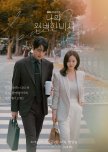
Romance with HR violations, but make it wholesome
Typically, what we see in Boss-employee dramas is that the Male Lead being the domineering CEO, catered by a savvy, sassy, or silly Female Secretary. So, when a role reversal appeared in the drama world, I was definitely intrigued, and this drama did not disappoint.It has all the hallmarks of a decent drama. From the expected banter to the secret relationship cliche, this drama has it down pat. I barely remembered both leads in their previous roles One Spring Night and Stranger, but in this instance, the chemistry between the actors is palpable on screen.
Lee Jun Hyuk is quite adorable in his role of a single-father who prioritizes his child’s mental well-being over his career advancement. Well-organized, and extremely resourceful, Yoo Eun Ho is perhaps the poster-boy for all green-flag male characters ever in K-drama land, especially for those women who didn’t mind dating somebody with a child in tow.
And Kang Ji Yun didn’t seem to mind. In fact, despite her prickly, almost anti-social demeanor, she hit it off with Eun Ho’s child, unbeknownst to the father. Han Ji Min delivers all the sass and seriousness needed by her C-suite level character. Initially feared by her employees for her coldness, Kang Ji Yun uses it as a shield against emotional pain stemming from her past, and not as a sign of indifference.
Eun Ho’s thoughtfulness and warm heart gradually thaws Ji Yun’s icy demeanor, that she eventually garners respect from her employees enough that they stood by her during the hard times. While I enjoyed the primary plot line, the secondary pairing felt contrived for me.
I wasn’t entirely convinced the second male lead, who once felt something for the female lead, would fall for the second female lead, who had loved the male lead for a long time. While I understand that dramas sometimes employ such tropes, I find the sudden and inexplicable shift in their affections, solely attributed to rejection by their first loves, to be somewhat implausible.
Not saying that the second leads’ performances were poor; it was the quick escalation of their relationship that dissatisfied me. The rest of the cast were also decent and Eon Ho’s daughter was as adorable as the father.
While the plot moved at a good pace, I was hoping for more details about Ji Yun’s experiences at her previous job, as the potential for a great arc was present. Some plot points were irrelevant and quickly brushed aside. But overall, this is a decent attempt at reversing a common trope on its head.
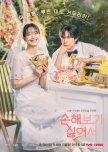
Corporate perks meet fake love... and one very real dildo duel
Noona romances are one of my favorite sub-tropes, and thankfully this is one of the better ones. I’m not really a fan of Shin Min Ah, though I’ve watched some of her dramas and I’m lukewarm towards Kim Young Dae; but in this drama, I think they work and look good together, despite comments to the contrary. I find Shin Min Ah’s portrayal of a woman, who is very calculating by nature, in the sense that is not evil or manipulative, but she measures her life in pluses and minuses. Her enjoyment increases if she thinks she’s ahead in life and decreases when she suffers a setback. So when she finds out that the company gives better perks to married employees, she takes advantage of this by hiring someone to pretend to be her husband.Enter Kim Young Dae as fake groom Kim Ji Uk, who cruises in life despite his wit, seems to be satisfied with working a low-paying blue-collar job, rather than being a corporate slave. An animosity seems to exist between our main characters, perhaps due to a clash of values or some unforeseen circumstance that will be revealed much, much later. But on the get go, the beef between these two hate-birds was so fun to watch.
The only people who are privy to this facade are Hae Yeong’s foster sisters, Ja Yeon and Hui Seong. Each has their own opinion on the matter, but they have their own problems to deal with. Frankly, I couldn’t care less about these two. Sorry, not sorry. And neither was I really invested in their love lives. Although Ja Yeon’s story might be more interesting, only because of the hilarity surrounding her hidden identity as a popular web novelist who writes smut. And coincidences of all coincidences, Ja Yeon encounters one of her detractors who happens to be boss of so and so, who happens be the son of so and so, and she happens to be friends with so and so, who happens to be the secretary of so and so. You know, typical small world.
Speaking of small worlds, Ji UK’s sudden presence at Hae Yeong’s company shocks her. Despite her efforts of keeping a distance from him, Ji Uk turns out to be a quasi-Peterella, wearing all fancy clothes, driving a sweet ass car, living in a snazzy apartment. The scenes of both Hae Yeong and Ji Uk avoid suspicion are funny as heck. And even more so are the instances where misunderstandings pile on other misunderstandings between Gyu Hyun and Ja Yeon. Then there’s a scene where most of the main cast gathers at Chairman Bok’s table, and we slowly see the faint dots connecting each other. Could it be that the already small world could get smaller?
The second half of the show explores this complicated relationship among the characters, with further plot twists thrown into the drama. You would think that by throwing fruit into a veggie salad and it will taste better. Not only we get mistaken identities; we get countersuits; we get a murder mystery that’s not really a mystery; we get polyamory; we also get a Mother who lived in a shoe, She had so many children, she didn’t know what to do.
And whew, I just got exhausted from that, so imagine watching it snowball into a dildo fight. Yes, you read that right. I’m not exaggerating this time. Then, the rollercoaster ended suddenly...wait a minute...is this a joke? They inserted the very dreaded TIMESKIP, because they do not know how to tie a neat bow without it. What the ever loving duck did you do to me???? Who does that??? Then, as easily as they pulled the plug, they just like flicked the switch and said, here you go, here’s your short happy ending. This is like somebody showing me the laborious way they baked a cake for twelve hours, only to just have me taste a smidge. This is definitely NO FAIR, NO LOVE.
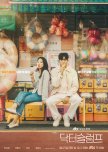
Flashes of warmth, floods of cringe—welcome to a drama with mixed prescriptions
I was bracing myself to watch this drama. On one hand, after hearing this would be a romance drama with Park Shin Hye, I immediately thought, “Oh my gosh, she’s going to screw this up isn’t she, with her notoriously horrible on-screen kissing?” Then there’s Park Hyung Sik who was brilliant in SWDBS and soundtrack#1. So I was mildly surprised to see Shin Hye’s vastly improved lip-locking skills, but her crying skills were so bad that even my nine-year-old could outperform her.Speaking of cringe, I wasn’t sure whether Hyung Sik was supposed to be a plastic surgeon in this drama, or a dentist, because the abundant times of him flashing his pearly whites were as if he’s trying to drum up sponsorship from Colgate. So it’s no wonder that, with his high visibility, that he’s an easy target. He went from high-profile to lying low in a nano-second, and somehow ends up staying at his ex-rival, previous crush’s house, because Korea is THAT small.
And while both Ha Neul and Jeong Woo’s careers are in the dumps, they cling to each other like Jack and Rose aboard the small wooden door from the Titanic. Their acting could not save them both from this drama, but you know who does? Surprisingly, it’s the rest of the cast, who were more natural in their roles. Seong Ha and Yoon Park have this cute chemistry going on as the second couple, and they were adorable as Hong Ran and Dae Young. Both single parents leading busy lives and were awkward with their own children, but somehow could lend each other support and give sound advice for the other.
I also particularly loved Jang Hye Jin as Ha Neul’s mother; I’ve seen her in many dramas and she’s just that lovely ahjumma who embodies the nurturing figure, while trying her best to understand her daughter despite initial misconceptions. By no means perfect, she tries to impress her nosy, one-upping relatives, and in the end, learns to accept that her children’s health and happiness are more important than having illustrious careers.
Another weak point in this drama is the surrounding mystery of how Jeong Woo’s patient died, or what made him the scapegoat for that death. Although I sensed who the culprit was from the beginning, I didn’t know that there were other layers in how this came to be. I wasn’t sure whether it was necessary to the plot, but I guess the writers deemed them important enough to include them in the drama.
There were other half-assed attempts at introducing characters into the drama who bear very little relevance, aside from showing the juxtaposition between real friends who stick with you or pretend friends who are only with you, when things are going great.
Ultimately, this series aims to tell you that misfortunes happen, but when they happen, it is how you cope with them that matters, and having supportive friends and family who help you along the way is a crucial part of that journey.
IMHO, this show delivered the right message with partly the wrong execution.

A drama that had me swooning—until it slapped a rushed bow on years of silence
I didn’t expect to enjoy this drama, but I did. I’m a sucker for friends-to-lovers, with a sprinkling of slow-burn, so I’m as good as dead.For starters, I’m rooting for a main character who is not your typical “hot Oppa“ lead, without needing to subscribe to beauty standards in order to be “accepted” by society. I find Tubby Kang so much more adorable before he lost weight because he was truer to himself and less conscious of trying to please others. And his chemistry with the FL before his transformation was palpable.
Jia Wei and Jing Jing was an accidental pairing that neither could have predicted. They were constantly at each other’s throats, but we all know that all this is just play-fighting and nothing serious. Their banter was so fun to watch, but when push comes to shove, they motivate each other to become better people.
Throughout the drama, we see both being oblivious, especially in the beginning, and both were also pinning their hopes on other people. To this end, Gao Zhan and the other Jing Jing become receptacles of the MC’s misplaced feelings. Neither memorable for their acting, nor essential to the plot, except perhaps to give platform to the MC’s stories.
Speaking of the plot, I must say the final episodes did not impress me. It seemed like the writers didn’t know what to do with the material, so they threw a wrench in or two, just to give a conflict that was really petty to begin with. And because of this, these supposedly BFFs became incommunicado for like some years, and you expect me to believe that once they saw each other, all is well in the world? If they wanted to do this prolonged silent treatment as a sub-plot, they must also do a gradual progression on how both came to terms with their feelings, and not just slap a bow with no explanation whatsoever, except for some cringe-inducing finale. This really put a dent on an otherwise good drama.

It didn’t surprise—but it didn’t offend. Just floated in the drama middle zone.
I was not so keen on watching multiple versions of the same story like I used to when I had more time, but this show came highly recommended. You may ask: aren’t most dramas these days rehashed works of the same story, using the same tropes and plot devices, but just used a different name or a varied setting, and you have the same old, recycled drama, only all jazzed up. But I digress.This Japanese adaptation did not hold my interest at first. The characters seemed disconnected from each other. Especially off-putting was Risa’s character. I already knew going in that she would impersonate her best friend for her own selfish desires. One may also argue that she had Sato Ai’s permission to do so in the first place, and therefore, it was acceptable. But she continued the pretense without Ai’s knowledge, and she did not seem remorseful about it; that midway through the show, I put this on hold for quite some time.
Picking up a second time where I left off, the show fared better, but not by much. My impression of Sato AI has improved, especially with how she dealt with the obstacles and challenges thrown her way. Sosuke, on the other hand, remained just a pretty face. He had very little chemistry with Sato Ai and had more engagement with Takuya. Speaking of Takuya, I did not feel a strong Second-lead syndrome like I did with the original Korean drama, though no fault of the actor.
The revelation at the end was no surprise to me. Perhaps if I watched this first, I might have a different opinion about this drama. There’s very little difference between the two titles, except this is less angsty and shorter, of course. What this Japanese version did better for me was the portrayal of female friendships. Perhaps due to its length, this show wasn’t able to explore much else. Nevertheless, it’s a decent copy of the original.

One clueless boy. One clever girl. One endless loop of emotional whiplash
This is unexpectedly cute and sweet. The joys and confusion of having a middle school crush are being explored in this drama. For years, Takagi has been one-upping Nishikata in terms of jokes and pranks that the latter becomes frustrated. But every time Nishikata thinks he has gotten his revenge on Takagi, she outsmarts him. Despite this, both spend more time with each other than they ought to be, when Nishikata is supposed to dislike Takagi.I loved the passive-aggressiveness of Takagi, juxtaposed with the naivete of Nishikata. Tsukishima Rui is fantastic as the witty girl who is harboring a not-so secret crush on her classmate. Meanwhile, Kurokawa Souya is adorable as Nishikata. His expressions are on point, especially when he becomes surprised that Takagi always got the better of him.
Their innocent flirtation is the crux of this story, and how they are more bonded to each other than they realize, particularly by the oblivious Nishikata. This drama captures the essence of that first sweet instance of blooming love, that I am too afraid to watch the sequel lest that bubble break.
Romance so lifeless, the spark had to be Photoshopped
I’m not sure what to say about this drama that I neither love nor hate. Maybe it’s easier if I started breaking the parts I enjoyed. So what I liked:1) Hirose Alice’s acting as the thirty-something year old woman who got a fresh start in life by entering a college to study what she missed out on a decade ago because of an unfortunate accident (apparently, she had quite a few of these). Her quirky expressions when she’s excited, and her stern face when she’s focused, were all captured on film.
2) The various characters living in a shared house. Their camaraderie, despite their distinct personalities, was refreshing and natural. They supported each other in their school work and their respective career paths. When there’s a disagreement, they talked it out or gave advice when requested, but mostly they listened to each other.
3) The inspiring messages the show imparts about not giving up, nor is it too late to pursue your dreams at any age as long as you strive for the path you created.
Now on the parts where I thought were disappointing:
1) I love noona romances, but the main pairing lacked chemistry. I’m not even expecting sizzling or hot-for-each-other attraction. But it wasn’t even lukewarm. Not to say Michieda wasn’t adorable as Taku, but it seemed like forced attachment on his part when paired with Sayako. So it was difficult for me to buy into their romance. All I see are two people who play a lot of rock-paper-scissors.
2) There are half-baked characters in the drama that don’t really serve a purpose for me, and are easily forgettable.
3) The time skips that flashed rapidly at the end. Are we supposed to believe that neither of them even attempted to contact each other during those years? I get it that both of them are doing what they thought it would be good for the other person, sacrificing their relationship so both can focus on their career. But if Shogo didn’t tell Taku that Sayako rejected him long ago, would Taku have gone back and looked for Sayako? And she’s no better at the end, postponing marriage until when she’s settled? Until what, she turns 50 and is too late to have kids?
Anyway, watching this drama is like expecting a firework display but ended up with just a birthday candle.

In this drama, Motomiya fortunately used this power mainly to communicate with her voiceless, quadriplegic father. She also used this ability to help her business, and she did not use them against others. Also, because of this talent, she gained a better awareness of other people’s sufferings as she tried to assuage their fears. But her reliance on this ability was tested when she encountered Yoon Tae Oh, who thought in another language that she couldn’t understand.
Motomiya tried to interpret Tae Oh’s internal musings, but she shouldn’t have worried though, because Tae Oh was forthright about his feelings. Whatever that was in Tae Oh’s mind, he voiced them and was sincere about it. Yuri doubted this, because in her experience, what one says aloud doesn’t always reflect their innermost thoughts. She developed some trust issues because she couldn’t believe that some people can be actually that pure-hearted and kind.
I loved Tae Oh’s character specifically because of this innocence about him, that he’s open and that he wears his heart on his sleeve. I also loved the interaction between Motomiya and her father, how their bond was so close despite the tragic accident that befell him. Motomiya could not get over her part in her father’s disability, but she kept forgetting that he would have done anything to protect her, and would not blame her for it.
I wasn’t keen on the other characters though. Even the story-line of the second couple was ho-hum for me. The plot, though simple, was not fully explored, as I would have liked it to be. I would have been interested in the fantastical nature of how she came to possess that ability to hear people’s thoughts. Though the drama made some reference, albeit briefly, it wasn’t enough for me. The saving grace of this drama was truly Chae Jong Hyeop’s portrayal of this mild-mannered, happy-go-lucky man who refused to let his chance at love be consigned to fate.


