


 2
2



Was this review helpful to you?

Was this review helpful to you?
This review may contain spoilers
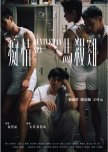
Story: I am happy that finally that an LGBTQ film/short didn't feature hot studs or even unattractive but fit/skinny males who seem to get more action than the ones who tip the scale.We can see that the MC is trying to put himself out there, trying to overcome his shyness by going to the pool and giving himself opportunities to get closer to his object of affection but sadly, most of us are all creatures who look towards physical appearances first before delving deep into the person behind it, even the MC is not exempt to this rule.
But towards the end, MC realizes that he can't force attraction that isn't mutual.
Acting: Average
Music: Nothing worth noting.
Rewatch value: Not really. Once is enough as it hit too close to home for me.
Was this review helpful to you?

This review may contain spoilers
Story: Cat and Dog are actually people and not animals who chase each other around: one seeks pleasure outside of his supposedly-committed relationship, while the other seeks stability, but neither really getting what they wanted. Acting/Cast: No acting prowess to speak of, but what can you expect from an adult entertainer.
Music: Nothing to write home about.
Rewatch Value: If only to figure out the logistics of how two men can fit in a small bath tub.
Overall: The film poses the question whether a “carnal connection can transcend into love?” And for me, the film does not answer this hypothetical query, and only serves to be gratuitous and self-indulgent.
Was this review helpful to you?

This review may contain spoilers
This drama simmered so gently, I forgot it was on.
I have mixed feelings about this drama — the kind that makes you sigh dreamily because the main couple is genuinely sweet, then immediately sigh again out of frustration because the story itself feels like a slow descent into narrative purgatory. Zhang Ling He was the magnet that pulled me in; his face card could carry an entire dynasty, but sadly, not this drama. Xu Ruo Han was lovely too, more than holding her own. So let’s be clear: the leads were not the problem. The problem was everything happening around them — or rather, the lack thereof.I love slow burn romance. Give me longing glances, emotional repression, even years of unresolved tension if it pays off in fire. But this wasn’t slow burn — it was just slow. Like wading through lukewarm bathwater, tepid and bland, with no heat in sight. The “romance” mostly consisted of walking, flower-staring, and meandering scenes that had the narrative commitment of a lost tourist. I needed toothpicks to keep my eyes open — and not in a binge-worthy, “I can’t stop watching” way, but in a “why am I still awake for this?” way.
And then there was the dreaded intoxicated first kiss. Can we retire this trope already? It wasn’t romantic, swoony, or even messy fun — just tired. They also tried to stir in angst with the ex-boyfriend and his one-dimensional outbursts, but it barely registered, except give Xi Fan the trauma-induced backstory she needed to see Su Ye in the first place, and later an excuse to run into Su Ye’s arms.
Oddly enough, I found myself liking Xi Fan’s parents. The resolution Xi Fan had with her parents was surprisingly healthy and mature — they were quick to recognize their shortcomings and have an honest heart-to-heart with their daughter, which was refreshing to see. For once, the elders weren’t the source of melodrama, and even Professor Yu — Dr. He’s grandfather — added a layer of warmth. But liking a handful of side characters isn’t enough to drag me through a drama that refuses to spark.
In the end, The Best Thing felt like a drama that wanted to be tender and introspective but ended up sleepy and safe. Sweet couple, yes. But sweetness without spice just leaves a bland aftertaste — and no amount of face card could make that worth finishing.
Was this review helpful to you?

Was this review helpful to you?
This review may contain spoilers
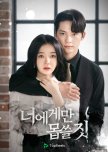
Wicked Just for You — because someone had to suffer.
This drama was the narrative equivalent of rubbernecking a train wreck — grotesque, chaotic, and somehow impossible to look away from. I don’t know why I sat through this drama; it felt like forcing myself to chew through charred bread while my brain screamed “just stop,” but my eyeballs refused to comply.The central relationship — a non-blood sibling bond — could have been compelling if framed with nuance. Instead, it’s a mess wrapped in a marketing lie. The so-called “progressive” sibling dynamic leans more into toxic gaslighting than the nurturing that I expected. I could have bought this Kool-Aid if the fiancé had been the actual abuser and the brother the protective buffer — but no, we get gaslighting packaged as growth and a female lead whose metaphorical blindness is so unearned you start wondering if the script misplaced her character arc.
Why doesn’t Seo Jin marry her endlessly forgiving fiancé? Why is she so predictably, stupidly not choosing Min Woo? And speaking of Min Woo, he’s the only likeable human in this circus. By episode thirty, I’m shipping Seojin and Min Woo just to preserve my sanity. Did I not already say Min Woo’s the best??
And to top it off, the production isn’t any better. Technical execution only compounds the mess. Continuity errors abound — glasses on and off in the same scene, “rich” characters recycling the same outfits for days, exaggerated acting that borders on parody. Even the blood that came out of noses started effervescing. Likewise, some sequences border on the absurd -- a guy dragged to jail tied with rope, and another poor dude sent to the hospital twice in a row like he’s on a loyalty punch card.
Except for Min Woo, every character feels like a caricature rendered in a crayon. In the end, this drama isn’t the worst rendition of its trope, but it’s certainly borderline. I endured it, but only as one endures a spectacle of failure — not for resonance, not for legacy, but because sometimes you can’t look away from a dumpster fire.
Was this review helpful to you?
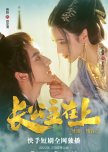
Microdrama rule #1: Cast chemistry this hot deserves a real budget.
I picked up this drama because I saw the two leads in another microdrama — and unlike most pairings that fizzle out once the script forgets what it’s doing, these two actually had spark. So naturally, I chased them into Zhang Gong Zhu Zai Shang, and thank the drama gods, it delivered. No bait-and-switch, no wasted potential — just consistent romantic tension that knew when to smolder and when to shut up and kiss already.The setup flips the Dong Lan Xue dynamic: Qi Xia Xia is the royal this time, and Jin Chao is the quiet, dutiful guard who could kill someone with a hairpin if they blinked the wrong way. It’s not groundbreaking, but the reversal works. Their dynamic actually feels earned — there’s push and pull, power imbalance, and enough “forbidden but not really” glances to keep me invested without rolling my eyes every five seconds. Plus, Jin Chao’s stoic loyalty with just a hint of barely-contained emotion? Yes, thank you, more of that.
It’s a quick watch, and surprisingly, the palace intrigue doesn’t feel like filler. There’s scheming, poisonings, framed crimes — you know, the essentials — but it moves fast and doesn’t pretend it’s Nirvana in Fire. And honestly, that’s fine. This drama knows what it is: a short-form ride with pretty people, political tension, and actual pacing.
Still, I couldn’t help but think — with a real budget and a major TV time-slot, this could’ve hit harder. Some plot threads deserved more than five minutes of runtime before getting resolved by monologue or offscreen arrest. But even with its limits, it never lost sight of the core: Qi Xia Xia and Jin Chao. That pairing carried everything, and I’m glad it didn’t disappoint. Not all microdramas get that right — this one did.
Was this review helpful to you?

This review may contain spoilers
Story: About a guy pretending to be straight by snatching himself a beard, but someone comes along and threatens to reveal his disguise. Acting/Cast: Mediocre as expected of non-professionals, but putting in quite the effort.
Music: Forgetful.
Rewatch Value: Maybe if you care for it, but most likely not.
Overall Impression: One boy is definitely playing up his straightness, whether out of fear or to incite jealousy, is the question, or maybe a little bit of both. While the other determines to disrupt this lie. I am all for pain-pine-pitiful bouts of unrequited or requited love, but the violence between the two boys, only exasperated their misunderstanding towards each other.
The end scene, while poignant, serves an indication that some people will just run away from their feelings rather than confront them. The message of the film became muddy and convoluted when the execution wasn't up to par.
Was this review helpful to you?

This review may contain spoilers
Romance bloomed. Then logic tripped, stumbled, and sobbed in the corner.
One of my favorite tropes is childhood friends-turned lovers, so this comes as no surprise that Love Next Door would be up my alley. Coupled that with charming actors such as Jung Hae In and Jung So Min, I was highly expecting this drama to be damn good. Where it started strong, especially love the banter and easy camaraderie between Choi Seung-Hyo and Bae Seok Ryo, I thought this was pretty much a done deal: an easy 10 points for me. But sadly, this was not. The drama’s attempts at realism, while admirable at first, became tedious and prolonged, and it’s no fault of the actors.I get it really: these characters are supposed to be flawed because we know that no one is perfect. And while I commend people by being self-sacrificing for their loved ones, there comes a point where this self-righteousness becomes overbearing. Take in case Seok Ryu’s example. She was adamant about not letting people know that she and Seung Hyo started dating, for reasons she believed their families may not receive the news well. But we see that her parents have loved Seung Hyo and considered him as part of the family already even before they started dating. I don’t see why they would oppose him now that they are. Then she has this inkling that they may not end up together in the future. Now with that mindset, why even agree to be together in the first place, if you already had plans to abandon the person who has loved you for most of his life?
Then only when your partner suffers an injury, that you finally declare your love for him, only to reject him later when he proposes. I find this behavior extremely flaky. Seok Ryu did Seung Hyo a disservice by stringing him along, afraid that she will lose him to an ex-girlfriend who was not even in Seung Hyo’s consideration. Granted, it may be too early for Seong Hyo to suggest the idea of marriage, but can you really blame him? They are both already in their mid-30s, and he has waited so long for her to agree into a relationship, it’s not surprising that he wanted to “seal the deal.”
Speaking of flaky, Kang Dan Ho is no better. And it’s this so-called self-righteousness again that is at play. First, he claimed to be too good for Mo-Eum, then later revealed his affection for her in front of Mo-eum’s mother while Mo-eum was intoxicated. Is he hoping she will forget his momentary weakness when she sobers up the next morning? He then later backtracks at the slightest provocation that Mo-eum’s mother is against their pairing.
I’m not too sure what these characters are playing at, but if they were young, in their adolescent years, perhaps I will have forgiven them for their immaturity. But they are not. I could overlook their indecisiveness if it didn’t affect others, but it does. You can’t just have everyone agree to your terms alone, especially if you are in a relationship. There should be at least a semblance of balance between the giving and the taking. Just because you suffered a great deal more doesn’t give you the right to play victim all the time. You can only use this card a few times, but there’s a point when it loses its effectiveness.
When Seok Ryu points out to Mi Suk that Dong Jin is banking on their mother’s blatant favoritism, it’s the same concept. Her parents gave her brother many chances to screw up, and they excused his failures because of his childhood illness. But because Seok Ryu was always an excellent student, they demanded more from her. And then when Seok Ryu comes home after “failing” (losing her job and fiancée); instead of saying it’s okay, they will be supportive, their parents tried to kick her back out. Only when they found out about her sickness did they capitulate. Why does it need to take someone to be sick, for you to be supportive?
We can apply the same scenario to Geyong Jong and Hye Suk’s relationship. For the most part of the show, it looks like they could hardly stand each other being in the same room. Eating separately, sleeping separately. It’s no surprise that the path will lead to divorce. But it turns around only when Hye Suk goes missing and could have a probable memory loss.
I’m struggling through the second half of the drama, with all these curve balls thrown in to make the plot more dramatic, but it’s not making the show more endearing. In fact, the more I watch this drama, the more frustrated I get. And to think the show tried to liven things up, by inserting comedic elements that frankly fell flat. They were trying too hard to be funny that they’re really not.
There are a few redeeming points going for this drama. The message of friendship, family and love is well-meaning; in fact, this show excels in juxtaposing the different bonds. The fact that being brought up in better circumstances did not necessarily guarantee a happier life, or vice versa. The show also highlights the characters’ emphasis on “putting on a brave face” and the importance of “face,” arguing that these shouldn’t outweigh family and genuine friends. They are there for you to lean on when times get rough, the same that Dan Ho and Seung Hyo like to help those in need.
While it has its moments, Love Next Door is just a waste of the cast’s talents that could have been better utilized in another drama, given the right script. It tried to wrap up loose ends too quickly after dragging on others. There were an excessive amount of drunken scenes, over-the-top yelling, and contrived angst just to fill in long episodes that could have been better edited for length.
Was this review helpful to you?
This review may contain spoilers
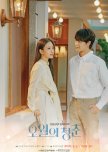
I am not typically into heavy melodrama, unless I count those teenage years of watching British shows about royals, or those childhood days of watching Hong Kong drama series about corrupt cops and dishonorable politicians. But Youth of May was a surprising pick that brought up memories of Martial Law when I was living in my home country. While my experience with martial law pales in comparison to the martial law imposed during the Gwangju uprising, this drama certainly puts into perspective how people have suffered and sacrificed their lives in the fight for democracy.The drama starts with the discovery of the remains of one of the victims of that fateful event in 1980, but we don’t know who had died. It could be any of the characters the drama will introduce later, except we know that a broken pocket watch was found along with the ruined corpse, and that watch could belong to anyone. So there will be death, we’re almost sure of that, and it would not be pretty.
Then the show takes us back to the days before the uprising, when innocence and love can still bloom despite the political oppression surrounding the area. The chance meeting of a nurse and a medical student turns out to be destined, as fate later brings Hee Tae and Myung Hee together when the latter’s bestie asks her to stand-in as proxy for her blind date with the son of the Head of the Anti-Communist Investigation. This arranged date was supposed to bring the two families together as political allies, with the Hwangs gaining a rich businessman as an in-law and their resources to facilitate the government, while the Lees try to take advantage of political clout to release Soo Ryun and her friends from being incarcerated.
But of course, the activism in Soo Ryun doesn’t allow her to collude with the opposition as she and her friends regard Hee Tae’s father as no more than a government lackey intent on suppressing the democratic freedom of its people. At first, it was funny how Soo Ryun coaches her best friend on how to be rejected by a suitor, but all the tricks and tips Myung Hee deployed did not prevent Hee Tae from wanting to see her again. Although Myung Hee does not seem to mind the affections bestowed upon her, she realizes that she cannot entertain these feelings as she plans to leave the country in a few weeks.
Undeterred, Hee Tae launches an all-out charm offensive, despite his father’s warnings, and pleads with Myung Hee to take a chance on him, even if it’s momentary. The chemistry between Myung Hee and Hee Tae is palpable on screen. Lee Do Hyun’s playfulness balances out Go Min Si’s wistfulness, and they are certainly better matched than Lee Do Hyun with Song Hye Kyo (that romantic pairing as dry as a flatbread). Both leads brought their A-game to this drama and carried so much weight that their characters, despite their flaws, are humanized. The rest of the cast also bring life and color to their respective roles, even the actor portraying the hated Ki Nam who lords over the city, or the actors playing Soo Chan and Soo Ryun who were grappling with the dilemma that their protected status almost exempts them from further investigation, while the poor suffers injustice.
The cinematography and fashion are on point as it paints the 80s cultural vibe against a political backdrop, where they separate the haves and have-nots. The pacing of the plot also sets the urgency of living in the moment when they still can and while Hee Tae and Myung Hee navigate their feelings for each other, they are faced with the reality of the struggles happening around them. Their personal choices on continuing with their star-crossed romance hinge on the plight of their friends and the citizens of Gwangju. Whereas Hee Tae wants to hightail out of the city at the first real sign of political trouble, Myung Hee feels obligated to stay and help those who are victimized by the soldiers.
Although I should commend Myung Hee’s compassionate nature, I sometimes got irritated at her reluctance to leave that put herself and Hee Tae in dangerous situations. Following in her footsteps is her brother who also decides it was a good idea to bolt when he feels like it and causing his sister grief. If only he stayed in place where he should, Myung Hee wouldn’t have gone and tried to save him more than once. Their father is no better, with his attempts to cross military zones and roads that have been closed due to volatile circumstances. Everyone seems to be trying to be a hero and recklessly go into perilous situations that can be avoided.
I understand that cowering and hiding inside your own house is not the solution either, nor I am suggesting that the government at the time had the right to impose martial law or that the soldiers are justified in beating innocent people senseless just because they look like students who are about to protest, but when the situation calls for you staying inside your house for your own safety, I don’t see why you would go out of your way to incur danger.
So kudos to those who are brave enough to die for their beliefs; without them, there will be no calls for change. And Youth of May serves as a reminder that those who came before us paved the way for a better future.
Was this review helpful to you?
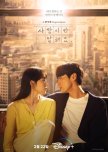
Lee Sung Kyung shows some of her best acting prowess in this drama; the way she unleashes her pent-up frustrations at how life dealt her hand, how the father she loved betrayed their family, how she has to hold back some of her emotions for the sake of her sister and brother, how she defends her actions as justifiable, and how she grapples with her growing feelings towards her sworn enemy.
The rest of the cast also pull their own weight in this mostly character-based drama, with the plot being secondary as a background. The events that unfold showcase how humanity or lack there-of can play in the decisions of some, like how some people are repentant while others are not, despite numerous chances given. We learn in this drama, that while some people are just plain horrible, it does not necessarily mean that their off-spring will be the same. Some just lack the basic human decency of treating others with respect and continue to become trash, but we should not be painting their relatives in the same brush because they can turn out to be really decent human beings with an unfortunate excuse of a mother.
If you are expecting a light-hearted, fluffy romance drama, this is not it as Call It Love meanders its way along the excruciatingly long road of life.
Was this review helpful to you?

This review may contain spoilers
This is basically a poor man's version of "A Business Proposal." Though the premise is more or less the same, one thing I did not like here was how Gal Hui took advantage of her boss' illness to dupe him into believing she was somebody else. Overlooking this fact, the rest of the drama is cute and funny, and sometimes heartbreaking. I can't believe I enjoyed this drama more than I should, despite it's many loopholes. To name a few: 1) The Fall. I am surprised that Do Min Ik did not split his head open while he fell from a good height (on his head!). The chances of surviving this fall is slim to none without major injuries. I get it that he dislodged the pin that made facial recognition possible, but that is all. No bandage wrapping around his head, no broken bones, how is it possible??
2) The Box Cutter. How lame it is that the person who tried to hurt Do Min Ik and others uses the same weapon multiple times??? There was blood on it, dude! How can you use the same damn thing?? Might as well put a sticker on it, "Property of this Idiot."
3) The USB File. I guess everybody has the same USB that could be mistaken easily, that it is a wonder how confidential documents are kept. You can have cat videos and accounts of extortion in the same damn device and people can just take it or leave it or throw it as they please
4) Dubious Company policies. It must be some poor HR screening policy that allows people who were once fired, to be employed again. Do they not keep some records? Won't there be more questions why you are coming back to work?
5) The Police. Clearly they have nothing else to do but to solve this one case of non-murder. They are so easily swayed by statements made by their suspects that it will be surprising if they caught anybody. Hint: they did not. The idiot in #2 turned himself in.
And the best of all:
6) The Cast. I mean the cast on fake Veronica's arm. I mean Do Min Ik may not be able to see faces, but a glaringly obvious green cast with a heart he drew on Gal Hui's cast. In what world would she be able to explain that away??? Even if her cover was not blown earlier in the night, she would be caught green-handed.
There are too many coincidences in this drama to make me believe in logical thinking, but if I switch my brain off, and overlook these inconsistencies, the drama teaches you to open your heart to possibilities and be more human.
Was this review helpful to you?

Also prominent in this drama is the topic of found family, how blood may not be always thicker than water, and there is no prerequisite when it comes to loving someone.
There's a few things that irked me about this drama, manely (pun intended) the bad hairstyles sported by many characters.
If they were meant to be endearing, they were not. Also, everybody seems to be up in each other's business and coincidentally run or know someone who knows someone. I guess this is typically true of small seaside towns. There are loopholes in how people show up suddenly without any logical reason, because "they just happen to be there."
The saving grace for me is Kitamura Takumi's portrayal of a deaf/mute man who doesn't let his lack of hearing/speaking deter him from enjoying life to the fullest. Hiragi Issei is the anchor that holds everyone together; his big heart injects everybody else with warmth. Issei believes that even broken people are only mean, because they are hurting and deserve love too.
Was this review helpful to you?

This review may contain spoilers
Easily becoming my favorite contemporary Chinese drama, "Falling Into You" does the Noona-romance trope right. Coming on the heels of "Why Women Love", Gina Jin again plays as the "older" woman being courted by a much younger man, it's no wonder that she has this role down pat. It's my first time watching Wang An Yu and he's pretty convincing as a love-sick puppy who's chasing around his master/mentor. Bonus points that he also acts the part of an all-around "jack-of-all-sports" who has to overcome the prejudices of being short-statured to compete in an event that usually favors taller profiles. This drama maybe about the romance between an unlikely couple, but it focuses on the hard work and determination of athletes to turn their dreams into reality despite obstacles. I also liked the fact that they included a secondary pairing that's based more in realism, where Jiang Tian and Yu Xia gave up their dreams of competing nationally to open a noodle shop.
Was this review helpful to you?


