
 Editorials


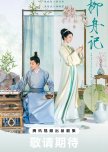
Of hearts that learn to reign.
Are You the One lingers long after the final episode—an experience that ennobles rather than dazzles, not for its grandeur but for the honesty with which it explores how affections and decisions are forged. The series reminds us that true power is born from quiet renunciations and that personal growth can be, at once, a revolution and a comfort.
At its center lies the bond between Liu Mian Tang and Cui Xing Zhou—a connection that transcends romance to become both a school and a mirror. They move through fractures, lessons, and reconciliations; their relationship feeds on patience and courage, on conversations that refine their character. Their evolution feels gradual and genuine: from the hesitation of the early moments to a shared trust built through trial and tenderness. Within that emotional forge, love emerges as both discipline and refuge—the most gratifying force that sustains the story.
Alongside this, the relationship between Liu Mian Tang and Zi Yu, now seated upon the throne as emperor, adds a powerful undercurrent to the narrative. It is not a simple rivalry nor an unquestioned alliance, but rather a meeting of respect and contrast—an ongoing dialogue between ethics and duty. Zi Yu challenges Liu Mian Tang to weigh conviction against the burdens of governance, while Liu Mian Tang reminds the emperor that true rule requires compassion. Their exchange becomes a lesson in leadership: that politics transforms when authority learns the language of empathy.
Shi Xue Ji, as the empress, stands as one of the most luminous figures in the series. She is both strength and serenity, wielding power without losing grace, and influence without arrogance. Her relationship with Zi Yu shapes not only the throne but the moral rhythm of the palace itself—she becomes the quiet architect of balance and conscience. Each of her gestures teaches that true influence does not always need to be loud. For many, Shi Xue Ji was the soul of the drama—a presence both elegant and enduring.
The supporting cast weaves a tapestry of loyalty, ambition, and redemption. If there’s one gentle critique, it is the wish for more room for the secondary stories to breathe; a few threads seemed to fade before reaching their fullest form. Yet the overall sense is one of fulfillment—each major arc resolves with coherence and emotional integrity.
From its script arise phrases that linger, like gentle truths: “To rule is to care,” or “When truth returns, it asks for tenderness, not punishment.” These lines serve as moral compasses, guiding both the characters and the audience. Are You the One ultimately teaches that the most enduring authority is earned through humility and listening, and that people change most deeply when offered trust instead of control.
Finally, there remains a deep gratitude—to the actors who breathed life into these journeys, to the writers for crafting words that echo beyond the screen, and to the team behind the camera who translated emotion into image. May their work find not only recognition but peace and satisfaction. This drama does more than entertain—it leaves lessons that endure, the kind that transform viewers into grateful witnesses of a story beautifully told.
At its center lies the bond between Liu Mian Tang and Cui Xing Zhou—a connection that transcends romance to become both a school and a mirror. They move through fractures, lessons, and reconciliations; their relationship feeds on patience and courage, on conversations that refine their character. Their evolution feels gradual and genuine: from the hesitation of the early moments to a shared trust built through trial and tenderness. Within that emotional forge, love emerges as both discipline and refuge—the most gratifying force that sustains the story.
Alongside this, the relationship between Liu Mian Tang and Zi Yu, now seated upon the throne as emperor, adds a powerful undercurrent to the narrative. It is not a simple rivalry nor an unquestioned alliance, but rather a meeting of respect and contrast—an ongoing dialogue between ethics and duty. Zi Yu challenges Liu Mian Tang to weigh conviction against the burdens of governance, while Liu Mian Tang reminds the emperor that true rule requires compassion. Their exchange becomes a lesson in leadership: that politics transforms when authority learns the language of empathy.
Shi Xue Ji, as the empress, stands as one of the most luminous figures in the series. She is both strength and serenity, wielding power without losing grace, and influence without arrogance. Her relationship with Zi Yu shapes not only the throne but the moral rhythm of the palace itself—she becomes the quiet architect of balance and conscience. Each of her gestures teaches that true influence does not always need to be loud. For many, Shi Xue Ji was the soul of the drama—a presence both elegant and enduring.
The supporting cast weaves a tapestry of loyalty, ambition, and redemption. If there’s one gentle critique, it is the wish for more room for the secondary stories to breathe; a few threads seemed to fade before reaching their fullest form. Yet the overall sense is one of fulfillment—each major arc resolves with coherence and emotional integrity.
From its script arise phrases that linger, like gentle truths: “To rule is to care,” or “When truth returns, it asks for tenderness, not punishment.” These lines serve as moral compasses, guiding both the characters and the audience. Are You the One ultimately teaches that the most enduring authority is earned through humility and listening, and that people change most deeply when offered trust instead of control.
Finally, there remains a deep gratitude—to the actors who breathed life into these journeys, to the writers for crafting words that echo beyond the screen, and to the team behind the camera who translated emotion into image. May their work find not only recognition but peace and satisfaction. This drama does more than entertain—it leaves lessons that endure, the kind that transform viewers into grateful witnesses of a story beautifully told.
Was this review helpful to you?


