

A Family Chosen, A Love Learned
Go Ahead is one of those dramas that isn’t built on a single great mystery or a monumental romance, but on the quiet miracle of three young people choosing to become a family when life denied them one. It watches vulnerability with patience, lets wounds breathe before attempting to heal them, and reminds the viewer that to grow sometimes means learning how to return with a steadier heart.
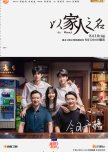
Ling Xiao, He Ziqiu and Li Jianjian grow up under the same roof without sharing blood, yet bound by the urgent need for a home. Their two adult caretakers—one driven by necessity, the other by guilt—sustain a space where affection is improvised, mended, and eventually made durable. This family is born from lack but strengthened by tenderness: simple dinners, inevitable quarrels, shared silences, and a domestic warmth that Go Ahead films with an almost therapeutic sensibility.
As time passes, each character heads in a different direction. Ling Xiao carries the shadow of a fragile mother and a guilt that drives him outward. Ziqiu searches the world for the belonging he was denied at home. Jianjian—the freest, most luminous—learns that even joy bears a cost when you fear losing what you love. In this second act the drama grows with them: more introspective, more attuned to trauma, and more conscious of how youth is sometimes interrupted by burdens no adolescent should shoulder.
When romance finally arrives, it does so delicately. The bond between Ling Xiao and Jianjian is not an abrupt twist but a natural blossoming of intimacy that always simmered beneath the surface. The series avoids morbid curiosity and instead treats their relationship with ethical clarity: they did not grow as blood siblings but as children of the same refuge. Love appears as recognition—affections that ripen quietly until they find their final shape. Ziqiu contributes to this dynamic with the sincerity of someone who loves without possession, embodying a vulnerable, respectful, and deeply humane masculinity.
What is most admirable about Go Ahead is how it treats pain. It neither romanticizes nor trivializes suffering. It presents pain as a legacy that burdens, yet also as the starting point for new life. Characters pursue therapy, name their limits, and reconcile with the past through the work of daily life. The performances are as restrained as they are honest; many of the series’ most memorable moments are contained in looks that strive to say what words cannot.
The mothers—both present and absent—add necessary counterpoints: emotional fragility, misunderstood hardness, and an inability to love steadily. None are depicted as monsters or martyrs, but as broken women acting from their own fractures. This complexity gives the drama a maturity uncommon in many family stories.
In the end, Go Ahead shines not for plot mechanics but for its humanity. It reminds us that family is not always given by fate; sometimes it is built by choice, with patience, imperfections, and the stubbornness to keep caring even when it hurts. After its episodes conclude, what remains is gratitude: for the parents who chose to care, for the children who learned to forgive, and for a story that teaches us the simple truth that blood may bind, but chosen affection—cultivated every day—is what truly sustains.
Ling Xiao, He Ziqiu and Li Jianjian grow up under the same roof without sharing blood, yet bound by the urgent need for a home. Their two adult caretakers—one driven by necessity, the other by guilt—sustain a space where affection is improvised, mended, and eventually made durable. This family is born from lack but strengthened by tenderness: simple dinners, inevitable quarrels, shared silences, and a domestic warmth that Go Ahead films with an almost therapeutic sensibility.
As time passes, each character heads in a different direction. Ling Xiao carries the shadow of a fragile mother and a guilt that drives him outward. Ziqiu searches the world for the belonging he was denied at home. Jianjian—the freest, most luminous—learns that even joy bears a cost when you fear losing what you love. In this second act the drama grows with them: more introspective, more attuned to trauma, and more conscious of how youth is sometimes interrupted by burdens no adolescent should shoulder.
When romance finally arrives, it does so delicately. The bond between Ling Xiao and Jianjian is not an abrupt twist but a natural blossoming of intimacy that always simmered beneath the surface. The series avoids morbid curiosity and instead treats their relationship with ethical clarity: they did not grow as blood siblings but as children of the same refuge. Love appears as recognition—affections that ripen quietly until they find their final shape. Ziqiu contributes to this dynamic with the sincerity of someone who loves without possession, embodying a vulnerable, respectful, and deeply humane masculinity.
What is most admirable about Go Ahead is how it treats pain. It neither romanticizes nor trivializes suffering. It presents pain as a legacy that burdens, yet also as the starting point for new life. Characters pursue therapy, name their limits, and reconcile with the past through the work of daily life. The performances are as restrained as they are honest; many of the series’ most memorable moments are contained in looks that strive to say what words cannot.
The mothers—both present and absent—add necessary counterpoints: emotional fragility, misunderstood hardness, and an inability to love steadily. None are depicted as monsters or martyrs, but as broken women acting from their own fractures. This complexity gives the drama a maturity uncommon in many family stories.
In the end, Go Ahead shines not for plot mechanics but for its humanity. It reminds us that family is not always given by fate; sometimes it is built by choice, with patience, imperfections, and the stubbornness to keep caring even when it hurts. After its episodes conclude, what remains is gratitude: for the parents who chose to care, for the children who learned to forgive, and for a story that teaches us the simple truth that blood may bind, but chosen affection—cultivated every day—is what truly sustains.
Was this review helpful to you?


