


 10
10 42
42 15
15


This review may contain spoilers
Deconstructing the myth of the invincible killer with the raw reality of an aging body
When action heroes grow old – what remains?
In the case of Pa-gwa: This is NOT a late-career revenge drama. It is an anti-myth. The KMovie Pa-gwa fundamentally challenges the conventions of the action genre.
The title Pa-gwa (파과) is a clever play on words. In Korean, it refers on one hand to "bruised fruit" that is no longer fit for sale. On the other hand, it historically signifies an age (16 for women, 64 for men) marking the end of one's "prime."
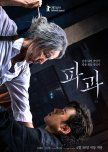
At the heart of the film is Lee Hye-young, delivering a masterful performance as Hornclaw through sheer presence and minimalism. While many praise her as a "strong woman," her true power lies in being overlooked. Hornclaw is not stylized as a superhero; she is a woman who exists at the edges of the frame, rarely heroized in frontal shots. She is a character becoming increasingly invisible—socially, physically, and cinematically.
The film treats this invisibility not as a deficit, but as a societal reality. An old woman who is overlooked, ignored, and underestimated—that is precisely what makes her dangerous. The message: A society that ignores older women creates its own formidable adversaries.
The movie consistently breaks with action clichés: there are no "cool" weapons or heroic fight choreography. The battles are grueling, often messy, making mistakes. Here, violence is not a spectacle; instead, it serves as a memory of past times and pains. It feels more lifelike and less polished.
The narrative style is equally unusual: the story remains open and incomplete, refusing simple explanations or neat moral judgments. The film does not attempt to organize violence, aging, or guilt—it simply endures them. This feels more honest, reflecting a real life that isn't always logical or conclusive.
But what makes the KMovie Pa-gwa so special in my eyes is its tenderness. The film takes time for quiet moments, observing the mundane with a mindful, unsentimental gaze—completely without trying to be "cool." Eventually, this is what makes it particularly powerful and human.
Pa-gwa tells the story of what happens when action figures grow old and can no longer win their battles with ease. And indeed: Lee Hye-young is the reason this film resonates so deeply and stays with you long after the credits roll.
PS:
The KMovie Pa-gwa (directed by Min Kyu-dong) is based on the acclaimed novel by Gu Byeong-mo.
In the case of Pa-gwa: This is NOT a late-career revenge drama. It is an anti-myth. The KMovie Pa-gwa fundamentally challenges the conventions of the action genre.
The title Pa-gwa (파과) is a clever play on words. In Korean, it refers on one hand to "bruised fruit" that is no longer fit for sale. On the other hand, it historically signifies an age (16 for women, 64 for men) marking the end of one's "prime."
At the heart of the film is Lee Hye-young, delivering a masterful performance as Hornclaw through sheer presence and minimalism. While many praise her as a "strong woman," her true power lies in being overlooked. Hornclaw is not stylized as a superhero; she is a woman who exists at the edges of the frame, rarely heroized in frontal shots. She is a character becoming increasingly invisible—socially, physically, and cinematically.
The film treats this invisibility not as a deficit, but as a societal reality. An old woman who is overlooked, ignored, and underestimated—that is precisely what makes her dangerous. The message: A society that ignores older women creates its own formidable adversaries.
The movie consistently breaks with action clichés: there are no "cool" weapons or heroic fight choreography. The battles are grueling, often messy, making mistakes. Here, violence is not a spectacle; instead, it serves as a memory of past times and pains. It feels more lifelike and less polished.
The narrative style is equally unusual: the story remains open and incomplete, refusing simple explanations or neat moral judgments. The film does not attempt to organize violence, aging, or guilt—it simply endures them. This feels more honest, reflecting a real life that isn't always logical or conclusive.
But what makes the KMovie Pa-gwa so special in my eyes is its tenderness. The film takes time for quiet moments, observing the mundane with a mindful, unsentimental gaze—completely without trying to be "cool." Eventually, this is what makes it particularly powerful and human.
Pa-gwa tells the story of what happens when action figures grow old and can no longer win their battles with ease. And indeed: Lee Hye-young is the reason this film resonates so deeply and stays with you long after the credits roll.
PS:
The KMovie Pa-gwa (directed by Min Kyu-dong) is based on the acclaimed novel by Gu Byeong-mo.
Was this review helpful to you?


