

 10
10 42
42 15
15


This review may contain spoilers
A Monument to Collective Resistance
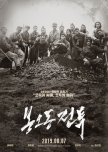
For me, "The Battle: Roar to Victory" refuses simple hero worship and shuns comparison with typical Hollywood blockbusters. Instead, it stands as a monument to the collective – to an identity forged from the resistance of ordinary people who were never meant to be soldiers.
To truly "feel" this film, I guess, one must understand the world these characters inhabited. Following the official annexation in 1910, Korea lived under iron-fisted Japanese military rule. The turning point came just one year before the film’s events: On March 1, 1919, activists in Seoul read a Declaration of Independence, sparking the nationwide Samil Movement. Up to two million people protested peacefully for months. The colonial power’s response was sheer terror: mass arrests, torture, and brutal massacres, leaving thousands dead.
This KMovie picks up in 1920, where this trauma transitioned into a new phase. Despair over failed peaceful appeals to the international community gave way to the conviction that freedom could only be won by force. The film captures the moment when farmers, hunters, and traders transformed into a desperate but determined Independence Army. Women, too, are shown as an integral part of this – not just as couriers in the background, but as fighters on the front lines, shattering the strict social roles of the era.
The cinematography is grand, but never for its own sake. The jagged canyons of Bongo-dong become a character in themselves. To grasp this, one should know the significance of the tiger in Korea: it is the national symbol, and the shape of the Korean peninsula is often likened to a pouncing tiger. The film introduces this symbolism brutally through a scene with a Japanese commander and a slain tiger – a deliberate metaphor for the attempt to physically and culturally annihilate the Korean spirit.
But in the decisive battle, the tide turns. The "Valley of the Tiger’s Mouth" is more than a name; it is a tactical trap. Utilizing their superior knowledge of the terrain, the resistance lures the technologically advanced Japanese army into narrow, impassable gorges. Here, the modern military machine loses its power. It is as if the land itself – the Korean Tiger – closes its jaws and swallows the invaders. The mountains are not just a backdrop; they are the deadliest weapon of the resistance.
Technically, the film is a modern powerhouse. The action is brilliantly choreographed, yet the violence is drastic and unvarnished, making the brutality of the occupation almost physically palpable. While director Won Shin-yeon, occasionally breaks this tension with slapstick humor – which may feel jarring to Western viewers – this abrupt shift is a known stylistic device in Korean cinema to make the unbearable endurable.
Even the portrayal of the Japanese antagonists, which may seem one-dimensional at first, serves a deeper purpose. These figures represent a deep-seated collective wound in Korea’s cultural memory known as "Han" – a feeling of accumulated grief, resentment, and a burning desire for justice that was never fully resolved. Since the liberation was immediately followed by the Korean War and the division of the country, the trauma of colonization remained unhealed. The almost caricatured villainy is less a narrative weakness and more a stylized mirror of this multi-generational pain.
The film’s massive success in South Korea (over 4.7 million viewers) was no accident. Released near Liberation Day in 2019 during a period of renewed trade tensions with Japan, it struck a deep patriotic nerve.
My Verdict
Is there patriotism? Yes. Pathos? Plenty. But those who look beyond these genre conventions will find a powerful tribute to an unyielding collective identity – to the human identity in resistance. I´d say, the film reminds us that history is not just written by generals. It is written by the countless individuals willing to stand up for their freedom.
To truly "feel" this film, I guess, one must understand the world these characters inhabited. Following the official annexation in 1910, Korea lived under iron-fisted Japanese military rule. The turning point came just one year before the film’s events: On March 1, 1919, activists in Seoul read a Declaration of Independence, sparking the nationwide Samil Movement. Up to two million people protested peacefully for months. The colonial power’s response was sheer terror: mass arrests, torture, and brutal massacres, leaving thousands dead.
This KMovie picks up in 1920, where this trauma transitioned into a new phase. Despair over failed peaceful appeals to the international community gave way to the conviction that freedom could only be won by force. The film captures the moment when farmers, hunters, and traders transformed into a desperate but determined Independence Army. Women, too, are shown as an integral part of this – not just as couriers in the background, but as fighters on the front lines, shattering the strict social roles of the era.
The cinematography is grand, but never for its own sake. The jagged canyons of Bongo-dong become a character in themselves. To grasp this, one should know the significance of the tiger in Korea: it is the national symbol, and the shape of the Korean peninsula is often likened to a pouncing tiger. The film introduces this symbolism brutally through a scene with a Japanese commander and a slain tiger – a deliberate metaphor for the attempt to physically and culturally annihilate the Korean spirit.
But in the decisive battle, the tide turns. The "Valley of the Tiger’s Mouth" is more than a name; it is a tactical trap. Utilizing their superior knowledge of the terrain, the resistance lures the technologically advanced Japanese army into narrow, impassable gorges. Here, the modern military machine loses its power. It is as if the land itself – the Korean Tiger – closes its jaws and swallows the invaders. The mountains are not just a backdrop; they are the deadliest weapon of the resistance.
Technically, the film is a modern powerhouse. The action is brilliantly choreographed, yet the violence is drastic and unvarnished, making the brutality of the occupation almost physically palpable. While director Won Shin-yeon, occasionally breaks this tension with slapstick humor – which may feel jarring to Western viewers – this abrupt shift is a known stylistic device in Korean cinema to make the unbearable endurable.
Even the portrayal of the Japanese antagonists, which may seem one-dimensional at first, serves a deeper purpose. These figures represent a deep-seated collective wound in Korea’s cultural memory known as "Han" – a feeling of accumulated grief, resentment, and a burning desire for justice that was never fully resolved. Since the liberation was immediately followed by the Korean War and the division of the country, the trauma of colonization remained unhealed. The almost caricatured villainy is less a narrative weakness and more a stylized mirror of this multi-generational pain.
The film’s massive success in South Korea (over 4.7 million viewers) was no accident. Released near Liberation Day in 2019 during a period of renewed trade tensions with Japan, it struck a deep patriotic nerve.
My Verdict
Is there patriotism? Yes. Pathos? Plenty. But those who look beyond these genre conventions will find a powerful tribute to an unyielding collective identity – to the human identity in resistance. I´d say, the film reminds us that history is not just written by generals. It is written by the countless individuals willing to stand up for their freedom.
Was this review helpful to you?


