
 News


Recent Discussions




Both are dramas about noncoventional couples. One of the leads in each have illnesses. The stories are not so similar but they both address stigmas and issues revolving illnesses.

Both are melodramas about hurt people. Love finds them in the strangest times and warms their hearts, but in both there are complications.

Melodramas with the same vibe and same amout of reality and weirdness. One of the leads in both dramas has been/is sick and the drama deals with that.


Similarities between 100 Days of Deception and The Lament of Autumn:
- Japanese occupation era: Both dramas are set against the backdrop of the Japanese occupation, with characters navigating a turbulent and dangerous period in history.
- Patriotism and resistance: Both explore loyalty to one's country and the struggle against a hostile occupying force.
- Love amid conflict: Romance develops amid political tension, where personal feelings clash with duty and national loyalty.
- Espionage and hidden identities: Secrets, deception, and dangerous allegiances add suspense to the characters' lives.
- Personal sacrifice: The characters face difficult choices that may require them to put their feelings aside for the sake of their country.
- Historical romance with suspense: Both combine romantic tension with the dangers and uncertainties of life under Japanese occupation.


Both of them is high school bls and there are very healthy friendship sides in them also, they always support each other. Also, one of the characters tries to impress other one after relationship starts and some plotlines happens. Both shows are really fun to watch

School Trip Season 2 and Popular Serizawa Acts Weird around Me are highly similar because they share the same screenwriter, Subaru Yamashita, who infuses both high school BL dramas with a distinct blend of sweet comedic timing and intense romantic devotion. Both series anchor themselves on the classic "popular prince x introverted loner" trope, pairing a charismatic campus icon (Watarai / Serizawa) with a shy, socially reserved partner (Hioki / Suzuki). The most striking parallel lies in the popular leads' behavior; both Watarai and Serizawa exhibit a deeply affectionate, clingy, and heavily overprotective "sticky" love, driven by a fierce possessiveness that keeps them glued to their partners' sides despite their different class placements or social standing.


I gave both show 10/10, equally funnily addicting.
• Peak Chaotic Comedy: Both dramas absolutely excel at taking ridiculous, over-the-top situations and running with them. The Kitazawa family is just as hilariously dysfunctional as Yamaneko’s gang.
• Elite Banter & Chemistry: If you watched Yamaneko just to enjoy the characters bickering and chattering, the sibling dynamic here delivers that exact same addictive vibe.
• Deceptive Depth: Just like Yamaneko is surprisingly deeper than its surface comedy, Momikeshite Fuyu hides genuine family life lessons beneath its layers of absolute absurdity.
All masterpieces by NTV, you can't go wrong.


- It's a very similar plot(PolicexCriminal/Mafia)
- just so u know it IS A BL NOT A GENDERBEND
- It's very dark but It's rly good so give it a tryYY!!
- just so u know it IS A BL NOT A GENDERBEND
- It's very dark but It's rly good so give it a tryYY!!


so much similiar. the two main leads families dont like each other. family dramas.. even the little market is the same. the more you watch you see the similarities


Both FLs assume another (sister or stranger's) identity and marry the ML, who is a general, in an arranged marriage. He begins to suspect she's not who she's claiming to be.


Both are about fandom and fan stalkers. Bona is the story about the downward spiral of a woman obsessed with an actor.
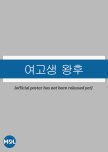

Seorabeol Knife and High School Queen are built on the exact same narrative foundation, acting as two sides of the same fantasy time-slip coin. Both shows focus entirely on the massive culture shock of a character being abruptly thrown hundreds of years into a completely foreign century overnight.
While they share a time-travel premise, their execution is completely inverted. Seorabeol Knife sends a modern-day professional back into ancient history. In contrast, High School Queen takes a legendary queen from the Joseon era and thrusts her into the modern world.
Both dramas also heavily explore the clash between royal and commoner identities. Seorabeol Knife features a modern commoner chef attempting to navigate the royal court of the Silla Kingdom. Conversely, High School Queen takes a literal ancient ruler and forces her to blend in as an ordinary high school student.
Finally, the main characters in both series must survive their dangerous new environments by relying strictly on their elite expertise. The lead in Seorabeol Knife uses his 21st-century culinary mastery to protect himself in the palace, while the lead in High School Queen uses her 400-year-old martial arts skills to handle modern school bullies.

Seorabeol Knife serves as the official spin-off and thematic successor to Bon Appétit, Your Majesty, directly occupying the exact same fictional universe. Both series share the same director, Jang Tae-yoo, meaning Seorabeol Knife will carry over the exact same world-building logic, rules of time travel, and high-production visual aesthetic.
The core plot formula is nearly identical. Just like the French-trained modern chef who accidentally slips through time in Bon Appétit, Your Majesty, Seorabeol Knife features a modern Michelin-starred Italian chef who gets pulled into the ancient past. In both shows, the protagonist must survive dangerous palace politics by using 21st-century culinary skills to win over a royal figure with an unyielding palate.
The main difference lies in the setting and the romantic dynamic. While Bon Appétit, Your Majesty takes place during the Joseon Dynasty, Seorabeol Knife goes 1,000 years further back to the Silla Kingdom. Furthermore, instead of cooking for a tyrant king, the chef in Seorabeol Knife forms a culinary romance with an ambitious princess who dreams of taking the throne.
Would you like me to break down the character profiles for this new chef and princess, or would you prefer a look at the historical Silla setting?


Narratively, both shows explore the chaotic transformation of an initial deception or game into complex, genuine emotional entanglements. They lean heavily into the popular "opposites attract" dynamic, where one protagonist tries to force a connection that completely backfires, only to spark true romance later on. In Mr. Fanboy, the story centers around a massive misunderstanding where a devoted fan named Wan is mistaken for an obsessive stalker (sasaeng) by Third, his idol's protective acting partner. In You Maniac, the plot kicks off with a social game where a carefree, flirtatious playboy named Dean takes on a deliberate challenge to chase down and seduce an indifferent artist named Moth.
In both scenarios, the main characters begin their relationships plagued by initial friction, pushback, and intense personal clashes. However, as the episodes progress, both series show how a messy, manufactured, or adversarial introduction gradually strips away the characters' defensive facades, forcing them to navigate deep internal struggles, unexpected vulnerability, and undeniable psychological tension.
In both scenarios, the main characters begin their relationships plagued by initial friction, pushback, and intense personal clashes. However, as the episodes progress, both series show how a messy, manufactured, or adversarial introduction gradually strips away the characters' defensive facades, forcing them to navigate deep internal struggles, unexpected vulnerability, and undeniable psychological tension.


- Sort of enemies (or actually enemies) to lovers
- Very powerful leads (both intellectually or physically)
- Very badass FLs, and MLs are very down bad for that
- Very powerful leads (both intellectually or physically)
- Very badass FLs, and MLs are very down bad for that


