
 News


First off, this storyline format was messy. The original had a better way of presently this story, which in and of itself is actually quite a unique premise. Honestly, in the movie version I was confused. Why did the director choose to put the scenes in that order BOGLES MY MIND… Poor choices were made!! I was unable to understand any of these characters or care about them. They felt flat and these are some amazing actors so that was EXTREMELY disappointing to watch.
In addition, it lacked the intrigue of the original. I was honestly bored…and this is NOT a boring story!! So why was it so hard to trudge through this movie?... I think it was because it lacked the comedy, the mystery, and adorable awkwardness of the original. Not to say the original was perfect. I think it lost focus halfway through. It ended up going in a different direction, that I personally think took away from a drama that had such amazing potential. However, it far exceeded the movie in every aspect!!
Honestly, I cannot really recommend this. Even as a HUGE fan of the story of Cheese in the Trap and someone who waited a long time for this adaption. Truly saddened by its lost potential.
Was this review helpful to you?

Is SEO-JOON enough for you to watch a series?
Netflix aired this show WHERE i lived 2 episodes behind Korea - I went from looking forward to fresh episodes (even trying to find the latest episodes online) to completely forgeting there were new ones.The series started out great, the first few episodes were standouts, the problem was it wasnt able to continue the momentum. It felt like the rest of the episodes dragged on that i was wishing the series would just end. It didnt feel like the show is reaching a climax and by the end i was bored.
Id only give this show an overall 7.5 just because of PSJ, he did, after all, acted his ass off in this drama. Yoo Jae Myung is amazing. I feel like Kim Da Mi is far too young for PSJ and to tell honestly, their chemistry a bit lacking. I love Lee Joo Young but why does a real woman play a transgender woman character??? Her beauty is distracting that i find it hard to believe she is a transgender.
Would i reccommend it - if you're a PSJ fan, yes. If not, you can skip it.
Was this review helpful to you?
script and quality
BL OF THE YEAR (until now 🫶💅I think BL delivered everything and more in this first episode, we had quality and a production of another level (which was already expected), the cast of millions and the perfect performance from everyone.
I loved the effect when the Bible went backwards in time (4 minutes) and still managed to run over the woman anyway (but it was destiny).
We as blzeiros won a lot today, because this work is incredible and only increases the level of bls (as the next ones can become, if they have quality and a good production).
Looking forward to knowing what will happen in the next episodes (because this series promises to deliver everything and more), stay tuned.
Was this review helpful to you?

Call it on-screen chemistry!
Lin Yusen and Nie Xiguang are practically tailor-made for Song Weilong and Zhao Jinmai! Their on-screen chemistry is not only top-tier but also feels like destiny itself—I couldn’t stop smiling throughout the entire series. The show perfectly inherits the unique subtle style of Gu Man’s works, where seemingly ordinary daily moments flow with touching emotions, and the portrayal of romantic atmosphere is textbook-level perfection. In terms of faithfulness to the source material, it largely achieves a divine capture of the original novel. As for production, the surprises keep coming: a cinematic-grade filter quality, cleverly thoughtful cinematography techniques, paired with K-drama-style OSTs.Was this review helpful to you?

This review may contain spoilers
A place to inhabit when the outside world feels too heavy
Amid the flood of BLs built around big twists and intense conflicts, Cat for Cash moves in a different direction. It’s smaller in scale, more intimate in its approach, and, above all, focused on making the audience feel, even if that means slowing things down and leaning into everyday moments. The premise, which could easily come off as quirky (a debt collector who can understand cats and a reluctant heir to a cat café), is handled with surprising emotional sincerity. The result is a series that begins as a light romantic comedy but gradually reveals deeper layers about grief, affection, and reconciliation.Right from the first episode, the tone is clear: there is humor, but it never comes without emotional weight. JeMeow’s death acts as the turning point that drives the entire story, and it’s also where the series shows its greatest strength: its ability to translate complex feelings into simple yet meaningful scenes. Lynx’s grief isn’t idealized; instead, it feels messy, contradictory, and at times even uncomfortable, especially when shaped by unresolved resentment.
Within this context, the relationship between Lynx and Tiger becomes the true core of the narrative. Unlike many BLs that rely on external conflicts or prolonged misunderstandings, the development here feels more direct and emotionally honest. Their connection grows through silence, lingering glances, and small acts of care, creating a dynamic that may feel slow to some but ultimately finds its strength in that very softness. It’s a slow burn that values the journey as much as the destination.
Much of this impact comes from the chemistry between First and Khaotung, who once again show an impressive command of emotional nuance. There’s a natural ease in the way they interact that gives even the simplest moments real weight. Tiger, in particular, stands out as an unconventional lead: a debt collector who, far from being cold and ruthless, reveals a quiet sensitivity, especially when it comes to cats or Lynx. Meanwhile, Lynx carries the emotional weight of the story, and his journey toward reconciling with his mother’s memory is easily the most solid arc in the series.
Visually, Cat for Cash leans into a warm and comforting aesthetic, with soft lighting and intimate framing that turn the café into a kind of safe haven. There’s a clear effort to make this space feel symbolic rather than just functional, a place where memories, affection, and unresolved pain coexist. The soundtrack supports this atmosphere well, enhancing emotional moments without overwhelming them and helping to maintain immersion.
Even so, the series still has its shortcomings. The writing sometimes hesitates to fully develop its own conflicts, resolving situations too quickly and without meaningful consequences. This weakens certain narrative arcs, making them feel somewhat shallow or repetitive. On top of that, the show’s most unique element, Tiger’s ability to communicate with cats, is surprisingly underused. What could have been a defining narrative device often feels like a minor detail instead.
Another aspect that stands out, though not in a positive way, is how Tiger’s cat allergy is portrayed. In theory, it should be a significant limitation, almost a natural barrier to his presence in the café. In practice, however, it only seems to matter when the plot needs it to. Tiger spends hours, sometimes even days, in a closed space filled with fur and airborne particles without showing consistent reactions. The allergy ends up feeling selective, more like a character trait than a real condition, which slightly breaks the suspension of disbelief in a series that otherwise tries to ground its fantasy elements in emotional realism.
The pacing can also be divisive. By choosing a more contemplative approach, Cat for Cash sometimes risks feeling stagnant, especially for viewers expecting clearer narrative progression. There are episodes where very little seems to move forward, which may affect overall engagement. Added to this are a few inconsistencies, both in the internal logic and in certain character choices, that, while not entirely damaging, are still noticeable.
And yet, it’s interesting how Cat for Cash still works despite these imperfections. That’s likely because its greatest strength doesn’t lie in the plot itself, but in how it makes the audience feel. There’s an emotional honesty running through the series, a genuine attempt to explore loss, imperfect love, and second chances. Lynx’s relationship with his mother, even after her death, is a perfect example of this: complicated, painful, and deeply human.
In the end, Cat for Cash isn’t about grand events, but about small, quiet gestures, the kind that slowly but surely change everything. It may not be the most tightly structured or consistently engaging BL out there, but it is, without a doubt, one of the most sensitive. And for those willing to meet it at its own pace, it offers something rare: a safe, almost therapeutic space where even the hardest emotions can soften just a little.
Was this review helpful to you?
 1
The river that ran straight and clear
Correct me if I'm wrong, but my geographical knowledge granted - most rivers run neither straight nor clear. This series promised a raging river and instead delivered a silent stream.Instinctually, it's easy to recognise that The Murky Stream is a drama that is solemn, but unfortunately, that may be the only thing that is consistent about it. Because the narrative, the plot, were all scattered around aimlessly, barely managing to come together in the final moments for a lackluster ending.
I do believe this is a story that requires some knowledge on the era it is set in - unfortunately, I walked in knowing none of it, making me unsure if some facts were true and lost on some contexts. As such, I may not have been able to understand or enjoy this piece of work in it's intended or to the full extent - and for the same purpose, I won't focus on the actual details in the series in my review.
The first three episodes of this series had dreamlike writing - the story ebbed and flowed like the titular stream, nothing was quite clear, everyone seemed highly faceted. With the introduction of every main character, I thought I had it figured out! I could tell how the story was going to go, I could plot out all the major conflicts based on the information we were given, and this was going to be an epic struggle for all our characters - for their duty, dreams or dignity.
I, however, wanted to be proved wrong, because my version of events weren't nearly as twisted or mysterious as they needed to be. I was proved wrong, but I now wish I was right.
Because you see, my predictions were coherent and the primary problem here is with the pace of the story - focusing on the plot, all the nitty - gritty details is not a bad thing, but too much focus on that and you lose track of your narrative, you lose your flow. Multiple seasons (or no), you need a setup, you need your events and you need a payoff, especially when the plot is heavily geared towards political and social themes. The story moved forward without any real direction or turbulence, things were plain and simple, yet made no sense.
No episode after the first trio had much to say, every immediate scene introduced a new character or a new conflict or a new chronicle, but none with any substance. All the details presented needed to have been revealed much earlier or in a much more interesting way. I do recognise that the narrative took on a form that was much closer to real life than reel, which eventually ended up bogging down what could have been an interesting tale.
Thankfully, the final two episodes did have an interesting narrative - but I hated them. Majorly because none of those plotlines had a valid setup. The hurried sequences seemed to be connected to actual historical importance based on the emphasis placed on them - but it was too little too late. It came out of the blue and did nothing to complement the setup in the first three episodes, rather, it felt like a brand new story all of a sudden.
It seems like the story, the dialogues, the bonds between all the characters were written down before the characters were even finalized - and when you're stubborn that the story will go one way and one way only, it doesn't matter how much you work on your characters, they will do and say what the script says, even if it means it goes against the very fiber of the core characteristics you've written for them or even if it means they barely have characteristic of significance, something that makes you remember them. This series is afflicted with the second situation.
This is only enhanced by another massive error they made writing this script, ignoring their leads. Most of them at least. You need them all for the most part, but take any one of them out of the equation and the story would still move forward. I don't see that as a good thing, especially when you're marketing the complex ties between all them to be as murky as your river, it is kind of futile to not give any of them the required screentime or character depth. All of them are one - dimensional, can be summed up in a word, or they have no real personality that allows you to ponder upon the bonds they'll create or the actions they will take.
Siyul for example - he's described as hot headed, but you can see he's kind and fair from his screentime. But that's it? How does that play into Chun's honest idealism? What about Eun's prejudice, or Mudeok's cowardice?
And Siyul is the common link here because there's barely any interaction amongst the other leads. It felt like each of them was on their own personal journey, yet occasionally crossed paths with others, in happenchance.
I suppose my main gripe here is that everything was clear as day - none of it was remotely murky. The story and the character's personalities were both set in stone, neither of budged an inch through the course of the nine episodes.
I have no complaints about the acting or the cinematography, but in this context, they pale in comparison to the writing that stuck out like a sore thumb.
Watching it completely did indurate the fact that many events that happened in the series may be reflective of real life, but once again, I am not well versed in the history of the region and era. I will do some research into this, but whether it was historically accurate or not, ultimately, this was my kind of drama, but with bad execution. On a personal note - I hated how little screentime Seoham had, because to be completely honest, I started it for him. But even discounting my personal feelings on it, objectively speaking, they had so much going for them, but instead of running with it, they sat around toying with ideas that went nowhere and settled for an ending out of left field. Let's say they concluded it as well as they could, with an ambiguous ending, but even if there is a second season, I will not be revisiting it.
6.75/10
Was this review helpful to you?
Fruits of Sorrow: Love's Tangled Roots in 'Paradise of Thorns
In the lush embrace of a remote durian orchard, "The Paradise of Thorns" unfolds like a bittersweet fruit, its story as complex and layered as the Thai landscape it inhabits. This poignant Thai film weaves a tapestry of love, loss, and legal strife, centering on Thongkam and Sek, a gay couple whose shared life is abruptly severed by tragedy.As the fragrant durian blossoms wither, so too does Thongkam's world when Sek passes away. The orchard, once a sanctuary of their love, becomes a battleground of grief and ownership. Thongkam must navigate the thorny path of reclaiming what he believes is rightfully his, while the absence of legal recognition for their union casts a long shadow over his fight.
The film's brilliance lies in its nuanced portrayal of five key characters, each a prism refracting different hues of love and loss:
Thongkam, portrayed with raw emotion by Jeff Satur, stands as the heart of the story. His endurance in the face of hardship is as steadfast as the durian trees he tends, his love for Sek rooted deeply in the soil of their shared dreams.
Mo, brought to life by Engfa Waraha, initially appears as thorny as the durian's husk. Yet, as the layers peel away, we see a woman equally scarred by love's cruel hand, her devotion to Saeng a testament to love's many forms.
Sek, played with complexity by Toey Pongsakorn Mettarikanon, embodies the conflict between desire and duty. Like a durian split open, his character reveals the sweet and the bitter - a man torn between his true self and societal expectations.
Saeng, masterfully portrayed by Seeda Puapimon, is like the roots of the durian trees - hidden yet vital. Her journey from seeming selfishness to revealed vulnerability mirrors the ripening of the fruit itself, her love emerging too late, but no less potent.
Jingna, brought to life by Keng Harit Buayoi, serves as the film's conscience. Like a bird's-eye view of the orchard, he sees all, his perspective offering a bittersweet wisdom on the cost of blind pursuit.
"Paradise of Thorns" transcends its initial premise of LGBTQ rights, blossoming into a universal meditation on love's many facets. It reminds us that in our struggle to claim what we believe we deserve, we may lose sight of what truly matters.
Set against the rustic beauty of Mae Hong Son, the film whispers that these tales of love and loss are as universal as the seasons. From Bangkok's bustling streets to the quiet durian groves of the north, human hearts beat to the same rhythm of joy and sorrow.
In the end, "Paradise of Thorns" leaves us with a profound truth: sometimes, in life's orchard, we open what we believe to be the sweetest fruit, only to find bitterness within. Yet it's in accepting this duality that we truly taste the richness of the human experience.
Was this review helpful to you?

Instead of a “will-they-or-they-won’t” plot, which all romance, include Western, does, they show the natural progression of a relationship, through various stages, with all the adaptation and negotiation that it involves, in a very adult-manner. While that could easily be boring, the cast is magnetic, photography stunning, and they really have great dialogue and a lot of chemistry. A *LOT* of chemistry. This series often takes your breath away and a whole sequence in episode 7 is a steamy classic in itself.
You also see a lot of conversations regular shows completely skip over, about sex, jealousy, consent, compromise. The series is romantic and sexy, but also very realistic in the depiction of a healthy relationship.
As a viewer, I was always waiting for the traditional BL mode of throwing a wrench into the plot at some point, but that, thankfully, never happens. Instead, they make a bold decision to, in the last third of the series, essentially switch the protagonists and make the main couple supporting, which gives us a unique opportunity: see the main couple live their happily ever after on screen, because now there are news leads carrying the weight of the drama.
If one criticism is to be made is that there are other two possible couples on the posters and peppered throughout, but they are given little screentime and have very little connection to the main plot, feeling completely throwaway. It’s not a huge issue, as they don’t show up that often, but it’s glaring, especially because the stories deal with rape and are very misplaced in a series that explores consent so well, otherwise.
On the production site, as I mention, the photography is gorgeous and there are many different locations, making the show visually very interesting.
The act is superb and even the supporting actors are on point. There is one weak link in Plan, who plays Can, but the other actor he mostly shares scenes with is so good that balances that out.
I cannot recommend Love By Chance enough. It not just a great BL, it’s a great series, standing tall among Eastern and Western programmes as well.
Was this review helpful to you?
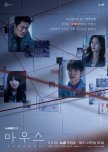
Mouse; A Masterpiece or A Mess?
The best way to describe screenwriter Choi Ran’s "Mouse" is somewhere between a masterpiece and a slightly disjointed mess in certain parts.
It’s wrong to entirely slander that " Mouse" wasn’t a good series. Without a doubt, the main cast were absolutely brilliant. ( Especially Lee Seung Gi’s hauntingly profound portrayal as Ba Reum, truly defining his talents as an actor.) Additionally , " Mouse" arguably had some of the best character development seen in a mystery- crime series in a long time. The portrayal of psychopaths felt haunting for the most part, whilst main characters Ba Reum ( Lee Seung Gi) and Mo-Chi ( Lee Hee Joon) had some shockingly profound character developments and twists. Even seemingly superficial side characters in the beginning such as Oh Bong-yi ( Park Ju Hyun) and the suave Choi Hong-ju, or " Sherlock Hong-Ju" ( Kyung Soo-Jin), had a lot more to their characters than first meets the eye.
However whilst it would be easy to give this drama a decisive ” 10/10” and write it off as flawless , it is undeniable that it isn’t without its faults either.
" Mouse" is undeniably a collection of surprising twists and turns which soon become a little disorientating. Whilst rooted in real—life depictions of a serial killers with a slight "fantasy twist" intriguing plot points soon become slightly predictable and mundane in the latter part. It was almost as though screenwriter Choi was running low on ideas ( despite the endless supply of unanswered questions left open for viewers) and decided to group together a cluster of feverish flashbacks, dismiss more intriguing characters peppered throughout the storyline and manoeuvre deux ex machina solutions for the resulted ending.
So, is " Mouse" actually worth watching from all the hype? This depends a lot on personal preferences. Whilst not flawless and a little clunky in the second-half, "Mouse” was undeniably filled with good acting, intriguing plot, characters and profound themes.
Was this review helpful to you?
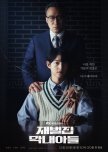
If Machiavelli knew the future, had a pack of abs and the world's baddest grandfather...
Listen to me. Before reading this review, I need to ask you a question:Why do you want to watch this drama? Is it because you just want to be entertained by unbelievable but extremely exciting twists at every turn or you want a drama with solid writing, realistic and logical storyline with no plot holes whatsoever?
If your answer is the latter, then our conversation ends here and I would have to regretfully say my goodbyes but if your answer is the former? Then, please. By all means, stay.
Reborn Rich is pure adrenaline rushing, thrill inducing crack of a show that offers you absolute entertainment for all of its 16 episodes.
So let me explain what you’re going to like about this show:
☑️ Song Joong Ki kicking absolute ass:
Song Joong Ki’s character here is this brilliant edge lord who is out for revenge, equipped with the power of the future, an IQ of 600 and skin that’s as smooth as a baby’s butt. While he is not the most well layered character out there with incredible depth or substance, he does excellently deliver your quintessential hot, charismatic and conveniently overpowered oppa character that’s easy to root for and puts on a great show.
☑️ The baddest grandfather alive:
The biggest winning point for me was definitely Lee Sung Min’s grandpa. His character is as vicious as they come. A true anti-hero with the greatest business acumen, greed for expansion and corporate ruthlessness. For all intents and purposes, the grandfather is a character with flaws and yet the one that you will come to love the most. His relationship encompassing love, compassion, respect and at times rivalry with his grandson (Song Joong Ki) is easily the highlight of the entire drama.
☑️ Acting and Music:
The drama is complemented with an emotional and powerful soundtrack that beautifully underscores impactful scenes. Moreover, the acting is excellent across the board which is unsurprising considering the veteran cast. I am not the biggest fan of Song Joong Ki’s work and I do believe he tends to only play certain types of characters he is comfortable with but even I have to admit that he really shines in some of the scenes in Reborn Rich. Acting wise, for me this is his best work yet.
☑️ Storytelling, politics and the battle of wits:
As someone who is doing her MBA and is an Economic major, I absolutely ate up all the business politics and corporate talk. The main lead knows the events of the future and uses that knowledge to play with stocks and investments so it benefits him. His back and forth with his rivals is so entertaining to watch. The politics and scheming aspect is executed quite well and never gets boring or stagnant.
☑️ The controversially out of the box ending:
Ok, so this is something you might not like. The majority of the people hate the ending and I can see why. I, for one, absolutely loved that they attempted to go so out of the box with this one. I wouldn’t in my wildest dreams have been able to predict the way the drama ended. It’s a very brave and ambitious route to take and while it doesn’t have the best execution, it’s still a commendable attempt by the writer.
I loved the way the author was able to run the story of a brilliant, young potential heir of the powerful Sunyang group parallel to the poor, desperate employee working at the same Sunyang and let the two worlds coincide beautifully.
Now, let’s go over the drama’s weak points:
❌ Romance and the female lead:
This is an unfortunate pattern that most female leads in a Soong Joong Ki drama are mere props with not much contribution to the plot. The female lead is the same here and the actress who isn’t given much to work with in the first place, delivers a quite bland and unexciting performance. The couple lacks any substantial chemistry and the romance isn’t believable. This is why it has been a relief for me that throughout the drama the love story was just a sub plot and shelved to the back whenever it mattered.
❌ The Execution:
Like I said, while I understood what the writer was trying to do with this, the execution is choppy at best. You have your favorite truck of doom making quite a few appearances, you have extremely convenient plot devices trying haphazardly to fill up the writing loopholes.
If you consider the way the story flows, it just doesn’t have the best writing out there. Some characters aren’t given proper development, others are introduced just for plot procession, while others are taken out abruptly or change drastically for the same purpose: to move the story forward or fit a particular narrative. Ultimately, this drama is more focused on the next big thing rather than the nitty gritty's or the development of its characters.
✅ Ending Thoughts:
This is the drama that you watch if you just want a good time. It has its emotional moments (especially in the way it masterfully explores the relationship between a prickly grandfather and his overly intelligent grandson), its moments of laughter and lots of scheming and fun twists.
Right from the start, it's obvious that the show requires a lot of suspension of belief and logic because it's just not that deep.
So if you’re willing to take it as an easy entertaining journey, then there’s no reason you shouldn’t be immersing yourself in pure Sunyang madness and hatching your own plot to take over the world!
Was this review helpful to you?
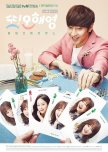
There are so many things that I love about this story. First of all is the idea in itself. They did a pretty good job with explaining the visions, making them convincing without making it look too much out of space. With the same pace Do Kyung was getting an idea of what was actually happening to him, it made me understand it step by step, too.
The way the romance was emerging. From the original setup to the new one. Well explained and real. I got a pretty good feel of how deep their emotions were growing and I liked the idea of "fate" here. I loved how that whole relationship was developing, even though they sometimes seemed a little foolish. But that's what love actually is, right? Acting against all logic and not getting bothered about other people's opinions. What makes you really happy and how do you want to spend that one life you got?
I was dying with pleasure seeing all that skinship. It felt comfortable and real and made me very, very happy. When it seemed like their pent up emotions were finally exploding, I felt the same. I'm a sucker for hugs and here are so many tight embraces that I wish I had someone near me who would hug me just at the same time, lol. And their kisses... Don't get me started with those. All these things are one big part of what made this romance so intense and beautiful.
The acting was very impressive. Eric blew me away. His character drew me in to a point where I couldn't stop but root for him all the way, no matter what he did. I saw his remorse, I felt his misery and I enjoyed his approach to slowly change himself and become happy, no matter the outcome. Same goes for Seo Hyun Jin. Her despair, her hunger for love and her feeling of betrayal of life itself were crushingly unfeigned.
There is some really strong writing in this drama. Some dialogues had a big impact on me and made my heart flutter all of a sudden so many times. The story did a pretty good job at riling up my emotions in every way possible.
I also loved the side stories. Interesting characters even though some of them were a little exaggerated. I enjoyed them nevertheless. Do Kyung's sister was one hell of a person. Her on/ff modes were hilarious but what I loved the most was that no matter what, she stuck to her family, supporting them in her own way whether blood-related or not and was always like a guardian. I also loved Hae Young's parents. Although her mother was really, REALLY stubborn towards the end, I enjoyed the time when she was silently giving in, showing that she truly loved her daughter and wanted her to be happy.
About the two second leads here...
Well, I didn't really care for their stories while watching the drama. Now, at the end... Well, of course they had their reasons for behaving the way they did. The other Oh Hay Young... as the story went on, her character became more palpable and explained some things, but it didn't change the fact that I couldn't care less. She had her chance, she blew it. End of story. Han Tae Jin... same goes for him and on top of that he was a petty loser. He couldn't accept the facts, acting all childish, throwing one tantrum after another. Do Kyung and him both did wrong. But at the point where Do Kyung realized his mistake, Tae Jin blamed others and continued his raving, staying blinded by his anger.
The ones I disliked till the end were Do Kyung's mom and Chairman Jang. No further explaining. Just stating that fact.
If there's one thing to complain about, it would be the dragging in the middle and until ep 16. I know that every scene and every moment were important for the story and can't be considered fillers. But I still think that they could have made some things a little shorter and not putting me in such agony >.< (although it makes you wonder if I would have gotten riled up about it with the same intensity, if they HAD made it shorter, right? Haha...)
In the end a very, very enjoyable roller-coaster with many memorial moments. Lots of emotions, lots of ups and downs and very satisfying in the end.
Was this review helpful to you?
(DISAPPOINTING) DIRECTOR,WRITER BRAIN DAMAGE , TOTAL TIME WASTE ,NO SENSE
Fu***** Mockery!If any other Kdrama team wants to learn how to ruin a perfect drama they can watch RR, i am just so devastated after finale that how someone can turn a really good drama to depression.this is supposed to be based on WEB NOVEL you can change the ending but at least see if it is suiting or not this make no sense
It was all going great for the first 15 episodes which was 94% of the whole show and suddenly they put their illogical reasoning towards finale.
I am with no words right now instead of cursing to put it here.
People who are going to watch this just avoid this to save your precious time…
I was going to write a 9/10 for this show before ep15 ending and now even wants to give it 1 just because of this finale but because of 15ep have to give it something better ,the writer here tried to subvert expectations with a nonsense ending for no reason but to create controversy and inflate her own ego, and by doing so not only stabbed the novel this was based on but also tarnished what the title of the drama indicated, the main character by going back to his poor body went against what the title of the drama was indicating, "Reborn rich", everything the ML did and experienced on the journey to the end became meaningless, which means anyone who watched this drama to this point has wasted their time too.
Was this review helpful to you?
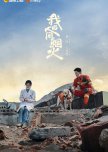
yang yang is very famous in India
I'm in medical field....so I like the concept of doctors and firefighters..and also the concept of cooperation between medical and firefighters....and their dedication for serving the people.....although nobody here is interested in Chinese drama except yang yang...I love this drama❤️and his previous work specially glory of forces..his acting was so good... soldiers go through various hell like torture..they portrayed very well...glory of forces and who rules the world is damm famous here.....Was this review helpful to you?
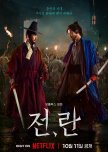
This review may contain spoilers
A HEARTBREAKING YET BEAUTIFULLY CRAFTED FILM
*Uprising* is a heartbreaking yet beautifully crafted film that takes us on an emotional journey through the friendship of Jong-Ryeo and Cheon-Yeong, set in a time of brutal class divisions in historical Korea. The plot centers on how the rigid social hierarchy affects their lives, particularly Cheon-Yeong, a slave who is forced to endure countless hardships in place of Jong-Ryeo.What starts as a cruel situation, Cheon-Yeong being beaten in Jong-Ryeo’s stead, evolves into a deep bond. Despite the fact that Cheon-Yeong isn’t born a slave, his family’s downfall forces him into this role, and it's his strength and refusal to accept the established hierarchy that makes him stand out. When he begins secretly teaching Jong-Ryeo how to fight, the dynamics between the two change, leading to a friendship that feels genuine despite the social disparity.
However, the film doesn’t shy away from the harsh realities of their world. Even after helping Jong-Ryeo win a prestigious sword-fighting competition, Cheon-Yeong is denied his freedom by Jong-Ryeo’s father, who breaks the promise of releasing him from slavery. This betrayal deeply scars Cheon-Yeong, though Jong-Ryeo still tries to protect him by sending him off to fight the Japanese invaders, hoping this will finally earn him his freedom. The film is filled with these moments of hope and crushing disappointment.
After years of fighting, Cheon-Yeong returns home only to find the world he left behind in ruins. Jong-Ryeo’s family home has been burned down by the people who suffered under the oppressive rule of his father. In one of the film’s most gut-wrenching moments, Cheon-Yeong tries to save Jong-Ryeo’s wife and son from the flames, but she refuses his help out of pride, seeing him as a slave rather than a person who might save her life. Her death serves as a stark reminder of how deeply ingrained social prejudice was, even to the point of self-destruction.
The climax of *Uprising* sees a tragic reunion between Jong-Ryeo and Cheon-Yeong after seven years of separation. Jong-Ryeo, unaware of the full story, initially believes Cheon-Yeong is responsible for his wife and son's deaths. Their final confrontation is tense, but as the truth is revealed, the film shifts focus from their conflict to a bittersweet reconciliation. Just when they finally resolve their long-standing misunderstanding, Jong-Ryeo is mortally wounded in battle against the Japanese. Cheon-Yeong kills the Japanese leader, Genshin, in a satisfying act of revenge, but it’s too late to save Jong-Ryeo.
In Jong-Ryeo’s final moments, he asks Cheon-Yeong if they’re still friends, referencing an earlier lighthearted exchange from their youth. It’s a poignant moment that captures both the tragedy and beauty of their relationship. Despite everything that has happened, the film shows that love and loyalty can persist, even in death. This scene is devastating, but it offers closure, showing that their bond was real despite the cruel world they lived in.
On a larger scale, *Uprising* also critiques the corruption of the ruling class, embodied by King Seonjo, whose greed and cowardice lead to the suffering of the common people. His alliance with the Japanese and subsequent desertion of his own throne during the invasion sparks the uprising that defines the film. The subplot involving Seonjo and the infamous Japanese leader Genshin, known as the “nose-snatcher,” adds layers of historical context and brutality to the narrative. In a symbolic twist, Seonjo’s greed is punished when the treasure he’s promised turns out to be boxes of human body parts, noses, to be precise, reflecting the horrors of war and the consequences of his betrayal.
In the end, Cheon-Yeong and a few of his fellow survivors form a new community, symbolically named “Beom Dong,” meaning “A world together.” It’s a hopeful note to close the film on, but *Uprising* doesn’t let the audience forget the price paid for such unity. The film leaves you with a lingering sense that although there’s hope for change, the struggle against social inequality is far from over.
*Uprising* masterfully balances personal and political themes, offering a powerful meditation on friendship, loyalty, and the fight for justice. It’s a tearjerker that hits hard, especially as it reveals the lasting impact of societal divisions, even as it tries to inspire hope for a better future.
Was this review helpful to you?

Personally, I think the beginning was very well done. The child actors did a good job within the film, especially given it was such a big part. When it got to when she was older it got a bit confusing I thought, but after a little thinking you can understand. The story line was good, but I think it had a bit too many concepts thrown in. I wish it was a simple "girl returns to grandmother and has to adapt to life" sort of thing, but I understand that for a lot of people, that wouldn't sell. I also don't like how there are hints at romance within it, but then that is abandonned - you should either leave it or put it in. However if that sort of thing doesn't bother you then this film is pretty good.
As I said, the cast is quite good. The young children within the film do a good job, as do the grandmother and Hye-ji. The acting can't be flawed too much, but I don't think it was a perfect performance by anybody.
Overall, I would rewatch it possibly. I think it is a nice film and it does give you something to think about, which I enjoy. It was a good film.
Sadly, I can't tell you where to get English subtitles online. I'm sure they will come out soon. I watched it on a Cathay Pacific flight, so that's the only way I can tell you to get it (nice holiday in HK)
Was this review helpful to you?


