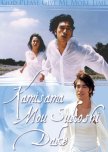
The acting is in my opinion exceptional. Both Kimutaku and Matsu Takako did an amazing job, their chemistry was simply amazing. The other two actors were also very good.
The music is just like the story, simple and beautiful. The main theme by Ohtaki Eiichi and the song by Cagnet really gave me the goosebumps in every scene.
I've already watched it twice in a very short amount of time and still want to watch it once more.
I find myself smiling like an idiot everytime I recall this dorama.
Was this review helpful to you?
Was this review helpful to you?

Oldie but goodie ...
This one is old Japanese drama from the late 90s but I decided to write a review because not only it's still one of my favorite Japanese drama of all time but I also miss this type of Japanese drama. Not so much about the story line but more about the acting and the realness to it. Kimura Takuya was still so young here but his acting was already good even back then.More recent Japaneae drama series are mostly very awkward with unnatural acting, and disappointing flow! specially if you compare it to korean, Taiwan, or Chinese drama production.
I still hope Japan can keep up because Korea, Taiwan, Chinese, and othernAsian countries used to copy Japan's entertainment everything ... but now they surpassed Japanese so much, it is almost painful to watch any recent Japanese drama.
Was this review helpful to you?

Was this review helpful to you?

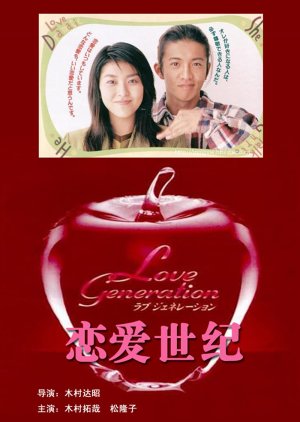
So once the shock of watching such a LQ dorama passed, I was hooked with the story. It has a Mexican soap opera feeling; the angles of the camera, the old soundtrack, the clothes... Even that apple in the middle of anything was so soap-opera-ish. I did not understand what it meant, although after half of the episodes, I kind of understood (the banner says "True love never runs smooth"; and it is obvious Teppei's and Riko's is True Love).
The story is a slice of life, a romantic one with several misunderstandings. Because the dorama has 11 episodes only, the misunderstandings don't last long (thankfully), but they happen one after the other.
All I can say is that the script was so well done I was immediately hooked, and it did not matter that I did not like most of the characters. Out of 5, I liked 2. I disliked the others intensely.
Who I liked?
- Riko, played by Matsu Takako. She can act, that is a big plus. Besides, I liked her personality. I like that she was so different from Sanae, that she was so easy-going and mostly annoying, but at least, very honest. Every time she cried, I was tearful. Poor girl, she suffered so much, but she never gave up! I admired her, because if I was her, I would have given up since episode 3.
- Eriko: Her best friend, interpreted by Fujiwara Noriko. She was a cheerful girl who was always there to support Riko-chan.
Before I start with the "who I did not like", I want to say that Kimura looked his best here. Not only he is younger (duh), but once he cuts his hair (or it is cut by someone else hehe) he looks really good. Nice haircut, simple but very sexy.
So...
Who I did not like?
- Teppei: while it may be true that KimuTaku looks his best here, it is also not his best role. Sure, Teppei is a "kakkoi" guy, he is a hard-worker, a nice friend and co-worker (what guy would be so nice to not have yelled at the girl who cut his glorious hair?). He also has his moments where the female audience would go "awwww" (such as when he hugs Riko from behind.. or when he runs to her hometown once he hears she is having an omiai). I had Shingo in mind during these scenes. There was a corner in SMAPxSMAP where the guys had to decide between A or B, which action is best liked by women? And according to Shingo, he had Kimura's characters in mind to decide, because Kimura's character are like, the epitome of Hero in a Romance. Well, not really. Teppei is not only a lecher, but an awful boyfriend. He makes Riko suffer constantly; he plays two sides. The only option Riko had was to trust him, and how could she? Even I had my doubts whether he really loved her or not. And once he hurt her, and she ran away, he went after her to do, what? To stay in front of her and be quiet? Say something, damn it!
Another thing I hated about him, but I guess it is all Kimura's, is that bad habit he has to smoke every damn time. In the office. Inside the taxi. At the bar. In his department. I hate smoking, and I hate that Kimura has, in that time already, smoker mouth (gray lips, stained teeth). Not appealing at all.
- Soichiro: what can I say, the Katagiri brothers are the worst. After he commits the worst crime a man can do to his fiancee, he has the nerve to ask for forgiveness. What an ass.
- Sanae: although she is nice and does not have ill intentions towards Riko, I could not stand her. The main reason is that I hate her type: perfect ex-girlfriend, perfect housewife, soft-spoken, always there with Teppei even when they have broken years ago. So fragile she needed Teppei (Te-chan **sneer**) always there for her (and the stupid guy who had to comfort her even when his Girlfriend was there suffering). Besides, first she "loves" Soichiro; then turns out, she has always loved Teppei, and at the end, she wants to try things over with Soichiro. Make up your mind, woman!
To me, the story was somewhat similar to Inuyasha (I love that manga/anime). Teppei is like Inuyasha (although Inuyasha was more sensible, and he truly appreciated Kagome), even their personalities were alike: serious, rescuing whoever needed him. Riko is like Kagome, suffering because her love one cannot forget his first love. And although she suffers and cries because of him, she cannot go away. Better to suffer than not being with him. I cannot say Sanae is like Kikyo because she is not... at all.
There is not a single boring moment on these 11 episodes; true, there were times where I was biting my nails because of certain misunderstandings (although I was always rooting for Riko, and if she misunderstood something, it was for a good reason). I would recommend it to people who likes or liked to watch Latin soap operas.
Was this review helpful to you?

The complexity of human feelings
I’ve been on a marathon of classic J-dramas, and of course Love Generation was on the list.I watched this drama right after finishing other classics like Tokyo Love Story, Asunaro Hakusho, and Long Vacation.
Watching Love Generation gave me the same feeling as the others. I think there’s something about classic dramas from the ’90s and early 2000s—the atmosphere always carries this sense of familiarity, warmth, and even nostalgia for something I never actually lived through, but somehow wish I had. It feels like a time when everything moved more slowly, when time itself had more quality, when relationships felt real and close. Technology wasn’t as present in everyday life, and people had to go to each other’s houses just to talk—or make plans in person simply to spend time together.
I think classic dramas really capture that feeling well, and Love Generation is no exception. It follows a very similar storytelling style and narrative structure to other rom-coms from that era. There are no villains or major dramatic incidents—just people living their everyday lives, dealing with misunderstandings, tangled emotions, and confusion.
I don’t really agree with the criticism people often make about this and other dramas from that time—that “nothing happens” and everything could be solved with a simple conversation. I mean, maybe it could—but that would ignore how complex human emotions and behavior actually are. It’s normal to be prideful, and when we’re upset, we don’t always want to listen to the other side. In that sense, I actually think older dramas do a better job portraying the complexity of relationships, both romantic and platonic.
That’s very present in Love Generation. The story introduces two people who seem completely opposite, but are actually quite similar: Teppei and Riko. They clash at first, constantly bickering, but even through all their petty fights, they slowly start to understand each other—and eventually fall in love, in a classic enemies-to-lovers trope.
Some people felt that the romance was forced, especially on the male lead’s side. It’s not always easy to grasp a character’s feelings when we’re not inside their head. But I was able to pick up on the subtle development of Teppei’s feelings for Riko thanks to Kimura Takuya’s performance. He has a very distinctive way of expressing emotion through his eyes, half-smiles, and body language.
In the middle of the show, he seems unsure because of his past feelings, but it gradually becomes clear that Sanae was more of an idealized version of love for him—someone who never showed her flaws and always seemed perfect, almost like a porcelain doll. And that’s exactly why Teppei put her on a pedestal. Of course he loved her, but it was a more innocent kind of love—the kind that comes from not really knowing the other person’s complexity or seeing all sides of them.
At the beginning, I honestly couldn’t stand Riko because of how selfish she could be. But that’s exactly what makes the story work: Teppei falls in love with her for who she truly is, despite all her flaws, her rough edges, and even her more unpleasant traits. He embraces her humanity—her imperfections—and chooses to love her anyway. He even explains this to Sanae, saying that with Riko, he could be himself. No matter how much they fought, he always wanted her close.
To me, that’s the main contrast the show is trying to make: idealized, youthful love versus real love. Idealized love is beautiful—full of smiles and light, happy moments. But real love is about staying, about caring for the other person even when things aren’t going well, when both people are aware of their flaws and go through frustrations, losses, failures, and doubts together.
Teppei and Riko’s love may not be glamorous or picture-perfect, but that’s exactly what makes it feel so human.
That said, I definitely had moments where they both frustrated me—mostly Riko, I’ll admit. Even so, I was still rooting for them until the end. I won’t lie, though—I also got frustrated with the writers for relying too much on repeated misunderstandings instead of moving things forward. I think the drama would have been stronger with just 10 episodes, cutting scenes like the earring, the amusement park, the coworker subplot. It started to feel repetitive, and the ending dragged a bit. At one point, it honestly felt like Teppei had to practically beg in his knees just to be heard by Riko, which really irritated me.
But in the end, that also reinforces her character. It often felt like she loved him more than he loved her, so the story ends up showing that he loves her just as much—enough to go to great lengths for her.
Overall, it’s a great show, and I genuinely loved watching it. Aside from the stress of the last two episodes, it’s a drama that really stayed with me, and I don’t think I’ll forget it anytime soon.
As for the weaker points, besides what I already mentioned, the soundtrack didn’t quite work for me. The theme song felt too melancholic and didn’t really match the tone of the drama—I would have preferred something different. Another weak point was the use of the glass apple. It’s there visually, but it feels somewhat random. While it helps build a visual identity, it doesn’t really serve a clear narrative purpose, except for a small connection near the end. Even then, it doesn’t feel like there’s a strong reason for it to be an apple specifically (unlike in Death Note or Boys Before Flowers, where apples have a clearer symbolic or linguistic meaning). I thought about it quite a bit but couldn’t come up with a solid interpretation—if anyone knows, I’d love to hear it.
Despite these small issues, it’s still a really good drama. If you enjoy that era and you’re a fan of Kimura Takuya, this one is absolutely a must-watch.
Was this review helpful to you?

This review may contain spoilers
Okay??
I don't know what to feel about this drama. The build-up romance parts were lacking in a way that although the first 4 episodes revolved around them being acquainted and slowly having feelings for each other, it felt too fast yet slow. I honestly enjoyed watching this, but that is mainly because of the cast as I recently finished "Long Vacation".Other than that, I think that the characters of the two leads are toxic. First, the FL actually slept with the ML before her supposed fiancée called it quits. Second, the ML keeps accepting any women who flirt with him while he is in the middle of a relationship like wtf. Third, the ML did not end his past lingering affection for his ex before entering a new relationship, leading to constant misunderstanding, mistrust, and arguments between the two of them (which is the focus of the last 4 episodes). Lastly, I think the FL should have realized that ML still hasn't totally moved on from his ex and I am aware of why she gets jealous, but she should have known that some things will happen no matter how much she gaslighted herself. I see she chose to trust him and was happy that he confessed but what can you expect from a guy who looked quite happy when he saw a girl (who is also her friend) inviting him in his bed?
So, I understand why she wants to break up completely because as they say, "a broken trust is hard to recover" and like what the FL just experienced, she keeps overthinking that something happened between the ML and his ex even though he already apologized for what happened previously.
Anyway, I am surprised by the FL acting here because her character differs from "Long Vacation" and also their chemistry! It's also good.
Was this review helpful to you?

This review may contain spoilers
Não gostei muito da dinâmica relacional do casal de Love Generation, mas entendo que para a época, o drama foi considerado um clássico dos romances modernos. Em vez disso, fiquei completamente encantada pela forma que desenvolveram a personalidade da protagonista — uma jovem mulher forte, decidida e sem papas na língua, que luta por sua independência e sonha encontrar um amor sincero e verdadeiro. Outro ponto positivo da obra, foi a construção da relação de Riko com a Sanae, sua aparente rival no amor, que frequentemente tem um comportamenta evasivo e dúbio perto do seu ex, e mesmo assim em nenhum momento foi hostil ou desrespeitosa com a protagonista, e se levarmos em consideração os tropes clichês do gênero da época, achei de fato a dinâmica das personagens femininas do drama bastante maduras. Partindo dessa consideração, a única coisa que presta nessa história são as mulheres, pois não gostei nem um pouco do protagonista e muito meno do irmão dele. Além disso, a mensagem da história é totalmente equivocada, o protagonista é emocionalmente dependente da ex e usava a Riko como estepe, e pra completar o fio da meada, nos três últimos episódios, o drama requentou o mesmo plot duas vezes e criou um conflito desnecessário para uma situação que poderia ter sido resolvida em um único episódio. A impressão que passa é que os roteiristas não tinham mais o que desenvolver e para preencher o tempo de tela, fizeram o casal brigar duas vezes pelo mesmo motivo. Claro que estou falando do ponto de vista de alguém que destesta plot de traição, o que não invalida os pontos fortes do romance como o desenvolvimento dos sentimentos dos protagonistas que nasce de uma implicância mútua e se transforma em um compromisso inicialmente de parceria e amizade. Mas infelizmente, preciso destacar que não foi nada crível insistirem em taxar a Riko como uma personagem egoísta e mimada, pelo contrário, ela era madura, segura de si e paciente até demais com o Teppei, que vacilou em vários momentos, era imaturo e de fato, o único egoísta da história. Essa e outras discrepâncias na trama me irritaram, mas não foi algo que me fez desgostar da obra, já que, a forte presença de personagens femininas profundamente desenvolvidas pelos roteiristas, deu destaque para uma análise interessante do papel das mulheres na sociedade moderna. Was this review helpful to you?