K-Drama

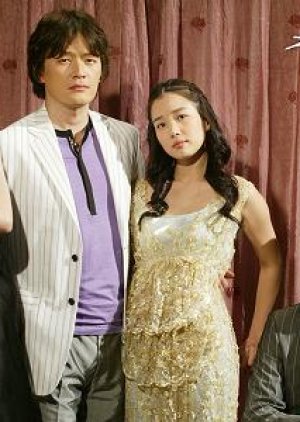
In 1992, Kang Su Min and family moved from Seoul to the rural area due to her mother’s health condition. 10 years later, she met her dad’s sister for the first time. Su Min found out that her auntie was once a famous actress but she had been drawn into a big scandal with another younger actress called Jung Mi Ryung. That was 20 years ago. Now, as Su Min has grown up, she moved to Seoul together with her passion to become an actress. There, she met Han Eun Bi who is the daughter of her aunt’s enemy. Both strive to become actresses. Eun Bi rises in the entertainment industry with help from her mother. However, Su Min has to give her all to get to the top. As they begin to compete with each other, will they repeat the story of the last generation? Edit Translation
- English
- magyar / magyar nyelv
- dansk
- Norsk
- Native Title: 그 여름의 태풍
- Also Known As: A Typhoon in that Summer
- Director: Lee Kwan Hee
- Genres: Romance
Cast & Credits
-
 Jung Chan Main Role
 -
 Lee Jae Hwang Main Role
 -
 Han Ye Seul Main Role
 -
 Jeong Da Bin Main Role
 -
 Sun Woo Eun SookOh Sung MiSupport Role
 -
 Moon Hee WonDirector JangSupport Role






Photos
Reviews

This review may contain spoilers
Our Life Is Not a Movie or Maybe
Compared to the substantial number of dramas that remain etched in the collective memory — constantly referenced, celebrated and reimagined — there are others that, almost inexplicably, slip into obscurity, swallowed up by time, the industry’s relentless turnover and an audience ever hungry for something new. "That Summer Typhoon" belongs precisely to this second category: a work that seems to have dissolved into the background noise of the Dramaverse, yet on closer inspection reveals an ambitious narrative structure, a surprising emotional depth and a thematic clarity that remains disarmingly relevant even today.It is, without a doubt, a drama of its time — but precisely for that reason it manages to foreshadow, with unsettling prescience, many of the dynamics we now take almost for granted: the invasive nature of the press, the artificial construction of celebrity, the increasingly blurred line between truth and public narrative, and the often-exorbitant price of success.
And yet, beneath this surface of glitz, spotlights and scandal, there beats a deeply melodramatic heart, built on fractured family ties, denied identities and truths deferred for far too long.
A sweeping, multi-layered narrative that can at times feel redundant across its thirty episodes, "Typhoon" constantly walks a fine line between excess and restraint, yet manages — and this is perhaps its greatest strength — never to lose its balance entirely. It is precisely in its insistence, in its returns and repetitions, that it finds a form of expression consistent with its very nature: a past that refuses to stay buried, a truth that demands space, an emotional storm — at times dangerously ambiguous — destined sooner or later to sweep everything away.
To revisit it today is to read it with a more discerning eye, one capable of recognising not only the limitations of a work inevitably tied to its era, but above all the strength of a narrative framework which, beneath the veneer of classic melodrama, conceals a surprisingly modern reflection on identity, image and responsibility.
On the surface, "That Summer Typhoon" presents itself as a classic early-2000s melodrama: the rise and fall of an actress, family secrets ready to resurface, impossible loves and artistic rivalries. Yet beneath this familiar structure, it builds something far more complex: a lucid reflection on identity, guilt and, above all, that fragile — and often insurmountable — boundary between private truth and public image.
In a world dominated by agencies, gossip and carefully constructed narratives, individuals move like pawns within a system that turns every event — even the most intimate — into spectacle. Success becomes a double-edged sword; fame, a mechanism that exposes, distorts and ultimately consumes.
From a narrative standpoint, That Summer Typhoon proves to be remarkably layered. It does not merely function as a family melodrama, but interweaves at least three distinct dimensions: the drama of the entertainment industry, the private tragedy of familial relationships, and a more subtle moral layer in which each revelation does not bring relief, but further complicates the characters’ lives.
Its structure unfolds through accumulation and reiteration: truths emerge, are questioned, then replaced by new versions, in a constant slippage that prevents any real stability. This is a familiar device in Korean melodrama of the period, yet here it is employed with unusual awareness, almost suggesting that no definitive truth exists — or that, when it does, it arrives too late to truly matter.
In this sense, the series moves fluidly between registers: moments of intense public exposure — press conferences, scandals, media intrusion — are set against intimate, often silent spaces where the emotional weight of events is felt without the need for explanation, further enhanced by a deeply effective musical score. It is precisely this oscillation between the external and the internal that gives the narrative its rhythm, despite the inevitable repetitions brought on by its length.
Even in its most repetitive passages, however, the series maintains a surprising equilibrium: each element contributes to a coherent whole, with individual threads ultimately converging into a single, overarching emotional “storm”.
"Typhoon" is, above all, a melodrama about truth and its consequences — a truth suppressed, concealed, manipulated and ultimately destined to resurface, sweeping everything and everyone away like the storm evoked in its title. Yet this is not merely a family secret, but a layered system of lies that encompasses individuals, relationships and an entire social ecosystem, where appearance outweighs substance and public image becomes a form of currency.
The drama thus constructs a dual narrative: on one level, the intimate, almost suffocating story of a family fractured by past choices and unresolved responsibility; on another, a broader reflection on the entertainment industry, the artificial construction of success and the intrusiveness of a media system eager to devour truth and reshape it into spectacle.
It is when this structure takes shape through the faces, gestures and silences of its characters that Typhoon makes its decisive leap, transforming from a potentially schematic narrative into a genuinely affecting experience.
Within this framework, even the most controversial element — the relationship between Soo-min and James — sheds any sensationalist dimension to take on the contours of a moral tragedy. The revelation is not deployed for shock value, but forces an irreversible reckoning, in which the characters must renounce not only a feeling, but an entire possible life.
It is, however, in its final stretch that "That Summer Typhoon" makes its most compelling shift, turning its melodramatic framework into a reflection on storytelling itself. The ‘film-within-a-film’ device — which reworks the characters’ lived experiences (with an ingenious reversal of roles!) — becomes a key interpretative lens: the pain is not resolved, but staged, transformed into a representation.
In this fragile balance between construction and authenticity, performance becomes the true emotional core of the narrative.
Jung Da-bin brings Soo-min to life with a disarming naturalness. There is never a sense of performance in the conventional sense: each gesture feels so spontaneous that acting and being seem to converge. Her arc unfolds through restraint, navigating increasingly complex emotional terrain without ever tipping into excess, preserving a clarity of gaze that becomes, paradoxically, her most radical form of resistance.
In hindsight, it is difficult not to perceive in this performance a glimpse of what might have been: a deeply human alternative to a frequently constructed and polished image of femininity. What remains is a subtle, painful trace that further deepens the emotional resonance of her work.
Alongside this quiet naturalism, Han Ye-seul adopts a more layered yet equally controlled approach. Her Eun-bi exists in a constant tension between public image and private fragility, shaped through nuance, silence and fleeting emotional fractures. It is a performance that avoids both caricature and victimhood, offering instead a complex, measured portrayal.
Viewed in retrospect, this characterisation acquires an almost meta-textual dimension: Eun-bi seems to echo the very public discourse that has often prioritised appearance over talent, embodying a figure who struggles — not always successfully — to assert a deeper, more authentic truth.
The result is a rare equilibrium: two performances that never compete for dominance, but instead build a relationship grounded in mutual recognition and quiet solidarity.
While Jung Chan, as director Kim Han-hee, operates within more conventional boundaries, Lee Jae-hwang finds greater depth in the tormented figure of James. Meanwhile, Lee Hyo-chun stands out in the role of Kang Jung-ok, delivering a particularly effective transformation: from a dishevelled figure trapped in the past to a gradually reconstituted presence, in a quiet yet powerful arc of personal rebirth.
Not without its flaws, "That Summer Typhoon" does at times suffer from redundancy and narrative overextension, with certain dynamics repeating to the point of perceptual fatigue. Yet in its closing movement, it takes a less predictable path: rather than culminating in rupture, it leans towards a fragile but genuine reconciliation, grounded not in forgetting, but in acceptance.
It is within this balance — between pain and awareness, loss and continuity — that the series finds its most complete expression.
Perhaps it is here that its most enduring value resides: in its ability to leave behind a trace that is less immediate, but more persistent — one that resurfaces over time and reveals itself fully only to a more attentive gaze. A subtle imprint in which constructed and lived identities overlap, at times even blur, amplifying — without ever stating it outright — a shared sense of fragility that extends beyond the characters to those who bring them to life.
And it is precisely for this reason that it deserves to be rediscovered.
-------------------------------------
To Jung Da-bin (1980-2007),
who, with her gentle radiance, has managed to transcend time and distance, reaching — silently — even here.
Wherever she may be, what remains is the imprint of a genuine emotion, and the memory of those who, even from afar, have never stopped watching over her.
8/10
Was this review helpful to you?
Recommendations
There have been no recommendations submitted. Be the first and add one.