Editorials

This review may contain spoilers
A storytelling review!,
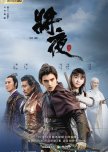
First and foremost, I know that this is not a short story so my ratings may not be taken seriously. However, to really make a reasonable rating for the story, I will have to divide the parts into the plot of a short story. At least that way, the best part will be taken into account despite the draggy pacing and unnecessary events that happened.Exposition/Beginning: 8
The story began interestingly. It was hooky and would try our patience just because we couldn't wait for another episode again. The setting and context of the story were well laid. It was into my liking and it was pretty worthwhile.
Rising Action: The happenings before the climax. 7.8
Poisoning. Peach Village. Parting. The events were pretty much acceptable though some little events felt unnecessary to me. Perhaps the beginning of the story was more memorable to me.
Climax or should I say, Episode 12? Lol. I'm gonna give this an 8.9 rate. It was the best and most interesting part of the story. Purest Sun Flame mastery at the most crucial time, discarding sword, starting anew to wander and see the world that was deprived-- it was a masterpiece. I was particularly hooked and I awaited for much meaningful journey that lies ahead. I wondered how the soldier would warm up to the world. It was so intense. Notwithstanding, that climax couldn't afford to get a 9 from me because, maybe,some dialogues felt off and/or an edit esp. with the PSF wasn't polished enough? Nevertheless, it was still an 8.9 to me.
The events after the climactic part weren't very good to me. Family issues all the way through: QJT and QC; QT being unable to see through her brother earlier; Fugui sent to Western regions, being friends with Fan Yunfei; Rumu assuming the role of the soldier because he was too heartbroken for his cousin; 3rd couple; the conflict between the 3 clans in Western regions and how the love story of the 3rd couple survived the crises---were either interesting or boring. I hoped they resolved QC's issue after an episode or two of being a villain rather than making it too long and deep to show us how evil he in all actuality was. And how about the case of the Mistress of Silk Cave? After being illumined and helping Fugui once, she never appeared again. Only her messenger/s was/were seen. No crucial alliance was formed. Perhaps, the best part among these was the pulling of Heaven-and-Earth Strike. I might as well count the astrologer's dance, Fan Yunfei vs. QC and Fugui vs. the guard parts for these were at least fun to watch. Hihi. Hence, I'm gonna give this a 5.5. It was just underwhelming altogether.
Let's talk about the Myriad Blight Formation (MBF) case. It wasn't impactful enough but was rather unconvincing. Among all the living beings in Western Regions, only the 3 in the MBF, 1 against Gulizan and Fugui against the spreading MBF were there. It was too big of a case to not be noticed by others. Why were there no other beings to give a hand? 🥹 Too bad, it didn't do well to me. It is a 5.
Towards the end- 6.2
The denouement was sad but it wasn't the reason why I gave it 6.2. QJT (I hate him to the bones) "I hate you because you are hateful," said Di Feisheng🤭🤣. Poor decision making was depicted.😁 The ending was peaceful but painful. Yes, I accept such ending but, does the way have to be like that? Was there no other way? Fugui was smart. His character was made smart but, how were those deeds smart?
The beginning was better than the ending.
I don't mind sad endings but, I mind how it turned out that way.
Overall rating for the story: 8, 7.8, 8.9, 5.5, 5, 6.2 will give an average of 6.9. It shall be 7 then.
Note: I love the acting though there were flaws. Cheng Yi acted the emotionless soldier exceptionally. I also loved it when I caught a glimpse of Xuan Ye.😁😁The editing wasn't bad but it wasn't polished enough.
Gonna wait for another actor Cheng Yi's drama. For the meantime, I'll watch his other dramas and surely, will rewatch the ones that I personally favor (TJOL and MLC).
Was this review helpful to you?

Laughable!
Honestly, one of the worst dramas of the year.I’m forcing myself to keep watching it for Cheng Yi and a few other actors in the cast, but it’s really hard to endure such a poorly written and badly produced show.
The CGI is downright nauseating—absolutely terrible.
The only redeeming quality of this drama is the costume design and its stunning use of vibrant colors.
I’m currently on episode 25, but as one fellow MDL user perfectly put it, it feels like I’m watching a story made by a teenager, with zero maturity for a project like this.
Laughable, seriously!
I admit I skipped a few parts. Honestly, I couldn’t endure so much mediocrity. But I did finish this tragic excuse for a drama.
I saw that some viewers felt deceived by the plot and the ending. I didn’t feel that way — halfway through the story, I already knew exactly what awaited me.
My biggest disappointment is Cheng Yi. As one fellow viewer perfectly put it, it felt as though he were merely watching his own character from the sidelines. A caricatured face, an empty expression, and a complete lack of emotion or engagement — as if he were simply finishing a dull, joyless task.
I wouldn’t recommend this to anyone who appreciates quality productions. Unfortunately, not even Cheng Yi makes it worth watching.
Was this review helpful to you?
Masterpiece
It is sooooooooo goooodd, Cheng Yi never disappoints me,fast pace, intrigued writing truly impressed me.I will recommend this to everyone,please watch it and send it a lot of Love 💕💕💕💕💕💕💕💕.it is truly wonderful.Cheng Yi is in your area again with another blockbuster.Li Yi tong and other characters are so good. Ost!!! Omg !!! It is on fire,I have listened to it countless times.Was this review helpful to you?

It's become an inconsistent, illogical, mediocre series. Simply put, the villain, Quan Jing Ting, doesn't die no matter what you do. Not only does he not die, he also wreaks havoc on everyone in sight. There's no need for another enemy. He's self-sufficient. He dies and resurrects. They destroy everything. His hands, arms, legs, bones, lungs, and spine are destroyed, but he gets back up and continues his evil deeds as if nothing happened.
Fu Gui, on the other hand, has one of his bones taken. He can't use a sword. Suddenly, he's gone. He's relegated to a secondary role. There's such absurdity. How can a leader train his own child to kill and force him to do it? It's illogical. He even makes a mistake, and the other leaders tell him to fire him, take away his abilities, and his father does the same. It's illogical. And this man protects them from demons. He kills for them. If you render this man incompetent, who will protect you? There's no answer to that. It's illogical. They're driving him away. Even if it's logical, I don't understand. I mean, the characters of Quan Jing Ting and Hong Ye are worthless. I don't understand what the screenwriter was thinking to impose these meanings on these characters. It's a shame for these actors, it's a shame for these images, and they've wasted the actors with the characters they've placed on these two actors.
For example, Ru Mu dies, and a girl, Wei Yun, suddenly has a mausoleum built in the middle of the desert. And it's beautifully designed, as if crafted by a master. It's completely unconvincing. You'll say, "This series is fantastic. This man burns a hundred people to death with his bare hands. He moves mountains. He raises water. He wields a hundred swords in the air. So, you're stuck with dementia?" I found it pointless. There were so many negatives. They didn't think or plan anything. It was a complete waste.
The chemistry between the leads was also lackluster. So, there was no real love, no connection, no trace of affection. It was very superficial. I didn't get any emotional content. They didn't contribute anything.
If the actors weren't good, even these scenes wouldn't have been watchable. Absolutely. Guo Jun Chen, He Ru Xian, Chang Hua Sen, Zhang Kai Ying, and Wang Hong Yi in the supporting roles were excellent. The relationships between these two, even if comical, seemed to contribute something. They became watchable because of the actors. I really liked Cheng Yi, Guo Jun Chen, and Chang Hua Sen. They were great together. There were some good scenes, too. I gave the series a 7.5 for their sake. I was going to lower it even further, but considering the cast, I decided it would be a shame.
Aside from that, some very valuable actors appeared in brief scenes. The series was like a celebrity parade, but the poor script took away their efforts. It was as if they'd said, "Our series is so bad, let's at least save it with good actors." I don't recommend it to anyone.
Was this review helpful to you?

Flashy aesthetics with a healthy dose of trainwreck instead of substance
Qingtong: Are you saying that the innocent and kind little brother I always thought you were never existed at all?Me: Could it be that the interesting drama I thought this was never existed at all?
This was really fun in the beginning. A bit tropey perhaps, but with pretty costumes, set design and CGI. The OST was good too, especially the theme song. Most importantly though, there were hints of future emotional complexity and somewhat meaningful tragedy. Or so I thought anyway. I expected that the tragic guy who had been raised to have no emotions and slaughter without asking questions would get to have some interesting emotional development.
Well, that didn't happen. This drama peaked in episode 12, because that was the only time there was any real emotional complexity and intensity. Afterwards, the drama slowly but surely descended into a complete trainwreck. It wasn't even one of those beautiful, fascinating trainwrecks that you just can't seem look away from; it was just stupid. As if a bunch of uninspired and incoherent scenes written by ChatGPT had been shoved into a blender. Eventually, I started wondering if the promising story I thought this was had always been just in my imagination.
The villains were horrible caricatures. They became black holes of idiocy that ruined the character of everyone around them, because by enabling the villains to do whatever they want over and over again for the sake of the plot, everyone else started looking like an idiot too. Side characters got disproportionate amounts of screen time, while the main characters were almost completely abandoned for half of the drama. Some of the side characters were really fun, others were terrible, but even the fun ones often felt out of place. Instead of emotional complexity, we got a bizarre little brother spider with a vaguely Freudian jiejie complex that took up astronomical amounts of screen time with no point or payoff.
The editing was struggling to make any sense of the material they had. There was zero respect for continuity or the characters. Random day-night transitions, incoherent presence of characters between scenes, scenes that were very obviously filmed without the actors being in the same room, heavy use of voiceover that felt very retconned, clumsily inserted shots of hand doubles that were really insulting to the viewer (ofc Li Yitong occasionally has gigantic hands and veiny arms). The later episodes also featured some extreme mismatch between what the drama wanted to pretend was happening on screen and what was actually happening on screen, giving emotional whiplash and uncanny valley. The drama wanted me to feel sad, but I felt nothing out of spite.
Everything about this drama gave the impression that the production process must have been a mess, which resulted in the final product being a mess. I only finished it to see how they would end it, but honestly the choices made in the last few episodes felt too bizarre for me to even comment on them.
Would definitely not watch this again.
Was this review helpful to you?

 1
1The Soldier, the Spider, and the Script that forgot their romance
This drama had the potential to be the best Fox Spirit Matchmaker… until the writers messed up and made me so pissed off… I was on the verge of rating this 1 star and calling it the worst FSM (it’s not). But the title is extremely misleading.The drama is about the male lead, a nameless soldier whose purpose is to kill demons. Void of emotions, forced to live a lonely life, he diligently complied with what he was told to do. Until the day he met the female lead, an insignificant, kind and innocent spider demon.
The first half of the drama was perfect. A blend of beautiful emotional moments, stunning fight scenes and heartwarming relationships. The second half of the drama shifted the focus on the secondary characters and expanded the world, but also created inconsistencies and a lot of irritation.
✨WATCH OR SKIP LOVE IN PAVILION AND RED MOON PACT?
Yes and no. Sword and Beloved (SnB) is made as a stand alone and can be watched on its own. However, it is also a direct continuation of Love in the Pavilion (LIP). Although the drama shows flashbacks of LIP and explains things well, I still recommend watching LIP first because of the bigger emotional payoff you will receive. There are details in LIP that make SnB more meaningful, such as Black Fox (main villain) origin story, the evil Uncle, Spider Queen, and the significance of the Bamboo Pavilion. On the other hand, I do not recommend Red Moon Pact (unless you love the cast), as the drama feels disconnected from the other two installments, and (for me) felt like a waste of a watch.
✨COUPLES / ACTORS PAIRS
Cheng Yi & Li Yi Tong (Human Soldier & Spider Demon, main couple)
I loved their chemistry. In the first half of the drama, they seemed to be the rare couple who loved quietly. A couple that you wouldn’t expect grand proclamations of love or passionate kisses. Their love seemed to be in the little gestures, unspoken but seen through their actions. However, I was extremely disappointed because in the end, this couple turned out to be more like friends/master-disciple relationship. There was nothing romantic about them (more in the negative points).
Guo Jun Chen & He Rui Xian (Human Swordsman & Dragon Demon, second couple)
This controversial couple had me questioning my drama choses. He met her when he was a kid and grew up living with her. But if we ignore that weird fact, I wanted them to work out because I simply loved Rumu. I didn’t particularly like her, she was too cold and mean for my taste. But I end up appreciating her in the end.
Chang Hua Sen & Zhang Kai Ying (Fox Demon & Human General, third couple)
My favourite foxy, who could even resist him! Honestly it wasn’t so much that I loved their romance but I simply loved watching Foxy as a character. This couple was fun and light-hearted but I can’t say they made a huge impact on me.
✨POSITIVE:
- Bromance. The best thing for me was the relationship of the three male characters - Fugui (the reserved leader), Rumu (a jack of all trades troublemaker) and Yunfei (an innocent cinnamon roll puppy). I love their interactions, their playfulness with each other, I could watch 40 episodes with just these three.
- Stunning visuals. The fight scenes, costumes, styling, settings. Everything was a feast for the eyes, especially the unique Western Region.
- Secondary romance. The second and third couple’s romance was developed really well. In fact, the second couple fit perfectly the title Sword and Beloved. However, at some point it felt like they did have too much screen time.
✨NEGATIVE:
- Main couple’s romance. In the first half of the drama, the plot seems to be connected to their romance. It was emotional, it was heartwarming, it was perfect. But in the second half, it’s like the writers switched and changed the characters. She promised to always be there for him and yet the writers separated them. Worse, when she met him again, she had dumb reasons to leave him again (without even speaking to him). Their reunion later was mega anti-climatic, pretending to be strangers for dumb reasons. Afterwards, their relationship completely digressed. In the end, it looked like they were just friends/master-disciple. There was zero romance between them which was extremely weird and disappointing.
- Main lead’s inconsistencies. This kind of covers my previous point. The leads became different characters in the second half of the drama. It’s like another writer had taken over, but he didn't understand their characters so he made up some stuff. It made no sense that she was hell bent on dealing with her brother alone because she thought Fugui would kill him. It made no sense that Fugui took 10k swords for her, but later didn’t even blink while sacrificing her. The male lead in particular felt like a shell of himself in some parts of the drama. The writers took away his sword, his beloved, and he ended up just showing up to drive the plot forward and that’s it.
- Father issue. Wangquan Hongye was one of my favourite characters in Love in Pavillion. I knew at the start that I would not like this new version of him. Part of me understood him. Part of me accepted him and his abusive behaviour. However, I expected growth, some sort of redemption. I suppose it’s realistic that he kind of stayed the same. Sure, he admitted his mistake in the end and gave a half ass apology to the main leads, but it wasn’t enough for me. I ended up disliking his character and wished he was killed off at the start and the male lead had a Shifu instead.
- Villains. They actually had the potential but weren’t fully utilised. The evil Uncle was pretty good at the start, but it was incredibly lame when the writers brought him back for the final episodes, as it made the heroes look dumb and weak. The Scepter Woman was mega hot but of course the writers killed her off quick. The Black Fox was fine but this is my third drama with her and I’m just thinking “does bish have 9 lives because she KEEPS coming back”. Overall, not impressive.
- Evil Brother. Unpopular opinion here but I didn’t mind his arc. However it was definitely too draggy.
✨OVERALL:
The early episodes of the drama promised a male centric story with heartwarming romance + bromance but ended up delivering only a portion of that. The first half of the drama was a solid 10/10 but then it felt like the writers had switched. The character’s inconsistencies were evident, as well as the main couple’s romance being changed to friendship/master-disciple. Some parts of the plot were brilliant, others a headache. I do have mixed feelings. It was kind of good but also quite disappointing. I guess if you are going in for the plot and the side couple’s romance, you might enjoy it. But if you are going in for Cheng Yi and the main couple’s romance, you’ll probably end up disappointed.
✨QUOTES:
“Lately, I’ve felt my heart growing warm. That warmth comes from bonds. The bond with family, friends, and even nature.” Fugui (male lead)
“Power is not right or wrong. It’s what you do with it.” Qing Tong (female lead)
P.S. I might reduce my rating later (depending on my mood).
Was this review helpful to you?

Not Perfect, But Beautifully Performed
The story isn’t perfect, but the actors — especially Cheng Yi — really did an amazing job. His performance once again showed how talented and versatile he is.The OST was beautiful and matched the emotions of the drama so well. I truly enjoyed watching it, even if it’s not something I’d rewatch.
Overall, it’s a good drama that left a lasting impression because of its strong performances and heartfelt moments.
Was this review helpful to you?

This review may contain spoilers
A Tale of Honor, Heart, and the Battle Between Duty and Desire
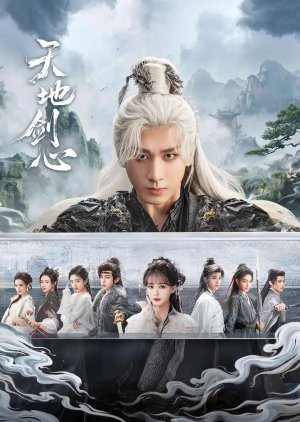
The drama is part of the broader franchise of Fox Spirit Matchmaker and is adapted from the manhua by Tuo Xiao Xin. The story combines fantasy, romance, and wuxia elements: humans, spirits/demons, warriors, loyalties, and love.⚔️Synopsis❤️
In a world where humans and spirits are divided by centuries of hatred, Wangquan Fu Gui, a disciplined soldier of the Yi Qi Alliance, stands as the perfect weapon — the only son of Wangquan Hong Ye and Dongfang Huai Zhu from Love in Pavilion, and cousin to Dongfang Yue Chu from Red-Moon Pact. Trained since childhood to fight demons, Fu Gui’s life is one of duty, order, and sacrifice — until an encounter changes everything. He meets a timid spider demon who, through compassion and trust, he names Qing Tong. With Fu Gui’s guidance, Qing Tong gains a human form and begins her journey toward freedom from the cruel Mistress of the Silk Cave. Their bond, fragile yet unbreakable, blurs the boundaries between human and spirit, soldier and soul. It also depicts how Fu Gui ultimately saves the world from Madam Black Fox, the primary antagonist of the Fox Spirit Matchmaker series.
✨Likes
🌸Strong Acting Performances:I thought Cheng Yi (as Wangquan Fu Gui) and Li Yitong (as Qing Tong) had amazing chemistry and emotional depth. I especially loved how their relationship developed gradually — it felt subtle, sincere, and genuinely touching rather than overdone.
🎬 High Production Quality: I'm impressed with the cinematography, costume design, and set pieces. The fight choreography and weapon sequences were well-executed and fluid.
💞 Emotional Depth and Themes: The drama explores duty vs. freedom, love across boundaries, and identity — resonating with audiences who enjoy introspective fantasy. The relationship between Fu Gui and Qing Tong feels symbolic: a soldier learning compassion and a demon learning humanity.
🕸️ Character Growth and Inner Conflict: Fu Gui’s transformation from a “weapon of the alliance” to a self-aware protector is one of the story’s strongest arcs. Qing Tong’s journey from a frightened spider demon to a free, independent woman adds heart and redemption.
🎶 OST and Atmosphere: I was really impressed by the background music, opening and ending theme — they felt so emotional, melancholic, and graceful, yet powerful at the same time. The soundtrack beautifully enhances both the love story and the grand, mythical atmosphere of the drama.
⚠️ Dislikes
🐢 Slow or Uneven Pacing: I felt that the middle episodes dragged a bit, spending too much time on side stories. The romantic progression also moved slowly, which might be frustrating for viewers like me who were hoping for a quicker emotional payoff. [For example, the whole subplot involving the obsessed Qing Cheng felt completely unnecessary to me. His over-the-top behavior was just too much — at one point, I even considered dropping the drama because of him. Whenever he appeared on screen, I found myself watching those scenes at 2x speed. His obsession with Qing Tong didn’t really add anything meaningful to the story; instead, it only frustrated me and reminded me of other overly obsessed second male leads I’ve seen before.]
🔄 Side Characters Taking the Spotlight: Several times, I felt that the secondary plots overshadowed Fu Gui and Qing Tong. There were just too many subplots, which made the main emotional story feel less focused. [For example, they spent far too many episodes on Fan Yun Fei and Li Xue Yang’s love story. At times, it even felt like *they* were the main characters, while Fu Gui and Qing Tong were just side characters or are there as cameos.]
💔Limited Romance Focus: Even though the drama is called *Sword and Beloved*, I sometimes felt the romance took a back seat to all the clan politics and world-building. [Just when I thought we were finally going to see some romance or progress in Fu Gui and Qing Tong’s relationship, they went and introduced that annoying guy Qingcheng — and he even kidnapped Qing Tong! Like, seriously, what the heck?]
🌀 Confusing Lore for New Viewers: Since it’s part of the larger Fox Spirit Matchmaker universe, newcomers might struggle with backstory references and terms (Yi Qi Alliance, Mask Group, Madam Black Fox, etc.).
⭐ Overall Audience Impression
“A beautifully crafted fantasy drama with heart, but one that asks for patience.”
If you like wuxia-fantasy dramas with strong production values, emotional depth, and don’t mind some narrative swings, Sword and Beloved is highly recommendable. The lead pair delivers, the world is rich, and the themes of identity, duty, and love are meaningful. However, if you’re seeking a tight romance with continuous focus on the couple and minimal detours, you might find yourself frustrated during slower or side-plot heavy stretches.
Was this review helpful to you?

This review may contain spoilers
The Duel of Destiny: Why Wangquan Fugui's Awakening Earned Sword and Beloved a Perfect Score
Sword and Beloved: A Deep Dive Review – The 10/10 Triumph of CharacterFinal Verdict & Rating: 10/10 (Justified by the groundbreaking character portrayal and the transcendent first act)
The drama Sword and Beloved (part of the Fox Spirit Matchmaker: Wangquan series) stands as a fascinating, and at times frustrating, case study in narrative execution. While it grappled with significant structural imperfections in its middle and latter sections, the drama unequivocally secured its status as a profoundly good and worthwhile viewing experience. This positive assessment is driven almost entirely by the monumental success of its central character arc—the awakening of Wangquan Fugui—and the sheer brilliance of the performance that brought him to life. The 10/10 rating is not a reflection of flawless plot mechanics, but rather an acknowledgment of the masterpiece level of character depth achieved, which, for many viewers, is the highest measure of dramatic success.
I. The Zenith of Character Arc: Wangquan Fugui's Awakening
The narrative engine of Sword and Beloved is the journey of Wangquan Fugui, a character conceived not as a person, but as an instrument. Born into the powerful Wangquan family, Fugui's existence was predetermined: to wield his family’s immense power for a singular, destructive purpose. He was raised in absolute isolation, shielded from the concepts of freedom, choice, or self-interest. He was a flawless, sentient weapon—a state of being that is inherently tragic and dramatically rich.
The Concept of the "Weaponized" Protagonist
Fugui represents the ultimate thematic confrontation: the struggle between fate and self-determination. His entire identity was a rigid construct of duty and lethal efficiency. The genius of the premise lies in establishing this foundation so firmly. The audience witnesses a soul completely detached, moving through life with the practiced, emotionless grace of a mechanism built for war. This setup intensifies the impact of the inevitable disruption.
Love as the Catalyst for Selfhood
In this drama, love is not the goal of the character, but the necessary catalyst for his birth. The relationship with Qing Tong does not serve merely as romantic entanglement; it functions as Fugui’s introduction to humanity. It is through her lens—her simple desires, her willingness to engage with the world outside the Wangquan compound—that he first perceives the possibility of an existence beyond his mandated mission. The initial act of rebellion—choosing to protect her, choosing to leave—is not an act of romance; it is the moment of his true self's awakening. He does not fight for her love; he fights because she taught him that he is worth fighting for. This powerful narrative inversion elevates the theme far above standard romantic fantasy fare.
II. Cheng Yi's Unmatched Embodiment: A Masterclass in Subtlety
The success of Fugui's arc hinges on the actor's ability to transition convincingly from the void of the weapon to the fire of the man. The consensus across all critical reception is that Cheng Yi's performance is not merely good, but a foundational pillar that carries the entire production. His portrayal deserves the highest acclaim, acting as the primary justification for the drama's definitive 10/10 achievement in acting and character study.
Physicality, Commitment, and Emotional Gradation
Cheng Yi's commitment was evident not just in the high-octane fight choreography—which critics hailed for its striking, almost dance-like quality—but in the minute details of his performance. His initial scenes conveying Fugui’s detached, almost inert demeanor, required intense internal control. This was followed by a masterful gradation as emotions slowly seeped in: a flicker of curiosity, a hesitant smile, and finally, the fierce, passionate determination to claim his own destiny.
The preparation for the blind scenes—reportedly involving three months of dedicated practice—is a testament to this commitment. The execution was noted for its striking authenticity, ensuring that even when physically impaired, the character's internal resolve and struggle remained palpably clear. This level of dedication translates directly into screen presence, cementing Fugui as one of the most compelling dramatic protagonists in recent memory.
Authenticity and the Arc’s Defining Look
The performance captures the profound loneliness of the character. Cheng Yi utilizes a potent economy of expression, making every slight shift in his gaze or posture significant. The "look" repeatedly cited in reviews—a potent blend of melancholy, intensity, and deep-seated yearning—became shorthand for the drama's entire emotional core. This authenticity allowed the audience to feel the weight of Fugui's past and the hope of his nascent future, providing the necessary emotional investment that made the early episodes resonate as an "epic" and a "solid 10/10" cinematic experience.
III. The First Arc: Pacing, Promise, and Perfect Execution (The 10/10 Segment)
The narrative segment encompassing Wangquan Fugui's liberation and his initial bond with Qing Tong (roughly the first 13 episodes) is where Sword and Beloved achieves undisputed excellence. This opening chapter functions as a perfectly honed short-form drama, tightly focused and brilliantly paced.
Narrative Tightness and Focused Theme
In this first act, the narrative had a clear, driving momentum: Fugui’s defiance of the Wangquan regime and his literal escape from bondage. Every scene served this purpose—establishing the suffocating environment, introducing the key catalyst, and executing the monumental break from his past. The stakes were high, the antagonists clearly defined, and the emotional payoff of his first, truly free steps was overwhelming. This sustained intensity and clarity of purpose created a dramatic curve that felt exhilarating and complete, justifying the initial, rapturous critical praise.
Emotional Investment and Viewer Hook
The initial bond between the leads, irrespective of later romantic failings, was emotionally necessary and deeply engaging in its capacity to facilitate Fugui’s growth. It wasn't about conventional "shipping" at this point; it was about watching a soul learn to breathe. This powerful emotional investment established a high watermark that, unfortunately, subsequent episodes failed to maintain, but it remains the indelible core memory of the series.
IV. The Central Conflict: The Disconnect of the "Beloved"
Despite the flawless execution of Fugui’s individual arc, a major flaw emerged as the drama progressed: the disappointing execution of the main romance. The central relationship, which should have been the thematic anchor justifying the title Sword and Beloved, was often perceived as flat and lacking in the necessary romantic spark.
Analysis of Romantic Chemistry
The paradox here is striking: the love was narratively essential for Fugui’s awakening, yet the on-screen chemistry between the main leads often failed to convey the passionate, consuming love implied by such a foundational sacrifice. This disconnect posed a significant problem, creating an emotional vacuum at the very center of the story. The intense individual performance of Cheng Yi required an equally intense counterpoint from his partner to complete the romantic equation, and when that counterpoint was perceived as muted, the relationship defaulted to a platonic, rather than passionate, connection.
Narrative Undermining: From Passion to Pedagogy
The writing seemed to shift focus away from developing the romantic passion and towards showcasing shared adversity, which, while strengthening their bond as allies, weakened their connection as lovers. The emotional temperature dropped, confusing the audience who had been promised a love worth fighting destiny for. This thematic dissonance created a narrative conflict where the primary external plot (challenging fate) remained strong, but the primary internal plot (the love story) felt neglected, failing to reach the heights promised by the initial premise.
V. Mid-Series Decline: Fragmentation, Filler, and Fumbled Pacing
The period around episodes 19 to 30 became the critical Achilles' heel of the drama, leading to the widely reported impression that the mid-section was a "total mess." This decline was characterized by a loss of narrative efficiency, structural weaknesses, and inconsistent character writing.
The Challenge of Sustaining Momentum
After the high-stakes escape in the first arc, the middle section struggled to establish equally compelling new stakes. Instead, the narrative structure devolved into episodic padding and what critics identified as "filler." This type of structural weakness—excessive scenes that do not advance the plot or deepen the character—is lethal to momentum. The pacing slowed dramatically, creating a perceived plot fragmentation where storylines felt tangential and disconnected from the main, overarching destiny narrative.
Character Inconsistency and Shifting Focus
A particular point of critique was the inconsistent characterization of Qing Tong. When a central character’s motivations or actions begin to feel ill-defined or contradictory to their established personality, it signals a deeper issue with the script. It created a sense that the writers were either struggling to manage the complexity of the larger mythology or had, as suggested, forgotten the original emotional focus in favor of expanding the supporting world-building or adding unnecessary subplots.
Structural Weakness in Separation Arcs
The decision to implement overlong separation arcs for the main couple further exacerbated the problem. While separation can heighten dramatic tension, prolonged, drawn-out absences—especially when the romantic foundation was already perceived as shaky—only deepened the sense of narrative stalling and contributed to the "friendship" rather than "beloved" dynamic. The core emotional experience was put on hold, allowing secondary elements to overshadow the central relationship.
VI. The Unintended Heroes: Secondary Couples and Narrative Relief
Ironically, the flaws in the main romance highlighted the remarkable success of the drama's secondary storylines. These pairings provided the "relief, energy, humor, and genuine chemistry" that the main couple lacked in the mid-series, effectively stealing the show.
The Power of Contrast
The secondary couples were praised for their well-developed, organic, and genuinely heartfelt relationships. They exemplified the very elements of passionate, committed "Beloved" connection that the main romance struggled to portray. Their chemistry was immediate and visible, offering a refreshing counterpoint to the more reserved, often platonic-feeling dynamic of the leads.
Defining "Beloved" Through Side Stories
In a curious turn of fate, the secondary characters ended up embodying the thematic promise of the title Sword and Beloved more faithfully than the leads themselves. These side stories offered simpler, cleaner romantic arcs that provided immediate emotional payoff and structural efficiency, proving that when the script was focused, the writers were capable of crafting compelling love stories. They offered a critical glimpse of what the main story could have been, further emphasizing the perceived fumble in the lead relationship's execution.
VII. Final Synthesis: A Triumphant Character, A Flawed Narrative
The collective viewing experience of Sword and Beloved is defined by this striking duality: a perfect, 10/10 individual performance and character arc existing within a fluctuating, sometimes structurally unsound, larger narrative.
Justifying the "Sword and Friendship" Moniker
The sentiment that the drama should be retitled “Sword and Friendship” or “Sword and Family” summarizes the ultimate thematic shift. The narrative ceased prioritizing romantic passion and instead focused on themes of loyalty, chosen family, and collective destiny. While these are profound themes, they conflict with the expectation set by the original title and the premise of love as the singular catalyst for self-discovery. The drama’s strength ultimately rested on its successful exploration of challenging destiny and self-discovery, not on the passionate union of two souls.
Context: Standalone Viewing and The Preceding Drama
It is worth noting that while Sword and Beloved can be watched as a standalone, its place as a sequel (to Love in the Pavilion) adds crucial context. Viewers who were already invested in the larger world-building and lore found the emotional payoff and grand narrative design more satisfying. However, even accounting for the sequel context, the structural issues and the main romance's flatness remain valid internal critiques.
Conclusion: A Good Drama, Flawlessly Performed
Despite the acknowledged issues concerning plot fragmentation and romantic chemistry in the middle episodes, Sword and Beloved remains a deeply impactful and ultimately good drama. The weaknesses in the script pale in comparison to the sheer power of the character study.
The definitive recommendation stands: Watch this drama if you value an exceptional character arc centered on self-discovery, challenging fate, and the profound brilliance of Cheng Yi's performance. His journey alone—from the emotionless soldier to the man who chooses his own existence—is an unparalleled achievement in performance art and character writing, securing the first arc's standing as a "solid 10/10" and elevating the entire drama's status. It is a triumphant journey of a man saved by his own will, albeit with the help of a 'Beloved' who functioned more as a philosophical guide than a passionate lover. The drama is thus a narrative saved by its transcendent star and a premise that, even when undercut by a meandering script, was simply too strong to fail.
Was this review helpful to you?

 1
1 1
1 1
1“Fugui❄️: A Lotus Striving to Bloom in Muddy Water⚔️”
Wangquan Fugui is a character who has never known love or freedom. From birth, his life’s sole purpose has been defined for him — to slay demons and destroy the Black Fox once and for all.Every step he takes is bound to this mission. If he ever falters, he’s reminded that his mother gave her life so he could fulfill it. Fugui has lived not as himself, but as a weapon — trained only to strike with the Heart and Earth technique, destined to kill rather than to live.
But everything begins to change when he experiences love — a love that teaches him to see beyond duty, to question his fate, and to fight for his own existence.
This is the journey of Wangquan Fugui, a man striving not only to fulfill his responsibility but also to finally live a life that belongs to him.
As the story unfolds, we see a world of powerful clans, mystical forces, and deep emotional ties — but at its heart, it’s about one man discovering what it means to be human.
Many anime and donghua fans once felt that something was missing — that Fugui seemed driven only by love, which made his story feel incomplete. But the drama changed that. Here, love isn’t his purpose; it’s his awakening. It opens his eyes to see that fate can be challenged, and not every demon must be slain. With that, Fugui finally begins to live for himself, not for a mission.
Cheng Yi’s commitment brings Fugui’s journey to life with striking authenticity. He hung from a tree without wires, his wrists bearing the marks of the strain, endured slaps like nothing, and practiced for three months to portray the blind scenes naturally — every detail, every emotion feels lived, not acted.
Was this review helpful to you?

Great Experience ✨
I love the eps at the start of this drama it was amazing and cute 💖. The OST is amazing, the actors are great but the story just isn't right. I waited this drama for a long time I was expecting really much not worth it 😭. I love their costumes and acting I gasped by seeing the first eps but later on the story and everything just massed up . I really hope they put more romance and not focusing on other stories . After all this drama is a great experience LYT was so cute lmao love her acting, Chengyi fight scene look so real and amazing. I love their time together and their OST.✨ But what got me mad and disappointed was that they were focusing about other love stories and having a long distance is just not it. And the ending is not OKAY I have seen LIP ending it was acceptable but THIS is not right. After all I give this a 8/10 great experience tho👏. I am now waiting for their another drama hope that DO NOT disappoint me. 💖Was this review helpful to you?
Where Love is Felt in Silence, Not Spoken Out Loud
"Sword and Beloved" (Fox Spirit Matchmaker: Sword and Beloved) is a Chinese drama that blends romance, wuxia, fantasy, and historical emotion, adapted from the manhua “Hu Yao Xiao Hong Niang.” For me, it was a drama with a quiet depth — the kind that unfolds slowly and leaves a lingering warmth even after it ends.The story follows Wangquan Fu Gui, portrayed by Cheng Yi, a man shaped by duty and burdened by his family’s legacy. His encounter with Qing Tong (Li Yi Tong), a spy who finds her freedom through him, becomes the emotional heart of the narrative. Their relationship isn’t built on dramatic confessions or constant physical closeness — it grows through subtle understanding, silent loyalty, and shared choices. The themes of sacrifice, compassion, and liberation are woven into their connection in a very grounded way.
The acting is one of the drama’s standout strengths. Cheng Yi delivers a layered performance, conveying Fugui’s internal struggles and tenderness with controlled restraint. Li Yi Tong brings quiet strength to Qing Tong, and the supporting cast adds meaningful presence to the story. The visual production — from the cinematography and CGI to the choreography — creates striking emotional moments, especially in the earlier episodes, enhanced beautifully by the soundtrack.
When Fugui is sent to the northern border, the pacing becomes slower, but I personally felt it served a purpose. Instead of feeling like a distraction, this arc expanded the world, introduced characters who later mattered, and deepened the emotional foundation of the conflicts that would follow. It felt like the story was preparing the ground rather than losing direction.
One aspect I really appreciated is that the drama does not follow the typical romantic format where the main couple is constantly together, interacting in every episode. Some viewers might find this distance unusual or less emotionally satisfying, but I actually liked it. The romance is not meant to be loud, constant, or conventional. It is shaped by separation, responsibility, and longing — and because of that, the moments they do share have more weight. The love here is quiet, resilient, and rooted in mutual recognition rather than everyday closeness.
The ending carries a bittersweet tone, leaning into destiny and sacrifice. While it may not offer a traditionally “happy” conclusion, I personally found it fitting and emotionally true to the story. It held a sense of completion that matched the journey the characters had taken. The final note felt calm, meaningful, and sincere — not meant to please everyone, but to honor the essence of their connection.
Overall, "Sword and Beloved" is not simply a romantic drama — and that is what I appreciated most about it. It is gentle, thoughtful, and emotionally atmospheric. It asks the viewer to feel rather than be told what to feel. It’s a story that doesn’t rush, that trusts silence and distance to hold meaning. And even after it ends, it leaves behind an echo — soft, warm, and quietly unforgettable.
Was this review helpful to you?