









 Winners & Nominees Of The 62nd Baeksang Arts Awards
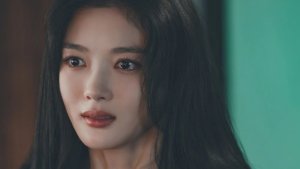
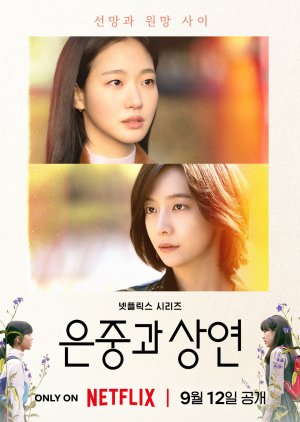
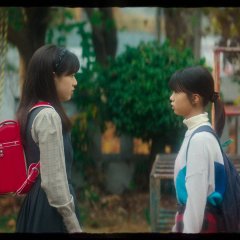
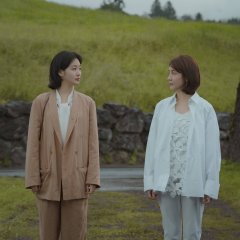
 Ryu Eun Jung, a woman with a candid personality, attracts people effortlessly. Her best friend and lifelong rival, Cheon Sang Yeon, has been by her side since elementary school. Coming from a wealthy background and being exceptionally talented, Sang Yeon was the source of Eun Jung's jealousy, yet they remained close, even if they sometimes hated each other. Over the years, they drift in and out of contact, reconnecting in their teens, 20s, and 30s. Now, at 42, Eun Jung is a drama writer, and Sang Yeon is a successful movie producer. One day, Sang Yeon unexpectedly shows up in front of Eun Jung, asking for an unexpected favor that will change the course of their lives. (Source: kisskh; edited by kisskh) Edit Translation
- English
- 한국어
- Arabic
- Русский
- Native Title: 은중과 상연
- Also Known As: Eun Jung & Sang Yeon , Eun Jung and Sang Yeon , Eunjungkwa Sangyeon , Two Women
- Screenwriter: Song Hye Jin
- Director: Jo Yeong Min
- Genres: Romance, Life, Drama, Melodrama
Where to Watch You and Everything Else

Subscription
Cast & Credits
-
 Kim Go EunRyu Eun JungMain Role
 -
 Park Ji HyunCheon Sang YeonMain Role
 -
 Kim Gun WooKim Sang HakMain Role
 -
 Seo Jung YeonYun Hyeon Suk [Sang Yeon's mother]Support Role
 -
 Kim Jae WonCheon Sang Hak [Sang Yeon's brother]Support Role
 -
 Lee Sang YoonKyung Seung Ju [Director]Support Role
Reviews

This review may contain spoilers
Told with a creeping, unsparing intensity whose force only reveals itself over time
You and Everything Else is no feel‑good drama.It is a precise, sometimes merciless analysis of a decades‑long friendship between two women. A fateful friendship.
At first I struggled, because the series feels so austere – but that very austerity drew me in more and more.
Told with a creeping, unsparing intensity whose force only reveals itself over time, the series refuses sentimental shortcuts. Kim Go‑eun and Park Ji‑hyun do not embody cliché “best friends,” but two women who love, envy, wound, and yet cannot let go of one another. Layer by layer, the show strips away the surface until only the raw weave of dependency, power, and guilt remains. Female friendship is placed at the center here—in all its ambivalence, as love, as rivalry, as entanglement. A theme rarely portrayed in Korea with such uncompromising clarity.
Particularly striking is the character of Cheon Sang‑yeon—and Park Ji‑hyun’s performance with her. She appears as the emotional echo of her brother, but in inverted reflection: charismatic, aloof, full of inner fractures. Her motives remain opaque, her closeness never certain, her distance never final. Psychologically, she bears traits of a pathic personality—someone who seeks intimacy, but only under conditions she herself controls. One might speak of narcissistic vulnerability: a mixture of grandiosity and deep inner emptiness. Her background explains much: a wealthy, detached family where status mattered more than affection. The brother’s death shakes the family to its core. The Asian financial crisis of the 1990s adds an economic rupture—challenges the family fails to withstand. Sang‑yeon is left alone.
Eun‑jung, by contrast, comes from humbler origins and seems almost naïve in the best sense—grounded, loyal, down‑to‑earth. She is by no means weak: emotionally stable, but conflict‑averse. Her “decency” is not conservative but empathetic. Her naïveté serves as a shield against Sang‑yeon’s manipulative complexity. Eun‑jung is the moral compass of the series, the conscience that wants to help without controlling. This contrast intensifies their bond: here the pathically charged, manipulative daughter of the elite; there the empathetic, steadfast daughter of the middle class.
The series touches on social taboos rarely addressed openly in South Korea. Assisted dying is one such sensitive theme. Even subtler are the queer undertones. Tellingly, the KDrama never ventures beyond hints and subtext. At times, Sang‑yeon’s feelings for the same man as her friend seem less like romantic rivalry than a proxy conflict. Between the lines shimmers a repressed longing for Eun‑jung herself—a dimension never spoken aloud, but one that heightens the psychological tension.
To grasp the force of this series, one must also look at Korean narrative tradition. The difficult‑to‑translate feeling of han—grief, resentment, unfulfilled yearning—permeates many dramas and is palpable here: in Sang‑yeon’s unfulfilled life, in Eun‑jung’s loyalty that borders on self‑erasure. Those expecting the familiar emotional excesses of K‑drama will find fewer floods of tears. Instead: sparse dialogue, almost documentary sobriety. Yet this only sharpens how close the two women’s fatal entanglement cuts—because nothing is softened or smoothed. And fate seems to heap more weight upon them with each encounter. More drama is always possible. And yes: makjang can be quiet, too.
Formally, the series remains strict, elliptical, austere. Those seeking rapid plot points will be disappointed. Those who surrender to it will see: this is not about sentimentality, but about the fine cracks beneath the surface, about what cannot be spoken. You and Everything Else is more than a drama about friendship. It is a psychological study of attachment and loss, a social commentary on Korean taboos, and a mirror held up to the uncomfortable question of how far friendship truly carries when it matters most.
Intense. Moving.
Was this review helpful to you?

Platonic friendships between women are truly the highest form of bond humanity has reached
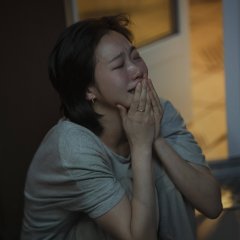
I just finished this drama and honestly, I feel completely drained in the best and worst way possible. As someone who has experienced a friendship very similar to the one portrayed, I could feel and relate to almost every second of it. Watching their story unfold felt like reliving moments of my own life. Platonic friendships between women are truly the highest form of bond humanity has reached. There’s seriously nothing quite like it. It’s a love that isn’t romantic yet still is a soul level connection and those who’ve been lucky enough to experience it know how magical and rare it is.There were times during this drama when I honestly thought I wouldn’t be able to continue. I almost had to stop because the pain was so overwhelming. I’ve cried more in the last few hours than I have in months. Not just light tears either, the kind of crying that makes your chest ache and leaves you gasping for breath. It was like I could feel it in every corner of my body. This drama gave me something raw and human, something that most shows fail to even attempt. That’s how deeply the script and the acting reached me. It’s not often that a piece of fiction manages to blur the line between reality and storytelling but this one sure did! Seriously whoever came up with this script deserves so much credit, because it’s not just the writing; it’s like they managed to capture life itself. Normally, I’m the kind of viewer who skips scenes here and there especially when I feel like the pacing is off or when filler moments drag. But with this drama, not a single second felt wasted. Every line carried weight and every scene was precious. In fact, I often found myself replaying moments just to absorb them fully whether it was a small look exchanged between characters or a line that cut right through me. That’s how precious it felt. I know I’ll be carrying this one with me for a long time, replaying scenes in my mind just like I did on screen. It’s rare to come across a drama this powerful and deep. I’m grateful (and devastated lol) that I did. I'm giving a 8/10 for rewatch value because although I know it would be awfully painful to go through it again, I would definitly rewatch this masterpiece.
Was this review helpful to you?