1
1 1
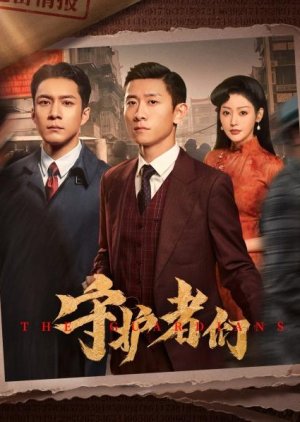
1Outstanding under-rated C-drama Of 2025: What It Means to Protect
How does one summarise a powerful litany of experiences and ideas, well-paced and masterfully conveyed by gripping performances in an espionage thriller of skilfully engaging camerawork, enabling you to feel as if you must navigate and survive a maze of threats, risks and circumstances? 17 episodes flew by. Suspense, intrigue, humour, tenderness… The simplest interactions and occasions can rouse your heart, shove your heart in your mouth, keep you riveted! I include vital history in my review, as to why 35 episodes of narrative excellence and strong plot-points are bolstered through award-worthy performances anchored by three leads and a fine ensemble cast. I heartily recommend this for literary discourse and/or anyone wanting to learn/refine the nuances of acting.You do not need to know the background and settings of this Republican-era drama focused on espionage and the lives of spies intertwined with ordinary citizens, to enjoy this. Wars can be fought and lost or won with pen and numbers, moreso than guns and bombs. If you want to truly grasp the realism of this drama, here is the fundamental picture which affects how our characters make decisions throughout the drama:
In 1939, Shanghai’s International Settlement was an espionage hub for many powers such as the Japanese, Americans, British, Soviets, etc. The national government of China was the ruling party of Nationalist Kuo Min Tang (KMT) under the leadership of Chiang Kai-shek, recognised by Western powers. The KMT had an intelligence arm named Bureau of Intelligence and Statistics (BIS). In 1939, Wang Jingwei chose to establish a Japanese-backed KMT government in Nanking, deliberately splitting from Chiang Kai-shek’s government.
During this time, the second Sino-Japanese War was ongoing. The Second United Front was a fragile alliance of necessity formed between the Chinese Communist Party (led by Mao Zedong) and KMT to resist the Japanese, a collaboration marked by mistrust and conflict. Japan participated in World War II from 1939 to 1945, as a member of the Axis which also included Italy and Hitler's Germany. In the mid-1940s against the Japanese, the war of resistance was not going well. KMT armies could only hold them at bay for a period of time before being ordered to retreat, or they would be crushed. Due to Chiang Kai-shek ordering KMT forces to retreat from the frontline, Communists who typically engaged primarily in guerilla warfare had to step in and mobilise the population behind Japanese lines, becoming the only power to fight the Japanese invasion and thereby growing exponentially with influence and power amongst fellow citizens.
During World War II, many Japanese soldiers were cruel and condescending towards citizens of many of those countries they invaded, including countries of South-east Asia and also within East Asia. Being brutalised, humiliated, and enduring the likes of starvation was the norm. Entire families were ruined. Being strongly anti-Japanese to the point of calling Japanese people all sorts of names and hating anything Japanese during those times was unsurprising and understandable, in countries such as Malaysia and Singapore and South Korea. The trauma is so bad that some survivors today cannot bring themselves to eat Japanese food or enjoy anything Japanese:
https://www.straitstimes.com/life/food/i-still-can-t-bring-myself-to-eat-japanese-food-how-wwii-shaped-the-eating-habits-of-a-generation
https://www.lowyinstitute.org/the-interpreter/ghosts-japan-s-occupation-malaysia
Not understanding how reviled the Japanese were amongst many countries suffering under Japanese occupation during World War II is to ignore a vital major portion of history which affects how people make choices in any country, including China. Repelling the Japanese and driving them out was a key desire of ordinary people. KMT's history of mistakes during this time included the New Fourth Army incident, KMT forces blockading areas run by the Communists and making skirmishes against Communist guerillas instead of fully coordinating against the Japanese invaders. This understandably drove people of multiple areas and countries to choose the faction(s) which they viewed as willing and able to protect them and stand up for them and get rid of the Japanese invaders.
It is against this backdrop that Gu Yangshan of BIS seeks Joseph Lee (a fellow mathematician who graduated from Oxford with him) aiding the Japanese in a special cipher system and codes creating ongoing consequences affecting certain warfronts. Ding Yi lives with a theatre troupe and as someone who isn’t part of the primary cast nor given the roles he seeks, decides to do more for himself outside the troupe by agreeing to a certain role that has him interacting with the Japanese while earning extra money on the side.
Ignorance and Intelligence clash and mingle in the first episode, with unavoidable consequences. Gu Yangshan and Ding Yi have very different personalities. Their interactions are never boring. Elvis Han Dongjun and Zhang Yishan are electrifying onscreen as individuals or together, be it restraint or anguish or wittiness or a myriad of moods shifting so quickly and naturally that Ding Yi’s awakening, growth and changes for the sake of self and country are organically charismatic. When the leader of the theatre troupe Xian Biyun is forced to step in, the dynamic duo’s realistically bumpy path of co-operation and disagreements is further enhanced by Zhang Tian Ai’s commanding participation as a capable female actress hiding a lot more than she appears to be.
The BGM is a feast for the senses when employed, such as Violin Concerto No. 2 in G Minor ie "Summer" from Vivaldi to start episode 3, where Gu Yangshan steals the opening scenes of the situation. Music does not overwhelm or interrupt vital moments of this drama, allowing performances to be vividly entrenched within your senses. The supporting cast splendidly rises to the occasion whenever they come on-screen.
In episode 9, Kenichi Miura as Takeda-san is a terrific nuanced villain creating tension that truly catches you off-guard. In episode 10, an award-winning performance of subtlety deftly segueing into emotions and rawness between Zhang Tian Ai and Roy Wang is etched into my memory: https://kisskh.at/753455-shou-hu-zhe-men#comment-23624462
In episode 11, Li Bo Yao as Tian Hao caught me for multiple reasons: https://kisskh.at/753455-shou-hu-zhe-men#comment-23625206
In episode 12, the mood changes. Ding Yi and Gu Yangshan’s brotherhood is wonderfully endearing: https://kisskh.at/753455-shou-hu-zhe-men#comment-23674228
Hongyu. Old Gu. Luo Han. Long'er. You won’t forget their names. There are so many moments and incidents throughout this adventure across the episodes I want to highlight, but must restrain myself. All I can say is that I have never been so touched and emotionally manoeuvred into feeling for all the three leads and supporting cast characters. A birthday celebration. Taking a photograph together. A hug. A promise. Honouring sacrifices.
“Beloved” was an enthralling crime-thriller cemented with vital psychological issues. “This Thriving Land” carved an indelible mark into my consciousness. “The Guardians” will rob you of words and haunt you into seeking language for your story experiencing its depths of beauty and pain and joy. You may find yourself wanting to adapt traits or mannerisms of Charlie, Ding Yi’s evolving Li Yue Se, Xian Biyun’s careful blend of strengths utilising feminine finesse and flirtation and firmness, and more.
Directors Yang Wenjun, Shi Luan, Yuan Yuchen and the main screenwriter Zhang Ji deserve to be toasted with the finest wines. They should win at least one award from one of three prestigious award ceremonies, due to their skilful surgical precision and balance in script and directing to reel you in, hook your emotions and arrest your mind. Themes are revealed with precision, lessons nailed without mercy. Internal foes and external enemies are deadly. Underestimation is costly.
Zhang Yishan is an outstanding actor who sets the bar, Elvis Han Dongjun tops it, Zhang Tian Ai matches Elvis Han, and then Zhang Yishan surprises you again (and not just because he plays more than one character). All of them deserve more lead roles and exposure in other genres of C-dramas. These main leads complement each other very well, undeniably captivating when solo yet able to further elevate each other in shared scenes. Whether together or apart, you can feel their bonds. You will live, laugh and cry with them. You will not expect the ending.
I promise your heart will get a workout like no other, discovering an extensive vocabulary of emotions for many unexpected situations and people. A smile. A bullet fired. Amidst debris and joy, the bittersweetness of survival and winning while losing, and vice versa. Humbled. Aching. Relieved. Gut-wrenching. Uplifting. Negotiate and navigate, to survive. Impossible to let go.
This is a masterpiece comprising twists, turns and dialogue further augmenting the character portrayals prepared to unexpectedly stun you. Selected music used throughout this drama and not part of the OST are sadly not collected into an album. OP is excellent. ED embodies the setting and spirit of all who exist in this drama. Sterling efforts of cast and crew solidly ensure the three Cs of laudable camerawork, cinematography and chemistry are timelessly preserved.
As to thoughts of fellow MDL viewers, I’d like to share Alien’s feelings and observations: https://kisskh.at/753455-shou-hu-zhe-men#comment-23908494
Each lead carries growing burdens and responsibilities. They can make mistakes which others pay for. Each of them desires to make everything work, for those they value and those they want to keep safe. They do not want to lose themselves. And yet… Duty. Country. Circumstances shape choices and convictions. And sometimes, you choose because you must, not because you want to. You don't have to agree with their choices. You are here to understand how and why things start and end.
The historical backdrop I highlighted plays a significant part of this story realistically influencing decisions, especially if you watch this not understanding anything about the KMT and CCP and World War II, and hence ignorantly label this drama as "propaganda" when people wanted to live and save their loved ones and get rid of the Japanese invaders starving and humiliating them, and would naturally be affected by changing circumstances to choose the faction(s) that could achieve all those.
I usually do not like Republican-era dramas. When I finished episode 35, all I could think was: I'll have to figure out how to retrieve my heart another day. That song which plays at 13:56, the camerawork for Ding Yi and Gu Yangshan and flashbacks until 17:15.... Perfection. Then flowing again into the tension and flow of this drama... The acting of Zhang Yishan, Elvis Han and Zhang Tian Ai is fantastic. The dialogues in this episode are amazingly maintained, even with the supporting cast. And at the end... I'm not even sure how I'm going to write a review for what I have watched. What an experience. At this point, still my C-Drama of 2025.
The incredible unforgettable《無數》(Countless) by 薛之謙 (Joker Xue) is perfect for 13:56 to look back at everything (the translation matches the sentiment, and this is a great song) pertaining to the life of spies and/or patriots:
“There’s a place that’s real
With colours only some eyes can see
Where nobody has any pockets
No need to carry anger or sorrow
Please tell me you really exist
Crossing mountains and rivers to restart everything
Please grant me a life of freedom and ease
and end this goddamned trading game!
During countless times of sinking lives
Why does a ship still arrive from distant tides
Carrying a truth as simple as a child
Showing justice wrought with bare hands
In the countless times I have sunk
willing to bear the criminal names of courage
In all my countless failures
Why do you still journey through storms with me
In a parallel story I will never let you down
What can I use to prove I exist?”
You make a choice, you live your convictions, you save lives, and you change history.
Others will not know you exist.
But we will remember.
This is the story of such men and women: The Guardians.
Was this review helpful to you?

This review may contain spoilers
THE BEST ESPIONAGE DRAMA OF 2025............Periodt.
The 35 Episodes wrapped and the finale comes in hot, part victory: part knife to the heart. It is witty when it needs to be, brutal when it counts and lands its theme with a clean, old-school flourish.Since the day I started this drama, it had me hooked from the get go. With each episode, it kept me on my toes for all the good reasons. The relationship between the leads is top-tier. Each one of them present for the other. Kudos to the actors for their superb and realistic acting that keeps you engaged. Kudos to the writer for such high quality screenwriting. Smartly paced, surprisingly funny when it calls for and devastating on cue.
I wish more people would discover this masterpiece cause it is so underrated. To the future viewers, don't hesitate to watch this. You will absolutely fall in love.
Classy finale, big feelings, no wasted curtain call.
Was this review helpful to you?

Talk about a well put espionnage drama!
The first episode of this drama is one of the best episode in the genre i've seen in a while. It had me hooked instantly, highly grasped my interest that I had to watch episode 2. Not only the story is interesting and awakes a certain curiosity, the acting is SUPERB, the chemistry is electrifying and I found myself rooting for the ML as soon as he appeared. Something about him is very humane and he's so great that you can't help root for him and see how insanely well he's gonna do in this world he finds himself thrown in without his consent.I appreciate the way this drama portrayed friendships, which I think is one of the most (if so not THE most) prohiminent subject across the drama. It was fascinating to see how because or thanks to friendship, the characters moved forward, discovered a bit more of whom they were, wether that is positive or negative for the said friendship. Essentially, friends changes us, makes us grow, question the world around us and quite literally opens new paths for us to take (or not) and this work perfectly painted that. Now, put this into an espionnage main plot focused on wars and different political views and opposites groups and you get something as heartwrenching, raw, and exciting as The guardians.
Not even one boring seconds. Everything was so fascinating and entracing. Major kudos for the three mains leads but also kudos to all the other actors that delivred stunning performances! This show deserves so much more recognition, i definitely invite you to give it a try, you won't be disappointed!
Was this review helpful to you?

One of the best dramas!
"In the Book of Fate, we share the same lines of words..."Whatever good words I write about this drama they won't be enough. Not just the best Republican drama but one of the best in general in all categories.
The directing, editing, acting, story, production quality..everything is absolutely superb.
I cried so much at so many moments. This show completely captures the essence of love and resistance. Anyone judging this show with dumb tropes like "does it have romance" "does it have a happy ending" would do such a disservice to it and to the art of film-making and dramas.
The acting is truly incredible. These are REAL actors. Their blood sweat and tears shaped such important characters, stories of people that have existed, breathing once again life into them through this show. So much respect to theze actors.
I think people that are c-drama fans should have this show as a must-watch. It's 10/10 in everything.
P. S. Yang Wenjun, you're such a cool director!!! I'm a big fan from now on!
Was this review helpful to you?
A Well Crafted Espionage Drama
I am relatively new to the world of Chinese dramas, having only started watching them over the past two years. As a result, I am unfamiliar with many of the older actors who are well known in the industry. Despite my limited exposure, I am grateful to have discovered this particular drama, which introduced me to some truly remarkable leading actors.Zhang Yi Shan delivered a performance that was nothing short of perfection, fully embodying the character of Ding Yi and captivating the audience. Elvis Han impressed with his deep voice and smoldering looks, exuding pure charisma throughout the series. I believe that pairing Gu Yang Shan with Shen Bi Yun as romantic interests would have elevated the visual appeal and heightened the dramatic tension, making for an even more compelling viewing experience.
The drama started off strong, maintaining a good pace up until episode 30. The storyline about espionage and underlying theme of friendship was both captivating and suspenseful, keeping viewers engaged as the plot unfolded. The dialogue was particularly smart, contributing to the overall quality of the production. Unfortunately, the series began to shift after episode 30. In my opinion, it should have concluded at that point, as the subsequent episodes introduced elements of CCP propaganda that detracted from my enjoyment. This change in direction led me to stop watching at episode 32.
Throughout the drama, the character Gu Yang Shan's motivations were strongly tied to his roots. However, near the end, the writers chose to have him regret the path he took during the war years and ultimately decide to join the CCP. Given that all dramas undergo censorship reviews, it is understandable that Gu Yang Shan could not remain a nationalist, and the CCP needed to be portrayed as the good guys. This narrative choice, while expected, influenced my overall perception of the drama.
Was this review helpful to you?
This review may contain spoilers
Overhyped
I thought Elvis Hans was the main lead at first and watched this because of him but after a few episodes, it was turning out that Ding Yi was the main lead. If he had not taken on the side job pretending to be Joseph Lee, there wouldn't be any story. His decision to earn money on the side deceiving other people led to all his misfortune and also dragged people around him into it. I've got to say that he is a really good actor but his character's stupidity and stubborness was so annoying that I couldn't watch it any further. People who like intense thrillers keeping them on the edge of their seats would like this, but I'm not one of them so dropped it.Was this review helpful to you?