This review may contain spoilers
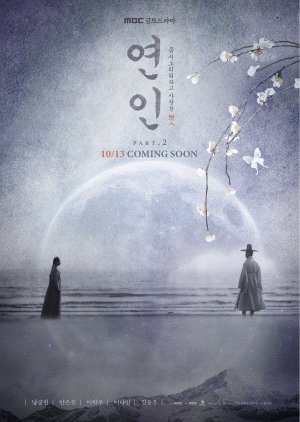
While retaining the poetic beauty of the original, this second half is a painful epilogue . . . At this point, I'm convinced the writers are sadists, and I can't stand to watch anymore just to see it all come to a bad end one last time. In sum, the random twists and turns that started cropping up in the last episodes of the first season, multiply in the second half. Hurdle, after hurdle, after hurdle. Just nonsensically raising hopes and dashing them. Will there be scenes that stick with me? Yes. Did I vow to stop watch multiple times? Also yes.
The acting, production values, cinematography, and some key pieces of dialogue are excellent. There are some powerful scenes that will linger on - but we're talking all of 10-15 minutes in 8 hrs of viewing. The key theme of the show is to always persist and survive as there could be the best moments of your life just around the corner.
I feel vaguely guilty, therefore, of not persisting to the end of this one, but frustration and dread was growing with every episode, and life is too short. I ended it at a high point, and I don't have strength to see if things fall apart once again. I would still highly recommend watching the first half/season 1 - it stands on its own and is a true gem of a K -Drama.
Was this review helpful to you?
A Nation in Turmoil, A Love Torn Apart: A Gripping, Heart-Wrenching Sequel
This sequel dives headfirst into heavier, more melodramatic waters—and justifiably so. Set against the bleak backdrop of war, humiliation, and captivity following Joseon’s defeat by the Qing, the story takes a darker, more intense turn. The Crown Prince now lives as a hostage in Shenyang, the Qing capital, while the scars of national disgrace run deep.At the end of the first series, Gil-Chae, misled by Ryang-Eum, believes Jang-Hyun is dead. Her grief clouds her judgment further when she mistakenly credits another man as her rescuer during a near-tragic moment and, in a hasty bid for security, accepts his proposal. Just as Jang-Hyun reappears, alive and willing to risk everything for her, she abandon him again—choosing duty to her family and stability over love.
Now married, Gil-Chae continues her metalware trade among the elite, until she is captured and sent to Shenyang. Proud and unyielding, she refuses to seek help from Jang-Hyun, despite knowing he is near. Her silence costs her dearly.
This sequel is a full-blown emotional rollercoaster. It stirs not only heartache but outrage:
- I wanted to shake Gil-Chae for her maddening pride. If only she had called for Jang-Hyun, he would have moved mountains to save her. Instead, she endures brutal treatment—and later wounds him further with lies and distance. It is infuriating. How an intelligent woman can fall victim to her own pride and stubbornness.
- The misplaced honour of Joseon society made my blood boil. Women who endured hell to return home were greeted not with compassion, but with accusations of impurity for having been touched by “barbarians.” They deserved better.
- When Gil-Chae’s husband hesitated to rescue her because of possible lost chastity, I could not help but mourn her mistaken choice of husband. His bigotry disguised as honour is no honour at all. He should at least think of getting her out of misery as priority above all else.
- The King and Lady Jo are nearly unbearable to watch. Not only do they abandon their people, but they kill returning captives? It is gut-wrenching. The drama makes you despise their moral bankruptcy. When a nation falls under the rule of a leader with twisted values and misplaced judgement, it is not merely misfortune—it is a slow unraveling of its soul.
- And then there is the once-noble scholar with high ideals, who folds under the threat of family disgrace. He chooses reputation over lives—while uneducated men risk everything to save others. His collapse of character is a powerful critique of hypocrisy in high places.
- Yes, there are moments of frustration—battle scenes that defy logic, unnecessary impersonations, and the tired use of amnesia not once but twice. With two concussion to the head so severe, what's the chance of surviving. Why have your back to the enemies in a battle situation?
But in spite of all that, the series still captivates. The storytelling remains strong, the emotional stakes high, and the ending surprisingly tender. The romance, though painful, is deeply moving.
Namkoong Min is stunningly charismatic, and the cast overall is dazzling—both in looks and performance. The cinematography is breathtaking, and the tension never lets up.
Some minor flaws aside, this sequel is a gripping continuation filled with passion, betrayal, sacrifice, and redemption. Highly recommended—though be prepared to yell at your screen. Don't sit too near, in case you punch it. 😂
Was this review helpful to you?

"I'll wait for you." should be the real title of the drama!
My overall thoughts about the 21 episodes:It's a fantastic drama with amazing acting, directing, and a meaningful story, BUT it's not perfect. There are a LOT of irritating parts and inconsistent writing as well.
There are multiple characters you can hate, honestly, you can't find good and bad people in this, just people, and that makes this show great, but it's gonna infuriate you, because the characters making stupid decisions, just like real people. I felt it was a bit dragged, some parts were overdramatic for no reason, and didn't make much sense story wise, but overall, this is a MUST-WATCH!
Namkoong Min and Ahn Eun Jin carried this drama with ease. They were incredible together.
I don't want to go into details, because that wouldn't be spoiler-free, and honestly, you need to experience this show by yourself.
Was this review helpful to you?

Maybe the best Kdrama of all times.
Ok, I have watched many K-dramas so far—many stories, many romances, many dramas.I have to say that this might be the best K-drama ever. Everything is in the title: "My Dearest"… The romance is "romancing" and It is not the childish romance you often encounter; it is a mature, healthy romance— it is ride or die.
You get attached to all the characters, even those you’re supposed to hate. You feel the pain, the struggle, the love, the hate… Everything is so well written that it’s scary. One episode, I’m laughing; the next minute, I’m crying.
I don’t know why, but this K-drama reminds me so much of Alchemy of Souls. The same loneliness after finishing it… It was hard to go through all the episodes because I knew I would suffer.
If you’re hesitating, don’t. It is worth watching.
One thing I learned is that true love can never fade, even in the face of all the hardships in the world.
Was this review helpful to you?

This review may contain spoilers
my dearest vs. the red sleeve
i have two words only: absolutely mindblowing!much has been analyzed about my dearest solely itself, but i wanted to use this review to stir conversation and draw some comparisons to another fantastic (and may i dare add, even more intriguing) sageuk-- the red sleeve-- in order to encapsulate my frustrations with the storyline of my dearest's main couple and where i see room for improvement.
(warning: some major spoilers ahead for the red sleeve).
1) equality of contributions in their relationship.
what the red sleeve does so well, even amidst a severe power imbalance between a crown prince and his court maid, is demonstrate that the ML and FL view each other as equals. despite the FL's lowly status of a court maid, she saves the ML on multiple occasions that made my heart SWOON, which ultimately restores balance to their power dynamic and also, reaffirms their mutual love for each other. that is what makes the love between them so discernible to the audience. i could FEEL it in my toes.
on the other hand, what was so frustrating in my dearest is jang-hyun's constant unreciprocated affection toward gil-chae. though both shows have this period of "unrequited love" from the MLs to the FLs, although refusing to become the crown prince's concubine, the red sleeve's FL constantly contributed to their relationship and protected the prince as much as the prince is protecting her, which made their affection for each other palpable. although the FL denies her feelings for him, you can see through her facade and really feel her love for him even with their massive gap in social status (which i'll delve into later). as for my dearest, although jang-hyun's love for gil-chae was so painstakingly obvious, i never felt as if gil-chae reciprocated it. the discrepancy between number of times he has protected her vs. the number of times she has protected him is just too large to imagine gil-chae loving jang-hyun with the same intensity and depth in which he loves her. honestly, as part 2 progressed, i started to pity jang-hyun immensely for his all-consuming passion for someone who seemed like she was indebted to him rather than her being in love. i also think this inequality in their respective contributions to their relationship is made worse with the durations of both shows. TRS is 17 episodes in compared to MD's 21, which may have helped me overcome the excruciating unrequited love phase and hang on to TRS's story much more than MD's.
2) the driving obstacle toward their relationships
in the red sleeve, we've always understood why the main couple could not be together; as a concubine, the FL would lose her freedom and be entirely devoted to a man who simply cannot be entirely devoted to her. what made their story so tragic is that their circumstances are entirely out of their control; it was fate that made the FL a court lady and the ML a prince. in addition, the pay-off of the couple finally getting together was truly rewarding in that the audience finally witnesses how becoming a concubine heartbreakingly stripped the FL of her personality and charm. the regret that she feels for giving in to the prince is tangible. the warning that she has been alerting both the prince and the audience over the entire course of the drama has finally (and tragically) come to fruition.
however, for my dearest, the obstacles that inhibited their relationship was the intervention of other characters as well as a simple lack of communication. to me, rather than tragic, these roadblocks were frustrating. to prove to gil-chae that he truly truly was committed to her, jang-hyun should've told her about the dozens of pairs of floral shoes he purchased during his agonizing time in simyang. to show jang-hyun that she was in love with him, gil-chae should've cleared up that his "younger brother" literally told her that he was dead, and also that she was staying with officer gu because she had a duty to her family, not because she didn't love him. their poor communication eventually lead to misunderstandings and it was KILLING me. furthermore, i never felt as if the pay-off of jang-hyun and gil-chae getting back together was as satisfying because their entire story was soon marred with hardship that seemed if it had no end.
despite these frustrations, my dearest has been an absolute roller-coaster exploring love in its most pure, raw, and honest shapes and sizes. jang-hyun's love and devotion toward gil-chae was so admirable. and alas, despite both being sageuks, the red sleeve and my dearest are two completely separate shows with separate romances featuring separate issues of the time period. either way, i highly highly recommend my dearest to those looking for a truly epic, slow-burn love story!
(on a final note, i wish men like jang-hyun were real.)
Was this review helpful to you?
Nam Goong‑min delivers a staggering performance as Lee Jang-hyun, the man of hidden pain and silent resolve. His transformation—from the enigma of Part 1 to the hero who fights not just for his country but for the woman he cannot forget—is executed with nuance and power. Opposite him, Ahn Eun‑jin as Yoo Gil-chae shines with strength and vulnerability, embodying a woman caught in war, politics, love and loss, yet refusing to yield. Their chemistry is magnetic, built on scars and longing, and every reunion or separation hits like a thunderbolt.
Visually and technically, Part 2 reaches new heights: the battle-scenes are epic yet grounded; the quiet moments—glances in moonlight, old wounds resurfacing—lift the drama into something poetic. The pacing tightens when it needs to, and allows space for reflection when emotion demands it.
Some viewers have noted that the political threads feel slightly more complex and dense this round, but that depth is part of the show’s ambition. By the end, the merging of personal and national vendettas reaches a satisfying resolution—bloodshed gives way to sacrifice, and despair gives way to hope. The finale manages to honour both the epic and the intimate.
My Dearest Part 2 is not just the continuation of a love story—it’s the fulfilment of one. It’s bold, sweeping and deeply human. A worthy sequel that honours its characters and ups the emotional ante in every way.
Was this review helpful to you?

Both the parts' review
After watching both parts, I realized that it’s actually a well-written story. In the first part, I was irritated by Kil Chae’s character until the very end. She refused to accept that Yeon Joon loved someone else and kept interfering in his matters while disregarding Lee Jang Hyun’s emotions and sacrifices. In the end, she married another man, which frustrated me a lot.The second part continued in flashback, just like the first. An old man in jail agreed to tell Jang Hyun’s story but wanted to know what had happened to him first. This led to another series of flashbacks, forming the core of the second season. One thing that confused me was whether the old man was actually narrating the story to someone or just recalling it in his mind. Additionally, I wasn’t sure if the events we, as viewers, watched were his narration or simply the director’s way of showing us the past.
The story seemed to have a happy ending, but it still felt incomplete. I expected it to conclude with the old man, bringing full closure to the narrative.
At the end, I want to conclude by appreciating the outstanding performances of Namkoong Min, Ahn Eun Jin, Lee Hak Joo, Lee Da In, Kim Yoon Woo, Park Kang Sub, and Kim Seo An. While the entire cast did well, they were the best. I also want to mention the actor who played the role of the Crown Prince—his performance was remarkable.
Was this review helpful to you?
This review may contain spoilers
too much suffering
the amount of disgrace that the characters of this series had to go through was too much.I had to take saveral breaks before finishing this season. I thought of dropping it several times.
If only half of it have happened to them would have been more enjoyable and believable as a story.
I mean two memory losses! come on!
I’m only giving 7 because I really enjoyed the first season. I wished they just had eloped than.
if you like to see a lot of suffering this series is for you.
Was this review helpful to you?

This review may contain spoilers
Not as good as part 1
While I absolutely loved part 1, part 2 felt disjointed. ML and FL had a lot more interactions, but the story had way too many useless characters and frustrating plotlines.There were a lot of scenes where ML and FL almost met but missed each other by a hair. At first, it was ok, but later became very frustrating because the writers overdid it. Some characters and storylines were pointless. What was the deal with the Chinese princess and her unrequited love for Jang Hyun? It didn't move the plot forward, but created unnecessary conflict that was more frustrating than meaningful. The princess got no character development and her arc ended in a very underwhelming way. She was cruel and selfish, and I expected Jang Hyun to deal with her in a smart way. But he told her he was leaving and she accepted it, the end. Gil Chae getting abducted to Qing also felt off. It was a tool for her to meet Jan Hyun, but the plotline felt like a forced cop out, rather than a natural story progression.
It also felt like the writers changed their mind with the direction of the story. They made a big deal about women being abused in one household because of a jealous wife. But Gil Chae spent very little time there, then left, and that was it. The arc with Gil Chae marrying the sergeant was also completely pointless. It was another tool to keep ML and FL apart for a bit longer without serving any other purpose.
The entire part 2 felt like a forced attempt to continue with the story post war, except there was not as much conflict and action. A lot of story arcs felt uninspired and forced. I wish the war plotline wouldn't have ended in part 1. This was when the story was at its best.
Was this review helpful to you?

This review may contain spoilers
Lacking compared to part1
My review is for the second half of the drama rather than the entire drama. I quite loved the first half (part 1) but this second half (part 2) was so much more weaker.The first 3 episodes are decent, there are light moments (when you compare to the tragedies of the first part) and hope. But episodes 4 - 9 were such a drag to watch. You get brief moments of happiness and then problems. To the point that it seemed like a never-ending mess. I was prepared for a tragic ending. Apart from that, the story was really moving slowly with not much happening. You can easily watch these episodes on 2x because everyone talks so slowly.
Some of the characters really annoyed me. One being the king. He was so hell bent on retaining power and his position that he lost trust in everyone including his ministers, his son, and his people. To target his own people who already faced so much was simply unforgiveable according to me. What does loyalty mean if the other party unreasonably wants to sentence you to death in order to feel "peace"?
The other character was the scholar who acted all noble and could see that the king's fears are driving him to cruelty and he made the same exact choices by giving into his unreasonable fears. Though it just proved that he was always a cruel man and he never regretted his part mistakes. He would repeat them again without much hesitation.
Finally, it was Officer Gu, who we all knew was not worthy of marrying Gil Chae.
It's easy to blame the "barbarians" for the sufferings of the people of Joseon but this part highlighted that the people of Joseon were far more cruel to their own. They abandoned their own family and wives and sisters and daughters if they deemed them to be "tainted" and were obsessed with keeping Joseon "clean". They were willing to kill their own by labelling them as traitors without proof. They forced women to kill themselves. They humiliated anyone who survived. They truly disgusted me because instead of easing each others suffering and giving each other comfort after all the hardships and sorrows, they rejected and ridiculed them instead. They didn't allow their own people to heal. So the real traitors were the ones who escaped "unscathed". Problem is, I don't know if majority of the audience will understand this because of the way it was presented. Unless you can relate to being "othered" in your own country, it's unlikely that most of the audience will understand this aspect of the story because of the way it is presented. It will probably get sidelined as an aspect of war.
The last two episodes were the best compared to the rest of this part. Though there are again unnecessary hurdles and part of me wanted to know what happened to all the politics that we were forced to suffer through, I am glad we were not forced to suffer more on the leads' story front. If not for the last 2 episodes, I would have certainly scored this part lower just for those middle episodes. The male lead also said and did all the right things and he truly was a blessing for everyone. The growth of the female lead was also nice to see and a good contrast between part 1 and 2.
One aspect they glossed over is what exactly happened to Ryang Eum.
The OST of this show continues to be enjoyable.
Was this review helpful to you?

a review for both part's 1 and 2
"Do you hear that? The sound of flowers blooming"I was sold. I was seated.
——
I devoured this drama in 2 days and lost my sleep for the beautiful narration it truly was. Mind you i have 3 pending kdramas as of 12/29 but i mindlessly put it on hold just to reserve myself to see this drama through...
I initially came across this drama when MBC released its trailer. it caught my attention but i guess it wasn't enough to get me out of the kdrama slump i was at the time😂 THANKS TO TIKTOK it resurfaced on my fyp and gave this a shot!!
Many say it starts off slow and picks up at 3rd-4th episode however i do not feel the same. From the first episode till the last few minutes of episode 21–i loved every bits of it.
I seldom writing reviews and reserve writing allat for dramas deserving. I can confidently say its well within my #10 all time best kdrama and #1 sageuk drama. Easily Nam Goong Min's and Ahn Eun Jin's best roles portrayals out of their filmographies.
Do i recommend?
Yes. Yes. Yes. Though be prepared for the rollercoaster and tearjerker it will be. If you suvived scarlet heart/moon lovers, then you wont have much trouble going through all the episodes. It is depressing. Sad. Dark.
I came for the romance but also stayed for the history of Joseon. I found myself sympathizing for the plight and the women of Joseon endured. This drama portrays all of the character's story so well—so much depth and well thought and written characters.
I miss my JangChae already☹️❤️
I'm in "i wish i could watch it like the first time" moment🥲
WELL my yapping ends now.
It has been awhile since i felt this empty after watching a kdrama. The void left in me will be hard to fill in.🥴
Was this review helpful to you?

This review may contain spoilers
This One Will Live Rent Free In My Head And Heart
I finished my watch of the extraordinary 2023 drama My Dearest last night and have already started my first rewatch. It might be my favorite Korean drama of all time...definitely in my top 5 for sure...GOD I truly loved every moment of it.The direction and cinematography for My Dearest was incredibly beautiful, thoughtful and at times shockingly raw. We were not spared the ugly details of what war looks like, there were no soft filters when the cast cried ugly tears and makeup did nothing to disguise what one would look like after weeks of no sleep, no bathing and no water.
Each of the main character’s stories and many of the support character’s too had so much depth and were written so well, with flaws and strengths just like all of us, that I found it easy to identify with many of them. And kudos for how thoroughly researched and beautifully described the deeply complex and bleak historical events of Joseon Korean were in My Dearest. Often when I watch historical dramas I am so lost I end up watching with an encyclopedia next to me (or Google 😉) to help with my confusion… My Dearest never frustrated me that way.
Ahn Gun Jin as Gil Chae (the FL) portrays an irresistible charismatic, flirty and spirited girl and it's that tenacious spirit that holds her and so many others in this drama in good stead. Ahn Gun Jin plays Gil Chae to utter perfection, and in turn we are treated to an amazing character...you love her and you hate her and you'll get frustrated with her, but in the end she is simply marvelous!
Namkoong Min as the indomitable Jang Hyeon absolutely creates his character. He is one of those actors who can basically leave all his acting to his face…the subtle movements of his eyes and his mouth covey eloquently his intentions, and the way he speaks, especially to Gil will have you melting in your seat…he. is. magic. He moves his face, his hands and his body and speaks his words with an almost poetic grace, and when he cups Gil’s face….well….suffice to say, the lead's chemistry was really beyond perfect.
I am not going to write about every character as this would be a tome…but suffice to say there really isn’t a weak character in this cast and thanks to some amazing writing they all get to truly shine in their parts. But I will call out two who, I feel, you can not help but be so invested in throughout My Dearest: Kim Yoon Woo as Ryang Rum will break your heart, and Choi Mu Sung as Yang Chun is truly an endearing bear of a man. I felt emotions linked to almost every character in this drama, and for many of them, many different emotions…they were so well written and complex.
Some have compared this drama's main and secondary couples to Gone With The Wind’s two main couples and it is easy to see...The FL, Gil Chae is Scarlett, wild, fierce and strong...the ML, Jang Hyeon is Rhett, handsome with a devil may care face that hides an intense and passionate man underneath. The second male lead Yeon Jun is the Ashley of GWTW...he owns Gil's childlike adoration as the story begins but we figure out early on that he is absolutely no match for her...lolz...and Gil's best friend, Eun Ae is like Melanie in GWTW, a sweet, quietly resolute and strong young woman. I loved watching their stories separately and together unfold in My Dearest.
And I can not finish this review without a nod to this gorgeous musical score, which is so integral to this drama...truly the soul of My Dearest.
The whole ost is perfect but there are 3 pieces of music I found interesting called Afternoon Lady I, II and III. In my own head I could easily have called these pieces: Gil’s Story. For myself when I listen to the three, each of these three songs take me chronologically through Gil’s maturing into the spectacular woman she becomes from the depth she gains as a human being experiencing the ordeals of war and hardship. We begin with a free-spirited young happy go lucky girl (that's Afternoon Lady I) to a maturing young woman dealing with the deeply emotional traumas life can deal us with a touch of wistfulness for her lost carefree days (that’s Afternoon Lady II) and finally into a full blown truly awesome woman who’d faced trials that crippled others yet gave her strength and depth (and that’s Afternoon Lady III)…gorgeous music… And also must say the two themes With My Heart and My Dearest just make me cry when I listen to them…they bring all the emotions of this truly touching drama back to me…
I rode a roller coaster of emotions with My Dearest and I am beyond satisfied that I finally watched this amazing piece of work.
It is truly a drama I wish I could watch for the first time over and over again…
Was this review helpful to you?