- Italiano
- 中文(简体)
- Русский
- Українська
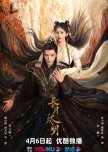
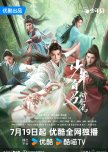
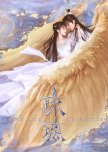
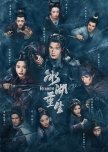
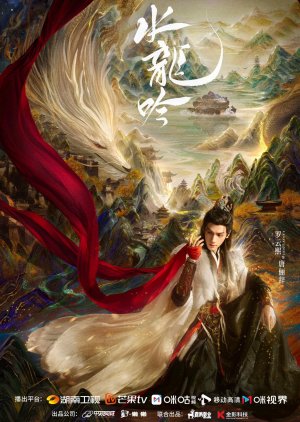
- Titolo Originale: 水龙吟
- Conosciuto Anche Come: Qian Jie Mei , Shui Long Yin , The Dragon Chant , Water Dragon's Chant , 千劫眉 , 水龍吟
- Regista: Chen Zhou Fei, Qian Jing Wu
- Generi: Mistero, Wuxia, Fantasy
Dove Guardare Shui Long Yin





Cast & Ringraziamenti
-
") Leo LuoTang Li CiRuolo Principale
Leo LuoTang Li CiRuolo Principale -
") Aero XiaoShen Lang HunRuolo Principale
Aero XiaoShen Lang HunRuolo Principale -
") Ao Zi YiChi YunRuolo Principale
Ao Zi YiChi YunRuolo Principale -
") Alen FangLiu YanRuolo Principale
Alen FangLiu YanRuolo Principale -
") Bao Shang EnZhong Chun Ji / Princess LangyaRuolo Principale
Bao Shang EnZhong Chun Ji / Princess LangyaRuolo Principale -
") Sebrina YaoXi Fang TaoRuolo Principale
Sebrina YaoXi Fang TaoRuolo Principale




Recensioni

Una fiaba oscura sul destino, l’umanità e il prezzo delle emozioni
Whisper of Fate è molto più di un drama fantasy o romantico: è un racconto che esplora, con profondità e complessità, il concetto di libero arbitrio, equilibrio tra luce e ombra, e il valore delle emozioni nell’esperienza umana. Guardando questo drama con occhi attenti, emerge chiaramente come ogni personaggio e ogni evento sia funzionale a una riflessione filosofica: cosa significa essere veramente vivi in un mondo governato dal destino e dalle forze divine?Tang Li e l’Artefice: due facce di un’unica realtà
Il cuore della serie risiede nel rapporto tra Tang Li e il suo alter ego, l’Artefice. Tang Li rappresenta l’umanità: imperfetta, vulnerabile, emotiva, ma capace di crescita, scelta e amore. L’Artefice, invece, incarna la parte fredda, calcolatrice e “divina”: creatore di ordine, esseri perfetti ma privi di cuore, artefice di un mondo controllato, senza caos emotivo.
La loro interazione non è una semplice lotta tra bene e male, ma una metafora delle scelte interiori dell’essere umano:
Tang Li rappresenta l’emozione, la compassione, la libertà di sentire e vivere
L’Artefice è la razionalità estrema, la logica assoluta, il controllo totale, la perfezione senza anima.
Il loro conflitto rappresenta una tensione filosofica universale:
l’equilibrio tra ordine e caos, ragione e sentimento, destino e libero arbitrio.
Solo integrando queste due forze , senza lasciarsi dominare né dall’una né dall’altra , è possibile raggiungere una vita piena e autentica
I burattini, così centrali nella narrazione, non sono solo elementi narrativi: sono rappresentazioni del destino che manipola l’uomo. Chi diventa un burattino ha perso la propria volontà, subordinato all’ordine esterno imposto dal Burattinaio o dall’Artefice
Dal punto di vista psicologico, questo rappresenta ciò che succede quando gli individui non riconoscono le proprie emozioni, ignorano il proprio mondo interiore e si lasciano plasmare dalle circostanze esterne. Il drama ci mostra che l’assenza di emozioni, pur garantendo stabilità e potere, porta a una vita vuota e senza significato.
Il messaggio più importante del drama è profondamente filosofico e richiama concetti taoisti e buddisti orientali: l’equilibrio tra opposti e la consapevolezza di sé.
Il dolore non è qualcosa da evitare: è inseparabile dalla vita e dall’esperienza umana.
L’amore e la compassione richiedono coraggio e sacrificio.
Il destino può tirare i fili, ma la vera libertà nasce dalla scelta cosciente e dalla responsabilità delle proprie azioni.
Tang Li insegna, attraverso il suo percorso, che l’umanità non è perfezione, ma capacità di sentire, di sbagliare e di scegliere con coscienza. L’Artefice, al contrario, mostra che la perfezione e il controllo totale privano l’essere della propria essenza
Il drama sviluppa una trama complessa, in cui il mondo divino e quello umano sono interconnessi.
Le azioni di Tang Li e degli altri protagonisti hanno conseguenze dirette sul mondo superiore, ma ciò che determina il corso degli eventi non è la potenza, bensì la qualità delle emozioni e delle scelte morali.
Questo ci ricorda un principio psicologico fondamentale: la libertà interiore è più potente della forza esteriore, e chi riesce a integrare luce e ombra dentro di sé può influenzare il mondo senza rinunciare alla propria umanità.
Whisper of Fate è un drama filosofico travestito da fantasy romantico: affronta il tema dell’essere umano alle prese con il destino, con le emozioni e con la propria parte oscura.
Il conflitto tra Tang Li e l’Artefice è una metafora della lotta interiore che tutti viviamo: scegliere la perfezione o accettare il caos emotivo, vivere secondo le regole imposte o seguire la propria coscienza.
Il messaggio è chiaro e potente: solo chi accetta la propria umanità, con tutte le fragilità e le emozioni, può trovare libertà, pace e armonia con se stesso e con il mondo.
Un drama che invita a riflettere profondamente, che combina azione, mito e introspezione psicologica, e che lascia un’impressione duratura sulla mente e sul cuore dello spettatore.
Questa recensione ti è stata utile?

 1
1Questa recensione può contenere spoiler
A very Chinese-flavour drama with eastern phylosophical ideas
WARNING: MAJOR SPOILERS -This post is part of a trilogy where I analyse only the cultural and historical artistic aspects, as well as two Eastern philosophical perspectives with strong presence in the drama, without tackling other elements such as wuxia themes, Confucianism, sci-fi inspiration, and so on. The links to the complete three-acts review with images are in the comments.
By accident when adding this part, I erased the previous review :
NOTE: Although the story is remarkable, the execution and direction has flaws that impact the overall result, so the final score is a balance between the outstanding aspects of the drama rarely seen in any kind of drama or serie (that gives the extra points to reach the 8) with its flaws. Luo Yun Xi and Jeremy Tsu - outstanding.acting
-------------
As we enter this THIRD and last ACT about Buddhism, the framework that gives structure to the whole story, it felt fitting to bring the classical theatre resource where a character steps in at the beginning to set the scene and offer context. Honouring that tradition, I’ll quote the answer that Mo’at gives to Jake Sully in the movie Avatar when he asks the Na’vi people to teach him their worldview and wisdom: “It is hard to fill a cup that is already full.”
This phrase didn’t just pop into my mind by chance. Buddhism is a philosophy and religion completely different from Western conceptions and beliefs, and since it sits at the heart of Shui Long Yin’s narrative, I tried my best to do justice to its principles. Although I kept things as concise as I could, this time you’ll need to be extra forgiving with me.
As actor Luo Yun Xi said himself (see ACT 2), Tang Li Ci seeks enlightenment. Let’s embark together on that search and see whether he attained what he was looking for, or if , at the very least, the journey was worthy.
Buddhism, the general framework
“All things are impermanent; they arise and they pass away.”
While Daoism is about finding harmony with the Dao, Buddhism is a path of understanding meant to transcend this world and the suffering inherent in it. It originated in India around the 5th century BC with Siddhartha Gautama who, after attaining enlightenment, became known as Buddha, or “the awakened one.”
The foundation rests on the Four Noble Truths:
1) Life contains suffering
2) Suffering has a cause (craving and attachment)
3) There is an end to suffering (nirvana and enlightment)
4) There is a path to end suffering
(NOTE 1 - Masters Puzhu and Fang Zhou // Although there is one “internal” path to end suffering, there are two “external” ways to walk that path. Puzhu represents the Buddhist archetype of the hermit who isolates himself from humanity and external distractions to walk the path. Fang Zhou represents the Buddhist archetype of the master who actively involves himself in worldly affairs with compassion.)
The ultimate goal is to wake up from the "dream" of cyclic existence, the Samsara, realising the true nature of reality. This is achieved by understanding and internalising several key principles:
Impermanence: All conditioned things are in a constant state of change.
Karma: The law of cause and effect, where intentional actions shape future experiences.
No-Self : The perception of a fixed, independent "I" is an illusion.
Nirvana: The unconditioned state, the cessation of suffering and the end of the cycle of rebirth, achieved by disolving all harmtful states of minds
So, let´s walk this path through Shui Long Yin together.
Impermanence: life as a dream or the stage of a play // “All phenomena are like dreams” - Heart Sutra
Some of the comments regarding the ending of Shui Long Yin revolve around the idea that everything Tang Li Ci did seems meaningless because no one remembers he existed. Even worse, not only are all the bad omens now living good lives, but TLC has never even existed. Was the whole drama, and all the time and emotions invested by viewers, pointless?
In the drama, Tang Li Ci voices a similar distressed question during his dream coma, and Fang Zhou’s answer guides not only him, but us, along the Buddhist path...and might add, the drama.
(NOTE 2 - Zhoudi Tower // In the dream, Tang Li Ci is disheartened and defeated because Yique YingYang is already back after ten years, and he feels that all the deaths and efforts back then were meaningless. Fang Zhou, a Buddhist teacher answers: “Even if YQYY is alive, are all the people who were able to live and enjoy life during those ten years not worthy of that?” … “In this world, not a second of effort is wasted.”)
By this point, we already know there are three stories: the original timeline, where Ye Mo kills Tang Li Ci only to realise that without emotions the Holy Son isn’t perfect and can’t achieve immortality; the second timeline, the one the drama actually follows; and the third one, the new life we glimpse at the end, where Tang Li Ci is no longer explicitly present nor ever existed.
So? Which one is real? The first one we never saw? The second one we grew attached to? The final one we only catch a glimpse of? Buddhism states that just as our dream experiences are mere appearances of the mind, so too are beings, their environments, their pleasures, and all other phenomena. The strong theatre-stage effect of the drama (ACT 1) seems to work like a visual metaphor of this.
(NOTE 3 - Tang Li Ci’s dream in Zhoudi Tower // From a Buddhist perspective, this dream and Tang Li Ci’s confusion about what was real bring up the topic of phenomena as mere appearances of the mind.
This doesn’t mean those phenomena don’t exist; it means they don’t exist on their own, only in relation to the mind. We believe the only “real” timeline in the drama is the one we just experienced because we formed a connection with it. The others feel unreal because we didn’t immerse ourselves in them, even though, at the back of our mind, we understand they existed too - but only from the moment we are introduced to them, not before.
We can see this idea represented in different moments and ways throughout the drama, through both cinematic and narrative resources: the contrast between chaos and fighting versus the calm, quiet tea scene in the Buddhist temple at the beginning; the reality in which Liu Yan lived all those years, where Tang Li Ci is a murderer and the most despicable being, versus Chi Yun believing the marks of Yique YingYang are beautiful and enhance Tang Li Ci’s attractiveness.
(NOTE 4 - All phenomena are like dreams // The quiet calm of a tea ritual and a baby sleeping at a lakeshore versus the chaos and action-packed fighting in the temple’s front yard.)
(NOTE 5 - Matrix (1999) – iconic sci-fi movie directed by the Wachowski sisters // The best way to explain it is this movie
2. Karma, suffering, and samsara: Even things aren´t “real”, we still suffer...Why? How? // “If you know your own mind and develop it, you will become a Buddha; do not seek Buddhahood outside yourself”
Every sentient being wants to be happy and avoid suffering. We tend to think that the causes of happiness or pain are external, but Buddhism states they actually lie within our own mind.
The mind isn’t a material object or a by-product of physical processes; it’s an immaterial and continuous entity, different from the body. Every action we take leaves an imprint or potential on our very subtle mind, and in time, its corresponding effect will arise. Virtuous actions bring happiness; harmful actions bring suffering. This is the law of karma, and it affects all lives, constantly.
At the beginning of Whispers of Fate, Tang Li Ci already has a partial understanding of these ideas taught by his master, Fang Zhou, and he reflects with the monk on intention and karma. When he decides to enter the jianghu, he is, without realising it, following Fang Zhou’s path to end suffering through the worldly-affairs way. At that point, his obsession and his merely intellectual grasp of these concepts and teachings prevent him from truly embracing them, as he still doesn’t fully understand what that way means or how it works.
(NOTE 6 - Tang Li Ci speaking with the Buddhist monk about intention, karma, and suffering. By entering the jianghu, he will come to learn and understand human emotions (hate, fear, love, obsession) and the deeper meaning of things, just as Fang Zhou told him many times.)
So, the world itself is the result of karma — the actions of the sentient beings who live in it. A pure world is the result of pure actions, and an impure world is the result of impure actions. Since all actions are created by the mind, all things, including the world, are created by the mind as well.
(NOTE 7 - Impermanence, karma, samsara // Every relationship and every character is shaped by karma and samsara. Hatred turns someone into an inherently bad person; attachment turns an object into something inherently pleasant and capable of making them truly happy. All mental afflictions work like this: they color reality with their own bias, and we end up responding not to what things truly are, but to the distorted version of them.)
While the body disappears at death, the mind - now called the very subtle mind, and without the memories of that life - continues to exist. Depending on the karma that grows, we reincarnate into a fortunate form (human or god) or an unfortunate one. We can’t choose; karma rules. This uninterrupted cycle of death and rebirth, without any freedom to choose, is called samsara.
3. The Path to Liberation from Suffering, and Enlightenment // “Samsara is like a wheel that turns through the force of contaminated actions performed by mental afflictions”
Mental afflictions such as attachment, hate, malice, jealousy, greed, and delusion are to the mind like clouds to the sky: bad habits that can be eradicated because they are not the sky itself. They are distorted perceptions that cling to things as if they had inherent or independent existence.
In the drama, this idea of clarity as the true nature of the mind is highlighted by Fang Zhou’s teaching: “Every person is born good” — which is also shared by Confucianism, by the way.
The strongest ignorance is the intuitive feeling that we possess a real and objective self that exists independently of other phenomena or things: the ignorance of self-grasping. Because we esteem ourselves so intensely, we feel attracted to objects and people that seem appealing, we desire to separate from those we dislike, and we feel indifference toward the rest. Therefore, attachment, hatred, and indifference arise. I’m sure you’ve already pictured countless examples from the drama while reading this.
Attention should focus on creating mental states that bring real happiness (love, patience, generosity) and also on letting go of mental afflictions completely by addressing their root: the mind’s tendency to cling to a fixed self. By tackling the causes of suffering within, external ones like illness or death lose their power to disturb us. This lasting freedom from mental afflictions and suffering is what Buddhism calls liberation, or nirvana. In other words, this is the path to truly freeing oneself from suffering.
There’s a sequence in Episode 2 that sums up everything above, so I’ll simply replay the dialogue, presented as a voice-over during the scene when Tang Li Ci is leaving the temple:
Tang Li Ci: “Masters and servants can turn on each other for money; brothers can betray and kill each other. In the end, the heart is the hardest to see through. Demons are everywhere.”
Monk: “Amitabha. Right and wrong, good and evil, they are just a thought apart. What you can’t let go is obsession. You’re very wise. You go through the sea of suffering by yourself. I believe you’ll eventually reach the other shore.”
** Some translation don't address the specific term "sea of suffering" but instead go for "salvation lies in your own hands". Although the essential meaning is the same, the second avoid the específico and direct reference to Buddhism - a bad take in my opinion as it's about Buddhist beliefs.
(NOTE 8) The path to liberation from suffering – The journey and the destination // From attachment to life, to the past, and to Fang Zhou, to loving new people and appreciating the human world and its beings, and ultimately managing to let go.
It’s worth noticing that, despite the different levels of wisdom each character had reached before the time reversal, almost all the villains’ endings carry a note of compassion. You might have thought “finally!”, but there certainly wasn’t a sense of “hate” or “I’ll wish you eons of suffering” left floating in the air.
Liberating only oneself from suffering isn’t the highest aim on the Buddhist path. Beyond wisdom, it’s kindness and love for others that form the true foundation for helping all beings reach the same state. Those who seek enlightenment do so guided by the mind of Bodhichitta: a mind that, moved by deep compassion, naturally wants to awaken in order to help all sentient beings directly.
The Buddhas are those beings that, having completely removed all traces of ignorance from their minds, have freed themselves from the dream of samsara and attained omniscient wisdom, along with the limitless ability to help others.
And with this understanding in mind, I hope you can find more meanings to the ones you´ve already found in Whispers of Fate. As for my part, the analysis of this trilogy has now come to an end.
** Epilogue (closing and ending notes) ** - I´ve link the three parts completed with images in the comments to a better review
Whispers of Fate is a drama about loss, grief, and attachments; but at its core, it’s a story that reflects on and questions what it means to be human from a very Chinese perspective, rooted in China’s history while staying in tune with its present. We see that search in every character, although I want to highlight three.
Nothing in this world is perfect, and neither is this drama. It’s a complex and ambitious project with a distinctive Chinese flavour that can look ordinary and simple on the surface, yet be slow and fast-paced, common and uncommon, all at once. And when we bring in our Western viewpoint, shaped by a Judeo-Christian background or even a modern secular mindset, we really do need to empty our cups first.
For me, the beauty of Whispers of Fate lies in its distinctive Chinese aesthetics, but also in the way it blends Eastern philosophies into its storytelling. In a way, the original title “Shui Long Yin” and its literal translation “Water Dragon Chant” is the most fitting, as the whole approach of the drama reminds me of those apparently simple tales and legends through which ancient cultures and societies explained the world, what it means to be human and why we are here.
Questa recensione ti è stata utile?