Editorials


 1
1This review may contain spoilers
A very Chinese-flavour drama with eastern phylosophical ideas
WARNING: MAJOR SPOILERS -This post is part of a trilogy where I analyse only the cultural and historical artistic aspects, as well as two Eastern philosophical perspectives with strong presence in the drama, without tackling other elements such as wuxia themes, Confucianism, sci-fi inspiration, and so on. The links to the complete three-acts review with images are in the comments.
By accident when adding this part, I erased the previous review :
NOTE: Although the story is remarkable, the execution and direction has flaws that impact the overall result, so the final score is a balance between the outstanding aspects of the drama rarely seen in any kind of drama or serie (that gives the extra points to reach the 8) with its flaws. Luo Yun Xi and Jeremy Tsu - outstanding.acting
-------------
As we enter this THIRD and last ACT about Buddhism, the framework that gives structure to the whole story, it felt fitting to bring the classical theatre resource where a character steps in at the beginning to set the scene and offer context. Honouring that tradition, I’ll quote the answer that Mo’at gives to Jake Sully in the movie Avatar when he asks the Na’vi people to teach him their worldview and wisdom: “It is hard to fill a cup that is already full.”
This phrase didn’t just pop into my mind by chance. Buddhism is a philosophy and religion completely different from Western conceptions and beliefs, and since it sits at the heart of Shui Long Yin’s narrative, I tried my best to do justice to its principles. Although I kept things as concise as I could, this time you’ll need to be extra forgiving with me.
As actor Luo Yun Xi said himself (see ACT 2), Tang Li Ci seeks enlightenment. Let’s embark together on that search and see whether he attained what he was looking for, or if , at the very least, the journey was worthy.
Buddhism, the general framework
“All things are impermanent; they arise and they pass away.”
While Daoism is about finding harmony with the Dao, Buddhism is a path of understanding meant to transcend this world and the suffering inherent in it. It originated in India around the 5th century BC with Siddhartha Gautama who, after attaining enlightenment, became known as Buddha, or “the awakened one.”
The foundation rests on the Four Noble Truths:
1) Life contains suffering
2) Suffering has a cause (craving and attachment)
3) There is an end to suffering (nirvana and enlightment)
4) There is a path to end suffering
(NOTE 1 - Masters Puzhu and Fang Zhou // Although there is one “internal” path to end suffering, there are two “external” ways to walk that path. Puzhu represents the Buddhist archetype of the hermit who isolates himself from humanity and external distractions to walk the path. Fang Zhou represents the Buddhist archetype of the master who actively involves himself in worldly affairs with compassion.)
The ultimate goal is to wake up from the "dream" of cyclic existence, the Samsara, realising the true nature of reality. This is achieved by understanding and internalising several key principles:
Impermanence: All conditioned things are in a constant state of change.
Karma: The law of cause and effect, where intentional actions shape future experiences.
No-Self : The perception of a fixed, independent "I" is an illusion.
Nirvana: The unconditioned state, the cessation of suffering and the end of the cycle of rebirth, achieved by disolving all harmtful states of minds
So, let´s walk this path through Shui Long Yin together.
Impermanence: life as a dream or the stage of a play // “All phenomena are like dreams” - Heart Sutra
Some of the comments regarding the ending of Shui Long Yin revolve around the idea that everything Tang Li Ci did seems meaningless because no one remembers he existed. Even worse, not only are all the bad omens now living good lives, but TLC has never even existed. Was the whole drama, and all the time and emotions invested by viewers, pointless?
In the drama, Tang Li Ci voices a similar distressed question during his dream coma, and Fang Zhou’s answer guides not only him, but us, along the Buddhist path...and might add, the drama.
(NOTE 2 - Zhoudi Tower // In the dream, Tang Li Ci is disheartened and defeated because Yique YingYang is already back after ten years, and he feels that all the deaths and efforts back then were meaningless. Fang Zhou, a Buddhist teacher answers: “Even if YQYY is alive, are all the people who were able to live and enjoy life during those ten years not worthy of that?” … “In this world, not a second of effort is wasted.”)
By this point, we already know there are three stories: the original timeline, where Ye Mo kills Tang Li Ci only to realise that without emotions the Holy Son isn’t perfect and can’t achieve immortality; the second timeline, the one the drama actually follows; and the third one, the new life we glimpse at the end, where Tang Li Ci is no longer explicitly present nor ever existed.
So? Which one is real? The first one we never saw? The second one we grew attached to? The final one we only catch a glimpse of? Buddhism states that just as our dream experiences are mere appearances of the mind, so too are beings, their environments, their pleasures, and all other phenomena. The strong theatre-stage effect of the drama (ACT 1) seems to work like a visual metaphor of this.
(NOTE 3 - Tang Li Ci’s dream in Zhoudi Tower // From a Buddhist perspective, this dream and Tang Li Ci’s confusion about what was real bring up the topic of phenomena as mere appearances of the mind.
This doesn’t mean those phenomena don’t exist; it means they don’t exist on their own, only in relation to the mind. We believe the only “real” timeline in the drama is the one we just experienced because we formed a connection with it. The others feel unreal because we didn’t immerse ourselves in them, even though, at the back of our mind, we understand they existed too - but only from the moment we are introduced to them, not before.
We can see this idea represented in different moments and ways throughout the drama, through both cinematic and narrative resources: the contrast between chaos and fighting versus the calm, quiet tea scene in the Buddhist temple at the beginning; the reality in which Liu Yan lived all those years, where Tang Li Ci is a murderer and the most despicable being, versus Chi Yun believing the marks of Yique YingYang are beautiful and enhance Tang Li Ci’s attractiveness.
(NOTE 4 - All phenomena are like dreams // The quiet calm of a tea ritual and a baby sleeping at a lakeshore versus the chaos and action-packed fighting in the temple’s front yard.)
(NOTE 5 - Matrix (1999) – iconic sci-fi movie directed by the Wachowski sisters // The best way to explain it is this movie
2. Karma, suffering, and samsara: Even things aren´t “real”, we still suffer...Why? How? // “If you know your own mind and develop it, you will become a Buddha; do not seek Buddhahood outside yourself”
Every sentient being wants to be happy and avoid suffering. We tend to think that the causes of happiness or pain are external, but Buddhism states they actually lie within our own mind.
The mind isn’t a material object or a by-product of physical processes; it’s an immaterial and continuous entity, different from the body. Every action we take leaves an imprint or potential on our very subtle mind, and in time, its corresponding effect will arise. Virtuous actions bring happiness; harmful actions bring suffering. This is the law of karma, and it affects all lives, constantly.
At the beginning of Whispers of Fate, Tang Li Ci already has a partial understanding of these ideas taught by his master, Fang Zhou, and he reflects with the monk on intention and karma. When he decides to enter the jianghu, he is, without realising it, following Fang Zhou’s path to end suffering through the worldly-affairs way. At that point, his obsession and his merely intellectual grasp of these concepts and teachings prevent him from truly embracing them, as he still doesn’t fully understand what that way means or how it works.
(NOTE 6 - Tang Li Ci speaking with the Buddhist monk about intention, karma, and suffering. By entering the jianghu, he will come to learn and understand human emotions (hate, fear, love, obsession) and the deeper meaning of things, just as Fang Zhou told him many times.)
So, the world itself is the result of karma — the actions of the sentient beings who live in it. A pure world is the result of pure actions, and an impure world is the result of impure actions. Since all actions are created by the mind, all things, including the world, are created by the mind as well.
(NOTE 7 - Impermanence, karma, samsara // Every relationship and every character is shaped by karma and samsara. Hatred turns someone into an inherently bad person; attachment turns an object into something inherently pleasant and capable of making them truly happy. All mental afflictions work like this: they color reality with their own bias, and we end up responding not to what things truly are, but to the distorted version of them.)
While the body disappears at death, the mind - now called the very subtle mind, and without the memories of that life - continues to exist. Depending on the karma that grows, we reincarnate into a fortunate form (human or god) or an unfortunate one. We can’t choose; karma rules. This uninterrupted cycle of death and rebirth, without any freedom to choose, is called samsara.
3. The Path to Liberation from Suffering, and Enlightenment // “Samsara is like a wheel that turns through the force of contaminated actions performed by mental afflictions”
Mental afflictions such as attachment, hate, malice, jealousy, greed, and delusion are to the mind like clouds to the sky: bad habits that can be eradicated because they are not the sky itself. They are distorted perceptions that cling to things as if they had inherent or independent existence.
In the drama, this idea of clarity as the true nature of the mind is highlighted by Fang Zhou’s teaching: “Every person is born good” — which is also shared by Confucianism, by the way.
The strongest ignorance is the intuitive feeling that we possess a real and objective self that exists independently of other phenomena or things: the ignorance of self-grasping. Because we esteem ourselves so intensely, we feel attracted to objects and people that seem appealing, we desire to separate from those we dislike, and we feel indifference toward the rest. Therefore, attachment, hatred, and indifference arise. I’m sure you’ve already pictured countless examples from the drama while reading this.
Attention should focus on creating mental states that bring real happiness (love, patience, generosity) and also on letting go of mental afflictions completely by addressing their root: the mind’s tendency to cling to a fixed self. By tackling the causes of suffering within, external ones like illness or death lose their power to disturb us. This lasting freedom from mental afflictions and suffering is what Buddhism calls liberation, or nirvana. In other words, this is the path to truly freeing oneself from suffering.
There’s a sequence in Episode 2 that sums up everything above, so I’ll simply replay the dialogue, presented as a voice-over during the scene when Tang Li Ci is leaving the temple:
Tang Li Ci: “Masters and servants can turn on each other for money; brothers can betray and kill each other. In the end, the heart is the hardest to see through. Demons are everywhere.”
Monk: “Amitabha. Right and wrong, good and evil, they are just a thought apart. What you can’t let go is obsession. You’re very wise. You go through the sea of suffering by yourself. I believe you’ll eventually reach the other shore.”
** Some translation don't address the specific term "sea of suffering" but instead go for "salvation lies in your own hands". Although the essential meaning is the same, the second avoid the específico and direct reference to Buddhism - a bad take in my opinion as it's about Buddhist beliefs.
(NOTE 8) The path to liberation from suffering – The journey and the destination // From attachment to life, to the past, and to Fang Zhou, to loving new people and appreciating the human world and its beings, and ultimately managing to let go.
It’s worth noticing that, despite the different levels of wisdom each character had reached before the time reversal, almost all the villains’ endings carry a note of compassion. You might have thought “finally!”, but there certainly wasn’t a sense of “hate” or “I’ll wish you eons of suffering” left floating in the air.
Liberating only oneself from suffering isn’t the highest aim on the Buddhist path. Beyond wisdom, it’s kindness and love for others that form the true foundation for helping all beings reach the same state. Those who seek enlightenment do so guided by the mind of Bodhichitta: a mind that, moved by deep compassion, naturally wants to awaken in order to help all sentient beings directly.
The Buddhas are those beings that, having completely removed all traces of ignorance from their minds, have freed themselves from the dream of samsara and attained omniscient wisdom, along with the limitless ability to help others.
And with this understanding in mind, I hope you can find more meanings to the ones you´ve already found in Whispers of Fate. As for my part, the analysis of this trilogy has now come to an end.
** Epilogue (closing and ending notes) ** - I´ve link the three parts completed with images in the comments to a better review
Whispers of Fate is a drama about loss, grief, and attachments; but at its core, it’s a story that reflects on and questions what it means to be human from a very Chinese perspective, rooted in China’s history while staying in tune with its present. We see that search in every character, although I want to highlight three.
Nothing in this world is perfect, and neither is this drama. It’s a complex and ambitious project with a distinctive Chinese flavour that can look ordinary and simple on the surface, yet be slow and fast-paced, common and uncommon, all at once. And when we bring in our Western viewpoint, shaped by a Judeo-Christian background or even a modern secular mindset, we really do need to empty our cups first.
For me, the beauty of Whispers of Fate lies in its distinctive Chinese aesthetics, but also in the way it blends Eastern philosophies into its storytelling. In a way, the original title “Shui Long Yin” and its literal translation “Water Dragon Chant” is the most fitting, as the whole approach of the drama reminds me of those apparently simple tales and legends through which ancient cultures and societies explained the world, what it means to be human and why we are here.
Was this review helpful to you?

 1
1 1
1This review may contain spoilers
To let go is to embrace
Hello, dear Wispys~ Most of us have finally reached our destination (i.e. the finale of the story), while some are still 'experiencing' the journey together with Tang Li Ci and others. It was a wonderful journey for me, and I hope it was a splendid experience for you as well! (˶ᵔ ᵕ ᵔ˶)💞Loosely adapted from the novel “Enduring a Thousand Tribulations” by Teng Ping, the drama follows its sole main character, named ‘Tang Li Ci’, on his journey to accepting certain truths, letting go of obsessions, and sacrificing for the greater good. The story begins with the lavish wedding of a young woman named A-Shui, who allegedly sold herself to City Lord Hao Wen as his concubine to pay for her father’s funeral. However, the wedding is abruptly halted when a devastating tragedy occurs mid-occasion, at the hands of a single man, as if it were a blessing in disguise for the innocent, young girl. This mysterious assailant reveals himself to be Tang Li Ci, a cruel and cunning cultivator who supposedly gouged out the heart of his saviour, who was essentially family for seven whole years. Being accused of the brutal massacre, the true young master Tang embarks on a journey to clear his name, along with his faithful friend, who is more like a devoted follower, Chi Yun. That is how he meets new people, such as A-Shui, Zhong Chun Ji, and Shen Lang Hun, some of whom later become his newfound family… Our male lead will face several confrontations and betrayals as he steers his life towards an almost impossible goal of resurrecting his deceased senior brother, Fang Zhou, and making things right.
Unlike some historical C-dramas we’ve watched, [Whispers Of Fate] draws on a range of philosophical and religious themes closely connected to Buddhism, such as “letting go of the self” and “embracing emptiness”. Therefore, I would humbly like to interpret my review through the lens of Theravada Buddhism (School of the Elders), exploring certain plot points and identifying how they are interconnected with the concepts of “The Four Noble Truths”, “The Wheel of Life”, and “The Eightfold Path”, which I will provide relevant links below to aid further understanding. (..◜ᴗ◝..)✨
More than ten years before the incident at the Hao residence mentioned above took place, Tang Li Ci (formerly known as Ajibaner Tang Jia) was rescued and taken under the wing of a highly revered martial artist, Fang Zhou, who was the eldest disciple and master of the Zhoudi Tower. Fang Zhou bestowed the name 'Tang Li Ci' upon him with the hope that he would become someone special—someone who doesn’t cling to past grievances. Seven years passed, and the bond of brotherhood between them grew deep—so deep that Tang Li Ci could not accept the fact that Fang Zhou was nearing death due to old injuries sustained during a battle with Yi Que Yin Yang at Tiandu Peak. This obsession led him down a dark path, where he practised an unorthodox technique to transfer his healthy life force to Fang Zhou while absorbing the poison harming his senior brother into his own body. However, this attempt ended in disaster, resulting in Fang Zhou's instant de@th due to Liu Yan’s interruption. Still unable to accept this loss, Tang Li Ci clung to a final desperate hope. He dug out his senior brother’s heart crystal to 'nourish' it within his own body, ensuring that it would continue to beat. As if that weren’t enough, this crafty 'fox' even stole the ice coffin belonging to Wangyu Yuedan’s father, the former leader of 'The Palace of Fallen Jade,' to preserve Fang Zhou’s deceased body inside. (Yes, I know… He’s been a naughty boy, stealing other people’s belongings… (ᵕ—ᴗ—) )
All living beings experience suffering, both physical and mental. Tang Li Ci's situation serves as a perfect example of Gautama Buddha's famous quote, "the root of suffering is attachment." This celestial being felt his world crumbling when confronted with the First Noble Truth: suffering or unsatisfactoriness (known as ‘dukkha’). His intense longing and obsession to be with Fang Zhou, who had already passed away, led him to pursue an impossibly dedicated goal of resurrecting his deceased senior brother—this is a clear example of mental suffering.
The Second Noble Truth (‘samudāya’) addresses the origin of dukkha, which is suffering caused by desire and attachment. This suffering arises from craving permanence in an impermanent world. These desires can manifest in wanting to achieve something—such as Tang Li Ci deluding himself into thinking he could bring the deceased Fang Zhou back to life—or in not wanting something, which reflects Tang Li Ci’s unfortunate fate associated with Yi Que Yin Yang. This latter aspect is a significant source of the misfortunes he has encountered.
In episodes 32 and 33, the male lead finally grasped the importance of letting go of his past obsessions, accepting them, and living in harmony with the present. From a Buddhist perspective, these small steps toward understanding one’s cravings and recognising the illusory nature of permanence represent significant progress toward the Third Noble Truth, or 'nirodha,' which means the cessation of suffering. 'Nirodha' signifies the potential to end our suffering and be liberated from the “Wheel of Life” (Bhavacakra). This concept illustrates the Buddhist belief in the cycle of Shengsi (生死), the Chinese transliteration of life and de@th, emphasising the interconnectedness of birth, death, and rebirth, as well as the teachings of karma.
Our male lead is determined to keep everyone by his side and to alter the tragic outcomes he has witnessed—the deaths of many innocent people, including his close friends and acquaintances. It is only when Tang Li Ci comes to understand his own suffering and its origins that he will truly grasp what it means to let go of these desires and embrace emptiness; this is what ‘liberation’ entails. As another quote states, “No one saves us but ourselves. No one can and no one may. We ourselves must walk the path.”
The fourth and final Noble Truth, known as 'magga', explains how individuals can guide themselves to achieve enlightenment by practising "The Eightfold Path". This path consists of right view, right intention, right speech, right action, right livelihood, right effort, right mindfulness, and right concentration. In simple terms, it is a guide that helps us move away from our cravings and towards ultimate freedom. In his final moments, Tang Li Ci reflected on the sincere wish he had made during the Lantern Festival:
“No matter how the world changes as years pass, I hope the people I care about, those who were with me, and friends who fought side by side…, can live peaceful and happy lives.”
When Tang Li Ci focuses on his desires, he becomes ensnared in the Wheel of Life once more, taking on different forms: first as a little white fox, then as a dragon. In the new timeline, he consistently serves as a guardian deity, protecting Shenzhou (神舟), which means Divine Land or Divine Continent, and its remnants. This role has led to the creation of the Legend of the Fox-Dragon. While it can't be said that he has fully achieved enlightenment—since he remains tied to that world by his attachments to friends and those close to him—it can be inferred that this protective Fox-Dragon may have finally grasped the Four Noble Truths before disappearing into the mortal realm. This occurs after he resets the world to a time before the existence of the Tianren realm and Yi Que Yin Yang.
Although time travel does not exist in Buddhism, ancient texts describe countless physical galaxies, solar systems, and worlds similar to ours (**which would be Shenzhou in the drama), collectively referred to as the “Thousand-Fold World System.” With that context in mind, here is my subjective interpretation: What if the Tang-gongzi we knew were reborn as an entirely different being in a world that resembles our own? At some point, he might have regained his memories due to his abundant spiritual powers, allowing him to ‘change the past’ and create a brand-new world filled with happy inhabitants.
And now… CUT! -ˋˏ✄┈┈┈┈ This is getting far-fetched… (๑´>᎑<)~* Let me finally present my humble insights on the drama...
Although the ending of [Whispers of Fate] may not be considered perfectly happy by all viewers, it is a drama that boasts stunning visuals, enchanting music, and a thought-provoking storyline. The production team paid close attention not only to the attractiveness of the main and important supporting characters but also to several minor characters who have only a few minutes of screen time. For instance, this includes the lesser-known members of Feng Liu Dian (House of Pleasures), the two goddesses guarding Ajibaner Tang Jia’s celestial mother during her pregnancy, along with other celestial beings.
One of the most charming aspects that captivated me was the music and the traditional instruments used. I was especially taken by Hong Gu’s arched harp, known as the Zonggaoji (originally called the "Saung-gauk" in Myanmar). This instrument is unique and rare, as it is not commonly seen in historical Chinese dramas. Among all the original soundtracks, my favourite is "春声碎 (Shattered Sounds of Spring)," followed closely by "临风吟 (Ballad to the Breeze)." "Shattered Sounds of Spring" feels like a soulful ode to Tang Li Ci’s longing and false hopes, as well as Liu Yan’s resentment towards him after Fang Zhou’s passing. In contrast, "Ballad to the Breeze" seems to convey that Tang Li Ci has finally come to terms with the truth and has moved past his earlier struggles. Additionally, the wardrobe designs for each character have been thoughtfully chosen not only for their visual impact but also to reflect the rich history of ancient China. Personally, I found Zhong Chun Ji's wardrobe choices less appealing. Unfortunately, her styling came across as somewhat over the top. For instance, her initial hairstyle at her introduction and the purple princess outfit paired with ocean-themed head accessories were particularly striking. (づ˶˃⤙˂˶)
[Whispers of Fate] can be a slow watch, and some viewers might feel that the story drags before reaching certain climactic plotlines. However, as you continue watching, you will find yourself hooked. The drama is undeniably complex, and it would have benefited from more thorough explanations of key events, such as how Ajibaner Tang Jia(Tang Li Ci) was injured and subsequently saved by Fang Zhou, as well as Tang Li Ci’s connections to Yemo and Yi Que Yin Yang. Additionally, the character arcs can be confusing, particularly with A-Shui.
A-Shui had great potential to drive the story forward with her intriguing, mysterious background. She was depicted as a pure-hearted woman who heals those around her with unconditional love and care, without any ulterior motives. However, she came across as a plain, blank sheet of paper left unused on a desk—without intention or purpose. A-Shui was one of the biggest enigmas for both Tang Li Ci and the audience. Unfortunately, her characterisation felt unsatisfactory. It would have been more effective if her relevance and importance had been hinted at in the earlier episodes, rather than being crammed into the later ones.
Despite a few downsides, [Whispers of Fate] is definitely one of the best dramas worth watching. By paying closer attention to the details and themes, we can learn a lot from these characters about their choices and their consequences. The drama offers not only entertainment but also a rich narrative filled with knowledge about ancient Chinese culture, infused with artistic heritage, philosophy, and religious viewpoints.
┈┈┈┈┈┈┈┈┈┈┈┈┈┈┈┈┈┈ . ݁₊ ⊹ . ݁ ⟡ ݁ . ⊹ ₊ ݁. ┈┈┈┈┈┈┈┈┈┈┈┈┈┈┈┈┈┈┈
The following links may help clarify the concepts I used for my review:
The Four Noble Truths-related:
https://www.ebsco.com/research-starters/religion-and-philosophy/four-noble-truths
https://buddhasartofhealing.com/blogs/thangka/dharmachakra-the-wheel-of-law?srsltid=AfmBOorLcTPTx228ED37pwiRx-P8kp8WFuUEg0Ip4NDq-Lu0NHYxWHbu
https://buddho.org/buddhism/#the-truth-of-the-way-that-lead-to-cessation
https://www.worldhistory.org/Four_Noble_Truths/
The Wheel of Life:
https://www.oxfordbibliographies.com/display/document/obo-9780195393521/obo-9780195393521-0072.xml#:~:text=bhava%2Dcakra)%E2%80%94or%2C,concrete%20form%20abstract%20metaphysical%20concepts.
https://www.lionsroar.com/buddhism/wheel-of-life-bhavacakra/
Many-worlds system concept:
https://www.quora.com/Does-Buddhism-support-the-theory-of-parallel-universes
https://www.themindingcentre.org/dharmafarer/wp-content/uploads/2009/12/R450-160524-Parallel-universes-RB150.pdf
Famous Gautam Buddha Quotes:
https://www.vedantu.com/general-knowledge/gautam-buddha-quotes
Was this review helpful to you?
Great Production, Visuals and Memorable Perormances
Since seeing the promotional material for Whispers of Fate, I've been anticipating this Wuxia-Xianxia series with the male lead as Luo Yun Xi. But after its release, and watching all 40 episodes, I'm struggling to articulate how I really feel about the characters and the story.Okay, first let's talk about the positives:
Production: Great. The sets, the handmade costumes for each character and the makeup are of the highest quality. OSTs and original songs that most of the cast sing fit their characters’ stories are amazing! (Actually, the same studio that produced the international hit
Till the End of the Moon is the same one producing Whispers of Fate. So, I knew it would be great quality in terms of overall production.)
Action scenes and choreography: Good, especially in small-scale and one-on-one duels. The movements are fast and there is not much slow motion (which is a plus, because it disrupts the flow of the scene and it's just annoying!)
VFX and CGI: Decent but not great. For different sets and places within this fantasy world, you can tell they mostly used green screens. But the lighting and the details in each set are very good. On the other hand, when it comes to animating giant moving objects and fantasy creatures, it ranges from average to bad.
And now onto the story and its characters…and this is where it gets a bit complicated. Whispers of Fate is actually an adaptation of a Chinese series of novels featuring a martial artist called Tang Lici and his companions Chi Yun and, later, Shen Long Huan as they traverse Jiangu (the martial arts world) to try to find the culprits behind the deadly and addictive “Nine Hearted Demon Pills,” the mysterious and dangerous organisation of Fengliu Parlour.
This is more or less the overall plot of the novel series. However, the original novel, as of now, is still unfinished. So naturally, for purposes of adaptation, the writers changed parts of the story and created a different ending.
I don't know, but maybe this is why I have mixed feelings about WOF’s story and characters. To me, it felt more like a character-driven story than a plot-driven one. Sure, the plot is very important, and you'll see interesting twists and turns along the way. The world of Jianghu, with its many different characters, is also important. But the main focus in this story always remains on Tang Lici and his personal journey and growth. His origin is quite different in the drama from the one in the novel. But in terms of personality, he shares many aspects of his novel counterpart: Seemingly cold, aloof and even arrogant; suspicious and always plotting ahead and trying to remain one step above others. Yet as we see more, his exterior hides a sensitive, fragile and tormented spirit, one whose nature and motives are mostly misunderstood by others. In a way, Tang Lici is very much like a child who mentally hasn't fully matured into adulthood; he has unhealthy ways of dealing with grief, abandonment and cannot accept loss.
So, watching the drama, I saw it as his personal story and journey of growth, as he faces a myriad of challenges and becomes a better version of himself. However, the ending left me feeling confused and a bit unsatisfied. I won't go into details (because it'll spoil the whole plot). But in terms of character development, I thought it made the whole journey of Tang Lici and his personal struggles moot. It's just my personal opinion, but I think it is this way because the novel is unfinished and the writers had to write the ending themselves. So, of course, some major incongruities in the overall themes of the story will be unavoidable.
But setting my reservation for the story aside, the casting is very good. Luo Yun Xi, as always, dedicates himself to the roles he plays and excels at them! For instance, through his macro facial expressions, tone of voice, eyes and posture, he conveys the character’s inner state very well. The others are fine too. But as I said, the main focus is always Tang Lici. Therefore, when it comes to other characters in this story, I found very few to be interesting.
As for the romance storyline … let's just say you will be disappointed. To be honest, before watching the drama, I knew romance wasn't a main driver of the story and was totally fine with it. But after watching the whole thing, I just wish they had scrapped the whole subplot or whatever it was, because it was very lacklustre to me (and a bit forced?) Yes, I know in the drama, it is part of Tang Lici’s personal journey. But I don't know if it's just me, but I felt no or very little chemistry between our protagonist and his supposed “love interest”, and the story doesn't really take the time to expand on it. So, to me, this subplot was the weakest and the least interesting aspect of the drama. It's nothing against the actors; you can tell they were really trying, but ultimately it comes down to the script and the narrative choices within it. To be fair, the romance isn't spectacular in the novel either, so it's understandable.
With that said, is Whispers of Fate worth watching? Yes, and I think it might improve my opinion and rating with a rewatch. In terms of casting, performance and the overall production quality, it is top-notch, but it is not flawless either.
Was this review helpful to you?

 2
2This review may contain spoilers
How Many Times Can TLC be Framed? Let Me Count the Ways.
Would you believe this is my first ever LYX costume drama? I've seen him in only one modern before where he did good but his FL dragged the show down. Needless to say I wanted to see him in a genre that fit him and here he definitely didn't disappoint; actually none of the actors did.Pros: The entire series centers around the ML or TLC as it should and his evolution. He initially had 3 arcs as someone else pointed out. The first one was as an over confident immortal who wanted to bring his senior Fang Zhou back to life; that was his obsession. He had tried to save him but failed because their other disciples walked in and one (LY) got into the middle causing a massive backlash, killing FZ. LY went crazy and joined as I called them "Team lunatic" and the third one simply disappeared and we didn't see him much other than in flashbacks and at the end of the show.
TLC's obsession with bringing FZ back was an ever consuming thing (he lived, breathed it); he put FZ's heart into his own stomach and kept FZ’s body in a coffin because of the power he had could essentially bring FZ back but at the cost of his own life. Unfortunately, LY stole half of that Rebirth thing and the puppet GMD the coffin with the body replacing it with a fake. TLC's obsession was such that he treated the people around that he first hired or saved like tools for his own means. When he came out of seclusion 4 years after the incident (and healing from LY's savage attack), it was to clear his name that LY, GMD, and the biggest villain YM who created puppets like GMD in images of himself and GMD followed. The opposition had a lot of middle villains that could do serious damage to TLC. LY kept harming TLC but he didn't kill him. Couldn't bring himself to. Because though TLC couldn't die, because he was from another realm, his immortality could be depleted as we saw his hair go from black to gold to white in the last episodes.
The dynamic was that there were many villains especially the main one, plus LY that was always doing something in the way and TLC's over confidence though he most of the time could predict his opponents move and outsmart them, they did get a few on him too. He didn't anticipate just how many people/puppets he had to deal with plus the evil pill disaster and YM and bringing FZ back to life. TLC's first thought personal arc was all about FZ and that he didn't matter as long as he could bring FZ back. Things started to shift as he started noticing the people around him weren't tools but helped him out of life threatening situations like AS with her blood or CY and SLH always on the frontlines willing to sacrifice for him. At first only FZ and LY were his only friends and LY later a lunatic enemy until the end; but than he started to open up and have feelings of friendship and protection towards these new people in his life. SLH was one of the best characters because he saw through TLC and told him what was what. He wasn't just a cold assassin but also preceptive. He called TLC a lot on his cover ups and made TLC really think hard about his steps.
FZ taught him how to read, write, and how to have feelings. Though when ZCJ confessed to him, he told her he didn't learn that emotion. He felt something for AS and felt CY was his younger brother. AS was also very preceptive but she understood his heart unlike SLH was more tactical. He had had other friends like XX who was comic relief in this otherwise, Puzhu, General Jiang who though we lost among others, went above and beyond for TLC and his little group. There were other great characters especially Jeremy who played GMD/YM. He was an amazing villain. FYL who played LY; first time in a lunatic villain role and he nailed it. I have to say absolutely every actor did a wonderful job as their characters. Master Shao's actor I've seen many times before was great. CHS though a guest from Bilbao Palace along with all the other guys whose character names I don't remember, the dude who was always directionless, his disciple who fell for ZCJ. ZCJ and her beginning arc was great. All the villains (even little Xiao Shi which was sad), except one who just didn't hit villain will be in the cons.
By the time TLC's final arc came around and he started to regard his friends very closely, they started leaving or getting killed off. AS turned out to be FZ's sister and GMD erased her memories so she could get close to TLC but her pure heart didn't harbor hatred but caring and love. Once her memories returned even though she did harbor some hate, she really didn't but she needed to grieve so after helping TLC destroy the first GMD in secret while pretending to be on GMD's side and saying mean words to TLC, she left altogether, more about this in the cons. But before any of this TLC finally let go of his obsession with bringing FZ back to life but releasing his heart from his stomach (ironically he needed to be kidnapped with FZ's body in the coffin as bait which still fell and shattered and FZ's body dissolved as TLC wounded, cried tortured tears. And ZCJ--who had turned to the dark side as while her own kidnapping LY tattooed a butterfly which made her a long lost fake princess--shoved a poisoned needle that LY cultivated for 4 years with poison just for TLC into him believing LY's lies that the needle will cripple him and she could control him like a puppet and make him love her; her own obsession), and the heart absorbed the needle and the poison so even in death FZ saved TLC's life as his heart, needle, poison and all was released.
CY's death was very hard (you had tears as did TLC) and XFT's meddling as well as GMD poisoning him and it distracted TLC, so XFT and GMD could kill Master Shao; she had already infiltrated the sword society thanks to the worst mistake Puzhu ever made by vouching for her (because of three year chess experience; though she was using him every moment. Then them being stuck in a cave, sharing secrets with his broken leg, their attraction to each other that wasn't meant to be. And lastly she supposedly helped him in the war by helping getting rid of the transformer and the dude creating them). After that greed, power hungry sword society leaders quickly sided with her against TLC no questions asked even when SLH, XX voiced suspicions; it was hushed.
Then when LY was finally captured after TLC rescued him this was after beating the ever loving snot out of him; I'll be honest I rewatched that scene several times. It was so deserved and overdue and giving LY his own memories and pain of what really happened so he would understand once and for all. Wish it was done way before though (as bait for TLC to come to Master Shao's funeral) when he was rescued by TLC and TLC of course attended and when they accused him of killing Master Shao and again of being YM, and than the tongue twisters between Puzhu and TLC at the mourning place; TLC showed off the fact that XFT knows how to block his heavenly power. All the other guys got the message. (Not to mention the not knowing what freedom was to the Peach Bitch calling her pathetic). And Puzhu said that whole you don't leave with LY or you will be condemned by everyone on purpose because he knows TLC doesn't care about being condemned by all as we've seen happen time and time again here. Then when he sees that TLC is fading and XFT stupidly takes advantage of that to kill both (by herself mind you; all her lackeys just stand there stunned) all the other guys warn him plus Puzhu disperses both powers as back up arrives for TLC. TLC takes away LY after which XX gives a very smart and intelligent speech (about stupidity of the sword alliance and blindly trusting the enemy; how disappointed Master Shao would be in them) a food for thought to everyone else and then you see everyone whoever stood by TLC's side just walk away saying they are done they are not dealing with this anymore. I'm going back to my island or whatever it is but it's quite obvious right then and there whose side they really chose. Sometimes words like that do not need to be spoken. They are just acted out. That's called real faith and trust. And the antidote is in the world.
LY sadly dies because of Xiao Shi's palm strike when he arrived at the cave for no reason and TLC though he checked everything on LY, didn't know about that. It was a heart wrenching moment because from the original 4 brothers of Z Tower, TLC was the only one left. LY returned the half of the Rebirth scroll he stole so TLC could kill YM once and for all. Probably the most gut wrenching was when TLC was broken and crying over little plates he made for CY, Master Shao, and LY. He was devastated and said he was all alone now which wasn't true; while he was in that cave, his friends like ZCJ who got a redemption arc along with the miracle physician, Ms. Hong, and XX dressed as a woman (which was added as the bit of humor to this somber part), Puzhu, SLH, the disciples, Fu Ren, were going all around the regions distributing the antidote and helping each other. These were still his friends and I really wish he knew that.
Meanwhile, TLC created a devise to reverse time to go back before YM was born meaning he wouldn't be born either; essentially rewriting history and bringing everyone back to life. The other price is that no one would remember him because technically he never existed. So after battling YM as the latter connected their realm to the mortal one nearly destroying that one, TLC killed YM with a sword and the full rebirth scroll; telling him his essence will be mortal knowing all of the emotions and just to make good choices; starting from birth without memories. TLC hit his time reversal device and fell into the void dissipating himself as he said an important line FZ once spoke "saving thousands of lives at the price of one is worth it."
Then next scene everyone is alive, SLH is reunited with his wife and FZ is having a meal with AS whose chef is Zhumei. They all manage to bump into each other but not now without knowing each other. Some funny moments and I'd like to believe that TLC was reborn as a white fox mixed with a dragon as the last scene was with XX who I honestly think recognized TLC but other then laughing and saying "silly fox", that was all that was needed and a bit of a voiceover made sense.
Woof, didn't think I'd write so much and we still haven't done the cons but the ending for me was done properly. I think TLC did everything he needed to do and lived his life and evolved as the people around him helped him. I can't see it any other way. Because if he stayed alive, YM would be reborn. They were connected and TLC wanted to sever that connection once and for all. I just wish we saw more of the important people alive that were great allies to the gang at the end.
I loved the costumes; they were stunning. TLC loved flapping his massive sleeves at people though BTS they could be cumbersome for other people. Every accessory, the scenery and sets that were real were beautiful too and the CGI was just right. The OSTs didn't overpower. And LYX's crying in particular as well as when he would really fight, people weren't kidding when they said he was born for costume dramas.
Cons: How many times can TLC be framed? Let me count the ways. Dear lord the first arc of the series LY framed him at least 3 times and it was like a hamster wheel, so repetitive. I've never had a drama drag in the beginning, it was getting old. I have to say that the writing and some editing was the worst here. Not to mention the zillion and a half flashbacks; twice each would have been enough (and also not in the same episode), they would had another 1/4th extra to film if most of that was deleted. It was a hot mess; many episodes had multiple of the same flashbacks. Like we get it already! It felt like the writer thought we had brain damage and wouldn't remember something we saw 20 minutes ago; absolutely ridiculous.
I'm going to address a very important point as it had the comment section divided. Personally, I think AS did exactly what she needed to; she just got her memories back and had a brother to grieve for and literally had no time because there was war and so much going on around her. I don't know how she didn't lose her mind. The man she fell for and cared deeply for though he claimed to have killed her brother, everything pointed to the opposite. Plus she had had the heart disease because she had been feeding him her blood so he could survive each time the situation was dire. What was completely wrong was the way they made her disappear after writing him a "Dear John" letter and not even explaining that she had the heart disease and didn't have long to live. It made him think she just didn't want to be around him anymore and given her relationship to FZ things were complicated so he let her be but it was like she was just sliced off with a knife and that's it. Very poorly written. Or when she would just appear out of nowhere like she did in cold as hell northern forest; people were searching for him in one specific and she just magically appeared to save him, didn't make any sense. At least write that they had a connection and she could feel him or something. But nope. Many times things needed to be explained and then acted out and neither were done so you felt lost like can we have a bit of a backstory?
I don't care who she was or wasn't but XFT was the peach bitch from start to finish. She only ever cared about herself. She killed people without a second thought; her own freedom was all that mattered, I think regardless, her crocodile tears for Puzhu were fake. She was a seductress and she knew how to manipulate people especially men as long as she got what she wanted like infiltrating the sword society and corrupting them by killing Master Shao and than cutting off his arm; like why and blaming the murder on TLC first portion of frame job and then came the rescue of LY where she just went all out and called him YM altogether like LY had done in the beginning. It was stupid because LY had never seen YM but she working directly for GMD knew YM made GMD look like him so how was that even remotely believable. So again we circle back to the frame jobs of the beginning. Eye roll worthy. So the fact that she took herself out in the last episode had nothing to do with anyone. And I personally didn't need to see her again reborn though I know it was more for Puzhu's aka Crown Prince's now sake, still could have done without. She wasn't a villain like the word would be but just an eh that followed instructions and was a puppet in a sense herself. Nothing anyone said made me like her. Her actress did a good job, that's really all. Oh and ZCJ's antler princess head piece looked ridiculous.
The last battle between TLC and YM was supposed to powerful because this is it and yet it fell flat because for starters they're darting in and out in between that metal tree contraption, secondly there's dialogue nonstop, so you somehow have to manage to read what they're saying and watch them fight but it wasn't like an actual full fight but darting, striking blades, than using spells and repeat plus constant dialogue. Editing had to be better here; fight like really fight not soft fight, don't talk, you can have instrumental music in the background to build the fight. Had that happened it would have been awesome and appropriate; 40 episodes were building up to this and it was very anticlimactic. And episode 40 felt rushed.
Would I recommend it? I would. It's gorgeous and the story though had issues sometimes with writing and editing; it was a deep and complex story which you really have to delve into. So get on watching.
Was this review helpful to you?

Grief, loss, and acceptance
What I like most about this show is its level of depth- enough material for me to think about, but still at a level I can understand without overanalyzing.Early in, the show presents a sort of preamble, with a tragic story of two friends driven apart by a misunderstanding. It clearly has some parallels to our main character’s past, because he keeps thinking about it. Tang Lici, who seems to know everything, can summarize the situation in a single line- yet fixing it proves to be much more difficult.
Grief, guilt, loss, acceptance, letting go. These are all topics that resonate with me on an emotional gut level, and watching the characters struggle with them felt meaningful and almost personal. It was simultaneously heartbreaking and heartwarming.
The show also toys with several other concepts like morality, human nature (born good!), the impact of kindness, friendship, and the complexity of human emotions. The ideas come and go rather than being constant themes, but I still found them interesting and thoughtful.
Exploring complex topics requires multidimensional characters, and that’s something this show does well. The main protagonist, Tang Lici, is powerful and clever, always a few steps ahead of everyone. I wouldn’t exactly call him relatable- I certainly couldn’t figure anything out with him, I was just watching him do his thing- but his emotions and struggles are. I really felt for him. He always seems perfectly fine, but he’s really not.
Tang Lici is initially cast as somewhat morally gray. He himself freely admits it. But I didn't think that that’s actually true. He may be a mastermind type who "uses" people; but from the beginning, his plans always try to keep everyone safe, and they usually serve the greater good. He just can’t be bothered to explain this all. If he has a flaw, it’s not lack of conscience or compassion, it’s hubris.
But to explore these ideas of morality, the show still gives us a foil in Puzhu, who’s saintly views on righteousness are clear to all. Puzhu actually comes across as preachy and naively self-righteous, especially compared to Tang Lici. But I think that’s sort of the point. He ends up having an interesting backstory and character arc, which I enjoyed watching.
Puzhu is just one of several characters who turns out to be less straightforward than he at first seems. I think this show does side characters well; even if they sometimes disappear from the story for a while, many are still given multifaceted personalities, character development, and their own story arcs. Zhong Chunji is a good example. She’s trying to be a good person, but she struggles to find her place. (Her sifu is, btw, absolutely lovable and adorable).
Other fun support characters include Chi Yun, the classic dumb but lovable brother-in-arms- at times this character archtype feels a bit forced, but he is actually pretty funny sometimes- and Sheng Langhun, who’s life was ruined by a random act of cruelty, but now gets to build friendships and grow a personality again. These two and Tang Lici get to be three musketeers for a little while in the middle, which is fun to watch. They and several others form a growing cast of friends that make Tang Lici’s jianghu journey less and less lonely.
And then there’s A-Shui. At first I was annoyed by her overly meek and demure mannerisms, but she soon proves to be smart, insightful, and perceptive. She’s not bad, I just initially did not like that she seemed poised to be Tang Lici’s love interest- she didn’t seem good enough.
But this show is not focused on romance, so their interactions and feelings for each other are not particularly played up. It’s more like, any growing affection between them is yet another part of Tang Lici’s personal journey. I was ok with that. Actually there are several other “relationships” in this story that get a similar level of (non) focus, which I rather like for being realistic and relatable. But fans of romance might be more disappointed by the hints + lack of development than if it hadn’t been there in the first place.
Overall, I wouldn’t have minded even more screentime and follow-through for some of these side characters, but their development was already way better than a lot of other shows. They’re more than just sidekicks.
On the villain side, ex-friend Liu Yan is flat out crazy. He gets a lot of leeway in my book- he was clearly so traumatized that he lost a few screws and became totally unhinged. Still, his repeated willful ignorance and self-contradictions really tested my patience sometimes. Ultimately, I could not fully hate him, but it was ok because neither could Tang Lici. Even his little pet red harpy in a harp chair got better.
As for other villains beyond that, I found them quite interesting, but I could still wholeheartedly root against them. I think that’s the best of all worlds.
The plot moves along at a decent clip, with backstory and secrets revealed at a good rate. I found the story engaging and interesting. It gets a little bit loopy towards the end (think time loops), but by hanging my logic on the wall and not thinking too hard, I could still enjoy the show quite a lot.
Some of the ideas explored are pretty heavy, but I didn’t find the show too dark or depressing. It has some decent humor in the first half, and sufficient happy or joyful scenes. It’s heartwarming to watch Tang Lici getting softer throughout the show, and more expressive about caring for his friends.
I also wasn’t too stressed for the first 30 or so episodes. My heart broke for Tang Lici and I cried a lot, but he seems so confident and in control all the time, and he also has a lot compassion, so I felt somewhat assured that he would take care of everything in a satisfying way.
That said, my stress absolutely skyrocketed in the last 5 episodes. This show doesn't tank as badly as some others towards the end, but I was still pretty disappointed by how rushed things felt, how artificially dire the situation became, and how all these side characters I had gotten so attached to seemed to just fade into the background.
Acting-wise, this show has a lot of familiar faces. I had actually not seen Luo Yunxi before and I think he did a good job- I believed both his “mastermind” Tang Lici as well as the innocent one from the flashbacks. My only problem was his flute playing which looked very fake. Overall, I thought everyone did a pretty good job. There is maybe a bit too much of people speaking slowly with pauses, like everything they say is significant and profound. Anybody talking like that in real life would get laughed at. But if this sort of “trying too hard to be deep” is the price to pay for a show exploring some more thoughtful ideas, I’ll take it.
For other production-level stuff, the fighting is heavily CGI-based. Luo Yunxi does more elegant hand motions and floating in air than actual combat. The CGI sometimes looks fake and sometimes seems a bit random, but overall I thought it looked pretty cool and really liked it. I admire the vision to choreograph such elaborate wirework around CGI that gets filled in later.
The costumes are really over the top. Sparkles, beads, metal accents, feathers, fur, you name it. I rather liked them, but maybe am even more impressed that the actors can walk in them.
I also love the music. Especially the ballad and its instrumental, but in general there are a lot of great songs and background musics. More importantly, they are used well to create the right emotional impact at the right time.
Overall I like this show most for its exploration of guilt, grief, and acceptance, which hit some emotional core for me, as well as the focus on personal journey and the development of side characters. Also because there are cats. I might have given it an even higher rating if it hadn’t fallen apart a little towards the end.
ENDING – READ AHEAD ONLY IF YOU WANT TO KNOW, CONTAINS SPOILERS
I’d consider this ending to be bittersweet.
The last few episodes are quite a roller coaster; they even kill off two of the most lovable characters in a row. I almost threw a slipper at my screen. Although the deaths are done well, I had gotten way too attached to the characters.
Things get more chaotic closer to the end. I thought Xifang Tao's story would have more depth and development, but for some reason they didn't go there, and then I didn’t fully understand the entire scene that ends with a cat flying at Jeremy Tsui. The final battle is poorly done with bad CGI (did they run out of budget?) Ultimately, a classic big sacrifice by our hero: Tang Lici rewrites history to wipe himself out and give everyone else a new story.
This bothered me not only because it leans into the time loop stuff, which is a logical conundrum, but also because I personally feel like peoples’ experiences make them who they are. So this is essentially like killing everybody. Even though we see a good 5 minutes of everyone happily living their new lives, they’re not the same people that I got to know and love.
And also. The way that every single love story in this show essentially fizzles out (except Chi Yun’s which ends in tragedy) is somewhat disappointing even for a non-romance buff like me. I appreciate how realistic it is- people really do just drift away and don’t come back. That’s life. Still, I watch shows to feel happy and get an escape from reality, and this was a little too realistically depressing. Having it all wiped away by a deus ex machina time bomb doesn’t really help the sour feeling.
Was this review helpful to you?

This review may contain spoilers
Whispers of Fate: A Masterclass in Visual Grandeur and Emotional Depth (10/10)
"Whispers of Fate" is a breathtaking wuxia drama that transcends the genre, establishing itself as a pinnacle of production quality and performance. Anchored by Luo Yunxi’s mesmerizing portrayal of Tang Lici (A'Li), the series is an absolute triumph that combines high-end fantasy visuals with a deeply complex and moving narrative.The drama’s aesthetic appeal is immediate and stunning. The artistry in the costuming, especially for Tang Lici, is unparalleled. From the contrasting beauty of the black and white wig to the rich colors and intricate details of his elaborate robes, every ensemble is a work of art, enhancing the character's mysterious allure. These visuals, coupled with the truly gorgeous settings and anime-like CGI, elevate every action sequence and magical display, making the world feel expansive and alive.
Yet, the true core of the drama lies in its characters, particularly Tang Lici. Much like Tantai Jin in Till The End of The Moon, Tang Lici is a figure of immense complexity and so many layers. Luo Yunxi’s acting is nothing short of a masterclass. He seamlessly navigates the character's duality: the cunning cultivator, the composed martial artist, and, strikingly, the wild little fox with big, innocent eyes.
His ability to convey profound internal turmoil a storm of pain and doubt beneath a calm exterior is captivating. In scenes of intense emotion, like the raw, childish outbursts, his tear-filled eyes and trembling lips deliver a masterclass in human vulnerability. It truly feels as though Tang Lici was a role specially crafted for him; it's impossible to imagine anyone else inhabiting the character so completely.
The story, penned by the same author as The Lotus Casebook, weaves a compelling and suspenseful narrative focused on themes of love, power, and the high price of choices. While brotherhood and intrigue are central, the subtle, meaningful glances and nuanced expressions between the leads add a delicate, fluttering layer of romance. The supporting cast is equally strong, each member bringing their own flavor without overshadowing the central conflict.
While one might wish for slightly more natural special effects or a tighter edit in certain arcs, these are minor quibbles in the face of such overwhelming quality. "Whispers of Fate" is a drama full of beauty, smart writing, and Luo Yunxi’s truly fantastic acting. It is a must watch for fans of high end fantasy and complex character studies.
Was this review helpful to you?

This review may contain spoilers
A hero's journey of letting go of his obsession
I've been looking for ways to summarise the drama in one short succinct sentence, but after watching the main lead's (Luo Yunxi) interview, I don't think anyone can sum it up better than him: Tang Lici's life can be summed up in three stages - Id, ego and superego.1) Id
Tang Lici's initial desire is self-preservation while also trying to find ways to Liu Yan, take back the Rebirth Sutra and resurrect Fang Zhou. Due to his cunning nature, Fox Tang initially treats those around him as tools that can help him achieve his goals, and Tang Lici's Id fuels his initial tendency to act outside conventional morality to serve his personal goal.
2) Ego
As he enters jianghu, he uses his intellect to garner more comrades in his fight against Fengliu dian and clear his name. However, the more friends he makes, the more he is able to realise that there is more to the world than Zhoudi Tower. He says Fang Zhou is everything, but he cannot truly be emotionally detached from his new friends.
3) Superego
After interacting with Chi Yun, Shen Langhun, Ah-shei, Master Shao and everyone around him, he is able to look at Fang Zhou's teachings in a new light. He should not live for just the resurrection of Fang Zhou, but think about his place in the world. This pushes him to fighting for the wuxia code of honour and the greater good, culminating in his eventual selflessness in saving the world.
As a character arc, I think it's cathartic for Tang Lici, but as a viewer, I do feel that the ending sometimes doesn't do the hero justice (similar to Till The End Of The Moon, where Tantai Jin sacrificed himself for the world). However, I do like how the screenwriter has tied up a lot of the open ends with regards to Tang Lici's journey of self-discovery, and how each arc directly contributed to his maturity as character.
One of my favourite characters, Shen Langhun, also follows a less obvious but similar arc in letting go of his revenge for Huiniang, and giving up retrieving her corpse and the seven-jewel hairpin for friendship and the greater good.
To end with a quote from the wise Master Shao: "Being a good person is hard. Being a good person has consequences, but still, you must be a good person."
Two biggest negatives of the show, but not enough to ruin it:
1. Liu Yan was too dumb and his arc dragged on for too long.
2. Xifang Tao and her goal for freedom doesn't stack up. She murdered everyone that stood in her and Gui Mudan's way, mutilated Master Shao's body after death (his arm!), and didn't show an ounce of regret when she was doing all the bad deeds. She is not a villain that made me go 'Wow - the hero has a match' - instead, I was absolutely disgusted by her actions. Yes she committed suicide in the end, but it didn't do anything for anyone - nothing redeeming about that. Puzhu's weakness and irresponsibility just adds to my disgust.
Was this review helpful to you?

 1
1This review may contain spoilers
Whispers of Fate: The Roar of the Water Dragon transforms Destiny and C-Drama history
An eerie elaborate palanquin silently soars through the night sky beneath cold gaze of a gigantic full moon, as wedding festivities at the Hao Residence will soon experience unfinished karma.After at least thirty years of watching mandarin dramas and movies as a child, I felt like a kid in a candy store rediscovering our constellations through the Hubble telescope across 40 episodes and after rewatching again: Excited, bright-eyed and soothed by an epic high fantasy xuanxia adventure richly imbued with history and art of various dynasties within Chinese civilisation.
An unusual protagonist with key themes of brotherhood, camaraderie and conflict are buoyed by a delicately-woven map of Taoism and Buddhism philosophy studded with Confucian elements. A solid layered emotional core tethering 40 episodes for profound exploration of human nature and identity inadvertently recalls certain Hong Kong movies of 80s and 90s, bolstered with doses of well-timed humour.
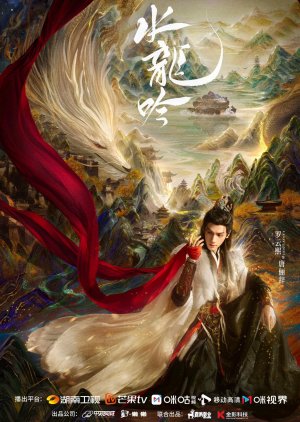
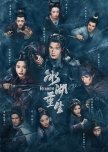
Understanding an official drama poster on this MDL page plus ancient chinese literary roots of drama title《水龙吟》is to realise micro-attention to details and its finale from the creative team, plus fundamental details about our leading protagonist Tang Lici, and his choices.
Loosely utilising Teng Ping’s novel “Enduring A Thousand Tribulations” is the unfolding mystery of Tang Lici: He must retrieve his memories, fully comprehend the seven emotions mentioned in Buddhism, truly realise and determine the meaning of his existence, and comprehend the goals of hostilities relentlessly pursuing him... To protect everyone dear to him.
From understanding nothing about emotions until he loses the only home he knows, memories score him with wounds he must learn to heal. Tang Lici must grow further and also learn to master keys of love, grievances, loss, relationships, mortality, plus realise how to embrace himself.
Tang Lici in episode 1 symbolises the drama’s unique screenplay unfolding a complex conspiracy which he is confidently capable of countering as a chess master and best martial arts warrior of the world ie Shenzhou, unlike many protagonists in typical C-dramas who must cultivate and slowly go through trials to develop capability.
With this approach, the central plot focuses on developments increasingly cementing crucial necessity and evolving symbolism of his adventures and existence, via numerous subplots. Viewers are primarily engaged in figuring out finer details and plans from antagonists versus the philosophical enigma of Tang Lici knowing his cues, instead of typical tropes for a weak still-developing protagonist. He strategically carves and maps his way through schemes aiming to crush him, kill him and ruin his name forever, but comes to discover vulnerability he had never considered, while he decides whether he wants to be a hero and save the pugilistic world alongside countless lives.
Why Tang Lici changes is not a religious study thesis or conscientious philosophical dissection of Fang Zhou's teachings. He comes to it in the same way as you, the viewer: You need mistakes, happiness, and this journey of myriad experiences interacting with different people to realise flaws and misunderstandings created, due to how you want to appear versus what you truly want to portray, which lies in the fundamental essence of acknowledging your true heart and values to yourself, finally becoming comfortable to openly share it with someone else without fear.
Tang Lici’s posturing hides his denial of certain facts while needing truths he is also unaware of. Through interactions with the likes of Physician of Miracles Shui Duopo, he learns that if you want a stranger to listen to you and truly hear you for what you are, they will maintain their standards and values despite any differences, but they must also empty their cup for you to allow true understanding and correction of previous assumptions and biases and ignorance. Will you do the same for them?
Light and shadows within past and present must be understood as yin and yang, not one to vanquish the other. Path to this awareness coming full circle in episode 40 is a group effort of cast and crew purposefully unveiling a richly sumptuous tapestry of integral details for you.
Lighting and camera angles for set arrangements institute a three-dimensional feel of depth and atmosphere contrasting foreground versus middle ground and background. Implications of theatre and opera struck me within thirty seconds of the introduction, heavily anchored within five minutes of Episode 1. Whether a wide-angled shot or an intimate space containing two or several characters, the frame composition is precisely symmetrical or deliberately asymmetrical to preserve the theatre of it all. Stanley Kubrick’s 1968 movie “2001: A Space Odyssey” is an apt example.
Theatrical deliberation is further strengthened via Peking operatic elements rendered more distinct for the villainous characters, in costumes and role delivery and speech patterns.
This drama can be divided into a prologue with four acts of an innovative groundbreaking zaju (杂剧) altered from a modern perspective to correspond with Western theatrical arcs of a five-act structure, akin to pivotal significance of Gui Mudan in episode 14 blending Peking Opera with Sichuan Opera while performing certain lines of Cui Yingying from a Yuan zaju. Of all dynasties within Chinese civilisation, Yuan zaju reached the profound pinnacle of elevating ancient narratives in Chinese literature to a distinct matured brilliance while emphasising cultural significance, where music melding with unique storytelling by scholars produced numerous talented playwrights.
Wang Shifu studied and adapted successful traits of different art forms, broke the rules of usual zaju and modified artistic means to more-effectively convey dramatic conflicts while refining delicateness of characterisations. “Romance of the Western Chamber” by Wang Shifu is one of the most iconic representative works of Yuan Opera literature in linguistics, lessons and narrative performance.
The creative team behind Whispers of Fate has employed similar fundamental traits of the best Yuan Dynasty dramatists and their individual trademarks, aptly-exemplified in Wang Shifu’s talents when evaluating this drama.
Decisively wielding flute and pipa unlike lost music of Yuan zaju, uncompromising clashes of love and hate between Tang Lici and Liu Yan determine the main melody of consequences impacting everyone. Rhythm of time and actions at each destination explored by Tang Lici is stealthily guided by clappers of a puppet master controlled by drumming from a mastermind.
Episode 1 is the prologue (楔子), with episodes 2 to 9 as exposition (Act 1). Chi Yun and Zhong Chunji clash and become allies. The Abbot of Gold Leaf Temple shares a rare conversation during a weiqi exchange with Tang Lici. Bound by intense emotions to Fang Zhou and Liu Yan whose roles and significance cannot be pigeonholed in the heart and mind of Tang Lici, he seeks to correct the past.
However, what Tang Lici did with Fang Zhou is fundamentally misunderstood by Liu Yan, whose beliefs as a practitioner in Traditional Chinese Medicine will naturally interpret unthinkably drastic measures as intentions of a monster murdering and desecrating a benefactor’s body, someone who is the kindest teacher and compass of justice in the pugilistic world.
Episodes 10 to 25 (Act 2) sees the series of events intensify, setting the stage for the rest of the conflicts to unfold as key villains make presences felt.
Episodes 26 to 32 (Act 3) is when tensions hit a new high, the mastermind emerges, and Tang Lici makes irreversible decisions affecting Shenzhou and the pugilistic world.
Episodes 33 to 38 (Act 4) magnifies the path of the main conflict, when Tang Lici finally perceives the roots of it all. Seeking an overarching solution, he returns to his origins during the Five Declines of the Celestial Realm and learns the most precious truths, meeting the most important woman in his life. Xifang Tao’s cunning manoeuvres for leadership in the pugilistic world creates irrevocable mutual hostility.
Episodes 39 and 40 (Act 5) reach inevitable resolutions. Tang Lici comes to terms with manipulation in a plot he could not fully anticipate, while overcoming bitterness of mistakes and costs and betrayals, converging at the Sea of Reincarnation. Highs and lows schooling Tang Lici to gain full understanding of seven emotions is also the path of gaining insights to actively understand Shūnyatā.
Within Mahāyāna Buddhism predominant in China, shūnyatā (emptiness of self) and compassion are closely intertwined. Shūnyatā realises all unnecessary boundaries between living beings such as you and I being illusions, in order to transcend rigid self-concepts of self, and nurture true compassion for all beings.
The journey of actively learning and enriching oneself in interplay of shūnyatā and karuna (natural expression of compassion due to understanding shūnyatā) naturally enables Tang Lici to gain a perfect spiritual body and fulfil his full potential, completely embodying the opening song of this drama.
Balancing divinity, chivalry and arrogance, Tang Lici’s journey via the narrative process of this drama matching specific camerawork is aptly-reflected within the Four Noble Truths of Buddhism from multiple angles and aspects, but how he learns to understand and value different people is the key catalyst for his transformation.
In kindness and insightful words of an assassin he wanted to buy, he gains an older brother. Influenced by unflinching protectiveness of selective eloquence, he learns to cherish a mischievous stubborn younger brother he never had. In turn, other people help him realise how to truly touch them. Xiao Shunyao and Ao Ziyi as Shen Langhun and Chi Yun are individual charismatic warriors forming a dynamic trio with Luo Yunxi as Tang Lici. Their interactions will leave you wanting more.
Jeremy Tsu and Luo Yunxi are outstanding. Gui Mudan is the most iconic C-drama villain in decades. Facets and moods of our flawed hero elevating and generating chemistry with everyone else can only be utterly personified by Luo Yunxi, one of China’s finest living cultural performers mastering stage and screen due to his extensive background in ballet, stunt training, and classical arts. Be it with Shao Yanping drinking tea, confiding his wishes for Fang Zhou to Shui Duopo, or multiple riveting exchanges with Zhong Chunji and Puzhu, Luo Yunxi demonstrates finesse, firmness, teasing, kindness and vulnerability in many unforgettable shades.
Superb performances from Chen Yao and Fang Yilun intend to push buttons as multi-faceted scheming wrong-doers gifted with abundant mercy from Tang Lici and Puzhu hoping they can change. Alen Fang's ability to maximise tension and menace with a co-star (see him menacing Riley Wang as Fang Pingzhai) or something more indefinable with Hong-guniang, is electrifying. Jiang Zhen Yu's portrayal as Xiao Hong is sensuously mesmerising. Bao Shang En’s efforts in the technically-exacting role of Zhong Chunji is laudable. Bai Shu and Ai Mi’s chemistry as bickering friends deftly switching between comedy and seriousness makes me want a spin-off general xianxia parody.
From a rural temple to headquarters of Central Plains Sword Alliance, enjoying a meal in an inn and journeying to the Palace of Fallen Jade, episodes 1 to 20 builds a chessboard and plants chess pieces for unavoidable battles, guiding you through China’s beautifully diverse natural vistas.
A set needing 18 months to construct, various scenes comprising seven-thousand square metres over 144 days and 164 outdoor locations results in amazingly detailed grandeur. Be it the Floating Abyss, Tang Lici’s Ship of Ten Thousand Apertures, Sword King City or the Celestial Realm, vibrant textured luminosity with ethereal or eerie haunting loveliness utilising an evocative organic colour palette of specific rock pigments is cemented via Yancai technique from Tang-era Dunhuang murals by Art Director Zheng Chen (Lost You Forever), Director Chen Zhoufei (won 55th Golden Horse Award for Best Cinematography of Zhang Yimou’s movie “Shadow”) and Zhang Zhi Bin. Set designs, set arrangements and cinematography is superior to "Till The End Of The Moon", due to technicalities combined with intensive traditional artistic techniques which I have mentioned.
847 costume sets reflect personality, states of growth or mindset or status, clothwork and beading designs rich in heritage from various dynasties. Weapons and accessories are rigorously-detailed works of art. Photos and details should be collated in a book, released in multiple languages. Art forms of music, opera, sculptures and history from museums, artworks plus ancient Chinese literature all gloriously spring to life, nods to 1980s media references skilfully acknowledged through a specific Chinese cultural lens. Ming Dynasty literature utilising Three Schools of Thought formed the basis of many weapon designs and concepts, especially sonic techniques of Tang Lici and Liu Yan. Shen Langhun’s serrated whipblades exuding chilling sonority of bronze chimes is inspired by《武備志 》(Treatise on Military Preparedness) from Mao Yuanyi.
Tang Lici’s golden armour hails its roots in the Four Buddhist Kings found within Chinese Buddhist temples, while recalling “Saint Seiya”. Qiaoyi Qiankun’s mechanical Qilin possibly inspires a rewatch of “Beast King Go-Lion” which “Voltron” is based on. In one dusty episode, the Tattooine desert from second instalment of Star Wars franchise inspires a chuckle-worthy homage.
Majority of battles with CGI are superbly choreographed and emotion-driven, episodes 8 to 12 of Tang Lici with Puzhu inspiring me to craft an episode summary of trivia, Buddhist concepts and novel details.
Tang Lici’s journey of perfecting himself through mastery of seven imperfections while growing in Buddhism from start to end (and most-clearly cemented in mandarin words he uses in episode 40) is a refreshing subversive masterpiece melding contemporary sensibilities and mythological traditions. Every age has its literature. This drama’s unique media-fusion narrative is a treasure map to rewatch, reflect and question your beliefs about heroism, judgement and compassion.
Execution is commendably enjoyable. Editing is affected by certain secondary storylines with too many characters while indulging aesthetics over plot arrangements at times. Certain characterisations and at least two subplots are uneven. The Celestial Realm grounded in Buddhism needed an extra episode with proper backstories of Bai Nanzhu, Ye Mo, and Xifang Tao, to strengthen parallel lessons between Tang Lici and Ye Mo.
My analysis: Reorganise and reduce flashbacks + alter or remove details in specific sections/subplots of certain episodes + second more-effective approach removing two characters (Bai Suche and A-Shui) =
https://kisskh.at/755725-shui-long-yin#comment-24390346
Viewers with extensive gaming and/or anime backgrounds, movie buffs of 70s/80s/90s and Buddhist philosophy aficionados will enjoy exploring timelines, bonds and themes. End credits with lyrics are flowing visual media equivalent of the infamous painting “A Thousand Li of Rivers and Mountains” utilising completely different colour palette and figures.
Underpinning it all is this observation from《道德經 》:
「故有無相生,難易相成,長短相較,高下相傾,音聲相和,前後相隨。」
Be it a wooden carving or a move in weiqi, bonus details here:
https://kisskh.at/profile/Xiang83/review/519762#comment-24487066
Was this review helpful to you?
Was this review helpful to you?

I am OBSESSED with Luo Yun Xi's looks
Finally something watchable and something worth reviewing. First few minutes in the drama and you can tell it is gonna be one of those bangers that you wait for the whole year if Luo Yun Xi is in it. I loved it a lot and when I say a lot...I mean it because I binge-watched all four episodes in a single sitting. The drama just draws you in with its suspenseful and breathtakingly beautiful scenes and the music is cherry on top. This is the sort of vibe which I got while watching 'Till the end of the moon' (atleast the first half of that drama). You can totally feel the 'Lotus case book' vibes because both the dramas have the same author. So if you like that one...you're gonna love the other one even more.I somehow love seeing Luo Yun Xi in antagonist roles. I don't know why but his sharp looks just goes with that and the starting scenes are just what I needed to get completely obsessed with the drama. I know he is playing a good character here but he is cunning and his smart way of dealing with the situations is going well with his heartless character. The haunting carriage and the wedding scenes are more than enough to make you binge watch it. What I wasn't expecting was seeing Alen Fang in an antagonist role and he is really very good here. I loved his mischievous, flirting, goofy roles a lot but this one is something else. All characters so far are good. I know it is more about brothers/friends centric and romance is not the centre but whatever we are getting, those little nuiances, subtle expressions and looks between FL ( if you can really call her that) and ML are more than enough to make your heart flutter. I just wish they dwelled little bit more with their story. Inspite of that I love seeing a FL who is not a typical bubbly personality instead she is serious, and her expressions adds depth to it that makes you think what is her back story. Other FL also portrayed her character well but it wasn't something that really stood out to me. The role was simple and there wasn't much to it. I loved all the other characters as well. A well selected cast for sure.
Overall I am very impressed with acting, CGI, and obviously smart writing though certain arcs could be shortened a little bit. Some scenes just felt dragged like one of the villains who kept pestering, she could be delt easily but it was done again and again. There were few scenes which made me skip the conversation. But overall it was really a good one especially if you are ML's fan. He is definitely made for historical/costume dramas.
Was this review helpful to you?
An exciting and captivating fantasy drama
When a person's fate, destiny, journey, everything is premeditated and planned beforehand itself,the consequences and aftereffects-be positive or negative, that follow in life, is what exactly about Whispers of Fate, in my thoughts.Tang Lici, the main protagonist, is super cobfident, intelligent, charismatic yet kind person who encounters such a sinisterous plot in his lifetime, and whether he bows to fate or alters it, is exactly what the drama focuses on.
What I like about Tang Lici is that, he never gets his conpanions and friends get hurt, always plans ahead, is empathetic, tries to bring peace to the world.
His journey finally teaches him to let go of obsessions, know the true meaning of life and obtain enlightenment.
Chi Yun, the little brother and Shen Langhun, the perceptive friend are truly impressive. 👍
Sword sect lord Shao, is truly a mentor and a good friend of Tang Lici.
Zhong Chunji, though led astray by her obsessions, finally stood for good.
I liked the little and subtle romance of Tang Lici and Ashei, but it ended abruptly.
Xue Xianzi, Shui Duo Po, Gu Xitan, Cheng Yunpao, Wan Yue Yu Dan, are some other characters worth remembering.
All the antagonist batch are the most annoying and disgusting ones, one can come across.
The costumes were excellent combined with beautiful sets and excellent action sequences.
I think this drama is worth watching for these action scenes and costumes. 💯
All the actors were FANTASTIC in their performances. They really deserve an applause👏💯
Coming to cons, I think the plot could have been written better with much less focus on the flashbacks, though it forms the base of the story.
The characters could be written much better with a potential to develop emotions and relations which could have given this beautiful story a much better outcome. The charaters need not be ended abruptly.
Anyways, its just my opinion.
Finally, it is one of a kind of its drama, which may not be everyone's cup of tea, but surely can be given a chance to see for its emotional journey of the protagonist!!
Was this review helpful to you?

This review may contain spoilers
Just A Bit Of Favorable
“Whisper of Fate” is not my usual type of drama. As someone who is short-tempered, I swear I almost lost patience with everyone in this show. There were moments so boring that I nearly dropped it — but since I had nothing else on my watchlist, I kept going. And honestly… it wasn’t that bad.Some scenes gave me déjà vu of Tantai Jin — especially with Liu Yan impersonating Tang Li Ci and also Tang Li Ci’s Ming Ye energy. If you’ve watched those references, you’ll know what I mean.
Now let me be brutally honest:
A Shei was so useless here.
She barely did anything. Yes, she saved Tang Li Ci, but if you think deeply… none of the trouble would’ve existed in the first place if she wasn’t even in the story.
The most frustrating — yet one of my favorite — characters was Xiao Hong. She was insanely loyal. If Liu Yan is evil, she’s evil. If he's good, she’s good. She followed him to the very end. I honestly felt bad because she didn’t get her own good ending. We didn’t even get a small scene of her after everything finished. It would've been nice if she got a moment like Xi Fang Tao and Pu Zhu.
Even though it's 40 episodes, it feels like some scenes were cut or needed more explanations. There were questionable moments (I won’t mention them 😭), and since I didn’t read the novel, I was confused that we never found out:
Who the real princess was
And why Master Shao never got proper justice
Still, the drama is great for fans of xianxia and mystery.
Not recommended for romance lovers — because this is very ML-focused and romance is barely there, not even for side characters (which is actually my preference lol).
Was this review helpful to you?