
 Editorials

 2
2 9
9 3
3 1
1 2
2 7
7 1
1 1
1 5
5 1
1 1
1 1
1 2
2 1
1 1
1 1
1 3
3


This review may contain spoilers
Whispers of Fate: The Roar of the Water Dragon transforms Destiny and C-Drama history
An eerie elaborate palanquin silently soars through the night sky beneath cold gaze of a gigantic full moon, as wedding festivities at the Hao Residence will soon experience unfinished karma.
After at least thirty years of watching mandarin dramas and movies as a child, I felt like a kid in a candy store rediscovering our constellations through the Hubble telescope across 40 episodes and after rewatching again: Excited, bright-eyed and soothed by an epic high fantasy xuanxia adventure richly imbued with history and art of various dynasties within Chinese civilisation.
An unusual protagonist with key themes of brotherhood, camaraderie and conflict are buoyed by a delicately-woven map of Taoism and Buddhism philosophy studded with Confucian elements. A solid layered emotional core tethering 40 episodes for profound exploration of human nature and identity inadvertently recalls certain Hong Kong movies of 80s and 90s, bolstered with doses of well-timed humour.
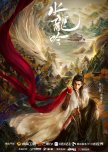
Understanding an official drama poster on this MDL page plus ancient chinese literary roots of drama title《水龙吟》is to realise micro-attention to details and its finale from the creative team, plus fundamental details about our leading protagonist Tang Lici, and his choices.
Loosely utilising Teng Ping’s novel “Enduring A Thousand Tribulations” is the unfolding mystery of Tang Lici: He must retrieve his memories, fully comprehend the seven emotions mentioned in Buddhism, truly realise and determine the meaning of his existence, and comprehend the goals of hostilities relentlessly pursuing him... To protect everyone dear to him.
From understanding nothing about emotions until he loses the only home he knows, memories score him with wounds he must learn to heal. Tang Lici must grow further and also learn to master keys of love, grievances, loss, relationships, mortality, plus realise how to embrace himself.
Tang Lici in episode 1 symbolises the drama’s unique screenplay unfolding a complex conspiracy which he is confidently capable of countering as a chess master and best martial arts warrior of the world ie Shenzhou, unlike many protagonists in typical C-dramas who must cultivate and slowly go through trials to develop capability.
With this approach, the central plot focuses on developments increasingly cementing crucial necessity and evolving symbolism of his adventures and existence, via numerous subplots. Viewers are primarily engaged in figuring out finer details and plans from antagonists versus the philosophical enigma of Tang Lici knowing his cues, instead of typical tropes for a weak still-developing protagonist. He strategically carves and maps his way through schemes aiming to crush him, kill him and ruin his name forever, but comes to discover vulnerability he had never considered, while he decides whether he wants to be a hero and save the pugilistic world alongside countless lives.
Why Tang Lici changes is not a religious study thesis or conscientious philosophical dissection of Fang Zhou's teachings. He comes to it in the same way as you, the viewer: You need mistakes, happiness, and this journey of myriad experiences interacting with different people to realise flaws and misunderstandings created, due to how you want to appear versus what you truly want to portray, which lies in the fundamental essence of acknowledging your true heart and values to yourself, finally becoming comfortable to openly share it with someone else without fear.
Tang Lici’s posturing hides his denial of certain facts while needing truths he is also unaware of. Through interactions with the likes of Physician of Miracles Shui Duopo, he learns that if you want a stranger to listen to you and truly hear you for what you are, they will maintain their standards and values despite any differences, but they must also empty their cup for you to allow true understanding and correction of previous assumptions and biases and ignorance. Will you do the same for them?
Light and shadows within past and present must be understood as yin and yang, not one to vanquish the other. Path to this awareness coming full circle in episode 40 is a group effort of cast and crew purposefully unveiling a richly sumptuous tapestry of integral details for you.
Lighting and camera angles for set arrangements institute a three-dimensional feel of depth and atmosphere contrasting foreground versus middle ground and background. Implications of theatre and opera struck me within thirty seconds of the introduction, heavily anchored within five minutes of Episode 1. Whether a wide-angled shot or an intimate space containing two or several characters, the frame composition is precisely symmetrical or deliberately asymmetrical to preserve the theatre of it all. Stanley Kubrick’s 1968 movie “2001: A Space Odyssey” is an apt example.
Theatrical deliberation is further strengthened via Peking operatic elements rendered more distinct for the villainous characters, in costumes and role delivery and speech patterns.
This drama can be divided into a prologue with four acts of an innovative groundbreaking zaju (杂剧) altered from a modern perspective to correspond with Western theatrical arcs of a five-act structure, akin to pivotal significance of Gui Mudan in episode 14 blending Peking Opera with Sichuan Opera while performing certain lines of Cui Yingying from a Yuan zaju. Of all dynasties within Chinese civilisation, Yuan zaju reached the profound pinnacle of elevating ancient narratives in Chinese literature to a distinct matured brilliance while emphasising cultural significance, where music melding with unique storytelling by scholars produced numerous talented playwrights.
Wang Shifu studied and adapted successful traits of different art forms, broke the rules of usual zaju and modified artistic means to more-effectively convey dramatic conflicts while refining delicateness of characterisations. “Romance of the Western Chamber” by Wang Shifu is one of the most iconic representative works of Yuan Opera literature in linguistics, lessons and narrative performance.
The creative team behind Whispers of Fate has employed similar fundamental traits of the best Yuan Dynasty dramatists and their individual trademarks, aptly-exemplified in Wang Shifu’s talents when evaluating this drama.
Decisively wielding flute and pipa unlike lost music of Yuan zaju, uncompromising clashes of love and hate between Tang Lici and Liu Yan determine the main melody of consequences impacting everyone. Rhythm of time and actions at each destination explored by Tang Lici is stealthily guided by clappers of a puppet master controlled by drumming from a mastermind.
Episode 1 is the prologue (楔子), with episodes 2 to 9 as exposition (Act 1). Chi Yun and Zhong Chunji clash and become allies. The Abbot of Gold Leaf Temple shares a rare conversation during a weiqi exchange with Tang Lici. Bound by intense emotions to Fang Zhou and Liu Yan whose roles and significance cannot be pigeonholed in the heart and mind of Tang Lici, he seeks to correct the past.
However, what Tang Lici did with Fang Zhou is fundamentally misunderstood by Liu Yan, whose beliefs as a practitioner in Traditional Chinese Medicine will naturally interpret unthinkably drastic measures as intentions of a monster murdering and desecrating a benefactor’s body, someone who is the kindest teacher and compass of justice in the pugilistic world.
Episodes 10 to 25 (Act 2) sees the series of events intensify, setting the stage for the rest of the conflicts to unfold as key villains make presences felt.
Episodes 26 to 32 (Act 3) is when tensions hit a new high, the mastermind emerges, and Tang Lici makes irreversible decisions affecting Shenzhou and the pugilistic world.
Episodes 33 to 38 (Act 4) magnifies the path of the main conflict, when Tang Lici finally perceives the roots of it all. Seeking an overarching solution, he returns to his origins during the Five Declines of the Celestial Realm and learns the most precious truths, meeting the most important woman in his life. Xifang Tao’s cunning manoeuvres for leadership in the pugilistic world creates irrevocable mutual hostility.
Episodes 39 and 40 (Act 5) reach inevitable resolutions. Tang Lici comes to terms with manipulation in a plot he could not fully anticipate, while overcoming bitterness of mistakes and costs and betrayals, converging at the Sea of Reincarnation. Highs and lows schooling Tang Lici to gain full understanding of seven emotions is also the path of gaining insights to actively understand Shūnyatā.
Within Mahāyāna Buddhism predominant in China, shūnyatā (emptiness of self) and compassion are closely intertwined. Shūnyatā realises all unnecessary boundaries between living beings such as you and I being illusions, in order to transcend rigid self-concepts of self, and nurture true compassion for all beings.
The journey of actively learning and enriching oneself in interplay of shūnyatā and karuna (natural expression of compassion due to understanding shūnyatā) naturally enables Tang Lici to gain a perfect spiritual body and fulfil his full potential, completely embodying the opening song of this drama.
Balancing divinity, chivalry and arrogance, Tang Lici’s journey via the narrative process of this drama matching specific camerawork is aptly-reflected within the Four Noble Truths of Buddhism from multiple angles and aspects, but how he learns to understand and value different people is the key catalyst for his transformation.
In kindness and insightful words of an assassin he wanted to buy, he gains an older brother. Influenced by unflinching protectiveness of selective eloquence, he learns to cherish a mischievous stubborn younger brother he never had. In turn, other people help him realise how to truly touch them. Xiao Shunyao and Ao Ziyi as Shen Langhun and Chi Yun are individual charismatic warriors forming a dynamic trio with Luo Yunxi as Tang Lici. Their interactions will leave you wanting more.
Jeremy Tsu and Luo Yunxi are outstanding. Gui Mudan is the most iconic C-drama villain in decades. Facets and moods of our flawed hero elevating and generating chemistry with everyone else can only be utterly personified by Luo Yunxi, one of China’s finest living cultural performers mastering stage and screen due to his extensive background in ballet, stunt training, and classical arts. Be it with Shao Yanping drinking tea, confiding his wishes for Fang Zhou to Shui Duopo, or multiple riveting exchanges with Zhong Chunji and Puzhu, Luo Yunxi demonstrates finesse, firmness, teasing, kindness and vulnerability in many unforgettable shades.
Superb performances from Chen Yao and Fang Yilun intend to push buttons as multi-faceted scheming wrong-doers gifted with abundant mercy from Tang Lici and Puzhu hoping they can change. Alen Fang's ability to maximise tension and menace with a co-star (see him menacing Riley Wang as Fang Pingzhai) or something more indefinable with Hong-guniang, is electrifying. Jiang Zhen Yu's portrayal as Xiao Hong is sensuously mesmerising. Bao Shang En’s efforts in the technically-exacting role of Zhong Chunji is laudable. Bai Shu and Ai Mi’s chemistry as bickering friends deftly switching between comedy and seriousness makes me want a spin-off general xianxia parody.
From a rural temple to headquarters of Central Plains Sword Alliance, enjoying a meal in an inn and journeying to the Palace of Fallen Jade, episodes 1 to 20 builds a chessboard and plants chess pieces for unavoidable battles, guiding you through China’s beautifully diverse natural vistas.
A set needing 18 months to construct, various scenes comprising seven-thousand square metres over 144 days and 164 outdoor locations results in amazingly detailed grandeur. Be it the Floating Abyss, Tang Lici’s Ship of Ten Thousand Apertures, Sword King City or the Celestial Realm, vibrant textured luminosity with ethereal or eerie haunting loveliness utilising an evocative organic colour palette of specific rock pigments is cemented via Yancai technique from Tang-era Dunhuang murals by Art Director Zheng Chen (Lost You Forever), Director Chen Zhoufei (won 55th Golden Horse Award for Best Cinematography of Zhang Yimou’s movie “Shadow”) and Zhang Zhi Bin. Set designs, set arrangements and cinematography is superior to "Till The End Of The Moon", due to technicalities combined with intensive traditional artistic techniques which I have mentioned.
847 costume sets reflect personality, states of growth or mindset or status, clothwork and beading designs rich in heritage from various dynasties. Weapons and accessories are rigorously-detailed works of art. Photos and details should be collated in a book, released in multiple languages. Art forms of music, opera, sculptures and history from museums, artworks plus ancient Chinese literature all gloriously spring to life, nods to 1980s media references skilfully acknowledged through a specific Chinese cultural lens. Ming Dynasty literature utilising Three Schools of Thought formed the basis of many weapon designs and concepts, especially sonic techniques of Tang Lici and Liu Yan. Shen Langhun’s serrated whipblades exuding chilling sonority of bronze chimes is inspired by《武備志 》(Treatise on Military Preparedness) from Mao Yuanyi.
Tang Lici’s golden armour hails its roots in the Four Buddhist Kings found within Chinese Buddhist temples, while recalling “Saint Seiya”. Qiaoyi Qiankun’s mechanical Qilin possibly inspires a rewatch of “Beast King Go-Lion” which “Voltron” is based on. In one dusty episode, the Tattooine desert from second instalment of Star Wars franchise inspires a chuckle-worthy homage.
Majority of battles with CGI are superbly choreographed and emotion-driven, episodes 8 to 12 of Tang Lici with Puzhu inspiring me to craft an episode summary of trivia, Buddhist concepts and novel details.
Tang Lici’s journey of perfecting himself through mastery of seven imperfections while growing in Buddhism from start to end (and most-clearly cemented in mandarin words he uses in episode 40) is a refreshing subversive masterpiece melding contemporary sensibilities and mythological traditions. Every age has its literature. This drama’s unique media-fusion narrative is a treasure map to rewatch, reflect and question your beliefs about heroism, judgement and compassion.
Execution is commendably enjoyable. Editing is affected by certain secondary storylines with too many characters while indulging aesthetics over plot arrangements at times. Certain characterisations and at least two subplots are uneven. The Celestial Realm grounded in Buddhism needed an extra episode with proper backstories of Bai Nanzhu, Ye Mo, and Xifang Tao, to strengthen parallel lessons between Tang Lici and Ye Mo.
My analysis: Reorganise and reduce flashbacks + alter or remove details in specific sections/subplots of certain episodes + second more-effective approach removing two characters (Bai Suche and A-Shui) =
https://kisskh.at/755725-shui-long-yin#comment-24390346
Viewers with extensive gaming and/or anime backgrounds, movie buffs of 70s/80s/90s and Buddhist philosophy aficionados will enjoy exploring timelines, bonds and themes. End credits with lyrics are flowing visual media equivalent of the infamous painting “A Thousand Li of Rivers and Mountains” utilising completely different colour palette and figures.
Underpinning it all is this observation from《道德經 》:
「故有無相生,難易相成,長短相較,高下相傾,音聲相和,前後相隨。」
Be it a wooden carving or a move in weiqi, bonus details here:
https://kisskh.at/profile/Xiang83/review/519762#comment-24487066
After at least thirty years of watching mandarin dramas and movies as a child, I felt like a kid in a candy store rediscovering our constellations through the Hubble telescope across 40 episodes and after rewatching again: Excited, bright-eyed and soothed by an epic high fantasy xuanxia adventure richly imbued with history and art of various dynasties within Chinese civilisation.
An unusual protagonist with key themes of brotherhood, camaraderie and conflict are buoyed by a delicately-woven map of Taoism and Buddhism philosophy studded with Confucian elements. A solid layered emotional core tethering 40 episodes for profound exploration of human nature and identity inadvertently recalls certain Hong Kong movies of 80s and 90s, bolstered with doses of well-timed humour.
Understanding an official drama poster on this MDL page plus ancient chinese literary roots of drama title《水龙吟》is to realise micro-attention to details and its finale from the creative team, plus fundamental details about our leading protagonist Tang Lici, and his choices.
Loosely utilising Teng Ping’s novel “Enduring A Thousand Tribulations” is the unfolding mystery of Tang Lici: He must retrieve his memories, fully comprehend the seven emotions mentioned in Buddhism, truly realise and determine the meaning of his existence, and comprehend the goals of hostilities relentlessly pursuing him... To protect everyone dear to him.
From understanding nothing about emotions until he loses the only home he knows, memories score him with wounds he must learn to heal. Tang Lici must grow further and also learn to master keys of love, grievances, loss, relationships, mortality, plus realise how to embrace himself.
Tang Lici in episode 1 symbolises the drama’s unique screenplay unfolding a complex conspiracy which he is confidently capable of countering as a chess master and best martial arts warrior of the world ie Shenzhou, unlike many protagonists in typical C-dramas who must cultivate and slowly go through trials to develop capability.
With this approach, the central plot focuses on developments increasingly cementing crucial necessity and evolving symbolism of his adventures and existence, via numerous subplots. Viewers are primarily engaged in figuring out finer details and plans from antagonists versus the philosophical enigma of Tang Lici knowing his cues, instead of typical tropes for a weak still-developing protagonist. He strategically carves and maps his way through schemes aiming to crush him, kill him and ruin his name forever, but comes to discover vulnerability he had never considered, while he decides whether he wants to be a hero and save the pugilistic world alongside countless lives.
Why Tang Lici changes is not a religious study thesis or conscientious philosophical dissection of Fang Zhou's teachings. He comes to it in the same way as you, the viewer: You need mistakes, happiness, and this journey of myriad experiences interacting with different people to realise flaws and misunderstandings created, due to how you want to appear versus what you truly want to portray, which lies in the fundamental essence of acknowledging your true heart and values to yourself, finally becoming comfortable to openly share it with someone else without fear.
Tang Lici’s posturing hides his denial of certain facts while needing truths he is also unaware of. Through interactions with the likes of Physician of Miracles Shui Duopo, he learns that if you want a stranger to listen to you and truly hear you for what you are, they will maintain their standards and values despite any differences, but they must also empty their cup for you to allow true understanding and correction of previous assumptions and biases and ignorance. Will you do the same for them?
Light and shadows within past and present must be understood as yin and yang, not one to vanquish the other. Path to this awareness coming full circle in episode 40 is a group effort of cast and crew purposefully unveiling a richly sumptuous tapestry of integral details for you.
Lighting and camera angles for set arrangements institute a three-dimensional feel of depth and atmosphere contrasting foreground versus middle ground and background. Implications of theatre and opera struck me within thirty seconds of the introduction, heavily anchored within five minutes of Episode 1. Whether a wide-angled shot or an intimate space containing two or several characters, the frame composition is precisely symmetrical or deliberately asymmetrical to preserve the theatre of it all. Stanley Kubrick’s 1968 movie “2001: A Space Odyssey” is an apt example.
Theatrical deliberation is further strengthened via Peking operatic elements rendered more distinct for the villainous characters, in costumes and role delivery and speech patterns.
This drama can be divided into a prologue with four acts of an innovative groundbreaking zaju (杂剧) altered from a modern perspective to correspond with Western theatrical arcs of a five-act structure, akin to pivotal significance of Gui Mudan in episode 14 blending Peking Opera with Sichuan Opera while performing certain lines of Cui Yingying from a Yuan zaju. Of all dynasties within Chinese civilisation, Yuan zaju reached the profound pinnacle of elevating ancient narratives in Chinese literature to a distinct matured brilliance while emphasising cultural significance, where music melding with unique storytelling by scholars produced numerous talented playwrights.
Wang Shifu studied and adapted successful traits of different art forms, broke the rules of usual zaju and modified artistic means to more-effectively convey dramatic conflicts while refining delicateness of characterisations. “Romance of the Western Chamber” by Wang Shifu is one of the most iconic representative works of Yuan Opera literature in linguistics, lessons and narrative performance.
The creative team behind Whispers of Fate has employed similar fundamental traits of the best Yuan Dynasty dramatists and their individual trademarks, aptly-exemplified in Wang Shifu’s talents when evaluating this drama.
Decisively wielding flute and pipa unlike lost music of Yuan zaju, uncompromising clashes of love and hate between Tang Lici and Liu Yan determine the main melody of consequences impacting everyone. Rhythm of time and actions at each destination explored by Tang Lici is stealthily guided by clappers of a puppet master controlled by drumming from a mastermind.
Episode 1 is the prologue (楔子), with episodes 2 to 9 as exposition (Act 1). Chi Yun and Zhong Chunji clash and become allies. The Abbot of Gold Leaf Temple shares a rare conversation during a weiqi exchange with Tang Lici. Bound by intense emotions to Fang Zhou and Liu Yan whose roles and significance cannot be pigeonholed in the heart and mind of Tang Lici, he seeks to correct the past.
However, what Tang Lici did with Fang Zhou is fundamentally misunderstood by Liu Yan, whose beliefs as a practitioner in Traditional Chinese Medicine will naturally interpret unthinkably drastic measures as intentions of a monster murdering and desecrating a benefactor’s body, someone who is the kindest teacher and compass of justice in the pugilistic world.
Episodes 10 to 25 (Act 2) sees the series of events intensify, setting the stage for the rest of the conflicts to unfold as key villains make presences felt.
Episodes 26 to 32 (Act 3) is when tensions hit a new high, the mastermind emerges, and Tang Lici makes irreversible decisions affecting Shenzhou and the pugilistic world.
Episodes 33 to 38 (Act 4) magnifies the path of the main conflict, when Tang Lici finally perceives the roots of it all. Seeking an overarching solution, he returns to his origins during the Five Declines of the Celestial Realm and learns the most precious truths, meeting the most important woman in his life. Xifang Tao’s cunning manoeuvres for leadership in the pugilistic world creates irrevocable mutual hostility.
Episodes 39 and 40 (Act 5) reach inevitable resolutions. Tang Lici comes to terms with manipulation in a plot he could not fully anticipate, while overcoming bitterness of mistakes and costs and betrayals, converging at the Sea of Reincarnation. Highs and lows schooling Tang Lici to gain full understanding of seven emotions is also the path of gaining insights to actively understand Shūnyatā.
Within Mahāyāna Buddhism predominant in China, shūnyatā (emptiness of self) and compassion are closely intertwined. Shūnyatā realises all unnecessary boundaries between living beings such as you and I being illusions, in order to transcend rigid self-concepts of self, and nurture true compassion for all beings.
The journey of actively learning and enriching oneself in interplay of shūnyatā and karuna (natural expression of compassion due to understanding shūnyatā) naturally enables Tang Lici to gain a perfect spiritual body and fulfil his full potential, completely embodying the opening song of this drama.
Balancing divinity, chivalry and arrogance, Tang Lici’s journey via the narrative process of this drama matching specific camerawork is aptly-reflected within the Four Noble Truths of Buddhism from multiple angles and aspects, but how he learns to understand and value different people is the key catalyst for his transformation.
In kindness and insightful words of an assassin he wanted to buy, he gains an older brother. Influenced by unflinching protectiveness of selective eloquence, he learns to cherish a mischievous stubborn younger brother he never had. In turn, other people help him realise how to truly touch them. Xiao Shunyao and Ao Ziyi as Shen Langhun and Chi Yun are individual charismatic warriors forming a dynamic trio with Luo Yunxi as Tang Lici. Their interactions will leave you wanting more.
Jeremy Tsu and Luo Yunxi are outstanding. Gui Mudan is the most iconic C-drama villain in decades. Facets and moods of our flawed hero elevating and generating chemistry with everyone else can only be utterly personified by Luo Yunxi, one of China’s finest living cultural performers mastering stage and screen due to his extensive background in ballet, stunt training, and classical arts. Be it with Shao Yanping drinking tea, confiding his wishes for Fang Zhou to Shui Duopo, or multiple riveting exchanges with Zhong Chunji and Puzhu, Luo Yunxi demonstrates finesse, firmness, teasing, kindness and vulnerability in many unforgettable shades.
Superb performances from Chen Yao and Fang Yilun intend to push buttons as multi-faceted scheming wrong-doers gifted with abundant mercy from Tang Lici and Puzhu hoping they can change. Alen Fang's ability to maximise tension and menace with a co-star (see him menacing Riley Wang as Fang Pingzhai) or something more indefinable with Hong-guniang, is electrifying. Jiang Zhen Yu's portrayal as Xiao Hong is sensuously mesmerising. Bao Shang En’s efforts in the technically-exacting role of Zhong Chunji is laudable. Bai Shu and Ai Mi’s chemistry as bickering friends deftly switching between comedy and seriousness makes me want a spin-off general xianxia parody.
From a rural temple to headquarters of Central Plains Sword Alliance, enjoying a meal in an inn and journeying to the Palace of Fallen Jade, episodes 1 to 20 builds a chessboard and plants chess pieces for unavoidable battles, guiding you through China’s beautifully diverse natural vistas.
A set needing 18 months to construct, various scenes comprising seven-thousand square metres over 144 days and 164 outdoor locations results in amazingly detailed grandeur. Be it the Floating Abyss, Tang Lici’s Ship of Ten Thousand Apertures, Sword King City or the Celestial Realm, vibrant textured luminosity with ethereal or eerie haunting loveliness utilising an evocative organic colour palette of specific rock pigments is cemented via Yancai technique from Tang-era Dunhuang murals by Art Director Zheng Chen (Lost You Forever), Director Chen Zhoufei (won 55th Golden Horse Award for Best Cinematography of Zhang Yimou’s movie “Shadow”) and Zhang Zhi Bin. Set designs, set arrangements and cinematography is superior to "Till The End Of The Moon", due to technicalities combined with intensive traditional artistic techniques which I have mentioned.
847 costume sets reflect personality, states of growth or mindset or status, clothwork and beading designs rich in heritage from various dynasties. Weapons and accessories are rigorously-detailed works of art. Photos and details should be collated in a book, released in multiple languages. Art forms of music, opera, sculptures and history from museums, artworks plus ancient Chinese literature all gloriously spring to life, nods to 1980s media references skilfully acknowledged through a specific Chinese cultural lens. Ming Dynasty literature utilising Three Schools of Thought formed the basis of many weapon designs and concepts, especially sonic techniques of Tang Lici and Liu Yan. Shen Langhun’s serrated whipblades exuding chilling sonority of bronze chimes is inspired by《武備志 》(Treatise on Military Preparedness) from Mao Yuanyi.
Tang Lici’s golden armour hails its roots in the Four Buddhist Kings found within Chinese Buddhist temples, while recalling “Saint Seiya”. Qiaoyi Qiankun’s mechanical Qilin possibly inspires a rewatch of “Beast King Go-Lion” which “Voltron” is based on. In one dusty episode, the Tattooine desert from second instalment of Star Wars franchise inspires a chuckle-worthy homage.
Majority of battles with CGI are superbly choreographed and emotion-driven, episodes 8 to 12 of Tang Lici with Puzhu inspiring me to craft an episode summary of trivia, Buddhist concepts and novel details.
Tang Lici’s journey of perfecting himself through mastery of seven imperfections while growing in Buddhism from start to end (and most-clearly cemented in mandarin words he uses in episode 40) is a refreshing subversive masterpiece melding contemporary sensibilities and mythological traditions. Every age has its literature. This drama’s unique media-fusion narrative is a treasure map to rewatch, reflect and question your beliefs about heroism, judgement and compassion.
Execution is commendably enjoyable. Editing is affected by certain secondary storylines with too many characters while indulging aesthetics over plot arrangements at times. Certain characterisations and at least two subplots are uneven. The Celestial Realm grounded in Buddhism needed an extra episode with proper backstories of Bai Nanzhu, Ye Mo, and Xifang Tao, to strengthen parallel lessons between Tang Lici and Ye Mo.
My analysis: Reorganise and reduce flashbacks + alter or remove details in specific sections/subplots of certain episodes + second more-effective approach removing two characters (Bai Suche and A-Shui) =
https://kisskh.at/755725-shui-long-yin#comment-24390346
Viewers with extensive gaming and/or anime backgrounds, movie buffs of 70s/80s/90s and Buddhist philosophy aficionados will enjoy exploring timelines, bonds and themes. End credits with lyrics are flowing visual media equivalent of the infamous painting “A Thousand Li of Rivers and Mountains” utilising completely different colour palette and figures.
Underpinning it all is this observation from《道德經 》:
「故有無相生,難易相成,長短相較,高下相傾,音聲相和,前後相隨。」
Be it a wooden carving or a move in weiqi, bonus details here:
https://kisskh.at/profile/Xiang83/review/519762#comment-24487066
Was this review helpful to you?


