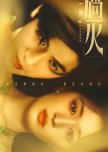
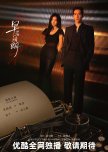
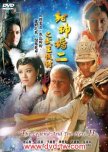
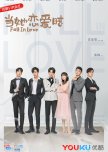
This drama shows an old bungalow and the three generations of women it witnessed - Lin Si Yun, Yi Yi, and Ye Xi Ning in the sixth century. In the ten years of changing times, we have constantly encountered collisions between reality and dreams. In the 1930s, Lin Si Yun returned to China with the dream of opening a maternity hospital, but encountered war. In the 1950s, the hospital was transformed into a clothing factory. Although Lin Si Yun's niece Yi Yi dreamed of becoming a clothing designer, she faced dual career and love challenges because of her status as the widow of a Kuomintang officer. By the 1990s, this old bungalow had been transformed into a well-known hotel in Shanghai. Yi Yi's granddaughter Ye Xi Ning was originally preparing for her best friend's wedding here, but she was accidentally involved in a conspiracy, which caused her to lose her job and bear huge debts, forcing her to join the wave of reform and opening up and face challenges bravely. Three generations spanned sixty years, and each left their own footprints in the tide of the times, witnessing their unyielding strength and courage. (Source: Chinese = Weibo || Translation = kisskh) Edit Translation
- English
- Русский
- हिन्दी
- Français
- Native Title: 足迹
- Also Known As: 足跡 , Zu Ji
- Director: Zhang Silin
- Screenwriter: Wang Wan Ping
- Genres: Life
Where to Watch Footprints of Change

Cast & Credits
-
 Tong YaoYi YiMain Role
 -
 Ryan ChengCheng AoMain Role
 -
 Liu Yi JunWen PuMain Role
 -
 Jelly LinLin Si YunMain Role
 -
 Wang He RunYe Xi NingMain Role
 -
 Zhang Rui HanYang Xue AnSupport Role



Reviews

 1
1The Journey of the Pocket Watch
The StoryThis drama is set during the Republican era—a turbulent time in China when ordinary people were faced with limited choices, uncertainty, and difficult decisions. The director has done an excellent job in creating a realistic portrayal of that period, supported by a well-written script that thoughtfully explores the political climate of the time. The inclusion of romance helps to soften the heaviness of the historical and societal themes.
The life stories of three generations are anchored around the old Lin family home, which evolves over time from a residential house to a hospital and later to a fabric factory that doubles as a residence. The romance of three generations of women in the Lin family, spanning from the 1930s to the 1990s, begins with Lin ShiYun, the granddaughter of the Lin family. After studying abroad and becoming a gynecologist, she returns to China with modern thinking and a bold spirit. She challenges her family’s traditional views and navigates the troubles caused by her irresponsible, gambling brother. Lin ShiYun is a strong-willed, clear-headed, and courageous woman—her personality is very likable. Once she sets her mind on something, she is determined to see it through.
I haven’t watched many dramas featuring Jelly Lin, and her performances usually didn’t captivate me. However, in this role as ShiYun, she truly fits the character and made me believe in her.
She meets Cheng Ao, a gangster lawyer played by Ryan Cheng. Though raised in a family with gangster roots, Cheng Ao was educated abroad and upholds patriotic values passed down by his adoptive father. He is the male lead in the first arc—a righteous, intelligent, and principled man who complements ShiYun’s strong personality perfectly. Ryan Cheng shines in this role, and I believe it’s his best performance to date, especially compared to his other recent leading roles in two major “S” Wuxia/Xuanhuan productions.
The first arc tells the story of Cheng Ao and Lin ShiYun finding love amid political turmoil, staying true to their beliefs, and making difficult life choices. They are among the lucky ones who survive the war and migrate overseas. I thoroughly enjoyed their romance—it felt inspiring and meaningful.
The second arc begins from episode 12 and centers on YiYi, ShiYun’s niece, who is deeply influenced by her aunt’s worldview. YiYi is widowed at a young age and faces discrimination from a conservative society. Her quiet, non-confrontational nature makes her a target of prejudice, but with determination and resilience, she finds her voice and love again. YiYi pursues her passion for clothing design and eventually thrives in the fashion industry. Her romance with a Communist Party minister, Wen Pu (played by Liu YiJun), is touching and layered with social tension. As always, Liu YiJun delivers a solid performance.
YiYi is portrayed by Tong Yao, an up-and-coming actress who feels very natural in this role. Although the second arc takes time to pick up—partly due to YiYi’s withdrawn personality—her quiet strength and artistic soul grow on you. As you begin to understand her grief and emotional depth, you can’t help but empathize with her and even wish that others would leave her alone. The side characters are frustrating at times, but they serve as realistic representations of the extreme ideological views present during early Communist China. The second arc concludes in episode 21, highlighting the hardships faced by YiYi and Wen Pu.
The final romantic arc follows YiYi’s granddaughter, Ye XiNing, whose love story begins with a chance encounter with schoolteacher Xiang BeiChuan. After being falsely accused and losing her job, XiNing’s journey is about rebuilding her career and discovering love. Among the Lin women, she is probably the most unlikable at first—impulsive, dramatic, and outspoken. However, she is also hardworking, resilient, and maintains a positive outlook. From working in a small jean factory to running an international clothing business, her growth is admirable.
XiNing and BeiChuan are complete opposites: she is loud, emotional, and blunt, while he is quiet, cautious, and principled. At times, it’s easy to feel sympathy for BeiChuan as XiNing’s dominating personality overwhelms him. But their romance grows as they work through misunderstandings and eventually commit to each other. Spoiler: this couple is the only one we see getting married on-screen.
A beautiful touch in the story is the symbolic passing of a pocket watch—from Cheng Ao to Lin ShiYun, then to YiYi, and finally to XiNing—representing the passage of time and the enduring values passed down through generations.
My Thoughts on the Couples (CPs):
Many viewers came to this drama for Ryan Cheng, who only appears in the first arc (up to episode 11). I particularly liked his role here, so I wanted to share my thoughts on the romantic arcs:
CP1 – Cheng Ao & Lin ShiYun
Their story is about spontaneity, contrasts yet shared values, courage, and remaining true to one’s roots. It’s a tale of ordinary people becoming heroes in extraordinary times.
CP2 – YiYi & Wen Pu
This is a story of forbidden love and defying social norms. It highlights the limitations imposed by society, and the endurance needed to triumph over adversity.
CP3 – Ye XiNing & Xiang BeiChuan
Their romance shows how love can blossom under unlikely circumstances. It’s about opposites attracting, seizing opportunities, holding onto beliefs, and striving for success while staying grounded.
All three love stories are intricately woven into the fabric of time, each representing a different response to the challenges of their era.
There are many powerful and thought-provoking lines in the drama about relationships, choices, and the consequences of decisions made. I truly enjoyed this drama and hope that more people will come to appreciate its depth, storytelling, and emotional richness.
A captivating trilogy on "living in interesting times" as a wronged woman and individual
Three stories, the 1st set in the late Republican period, the 2nd in an early Communist period and the 3rd in "roaring 90s", in the same city (Shanghai), all stories greatly "witnessed" by the same house, which was a family home (later a hospital/working place) of the first female protagonist, a working and living place of the second and the third FL: three women of different generations sharing a mutual family bond and leaving their "footprints", their life stories, romances, spirits and strenghts for each new generation to come, symbolically conveyed to the audience with passing the pocket watch (gifted to the first FL by her husband) on to the next generation .The setting of all three stories is historically and visually impeccable in every detail, object, costume and prop, helping a viewer to fully immerse in the time treated in each arc. Visual aesthetics of the first two stories are furtherly accentuated by framed chiaro-scuro shots under porches and arcades, looking like paintings or precious old photos. This clear and sophisticated retro vibe is replaced by "modern antiques" bursting colours in the third story. The artistic department covering three different period of times and the camerawork are perfect, 10/10. The choice of classical music and Chinese folk tunes serves well particularly in the 2nd story, where it is almost part of the script: FL and ML get closer thanks to their love for fine arts in general (FL is a designer and a painter), it helps them to understand each other.
But the overall tune of the three stories is different, each fitting the time and type of storytelling. The first story is a pure narrative, told by the 2nd FL (an elderly lady at the moment of storytelling) to the 3rd FL (her grandaughter) in the lowest moment in life of the latter (it isn't clear if she tempted a suicide or collapsed due to a shock of being unintentionally involved in a fraud and money embezzlement). That's the reason why the first story flows so well, scenes and episodes follow the memories and story telling of an old woman who is an artist herself, who deeply loved and respected her aunt (1st FL), a doctor who studied abroad, coped with difficult family issues, challenged societal norms and had a beautiful love story with her uncle. Excellent dialogues, acting and directing fully delivered that story.
Having a terrible father and a weak mother, this aunt was the only person YiYi (2nd FL) could count on. She was her polar star and a rolemodel to follow even when they've lost contact and she ought to face even greater challenges. Two actresses who impersonated the 2nd FL did an amazing job. Great story, great acting, aesthetics and subtle use of arts are the reasons why there was no drop in the overall quality as it happened in the War of Faith when the story turned from the (opulent) Republican to (poor) Communist era in Shanghai.
The plot and dialogues, although simplified and sometimes overdramatised to fit into the format of 10 eps per arc, are credible and sufficient both to characterise persons involved and realistically depict the time and the environment. Probably, the story in the 2nd arc is closest to real historical setting I've seen of this period in any Chinese drama (also because it avoided to deepen certain events and purges in the first 5 years of Communist takeover, while how the Cultural Revolution impacted the story was only hinted and not particularly deepened). An incredibly credible story, which feels both realistic and poetic.
After these two dramatic stories, full of turbulences, the third felt... anticlimatic. Again, the environment was faithfully represented, the actors did their job etc., but the story was not captivating enough. It has its good aspects (politics, business and relations are actually interesting as they were in previous arcs), but, imo, it fails to explain the characters as they were explained in the the 1st and the 2nd. The 3rd FL is emotionally volatile, maybe even unstable (that's why I've thought she tried a suicide), domineering towards her boyfriend for no reason. Having such a great grandma, she shouldn't be like that... The always upright 3rd ML doesn't shine either and the chemistry between the leading actors is not particularly credible. Maybe, we should take their story as a passage obligé to hand down the pocket watch to some future descendant who will live in more demanding times. Despite these flows regarding mainly the 3rd story, I strongly recommend you to watch this well-written, well-crafted and performed drama.