1
1This review may contain spoilers
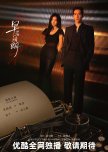
The Journey of the Pocket Watch
The StoryThis drama is set during the Republican era—a turbulent time in China when ordinary people were faced with limited choices, uncertainty, and difficult decisions. The director has done an excellent job in creating a realistic portrayal of that period, supported by a well-written script that thoughtfully explores the political climate of the time. The inclusion of romance helps to soften the heaviness of the historical and societal themes.
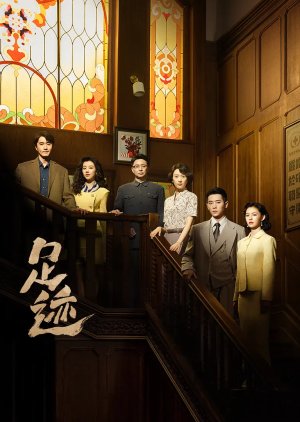
The life stories of three generations are anchored around the old Lin family home, which evolves over time from a residential house to a hospital and later to a fabric factory that doubles as a residence. The romance of three generations of women in the Lin family, spanning from the 1930s to the 1990s, begins with Lin ShiYun, the granddaughter of the Lin family. After studying abroad and becoming a gynecologist, she returns to China with modern thinking and a bold spirit. She challenges her family’s traditional views and navigates the troubles caused by her irresponsible, gambling brother. Lin ShiYun is a strong-willed, clear-headed, and courageous woman—her personality is very likable. Once she sets her mind on something, she is determined to see it through.
I haven’t watched many dramas featuring Jelly Lin, and her performances usually didn’t captivate me. However, in this role as ShiYun, she truly fits the character and made me believe in her.
She meets Cheng Ao, a gangster lawyer played by Ryan Cheng. Though raised in a family with gangster roots, Cheng Ao was educated abroad and upholds patriotic values passed down by his adoptive father. He is the male lead in the first arc—a righteous, intelligent, and principled man who complements ShiYun’s strong personality perfectly. Ryan Cheng shines in this role, and I believe it’s his best performance to date, especially compared to his other recent leading roles in two major “S” Wuxia/Xuanhuan productions.
The first arc tells the story of Cheng Ao and Lin ShiYun finding love amid political turmoil, staying true to their beliefs, and making difficult life choices. They are among the lucky ones who survive the war and migrate overseas. I thoroughly enjoyed their romance—it felt inspiring and meaningful.
The second arc begins from episode 12 and centers on YiYi, ShiYun’s niece, who is deeply influenced by her aunt’s worldview. YiYi is widowed at a young age and faces discrimination from a conservative society. Her quiet, non-confrontational nature makes her a target of prejudice, but with determination and resilience, she finds her voice and love again. YiYi pursues her passion for clothing design and eventually thrives in the fashion industry. Her romance with a Communist Party minister, Wen Pu (played by Liu YiJun), is touching and layered with social tension. As always, Liu YiJun delivers a solid performance.
YiYi is portrayed by Tong Yao, an up-and-coming actress who feels very natural in this role. Although the second arc takes time to pick up—partly due to YiYi’s withdrawn personality—her quiet strength and artistic soul grow on you. As you begin to understand her grief and emotional depth, you can’t help but empathize with her and even wish that others would leave her alone. The side characters are frustrating at times, but they serve as realistic representations of the extreme ideological views present during early Communist China. The second arc concludes in episode 21, highlighting the hardships faced by YiYi and Wen Pu.
The final romantic arc follows YiYi’s granddaughter, Ye XiNing, whose love story begins with a chance encounter with schoolteacher Xiang BeiChuan. After being falsely accused and losing her job, XiNing’s journey is about rebuilding her career and discovering love. Among the Lin women, she is probably the most unlikable at first—impulsive, dramatic, and outspoken. However, she is also hardworking, resilient, and maintains a positive outlook. From working in a small jean factory to running an international clothing business, her growth is admirable.
XiNing and BeiChuan are complete opposites: she is loud, emotional, and blunt, while he is quiet, cautious, and principled. At times, it’s easy to feel sympathy for BeiChuan as XiNing’s dominating personality overwhelms him. But their romance grows as they work through misunderstandings and eventually commit to each other. Spoiler: this couple is the only one we see getting married on-screen.
A beautiful touch in the story is the symbolic passing of a pocket watch—from Cheng Ao to Lin ShiYun, then to YiYi, and finally to XiNing—representing the passage of time and the enduring values passed down through generations.
My Thoughts on the Couples (CPs):
Many viewers came to this drama for Ryan Cheng, who only appears in the first arc (up to episode 11). I particularly liked his role here, so I wanted to share my thoughts on the romantic arcs:
CP1 – Cheng Ao & Lin ShiYun
Their story is about spontaneity, contrasts yet shared values, courage, and remaining true to one’s roots. It’s a tale of ordinary people becoming heroes in extraordinary times.
CP2 – YiYi & Wen Pu
This is a story of forbidden love and defying social norms. It highlights the limitations imposed by society, and the endurance needed to triumph over adversity.
CP3 – Ye XiNing & Xiang BeiChuan
Their romance shows how love can blossom under unlikely circumstances. It’s about opposites attracting, seizing opportunities, holding onto beliefs, and striving for success while staying grounded.
All three love stories are intricately woven into the fabric of time, each representing a different response to the challenges of their era.
There are many powerful and thought-provoking lines in the drama about relationships, choices, and the consequences of decisions made. I truly enjoyed this drama and hope that more people will come to appreciate its depth, storytelling, and emotional richness.
Was this review helpful to you?
A captivating trilogy on "living in interesting times" as a wronged woman and individual
Three stories, the 1st set in the late Republican period, the 2nd in an early Communist period and the 3rd in "roaring 90s", in the same city (Shanghai), all stories greatly "witnessed" by the same house, which was a family home (later a hospital/working place) of the first female protagonist, a working and living place of the second and the third FL: three women of different generations sharing a mutual family bond and leaving their "footprints", their life stories, romances, spirits and strenghts for each new generation to come, symbolically conveyed to the audience with passing the pocket watch (gifted to the first FL by her husband) on to the next generation .The setting of all three stories is historically and visually impeccable in every detail, object, costume and prop, helping a viewer to fully immerse in the time treated in each arc. Visual aesthetics of the first two stories are furtherly accentuated by framed chiaro-scuro shots under porches and arcades, looking like paintings or precious old photos. This clear and sophisticated retro vibe is replaced by "modern antiques" bursting colours in the third story. The artistic department covering three different period of times and the camerawork are perfect, 10/10. The choice of classical music and Chinese folk tunes serves well particularly in the 2nd story, where it is almost part of the script: FL and ML get closer thanks to their love for fine arts in general (FL is a designer and a painter), it helps them to understand each other.
But the overall tune of the three stories is different, each fitting the time and type of storytelling. The first story is a pure narrative, told by the 2nd FL (an elderly lady at the moment of storytelling) to the 3rd FL (her grandaughter) in the lowest moment in life of the latter (it isn't clear if she tempted a suicide or collapsed due to a shock of being unintentionally involved in a fraud and money embezzlement). That's the reason why the first story flows so well, scenes and episodes follow the memories and story telling of an old woman who is an artist herself, who deeply loved and respected her aunt (1st FL), a doctor who studied abroad, coped with difficult family issues, challenged societal norms and had a beautiful love story with her uncle. Excellent dialogues, acting and directing fully delivered that story.
Having a terrible father and a weak mother, this aunt was the only person YiYi (2nd FL) could count on. She was her polar star and a rolemodel to follow even when they've lost contact and she ought to face even greater challenges. Two actresses who impersonated the 2nd FL did an amazing job. Great story, great acting, aesthetics and subtle use of arts are the reasons why there was no drop in the overall quality as it happened in the War of Faith when the story turned from the (opulent) Republican to (poor) Communist era in Shanghai.
The plot and dialogues, although simplified and sometimes overdramatised to fit into the format of 10 eps per arc, are credible and sufficient both to characterise persons involved and realistically depict the time and the environment. Probably, the story in the 2nd arc is closest to real historical setting I've seen of this period in any Chinese drama (also because it avoided to deepen certain events and purges in the first 5 years of Communist takeover, while how the Cultural Revolution impacted the story was only hinted and not particularly deepened). An incredibly credible story, which feels both realistic and poetic.
After these two dramatic stories, full of turbulences, the third felt... anticlimatic. Again, the environment was faithfully represented, the actors did their job etc., but the story was not captivating enough. It has its good aspects (politics, business and relations are actually interesting as they were in previous arcs), but, imo, it fails to explain the characters as they were explained in the the 1st and the 2nd. The 3rd FL is emotionally volatile, maybe even unstable (that's why I've thought she tried a suicide), domineering towards her boyfriend for no reason. Having such a great grandma, she shouldn't be like that... The always upright 3rd ML doesn't shine either and the chemistry between the leading actors is not particularly credible. Maybe, we should take their story as a passage obligé to hand down the pocket watch to some future descendant who will live in more demanding times. Despite these flows regarding mainly the 3rd story, I strongly recommend you to watch this well-written, well-crafted and performed drama.
Was this review helpful to you?
Difficult to review - mashup of 3 completely different dramas - from AMAZING to no thanks
While all connected, this drama follows three generations of women related to each other, and the plots are also connected by the house they lived in. The first arc was amazing - 10/10 and I recommend watching it. Cheng Ao and Si Yun are beautiful and very interesting characters. Great acting, intense, keeps you on your toes. Even the "villains" were very interesting.The second arc has a completely different vibe. Much calmer and slower, and I think meant to frustrate you because of the post-war / New China era. Acting is good, and after some discussion, the story and pace of the episodes make sense, but it was just so boring for me! 7.5/10 ... if it's your vibe, then continue watching!
The third arc killed it for me and I dropped the show. No rating. So I don't even know what to give this show overall... I'm torn. If I could just review the first 1/3 of the show, especially with Cheng Lei's performance, then 10/10...
Was this review helpful to you?
This review may contain spoilers
Great to watch for the first 2 stories only.
This drama would be 10 /10 for first 2 parts and 3/10 for the last part. Hence my overall rating is 7.5. And I dropped after episode 25. Didn’t want to continue wasting time on the last part.This drama started so well and continued to be so engaging until the second story ended. These first two parts are so well acted, with tight and fast paced plots. The first arc was beautifully narrated with some real beautiful people ie Cheng Lei, Jelly Lin as the main leads. The story was simple yet powerful in showing how unchecked corruption and wastage can ruin families and a nation. The love story was subtle yet strong. Second arc was equally strong. Although there were some annoying characters here eg the sister in law who loves to shout instead of talk like a normal person, I feel that the drama is trying to be realistic to what life was then. How early communist leaders and members got carried away with their ideals and abuse the so called intellectuals. It’s quite sad to see how low educated people was given power and they didn’t know how to handle the power and responsibilities, hence abused good people who did not have anything to do with the decadent and corrupt practices of the past. Again the love story between the leads were beautifully told. Mature love without super attractive leads. Yet I was so touched by their love. The actor is so good. The third story arc unfortunately is so boring. Again there is a character liuling who just acts like a hooligan. Boring storyline trying to show 1980s /90s China trying to open its economy. Acting was flat. I wish they had focused on a more romantic storyline to portray this era eg how people separated to pursue dreams overseas etc. instead it kept going on about factory and garment production. So bad that I dropped the drama with 5 episodes to go. No point for me to continue because I didn’t enjoy this part at all.
I still recommend this drama but just watch the first two stories.
Was this review helpful to you?

THREE ERAS, ONE ERROR
Since this journey travels across time and is divided into three books, I'm going to review each 'book' as a I go.REPUBLICAN ERA
I've seen a handful of these types of stories, and I can report with relief this isn't a bloody massacre of slayings and endless torture porn. Yes, there are some violent moments, but they're not exploited for cheap sensationalism.
This is really one of the best love stories I've seen in over 25 C-Dramas. I believe it's not as good as Crystal Liu and Wallace Huo in THE TALE OF ROSE, but it may be better than the leads of REBEL PRINCESS, and that was a killer love story.
The thing is the chemistry felt so real here between Jelly Lin and Ryan Cheng I wonder if... maybe... it was real for a reason. In fact it was so good I now understand why so many viewers were displeased by BOOKS 2 & 3 of this series. When you have this good a romance, you can't believe it ended in 11 episodes!
By the way, Jelly Lin is WHY I'm watching this series. Her roles in A DREAM OF SPLENDOR and IMPERFECT VICTIM made trying this show mandatory. She is TERRIFIC and has a very long long career in front of her, and I'm convinced she will be the heiress to Li Qin's roles when the time comes.
Liu Yijun turned in a quality performance as mob boss Zang. Instead of being a mean ruthless bastard (stereotype), he's actually remarkably understated and human. Sure, when push comes to shove, he erupts == but ironically he seems to be a man of peace.
I've seen the transition from this story the next now. I really wasn't ready to leave this story, but the times -- they are a changin'.
COMMUNISM ERA
In one sense I understand why viewer were disappointed with this era. Communism just ain't as sexy and stylish as the Republican era. But the real appeal of part one is the same appeal here: a truly great romance.
So anyone who trashes this segment still has a crush on the prior couple and neglected to move on AND/OR they have a bias against older actors and communism.
I'm here to assure you Segment Two is NOT a reason to drop this series.
The male lead Liu Yi Jun is as amazing as he is unrecognizable from his role in IMPERFECT VICTIM. People may have hated him so much in that role he begged for this one.
Tong Yao was hard to recognize from her role in RUYI'S ROYAL LOVE IN THE PALACE, because that series was a showcase of China's best female talent at that point. She's no mean girl here, and along with Liu Yi -- delivers a graceful understated performance. Their littlest looks will send romantic chills up and down your spine.
Great supporting actors here as well. Yang Yu Ting as the old bitch party leader, Zhang Ye Zi as our female lead's sister in law and childish watchdog, Zhang Rui Han as an apparently bi-polar troublemaker, and Hou Yan Song as the best friend who struggles to change with the communist times. His last moments on screen were a masterclass in nuance.
I must say there's some SERIOUS social commentary about how cruel and judgmental the Communist party can be. It's presented as a cult where party members can harshly judge you for even the mildest semblance of individuality. What really sucks is that young party types can tear into older citizens like they're filth, profoundly disrespecting their elders.
The series implies that when the working class was given the keys to rule the rich and educated, they lacked the proper skills to do so. Like making a 3rd grade student 'educate' their teacher.
I found it confusing how this series got by the censors, but have since learned as bad as they're showing things -- it's only the tip of the iceberg. Therefore, despite this series appearing to be objective, it's sugarcoating the real history and therefore is propaganda. It's like showing Nazis arguing with themselves in pubs but never mentioning the Death Camps.
I bluntly disagree with any reviewer that this segment is in any way a let down. The show clearly warns you it's about 3 different eras, not one, and this second story -- as different as it is from the first -- deserves just as much praise.
ROARING 90s
Of the three era's depicted, this was the error. Despite good intentions, I believe it was poorly conceived.
Like the last two segments, we have a romantic couple, which helps tie these three stories together. That and the fact FL Wang He Run is a relation to the families in these three stories. This is my first exposure to this actress, even though MDL claims I already know her from RUYI'S ROYAL LOVE IN THE PALACE, but it pains me to recall which character she played.
Anyway, she's quite good, and she reminds me of Crystal Lui but 8 years younger. I recently saw the ML Eric Le Yang in IN SPITE OF THE STRONG WIND, where he was rather quirky but entertaining. Here he's more geeky but just as much fun.
Both do a great job and offer a new coupling twist. Where the prior couples had cultural barriers preventing them from them from quickly becoming couples, here the problem is the couple themselves. They're not an obvious match of chemistry. These two strain the expression of opposites attracting.
But there's a message here about capitalism, one that resonated the same in THE YOUTH MEMORIES: big money makes good people do evil things. I know Westerners might scream 'Commie Propaganda!' but just one glance at America's President.
What goes wrong here is hard to pinpoint. My gut tells me that the fashion industry was the wrong industry choice. Or that using a tiny little company instead of a big one wasn't wise.
My other complaint is what I like to call WRITERS WRITING ABOUT WRITING. I've been a creative writer my entire life and observed other creative writers. The insecure writers insert a character into the story who is, themselves, a writer. They do this so that at the end of the story the struggling writer becomes famous and beloved. Like I said: INSECURE.
Our male lead is a teacher struggling with romance and career. That's fine. But towards the end of this segment it's revealed he's a writer, and not just a writer but a 'great' writer -- and the cemented this segment as a misfire and disappointment. Dear Wang Wan Ping -- the writing in your first two segments was extraordinary, never make this mistake again!!!
Apart from the actors and writing, this segment was clearly rushed and rather sloppy.
-- In Episode 25 at the 4:25 mark, PUSH PLAY and you'll see a woman in glasses leave the scene and TOTALLY bump into something offscreen and then stumble back into view. This was a flubbed take. Did they run out of time and money to re-shoot? It would be sad if that's a yup.
-- In Episode 26, around the 8:40 mark -- a fly circles the dinner table and our female lead swats at it from offscreen, another failed take. She wasn't supposed to do that because she wasn't on camera.
-- There was a moment where our ML lead leaves something by a door on the floor, he knocks on that door, and runs off. Our FL opens the door and is already looking down instead of out. Normal people first look out at who might have knocked, not down at what possible package was left. My name for this is a CHARACTER READ THE SCRIPT violation. A failed take.
The series ending was rushed as well. We needed the Aunt from the previous story to ties things together better. To speak to our FL and share the perspective of generations. Although a family heirloom re-appears again, it failed at tying everything together in a powerful way. This writer needs to see THE LAST EMPEROR and learn how to plant and pay off a prop more dramatically at story's end. This story had that chance and completely blew it.
Also, I think it would have been very cool if some of the dialog in this home was echoed over the three different generations. Suppose each female lead asked each male lead, "What do you think of this dress?" and she spun around -- IN THE EXACT SAME SPOT as all the other female leads? What if each male lead walked up to the same window and made the exact same statement like, "There must be a better way."
Such moments would have tied these stories tightly together and whispered to us, "The more things change, the more they remain the same." I think THAT message is what this series meant to say, but if it did -- it was barely a whisper.
Was this review helpful to you?

You should watch only the first 10 episodes, and drop it afterward. Bad drama.
Footprints of Change is a melodrama that spans over 60 years, from the 1930s to the 1990s, starring an ensemble cast that expands across three generations of three women during that time.The acting is good, but the script takes a turn for the worse after 10 episodes. The first 10 episodes, starring Cheng Lei and Jelly Lin, featured more engaging and dynamic stories, as well as on-screen chemistry.
From episodes 11 to 20, starring Tong Yao and Liu Yi Jun. Tong Yao's character Yi Yi was the niece of Lin Si Yun (played by Jelly Lin). Her character and Wen Pu were frustrating to watch because of the ridiculous involvement of the Communist Party in their lives, to the point of being absurd.
From episodes 21 to 30, starring Rain Wang, she played Ye Xi Ning, the granddaughter of Yi Yi. The last 10 episodes were a waste of my time, and I watched them at 2x speed.
In short, don't waste your time with this drama. If you insist, then watch only the first 10 episodes with Cheng Lei and Jelly Lin.
Synopsis: This drama shows an old bungalow and the three generations of women it witnessed - Lin Si Yun, Yi Yi, and Ye Xi Ning in the sixth century. In the ten years of changing times, we have constantly encountered collisions between reality and dreams. In the 1930s, Lin Si Yun returned to China with the dream of opening a maternity hospital, but encountered war. In the 1950s, the hospital was transformed into a clothing factory. Although Lin Si Yun's niece, Yi Yi, dreamed of becoming a clothing designer, she faced dual career and love challenges due to her status as the widow of a Kuomintang officer. By the 1990s, this old bungalow had been transformed into a well-known hotel in Shanghai. Yi Yi's granddaughter, Ye Xi Ning, was originally preparing for her best friend's wedding here. Still, she was accidentally involved in a conspiracy, which led to her losing her job and incurring huge debts, forcing her to join the wave of reform and opening up and face challenges bravely. Three generations spanned sixty years, and each left their own footprints in the tide of the times, witnessing their unyielding strength and courage.
My Reviews:
1. Acting: 7
2. Script: 5
3. Music/OST: 5
4. Production Quality: 7
5. Cinematography: 5
6. Rewatchable: 4
7. On-screen Chemistry: 6
Overall Rating: 5.5
Was this review helpful to you?

This review may contain spoilers
Three Different Generations, Three Arcs Ordered from Best to Worst
As the synopsis says, this drama follows the journey of three different women across three different generations. Many came for Ryan Cheng and left immediately afterwards which was the correct choice in hindsight.Arc 1
-Setting: A vibrant Shanghai with undertones of war
This was the best arc for many reasons. The actors and plot was head and shoulders above the other arcs. This follows Lin Si Yun who is a woman ahead of her time. Educated abroad and raised in a well-off family, LSY is an aspiring ob-gyn. Upon her return to the country, she realizes her family has become bankrupt after her father's passing due to her brother's gambling debt. Her brother and mother both want to marry her off in exchange for a fortune to clear their debt. When the debt collectors arrive at her family's house, she meets the gang's lawyer Cheng Ao who takes care of legal disputes.
Girl, when I say Ryan Cheng outdid himself in this role, I mean it. He played the role of well-educated bastard/smooth 'criminal' so well. He is what Wattpad girlies dream of. Coupled with Jelly Lin's excellent portrayal of LSY, it was quite good in terms of chemistry and plot.
Arc 2
- Setting: A devastated Shanghai rebuilding after the war
This was an interesting yet frustrating arc. Again, the actors were quite good in this arc but the plot made me raise a couple of eyebrows. Given how strict China's censorship is, especially regarding historical events, I was surprised this made the cut and was shown as it didn't really paint the new society after the war in a completely good light. The main character of this arc is YiYi who is LSY's niece. From the previous arc, we know that YiYi fell in love with a young man who later joined the Kuomintang army. Our starting place with YiYi was already rough as she's being sidelined and poorly treated as the widow of a KMT official. She insists on staying in Shanghai to await news of her husband but in the mean time, she's being interrogated and questioned every other day by everyone around her, including her own sister-in-law. It gets so bad that even her own thoughts written in her diary were considered revolutionary and nothing is 'private'. Her room is searched multiple times; she cannot drink coffee without it being considered a luxury/bourgeoisie, and she's framed a couple of times based off of prejudice. When it is revealed that her husband is actually a martyr and her status changes, she again is not given any peace. Now she has to 1) speak of her husband's heroic actions, 2) cannot grieve or have negative emotions regarding her husband's death, and 3) has to be even less bourgeoisie because she needs to be a model for others as a martyr's wife. At the same time, her stinky sister-in-law is demanding all sorts of things from her despite also participating in her ostracization, reporting her for revoluntionary thoughts, and ignoring her (and her brother) because of ties to the KMT.
As frustrating as this arc was, I still watched through it because I wanted to know how it passed through inspection. Surprisingly, I think because the prejudice, sidelining, and framing were done by people and not necessarily condoned by the party itself, censorship let it slide which gave the arc a sense of realism. In real life, China did go through a period of societal unrest/distrust in one another because of the Communist party takeover. The only part I found to be unrealistic in this arc was YiYi 'staying' for her new love. Respectfully, she did not come across someone who was willing to take things down lying. Given the amount of crap that they put her through, I was sure she would have left for good after they found out that her husband was a martyr. And then later when they continued to persecute her for liking art, literature, etc. and then barring her from falling in love with an official in the Communist party. From Arc 1, we know what a spitfire YiYi is but it was like they completely changed her character. The number of times she had to make clear that she didn't blame anyone or that she wasn't resentful seemed unreal. Sorry girl, no man is worth having to live your life being persecuted for liking coffee or literature or having 'revolutionary' thoughts. (Edit: I skimmed this part too because it made me mad but apparently she did leave but her ending with Wen Pu was kinda unclear)
Arc 3
- Setting: An increasingly commericalized Shanghai
Honestly, I skipped this arc but caught glimpses. This arc follows Ye Xi Ning who is YiYi's granddaughter and LSY's great grandniece (?). Ye Xi Ning is an aspiring entreprenur in a society that had become more lax towards capitalism. She as a female business owner is navigating a male dominated field, scams, and pitfalls. Her love interest is a grad (?) student who hold more lofty ideals than her which kind of sets up the issue that later follows. The premise wasn't that interesting and so I didn't bother watching it.
TDLR: Just watch the first arc and treat it like a short drama.
Was this review helpful to you?

First and Second Generations were great then mehhh
LIKESi Yun's brother and mother really trash omg
That dinner between Cheng Ao, Zeng Da Lun and Shen Yi Qun wow so happening
That gunshot scene Zeng Pei De - woots!
Wow the drama used native dialects I loved it though I don’t understand
Yang Xue An and Xiao Qing I think they have serious personality problem
Yi Yi forgives Wen Pu too easily
What happened next was not explained probably got cut scenes annoying
DISLIKE
What happened to Wen Pu and Yi Yi was not explained properly
Third generation sooo boring like I don't even know what the story is for
MUSIC
Not to my liking
REWATCH VALUE
Probably rewatch when I'm free someday the first generation story
Was this review helpful to you?

I watched this for Cheng Lei... and honestly, I have no regrets.
I'm not even going to pretend I started this drama because of the story. I watched it for one reason and one reason only: Cheng Lei.I absolutely love him as an actor. His acting is always so natural, and let's be honest... his smile alone is enough to make me start a drama. So when I found out he was in Footprints of Change, I immediately gave it a try.
Everything involving his character was enjoyable to watch. He completely kept my attention, and I genuinely liked every scene he was in. His chemistry with his co-actor was completely mind-blowing. their chemistry is top notch !
That said, once his part was over, I lost all interest. I didn't really want to continue watching the rest of the story or the other characters, so I decided to drop the drama. It wasn't because I thought the show was bad. I was simply there for Cheng Lei, and once I got what I wanted, I was satisfied.😭
So if you're watching this for the overall story, I can't really give a fair opinion since I didn't finish it. But if you're a Cheng Lei fan like me, his scenes are definitely worth watching! 😭❤️
Was this review helpful to you?
Review up to 11
I am only interested in the story of the aunt and uncle of the narrator. This part is about the pre-communist era. I am not interested in subsequent stories as I grew up in a communist country, escaped it: watching stories about the oppression of the system is depressing and not entertaining for me. Brings back too many bad memories.As I am heading to Shanghai next month, I am interested in the old Shanghai before the communists took over. It's a typical story of gangsters except this one took on the communist theme - all for the country.
The chemistry between the ML and FL is amazing, unlike (Legend of Female Gen - no chemistry and story was terrible). I think ML acted well in this story.
I dropped the rest of the episodes after the story of the old shanghai ended. I gave the story full marks - not that there was nothing to complain about - but as a whole, it was entertaining and convincing.
Was this review helpful to you?
Very interesting.....must watch
So let me start with that I came to this drama with the only goal of watching Cheng Lie....that's it he was the plot for me.I am not a particular fan of Chinese drama from this time period, mostly because I am not very familiar with Chinese history and I end up feeling more confused and frustrated with how female roles are displayed. The introduction of some western luxurious things while complete absense of them in the areas that matter baffles me, annoys me and frustrates me. I just avoid such dramas, this is a me issue.
However as I said I came for Cheng Lie and I am glad I did. This drama, the first arc was captivated me from the first Ep. I finished it all in 2 days straight. Everyone acted superbly, all roles were gray and just so intriguing and involving that I might come back one day to it to actually watch the second and third arc. My dropping this drama has nothing to do with the story or content or acting. It's a gem and I highly recommend watching this one.
Job well done in execution!! Kudos to the team.
Was this review helpful to you?

Footprints of Change
Comecei esse aqui só pelo Cheng Lei mas fiquei pois ele foi uma surpresa muito boa! A proposta de acompanhar diferentes gerações de pessoas ligadas ao mesmo lugar (a casa em Xangai) é muito interessante. Achei que eu ia estranhar a mudança dos personagens, mas todos conseguem cativar. Essa mudança também mostra que o tempo passa, as pessoas mudam e o mesmo local permanece ali, carregando várias histórias.No geral, é um drama sensível sobre o tempo, que nos atravessa. Acabei gostando mais do que imaginei, e virei fã de histórias da época republicana da China!
Was this review helpful to you?