Editorials


Elvis Doesn't Rock
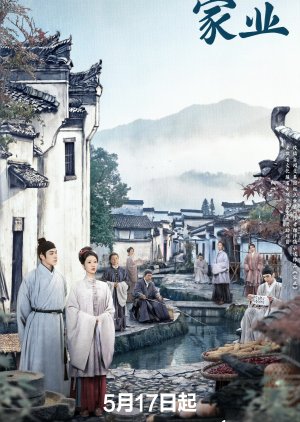
Let me start with a disclaimer: I don't mean to specifically target the actor playing the male lead in this drama, Elvis Han. I just can't resist making a pun. The truth is, this drama is so flat, dull and stilted that I don't believe any kind of cast could have made it rock and roll.At first glance, there is nothing terribly and obviously wrong with the Heir. The drama is exquisitely shot with a delicate color palette strongly reminiscent of Chinese traditional ink paintings. It embodies, quite literally, the notion of "moving pictures", presenting us with a succession of meticulously curated visual compositions. The costumes are authentic, the settings carefully elaborate. Frame after elegant frame, we can but sit back and admire subtle images parading before our eyes.
The problem is, these pretty pictures may be moving, but they fail to move us. They can't engross or entertain because they feel like paper-thin illustrations. The characters lack substance and, well, character. They are nothing but cyphers, empty shells populating the arduous but triumphant journey travelled by the female lead on her way to recognition and prosperity.
I strongly suspect that the Heir was written by AI. Somebody typed in: "give me a story about an independent, high-spirited, career-oriented young woman practicing a complex heirloom craft" and what came out was Li Zhen, a girl who manages to impose herself against all odds as a leading figure in the highly competitive and heavily monopolized ink industry flourishing under the Ming dynasty.
In the abstract, a young woman of strong character making her own way in a world made by and for men sounds like an interesting and inspiring premise. In practice, our heroine is a quintessential poster girl with whom no living woman made of flesh and blood could ever hope to compare.
For example:
- Li Zhen is omniscient and preternaturally mature from her early childhood;
- Li Zhen is universally capable, never puts a foot wrong and has a ready solution for every kind of problem;
- Li Zhen is never intimidated when faced with an obstacle: she spontaneously improvises motivational speeches so stirring that she invariably sways stubborn patriarchs into submission and has them eating out of the palm of her hand;
- Li Zhen is never tired, moody, dispirited or anything short of breezily energetic;
- Li Zhen always looks exceedingly pretty in spite of her unshakeable devotion to duty and and endless working hours.
Et cetera ad infinitum.
Only a bot would believe that such a peerless paragon of perfection could ever seem relatable, interesting, inspiring or anything other than oppressive from the point of view of an ordinary human being.
In our imperfect and flawed human reality, the heroine's unimpeachable excellence is so out of reach that we can only observe her goings-on from a polite distance. The lofty standards she sets for women to live up to are so unrealistic that trying to get invested in her story feels like a laborious uphill battle against our own conscience. For the sake of sisterhood, we feel that we should be rooting for her, but we can't; so we keep pushing through in the hope that things will get better, but they don't.
The Heir is very clearly a vehicle for the actress Yang Ze, who has turned protofeminism into her niche specialty. The drama seeks to capitalize on the success of the Flourished Peony - and to rectify some of its weaknesses - but is so superficial and soulless in its approach to storytelling that it fails to convince in spite of its painstaking efforts.
Moreover, the protofeminism it preaches is counter-productive as it burdens young girls with impossible expectations. There is nothing wrong with creating an enjoyable story about a superwoman so long as it is made clear that it is pure fiction, which is not the case here. The Heir takes itself very seriously and expects us to do the same. If I had to describe this drama in one word, it would be sanctimonious: making an artificial show of upright values with the goal of generating profit by courting public approval.
In order to punish the producers for their exploitative approach to the issue of women's empowerment, I am sorely tempted to give this drama an overall score of 7. However, this would be profoundly unfair to the crew members involved in the cinematography and the art direction. Also, the fascinating history of ink-making under the Ming dynasty is meticulously researched and does have an educational value for anyone who, like me, is eager to learn more about Chinese culture.
In conclusion, it is a pity that the best elements of this drama were not used to make a gorgeously instructive documentary. Strange as it may sound, I can't help feeling that a non-fictional exploration of the historic ink-making craft would have been infinitely more thrilling and entertaining than the Heir in its present form - woefully undramatic, self-righteous and emotionally blunted.
Was this review helpful to you?
This review may contain spoilers
A beautiful story + perfect cast let down by a shallow storyline
I really thought this was going to be an iconic drama for me. It felt like the book Pachinko, watching a family's rise and fall across multiple generations. I was so convinced this was prestige TV.But by episode 26, I've accepted that perfect casting and amazing cinematography can't fully make up for a shallow storyline.
How many times can we watch Li Zhen be set up, people turn against her, she proves her innocence and they accept that they were wrong to doubt her. And then just a few episodes later, it happens again in the exact same way. My final straw was the case with the bad glue by Uncle Decai. It was so obvious that she was being set up by someone from within the family, but still the characters act all confused and even want her to hand over the family seal. It made no sense. I couldn't believe that these are the people who have been running a centuries-old relatively successful business.
This whole "doubt Li Zhen then she clears her name and everyone likes her again" happens so many times to the point that it becomes unbelievable. It's clear the writer didn't know how to create conflict without over-relying on this trope.
When I realized that this is a story that just goes round in circles, I realized I don't need to watch the rest. Watching Li Zhen prove people wrong and stand in her integrity the first few times is enough for me - I don't need to see it happen 10 more times with the same characters over and over.
Was this review helpful to you?
This review may contain spoilers
The times and values are conservative but the Story is liberal
I started watching this for YangZi. Then I was hooked by the intricacies of the ancient ink making industry.Its an easy going drama of a family business with its own politics and business rivals competing for supremacy. The malevolence seems more dramatic than sinister. The Eight Branch of the century old Li Ink family is expelled after an incident that will only be fully revealed in the last 2 episodes. The initial intense competition for top ink maker was between the Li and Luo families to be the Imperial Tribute Ink. Within the first 5 episodes, this dynamic changed with the rapid decline of the Li Family due to a series of misfortunes and the near demise of the Luo Family when they fell from favour in the Capital.
Into this vacuum enters the Tian Family, who were stragglers within the Huizhou Ink community. Through a series of cunning schemes and devious plots, they rose to be top dog, and top villains, headed by Tian BenChang.
On the outside the previously favored granddaughter of the disgraced Eight Branch, Li Zhen, decides to pursue her passion and heritage. She becomes the apprentice of her Grandfather, the fallen Ink master of Li Ink who had to swear never to make another ink piece again in penance.
Essentially this is the story of Li Zhen (Yang Zi) and the rejuvenation of Li Ink against all odds. It is also a chronicle of family values, the Huizhou ink industry and relationships. Beyond the impossible romance between two lovebirds, there are many other more noteworthy relationships; mothers and daughters, grandparents and grandchildren, siblings, childhood friends, business partners etc.
Yang Zi did not disappoint neither was this drama her high point. She was best at her relationships with her Grandparents and most poignant at their demise. She was often inspiring when faced with challenges. I enjoyed her interactions with her mother most.
The MLs, both friends and foes, are at best, insipid. Luo WQ (EH) was more operatic than dramatic.
The settings, especially the shots around Huizhou, are magnificent. I also learned about isinglass.
Was this review helpful to you?
When life and livelihood,both are ink !!
I was a bit skeptical initially to watch this since , its based on ink making families, but now I regret not watching earlier.The Heir has been one of those dramas, that really left me speechless with the way the process of ink making has been perfectly blended with the emotions, schemes, ups and downs, and livelihood of all the families who are either directly involved in ink making or those who depend on them.
I never imagined that there would be such background stories filled with tensive moments competitions,hardwork,integrity in running a business of ink.
This drama really provides the best insight of th whole processof ink making-from the raw materials to the end product and all the harwork and thought that goes into it.
The family relations and emotions of various families, especially that of Li family of Huizhou, are well written and portrayed too.
YangvZi, once again amazed me with her splendid and elegant performance as Li Zhen, who is a very strong willed, resilient, dedicated and smart female lead.
Elvis Han as Luo Wenqian/Qi Jiu , has become one of my favorite male leads. His performance is outstanding, and amazing.💯👌I am totally impressed by his acting. His performance has brought tears to my eyes in few scenes.
All the cast were excellent in their performances 👏
I also liked the slow burn, subtle love track of the leads. 🤗
If you want to watch a relatively new concept of-"ink making and the emotions, pain and hardwork of the families who depend on it", thrn this one is the perfect pick.
I really loved this drama!!
I will definitely rewatch it.
A HIGHLY RECOMMENDED DRAMA
Was this review helpful to you?
This review may contain spoilers
Art, Intrigue, and Willpower
Hello,This is an excellent series set during the Ming Dynasty. It unfolds through a strategic plot involving a major scandal—centered on "tribute ink" presented to the imperial court—that upends the reputations of established ink-making clans and shifts the industry's balance of power. Amidst this turmoil, the story follows Li Zhen as she rises in the industry through her own ingenuity and by refining traditional techniques that had nearly been forgotten. The series offers an in-depth look at the arduous ink-making process, the discipline of the craft, intra-clan rivalries, and the strategic battles between merchants. It highlights a strong female protagonist who stands on her own two feet, mastering her trade and upholding her legacy. Furthermore, it provides a detailed portrayal of Ming-era aesthetics, traditional workshops, Chinese calligraphy, and the merchant guilds of the time.
I thoroughly enjoyed watching the story of such a powerful historical figure.
Was this review helpful to you?

A Must Watch! Don't let the MDL rating fool you.. when majority of the reviews are 10/10!
No Spoilers Here. This was absolutely a wonderful watch! From the beginning i knew this was gonna have some emotional scenes just from watching the FL previous shows.. she always makes me cry.. I love the ML.. he is such a great actor as well. Ok lets talk about the story.. this is a mature storyline. No cutesy stuff. No heavy romance. But when the leads have their scene.. it just pulls on your heart. The story focuses on family ties.. loyalty and perseverance. About overcoming the worst hardships.. learning that what doesn't kill you makes you stronger. When they said strong FL.. they meant it. And i loved the way the ML plays off the FL.. both have strong personalities but they allowed each other to be themselves while respecting eachother. I just loved their dynamics. As for the the show itself.. the pacing was perfect it didnt drag or bore me.. it kept me wanting to see what happens next.. the amount of episodes was perfect as well.. no loose ends.. no abrupt ending. I would definitely recommend this to anyone looking for a more mature storyline. And definitely would rewatch this over and over again 💜Was this review helpful to you?
Amazing
Yang Zi’s acting is always on point. This drama is great!!It is a heartfelt modern drama that showcases Yang Zi’s strong and natural acting. The story is realistic and grounded, focusing more on emotional development and relationships.
Yang Zi’s performance adds a lot of depth to the story; her emotional scenes feel sincere and well-controlled.
Was this review helpful to you?
A Heroine With Brains and Backbone — The Heir Delivers
The Heir hooked me from the very first episode, and the glowing reviews I'd read beforehand turned out to be well deserved. What grabbed me straight away was the FL: a genuinely strong character who is sharp, entrepreneurial, and brimming with fresh ideas. She's the kind of protagonist who commands the screen: clever enough to outthink almost everyone around her, and fiercely protective when it comes to her family. She refuses to let anyone bully or belittle the people she loves, and watching her stand her ground is deeply satisfying.Beyond its lead, the drama keeps me thoroughly invested with a consistently intriguing plot. Each episode raises new questions and tensions, leaving me eager to see what comes next — that rare "just one more episode" pull that's so hard to find. The pacing, the stakes, and the way the story unfolds all work together to keep me looking forward to every new instalment.
The Heir has earned a place among my top 10 Chinese dramas of all time. If you love a heroine with brains, backbone, and heart, paired with a story that never lets your attention drift, this one is absolutely worth your time.
Was this review helpful to you?
Forgiveness , Persistance and Wisdom
I reckon this is one of the best movies I've ever watched. It has a beautiful storyline that kept me interested from beginning to end. I never realized that making ink in the olden days was such a difficult process with so many complicated steps. It was fascinating to learn about the craftsmanship and dedication behind it.What touched me the most was the story of a family ( the Eight branch )that had been rejected and expelled from the main ( Li Clan ) family, only to rise and become the ones who ultimately saved the family business. Their persistence, hard work, love, and willingness to forgive helped them overcome every obstacle that stood in their way. It is a heartwarming and inspiring story that shows how resilience and compassion can triumph over adversity.
I highly recommend this movie to anyone who enjoys meaningful family dramas with rich historical and cultural elements.
Was this review helpful to you?
What A Masterpiece Drama, Strong and Smarl FL, BEST INK related CDRAMA Ever!
What an incredible series! It easily deserves a rating higher than 8.5, as the storyline, performances, and cinematography are flawless. Yang Zi delivers another phenomenal performance, solidifying her status as a top-tier actress. The emotional family dynamics involving Li Zhen, her grandmother, and her grandfather were deeply moving and brought me to tears. I also loved the evolution of Li Zhen's relationship with her uncle, Li Jingdong, shifting beautifully from rivals to him becoming her ultimate support system. Though the male lead's character frustrates me, the actor himself did a great job and looks fantastic in historical attire. His quest for family revenge is continually foiled because his enemies constantly outsmart him, and despite serving under a general, his combat skills are weak. Ultimately, this show is a must-watch. In my opinion, Yang Zi and Zhao Lusi are currently the absolute best A-list actresses in the C-drama industry.Was this review helpful to you?

This review may contain spoilers
This Is Not a Romance (And That’s Why It Works)
I have spent the last several weeks completely immersed in this drama, and after finishing all 42 episodes, I think the biggest mistake viewers can make is watching it as a romance.There is romance in it. There is longing, heartbreak, separation, devotion, and eventually love. But romance is not the story.
The story is Li Zhen.
More specifically, it is the story of a woman rebuilding a family, preserving a craft, and carrying an entire legacy on her shoulders.
One of the things I appreciated most is that the drama never turns Li Zhen into an instant genius. She fails repeatedly. Ink batches are ruined. Experiments go wrong. Business plans collapse. Trusted people betray her. Every success is earned through persistence, intelligence, and an almost stubborn refusal to quit.
That commitment to process is what makes the drama feel so authentic.
The same applies to the relationships.
Unlike many idol dramas, this series does not rely on endless misunderstandings, accidental falls, forced jealousy, or artificial romantic obstacles. The relationship between Li Zhen and Luo Wen Qian develops slowly through partnership, trust, and shared hardship. Some viewers may find the romance too restrained, but for me it fit the story perfectly. These are two people carrying enormous responsibilities. Their feelings grow naturally through working side-by-side rather than through dramatic declarations every few episodes.
Yang Zi is outstanding as Li Zhen. She never seems concerned with looking beautiful at every moment. Whether covered in soot, exhausted from failed experiments, grieving, frustrated, or triumphant, she feels completely believable. Li Zhen is intelligent without being perfect, determined without being invincible, and compassionate without becoming naive.
This was my first drama with Elvis Han, and he made a tremendous impression. He has one of the most distinctive voices I’ve heard in a C-drama, and his performance carries a quiet emotional weight that works especially well alongside Yang Zi. Much of his character’s journey depends on restraint rather than grand gestures, and he handles it beautifully.
I also want to specifically praise Wang Zi Hao as Tian Ben Chang.
For much of the drama, Ben Chang could have become a one-dimensional villain. Instead, Wang Zi Hao creates someone far more interesting: a young man whose ambition gradually corrodes every decent part of him. Watching his descent from an attentive and seemingly sincere young man into someone willing to sacrifice family, morality, and eventually even his own brother was one of the strongest character arcs in the series. I was constantly impressed by how much screen presence he brought whenever he appeared.
Another major strength is the supporting cast.
Seventh Grandmother became one of my favorite characters. Li Jin Shu (Eighth Grandfather) became one of my favorite characters. Rong Hua’s journey surprised me repeatedly. Even secondary branches of the family receive enough development that their victories and losses matter.
The drama also does something increasingly rare: it allows older characters to be important. Wisdom, experience, craftsmanship, and mentorship are treated as valuable rather than obstacles to younger characters taking center stage.
As for the ending, I suspect viewers will debate it.
Personally, I found it fitting.
The final episodes reinforce what the drama has been telling us from the beginning: this is ultimately the story of Li Zhen’s legacy. The romance matters, but it is not the sole measure of her life. The preservation of knowledge, the restoration of the Li family, and the continuation of the craft matter just as much.
By the end, what stayed with me most wasn’t a kiss scene or a confession.
It was the image of knowledge being preserved and passed forward.
For a drama centered on ink-making, that feels exactly right.
Rating: 10/10
A rare drama that trusts its audience, respects its characters, and understands that craftsmanship, family, and legacy can be just as compelling as romance.
Was this review helpful to you?

A MASTERPIECE DRAMA OF YANGZI?❤️
Wow, just WOW—I honestly cannot believe I flew through all 42 episodes without skipping a single second or ever feeling bored! From the very first six episodes, Yang Zi absolutely ate this role; she did so well, and I cried so much my eyes were literally swollen over how much her family suffered. I deeply admired her character for being such a strong girl—even when fate was incredibly hard on her, she kept smiling and stayed resilient. On top of the emotional story, I actually learned so much about Chinese ink and culture, which added such a beautiful layer to the background. The entire cast deserves an award because you can truly feel the sheer effort, intense love, and deep hatred they poured into their characters. At its core, the drama highlights a powerful life lesson: even if you love your family members deeply, they will be gone one day, but you still have to continue your life and do better to make them proud. The male lead was also phenomenal; you could completely feel the pain in his eyes and understand his drive for revenge after losing his father and watching his older brother die right in front of him. While I absolutely hated the villains, the writing gave them reasons for their actions too. This is hands down a must-watch of 2026—a total 10/10 that I highly recommend!Was this review helpful to you?