Celebrity


This review may contain spoilers
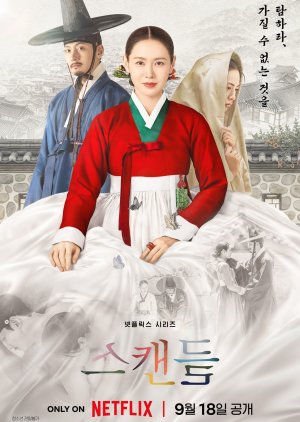
It’s scandalous
It does what if is expected to do. It’s scandalous. So far I have never given any particular attention to the FL or ML coz their acting never felt raw. But here it was very very raw.It was the micro expressions that made their acting amazing. For normal audience it might seem as bland acting but they did an amazing job.
For instance
How son ae Jin - speaks so respectfully in a soft manner but her irritation and anger can be seen in her jaws
The mother in law of nana, the smirk she gives for a second before hiding it with tears. When son ae Jin is paying respects.
Ji chan wook, when he was really confused about his love but forced himself to fall back into the same loop just because without that it wouldn’t be him
The plot it’s scandalous, it’s scandal people that’s the whole title what else did you expect, people blushing and holding hands. They tried to be raw with it. And had a fitting end. It is a great watch but not everyone’s cup of tea.
Was this review helpful to you?

When Feelings become a wager
The Scandal is one of those dramas that makes you uncomfortable because the story isn't entirely unfamiliar. Lady Cho and Won turning someone's emotions into a game may be set in another era, but the idea of people manipulating feelings for their own amusement, revenge, or personal gain is very much a reality today.What makes their wager particularly disturbing is that the widow doesn't know she's part of a game. While Lady Cho and Won know the truth, she is allowed to believe that the affection being shown to her is genuine. One side sees a challenge; the other person is putting real trust and emotions into something she thinks is real.
And that's where the story becomes more than just a scandalous romance. In real life, people sometimes pretend to have feelings, make bets over someone's affection, or pursue someone simply to achieve a personal goal. The person doing it may eventually develop genuine feelings, but that doesn't erase the deception that brought the relationship into existence.
That's what makes The Scandal so fascinating to watch. It asks what happens when a game involving someone else's heart becomes real and whether genuine feelings can ever completely undo the damage caused by the lie.
Was this review helpful to you?

Positive and Lacking about this drama
Just finished binge watching and I have mixed feelings about this drama. There are definitely positive aspects but there are also some areas where I felt it was lacking.POSITIVE
• Excellent acting, hands down.
The acting is easily the strongest part of this drama. The micro expressions, especially from Son Ye Jin, really impressed me. Ji Chang Wook and Nana also delivered great performances and I think all three leads carried their characters really well.
• The dialogue is good.
The conversations feel purposeful. The storytelling is poetic, especially in Episode 8, which is my favorite episode.
• The premise is intriguing.
The basic premise immediately makes you curious about where the story is going.
• The three main characters have depth.
I especially appreciated how their characters became more developed toward the final two episodes.
Son Ye Jin’s character feels layered because of the conflict between what she wants, what she believes she deserves and the things she is willing to do to achieve it. Her actions become more understandable as we learn more about her motivations.
Ji Chang Wook’s character also develops beyond his initial impression. His relationships and experiences gradually reveal a more emotional and vulnerable side of him especially when he falls in love with Nana’s character.
Nana’s character is probably the one I found the most interesting to watch develop. She starts out seemingly caught in circumstances beyond her control but as the story progresses, we get to see more of her personality and emotions.
• The nudity felt intentional.
I actually appreciated how the drama handled its nudity. It didn't feel excessive. The scenes felt intentional and appropriate to the story and the characters rather than being gratuitous. I think the drama found a good balance between showing intimacy and keeping it from becoming distracting.
• Very theatrical and poetic
It feels like watching a stage play unfold on screen. Its storytelling is deeply rooted in Korean history and culture, from women’s lives in Joseon to tobacco, silk farming, hanji, and Catholicism. I’m sure there were many more historical details that I’ve forgotten, but without a firm grasp of Korean history, you could easily miss some of its layers. That historical depth is what makes the drama feel so rich.
LACKING
• The lack of a strong score.
The first thing that comes to mind is the lack of music/score. A lot of scenes felt bland because there were scenes that were clearly supposed to feel intense, emotional or suspenseful but the music isn't giving for me.
I think the right score in certain scenes could have made a huge difference. Some scenes felt flatter than they should have which eventually affected the pacing and made certain parts feel boring.
• The chemistry between Ji Chang Wook and Son Ye Jin.
I didn't really feel that spark or intensity between their characters. I don't know if it's a casting issue or if their relationship needed more backstory but I found myself wanting more emotional build up between them.
I think if the drama had spent more time establishing their history and connection, I might have felt more invested in their relationship.
Interestingly, when Ji Chang wook's character finally gets to know Nana's character and starts falling in love with her, that's when I actually felt something. Their dynamic gave me more emotional investment, which I liked.
• I expected more from the cinematography.
Visually, I was expecting a little more. The aspect ratio change during the flashbacks was a nice touch and helped distinguish the different timelines, but beyond that, the overall cinematography felt somewhat underwhelming. Given the time period, I was expecting the visuals to have a stronger sense of atmosphere and identity.
As with many kdrama Netflix Originals, I also noticed some similarities in the color grading, though that’s not necessarily a bad thing. The cinematography is still solid overall but I think it could have been more distinctive and better suited to the setting. A strong 9 for me, but with a more memorable visual direction, it could have been a perfect 10.
• The overall drama is forgettable in my opinion. While writing this review, I realized I can't remember the name of the characters.
I enjoyed parts of it but I also found myself thinking about how much stronger certain scenes could have been with better execution.
Was this review helpful to you?
This review may contain spoilers
The Anti-Fairy Tale : A K-Drama That Isn't Afraid of Raw Real Physical and Emotional Intimacy
I just wrapped up all 8 episodes of The Scandal, and honestly, It went exactly where I worried it would. Having watched the original Untold Scandal 2003 film where this series based on , I knew the tragic direction of the story and how the ending would unfold.My hunger and thirst for a proper, deep meaningful romance between Son Ye-jin and Ji Chang-wook was left completely unfed. What I was truly hoping for was a meaningful, genuine love story between Son Ye-jin and Ji Chang-wook in this series and was hoping it will not follow some of the narrative of the movie where this drama based on. As much as I was dying to see these two massive powerhouse actors share a sweeping romance, this just wasn't that kind of story that Im hoping for them. Instead, Son Ye-jin’s character functions as the antagonist and master manipulator, acting as the strategic catalyst driving the plot rather than Ji Chang-wook’s true romantic partner.
Sure, Cho-won loved Lady Cho first, but her endless desire for control, pride, and societal power meant she constantly pushed him away and used him like a pawn on a chessboard. By the time she realized what she was losing him as he is falling to 2nd fl , it was far too late.
The actual profound, deeply felt romance in this story ends up belonging to the Male Lead and the 2nd Female Lead (Nana). Watching Cho-won fall genuinely in love with Hui-yeon while Son Ye-jin orchestrates things from the shadows was both fascinating and deeply frustrating as a huge fan of Son Ye - Jin.
The series pulls no punches in showcasing these explicit, highly passionate bed scenes between Ji Chang-wook and Nana. Seeing intimacy portrayed so boldly on the small screen makes you wonder if CGI or AI body doubles were used, or if it was entirely the actors' raw commitment—either way, the acting is phenomenal. This drama which based of Untold Scandal 2003 , really almost copies the movie’s signature sensuality directly ——showing the whole nakedness except the private parts of them and creators of this drama really showcases the bold sexual position. For a kdrama that is not really usual you see , it will probably shock you , but then It also proves once again that when a story truly demands it, Korean creators can easily rival or surpass Hollywood in handling mature, explicit scenes with high artistic intensity, just like their classic cinema hits such as “A Frozen Flower” where played by Zo In sung & the cast which well done.
Watching Cho-won share those deeply intimate moments with the 2nd FL while Son Ye-jin remained locked in a cold game of wits made it even harder to digest as a huge SYJ fan. In many ways, the 2nd female lead seems actually serves as the true female lead of this series because she is portrayed with such a pure spirit and receives the the romantic meaningful love of the ML even he didn’t personally confessed to her .
When it comes to acting, and visual aesthetics, this drama is absolute top-tier. Son Ye-jin commands every single frame with an icy, magnetic, and haunting presence, and Ji Chang-wook delivers one of the most complex performances of his career. The tension between them is electric, but the narrative itself is just so heavy and depressing to digest. It is a masterpiece wrapped in sheer tragedy.
At its core, The Scandal serves as a painful reminder of what happens when you treat human emotion and love as a game of power and pride. Lady Cho spent her entire life trying to manipulate everyone around her to escape her own powerlessness, only to end up completely isolated in disgrace—destroying the only man who ever truly understood her. Pride will always destroy real love before it even gets to bloom.
Just a quick note that these are strictly my personal thoughts, views, and feelings as a long fan . Drama experiences are always subjective, so please don't let my review stop you from diving in. Watch it, experience the phenomenal acting for yourself, and form your own judgment!
Breakdown of my rating:
Acting & Performance——— (10/10): Son Ye-jin ,Ji Chang-wook & Nana top-tier acting, magnetic presence, and electric chemistry.
Production & Direction ——-10/10 the visual aesthetic, cinematography were phenomenal.
Story & Romance ————— 7/10The heavy, devastating nature of the tragedy of ML combined with the disappointment over the romance dynamic—where Son Ye-jin acts as the mastermind rather than the main romantic interest—kept it from reaching a perfect score from me
Overall 7.5–8/10 —high-quality production , while clearly Im being also honest that my ratings reflecting of an unfulfilled expectations for a meaningful romance of SYJ and JCW.
Was this review helpful to you?

The Scandal — My Honest Thoughts
I wouldn’t call The Scandal a masterpiece, especially with the expectations I had going in, but it’s still a very good drama. I had a good time watching it, and the performances were genuinely too good. It started so well, with so much momentum, and towards the end, there was some sense of fulfilment, but it still wasn’t enough for me.The biggest problem is that the momentum faded in the middle. For an 8-episode drama with such a strict runtime, there isn’t much room to explore character growth, but even within that runtime, there were a lot of scenes that felt too slow. There were moments where the drama went into a very dead zone. At the same time, there were so many relationship dynamics, especially between the supporting characters, that could’ve been explored much more. I kept thinking about certain scenes that could’ve been replaced with something more meaningful.
The most disappointing part for me is that it never became as dark as I wanted it to be. The potential for obsession, jealousy, possessiveness and all those complicated emotions was clearly there, but the drama didn’t explore them deeply enough. That doesn’t mean there are no such moments. There are moments where it absolutely explodes, and I really loved those scenes. But they are too few, and the progression of the characters could’ve been much stronger.
And the chemistry… somehow, it was missing. I don’t think this is on the actors. Ji Chang-wook, Nana and everyone else portrayed their characters really well and were consistent throughout. But chemistry is also part of the director’s job. It’s the director who has to bring that chemistry out of the actors and make you feel the attraction, tension and relationship dynamics. So for me, that part definitely falls more on the direction.
Technically, though, the drama is really good. The production value is excellent, the music is top-notch, and I loved the visual representation of the er0tic and sensual scenes. Some of the choices were genuinely creative. The er0tic and sensual scenes are not bad at all, and honestly, some are very well-crafted. There could’ve been more, and they could’ve been more direct, but that doesn’t mean what we got was bad. They do show emotion and serve their purpose; they just don’t hit as hard as they could have.
I also loved that long shot of the whole area towards the end. Little technical choices like that reminded me of the potential this drama had. Somehow, I feel like the soul of the drama got a little lost in the middle.
But I still had a good time watching it. I binged the whole thing, and it’s definitely not a bad watch. The hate it’s getting feels unnecessary to me. I also think people need to be a little more open-minded about the er0ticism and sensuality. Yes, it could’ve been better, but that doesn’t mean those scenes were bad. They had something to say and, in many moments, they worked.
And I really have to applaud Ji Chang-wook and Nana for having the courage to take on characters like this. When you have that level of popularity and status, taking challenging roles comes with a lot of risk. I have nothing but praise for them.
I honestly want more K-dramas in this space: obsession, er0ticism, sensuality, thriller, jealousy, forbidden love, and that feeling of not being able to have the person you want because you’re not powerful enough. I’d love to see more of this genre.
Was this review helpful to you?

This review may contain spoilers
Nudity And Beyond
If, like me, you weren't aware what you were walking into, then you're definitely in for a shock. Yes, the drama has a lot of nudity. Let's get into what I liked and disliked and there will be spoilers.Briefly, Lady Cho and Cho Won are cousins who have haboured romantic feelings for each other but could never be together. However, they end up dragging other people into the tragedy of their lives.
SPOILER: Personally, I found both of them vile. Him for suggesting he can sleep with a virtuous widow and her for agreeing to sleep with him if he succeeds. She wanted him to impregnate her infertile husband's concubine. She could have just said, I'll sleep with you if sleep with her. But no, she allowed him to play with another woman's feelings because she wanted to deny her own. Furthermore, she did not care whether that woman lived or died which showed that even a smart learned noble woman has failed to escape the grasp of cultural norms and develop empathy.
The plot itself is interesting but the story drags at times. Also it felt like the overuse of mainly female nudity was to entice viewers and create dialogue around the show. While the women were practically baring it all, the men had a few side and posterior shots. They were too scared to have their men expose themselves or perhaps it would be too crude (maybe pornographic territory) to view male genitalia on screen unlike bare-chested slender women with shots lingering on their bodies from all angles? This is why I find these types of shows ridiculous. You are careful to protect your male actors' dignity while knowing your misogynistic society will target and shame women? The scenes were not even worth going back to watch. There was no sensuality.
Without the nudity, the series is average and so I rated it accordingly. I was sort of happy with the ending so there's that. Another plus was the scenery was genuinely beautiful. All actors did a decent job especially the support cast. Special props to women who put their trust in the project. I'm sure it was not an easy feat to shoot such scenes.
Depending on how you feel about the nudity, it can be a hit or miss.
Was this review helpful to you?
This review may contain spoilers
JWC is approaching perfection. Drama is good but could have been better
What I liked:1. JCW acting. His dedication to each and every line of each and every scene is simply a joy for everybody's eyes. Every year that passes he becomes even better in the matter of precision of delivery.
2. The casting choices, very much on point.
3. Costumes and settings.
4. The director's view of the tale as a Joseon "pansori" folktale, narrated by a storyteller throughout the 8 episodes. It really put me in a "Chunhyang" mood, and I was expecting Cho Seung-woo to pop up on screen... too bad he didn't!
What I didn't like:
1. I know that adaptations are, in fact, ways to adapt the original source to the view of the screenplayers and director and thus, nobody can really complain. But I think that, since the story is very well known (since 1782!) the authors felt that the plot had to be scrambled a little bit. A little bit too much, in my opinion: nobody gets punished for the cruelty of their manipulations and everyboody lives as if nothing had happened, except for poor JCW's character, who had been nothing but a pawn in the hands of his cousin and of his king all of his life.
2. The horrible, horrible cinematography. Everything is orangy brown, for some reasons I couldn't really understand.
A note for those who expected a chaste and nudity-free kdrama, in which fully grown-up lovers kiss without touching each other with their mouth closed and their eyes wide open... well... this is the wrong 2026 drama, go watch that awful mess named Our sticky love.
Was this review helpful to you?

Ji Chang-wook & Son Ye-jin acting Masterclass!
Honestly, I didn’t expect to like this drama as much as I did. I’m not really a fan of erotic series, but somehow, this one worked for me.
I tried not to let the erotic scenes distract me from the actual story. I focused only on what felt necessary for the plot, and because of that, by the final episodes, I could really feel the tragedy of the story. The character development was beautifully done, and I think Ji Chang-wook and Son Ye-jin brought their characters to life in the best possible way. Nana also did a good job, although I felt that her look, especially her lips, didn’t quite fit the historical-drama setting.
. The main negative for me was the pacing, but honestly, novel-based dramas usually have a slower pace, so it didn’t bother me too much.
About the erotic scenes: around 50% of them felt unnecessary to me, especially some of the scenes in the starting episodes. I really liked some of the seductive scenes in episodes 4–6 because they actually felt meaningful and well-executed. Episode 7, though, had some of the most unnecessary scenes, in my opinion.
The drama is officially rated for adults, so if you’re comfortable with that kind of content, just know what you’re getting into before starting it.
Overall, I went in with very low expectations, but I ended up enjoying it much more than I expected. The performances, character development, tragedy, and novel adaptation are what made it work for me.
Was this review helpful to you?

This review may contain spoilers
Gambler knows That the secret to survivin' Is knowin' what to throw away And knowin' what to keep
Beyond the inevitable connections with the literary roots of Laclos’s epistolary novel, “The Scandal” captivates through its ability to bring together different languages, eras and sensibilities without being reduced to a mere transposition of a pre-existing model. It is a multifaceted work, in which the subject matter of the eighteenth-century narrative meets Korean melodrama, the rigour of Joseon-era social conventions and a contemporary sensibility towards desire, repression and appearances.This ongoing dialogue between seemingly disparate elements manages to make the whole thing interesting: even as codes, cultures and even the way in which eroticism is portrayed change, certain dynamics remain surprisingly recognisable. The respectable façade, the obligatory conventions, what is permissible to desire and what must instead be concealed – these belong to a specific era, but not necessarily to that era alone. In this way, “The Scandal” uses the ‘classic’ not to look back nostalgically at the past, but almost to observe ourselves through it.
The literary inspiration would inevitably lead the viewer to draw constant comparisons with Laclos’s original work and its most famous film adaptations, but “The Scandal” gradually establishes its own identity by refusing to become trapped in a mere transposition of the source material. Rather than simply reproducing its plot developments, the drama retains certain fundamental mechanisms and reworks them within a structure in which seduction, manipulation and desire become the true driving forces of the narrative.
The wager lies at the heart of this plot: it begins almost as a game, a challenge between two people who know each other all too well, but ends up turning into something far more serious when its consequences gradually slip beyond the control of those who conceived it. Surrounding it are seduction – exercised as much through the body as through words – and manipulation, which finds one of its preferred tools in the written form of letters. In short, the game works as long as its architects can consider themselves masters of the rules; but when feelings, desires and consequences begin to elude their control, even the story’s architects discover they can no longer govern what they have set in motion.
It is above all in the letters that the connection with Laclos becomes most evident, but also most interesting, because the drama manages to transform them gradually, along with the relationships between the characters.
They are not merely a tribute to the epistolary form of the original novel, but become the very driving force behind the story: they preserve memories, shape identities, fuel seduction, reveal feelings and, when they fall into the wrong hands, can become weapons. It is through their correspondence that Cho-won and Lady Cho get to know one another as young people, finding in writing a space of freedom that social conventions deny, particularly to her; Those same letters then become a record of a feeling which, stifled by an arranged marriage and family rules, turns into distance and resentment.
Years later, Cho-won once again uses the written word as a tool of seduction, this time to win over Hui-yeon: the letters allow him to gradually enter her most intimate space, where gestures and the body cannot yet reach. Here, however, the mechanism begins to slip beyond the control of its architects. Hui-yeon, now imbued with a new sense of self, puts her feelings into writing, and that letter takes on two opposing meanings at once: whilst for Lady Cho it may be seen as tangible proof of a wager now almost fulfilled, for Hui-yeon it represents a genuine confession, the most sincere declaration of love ever made. For Cho-won, now wavering, those words can no longer be reduced to the simple logic of the game.
Writing, which began as a tool of manipulation, has given rise to a genuine emotion that can no longer be controlled by those who brought it about.
From that moment on, letters gradually cease to belong to those who write them.
Even on an erotic level, the written word thus takes on a significance that is anything but secondary. Although it is a series intended for an adult audience, “The Scandal” does not rely solely on imagery to convey its sensuality: certain nude scenes form part of a much broader construction of desire, in which the gaze, the gesture and, above all, the spoken word contribute to gradually revealing what the characters have long repressed. Indeed, it is certain letters – with their sometimes surprisingly explicit language – together with the conversations of the village women and the drawings used to tarnish Cho-won’s reputation, that introduce an erotic element which the imagery then merely serves to complement. In short, sensuality is often first imagined and articulated, and only subsequently embodied.
Gradually, “The Scandal” seems to move further away from the simple mechanics of seduction. Desire arises not only from physical proximity, but from what the characters imagine about one another: from the words they receive, the glances they interpret, the expectations and the images they construct in their own minds. To seduce, then, means – even before winning over a body – to construct a presence in the imagination of others. And when that construction begins to coincide with a genuine feeling, the game loses its original nature.
This mental construct – passion constrained by social norms, and the body language that shines through the words and letters – probably defines the erotic and sensual nature of the story better than any image, in keeping with the body’s gradual liberation from the social roles that have long held it captive. Desire arises in the mind, is fuelled by words, takes shape in the imagination, and only then becomes reality.
From this perspective, Hui-yeon proves to be the drama’s surprisingly most multifaceted character, capable of developing a fully realised narrative arc: a woman who is already ‘dead inside’, a virtuous and chaste widow, driven by extreme resolve to be reunited with her deceased husband, whose identity is built entirely around her grief. She longs to die in order to be reunited with a man she never truly had the chance to know.
The paradox arises from a desire rooted in absence—that of her dead husband—but through Cho-won’s letters she ends up confronting a presence that speaks to her, provokes her and seduces her. In that exchange of letters, the presence initially imagined through words gradually becomes a real, tangible desire: the very possibility of imagining herself in a relationship with a man. It is this element of vitality which, through desire, gradually restores her sense of her own existence. The erotic discovery thus becomes the transition through which Hui-yeon comes to perceive herself once more as a living person.
Hui-yeon’s transformation is also achieved through a performance built primarily by subtraction. Nana explores sensuality without making it immediately visible: the mourning clothes, the composure, the subtle gestures, the glances and the hesitations gradually construct a body that seems almost to disappear behind the social role that governs it. When the femininity that this role had repressed finally emerges, it does not therefore appear to be a sudden transformation of the character, but rather the revelation of something that had always been there beneath the surface. The body that is finally revealed is almost the visible consequence of a sensuality that Nana had already established whilst she was still fully clothed.
But the dynamic works precisely because it is a three-way interplay. Son Ye-jin builds the character of Lady Cho through equally rigorous control, often relying more on what she implies than on what she states explicitly: half-finished sentences, intonations, piercing glances with which she seems able to make others confess even before they have decided to speak. Her rhetorical and storytelling skills allow her to continually reweave the threads of the situation, even when the mechanism begins to slip from her grasp. It is significant that she gradually loses some of that composure precisely when she realises she cannot exert the same control over Cho-won: behind the strategist capable of manipulating others, a woman emerges who is deeply dissatisfied with the life she has been assigned, ultimately forced to come to terms with the loss of the one love she had truly desired.
Ji Chang-wook, by contrast, begins with an almost playful seduction, portraying a Valmont-like Cho-won who seems to take particular pleasure in exercising his skills: a smooth talker, a libertine, perfectly aware of the ease with which he manages to win over the women he meets. All of them, that is, except Lady Cho. But even this confidence gradually shifts as the game produces consequences that can no longer be attributed to the logic of the wager. His demeanour changes in tandem with the character’s growing realisation, right up to the finale, where that seemingly absolute freedom proves to be far more fragile than it appeared.
In short, the three actors must carry a complex and largely static story, in which the conflict plays out primarily through words, letters, glances and power dynamics: Son Ye-jin is almost always confined to domestic spaces, and even the visual style often eschews the most immediate glamour. It is the sort of narrative that could easily have become theatrical in the least interesting sense of the word. Yet if it manages to maintain tension, it is also because the three protagonists succeed in shouldering much of the narrative burden, transforming control, seduction and the gradual loss of control into a form of action that requires no grand external gestures.
At the end of the day, what remains is the fate of three people who have each, in their own way, sought to control the desires and circumstances of their own lives, only to find themselves trapped by the consequences of their choices. It is perhaps precisely in their different outcomes that “The Scandal” reveals its most bitter aspect: none of the three truly returns to the life they had imagined, because what has been repressed, sacrificed or pursued for too long inevitably comes back to haunt them.
In conclusion, “The Scandal” seems to succeed on several fronts: it draws on Laclos’s literary legacy without becoming bound by it, making the letters not merely a tribute to the epistolary form, but one of the story’s true driving forces; it constructs a self-aware sensuality, relying more on words, glances and the gradual discovery of the body than on exhibitionism for its own sake; it finds in Nana, Son Ye-jin and Ji Chang-wook a cast capable of carrying a narrative that is anything but straightforward, transforming even the stillness of the settings and relationships into dramatic tension.
But perhaps its greatest merit lies precisely in its ability to bring culture and entertainment together without one having to be sacrificed for the other; In the end, Cho-won and Lady Cho’s gamble becomes the drama’s own. A gamble which, on balance, paid off.
8 ½
Was this review helpful to you?

This review may contain spoilers
A Beautiful Adaptation That Never Escaped the Shadow of Its Predecessors
I went into The Scandal with tremendous anticipation. The source material, Dangerous Liaisons, is one of the most enduring stories about manipulation, desire, revenge, and emotional destruction ever written. The challenge for any adaptation is not simply telling the story again but justifying why this version needs to exist. Unfortunately, while The Scandal is visually elegant and contains some strong performances, it never fully answers that question. The problem is not that it is bad. The problem is that it exists in the shadow of giants. That legacy is both a blessing and a curse for The Scandal.As a standalone drama, it is handsome, well-acted, and beautifully produced. The costumes are stunning, the cinematography is elegant, and its exploration of social hierarchies within Joseon society provides a natural backdrop for this tale of seduction and betrayal. Yet while the series faithfully adapts the essential elements that have made Dangerous Liaisons endure for centuries, it rarely achieves the emotional devastation that made the best versions unforgettable.
The story itself remains compelling. Lady Cho and Cho Won, two aristocrats accustomed to getting what they want, enter into a dangerous wager involving the virtuous widow Hui-Yeon. What begins as manipulation gradually transforms into something neither participant fully anticipates. Feelings become real, loyalties blur, and people who believe themselves to be masters of human emotion discover they are not nearly as immune to its consequences as they imagined. The central tragedy has always been simple: people convinced they are playing a game eventually discover that the game is playing them. Where The Scandal succeeds most is in its performances, particularly its three leads.
Nana delivers the strongest performance of the series as Hui-Yeon. She is absolutely stunning without makeup and perfectly captures a woman who has spent decades suppressing her desires for duty, reputation, and virtue. Her portrayal has a quiet strength that keeps the character from becoming merely passive or saintly. Hui-Yeon’s restraint feels lived-in. Her vulnerability feels earned. As her relationship with Cho Won develops, Nana makes every emotional concession matter. Small gestures, lingering glances, and moments of hesitation all carry weight because the audience understands exactly how difficult they are for her.
Because Nana builds the character so effectively, I found the emotional payoff frustrating. When Hui-Yeon discovers that she was originally pursued as part of a wager, she is understandably devastated. Nana communicates hurt, humiliation, and heartbreak beautifully. What felt missing was rage. It felt rushed. This is a woman who spent years protecting her principles and denying herself personal happiness. The revelation should have shattered not only her trust in Cho Won but her entire worldview. Instead, the series leans heavily into sorrow where I wanted fury. I found myself remembering Michelle Pfeiffer's Madame de Tourvel and Zhang Ziyi's Du Fenyu, performances that made similar moments feel utterly catastrophic. Nana succeeds where many actresses would have failed. My disappointment lies not with her performance but with the emotional scale the drama allows or does not allow the moment to reach.
Son Ye-jin takes on perhaps the most difficult role in the series in the role as Lady Cho. Lady Cho is not simply a villain. She is intelligent enough to understand the limitations imposed on her and bitter enough to resent them. She has learned to survive by manipulating others because direct power remains largely out of reach. The role requires an actress who can portray intelligence, jealousy, insecurity, cruelty, charm, and vulnerability at once. Son Ye-jin handles much of this exceptionally well. She gives Lady Cho a sharp, calculating presence. Every smile seems measured. Every conversation feels strategic. The audience understands immediately that this is a woman constantly assessing the people around her, searching for weaknesses and opportunities.
What impressed me most was her ability to make Lady Cho understandable without making her sympathetic. We understand her frustration, her resentment, her loneliness, but we also never lose sight of the fact that she repeatedly chooses cruelty. Where the performance falls short for me is in its lack of menace. The greatest interpretations of this character archetype, particularly Glenn Close and Cecilia Cheung, possess an almost frightening authority. Their characters dominate scenes before speaking a single word. Son Ye-jin's Lady Cho often feels more wounded than dangerous. That choice adds humanity to the character, but it also reduces some of her impact. Rather than feeling like the unstoppable architect of everyone's downfall, she occasionally feels like another victim of the world she inhabits. The performance is intelligent and nuanced, but I wanted more danger lurking beneath the surface.
Ji Chang-wook's Cho Won is perhaps the most uneven of the three central performances, although not without considerable strengths. Cho Won is a difficult role because the audience must understand both why people are attracted to him and why they should fear him. He is a seducer, but he is also a profoundly damaged man who has transformed his emotional wounds into a weapon. Ji Chang-wook has the charm required for the role. His confidence feels effortless, and his playful arrogance helps explain why Lady Cho sees him as the perfect instrument for her schemes. To me, though, his strongest scenes are not the seductions. They are the moments when Cho Won begins realizing he has genuine feelings for Hui-Yeon. As the character's confidence starts to unravel, Ji Chang-wook reveals the insecurity and vulnerability beneath the surface. The performance becomes significantly more compelling once Cho Won is forced to confront emotions he can no longer control.
Yet unlike Jang Dong-gun's unforgettable interpretation in Dangerous Liaison (the Korean/Chinese production), I never felt that overwhelming magnetism that makes it impossible to look away whenever the character appears. Ji Chang-wook's version feels more human and approachable, which is not necessarily a flaw, but it does diminish some of the intoxicating danger that defines the character. And it’s why Cho Won's tragedy is intellectually convincing but not always emotionally overwhelming.
The supporting cast performs well within their roles. Shin Youn-ha brings sincerity and vulnerability to So-ok, embodying the innocence that becomes collateral damage in the games her social superiors play. Chani's In Ho reminds us that the consequences of manipulation extend far beyond those directly involved. Both characters help ground the story by showing the human cost of the selfish choices made by Lady Cho and Cho Won.
Ultimately, The Scandal is not a failure. It is a good adaptation of a great story. The production values are impressive. The cast is talented. Nana delivers a performance that deserves recognition. Son Ye-jin offers an intelligent interpretation of Lady Cho, while Ji Chang-wook convincingly captures Cho Won's gradual emotional unraveling. My disappointment stems from knowing how powerful this story can be. Michelle Pfeiffer's heartbreak haunted me longer. Zhang Ziyi's devastation moved me more deeply. Glenn Close's manipulation terrified me more. Cecilia Cheung's cold brilliance proved more unforgettable.
Viewed in isolation, The Scandal is a solid historical melodrama anchored by strong performances and timeless themes. Viewed alongside the greatest adaptations of Dangerous Liaisons, however, it feels less like a definitive interpretation and more like a beautifully crafted echo of stories already told with greater emotional force.
Do with this review what you will. I am neither recommending The Scandal nor discouraging anyone from watching it, if that makes any sense. There is enough here to admire: strong production values, beautiful costumes, a compelling source story, and an excellent performance from Nana. Yet something is missing that keeps me from wholeheartedly championing it. Perhaps the best way to describe my reaction is this: I respected The Scandal far more than I loved it.
For viewers unfamiliar with Dangerous Liaisons, this may be a rewarding introduction to a timeless story. For those who carry vivid memories of Michelle Pfeiffer, Zhang Ziyi, Glenn Close, Cecilia Cheung, Jang Dong-gun, or John Malkovich in the roles that inspired these characters, the experience may feel considerably less impactful. In the end, I admired The Scandal, but I never felt truly devastated. And for a story built upon manipulation, betrayal, and heartbreak, that is perhaps the greatest disappointment of all.
Was this review helpful to you?

This review may contain spoilers
An outstanding Ji Chang-wook and a psychologically fascinating female lead
When I started watching "The Scandal", I had no idea that it was an adaptation of *Les Liaisons dangereuses*. Nevertheless, the story immediately reminded me of the French novel. At first, I also wondered whether the producers were trying to capitalize on the success of "Bridgerton*" with its combination of period costumes, aristocratic intrigue and sexual tension. But the series turned out to be considerably darker and more psychologically interesting than I had anticipated.1. Ji Chang-wook: An outstanding performance
I have admired Ji Chang-wook for years. Even in 'Empress Ki' his ability to portray a tragic hero was evident. But in 'The Scandal', I believe he has surpassed himself. His portrayal of Cho Won is exceptional, particularly in his depiction of emotional vulnerability. What begins as the performance of a confident, almost arrogant seducer gradually reveals a deeply wounded man, trapped between his attachment to Lady Cho and his discovery of genuine love. His facial expressions, especially his eyes, communicate emotions that words could never adequately express. His transformation from a seemingly carefree womanizer into a tragic hero was, for me, the most compelling aspect of the entire series.
I was initially surprised by the explicit intimate scenes, but I appreciated his decision not to artificially enhance his physique for the role. His natural physical appearance made the character more believable. The emphasis remained on the emotional significance of intimacy rather than on displaying a perfectly sculpted body. This was a mature, courageous performance that demonstrated just how versatile an actor he has become.
2. Lady Cho: An intelligent woman trapped by her circumstances
I must admit that Son Ye-jin has never been one of my favourite actresses. Even in 'Crash Landing on You', I found her screen presence rather cold and emotionally distant. However, I appreciated her performance here, particularly toward the end, when Lady Cho's carefully constructed emotional defenses finally begin to collapse.
What fascinated me most was her character's psychology.
Lady Cho is an exceptionally intelligent woman whose abilities are recognized by her father. Yet she cannot put her intelligence to use by serving the king simply because she is a woman. The wedding flashback is particularly revealing. Her father weeps not only because his daughter's remarkable potential will remain unfulfilled, but also because he will miss her terribly after her marriage. At precisely this moment, she is preparing to escape with the young Cho Won.
Could her father's grief have influenced her decision to abandon their escape? Did she sacrifice her love out of filial loyalty? Or did she recognize that running away with Cho Won would not resolve her fundamental problem: being an ambitious, intelligent woman in a society that offered her so few opportunities? The series leaves these questions unanswered, that might be a weakness and I think that also steers some critiscm. However, they invite us to reflect on her motivations.
Interestingly, her father subsequently disappears from the narrative. Instead, we see Lady Cho establishing considerable authority within her husband's household. Perhaps this becomes her substitute for the political influence and intellectual recognition she was denied.
3. The disturbing question of the concubine
One aspect of Lady Cho's behavior made me particularly uncomfortable: her attempt to manipulate the young concubine's pregnancy and involve Cho Won in the arrangement. The marriage has produced no children, and the husband needs an heir. But why does Lady Cho devise such an elaborate and morally questionable scheme? Is she primarily trying to secure her position within the household? Is she demonstrating that she can control everyone around her, including her husband and Cho Won? Or is there also jealousy involved?
Perhaps she resents the fact that the young man who once loved her has become such a successful womanizer. Yet she simultaneously uses his sexuality as an instrument of her own ambitions. This contradiction makes her character both fascinating and deeply disturbing.
4. Nana: The Unexpected Winner
For me, Nana's character is the unexpected winner of the series. While the other two destroy each other, she discovers life. Starting as a young virgin widow who is expected to commit suicide, she experiences sexuality, rediscovers her will to live and ultimately breaks free from the constraints imposed upon her. Whether joining a Christian community represents genuine liberation or simply exchanging one restrictive belief system for another remains an interesting question.
Nana's performance was wonderfully subtle. With her perpetually wounded, almost deer-like expression, she conveyed vulnerability without ever appearing weak. Her character's transformation was remarkable, and her understated acting provided a beautiful contrast to the emotional intensity of the two leads.
5. Two very different tragic characters
Ultimately, I see the two principal characters as tragic figures, but their tragedies unfold differently. Cho Won gradually discovers genuine emotional intimacy, only to find himself unable to escape the destructive relationship that has shaped his life. Lady Cho, meanwhile, is a woman of exceptional intelligence and frustrated ambition who has learned to exercise power through manipulation. Perhaps she genuinely loves Cho Won, but she seems unable to separate love from control.
I particularly appreciated how their psychological complexity emerges through their actions rather than through lengthy explanations. For me, this is a series that becomes more interesting the longer you reflect on it. Not every motivation is fully explained, and certain narrative decisions remain questionable. But the characters offer considerably more depth than a conventional historical romance.
Above all, Ji Chang-wook's performance is unforgettable. I have always considered him an excellent actor, but his portrayal of Cho Won has given me an entirely new appreciation of his abilities.
PS: the music was sometimes too 'French' for my taste, and yes, it was a bit lenghty. However, I congratulate the director ti undertake such different K-Drama.
Was this review helpful to you?

A Gorgeous Shell Over a Hollow Core
The Orchestrated Wager Game of Deception and Lies: When Stupendous Acting Meets a Disappointing Plot!I had been anticipating this drama for a full year, drawn in by a powerhouse cast that looked tailor-made for the premise. While many fans were initially skeptical of the trailers, my disappointment ultimately ran far deeper once the actual series began.
Episode 1 offered a unique and genuinely compelling introduction, keeping my expectations high. By Episode 2, things truly ignited: Lady Cho and Cho Won launched into a gripping wager game, creating an electric vibe and a crackling chemistry that made it feel like a completely different caliber of storytelling.
Unfortunately, everything began to fade away and fall apart from Episode 3 onwards. It felt as though the writer changed overnight—an unpopular opinion, perhaps, and many won't agree with me, but one hard to shake once the narrative lost its footing. Rather than a tight, compelling plot, the runtime became weighed down by an endless noise of supporting characters serving little purpose other than to drag the pacing. It is a frustrating pattern, as Korean dramas are having to vow for starting brilliantly only to spiral downward fast and drastically, squandering immense potential. Add in a frequent misuse of the background music, and the immersive experience frequently broke.
The Highs: What Actually Works
Despite the writing missteps, certain elements kept it barely watchable:
■ A well chosen Cast of main actors:
●Son Ye Jin: Utterly magnetic. Her elegance in traditional Korean garments was striking, and while her character was cunning and manipulative, her composure and commanding acting were highlights.
●Ji Chang Wook: Played the charismatic playboy role to absolute perfection—a fit so natural it felt written exclusively for him. His chemistry with his co-stars was palpable, particularly with Nana.
●Nana: Delivered a top-notch portrayal of a mourning widow so convincing it scarcely felt like acting. She was a phenomenal addition to the main ensemble.
■Aesthetics & Cinematography: The filming locations and overall visual direction were gorgeous. The cinematography easily stole the show, often overshadowing a narrative that collapsed under its own weight.
Ultimately, The Scandal feels like a poorly written story propped up by high production value. I don't regret giving it a try, if only because it serves as another reminder not to blindly trust luring teasers, trailers, or posters. Being generous after fast-forwarding through episodes 5 to 8, it earns a 6/10—not a decent drama by any stretch, but just barely watchable thanks to an A-list cast and stunning cinematography that provided its only true worth.
Was this review helpful to you?