K-Drama


This review may contain spoilers
I Wish This Show Had A Different Ending, No Matter How Unrealistic It Seems!!
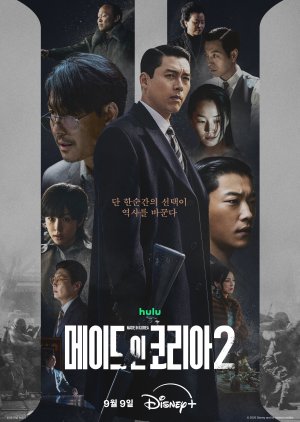
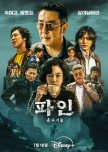
What a disappointing end to a thrilling journey!!While you are trying to imbibe fiction into realism, facts get distorted. The incidents leading to the assassination of the Korean President are true, and so are the event circumnavigating military rule. While rewriting history, the character names were changed, but the show manages to remain true to the gruesome history that saw the regime changeover in Korea. While the show does stick to original facts, it is obvious that this series hinges on the dynamics between our bold main protagonists. The cat and mouse chase between Baek Gi Tae & Jang Gun Yeong is the highlight of this show. Jang Gun Yeong’s hunger for revenge drives the narrative, only for him to take a nosedive in the finale. Instead, we are left with a lackluster ending where Baek Gi Tae meets an unlikely ending, at the hands of his own brother.
Read the complete article here-
https://kcdramamusings.wordpress.com/2026/09/24/made-in-korea-season-2-series-review/
Was this review helpful to you?

This review may contain spoilers
"I was serving my country. Everything I did... I did for the sake of this nation... Baek Kitae."The major reason as to why I enjoyed this season even more is the fast pacing and incredibly intense acting! This show thrives on the "show, don't tell" method so if you blink, you might miss a crucial clue. Everyone ate, and I mean everyone!! My main MVPs, however, were Baek Kitae (played by Hyun Bin) and Pyo Haksu (played by Roh Jaewon)!
Logically, the story was fantastic, but emotionally? That is a whole different story.
This season we got to see Baek Kitae fight to retain a scale of power that had grown massive. What made it so thrilling was the 9-year jump, bringing higher stakes, transformed characters, and completely shifted power dynamics.
Emotionally, I was so frustrated by the end because Kitae kept getting outsmarted through and through. But I can't blame the writing. Logically, when someone refuses to adapt to change and clings to rigid, outdated methods, they automatically fall behind... that is exactly what happened to Kitae. His enemies spent seven years studying him to build better strategies to take him down, while he was stuck in a loop of comfort. In the end, the KCIA lost under his leadership purely due to his own rigidity.
I understood it perfectly from a story standpoint, but it doesn't erase the emotional pain of that ending! Either way, an absolute top-notch watch with elite acting.
Was this review helpful to you?

Why 《Made in Korea》 Is a Masterpiece of Secret History
How can you tell if a writer and director have mastered their craft? It is when they can tightly weave fiction into real history without changing the actual flow of events, leaving us wondering if those events did happen in some form or another. That is exactly what 《Made in Korea》 is, a secret history genre of fiction seamlessly inserted into the seams of South Korea's turbulent 1970s.This is no ordinary fiction. This is not like typical historical fiction where a story is simply set against the backdrop of a particular period, such as in 《Abraham Lincoln: Vampire Hunter》 or 《Avengers》. Instead, 《Made in Korea》 belongs to the same tradition as 《Titanic》and 《The Da Vinci Code》, fictional stories tightly woven into actual history that the audience can no longer tell where fact ends and fiction begins.
This genre is particularly captivating when executed properly. A writer must perfectly fit a fictional story into real-world events without altering the timeline. Meanwhile, the director must integrate the narrative seamlessly into existing knowledge that the audience is left wondering if the fiction is secretly based on classified, unreleased, or incomplete records that the creators simply cannot legally or openly acknowledge.
That is what 《Made in Korea》 is made of. It is a true work of art by writers Park Eungyo (박은교) and Park Joonsuk (박준석), and director Woo Minho (우민호). They have definitely mastered their craft, making 《Made in Korea》 their definitive masterpiece.
Was this review helpful to you?

This review may contain spoilers
Baek Ki-Tae: The Man, Myth, and Legend
I finally finished this. I have to say, I don't think the ending is bad (while I don't fully agree with it, this is based on historical events, after all.) I can't think of a single form of media where a villain protagonist has genuinely won and not faced a tragic downfall or suffered at the end. Not Macbeth, not Death Note, not House of Cards, Secrets and Lies (another ambiguous ending), Queen of Ambition, The Blacklist (ish), Ruby Ring (the ending for this was INSANE lmao, literally and figuratively), Return... the list goes on.Edit: There are a few movies where the villain protagonist wins at the end... but that's rare. I will not spoil them, though. So I was slightly wrong.
So the way Ki-Tae's story ended didn't surprise me much. He would've never became president. That being said, there was no use to Ki-Hyun's character in the drama. I get that he was meant to be a foil to Ki-Tae, but he was mostly wasted and mainly a goddamn coward from beginning to end. Yu-Ji's change surprised me (I don't understand why a few people had issues with it? She was literally tortured, that would change anyone 😭), Ye-Jin... did some stuff, but of course, never got to completely showcase her own talent (she felt like a better foil to me than Ki-Hyun, tbh), Gun-Young basically went off the deep end because of revenge, things were never gonna end well for him. Oh, and I HATED the General! Fuck that guy! Chief of Staff Cheon was interesting, but then... he turned out to be a total rat. Of course. Pyo Hak-Su was hilarious though lol
The part with Madam Shin being a shaman felt random and kinda unnecessary? Like whatever I guess... The overall pacing improved a lot in this season. I would say I like both seasons equally at this point? The acting remained fantastic, of course. And the music was great. I found Season 2's opening to be much better than Season 1's, in my opinion. Suited the darker tone of the season. And with Ki-Tae fading away, I think that should've been a hint as to where his story was headed. 💀 My one minor gripe is probably the smoking scenes. I feel like they overdid it here 😂 stylistically it's cool, but some scenes were literally just "dim, smoke, foggy. Whispers and stares." And that's it. As I said on here, Baek Ki-Tae is one of my favorite villain protagonists in k-dramas. Hyun Bin's acting definitely helped with that, and the writing... very... hmm, layered, to an extent?
My theory is that Ki-Tae did not die. Let a girl dream. He survived and made it to that boat. 😭 Faked his death and became a fixer overseas or something! I love that the ending is ambiguous, though. My ideal ending would've had him win. OR, lose and reinvent himself somehow, becoming worse and far more cunning. I still feel like my theory happened, so... maybe the second one might be true? 👀
Overall rating for Season 2: 9.5/10. I still recommend this series. Feel free to watch it if it's your cup of tea. If you like fluffy rom-coms, skip it. Do not press play, move on. 😁 BUT if you like villain protagonists, political thrillers, morally grey characters, and a ton of conspiracies, go for it. This is an incredible drama.
Was this review helpful to you?

This review may contain spoilers
King of the meth game
To say that Made in Korea rekindled my fire for Asian dramas after nearly a decade of being out of it is understating it. I'm always going to be a sucker for spies and espionage, and I'm *especially* a sucker for the Cold War timeframe. And compared to a lot of works in the west, especially in the 70's time frame MiK sets itself in, that works within the confines of Detente between the US and the Soviet Union, setting it in South Korea and Japan allows for a lot more flexibility, and gives a look into a South Korea that is still dealing with the aftershocks of both the Korean War, and being a dictatorial bulwark for the US against the spread of communism in East Asia. After watching the first half and giddy at the prospect of a second half that could be as good as the first, I dove into the second half wondering what the writers, and specifically Woo Min-ho could do.The story picks up in the late 70's, with Baek Ki-tae (Hyun Bin) having ascended to the deputy director role of the Korean CIA, and looking for further control. The meth trade between Japan and Korea is still humming along, and even beginning to sell within borders. But the winds of regime change are blowing, and Ki-tae specifically has new apex predators looking to knock him off the perch - specifically, in Hwang Dae-sik (Heo Jung-do) who sees his operations as an obstacle to his own power and ambitions. To that end, Dae-sik decides to bring Jang Geon-young (Jung Woo-sung) out from the purgatory Ki-tae forced himself in, and bring him down. Cue chess matches and a lot of killings.
To be honest, the second half meets the lofty expectations set by the first. But then we eventually get into the last 10 minutes, and the ending specifically. For what it's worth, I'm not as down on the ending as others are - I think thematically, it is fitting. As much as people are essentially caping for a meth dealer to win because of the absolute powerhouse performance Hyun Bin provides, it was clear to me that Ki-tae ultimately did not have that next gear of evil to be able to gain the further control that he lusted after. The ultimate irony of Dae-sik being the winner tracks for those who know their Korean history, considering he is ultimately a value brand interpretation of Chun Doo-hwan, the dictator that would take control in 1979 as well, and last until 1988, but that still doesn't explain away that when it comes to the story, Ki-tae is seriously nerfed. Maybe it is me looking too much through the lens of hindsight and knowing how the US ultimately inflamed the dictatorships that were under its umbrella, but it would have been easy to cook up a cockamamie plot that the North had infiltrated the Army staff, and that there needed to be a change of power. But if you are the one to enjoy your stories being wrapped up in a nice bow, then the open-ended nature of the ending is definitely going to be a massive rain cloud on your ultimate enjoyment of the ending, even if you have knowledge of the events that MiK bases itself in, or how Korean dramas operate where the villain almost never wins.
Unfortunately, for as much as Woo Do-Hwan manages to step up to the plate in terms of acting as Baek Ki-hyun, there is no denying that he is the weakest link character wise in the main cast. Whereas Ki-tae's ultimate folly is his belief in his brother, Ki-hyun is straight up a coward. He has no problem effectively working and undermining the investigation that he is apart of, but even after seeing his sister become a meth head more or less due to Ki-tae's ambitions, the motivations for stabbing Ki-tae in the back are shaky at best. The open ended ending does save him somewhat from being truly a useless character, but he is without question the weak link.
Geon-young's character change from the first half is one aspect I do enjoy greatly. It's clear that his drive to bring Ki-tae down has him ultimately abandoning his values and shacking up with military men who are bloodthirsty and willing to lash out and eliminate those they see as a threat (Geon-young more or less spells this out at the end) but it is exciting to see whether he will cross the event horizon and truly become a wild animal off the leash in order to get what he wants, or if he will restrain himself just that little bit. Said push, pull and strain also drives his relationship with his partner Oh Ye-jin (Seo Eun-su) but she unfortunately feels increasingly superfluous as the second half goes on, with very little charm that made her enjoyable in the first half.
And then there is the Japanese end of the story, and specifically Choi Yuji (Won Ji-an) and her own power ambitions. I will admit, it was a surprise to see that there was indeed feelings between her and Ki-tae, but it's done in a way that feels right, and while it does make up part of the reason for Ki-tae's ultimate escape plan, it is not overbearing otherwise. Considering that the story becomes much more insular, especially in the last two episodes, it's no surprise to see Yuji become a smaller player outside of the first episode, but even with what Won Ji-an has to work with, she delivers for sure.
Continued from the first half, is the top notch set work and aesthetics of it all. There was no expense spared in presenting Korea and Japan in the 70's, with cigarette and cigar smoke and dark rooms a plenty. It is truly a textured, rich world, and it's clear that the Disney money allowed for a lot more flexibility in that regard to present the world in a way that felt true. For as much stick as I and others have given the ending, I will admit the lighting in the scene in general was fantastic, flipping between bright lights, darkness, and bright red.
I think even taking the ending into account (again, I am not as down on it as others because I can understand, and ultimately get, why it was done, but it definitely can turn some people off) there is no denying that I enjoyed Made in Korea. A lot. It gave me everything I love, done up in a time frame and period that is unique for me, seeing things in a Western-centric lens. That it truly feels like the 70's is also a really fantastic showing from Woo Min-ho, using the big money given to him for this project well. I doubt that there will be a third season (especially considering the director has stomped up and down that 12.12 The Day essentially did that for him, and considering it also has Jung Woo-sung, people might as well go there for the next part) so if this is truly the end, I loved a lot of it. And even it's worst aspect kneecapping it a couple yards from the end, this is by far the best Korean drama I've watched taking everything into account.
Was this review helpful to you?
REVIEW - MADE IN KOREA SEASON 2
It is easily one of the most visually stunning and expensive K-dramas of the year. However the relentless, excessive scenes of characters smoking add absolutely zero value to the actual plot. Instead of moving the narrative forward, we are repeatedly subjected to long, lingering shots of smoke filling the room during dialogue-heavy scenes. Rather than adding atmosphere, it breaks the momentum and feels like lazy visual filler. Baek Ki-tae, (Hyun Bin) carries the show on his back. He balances ruthless aggression with a magnetic charm that makes it impossible to look away. There are no pure heroes here; it is a fascinating, cynical look at how absolute power corrupts absolutely. Made in Korea Season 2 is a muscular, high-stakes triumph of Korean television. It isn't perfect, but its historical weight and top-tier acting make it well worth the watch.Was this review helpful to you?

Don’t ever judge it too early based on season one
In my opinion, season one was an introduction to season two.I liked season two more than season one because it was more exciting and more gripping, and it was unpredictable until the very end
The acting was amazing. I loved Hyun Bin’s performance so, so, so, so much, and I’d give him a two out of ten.
I felt that the writing had some flaws/bugs in places, but overall the series had the atmosphere/vibe of Korean movies, and I personally love that vibe, and it was the reason I started this series
Was this review helpful to you?

great pilitical thriller and stellar acting...season 2 did not disapoint!
The second season of Made in Korea did not disappoint—it holds the same high standard as the first. The cast is outstanding, and the way they bring their characters to life is remarkable. The production design and the 1970s atmosphere are immersive, pulling you into a world of political intrigue and moral ambiguity.We see Baek Ki-tae (Hyun Bin) once again face his enemy Jang Geon-yeong (Jung Woo-sung) and fight for his survival. I found myself rooting for Baek Ki-tae, even though he is undeniably a bad guy. But let's be honest—were the rest of the politicians or generals any better than him? If someone wants power, they will not stop and will do anything they have to do to get it. That was Jang's realisation at the end: even if he got what he wanted, did the world really change? No, it is still the same.
It was fascinating to watch Baek Ki-hyeon (Woo Do-hwan) grapple with his dilemma—whether to side with his brother or follow orders from above. Who was the real villain when everyone wanted a piece of the pie? The line between good and evil blurs constantly, and that's what makes the story so compelling.
I am so excited that there is talk about a third season. The ending was realistic, and it also left you wondering whether it really happened, as they did not show it.
Final Verdict: A gripping sequel that expands on the first season's themes of power, corruption, and survival. If you enjoyed the first season, this is a must-watch. Highly recommended for fans of political thrillers and stellar acting.
Was this review helpful to you?
It's looking like a good start for new season...
Season 2 is already looking stronger and more focused than Season 1.The biggest improvement is the structure. Instead of feeling like several loosely connected political/crime chapters, Season 2 is designed as one continuous six-episode story.
Nine years have passed, and Ki-tae is no longer simply an ambitious businessman trying to enter the political world.
He's now at the height of his power as KCIA deputy director.
That changes the character completely.
In Season 1, we watched him build power.
In Season 2, we're watching him protect power.
And that's arguably more interesting.
Hyun Bin continues to be the biggest reason to watch the series.
My verdict so far
Season 2 has improved the formula.
Season 1 was mainly about Ki-tae's rise.
Season 2 is about what happens after he gets everything he wanted — and the people who are coming for him.
The introduction of Ki-hyun, the nine-year time jump, Geon-young's transformation from justice-seeker to revenge-seeker, and the 1979 political backdrop make this season considerably more ambitious.
Was this review helpful to you?

One of the finest historical dramas!
Made in Korea is one of the most extraordinary series I have ever watched and, in my opinion, one of the finest historical dramas I have seen, particularly in its exploration of politics, power and diplomacy. Watching both seasons together made the experience even more complete, allowing the story to unfold as one cohesive and powerful work. 💯❤️👏🏻
The production is outstanding in every respect. The direction, cinematography, atmosphere, soundtrack, sound design and overall execution come together to create a truly exceptional experience. Every element contributes to the intensity and authenticity of the story.
What impressed me most was the acting. The performances were so vivid, convincing and intense that I sometimes felt as though I were actually part of the story, witnessing and experiencing those events as they unfolded in real life during that era. The actors did not simply portray their characters; they made them feel real, bringing their lives, struggles and inner conflicts remarkably close to the viewer.
Hyun Bin deserves special recognition for his extraordinary portrayal of Baek Ki Tae. The character is fascinating, complex and, at times, shocking, and Hyun Bin reveals so many layers of his personality through his performance. His intensity and ability to convey the character’s different sides left a profound impression on me and showcased the remarkable depth of his talent.
Jung Woo Sung, Woo Do Hwan, Seo Eun Soo, Won Ji An, Jung Sung Il, Jang Hye Jin and Roh Jae Won also deserve praise for their compelling and convincing performances. The entire cast is excellent, including those in smaller roles. The strength of the acting is not limited to a few leading performers; everyone contributes to the authenticity and impact of the series.
One detail that particularly resonated with me was Ki Tae’s insistence on yeomchi (염치), a sense of shame, honour and moral self-respect that prevents a person from acting without conscience. His words about people who betray others without the slightest sense of shame stayed with me. As a Greek, I found a meaningful connection with Aidōs (Αἰδώς), an ancient Greek concept associated with moral conscience, dignity and the inner restraint that keeps a person from acting dishonourably. Although these concepts are not identical, their shared emphasis on inner moral responsibility felt deeply familiar to me. The return to this idea in moments of betrayal made it even more powerful. It was a detail that gave the series an additional layer of meaning for me, reminding me that certain fundamental questions about honour, conscience and what it means to remain human transcend cultural boundaries.
A production of this calibre is the result of collective effort. From the writing and direction to the performances and every contribution behind the scenes, each part matters. Made in Korea is an outstanding example of what can be achieved when the entire team works together at such a high level.
An extraordinary series in its storytelling, performances, production and emotional impact. One that stayed with me not only for its quality, but also for the ideas it made me reflect on! ❤️ 10+/10
Was this review helpful to you?