- Italiano
- English
- Français
- Português (Brasil)
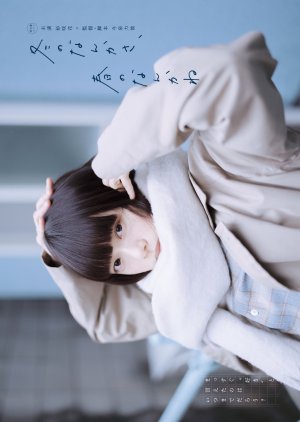
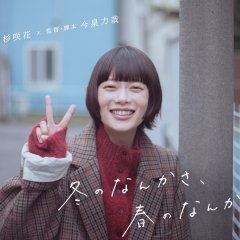
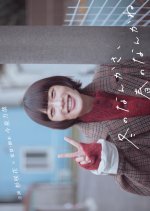
- Titolo Originale: 冬のなんかさ、春のなんかね
- Conosciuto Anche Come: Fuyu no Nanka sa, Haru no Nanka ne , ふゆのなんかさ はるのなんかね
- Regista: Yamashita Nobuhiro
- Sceneggiatore & Regista: Imaizumi Rikiya
- Generi: Romantico, Drama


Cast & Ringraziamenti
-
") Sugisaki HanaTsuchida AyanaRuolo Principale
Sugisaki HanaTsuchida AyanaRuolo Principale -
") Narita RyoSaiki YukioRuolo di Supporto
Narita RyoSaiki YukioRuolo di Supporto -
") Okayama AmaneHayase KotaroRuolo di Supporto
Okayama AmaneHayase KotaroRuolo di Supporto -
") Mizusawa RintaroWachiRuolo di Supporto
Mizusawa RintaroWachiRuolo di Supporto -
") Nouchi MaruEn-chanRuolo di Supporto
Nouchi MaruEn-chanRuolo di Supporto -
") Shida SaraMakiRuolo di Supporto
Shida SaraMakiRuolo di Supporto







Recensioni

Ciò che amore non è
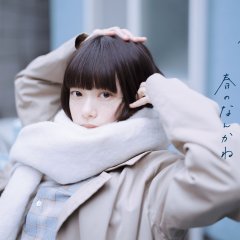
Questa serie, disponibile su Netflix con il titolo "Sounds of Winter", è girata quasi con un impianto documentaristico, regalando momenti di grande introspezione, con un ritmo lento (a tratti soporifero), dialoghi lunghi e intensi, scene con ampio minutaggio, location urban e una fotografia fredda. I costumi sono minimal e, soprattutto nel caso della protagonista, semplici e oversize, quindi outfit privi di orpelli per non distrarre dal focus narrativo. La colonna sonora è caratterizzata dalle canzoni più in voga del J-Pop.Sicuramente la qualità della recitazione degli attori è eccellente, visto il forte realismo che permea le vicende dei personaggi.
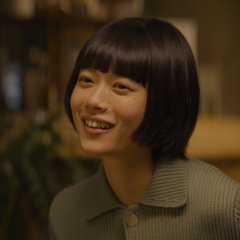
Protagonista è una giovane scrittrice di nome Ayana, le cui frequenti delusioni sentimentali, raccontate in alcuni flashback che aprono la gran parte degli episodi, l'hanno resa incapace di amare davvero; intraprende, infatti, una relazione con un hair stylist, Yukio, incontrato casualmente in una lavanderia a gettoni ma, nel frattempo, lo tradisce con il signor Yamada e ha un'ambigua amicizia con Kotaro. Insomma, non è la classica eroina romantica. Si ripetono scene di vita quotidiana, in cui la vediamo mangiare e fumare o prendere appunti per i suoi romanzi.
La narrazione non è altro che uno sguardo sulla realtà contemporanea, fatta di rapporti affettivi "liquidi", dove la stabilità e l'esclusività si sono dissolte.
Il messaggio che trasmette è di una donna ferita, fragile, ma libera, che non vuole né essere etichettata né appartenere a qualcuno. Molto attuale.
Questa recensione ti è stata utile?

 1
1The rating is 7.4, the reviews are 9s… Looks good to me!
You will know in the first fifteen minutes if this drama is for you and you will either sink into it or find it unutterably boring. I’m of the first category. I love Japanese art-house style. Restrained, delicate, beautiful and all happening under the surface. The slow unfolding of the conversation, with long pauses into which you fall.Written by a man it explores the territory of intimacy using the relationships of one woman, Ayana, with multiple others, mostly men. But this is about distance between people as much as it is about closeness. What makes us feel comfortable in a relationship. Why seemingly good people are not a compatible match. The reasons why relationships may include or avoid sex. It’s a 360 on relationships.
Each episode examines a separate relationship dynamic that Ayana has had over the past ten or so years. As she tries to work out what it is that she wants, and how the preceding relationships affect the future ones. She is exploring herself through the contact she has with others.
All the men seem to inhabit a similar sphere. None of them are hard core go getters or tsundere they are very unremarkable people, as is she. That is not a criticism or a dismissive comment, rather, a description of the type of people that are explored in the drama.
Having muted characters gave a sameness to the interactions. The conversations were all at the same pace and in many ways delivered in the same way. But there were different undercurrents that caught you up in them. The script stays very close to life, with long pauses and at times has the feel of a structured improvisation. The slowly unfolding conversations allow space to reflect on yourself as well as understand the characters. The difficulties/tensions hang in the air and are not rushed. There is very little visible emotion, no wailing, just internalised feelings.
Don’t expect a lot of plot and the order of the episodes is non-chronological. Although it adds a little mystery, as in wanting to understand why she is as she is, I did find it a little confusing. Mainly because you are following an emotional development and the backstory often meant that you were unsure where on her journey Amala was at that particular moment. I can understand perhaps why they did it this way, as we do not reflect on our life sequentially, fragments mean different things at different times.
Amala is a novelist. As a writer I found it interesting that all of her stories were very directly based on herself and her relationships Almost retelling reality. This is not the case for most writers, who deliberately and proudly create their own characters, even if they may have some traits of a real person. But here, in the drama, it seemed as though it was being used deliberately to blur the lines between reality and fiction, truth and imagination, desire and fact.
In true art-house style, the drama uses mood as the narrative device. Emotions are hinted at rather than revealed. There is a scene at an onsen where Amala both smiles and cries in a long direct stare into the camera, allowing the audience to participate in the incompatible blend of emotions that she is experiencing.
These long-held camera shots are the signature of the drama. Filmed by a largely static camera which often concentrates on faces and expressions. The lack of camera movement adds to the almost profound stillness of the narrative. Music is used sparsely if at all, and long silences hang in the air. The only thing that I found annoying, was the abrupt cut to black between scenes. Somehow the black emphasised the change and left me feeling even more hung out to dry. Especially if it was an intense scene in which I had become immersed. Like most of them…
I liked the performances and felt that the director and the cast managed to create a cohesive feel for the drama as a whole. This was not necessarily easy in a drama where most scenes have just two people in them and the cast does very little ensemble acting.
Overall I really liked this drama, and found it immersive and thought provoking.
Questa recensione ti è stata utile?