News


- Português (Portugal)
- Français
- Português (Brasil)
- English
- Native Title: Tシャツが乾くまで
- Also Known As: T-shirt ga Kawaku made , Tīshatsu ga Kawaku made , ティーシャツがかわくまで
- Director: Doi Nobuhiro, Tsukamoto Renpei, Komaki Sakura
- Screenwriter: Ubukata Miku
- Genres: Romance, Drama



Cast & Credits
-
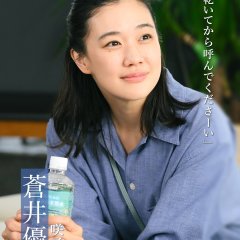
") Aoi YuSeo SakikoMain Role
-
") Nakajima AyumuSonoda ItsukiSupport Role
-
") Takahashi FumiyaYano NaotoSupport Role
-
") KahoSonoda AzusaSupport Role
-
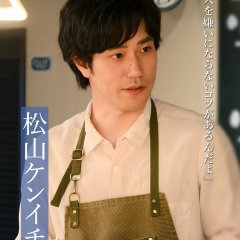
") Matsuyama KenichiSeo MitsuruSupport Role
-
") Saito AsukaSonoda MikiSupport Role










Reviews

Enigmatic. Perplexing. Healing.
This series begins with loss…with people finding support in one another through the trauma of losing someone they love. Like a train ride, it starts very slowly, gradually gaining speed and momentum until…it hits a wall.The writers beautifully incorporate so many metaphors throughout the story that, as a viewer, I constantly found myself looking for answers. Why can’t you just tell me what is happening? Because that would dumb me down.
This is what I admire about Japanese writers. They have a creative way of challenging our intellect without resorting to cheap tricks. Here we simply watch people dealing with loss, grief, marriage, love and the things we keep hidden. And just when you think you understand where the story is going, something happens that changes everything.
Because you’ve already become emotionally invested in these characters, your reaction is exactly what the writers wanted…anger, confusion, disbelief, frustration. Call it whatever you like.
But like hanging a T-shirt out to dry, understanding takes time, patience and acceptance.
That’s when the train starts gaining momentum.
Then, just as you’ve surrendered to the idea that perhaps this journey is becoming boring and monotonous…the train hits the wall.
Suddenly your emotions are pulled right back in.
What just happened?
Was that real?
Was that a dream?
And once again, you’re questioning everything you thought you understood.
The acting is superb and remarkably natural. During the last few episodes, I purposely turned off the closed captions. I wanted to listen to their voices, watch their eyes and study their body language. Sometimes those things tell a story all by themselves. By watching this way, every revelation became even more shocking because I wasn’t being told what to think…I had to interpret what I was seeing.
And perhaps that is what this entire series has been asking us to do.
How well do we really know someone we’ve loved for years?
You can sleep beside someone every night, build a home together and create what appears to be a loving and peaceful marriage…yet never share your deepest thoughts, fears and secrets. We sometimes reveal only the parts of ourselves that we believe will preserve that happiness, while keeping our real selves safely hidden underneath.
Is that still love?
Perhaps the title itself provides the answer.
A T-shirt doesn’t dry simply because the washing machine has stopped spinning. Pull it out too soon and it may still be wet. You have to hang it up, expose it to the air…and give it time.
Maybe people aren’t so different.
And perhaps love isn’t about keeping everything clean and perfectly folded. Maybe it’s about finally exposing everything we’ve kept hidden and discovering whether, after all of it has been washed and hung out to dry, we still choose the person standing beside us.
I’m on episode 9, however the series ends it would make me feel good. Because finding love and even losing it after is still better that never to have loved at all.
Was this review helpful to you?

This review may contain spoilers
When the Laundry Finally Dries
Until the T-Shirt Dries proves relationships are far more intricate than any simple affair story could ever capture. What begins with Sonoda Itsuki spotting his wife Azusa meeting another man, Seo Mitsuru, at a local coin laundry every third Friday of the month quickly expands into something much deeper. When a tragic bus crash claims Azusa’s life and leaves Mitsuru missing, Itsuki and Mitsuru’s unassuming wife, Sakiko, are thrust together into a joint investigation. They soon realize that their marriages were built on fragile assumptions, silent resentments, and hidden layers of loneliness that neither of them fully understood.The strength of this drama lies in how it handles its complex themes without ever feeling heavy-handed. Every character is beautifully flawed yet deeply sympathetic. Sakiko initially appears to be the picture of a cheerful, secure, and positive homemaker, but beneath her curated facade of the perfect wife, she is a lonely soul desperately performing a role to maintain domestic stability. Her journey of unravelling is mirrored by the washing machine filter. Throughout the drama, the filter represents the psychological boundaries and capacity of what a person can bear within a high-stakes relationship, catching all the invisible dirt and lint of daily life until it finally tears under pressure.
The literal breakdown and tearing of that filter at the end of the series deepens the narrative commentary on marital endurance. When the physical lint filter actually tears apart alongside Sakiko's internal emotional filter, it signals the end of her capacity for submissive compliance and role-playing. For Mitsuru, his cryptic note telling her the filter is dirty acts as a physical tipping point. When his internal filter fills up with the pressure of trying to be the perfect, loving husband, he breaks. Rather than doing the heavy emotional lifting of communicating, he chooses to purge his life entirely, running away when the machinery of his domestic life gets too heavy to process.
Mitsuru is an equally fascinating study in human vulnerability. Operating as a gentle coffee shop owner, his outward charm masks a deep inferiority complex and a lifelong impulse to flee when emotional pressure mounts. Abandoning his wife via that note in the laundry filter is cowardly, yet his raw honesty with Azusa at the laundromat reveals a man simply searching for a place to breathe. Later on, his sudden resistance and childish, emotional meltdown upon realizing Sakiko wants a divorce contrasts sharply with his usual elusive demeanor, proving just how fragile his composure truly is.
Azusa herself acts as a haunting, tragic catalyst. Her meetings with Mitsuru were never a conventional betrayal, but rather a platonic sanctuary where two isolated souls could speak their absolute truths without fearing judgment or dislike. Meanwhile, Itsuki’s rigid adherence to corporate order and structured expectations crumbles as he learns that human hearts cannot be managed like a tidy schedule.
Visually, the drama feels like fresh laundry hanging in the sun, offering a stunning yet comforting aesthetic that makes its intricate narrative entirely digestible. The muted, clinical palettes of the domestic homes contrast sharply with the warm, neon-lit liminal space of the coin laundry, perfectly capturing the emotional states of the characters. Even the recurring presence of almond cakes serves as a poignant visual motif for performative affection masking a hollow interior. Accompanied by a memorable soundtrack that lingers long after the credits roll, every stylistic choice works in harmony to ground the story.
The ambiguous open ending has divided viewers, but I find it to be the most realistic and satisfying closure. As a romance lover, watching every ship sail neatly into port is always tempting, but realism has a much deeper charm here. Sakiko ultimately rejects Itsuki's structured ultimatums and chooses to live on her own terms, transforming from a submissive partner into a fully autonomous individual. Whether the mysterious figure stepping through her door at the finale is Mitsuru or someone else matters far less than her newfound freedom. The final lingering image of the white T-shirt hanging on the line captures the heart of the entire series. Emotional healing takes time, and much like a damp shirt, you cannot rush a relationship to dry before it is ready. This is a wonderfully layered, deeply recommended watch for anyone who appreciates the quiet complexities of human connection.
Was this review helpful to you?