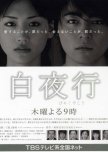
News


Enigmatic. Perplexing. Healing.
This series begins with loss…with people finding support in one another through the trauma of losing someone they love. Like a train ride, it starts very slowly, gradually gaining speed and momentum until…it hits a wall.The writers beautifully incorporate so many metaphors throughout the story that, as a viewer, I constantly found myself looking for answers. Why can’t you just tell me what is happening? Because that would dumb me down.
This is what I admire about Japanese writers. They have a creative way of challenging our intellect without resorting to cheap tricks. Here we simply watch people dealing with loss, grief, marriage, love and the things we keep hidden. And just when you think you understand where the story is going, something happens that changes everything.
Because you’ve already become emotionally invested in these characters, your reaction is exactly what the writers wanted…anger, confusion, disbelief, frustration. Call it whatever you like.
But like hanging a T-shirt out to dry, understanding takes time, patience and acceptance.
That’s when the train starts gaining momentum.
Then, just as you’ve surrendered to the idea that perhaps this journey is becoming boring and monotonous…the train hits the wall.
Suddenly your emotions are pulled right back in.
What just happened?
Was that real?
Was that a dream?
And once again, you’re questioning everything you thought you understood.
The acting is superb and remarkably natural. During the last few episodes, I purposely turned off the closed captions. I wanted to listen to their voices, watch their eyes and study their body language. Sometimes those things tell a story all by themselves. By watching this way, every revelation became even more shocking because I wasn’t being told what to think…I had to interpret what I was seeing.
And perhaps that is what this entire series has been asking us to do.
How well do we really know someone we’ve loved for years?
You can sleep beside someone every night, build a home together and create what appears to be a loving and peaceful marriage…yet never share your deepest thoughts, fears and secrets. We sometimes reveal only the parts of ourselves that we believe will preserve that happiness, while keeping our real selves safely hidden underneath.
Is that still love?
Perhaps the title itself provides the answer.
A T-shirt doesn’t dry simply because the washing machine has stopped spinning. Pull it out too soon and it may still be wet. You have to hang it up, expose it to the air…and give it time.
Maybe people aren’t so different.
And perhaps love isn’t about keeping everything clean and perfectly folded. Maybe it’s about finally exposing everything we’ve kept hidden and discovering whether, after all of it has been washed and hung out to dry, we still choose the person standing beside us.
I’m on episode 9, however the series ends it would make me feel good. Because finding love and even losing it after is still better that never to have loved at all.
Was this review helpful to you?

This review may contain spoilers
When the Laundry Finally Dries
Until the T-Shirt Dries proves relationships are far more intricate than any simple affair story could ever capture. What begins with Sonoda Itsuki spotting his wife Azusa meeting another man, Seo Mitsuru, at a local coin laundry every third Friday of the month quickly expands into something much deeper. When a tragic bus crash claims Azusa’s life and leaves Mitsuru missing, Itsuki and Mitsuru’s unassuming wife, Sakiko, are thrust together into a joint investigation. They soon realize that their marriages were built on fragile assumptions, silent resentments, and hidden layers of loneliness that neither of them fully understood.The strength of this drama lies in how it handles its complex themes without ever feeling heavy-handed. Every character is beautifully flawed yet deeply sympathetic. Sakiko initially appears to be the picture of a cheerful, secure, and positive homemaker, but beneath her curated facade of the perfect wife, she is a lonely soul desperately performing a role to maintain domestic stability. Her journey of unravelling is mirrored by the washing machine filter. Throughout the drama, the filter represents the psychological boundaries and capacity of what a person can bear within a high-stakes relationship, catching all the invisible dirt and lint of daily life until it finally tears under pressure.
The literal breakdown and tearing of that filter at the end of the series deepens the narrative commentary on marital endurance. When the physical lint filter actually tears apart alongside Sakiko's internal emotional filter, it signals the end of her capacity for submissive compliance and role-playing. For Mitsuru, his cryptic note telling her the filter is dirty acts as a physical tipping point. When his internal filter fills up with the pressure of trying to be the perfect, loving husband, he breaks. Rather than doing the heavy emotional lifting of communicating, he chooses to purge his life entirely, running away when the machinery of his domestic life gets too heavy to process.
Mitsuru is an equally fascinating study in human vulnerability. Operating as a gentle coffee shop owner, his outward charm masks a deep inferiority complex and a lifelong impulse to flee when emotional pressure mounts. Abandoning his wife via that note in the laundry filter is cowardly, yet his raw honesty with Azusa at the laundromat reveals a man simply searching for a place to breathe. Later on, his sudden resistance and childish, emotional meltdown upon realizing Sakiko wants a divorce contrasts sharply with his usual elusive demeanor, proving just how fragile his composure truly is.
Azusa herself acts as a haunting, tragic catalyst. Her meetings with Mitsuru were never a conventional betrayal, but rather a platonic sanctuary where two isolated souls could speak their absolute truths without fearing judgment or dislike. Meanwhile, Itsuki’s rigid adherence to corporate order and structured expectations crumbles as he learns that human hearts cannot be managed like a tidy schedule.
Visually, the drama feels like fresh laundry hanging in the sun, offering a stunning yet comforting aesthetic that makes its intricate narrative entirely digestible. The muted, clinical palettes of the domestic homes contrast sharply with the warm, neon-lit liminal space of the coin laundry, perfectly capturing the emotional states of the characters. Even the recurring presence of almond cakes serves as a poignant visual motif for performative affection masking a hollow interior. Accompanied by a memorable soundtrack that lingers long after the credits roll, every stylistic choice works in harmony to ground the story.
The ambiguous open ending has divided viewers, but I find it to be the most realistic and satisfying closure. As a romance lover, watching every ship sail neatly into port is always tempting, but realism has a much deeper charm here. Sakiko ultimately rejects Itsuki's structured ultimatums and chooses to live on her own terms, transforming from a submissive partner into a fully autonomous individual. Whether the mysterious figure stepping through her door at the finale is Mitsuru or someone else matters far less than her newfound freedom. The final lingering image of the white T-shirt hanging on the line captures the heart of the entire series. Emotional healing takes time, and much like a damp shirt, you cannot rush a relationship to dry before it is ready. This is a wonderfully layered, deeply recommended watch for anyone who appreciates the quiet complexities of human connection.
Was this review helpful to you?

Great start but loses steam at the end ...
This definitely was one of the most unique stories I've seen in quite some time. The wring and acting are really superior in this drama. I wasn't familiar with the two main leads, only Fumiya Takahashi was recognizable from past roles. I wish he had a bigger part, but the two protagonists gave us great performances. Yu Aio & AyumuNakajima really have a great chemistry with each other, but we're just not sure what that chemistry is, especially as you get deeper into the series.This story deals with so many things throughout this series, death, deception, mental suffering and many different types of relationships between a man and woman. It shows how different situations can be perceived by others when you don't know or understand all the facts.
As the series lays the foundation early on, be careful not to draw too many conclusions ... because whenever you think has happened or will happen, it really changes quite a bit from the first few episodes until the finale.
I must admit, though, I really enjoyed this series so much until the last couple of episodes. It started to lose points with me beyond episode 7. The story seemed to be lacking the powerful draw it had earlier on, especially the final episode. It does wrap things up nicely at the end, except for the final sixty seconds ... I'm not understanding that ending at all. It also was a bit mediocre and very anti-climactic, considering how intense the rest of the series was.
I know it's sounding like I hated it, but it really was a great series overall. I just wish the final two hours or so was written a little bit different. It is a great watch!!!
Was this review helpful to you?

well-meaning show with weird pacing and execution
I understood very well what this show was trying to tell us: not everything is what it seems, and sometimes the magic lies in simply waiting for everything to slowly unfold. That is probably what makes this show so unique in its own way.The pacing of the first six episodes was especially good since it constantly made me want to immediately move on to the next episode just to see what was really going on.
I really enjoyed the feeling of having my assumptions gradually challenged. The show would give you just enough information to form an impression of a character or situation, only to later reveal another side of it. That constant uncertainty worked incredibly well in the beginning because I was actively trying to put the pieces together along with the characters.
However, the later episodes started to lose me a little. My biggest problem wasn’t necessarily that the story kept revealing new information, but that the emotional and psychological conclusions I had reached about the characters would sometimes be undone almost immediately by another revelation. I would spend an episode building a certain understanding of a character, letting that shape how I felt about them, and then a new piece of information would come along in the next episode and completely reframe it. Eventually, I stopped mentally checking in with their stories as much because I felt less certain that the emotional investment I was making would actually have somewhere to land.
This became especially noticeable with the dialogue. There were moments when I could feel the writing trying very hard to communicate the intended meaning or push the characters toward a particular revelation, rather than allowing their conversations to naturally unfold from who they were. Sometimes it felt like they were saying something because the script needed them to say it, rather than because I could genuinely believe that this was how these characters would speak to each other in that moment.
And ironically, I think that’s where the show’s central strength eventually became a weakness for me. The constant idea of “things aren’t what they seem” is fascinating when it makes you reconsider what you thought you knew. But when almost every emotional conclusion is repeatedly destabilized, it can become difficult to form a lasting connection with the characters themselves. At some point, I wasn’t as interested in discovering what was actually true anymore because I was no longer emotionally anchored enough to the characters to care about which version of them was revealed next.
Still, I think the first half deserves a lot of credit. The atmosphere, pacing, mystery, and gradual unfolding of information created a very particular kind of tension that I rarely get from dramas.
Was this review helpful to you?

Another great study of love.
Ubukata Miku, the scenarist of this drama, is to me, a master at making bold statements about relationships in the most casual and monotonous way. Her dramas always emphasise the complexity of human beings and relationships, proving her point by introducing the story from different povs and she has such an expanded vision of love and how it manifest and exist in different ways that I cannot simply hate this show.I loved it, it challenged us, viewers, on our stigmas around roles and what a relationship must look like and the genius of it comes from the fact that I was absolutely unable to hate any characters. She made them so tangible and real that I could only sympathise and emplathise with each one of them. They are all complex, they all make mistakes, but they are also all deserving of love and it teaches us that it can manisfest in ways we do not expect or even think possible.
It might seem a bit slow or confusing at times and it is quite dialogue heavy without necessarily saying too much but for people who are interested in studies of love and humans and how the world's expectations have a direct imapct of it, i highly recommend it. Every single actors did a magnificent job in my humble opinion!
Was this review helpful to you?

Slow Paced, Emotional, & Unique
In my opinion, the story of this drama is quite unique; it is the first time I have encountered a narrative quite like this. It touches upon the mental health struggles of the character Seo Mitsuru and explores a friendship between a man and a woman that doesn't necessarily have to culminate in romance. The writer is also responsible for the slice-of-life drama "Silent" (2022), which centers on the life of a person with a disability a show well worth watching. The storyline is well-constructed, and the pacing feels just right, with each episode ending in a way that leaves the viewer intrigued. The conclusion is truly climactic and exactly what I had hoped for; it feels fair, logical, and free of convenient "plot armor."The cast featuring Aoi Yu as Seo Sakiko, Nakajima Ayumu as Sonoda Itsuki, Kaho as Sonoda Azusa, and Matsuyama Kenichi as Seo Mitsuru, creates a well-rounded and balanced ensemble where every character is effectively portrayed. Special praise goes to Kaho for her excellent performance of a rather unique character, and to the Aoi Yu–Nakajima Ayumu duo for perfectly capturing the reactions appropriate to their respective roles.
I think this drama would be in my dorama's list that i will rewatch in the futures.
This drama will tell you about a man and a women friendship, marriage relationship, family, love, and mental health to other level that what you action is, in the future you consequence will come, soon or later.
Was this review helpful to you?
This review may contain spoilers
Strong first half undercut by unfortunate writing choices
I liked the first half of this drama very much. It’s a unique premise and the cast is fantastic. And the two leads had wonderful chemistry. Their scenes together were always interesting.Unfortunately, the drama got a bit too caught up in its own cleverness with undoing everything the audience thought we knew, until there was precious little to grasp onto with the characters. I don’t appreciate twists when they undercut character to the point that your emotional connection to them is severed. And that’s very much what happened for me with Sakiko in the final episodes.
Additionally, story focus in the last few installments shifted away from Itsuki and toward Mitsuru, and the former is a much more interesting character than the latter. I found myself irritated sitting through whole episodes where Itsuki barely appeared and I was asked to be sympathetic towards a childish coward who harmed many people because he simply refused to communicate. The show’s attempt to give Sakiko an “equal” relationship crime to level the playing field between them also fell quite flat for me, and the whole thing kind of limped to the ending after that.
It’s a shame this lost steam. It’s rare to get well written dramas about adults with interesting interior lives. I’d have been more interested in a version of this story that saw the original premise through rather than undercutting it to try to make some larger thematic point that didn’t land.
Was this review helpful to you?
This review may contain spoilers
A Messy Road that Leads to Perfection
Moral of the story: people don’t need to be enmeshed in suffocating roles or relationships. They can set themselves free while still being connected to each other. That’s perfect.Here are my feelings as they ebb and flow throughout the series. In case you’re wondering, my 10/10 rating comes from the last episodes and how things resolved themselves in the end:
In episode 5, the phone conversation between Sakiko and Seo in the café that Naoto is now taking care of, and after almost a year of her husband gone missing and disappeared and calling his café once in a while to see how she’s doing. All I can say is what a weird person, and even more cruel and sadistic to continue checking up on her like that. He did something like that and put her through all that trauma just to conduct surveillance and monitoring on her mental state and if she’s eating well or sleeping well. And then when she speaks to him over the phone, he gives one word answers. Why did he even bother calling if he’s gonna give one word answers sounding like an emotionally unavailable puppet? And Sakiko has to drag all the answers out of him but she gets nothing after a year of him disappearing, except one word answers. And even she is like putting on this false façade at first like “Oh are you eating well or are you sleeping well?” like who cares!? And she’s like Azusa was Sonoda‘s beloved wife why did you go with her and why did she die and he just says “mmm” and she’s left talking to herself. What an emotionally unavailable, cold, heartless conversation. This was the end of the relationship. And all he has to say is, “I’m glad you sound well. Take care.” WHAT?
It’s like they both try to act like they’re totally fine after he abandoned his wife for a year. Why don’t these people speak openly with honesty and vulnerability? Just be emotionally honest and ask straightforward questions instead of saying poetic nonsense like “Yes the sky is a deep blue today isn’t it?” while crying. And other people like Naoto and the bookstore owner that Azusa used to work at actually has the nerve to speak badly about Sonoda and Sakiko. When Azusa and Seo were sneaking around and caused them all this pain. I don’t see why the spouses left behind are the ones who have to suffer and be blamed for seeking comfort in each other. It’s like they also have to feel guilty getting along with each other and getting closer to each other. It’s as if they’re expected to hang onto the deceased forever and never allowing themselves to be happy ever again. That’s simply not fair. They didn’t do anything wrong. And even then, after speaking to him over the phone in this sad conversation, Sakiko acts like a martyr and says I can’t hate him. It’s really pathetic. Why does everyone have to act like a saint as if they’re not angry? Is this the expectation of saintliness in marriage and family? it’s not natural at all. It’s just a fake performance. An even despite having these phone conversations, nothing actually gets communicated. They just put up a fake front like a mask and persona. If you get one conversation with a guy who ran away for a year, wouldn’t you ask him real questions? Instead of having the superficial conversation and hanging onto this robot like husband who has nothing value to say? Sakiko and Sonoda are so much more open with each other. So they should be with each other. So the relationship between them that I was initially skeptical about now feels completely right. And then just as Sonoda and Sakiko are cleaning up her house with the conviction that she needs to get rid of Mitsuru’s things, even ordering pizza in a light moment of bonding, Mitsuru decides to come back with a beard saying , “Tadaima,” and expects his wife to say “okairi” like a robot. Unless this guy has some supernatural explanation kind of amnesia or some serious accident where his memory was lost, he has no right or excused to come back, showing his face to his wife who went through so much trauma because of him. How can this man just expect her to not move on after he abandoned her like that? What a terrible husband. No one openly communicates in this series- what is the point why does no one ask any question or communicate openly? What is wrong with these people? Why do they act like robots? Then Mitsuru goes about his business, making coffee like he’s not accountable for anything. Instead of asking any relevant question she asks her husband, “How are you feeling right now?” What?!? It’s not a therapy session, it should be an interrogation! Then she says “Seeing you acting all nonchalant like that makes me angry.” Finally, she’s getting a backbone. But he offers zero explanation. Then they talk about other useless things like “Do you wanna have a smoke while you’re drinking coffee?” and he says, “oh I haven’t smoked in a year.” what is this nonsense conversation and small talk at an intense time like this? It’s like they’re playing husband and wife saying all the scripted lines like “oh I’m going to the supermarket. Do you want anything?” Arrrg it’s so frustrating to watch.
Then it goes into a flashback of how these two met, and this husband seemed like a pretty dull character, even from the wedding that they met at. And they seemed to have bonded over negative things that each other hated. I don’t think this relationship had much of a future or foundation. Sakiko describes her mother who sounds like a narcissist, and seeing this man who seems to be emotionally cold and unavailable, it seems like she’s falling into his trap or developing a trauma bond with a wounded man. Then he proposes after the third date and then he disappears for three months and then text her saying he’s back from a business trip and she is so excited to hear from him again. These are huge red flags. They didn’t even have a wedding ceremony so the whole thing feels kind of shady. It is definitely a trauma bond and possibly a narcissistic abuse relationship.
Why are they doing this whole “Okaeri/tadaima/oyasumi” charade after the guy abandoned her for a year, came back, and still offers zero explanation other than “mmm.” Then “Did you clean the floor? Oh the warranty for the vacuum expired” like WHAT? Are either experiencing human emotions right now? Why does Sakiko need to do that performance? They’re just supposed to act like nothing is seriously messed up about this relationship? First they said he was dead, then he’s missing, then he did it on purpose and is weirdly checking up on her, then a year later he shows up acting like nothing even happened and as if he doesn’t even care or owe anyone an explanation. What is wrong with this show and the characters in it? Is this how robotic and emotionally dead relationships are? Why is this Sakiko so fixated on him and beating around the bush? They say a lot of nonsense but don’t get to the actual point, “Why did you leave for a year without a word and why did you come back? Why were you with Sonoda’s wife?” Why can’t these people talk about anything beyond the superficial and formal? Ask these simple questions for Heaven’s sakes! Why is it always passive aggressive?
Then they have the so-called important meeting where Sonoda is dressed up in a nice suit everyone is dressed up except for the husband who is still dressed like a hobo, and tea is prepared. Everything looks so formal and perfect and then all they end up asking were you having an affair with Azusa? Why don’t they ask this guy why he left for a year? I went to visit my parents without even telling my wife? Taking another woman on the trip with me and gone missing for a year? And why on earth do Sakiko and Sonoda not ask him that question? Why did you leave without a word? Why did you abandon your wife? Going to visit my parents is not explaining anything. All they can ask is about the affair, is that’s all they care about? Why don’t they ask more comprehensive questions? It’s so frustrating to watch these characters with such poor communication skills. And then Sakiko gives him the weakest slap that I’ve ever seen. He needs to be held accountable until he confesses what he’s been up to. Instead of doing this mysterious silent routine and pretending like everything is fine.
And then his husband actually has the nerve to ask “What exactly is both of your relationship and acts like he’s mad about it when he’s the one who ran away.” And he actually has the nerve to lecture to both of them saying how can you prove it’s not an affair, etc. Episode 6 is so frustrating to watch. The poor communication!
Episode 7 starts with Sonoda taking initiative to talk with the husband in private, but whenever they get to the real question of why he disappeared Sonoda is like ”I don’t even care to know the reason it doesn’t even matter.” What??! Yes it does matter!!!! Then Sonoda storms off after not even having a real conversation.. Meanwhile Sakiko is cleaning their tea cups at home as if they’ve just had a lovely meeting.
In the flashback of how Azusa and Mitsuru met at the laundromat, for some reason Azusa seems thoroughly unlikeable desperately trying to make useless conversation with a stranger just so she distract Mitsuru and call attention to herself. At first I thought it was sad that she died, but she seems to be quite an annoying character. I feel the most sorry for Sonoda who had to go through so much and now this loss.
As for Mitsuru’s excuse and backstory as to why he ran away… it was actually very believable. Shady, yes. But very believable. And it makes sense if he’s been doing that since he was a child. I know the feeling. I actually had empathy for him at that point once he started explaining. I think Azusa’s death was a result of her own silliness and desperation for attention following Mitsuru on a bus ride and getting herself involved in that bus accident. She seemed eager to start a relationship with Mitsuru.. I guess Azusa was his monthly therapy session (which he should have been going to in general) that kept him sane in his marriage relationship, so when his therapist died, he decided to disappear for a year. Interesting.
When Azusa starts this thing about tagging along with the bus ride, she seems to be proposing an affair. She’s trying to convince him that there was no affair and there was absolutely the precursor to an affair. She was proposing disappearing together and going something “scandalous.” She started the affair and it’s her own fault she died. If they had something to hide, even if I’m not against it and do understand, If it had gone on for longer, I believe it would have definitely become an affair between the two.
The episodes start getting more ridiculous after episode 8 with Sakiko running away and her husband calling a town hall meeting with all the characters to get info on her to find out where she could be. Then she ends up at the ocean with some ex-husband fisherman dude and his kids and she sounds more energetic and giddy than ever (seriously these characters are quite fake and performative with positive emotions). Then Mitsuru runs to Chiba and Sakiko runs back to Tokyo. And the husband Mitsuru actually has the nerve to act all worried that Sakiko has run away after his one year stint. These men really have zero sense of irony and empathy when it comes to their women.
In a hilarious turn of events, Sakiko’s side of the dysfunction reveals that she was married 4 times before. It’s hard to believe but uh.. okay!
There are still so many unexplained things like how Mitsuru was living with his parents for a year without any issues? And how is Sakiko supposed to live happily and normally without abandonment issues from now on? What a shame of a marriage. When he works late, she gets traumatized from not seeing him and not responding. How can there be any trust in the relationship anymore?
I love Sakiko’s attitude at the beginning of episode 10. In fact my rating is based on the resolution of this drama. I love how it all ended. She’s basically stopped giving a hoot about family or marriage or what her husband thinks of her relationship with Sonoda- and she’s like “yep yep having an affair, whatever! Think whatever you want.” After being alone for a year and discovering her own inner strength on her own, she realizes she doesn’t need a husband anymore and that’s when I can see her true strength and independence come out for the first time. She’s breaking free of this marriage/family trap. I love it.
The kitchen conversation after Mitsuru throws her divorce application in the curry pot, was the most honest conversation in the whole series. They’re spitting their true feelings at each other so easily at that point because there’s nothing more to hide or defend. Sakiko says let’s stop this ridiculous marriage role and have an easier relationship. I love that message. The marriage relationship and husband/roles are so heavy and suffocating that you can’t even be yourself anymore and have to run away. Freedom to be yourself is important. Family and marriage roles are so heavy that it ruins relationships. One person can’t fulfill all your needs.
I love the way they split up and the reasons they split up for. So they can be free human beings and not trapped in this suffocating relationship anymore. Even their attitude about it in the end speaking with a blind of freedom- harmonious without fighting, acknowledging each other’s sadness, and working together to wash the sheets and curtains before leaving. Their departure- Mitsuru’s departure was lovely, without conflict. With Sakiko’s self assurance that she’ll be fine. I like how everyone gets to be their messy selves and unburdened by the heavy roles of family relationships. I feels like the future of how human relationships should be.
They all come together and bond even in their sadness, kids, love, history, flaws, and experiences. I loved watching Sakiko living alone - connected to others while being alone in her autonomy and personal power. It was perfect. It ended up leaving a warm fuzzy feeling in my heart.
Was this review helpful to you?

Wasted Potential
This genre isn’t really my cup of tea, so I have to say that I really appreciated the acting, writing, and directing. The whole series is directed quite simply, but it works well considering the genre. My favorite thing about this series is obviously the complex main characters. Despite their platonic relationship, they were so much fun to watch. I just wish the finale had gone differently because I saw them as an item.Was this review helpful to you?

Woody Allen, but ten times more unbearable
I finished Until the T-Shirt Dries, and the easiest way I can describe it is this: Woody Allen, but ten times more unbearable.It carries all that neurosis, guilt, and intellectualization of desire so characteristic of Allen. A bus accident traps Sakiko and Sonoda in an almost solipsistic paranoia, obsessively trying to discover what their partners were really doing behind their backs.
Like Annie Hall or Deconstructing Harry, the series repeatedly uses conversations with imaginary projections and absent people, allowing its characters to debate their own emotional voids instead of taking a single real step forward.
But there is one fundamental difference.
Woody Allen usually filters his neurosis through cynicism, black comedy, or tragic irony. Until the T-Shirt Dries tries to execute a similar device with leaden solemnity and poetic pretension, and the pacing completely collapses as a result.
The frustrating part is that the series actually has some very good twists. At times, it seems as if it is finally going to become a fascinating mystery. But every time the story starts moving, it stops again to contemplate its own navel.
And although the relationship at the center of the story never becomes physically sexual, I still consider it infidelity. Two married people secretly reserving time for each other, traveling together, and building an emotional intimacy deliberately hidden from their spouses does not suddenly become harmless simply because they never had sex.
After ten episodes, Until the T-Shirt Dries ultimately felt like an exercise in the screenwriter's self-indulgence at the expense of the viewer's time.
Was this review helpful to you?

This review may contain spoilers
a whole new plot
i watched it because i saw a youtuber recommending it, the plot was intriguing and like two days ago i thought i should start it instead of doing my homework loli couldnt stop watching once i started it, even in the beginning i also thought azusa and mitsuru couldve had an affair. i guess thats how relationships works, and maybe this misconception of thinking they needed to have something romantic and not just purely friendly. i thought it was weird for them to only see each other once a month in one place and not telling their partners. if you were only friends, why dont tell your husband/wife? it was weird, but i understood they had things they couldnt tell them. i dont think thats wrong, having your personal things is okay imo, for every relationship, even for friendships, but in this case, i think they couldve had talk about this habit of fleeing from mitsuru or having four marriages/divorces before but maybe thats just me.....
im a sucker for romance, so i was waiting SO BAD for itsuki and sakiko to confess to eo, or living together, or even when mitsuru came back i needed itsuki to hit him, at least slap him, too but it didnt happen🥀 (i didnt dislike mitsuru, but yeah i was rooting for itsuki and mitsuru kinda deserved it)
when mitsuru showed his respect for azusa at itsuki's house i cried, i actually cried during almost every episode in the show. it was a really emotional show, i kind of like them, even tho i know i need to watch them when im in a very especific mood, but i really enjoyed the drama.
the end was weird, especially when the bell rang at sakiko's house, who was it? she was clearly waiting for someone, i wish they couldve had just tell who it was, i know the rest of her life (their lives, of the characters in general) is quite obvious, they kept living their lives, i wish they had said something tho... but after all, i cant pinpoint the things the drama lacked, i dont think the pace was slow or fast, maybe the second part was?? especially because in the last episode sakiko decided to divorce and yeah, im happy for her, i kinda needed that ending, but ive never liked when they do that in dramas, breaking up almost at the end, like they want unnecesary drama, im not a fan of that.
however, i think more people should watch it. because of the idea of cheating and death i really thought this would be a completely show, but i enjoyed it, i would probably recommend it ❤️
Was this review helpful to you?
This review may contain spoilers
The complexity of life and relationships
I was really touched by this drama, it’s been a long time since I’ve been moved like this.There’s a bit of everything: grief, love, self preservation, guilt, friendship… And all topics were treated with care and softness.
The couple of plot twists really got me, I had other things in mind, but I did appreciate it didn’t went where I thought, though I was right about Azusa and Mr. Seo relationship being mostly innocent (we can debate if it was emotional cheating? I love that it was presented in a way that it’s impossible to say for sure).
Human beings are complex as much as the relationships between them. Marriages should be easy, but it still takes a lot from both parts and each of them has to also take time to maintain their own individuality to not lose sight of who they are.
It moved me, it made reflect, I think it’s gonna stay with me.
A good example of a 10 episode drama that can do everything that is supposed to do.
One thing that bugged me was the forced (for me personally) plot twist of Mrs. Seo also having a big secret after the husband return and share his.
Was this review helpful to you?