
 News



 6
 7
 1
 2
 1
 3


It feels like reading a beautiful novel...
The legend of TANNIANG, THE LIFE AND MEMOIRS OF SHEN JIA LAN.The Life and Memoirs of Shen Jialan
The way the finale ended may again divide viewers, but for me it was a fitting and grand ending for a woman who lived through a life filled with tragedy, servitude, sacrifice and love.
I’ve watched this entire drama through the eyes of Shen Jialan. It is her life story after all. The writers wanted to tell her story almost as if we were reading her memoir.
The passage of time is one of the most beautiful parts of the writing. Instead of simply telling us that years have passed, we see it through the people around her. Children grow, servants marry, families expand, and even a young lotus root vendor returns years later with a child of her own. The world keeps moving…and so does Shen Jialan.
There are no grand visuals of heroes arriving on magnificent horses, no wire acrobatics, dazzling fight sequences, not even romantic kisses to keep us satisfied. This is a thinking person’s drama, where answers are not always given…they are learned.
The writers rarely explain everything. Water, the eagle, crickets, poetry, ants eating away at the roots…things that initially seem insignificant eventually mean something. I actually found myself rewatching episodes because sometimes there was another story underneath the story.
In many ways, it feels like watching a Jane Austen novel come to life, where our heroine simply keeps living despite everything life throws at her. It is about perseverance, survival…and maybe even outliving everyone.
Tan Song Yun carries that lifetime beautifully. So much of Lanxiang is expressed through her eyes, her posture and the smallest movements rather than grand speeches. Liu Xue Yi matches her with Jin Qi’s quiet restraint. Their romance may have very few kisses, but sometimes one look between them says more than a kiss ever could.
Sometimes the smallest, most subtle movements make the biggest sound.
But this story still belongs to Shen Jialan. The story of Tanniang, told in the middle of the series, became much more meaningful to me by the end. She was the woman who sacrificed herself and eventually became the eagle, forever watching over everyone else. For me, Shen Jialan was Tanniang.
And whether one likes it or not, Jin Qi was only one part of her very long life. An important part, certainly. But like her adoptive parents, he gave her the love she needed to overcome some of her sadness and eventually find happiness again. Together they found strength in each other, but Lanxiang’s journey was always larger than their romance.
After watching over a hundred Chinese dramas and God knows how many Korean, Japanese, English and Spanish shows, I can say this is one of the best written drama series I have watched.
It will not be for everyone. Some will find it painfully slow. Some may dislike the finale. Others may wish there had been more romance.
But I don’t think this was ever simply a romance. It was the life of Shen Jialan.
In the end, we enter and leave this world alone. But life was never really about the destination anyway…it was always about the journey.
And the final words of the drama say it all. Not completely spelled out for us, because just like the entire series, they leave us with something to think about:
“Love given returns as love, blessings bestowed return as blessings.”
Jia Yi, Han Dynasty
Was this review helpful to you?
Caveat Emptor!!! buyer beware.
Caveat emptor. When something looks too good to be true, perhaps we should be wary.Was I sold a bag of rotten eggs? And can I only blame myself because I was attracted to the beautiful packaging? I have been watching Royal Betrothal slowly unravel since the second half began, and I kept telling myself, perhaps it will get better. That is usually the danger with these dramas, you invest so much time and emotion that you keep hoping the writers will somehow find their way back.
Unfortunately, by episode 30, I finally gave up. Their version of a Game of Thrones “Red Wedding” was the moment I couldn’t even finish the episode. Everything about it felt wrong. The bait-and-switch, only to be baited and switched again, became exhausting. At some point I had to ask myself: How creative were the writers when they ran out of ideas? The excessive slow-motion sequences became almost comical, the fight scenes defied any sense of realism, and the drama seemed to substitute spectacle for storytelling. With only two episodes left, I finally succumbed to my inner desire to drop the series. Life is simply too short to finish a drama I no longer enjoy.
And that is particularly disappointing because this drama had so much going for it. The production looked beautiful, the cast was attractive, and there were moments early on when I genuinely thought we were getting something special. Wu Jin Yan and Chen Zhe Yuan are both talented actors, and they certainly have the ability to carry a good story. But as a viewer, I also have to hold them accountable not for the writing or directing, but for the choices they make about the projects they take on. As top actors, they have some say in the stories they attach themselves to. After this one, unfortunately, they have lost a little of the goodwill I had as a fan.
I know Chinese dramas are becoming increasingly mainstream and are reaching audiences far beyond China. That is wonderful. But please, don’t mistake international audiences for ignorant fools who will accept anything simply because the costumes are beautiful, the actors are gorgeous and the production looks expensive. We are watching. We are paying attention. If anything, expanding into the international market means the writing has to step up, more credible characters, more intelligent plotting, and storytelling that doesn’t insult the audience’s intelligence. The Chinese drama industry absolutely has the talent and resources to do this. I’ve seen it. And unfortunately, Royal Betrothal is no Pursuit of Jade.
If this becomes a continuing trend, audiences outside China may eventually shift their attention back to Korean dramas and other Asian productions. There is plenty of competition out there, and beautiful packaging can only take you so far.
Having said all that, I realize this is a rather long rant. But sometimes you simply have to get it out of your system. I really don’t like being sold a beautiful bag only to discover that someone forgot to check what was inside.
So, with two episodes remaining, I’m moving on. There are plenty of other dramas waiting for me and perhaps after this disappointment, it’s time for some completely senseless high-school BL nonsense. Sometimes that’s exactly what the doctor ordered.
And next time, please don’t call it Royal Betrothal.
Just call it what it really is:
“Chop Suey: The Movie… Part Deux.”
Was this review helpful to you?
Enigmatic. Perplexing. Healing.
This series begins with loss…with people finding support in one another through the trauma of losing someone they love. Like a train ride, it starts very slowly, gradually gaining speed and momentum until…it hits a wall.The writers beautifully incorporate so many metaphors throughout the story that, as a viewer, I constantly found myself looking for answers. Why can’t you just tell me what is happening? Because that would dumb me down.
This is what I admire about Japanese writers. They have a creative way of challenging our intellect without resorting to cheap tricks. Here we simply watch people dealing with loss, grief, marriage, love and the things we keep hidden. And just when you think you understand where the story is going, something happens that changes everything.
Because you’ve already become emotionally invested in these characters, your reaction is exactly what the writers wanted…anger, confusion, disbelief, frustration. Call it whatever you like.
But like hanging a T-shirt out to dry, understanding takes time, patience and acceptance.
That’s when the train starts gaining momentum.
Then, just as you’ve surrendered to the idea that perhaps this journey is becoming boring and monotonous…the train hits the wall.
Suddenly your emotions are pulled right back in.
What just happened?
Was that real?
Was that a dream?
And once again, you’re questioning everything you thought you understood.
The acting is superb and remarkably natural. During the last few episodes, I purposely turned off the closed captions. I wanted to listen to their voices, watch their eyes and study their body language. Sometimes those things tell a story all by themselves. By watching this way, every revelation became even more shocking because I wasn’t being told what to think…I had to interpret what I was seeing.
And perhaps that is what this entire series has been asking us to do.
How well do we really know someone we’ve loved for years?
You can sleep beside someone every night, build a home together and create what appears to be a loving and peaceful marriage…yet never share your deepest thoughts, fears and secrets. We sometimes reveal only the parts of ourselves that we believe will preserve that happiness, while keeping our real selves safely hidden underneath.
Is that still love?
Perhaps the title itself provides the answer.
A T-shirt doesn’t dry simply because the washing machine has stopped spinning. Pull it out too soon and it may still be wet. You have to hang it up, expose it to the air…and give it time.
Maybe people aren’t so different.
And perhaps love isn’t about keeping everything clean and perfectly folded. Maybe it’s about finally exposing everything we’ve kept hidden and discovering whether, after all of it has been washed and hung out to dry, we still choose the person standing beside us.
I’m on episode 9, however the series ends it would make me feel good. Because finding love and even losing it after is still better that never to have loved at all.
Was this review helpful to you?
Spooked but where’s the love.
When the movies The Sixth Sense and Ghost have a baby, you get Spooky in Love. So let’s be clear: this was never really about investigating death and murder, nor was it truly a rom-com.The references to Greek mythology and the boat that carries souls to the afterlife were a creative touch (sarcasm intended), and an elaborate way to end a soul, if you will. But apparently, nothing demonstrates true love better than sacrificing oneself by getting run over by a truck. Because, naturally.
This show is so riddled with tropes that it could fill a Swiss cheese. So let’s just call it what it is: a cheesy show.
Unfortunately, it is also symptomatic of what I find increasingly frustrating about some newer K-dramas: recycled ideas, lazy writing, and stories seemingly designed around what will generate Netflix hits rather than what makes for a satisfying narrative. The audience is apparently expected to consume whatever is served, specially cheese.
Just as I said in my episode reviews, the ending completely fell off a cliff. What started with an intriguing premise ultimately became unremarkable, predictable, and forgettable.
Maybe it works for dreamers. It certainly didn’t work for me.
And that’s the real shame. With two such talented actors carrying the story, they deserved a much better script.
Was this review helpful to you?
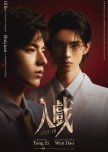
I am challenged by this series
I’ve written many reviews and this how challenges me so much that I wrote this one episode before it ends. I’m genuinely struggling to decide how I feel about this series. Even after eleven episodes, I’m still undecided whether I like it or not, and perhaps that’s part of what makes it so intriguing.Deep In explores actors wrestling with deep psychological issues while asking an interesting question: how much of a character eventually becomes part of the actor portraying them? Years ago I had the opportunity to speak with a well-known actor about this very subject. When I asked whether playing certain roles affected him personally, he simply replied, “How could it not? The characters we play eventually become every bit a part of who we are.” That conversation stayed with me, and this series attempts to explore that idea through its “show within a show” narrative.
I’ve always enjoyed stories that blur the line between fiction and reality. When executed well, they become fascinating character studies. Unfortunately, Deep In isn’t always successful because the performances don’t feel equally matched.
Ollie, despite being only twenty years old, appears more comfortable inhabiting both of his roles though struggle with his youthful looks. Although this may also be Shu Yuan’s first major acting role, his inexperience is more apparent. There are moments where he feels self-conscious rather than fully immersed in the character, creating a disconnect that weakens the emotional foundation of the story.
If viewers are simply looking for another BL romance, attractive leads and fan service may be enough. But in today’s crowded BL landscape, that’s rarely enough to make a series memorable. What separates a great drama from an average one isn’t how many romantic or intimate scenes it contains, but whether the emotions feel authentic. A passionate kiss or an NC scene may quicken the pulse for a moment, regardless of whether it’s a straight or gay romance, but those moments fade quickly. What remains are the quiet, emotionally truthful performances that stay with you long after the credits roll.
I don’t watch BL because I want attractive actors paired together. I watch because I want to understand the people they’re portraying. Genuine chemistry comes from believable performances, not simply from fan expectations or carefully cultivated “shipping.” Great actors create emotional connections that transcend the genre itself.
Perhaps that’s why I’ve grown increasingly critical of the BL industry as a whole. Thai BL, in particular, has become an effective launching pad for young actors, but the industry’s reliance on fixed pairings and fan-driven shipping can also become limiting. Watching the same couples play variations of similar characters eventually loses its novelty. Variety challenges actors to grow, while repetition often breeds complacency.
Another challenge Deep In faces is its casting. The story asks very young-looking actors to portray characters with emotional maturity beyond their years. Ironically, I think it may have been easier for older actors to play younger roles than for these youthful actors to convincingly portray older, more psychologically complex adults. Their performances are sincere, but I was never entirely convinced by the illusion.
What I do appreciate is that the series isn’t afraid to explore uncomfortable ideas. What happens when an actor’s role begins to reshape his own identity? When actors genuinely fall in love because of the characters they portray, does it last? The show even touches on morally complicated territory that invites discussion or arguments rather than easy answers. Whether viewers accept these probably depends on how willing they are to separate fantasy from reality.
With one episode remaining, I’m still undecided. I admire the ambition behind Deep In far more than I admire its execution. Perhaps the finale will bring everything together. For now, I’m left appreciating the questions it asks more than the answers it has given.
Was this review helpful to you?
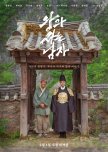
history is rarely kind but real
I’m not a big fan of dramas or movies that leave me sad and teary-eyed in the end, but I wanted to watch this film because of its significance in Korean history and because of Park Jihoon (known fo this role in Netflix’s Weak Hero Class. I’ve become a fan of this antithesis of the typical Asian lead actor. Jihoon is not particularly tall and he doesn’t have that stereotypical Korean leading-man face, but he has this puppy eyes that is full of emotion and his screen presence is undeniable and emotionally honest. Both PJH and Yoo Hai Jin deserves the Baeksang awards for their outstanding acting.This is the tragic story set during the 15th century Joseon era and the reign of King Danjong, a teenager who inherited the throne at a very young age after the death of his father. His uncle eventually took the throne from him, and the young king was exiled to a faraway land. The movie centers on two characters: the former king and the town chief who becomes his warden.
Even though we already know how the story ends, I truly enjoyed the evolution of the characters and the gradual friendship that develops between them. There are quiet moments in the film that touch your heart deeply and left both my wife and me very teary-eyed. Yet somehow, you leave the theater with a sense of warmth because, despite the tragedy, humanity still wins in the end.
It’s currently on limited release in the U.S., and we always enjoy driving to Koreatown to watch Korean films. It just feels more authentic somehow. The movie has been a huge hit in South Korea, and I completely understand why. I think many people could relate to the young king, his loneliness, helplessness, and quiet dignity
Was this review helpful to you?
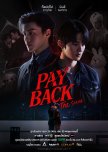
Redemption, not revenge.
This series would have been more appropriately titled “Redemption.” While it begins with Min’s relentless pursuit of revenge against the man who betrayed him, it gradually evolves into something much more meaningful. It explores the realization that a life fueled by vengeance is also consumed by anger and hatred. In Min’s case, the greatest act of forgiveness isn’t directed at someone else, it’s forgiving himself so he can finally move forward. In the end, he learns that what truly matters isn’t revenge, but the people who stand beside him.The series does an excellent job of maintaining both its momentum and narrative consistency from beginning to end. That said, I couldn’t help but feel that ten episodes were simply not enough. Two additional episodes would have allowed for richer character development, particularly the relationship between Sky and the photographer Pakin. Arthur also deserved more depth, especially considering his mother’s pivotal role in building Dream. That aspect of the story felt underexplored. The series also shines a light on the darker side of the entertainment industry. While this isn’t a new theme, it’s an unfortunate reality that has existed for decades, and the show presents it effectively without sensationalizing it.
The acting is top-notch, and much of that credit belongs to the director, who successfully drew out deeply emotional performances from both Toptap and Min. They’re already talented actors, though I still believe both have room to grow in their craft. What truly elevates the series, however, is their chemistry. It is absolutely electric. Their NC-17 scenes are undeniably intense and will send more than a few heart rates into tachycardia. And yes… it’s nearly impossible not to notice those infamous hot buns.
This pairing has undoubtedly cemented their place as a fan-favorite ship. My only hope is that they avoid the trap that has claimed so many popular on-screen couples before them, accepting weak scripts simply to capitalize on fan service. They have proven they can deliver compelling performances, and they deserve projects that challenge them as actors rather than merely feeding the fandom.
Was this review helpful to you?
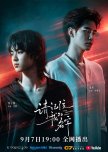
Alice into the rabbit hole…
A contract love, a broken heart, and people already broken long before they find each other… emotional, dark, and immediately compelling. There is a missing piece…The beautiful OST and creative opening drew me in at once, but it was that first scene that truly defined the roles these characters are about to play. Shen Mo appears to be a hapless, weak pushover, yet there is clearly something painful beneath that quiet exterior. There may be echoes of Bittersweet Love, but this already feels far better written and produced.
And it seems everyone is hiding something. Beneath Ming Xuan’s towering, commanding presence are layers of loneliness and longing. Add Shou Yan into the picture and the triangle becomes much more interesting… deep, dark, and full of psychological trauma, exactly my cup of tea. But who is really the stronger person emotionally? So far, it appears to be Shen Mo. Beneath his seemingly fragile and submissive exterior may be a resilience the others have yet to understand.
It is a familiar trope, but the writing gives it a creative edge. The production is polished, the OST is beautiful, and the acting is strong, especially Zi Hao as Shen Mo. He has that innocent, almost fragile quality of someone pulled straight from a high-school yearbook, which makes the pain he is hiding even more believable.
What surprised me most was the outro… the song paired with flashes of the past and perhaps the future was wonderfully creative. I rarely write and post an early review but If the first two episodes are any indication, this may be one of those dramas worth patiently waiting for each new piece to fall into place.
My finale review…
“Till death do us part.” When Shen Mo kneels before Ming Xuan and proposes, it completes a story that began in a very dark place. What first looked like a contract love story slowly became something deeper… a story about trauma, memory, regret, and the hard work of healing.
Shen Mo had lost more than memories. He had buried pain so deeply that even he could not face it. Ming Xuan, meanwhile, had to live with the regret of what he did and the years he lost waiting for Shen Mo. Their love was never simple, and the series did not pretend that pain disappears just because two people love each other. They had to face the past before they could choose a future.
The acting is one of the strongest parts of this drama. So much is said through their eyes, the pauses before they speak, the small moments of avoidance, and Shen Mo’s fidgety hands. The leads make us feel the weight of what these characters cannot say aloud. The music is equally beautiful, carrying the sadness and longing of their story from beginning to end.
The Missing Piece is more than a red flag romance. It is a slow burn story about two hurt people finding their way back to each other. In the end, the missing piece was not only Shen Mo’s lost memory. It was the courage for both of them to finally choose love without fear.
Was this review helpful to you?
when chemistry isn’t enough
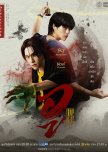
Since watching High School Frenemy, I became a fan of SkyNani. After all, they broke away from GMMTV’s familiar formula by making a bromance instead of a BL. Similar to The Untamed, the pair built a loyal following through their chemistry alone.But unlike The Untamed, I think a bromance can only sustain its appeal for so long. This is one reason I appreciate that other Asian countries don’t always follow the Thai BL formula. Sometimes pairings become forced, and actors end up playing roles that don’t truly suit them. Yes, they can cry on cue or exchange intense gazes, but chemistry alone isn’t enough.
If I’m being completely honest, I think Sky and Nani are stronger as individual actors than as a permanent screen pairing. I’m also glad they don’t participate in the song-and-dance fan events that many BL couples do. In my opinion, that preserves their value as actors rather than turning them into fan-service personalities.
As for Wu, it started with tremendous promise but quickly lost its momentum. The opening episodes were compelling, yet the story soon became predictable and, at times, overly sentimental. More disappointing was the lack of meaningful character development. Nearly every major character occupied a pivotal role in the narrative, yet few were given the depth they deserved. The supporting cast, rather than enriching the story, often felt underutilized.
The biggest indication that the series wasn’t working for me was that I found myself rooting for the antagonists. When the villains become more compelling than the protagonists, it’s usually a sign that the emotional investment has shifted.
I also think the series suffered from its length. Recently, many Thai BL dramas have shortened their episode counts, perhaps following the trend of Japanese dramas. But what works in Japan doesn’t necessarily translate elsewhere. Japanese storytellers have mastered the art of concise, tightly constructed narratives. Simply making a series shorter doesn’t guarantee better pacing. In Wu, I felt there was enough material for a longer series that could have explored its characters and themes with greater depth.
I’m sure many fans will disagree with my assessment, and that’s perfectly fine. I’ve long accepted that we don’t all see stories the same way. It would be a rather dull world if we did.
In today’s BL landscape, where dozens of new titles are released every year, audiences have more choices than ever before. Ironically, while the quantity has increased, I can’t help but feel that the overall quality has gradually declined.
Was this review helpful to you?
An epic story of love and courage
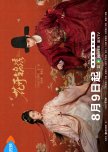
Too many Chinese dramas arrive wrapped in hype because of their popular actors, only to disappoint with weak scripts and little chemistry. Sometimes the age difference becomes impossible to ignore, while other pairings simply lack that elusive spark. Add the overused palace intrigues, endless scheming, and conversations that drag on for several episodes…and many historical dramas begin to feel interchangeable.Road to Splendor feels different. At its heart, this is the story of two people stripped of security and forced to survive through difficult circumstances. Zhao Ling and Fu Tingyun begin with very little except their intelligence, courage, and growing trust in one another. Together they overcome each challenge, rise in status, and move closer to the lives they once dreamed of…only to discover that perhaps they had already found their dream simply by being together. There were true poignant conversations, realizations, regret for both of them.
The series unfolds through the different stages of their journey. With every new place, they encounter people who test them, help them, or eventually become part of the family they create around themselves. Their strength is never entirely individual. Zhao Ling may possess the boldness and instinct to survive, while Fu Tingyun brings patience, intelligence, and quiet resolve. Together, they become stronger than either could have been alone.
But entering the imperial court changes the game. Survival among ordinary people required courage and resourcefulness…survival among the powerful requires experience, restraint, and an understanding of rules they are only beginning to learn. Their rise gives them greater influence, but it also exposes their weaknesses. Every promotion places them closer to power…and closer to those who know how to manipulate it. There were some great antagonists as well who added balance tothe show, getting me riled up , but without them the show would have been flat lacking depth and context. And for once, the mighty Secretaries do not control the Emperor or the Imperial guards, assassins or a large military.
The Road to Splendor often times is difficult and filled with sacrifices, only through these lessons and painful experience will our protagonist learn, similar to the game of “Go” every win also means sacrifices.
This drama does not rely on dramatic and grand entrances, nor does it use high-wire climactic acrobats.
What I appreciate most is that the story rarely feels stagnant. It avoids many of the usual Chinese-drama problems where conflicts are stretched unnecessarily or buried beneath endless, meaningless conversations. Each chapter builds naturally upon the one before it, and every struggle teaches Zhao Ling and Fu Tingyun something they will need for the next. Watching them learn how to survive the politics surrounding them is far more satisfying than the palace intrigue itself.
The chemistry between Ding Yuxi and Deng Enxi is unmistakable yet never forced. It can be seen in the way Zhao Ling looks at Fu Tingyun…and in the subtle, gentle way she disarms him without diminishing his strength. Both actors are undeniably attractive, but their appearances never overwhelm their characters. Ding Yuxi has his own rugged, masculine presence, especially beneath that wide-brimmed straw hat, while Deng Enxi gives Fu Tingyun a quiet grace that gradually reveals remarkable strength.
Perhaps the real splendor in this story is not the wealth, status, or recognition they eventually gain. It is the road they traveled together…and the realization that everything they were searching for had already been walking beside them.
Was this review helpful to you?

The second season syndrome
Season 1 started with Uncle Jian dead, his body shown and his funeral taking place, while the story revealed that he was the head of Muthehelp. He also left his niece the green code, a signal that everyone in the organization was obligated to protect her. That setup created such a powerful foundation that I was expecting Season 2 to pick up directly from there. Instead, the connection felt somewhat loose.This is what I call the second-season syndrome. When the first season is a classic, how do you possibly top it?
It reminded me of the first time I watched Kill Bill: Vol. 1. That feeling of discovering something completely fresh is almost impossible to recreate. Season 2 doesn’t quite have that same impact. But to be fair to the writers, they weren’t really trying to repeat Season 1. This time, they went deeper into the mythology, the characters, their backgrounds and motivations and, of course, there were a lot more deaths.
And honestly, it wouldn’t be much of a bloody action series if only the good guys were allowed to survive.
My favorite character in the entire series remains our supreme female antagonist. She drove me absolutely boiling, and I have to admit, I admire her craziness. There is something fascinating about her anger. Deep down, there is even a part of her we can understand. Her rage doesn’t come from nowhere; it comes from pain, betrayal and the feeling of being wronged.
Jian may have played a smaller role this time around, but I actually enjoyed seeing more of my favorite lead actor. Still, at its heart, this season feels like a story about the wrath of women who kill.
Unlike Season 1, there isn’t much here that demands to make sense. Don’t look for profound meaning. Don’t expect to finish an episode longing for love or wondering who you want to become.
This is not that kind of show.
It’s meant to be enjoyed with a bowl of popcorn on the couch while watching people do increasingly outrageous and senseless things to one another.
And you know what?
For what it is, I enjoyed every bloody minute of it.
Was this review helpful to you?

A scent of a Rose
When I first heard the title Tigers Sniff the Rose, I wondered who or what the rose represented. Initially, I thought the roses were the women who influenced the men’s lives. But as the story unfolded, I began to see the rose as the throne itself… the power it holds and the people who covet it. The powerless emperor, the princes, the princess, eunuchs, and generals, all drawn to it like moths to a flame. And the closer they get, the greater the chance of getting burned.Though there are many characters, the story primarily revolves around two best friends, Yan Shang and Wen Ji. Two seemingly powerless and insignificant men whose actions eventually become central to the story. And alongside them are the women they love, Danyang and Chunhua.
What this drama isn’t is another story of mighty generals charging on horseback or women with superhuman strength and luck that never runs out. I always remember the old saying, the pen is mightier than the sword. And that’s what I enjoy about this series. Wisdom and intelligence are far more powerful than brute force. Our leads and supporting characters actually think, plan, and strategize their way through challenges rather than simply fighting their way out.
While the story progresses like any other historical drama, what I love is how unpredictable the journey becomes. Yes, we had our hopes about who would win, but how we get there is what makes this series so enjoyable. Every character follows their own path, and somehow their stories cross at just the right moments. The beautiful romances, the political intrigue, and the constant royal infighting kept me interested in every episode.
It’s not just about who gets the throne, but what happens to everyone drawn toward it. The buildup to the finale isn’t rushed. The writers crossed their t’s and dotted their i’s. Unlike other series where the ending leaves more unanswered questions, this one closes every loop and allows us to move on, as it should be.
Was this review helpful to you?
When love truly hurts…it’s epic
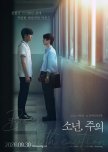
Just from the mood of the characters, I can already tell this series is going to be emotional. What troubles our two leads…a 32-year-old temporary teacher and a 21-year-old repeat student?For one, viewers who didn’t do their research may immediately assume this is a story about pedophilia, but that’s a myopic reading that can’t see the forest for the trees. He is 21 years old. The real controversy here is the teacher-student relationship and the imbalance that comes with it…and perhaps a serious subject like this is exactly what should be explored in an open environment where honest discussion can happen.
But I think there’s something much deeper the writer wants to convey. Neither of these two has been able to move forward. Both seem anchored to their past by regret, and for me, the mystery isn’t simply whether they fall in love…it’s discovering what happened to them, what they’re carrying, and why they remain stuck in place.
With only eight episodes, there isn’t much room to wander. Even with all the supporting characters surrounding them, I expect the story to confront these issues quickly. Maybe the real question isn’t who troubles them…but what troubles them, and whether they can finally let it go.
And now with only two episodes to go…
This is not a story of love…Sometimes the hardest person to find isn’t someone who will love you…it’s yourself.
This isn’t even a romance in the conventional sense. Like River Phoenix’s character in My Own Private Idaho, it’s about searching for yourself, desperately chasing the meaning of happiness, only to find yourself wandering down a path of self-destruction.
I realized the writers don’t want us sitting comfortably in our seats, munching popcorn and feeling good about love. Hell no. They want us squirming, with that awful gut-wrenching sensation as we watch people make decisions we know will hurt them. This drama challenges our beliefs, our prejudices, and perhaps most uncomfortably…our own sense of morality.
Four characters, four different manifestations of human vulnerability. And somewhere among them is probably someone we know…or worse, someone we recognize in ourselves.
The Savior. The person with an almost pathological need to help others, so consumed by doing good that he fails to recognize when compassion crosses ethical boundaries. His intentions may be noble, but when does helping someone become a way of satisfying his own emotional needs? And who gets hurt when he can’t tell the difference?
The Abandoned Soul. Someone so starved of affection that even the smallest gesture of kindness becomes something worth clinging to. He isn’t necessarily looking for romance…he’s looking for proof that he matters. And when you’ve spent your life feeling unwanted, even the wrong kind of love can feel like salvation.
The Desperate Survivor. Cornered by circumstances beyond his control, trying to save someone he loves while slowly sacrificing himself in the process. Like a rat trapped in a corner, he’ll do almost anything to escape. We can condemn his choices from the comfort of our living rooms, but what would we do if desperation came knocking at our own door?
The Wounded Lover. Someone who loves so painfully that affection becomes suffering. He holds on, even when holding on hurts. Is that devotion, obsession, or simply the terrifying thought of losing the person who gives his life meaning?
And I find myself hurting alongside these characters. The Samaritan in me wants to reach through the screen, grab them by their shoulders, and scream, Please, stop doing this to yourselves! I want to help them, guide them, somehow pull them out of their miserable circumstances. But perhaps that’s my own uncomfortable realization…I have been a savior, a cornered rat, once looking for love in the wrong places, desperate for affection. Wow I can relate to each of them
With two episodes remaining, I don’t know whether these characters will find happiness, redemption, or simply more heartbreak. And strangely, I’m no longer certain that a happy romantic ending is what this story needs.
Because perhaps the greatest tragedy isn’t failing to find someone who loves you…
It’s spending your entire life searching for love without ever discovering who you are.
…………….. my final review
And what a finale! The writers ended this drama exactly as I hoped not with every question answerd or wound healed, but with a beautifully told story that lingers long after the credits. Hyunjae’s heartbreak, Giwoo’s misguided compassion, and Jeongha and Seongwon finding hope amid the suffering made for an unforgettable emotional journey. I didn’t need a fairytale ending; I needed something honest and thought-provoking, and they delivered. This eight episode drama deserves a Baeksang Award, if only there were one for BL dramas. Truly epic..not in grandeur, but in its profound understanding of the human heart.
So I changed my rating from a 9.5 to a 10.
Was this review helpful to you?
This review may contain spoilers
Something wrong happened along the way
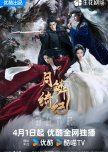
I know this will ruffle a few feathers among fans, but Veil of Shadows simply didn’t work for me and in more ways than one.First, the storyline felt unnecessarily convoluted. Instead of building intrigue, it created confusion, with noticeable plot holes and repetitive scenes that added little value. I found myself trying to piece things together rather than being immersed in the narrative.
Second, the promotion of Joseph Zheng as a leading figure felt misleading. His role comes across more as supporting, which may leave viewers expecting a different kind of presence feeling disappointed.
Visually, the series leans heavily on CGI—so much so that it often distracts from the performances rather than enhancing them. Style seems to take precedence over substance, and not always to the show’s benefit.
And then there’s the cinematography choice: the constant close-ups paired with dramatically wind-swept, wavy hair. It’s a stylistic device that quickly becomes overused, losing its intended impact and turning almost into a visual cliché.
The stakes also feel diminished. Characters die, only to be revived through a recurring “magic stone” device and if all things fail there’s the qlubiquitous “everything-can-be-fix-with-time-travel”This cycle undercuts emotional weight so why invest in loss if it’s repeatedly undone?
It also raises a fundamental question: whose story is this, really? The narrative focus feels scattered, making it hard to connect deeply with any one character or relationship.
Finally, the inclusion of the “weasel demon” character while perhaps intended as quirky or compelling felt more distracting than engaging, especially as the role grew in prominence.
Overall, the show reminds me of the same issues I had with Fangs of Fortune: over-the-top dramatics, an overcrowded cast, and a storyline that struggles under its own ambition. There’s a distinct flair for spectacle, but without clarity and cohesion, it becomes difficult to stay invested.
Of course, this is just my perspective. If you enjoyed the series, that’s completely valid. But for me, it ultimately fell short of its potential.
Was this review helpful to you?
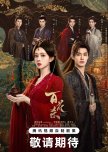
A story of love beautifully told
It’s rare to watch a Chinese drama where the writing, directing, screenplay, and performances sustain a steadily growing intensity from beginning to end. Too often, C-dramas start with tremendous promise, lose momentum halfway through, and stumble toward a rushed or unsatisfying conclusion. Blossoms of Power is one of the rare exceptions. Every episode builds naturally upon the last, making the final payoff feel completely earned.The female lead is undoubtedly the heart of the series. Rather than serving as a supporting figure to the male protagonist, she commands every scene with intelligence, confidence, and emotional depth. Her relationship with the Crown Prince is equally refreshing. He follows her lead not out of weakness, but out of admiration, trust, and genuine love, creating one of the healthiest and most balanced partnerships I’ve seen in a palace drama.
What impressed me most was how unpredictable the story remained until the very end. Just when I thought I knew where it was heading, the writers managed to surprise me with an ending that was both satisfying and emotionally rewarding. In an era where many recent C-dramas have settled for recycled plots and mediocre storytelling, Blossoms of Power reminds us how compelling the genre can be when the script is given the attention it deserves.
I rarely feel the urge to rewatch a drama, but this is one I’ll gladly revisit. In many ways, I found it even more convincing than the highly praised Pursuit of Jade. The heroine possesses no supernatural abilities or exaggerated martial arts skills. Her greatest gift is an extraordinary sense of smell, yet she skillfully navigates the dangerous complexities of palace politics, earns the respect and affection of multiple princes, and never loses sight of her purpose. That, to me, is what makes a truly compelling female lead. Her strength comes from intelligence, resilience, and composure, not from impossible feats of acrobatics.
Another welcome surprise is the production itself. The series avoids excessive CGI and over-the-top wire-fu that often distract from the story. Instead, it invests in believable performances, thoughtful character development, and carefully crafted political intrigue. The result is a drama that feels grounded, emotionally engaging, and consistently rewarding.
Most importantly, Blossoms of Power delivers something increasingly rare: a beautiful, well-earned, and thoroughly satisfying ending. It never loses sight of its characters or its story, making it one of the finest palace dramas I’ve watched in recent years.
Was this review helpful to you?


