

 1
1 1
1


Forgetable and Regretable
And I thought Journey of Legend was bad, Sword and Beloved is even worse. It’s like the first time I had sex: quick, confusing, and utterly forgettable.In a sea of talented Chinese actors, Cheng Yi somehow feels past his prime and yet he shouldn’t be. Maybe the blame lies with the production company or direction, but the hype surrounding this drama only made its failure more glaring. For someone once known for emotional intensity, Cheng Yi now looks stuck in an endless cycle of recycled expressions and overwrought suffering. What once felt passionate now feels mechanical.
The series started with an interesting premise but quickly fell apart. Between the filler “lovey-dovey” scenes and paper-thin plot twists, it felt like a desperate attempt to stretch mediocrity into forty episodes. Cheng Yi’s character barely anchors the story, more like a bystander watching others die, much like in The Journey of Legend. Apparently, death follows him more faithfully than any love interest.
There is no sword and definitely no beloved in this series. What it should’ve been titled was “Spiders Have Feelings Too.” The pacing is lifeless, the writing uninspired, and the production forgettable.
At this point, I’m convinced Cheng Yi has fallen victim to repetition- same roles, same expressions, same emotional clichés and the result is cinematic déjà vu.
Final Verdict: 3/10. A stunning example of how hype and habit can kill artistry. I’m officially dropping this show and taking a long break from Cheng Yi dramas
Was this review helpful to you?
What if…the Prince and Cinderella did not live happily ever after…
This is a story about love but not in the tragic, self-pitying way that many “sad” love stories tend to portray. In fact, I don’t see it as a sad story at all. To me, it’s a lesson. A reminder that when you find the right person, you hold on even if things don’t ultimately work out. Living with regret is far more painful than learning from a mistake.The film is beautifully written. Like Cinderella, life does not always promise a fairy-tale ending. What matters is not the ending, but the journey shared together. It may not deliver the kind of happy conclusion most viewers expect, yet it leaves you with something deeper and more meaningful.
I don’t usually gravitate toward melancholic stories, but this one moved me in a different way. It celebrates friendship, connection, and the importance of cherishing relationships while they are still present. As my father once told me, “Don’t give me flowers when I’m dead.” That wisdom resonates deeply here. Appreciate people now. Love them now. Say what needs to be said now.
This film gently reminds this generation to brace for the future but more importantly, to live fully in the present.
Moon Sang-min may not yet be as globally recognized as some Korean stars, but he absolutely holds his own as a leading man. I felt every layer of his character — the pain, the joy, the laughter, and ultimately, the gratitude. His performance was sincere and grounded. The three main characters beautifully acted their roles.
And to Netflix, thank you for continuing to showcase meaningful stories. Not everything needs extravagant production to leave a lasting impact. Sometimes, content and heart are more than enough.
Was this review helpful to you?
a victim of a bad script
Like so many Chinese drama recently it has a very strong start. a strong storyline and a selection of protagonists and antagonists. It had a strong side story as well. Yet the story felt in cohesive and the flow disrupted. Where’s Bailu had the lead all throught, Ryan Cheng played the support role with leas screen time. It made his acting seem suppressed as well. I actually the some of the supporting roles that created depth to the story but no matter how great they were the series fell very flat in the end. This is one of those where they could have shortened the series to 24 and with concise storytelling, it may have flowed more smoothly.Was this review helpful to you?
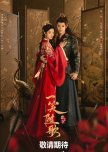
The Tale of Two Princes — Review of Fated Hearts
Fated Hearts attempts to tell the story of two princes. One, born to rule, lacks the ambition to lead; the other, fated to stand in his brother’s shadow, burns with resentment and hunger for power. To further complicate the mix, the story introduces a female general — a potentially strong character — who becomes entangled in their lives and emotions.At its core, this premise could have been compelling. Themes of fate, ambition, love, and betrayal have long been staples of great historical epics. Unfortunately, Fated Hearts feels like a missed opportunity, undone by a script that tries to be grand but ends up feeling bloated and directionless.
If I were to summarize the show’s moral undertones, I’d say it explores nearly every deadly sin — greed, lust, pride, envy, wrath, and even a touch of sloth. The only one missing might be gluttony, unless one counts the female lead’s relentless “consumption” of responsibility as she constantly saves the men around her from disaster. The overindulgence in melodrama and unnecessary subplots could itself be considered a form of narrative gluttony.
And that’s really where the problem lies: too much filler, too many characters, and too little coherence. Strip away the side stories and focus on the central conflict — the father’s expectations, the rivalry, the price of duty — and this could have been a tightly written 16-episode drama. Instead, it stretches into 38 episodes that test one’s patience more than they move one’s heart.
At best, the series offers a reflection on the burden of legacy and the sin of a father (or mother)forcing his children into lives they were never meant to lead — a familiar theme in many Asian narratives. But even this moral thread gets diluted amid the endless palace schemes and repetitive emotional arcs.
Perhaps my view comes off as cynical, but this isn’t just about Fated Hearts. It’s part of a larger trend I’ve noticed in recent Chinese dramas — beautifully produced, visually rich, and star-studded, yet lacking in depth and storytelling discipline. Much like what has happened in parts of the Korean drama industry, commercial appeal seems to have overshadowed creative integrity.
I can’t help but wonder: have audiences grown too forgiving, choosing to idolize familiar faces rather than demand stronger narratives? Or have writers simply given up trying to challenge us with thought-provoking stories? Fated Hearts isn’t the worst drama out there, but it’s another reminder that stunning visuals and famous actors can’t save a weak script.
Was this review helpful to you?
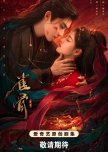
A great start only to be foiled by a disappointing finish
This series started with the promising premise of a love triangle that kept pulling viewers back and forth for most of its run. Woven into that were political intrigues, betrayals, and plenty of deaths. Like many Chinese dramas, it features beautiful songs that elevate key romantic and emotional moments. However, it also falls into one of the genre’s most common pitfalls: the excessive and repetitive use of music during endless flashbacks. Had the flashbacks been trimmed, the series could easily have been shortened by two episodes without losing anything of value.The costumes and production values were top-notch, as expected from a cast of this caliber. The supporting actors performed their roles beautifully, and the opening battle sequences were both dramatic and visually impressive.
The storytelling maintained a steady pace that kept me looking forward to each new episode as the twists and revelations unfolded. Even so, it was always apparent that the protagonist remained in control of the situation. After all, he is Crown Prince Wendi. Part of me wished he had ultimately claimed the throne, considering how many people sacrificed their lives to keep him alive. Instead, the writers chose the more heroic, selfless ending, placing love above power. Since his wife clearly despised palace life, it was obvious where the story was headed. From that point on, the ending became fairly predictable, although the continued twists were enough to keep the story engaging.
That said, the series is not without its flaws. The biggest issue is the premise that the son of a Grand Tutor, disguised as a prince, ultimately becomes Emperor or perhaps merely serves as Regent for life. Does the reigning Emperor really have no other relatives with a legitimate claim to the throne? If not, isn’t this technically a coup?
I was also puzzled by the decision to have Xiao Wuxi join the Eagle King when we eventually learn it was all an elaborate ruse. The amount of suffering inflicted on his own soldiers and even his wife simply to make the deception convincing felt unnecessarily extreme. This is where I think the writers became too enamored with constantly misdirecting the audience instead of telling a more believable story.
Then there are the battle tactics. There were so many episodes on the three ore mines used to develop the fireballs only to have a very brief moment near the end. And why unleash devastating fireballs while your own army is fighting on the same battlefield? The collateral damage would have been enormous. If they possessed that kind of firepower, why not trap the enemy in a valley and rain destruction from a safe distance?
This is classic C-drama writing: an excellent setup with compelling characters and strong momentum, only for the final act to lose its way. I’m sure many viewers will disagree because we naturally want our heroes and lovers to follow the path our hearts prefer rather than the one common sense dictates. After all, that’s part of the fantasy these dramas are meant to deliver.
Was this review helpful to you?
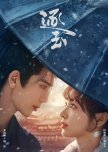
as good as it gets…
Chinese dramas are often weighed down by overly long and disjointed storylines, stretching plots to fill countless episodes. Pursuit of Jade, however, breaks that pattern. It maintains a steady rhythm and narrative cohesion that keeps you fully engaged from start to finish.The production feels grand, and the script is beautifully crafted. Every character serves a purpose, and when you find yourself equally invested in both protagonists and antagonists, you know the story is well-balanced. While the leads delivered strong performances, it was the antagonists who truly stood out. The two Princes, in particular, were exceptional, their performances eclipsed even the Marquis and Fan Changyu. They made me frustrated at their characters, yet deeply impressed by their acting.
The supporting cast also deserves recognition for reinforcing the story and keeping the momentum alive. What I appreciated most is that no character felt unnecessary or out of place; each one contributed meaningfully, making the story feel complete.
The ending was equally satisfying, unrushed, with a full episode dedicated to providing proper closure for every character.
If I had one minor critique, it would be that the actors looked almost too perfect. At times, their polished appearance slightly distracted from the immersion of the story.
Was this review helpful to you?
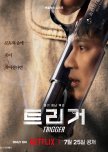
Netflix trying to create a Korean John Wick gone wrong.
This is a classic story when what was a great business of Korean drama started going downhill once they became so commercialized. Typical of Netflix who created Squid Games to gain more viewers through sensationalism and violence. The acting is superb I will give them that but the storyline is just plain ridiculous for a $30 million dollar budget. Let’s make a series and show how stupid the Korean government could be and their sense of security is just an oxymoron. After all SK is always in alert and never in this show did they show this to be true. This is why I’ve been watching less K drama and more C drama for its content but got caught with the hype.Was this review helpful to you?
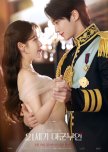
the imperfect crown
The (Im)Perfect Crown.Nothing is worse than a great storyline being overshadowed by the perfectly sculpted faces of Byeon Woo-seok and IU. It’s the same issue I had with The Pursuit of Jade. Modern Asian dramas are becoming clichés where appearances matter more than acting, storytelling, or emotional depth. The industry seems obsessed with cookie-cutter beauty rather than compelling characters and meaningful narratives.
Yes, there were plenty of “Kodak moments” filled with sweetness and giddiness, but the lack of depth and proper character development turned this series into something painfully two-dimensional.
The premise itself already asks to stretch reality: a functioning monarchy in modern South Korea, but for the sake of art, fine, let’s go with it. What pulled me out completely, however, was the palace fire tragedy where apparently no fire trucks existed in this universe. And this fire happened twice. Details matter. Instead, the writers relied almost entirely on the fame and beauty of the leads to carry the drama. And commercially, it worked but at what cost?
The series feels like a Disney-esque fantasy monarchy straight out of Cinderella: polished, utopian, and engineered for a happily-ever-after ending. But what about the rest of the world around them? Where were the supporting characters, the emotional consequences, the complexity? The story desperately needed 16 episodes to flesh out its universe and relationships.
In the end, the drama felt like the perfect date leading into an exciting night, only to end in complete disappointment.
If Disney and Netflix continue Americanizing Korean dramas, we already know where this leads. What once made K-dramas special was their innocence, curiosity, emotional sincerity, and sense of wonder. Once that authenticity is lost, it may never truly come back.
Was this review helpful to you?
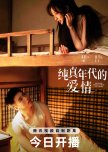
A simple story of the meaning of love
I’m not always a big fan of Chinese love stories as it can get long and convoluted. This series with Arthur Chen and Sun Qian is just what the doctor ordered. The pacing is well done, a slow burn to a growing relationship. I specially enjoyed watching China back in the 70’s and saw how people lived. It completely changed my point of view, not the dark stories I’ve heard. People are people no matter where you are, it’s th circumstances that differs. And this love story stayed true to what people go through.It talks about the challenges living a communist China where the deeply rooted culture sets the tone. The chemistry of the lead actors where superfluous and just grows on me, it’s not hyped and feels real. You can see Fei Ni slowly opens what’s been hidden deep inside her heart to Fang Mu Yang. The supporting characters as well added a parallel storyline that was not distracting as they too have their own challenges to overcome. The focus on their hopes and inspirations is very welcoming in a dreary life of Communist China in the 70’s I’m glad it’s only 29 episodes so unnecessary fillers which C-Dramas are notorious resulting in flat endings. I feel scriptwriting is crucial, just like preparing a perfect meal, don’t overdo the ingredients. This is what this series is about, the right amount of ingredients slowly cooked to perfection.
Arthur’s acting has gotten better as he gained more experience but sometimes his good looks can also be his challenge as it can distract my focus. It’s the thought of “he’s too good looking to be true”, and in comparison to Sun Qian’s simple looks and her superb acting she truly dominates the storyline.
This show has so many memorable and relatable moments that makes me want to see more of the lives of Chinese in the years when I was growing up in Asia.
Was this review helpful to you?
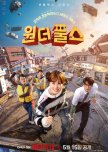
warning: a sarcastic review
I really wanted to like Wonderfools. The cast had all the ingredients for a memorable series, but what I got instead was an epic collapse in storytelling.Watching this drama felt like raising a funny, charming stepchild only to discover eight episodes later that there was a dark psychotic personality hiding underneath the entire time. I kept trying to understand the writers’ intentions. Were we supposed to laugh, cry, feel suspense, then laugh again five minutes later? The show swings emotions around like a drunk DJ changing playlists at a wedding reception.
It wants to be quirky and dark at the same time, almost like Heath Ledger’s Joker wandered into a neighborhood sitcom. The difference is that Ledger’s Joker was brilliantly consistent. Wonderfools has the emotional stability of Batman after three espresso in shots and a nervous breakdown. It wants to Korea’s version of DC’s Suicide Squad.
Slapstick comedy only works when the tone commits to it. The Three Stooges knew exactly what they were. Here, the trio feels more like Dumb and Dumber… and their sister, Dumbest.
And somehow, in only eight episodes, the show still manages to drag while never fully developing anyone. Every character feels assembled from leftover K-drama tropes:
* the guilty grandma with a dark secret
* the handsome Clark Kent drowning in emotional confusion
* villains who are somehow more interesting than the heroes
* and of course, the obligatory cult-like church leader, because apparently Korean dramas now believe every church leader is one sermon away from becoming a supervillain.
* even squeezed a slow-motion scene using Radiohead’s “I’m a Creep…I’m a Weirdo” playing in the background.
But there is a bright side: it’s only eight episodes. And yea the good guys win. But you have to survive the uber-long final two episodes that looked like a scene from Batman vs Superman. This really is turning into a DC comics trope. And if the stars all align, there won’t be a season 2.
Just like Disney mishandled The Perfect Crown, Netflix seems equally determined to turn Korean dramas into disposable content. What happened to the days when dramas made you genuinely feel something long after the ending? Now it’s just emotional fast food, quickly consumed and forgotten before the next algorithm recommendation appears.
Was this review helpful to you?
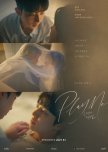
It’s a Small World ride…cute and memorable music
What happens when straight actors and idols play BL with a Disney-esque references? The mermaid. Dreams. The songs.In a cancel-culture and scandal-averse South Korea, I’m genuinely impressed by actors and idols who are willing to step outside their comfort zones and take on roles that may not necessarily fit the image their fans have created for them. Whether an actor is straight, gay, or somewhere in between in real life is really none of our business. What matters is the character they are portraying.
And honestly, doing something different when you know a portion of your fandom may scrutinize every move takes guts. So I applaud these actors and idols for taking the chance. Idols especially, because let’s be honest, not every idol is naturally an actor.
The premise of Play Me is very simple and very direct: a love interest from our youth, a misunderstanding, and a reunion years later. No complicated plot twists, no tortured souls, no unnecessary angst. I only wish Korea could reunify as easily as these two did. Imagine what that country could accomplish!
I still remember how Brokeback Mountain changed our perception of straight actors playing gay roles forever.
This isn’t the kind of BL with NC scenes or even particularly graphic kissing. There are clearly limits to what their agencies and companies are comfortable allowing. Instead, Play Me caters more to the yaoi-loving female audience who can get giddy simply watching their favorite idols in a BL situation. And let’s be honest, this is also what sells merchandise.
And yes, I admit it: we’re here for the ride.
Personally, I enjoyed the ride. This wasn’t some rough-and-tumbling roller coaster. It was more like It’s a Small World at Disneyland…cute, colorful, uncomplicated, and over before you know it.
The production quality is good, the acting is decent, and the music is surprisingly memorable. But what really worked for me was the chemistry between the leads. You can tell they either genuinely get along, or they’re simply very good at making us believe they do. Either way, it works.
I wouldn’t mind seeing these two together again.
In fact, I think we should encourage idols and actors to take on more BL roles. Not because we need to speculate about their real lives or sexuality, but because it’s entertainment. That’s all it needs to be.
Sometimes we don’t need a complicated story, tortured characters, or a masterpiece.
Sometimes we just want two pretty boys, a cute story, good chemistry, memorable music, and a reason to smile.
And Play Me gave me exactly that.Cute. Sweet. Easy. And a fun little ride.I’m glad I got on.
Was this review helpful to you?
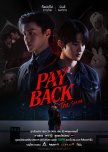
Redemption, not revenge.
This series would have been more appropriately titled “Redemption.” While it begins with Min’s relentless pursuit of revenge against the man who betrayed him, it gradually evolves into something much more meaningful. It explores the realization that a life fueled by vengeance is also consumed by anger and hatred. In Min’s case, the greatest act of forgiveness isn’t directed at someone else, it’s forgiving himself so he can finally move forward. In the end, he learns that what truly matters isn’t revenge, but the people who stand beside him.The series does an excellent job of maintaining both its momentum and narrative consistency from beginning to end. That said, I couldn’t help but feel that ten episodes were simply not enough. Two additional episodes would have allowed for richer character development, particularly the relationship between Sky and the photographer Pakin. Arthur also deserved more depth, especially considering his mother’s pivotal role in building Dream. That aspect of the story felt underexplored. The series also shines a light on the darker side of the entertainment industry. While this isn’t a new theme, it’s an unfortunate reality that has existed for decades, and the show presents it effectively without sensationalizing it.
The acting is top-notch, and much of that credit belongs to the director, who successfully drew out deeply emotional performances from both Toptap and Min. They’re already talented actors, though I still believe both have room to grow in their craft. What truly elevates the series, however, is their chemistry. It is absolutely electric. Their NC-17 scenes are undeniably intense and will send more than a few heart rates into tachycardia. And yes… it’s nearly impossible not to notice those infamous hot buns.
This pairing has undoubtedly cemented their place as a fan-favorite ship. My only hope is that they avoid the trap that has claimed so many popular on-screen couples before them, accepting weak scripts simply to capitalize on fan service. They have proven they can deliver compelling performances, and they deserve projects that challenge them as actors rather than merely feeding the fandom.
Was this review helpful to you?
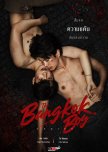
Too many twists and turns
Watching Bangkok Boy felt like riding a tuktuk on the streets of Bangkok, weaves around trying to get to the destination. The edgy drama just became overwhelming that I really didn’t know who to root for. I felt the relationship of the main character wasn’t fully developed and just rushed. I don’t mine a bait and switch storyline but there just too much switching I couldn’t keep up. Keep that edgy for at but please allow the viewer to absorb and focus and get engaged. As the saying goes “if you lost me at hello…you lost me forever”Was this review helpful to you?
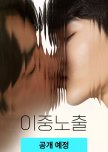
it’s only porn if you think it is
When I first watched Double Exposure, there were no subtitles, so without any context, I could only appreciate its visuals. At first glance, those visuals appeared highly erotic—almost pornographic.When I finally watched it again with subtitles, the film became something entirely different. The dialogue, though seemingly simple and understated, added remarkable depth and dimension to the story. It transformed what initially felt like a purely visual experience into an exploration of intimacy, vulnerability, and human connection.
I also found myself wondering how a Korean production company had the courage to make such a daring film. Had it been produced in parts of Europe, it might have been viewed less as something controversial and more as an artistic or educational exploration of sexuality. Cultural context inevitably shapes how audiences perceive a film like this.
I admired the actors for pushing beyond conventional boundaries, knowing they risked criticism or even being marginalized within their own industry. Learning that this was their first acting role made their performances even more impressive. They played their characters with complete conviction. Their chemistry felt natural and unforced, as though the attraction between them genuinely existed. Their body language and facial expressions conveyed everything that words could not.
The film’s nudity, including its full-frontal scenes, never struck me as gratuitous. It felt honest and matter-of-fact—more akin to the casual nudity one encounters in a Korean spa, where there is no malice or voyeurism attached to the human body. It was simply presented as part of the characters’ reality.
If I had one criticism, it would be the editing. While I appreciate the deliberate pacing and lingering shots, a few sequences became confusing, and tighter editing could have made the narrative flow more cohesively.
The NC-17 scenes were executed with remarkable restraint and authenticity. They never felt forced or inserted merely for shock value. The kiss, in particular, was beautifully performed—so genuine that it became easy to forget these were actors simply fulfilling a role.
There will undoubtedly be those who dismiss the film because of its explicit content. But I can’t help wondering: if the same story were told between a man and a woman, would it be judged differently?
For me, Double Exposure is ultimately a work of art. Art, when created without malice or exploitation, is an expression of humanity. This film may challenge its audience, but beneath its explicit imagery lies a sincere exploration of intimacy, vulnerability, and the courage to tell an unconventional story.
Was this review helpful to you?
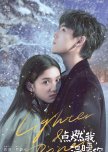
L&P - Life and Pursuit of Love
It’s an odd title for a love story Lighter & Princess and it naturally makes you wonder: is there more beneath the surface? The answer is an emphatic yes.I’ve never been particularly drawn to Arthur Chen in his action roles, but here, he proves he’s far more effective in a character-driven drama. There’s a quiet intensity in his performance that works beautifully opposite Zhang Jingyi. Their chemistry isn’t loud or exaggerated, it’s in the glances, the pauses, the unspoken tension. Those small moments carry the story just as much as the plot itself, and they’re difficult to replicate.
What makes the series compelling is its central character, Li Xun, a male lead riddled with contradictions and emotional blind spots. He’s far from ideal, and that’s precisely the point. His flaws aren’t just narrative devices; they generate the tension and momentum of the story. In many ways, the writing leans into these imperfections, allowing the audience to constantly question him, understand him, and occasionally feel frustrated by him. That complexity is what keeps the story alive.
Yes, there’s a touch of hyperbole, this is still very much a Chinese drama, but surprisingly, it doesn’t derail the narrative. My usual frustration with 30+ episode series is the unnecessary padding, yet here, the story remains relatively focused. Side plots exist but rarely distract, and the emotional arc stays intact. It takes its time, sometimes slower than necessary, but not indulgently so.
The relationship at the heart of the series feels almost like opposing ions, naturally drawn together, yet constantly at risk of being pulled apart. There’s a push and pull that feels inevitable, almost fated, and that tension gives the romance its weight. It may start slow, but I found myself fully invested, never tempted to skip ahead. The performances and the writing demand your attention and reward it.
Lately, I’ve found myself drifting away from Chinese dramas, leaning more toward Korean and Western series for tighter storytelling. But every so often, a show like Lighter & Princess reminds me why I started watching them in the first place. It doesn’t reinvent the genre, but it refines what works: strong chemistry, flawed characters, and a romance that feels earned rather than manufactured.
I’m glad I gave this one a chance.
Was this review helpful to you?


