
 News



 6
 7
 1
 2
 1
 3



as good as it gets…
Chinese dramas are often weighed down by overly long and disjointed storylines, stretching plots to fill countless episodes. Pursuit of Jade, however, breaks that pattern. It maintains a steady rhythm and narrative cohesion that keeps you fully engaged from start to finish.The production feels grand, and the script is beautifully crafted. Every character serves a purpose, and when you find yourself equally invested in both protagonists and antagonists, you know the story is well-balanced. While the leads delivered strong performances, it was the antagonists who truly stood out. The two Princes, in particular, were exceptional, their performances eclipsed even the Marquis and Fan Changyu. They made me frustrated at their characters, yet deeply impressed by their acting.
The supporting cast also deserves recognition for reinforcing the story and keeping the momentum alive. What I appreciated most is that no character felt unnecessary or out of place; each one contributed meaningfully, making the story feel complete.
The ending was equally satisfying, unrushed, with a full episode dedicated to providing proper closure for every character.
If I had one minor critique, it would be that the actors looked almost too perfect. At times, their polished appearance slightly distracted from the immersion of the story.
Was this review helpful to you?
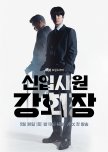
A modern twist of A Christmas Carol
The series begins with a man being reborn in another body, somewhat like the movie Chances Are. It’s an interesting premise, but what caught my attention wasn’t the body swapping. It was the story of a man who had everything but, in reality, had nothing.The Chairman reminds me of Ebenezer Scrooge, a man who built a chaebol empire, but at what price? He has everything money can buy, yet his family is falling apart, consumed by avarice, greed, and the hunger for power. And then there’s Jun Hyeon, a young football player whose only dream was to play the sport he loved, only to have that dream destroyed.
Like the Ghost of Christmas Present, Jun Hyeon unknowingly becomes the Chairman’s guide, allowing him to see the world through someone else’s eyes. A world where his power has created division, hatred, betrayal, and even murder. The empire he spent his life building has become the very thing destroying his family. And perhaps, for the first time, he begins to understand the terrible price of his success.
But what struck me most was the check Jun Hyeon was holding. When asked to write a name, he wrote the company’s name instead of his own. Such a simple gesture, yet it says so much about his character. He couldn’t be bought. In a world where everyone seems to have a price, Jun Hyeon is perhaps the only person who doesn’t.
And this is where I see the heart of Reborn Rookie. It’s a story of redemption…of a man who has everything but has nothing, and a young man who has lost everything yet possesses something money can never buy. His integrity. And our Chairman eventually learns what happiness truly means…the love of family, even a grandmother with dementia.
Lee Jun Young, as always, plays his role so well, both as the younger Jun Hyeon and the older Chairman Kang. He manages to bring out two very different personalities, and it’s his performance that makes the story work.
But there’s something about the story that bothered me. I suspected early on that the Chairman’s original body was still alive. Why else would the doctor take it away so quickly? It was obvious there was something more going on, and I feared the writers would take us down another predictable path. And they did. This is exactly the kind of plot redirection I abhor. Why complicate a beautiful story about redemption with unnecessary twists?
Unfortunately, the ending was predictable and, to be honest, lacked originality. The last four episodes became so convoluted that I felt the writers had dug themselves into a hole and couldn’t figure out how to climb back out. It was practically a shitshow by the end.
It was like watching a tennis ball being lobbed back and forth, or worse, a shell game where the writers kept moving the shells around, hoping to deceive the audience. But move those shells enough times and instead of being surprised, you simply lose interest. I certainly did, and the only thing I got from all that back and forth was a headache.
What’s unfortunate is that these actors deserved so much better. The acting was good, the premise was promising, and the story had the potential to be something genuinely moving. But the writers seemed more interested in fooling the audience than telling a compelling story. If you’re going to play a shell game with your viewers, then blow me away with something brilliant, something I never saw coming. Not this shell game.
In the end, Reborn Rookie had a beautiful story to tell about greed, family, happiness, and second chances. It didn’t need all those twists to make it interesting. Sometimes a simple story told well is far better than a complicated one that loses its way. And that’s what disappointed me the most.
Was this review helpful to you?
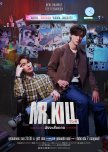
A killer premise that never delivered the blow.
I finished Mr. Kill and unfortunately the finale was a letdown. What should have been the culmination of a dark and suspenseful crime thriller never built the intensity I was waiting for. Instead, it was filled with more of the same missteps that bothered me throughout the series.The premise was actually very good…an artist whose drawings eerily resemble the work of a serial killer, making him a suspect himself. There was so much potential for paranoia, psychological darkness and suspense. But somewhere along the way, I found myself questioning the writing more than questioning who the killer was. And yes…the murderer became rather obvious. Sometimes you just have to follow your gut.
But the finale really tested my suspension of disbelief. You kidnap a police officer and nobody thinks to search him for a gun? After everything these characters supposedly planned? And Praew kidnaps and somehow there seems to be remarkably no consequence for what she did? Earlier we had someone being shot in broad daylight by the river, the gun casually handed to a henchman despite fingerprints…and again I was expected to simply accept it. I can believe corruption. I can believe powerful people manipulating investigations. But the story still has to give me something believable to manipulate.
The performances unfortunately never compensated for the weaknesses in the writing. Dew, Tee and Off had characters that should have given us vulnerability, frustration, manipulation and darkness, but I rarely felt the intensity these roles demanded. Too often I felt I was watching actors playing characters rather than people actually living them. The supporting characters were equally fragmented…much like the storyline itself.
For big fans of these actors, I can understand enjoying Mr. Kill. They certainly have the looks and there are moments of chemistry. But from my own experience watching darker crime and psychological dramas, good looks can only take me so far. I needed to feel danger. I needed that uncomfortable darkness that makes you suspicious of everyone and keeps you glued to the screen. Most importantly, by the finale I needed suspense…and I never got it.
A thriller can mislead me, surprise me and even make me believe the unbelievable…but first it has to create a world believable enough for me to get lost in it.
GMMTV…please do better. You had a killer premise. Unfortunately, Mr. Kill never quite delivered the killing blow.
Was this review helpful to you?
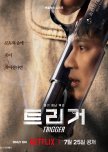
Netflix trying to create a Korean John Wick gone wrong.
This is a classic story when what was a great business of Korean drama started going downhill once they became so commercialized. Typical of Netflix who created Squid Games to gain more viewers through sensationalism and violence. The acting is superb I will give them that but the storyline is just plain ridiculous for a $30 million dollar budget. Let’s make a series and show how stupid the Korean government could be and their sense of security is just an oxymoron. After all SK is always in alert and never in this show did they show this to be true. This is why I’ve been watching less K drama and more C drama for its content but got caught with the hype.Was this review helpful to you?
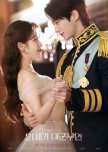
the imperfect crown
The (Im)Perfect Crown.Nothing is worse than a great storyline being overshadowed by the perfectly sculpted faces of Byeon Woo-seok and IU. It’s the same issue I had with The Pursuit of Jade. Modern Asian dramas are becoming clichés where appearances matter more than acting, storytelling, or emotional depth. The industry seems obsessed with cookie-cutter beauty rather than compelling characters and meaningful narratives.
Yes, there were plenty of “Kodak moments” filled with sweetness and giddiness, but the lack of depth and proper character development turned this series into something painfully two-dimensional.
The premise itself already asks to stretch reality: a functioning monarchy in modern South Korea, but for the sake of art, fine, let’s go with it. What pulled me out completely, however, was the palace fire tragedy where apparently no fire trucks existed in this universe. And this fire happened twice. Details matter. Instead, the writers relied almost entirely on the fame and beauty of the leads to carry the drama. And commercially, it worked but at what cost?
The series feels like a Disney-esque fantasy monarchy straight out of Cinderella: polished, utopian, and engineered for a happily-ever-after ending. But what about the rest of the world around them? Where were the supporting characters, the emotional consequences, the complexity? The story desperately needed 16 episodes to flesh out its universe and relationships.
In the end, the drama felt like the perfect date leading into an exciting night, only to end in complete disappointment.
If Disney and Netflix continue Americanizing Korean dramas, we already know where this leads. What once made K-dramas special was their innocence, curiosity, emotional sincerity, and sense of wonder. Once that authenticity is lost, it may never truly come back.
Was this review helpful to you?
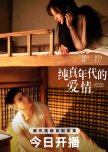
A simple story of the meaning of love
I’m not always a big fan of Chinese love stories as it can get long and convoluted. This series with Arthur Chen and Sun Qian is just what the doctor ordered. The pacing is well done, a slow burn to a growing relationship. I specially enjoyed watching China back in the 70’s and saw how people lived. It completely changed my point of view, not the dark stories I’ve heard. People are people no matter where you are, it’s th circumstances that differs. And this love story stayed true to what people go through.It talks about the challenges living a communist China where the deeply rooted culture sets the tone. The chemistry of the lead actors where superfluous and just grows on me, it’s not hyped and feels real. You can see Fei Ni slowly opens what’s been hidden deep inside her heart to Fang Mu Yang. The supporting characters as well added a parallel storyline that was not distracting as they too have their own challenges to overcome. The focus on their hopes and inspirations is very welcoming in a dreary life of Communist China in the 70’s I’m glad it’s only 29 episodes so unnecessary fillers which C-Dramas are notorious resulting in flat endings. I feel scriptwriting is crucial, just like preparing a perfect meal, don’t overdo the ingredients. This is what this series is about, the right amount of ingredients slowly cooked to perfection.
Arthur’s acting has gotten better as he gained more experience but sometimes his good looks can also be his challenge as it can distract my focus. It’s the thought of “he’s too good looking to be true”, and in comparison to Sun Qian’s simple looks and her superb acting she truly dominates the storyline.
This show has so many memorable and relatable moments that makes me want to see more of the lives of Chinese in the years when I was growing up in Asia.
Was this review helpful to you?
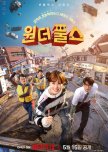
warning: a sarcastic review
I really wanted to like Wonderfools. The cast had all the ingredients for a memorable series, but what I got instead was an epic collapse in storytelling.Watching this drama felt like raising a funny, charming stepchild only to discover eight episodes later that there was a dark psychotic personality hiding underneath the entire time. I kept trying to understand the writers’ intentions. Were we supposed to laugh, cry, feel suspense, then laugh again five minutes later? The show swings emotions around like a drunk DJ changing playlists at a wedding reception.
It wants to be quirky and dark at the same time, almost like Heath Ledger’s Joker wandered into a neighborhood sitcom. The difference is that Ledger’s Joker was brilliantly consistent. Wonderfools has the emotional stability of Batman after three espresso in shots and a nervous breakdown. It wants to Korea’s version of DC’s Suicide Squad.
Slapstick comedy only works when the tone commits to it. The Three Stooges knew exactly what they were. Here, the trio feels more like Dumb and Dumber… and their sister, Dumbest.
And somehow, in only eight episodes, the show still manages to drag while never fully developing anyone. Every character feels assembled from leftover K-drama tropes:
* the guilty grandma with a dark secret
* the handsome Clark Kent drowning in emotional confusion
* villains who are somehow more interesting than the heroes
* and of course, the obligatory cult-like church leader, because apparently Korean dramas now believe every church leader is one sermon away from becoming a supervillain.
* even squeezed a slow-motion scene using Radiohead’s “I’m a Creep…I’m a Weirdo” playing in the background.
But there is a bright side: it’s only eight episodes. And yea the good guys win. But you have to survive the uber-long final two episodes that looked like a scene from Batman vs Superman. This really is turning into a DC comics trope. And if the stars all align, there won’t be a season 2.
Just like Disney mishandled The Perfect Crown, Netflix seems equally determined to turn Korean dramas into disposable content. What happened to the days when dramas made you genuinely feel something long after the ending? Now it’s just emotional fast food, quickly consumed and forgotten before the next algorithm recommendation appears.
Was this review helpful to you?
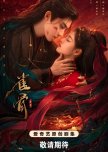
A great start only to be foiled by a disappointing finish
This series started with the promising premise of a love triangle that kept pulling viewers back and forth for most of its run. Woven into that were political intrigues, betrayals, and plenty of deaths. Like many Chinese dramas, it features beautiful songs that elevate key romantic and emotional moments. However, it also falls into one of the genre’s most common pitfalls: the excessive and repetitive use of music during endless flashbacks. Had the flashbacks been trimmed, the series could easily have been shortened by two episodes without losing anything of value.The costumes and production values were top-notch, as expected from a cast of this caliber. The supporting actors performed their roles beautifully, and the opening battle sequences were both dramatic and visually impressive.
The storytelling maintained a steady pace that kept me looking forward to each new episode as the twists and revelations unfolded. Even so, it was always apparent that the protagonist remained in control of the situation. After all, he is Crown Prince Wendi. Part of me wished he had ultimately claimed the throne, considering how many people sacrificed their lives to keep him alive. Instead, the writers chose the more heroic, selfless ending, placing love above power. Since his wife clearly despised palace life, it was obvious where the story was headed. From that point on, the ending became fairly predictable, although the continued twists were enough to keep the story engaging.
That said, the series is not without its flaws. The biggest issue is the premise that the son of a Grand Tutor, disguised as a prince, ultimately becomes Emperor or perhaps merely serves as Regent for life. Does the reigning Emperor really have no other relatives with a legitimate claim to the throne? If not, isn’t this technically a coup?
I was also puzzled by the decision to have Xiao Wuxi join the Eagle King when we eventually learn it was all an elaborate ruse. The amount of suffering inflicted on his own soldiers and even his wife simply to make the deception convincing felt unnecessarily extreme. This is where I think the writers became too enamored with constantly misdirecting the audience instead of telling a more believable story.
Then there are the battle tactics. There were so many episodes on the three ore mines used to develop the fireballs only to have a very brief moment near the end. And why unleash devastating fireballs while your own army is fighting on the same battlefield? The collateral damage would have been enormous. If they possessed that kind of firepower, why not trap the enemy in a valley and rain destruction from a safe distance?
This is classic C-drama writing: an excellent setup with compelling characters and strong momentum, only for the final act to lose its way. I’m sure many viewers will disagree because we naturally want our heroes and lovers to follow the path our hearts prefer rather than the one common sense dictates. After all, that’s part of the fantasy these dramas are meant to deliver.
Was this review helpful to you?
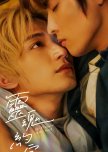
A story as old as time with room to grow
It can be difficult for some viewers to accept the idea of an older man falling for a younger man. Even though we live in what’s supposed to be a more open culture, certain relationships still carry a sense of taboo. But as the saying goes, love is love—and if BL relationships are to be embraced, then age-gap dynamics should be viewed with the same openness that we often grant heterosexual couples.What stands out about this series is how much it focuses on character growth and emotional evolution. As the story unfolds, you discover there’s much more depth to the relationship than first meets the eye, which makes it all the more special. While the acting still has room for improvement, the natural chemistry between the leads more than makes up for it. The kissing scenes could have been stronger, but it’s worth noting that both actors are straight, which adds its own challenge.
I haven’t seen many BL dramas produced and located in Hong Kong and it has potential. The OST is both beautiful and haunting, adding a layer of atmosphere that lingers after each episode. I’d love to see these two actors reunited in future projects
Was this review helpful to you?
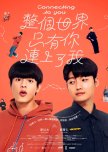
Threads of love…longing for more
The series finally ended and it’s giving me a bit of melancholy, after all these two have grown on me. Bruce Chiu and Liu Yu Ren carried this story with heart. Bruce’s Chia Kai, a neurodivergent thread-seeing seer, could have easily become a caricature, but he made him wonderfully human…adorable, perceptive, and expressive in ways that often said more than dialogue. Liu Yu Ren gave Ta Wei the appropriate toughness of a police officer while revealing the wounded, layered man shaped by abuse. Watching their story unfold was a joy.Call it bromance or BL, it does not really matter. There were no NC scenes and no intense kisses, yet their closeness, charm, and chemistry felt more genuine than in many series that try much harder. The love was already there…in the way they protected, understood, and chose each other. For two actors stepping outside their usual comfort zone, that emotional intimacy was simply great acting.
The finale revealed what the story had quietly been building toward. “Whatever problems we face in the future, we face them together” is not merely encouragement…it is love in its most honest form. And perhaps a special episode will finally give this couple what the series intentionally held back…the space to let that romance breathe.
Ms. Peggy was my favorite character. As a student of psychology, she reminded me of my own teachers…wise, observant, and always seeing what lies beneath the surface. Episode 11’s discussion of the Zeigarnik effect, how our minds hold on to unfinished tasks, may be more than a psychological lesson. Maybe it is the show’s little Easter egg that Chia Kai and Ta Wei’s unfinished romance still has a few threads left to weave.
Was this review helpful to you?
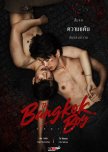
Too many twists and turns
Watching Bangkok Boy felt like riding a tuktuk on the streets of Bangkok, weaves around trying to get to the destination. The edgy drama just became overwhelming that I really didn’t know who to root for. I felt the relationship of the main character wasn’t fully developed and just rushed. I don’t mine a bait and switch storyline but there just too much switching I couldn’t keep up. Keep that edgy for at but please allow the viewer to absorb and focus and get engaged. As the saying goes “if you lost me at hello…you lost me forever”Was this review helpful to you?
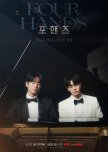
Beautifully haunting…a masterpiece of music and storytelling.
With only two episode left…where does it ges from here?On one hand, Jeong Yo achieves his ultimate revenge and Bi O continues spiraling until there is nothing left to save. On the other, Jeong Yo discovers what Edmond Dantès eventually learned…revenge may bring satisfaction, but it can never return what was stolen. Perhaps redemption can only come through forgiveness.
From the beginning, music has been the invisible thread binding these two men together. It gave Jeong Yo a dream. It taught Bi O how to feel. It created their friendship, became the source of their rivalry, and eventually became Jeong Yo’s weapon through “Nemesis.”
Some may see their relationship as a bromance, but I think it goes much deeper than that…and not in a physical or romantic sense. They are kindred spirits whose connection has always been emotional. Almost like twins who somehow understand what the other is feeling without needing the words. One fills something missing in the other.
That is what makes Jeong Yo’s revenge so tragic. To destroy Bi O, he may have to destroy a part of himself.
And what a beautifully made drama this has been. The cinematography has an almost cinematic quality, from the intimate scenes around the piano to the beautiful locations in Prague. The acting has been superb, the writing intelligent and layered, and the direction knows when to let silence speak. But above everything else is the music…not simply a soundtrack, but another character telling the story when words no longer can.
And perhaps that is where these final two episodes will circle back to the beginning…four hands, one piano, two souls connected by music.
Music brought them together.
Revenge tore them apart.
Will forgiveness allow them to play together again?
Was this review helpful to you?
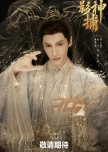
A Mystery or a Fairy Tale…Make Up Your Mind
I had high expectations for Shadow Punisher, especially with two lead actors I genuinely enjoy watching. And to their credit, their performances were as good as expected. The production looked impressive, the mysteries were interconnected, and the story had all the ingredients of a great Chinese investigative drama…political intrigue, family rivalries, hidden enemies, and a promising bromance. Unfortunately, having all the right ingredients doesn’t always make a satisfying dish.I love a good mystery, especially one that challenges my intellect and keeps me guessing. But with only 30 episodes, Shadow Punisher spends far too much time on lengthy investigations and pseudo-detective work. Each mystery takes so long to resolve that I eventually stopped trying to figure things out. I was simply watching and waiting for the outcome. Li Si dominates almost every scene, while Meng Rui feels more like a supporting character than an equal lead. Their chemistry is there, but the emotional connection never really develops. I understood their partnership, but I never felt deeply invested in it.
What disappointed me most was the poor character development. The four central characters deserved stronger introductions and more attention to their individual histories. Instead, we’re given bits and pieces of their pasts and expected to put everything together ourselves. The complicated relationships between the Emperor and his sons could have made a fascinating family drama, yet the palace intrigue feels almost like a side story. And then there’s Liluo, an enemy so powerful and deeply rooted throughout the empire that I kept wondering…if they had already infiltrated the palace and controlled so much, why wait until now? Why was Prince Xian suddenly so important? The explanations never completely convinced me.
Everyone seems to be a puppet, with someone secretly pulling the strings. But who’s the real puppet master? I’ll leave that for viewers to discover.
By the finale, almost every hero seems destined to sacrifice something, even their lives, to eliminate the threats. But where was the emotional impact? I should have been devastated, yet I barely felt anything. And when the final confrontation arrived, I couldn’t help thinking of Prince Phillip battling Maleficent in Disney’s Sleeping Beauty. Suddenly, this elaborate detective mystery had turned into a fairy tale battle between good and evil, complete with supernatural powers and heroic sacrifices. The difference is that Sleeping Beauty was always meant to be a fairy tale, and at least that fairy tale had a happy ending. Shadow Punisher offered no such comfort.
I don’t know whether it was the writing, the pacing, or simply poor execution, but this series feels like a missed opportunity. It left me with more questions than answers, and not the kind that make a good mystery. The actors did their best, but even talented performers can only do so much. Perhaps the saddest part is that I didn’t even need a happy ending. I just needed an ending that made me feel something. After 30 episodes, I had nothing to mourn, nothing to celebrate, and very little to remember.
Was this review helpful to you?
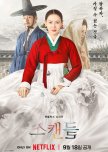
The Women of Bukchon
After all, Korea is not France.I think director Jung Ji Woo knew exactly what he was doing when he adapted Les Liaisons dangereuses into a Korean period drama. The two societies were very different. Laclos gave us French aristocrats playing dangerous games with sex, love and reputation. Joseon society was much more controlled, especially for women. How they dressed, behaved, loved and even showed desire had rules.
So instead of simply putting the French story in Korean period, the director changed it.
Even the outcome is different. The original story ends with death, disgrace and destruction. The Scandal is much more subtle. There is still honor among sinners, and morality and reputation continue to control their lives. Oh yes, there is sex and nudity…but please, a few breasts and buttocks hardly compare with the scandalous behavior of the original story. Again…subtleties. And subtlety is both the strength and weakness of this series.
Eight episodes gave the director plenty of time to explain these characters and why they behaved the way they did. Unfortunately, it also gave us long conversations, slower pacing and less intensity. Sometimes I wanted the manipulation to burn instead of simmer. I honestly think this would have been much better as a tightly written three hour movie. Keep the beautiful cinematography, the glances, the silence and the sexual tension…but move the story along.
I admire the actors for taking risks, especially Ji Chang Wook. He stepped away from the clean and romantic image many of us are used to and played a man who uses sex and seduction as weapons. Earlier I wondered if Cho Won could eventually make me forget Ji Chang Wook. Not completely…but I admire him for trying something different.
Nana will probably divide viewers. Some saw her quiet performance as lacking emotion. I saw a young widow whose husband died before she really had a chance to live. Instead of enjoying marriage, she was expected to mourn, remain pure and behave exactly as society demanded. Even seeing her smile became difficult during these eight episodes. Her restraint was not necessarily a lack of emotion…perhaps it was a woman who had learned she was not allowed to show it.
By the end, I wondered if The Scandal should have been called The Women of Bukchon. Lady Cho fights the rules by manipulating them. Hui Yeon survives by living within them until she finally begins choosing for herself. Both women want something society tells them they should not want.
Maybe that is what this version ultimately became. It started with Laclos and his scandalous games of sex, power and manipulation, but somewhere along the way it became a story about women, desire and the price of living in a society that decides what is proper.
It is not the French story copied into Korea. And it should not be. After all…Korea is not France
Was this review helpful to you?
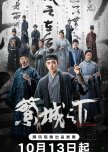
If Agatha Christie wrote a Chinese novel
I started writing this review when I was only on Episode 10, so I had no idea how this story would end. But I already had a feeling about this series. Now that I’ve finished it, I can say that my initial impression was actually right but the ending gave me an even greater appreciation of what the writer was trying to accomplish.Ripe Town is one of those rare C-dramas where the production itself deserves movie-quality resolution. The cinematography, particularly the use of light and shadow, creates an incredible sense of depth. More importantly, the story demonstrates something I always appreciate in a drama: an understanding of humanity.
It reminded me a lot of Under the Microscope, wonderfully acted by Zhang Ruo Yun, where historical events gradually lead to mysteries in the present. Both shows trust the audience to follow the clues rather than simply throwing answers at us.
And perhaps what I enjoyed most about Ripe Town is what it doesn’t have.
It’s missing the very handsome A-list actor whose impeccable looks easily distract the audience and somehow make an unbelievable character believable.
It’s missing people flying through the air attached to invisible strings, performing acrobatic moves that defy every known law of physics.
It’s missing CGI that makes a serious historical drama look cartoonish, and sometimes downright garish.
It’s missing the horrible fillers that somehow take a story that should have been 12 episodes and stretch it into 40.
And it’s missing that dreaded C-drama finale that seems to simply drop off a cliff.
Instead, Ripe Town trusts its story.
The cinematography is particularly impressive. The director of photography uses beautiful soft lighting and filters that emulate the warmth of afternoon sunlight. Reflected light coming through windows often frames the characters’ faces with a softness that almost feels like a painting. As a photographer I always appreciate the use of shadows to add depth and there was a lot of that in this series.
What impressed me even more is how seamlessly the studio scenes blend with those filmed outdoors. Nothing feels artificial. If CGI was used, it was used sparingly enough that it never became a distraction.
The writing is equally impressive.
Masterfully written scripts can tell a story in only so many episodes. You don’t need 40 episodes when the story itself is strong enough to carry the audience.
Though this is a serious drama, I love the occasional light comedic moments that actually made me laugh, especially because our lead actor maintains such a wonderfully stoic face.
At the center of the story is our young lead, Qu Sangeng who is torn between his own moral values and his corruptible master. What makes him fascinating is the contradiction in his character. Despite essentially being his master’s lackey, he demonstrates intelligence and deductive skills far beyond his young age. Yet he still manages to maintain the respect of the more seasoned people around him.
The dynamics between the characters are complicated, and that is what makes the story so interesting. Everyone seems to be connected to someone else, and every relationship has another layer underneath it.
The script is complex without feeling unnecessarily complicated.
The writer and editor do something I particularly admire as they peel away the mystery layer by layer. Just when you think you understand what is happening, another piece of the puzzle changes your understanding of the previous one.
I was especially impressed by the young actors. For their age, they demonstrate remarkable skill. I truly admired young Lu Zhi, played by 15-year-old Yu Yao, who demonstrates acting ability far beyond his age.
And then I finished the series.
That’s when I realized that Ripe Town wasn’t really just a murder mystery. It is a story about revenge, morality and the consequences of allowing the past to control the present. The secrets they kept. What initially appears to be a story about murder gradually becomes something much darker. Lu Zhi’s desire and anger is something understandable. He has suffered, he has lost people he loves, and he wants justice. But revenge has a way of changing the person seeking it.
What begins as justice eventually becomes another form of violence. “Justice when it is late is not justice”.
And this is where the series becomes much more interesting to me. The real tragedy isn’t simply discovering who is responsible. It is watching how victims eventually become perpetrators themselves. The events that happened twenty years earlier continue to affect everyone in the present. Without giving away the story woven into the script, I was totally surprised
Twenty years. Think about that. An entire life shaped by something that happened when they were simply teenagers. And when the truth finally comes out, there isn’t the kind of satisfying ending we normally expect from a mystery drama. There is no great heroic victory where everyone gets what they deserve.
Instead, revenge has consumed almost everyone. After everything they have gone through, after twenty years of hatred and revenge, death ends it all.
The series isn’t really asking us to decide who is good and who is evil. At what point does a victim become the very thing he hates? Vengeance only begets vengeance. That is what I ultimately admire about this drama.
It doesn’t rely on handsome faces, spectacular wire work, excessive CGI or endless filler to keep us watching. It relies on its characters and the gradual unraveling of the truth. And perhaps most importantly, it understands that there is rarely such a thing as clean justice when revenge is involved.
Now that I know how the story ends, I actually want to watch Ripe Town all over again. Not because I didn’t understand the story the first time, but because I suspect I missed many of the clues. The beauty of a good mystery is that the second viewing can sometimes be better than the first.
The first time, you’re trying to figure out what happened. The second time, you already know what happened. Now you can see why it happened.
And that, for me, is what makes Ripe Town worth watching.
Was this review helpful to you?


