
 News


 6
 7
 1
 2
 1
 3


it’s only porn if you think it is
When I first watched Double Exposure, there were no subtitles, so without any context, I could only appreciate its visuals. At first glance, those visuals appeared highly erotic—almost pornographic.When I finally watched it again with subtitles, the film became something entirely different. The dialogue, though seemingly simple and understated, added remarkable depth and dimension to the story. It transformed what initially felt like a purely visual experience into an exploration of intimacy, vulnerability, and human connection.
I also found myself wondering how a Korean production company had the courage to make such a daring film. Had it been produced in parts of Europe, it might have been viewed less as something controversial and more as an artistic or educational exploration of sexuality. Cultural context inevitably shapes how audiences perceive a film like this.
I admired the actors for pushing beyond conventional boundaries, knowing they risked criticism or even being marginalized within their own industry. Learning that this was their first acting role made their performances even more impressive. They played their characters with complete conviction. Their chemistry felt natural and unforced, as though the attraction between them genuinely existed. Their body language and facial expressions conveyed everything that words could not.
The film’s nudity, including its full-frontal scenes, never struck me as gratuitous. It felt honest and matter-of-fact—more akin to the casual nudity one encounters in a Korean spa, where there is no malice or voyeurism attached to the human body. It was simply presented as part of the characters’ reality.
If I had one criticism, it would be the editing. While I appreciate the deliberate pacing and lingering shots, a few sequences became confusing, and tighter editing could have made the narrative flow more cohesively.
The NC-17 scenes were executed with remarkable restraint and authenticity. They never felt forced or inserted merely for shock value. The kiss, in particular, was beautifully performed—so genuine that it became easy to forget these were actors simply fulfilling a role.
There will undoubtedly be those who dismiss the film because of its explicit content. But I can’t help wondering: if the same story were told between a man and a woman, would it be judged differently?
For me, Double Exposure is ultimately a work of art. Art, when created without malice or exploitation, is an expression of humanity. This film may challenge its audience, but beneath its explicit imagery lies a sincere exploration of intimacy, vulnerability, and the courage to tell an unconventional story.
Was this review helpful to you?
Arthur Chen and cast delivers.
And just when I thought I had completed all 60 episodes, I discovered there was a Season 2 waiting for me. But this review is about Season 1.The first reason I started watching Ever Night was Arthur Chen. Although I’m relatively new to C-dramas, I’ve come to admire his versatility as an actor. Learning that this was one of his earliest major roles, filmed when he was only around 17 years old, made his performance even more impressive. He was clearly a diamond in the rough, and seeing how much he has grown as an actor since then only deepens my appreciation for his work.
The storyline is beautifully crafted, with compelling episodes that kept me glued to the screen and binge-watching for three straight days. Unlike many recent dramas that struggle to maintain momentum even with 40 episodes, Ever Night makes excellent use of all 60. My only minor criticisms are the occasionally lengthy conversations and the frequent use of flashbacks. However, these are small flaws in an otherwise outstanding production.
What I appreciated most was the gradual and believable evolution of the protagonist. Unless you’ve read the novel, there is certainly a learning curve in understanding the many characters and their roles within the story. Yet as the narrative unfolds, all the pieces come together remarkably well.
And what an ending it was intense, satisfying, and emotionally rewarding. It delivered both excitement and closure while leaving me eager to continue the journey in Season 2.
Was this review helpful to you?
a story worth watching
One of the recurring challenges with many long-form Chinese dramas is their tendency to lose focus over time, often becoming drawn out or repetitive. Blood of Youth, however, manages to sustain its momentum across all episodes. It presents a narrative that feels complete, with each arc contributing meaningfully to the overall story.The series distinguishes itself through the depth and complexity of its characters. Each figure—whether central or supporting—has a clear backstory and motivation, contributing to a broader understanding of the world the drama builds. The storytelling maintains a balance between action, emotion, and reflection, keeping the viewer engaged without overwhelming them.
Acting and Themes
At its heart, Blood of Youth explores themes of redemption, loyalty, and betrayal. The performances are consistently strong, capturing both the moral ambiguity and the emotional struggles that drive the characters. The antagonistic roles are portrayed with nuance, and the interplay between good and evil feels grounded rather than exaggerated.
The only notable drawback lies in the large number of supporting characters. For non-Chinese speakers, it can be challenging to keep track of names and relationships, though this is more an accessibility issue than a narrative flaw.
In an era where the sheer volume of C-dramas can lead to creative fatigue among both creators and audiences, Blood of Youth stands out as a reminder that quality storytelling still exists within the genre. Though viewed later than its initial release, the series proves to be a rewarding experience—an example of how thoughtful writing and direction can elevate familiar tropes into something memorable.
Was this review helpful to you?

A butterfly returns when the flower blooms
Sometimes we need to stop asking why, it is just is. The Chinese makes some of the best BL shows and this is one of them from Hong Kong. It’s gritty and grungy, and very real. When a show is beautifully scripted and craftily edited it can really tell a story and in 5 short episodes. Some are left to the audience imagination. The show talks about relationships that are painful to go through, specially those we regret for not even fighting for. The what ifs! This is not a Thai feel good BL and that’s what makes it so great. It touch me deep and invited some of the pain I went through growing up, and reminded me my life now is what it is based on the choices I made and that happiness continues with knowing we become because we chose it. Is is just is.Was this review helpful to you?
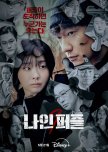
They should rename the 5 puzzles instead
I would like to write a prolonged review of this show but I couldn’t care much for this Disney production…the script is lagging and lacking depth specially in character development. Though I like the flat affect of the male lead, the female lead was so irritating to watch. I liked her in the Witch series but being a narcissistic neurotic character is not her cup of tea. Maybe it’s her acting of poor direction but how can a police department tolerate an individual to just insert herself when she wants to. Rich girl bratty behavior driving. Lamborghini in a PD reminds me of another show, “Bad Boys” with Will smith and his Ferrari. And please enough of the slight of hand magic trick redirection in scriptwriting. That is so….80’s? My wife truly enjoyed it as she felt entertained but my mind was constantly finding flaws….i just struggle to watch this.Was this review helpful to you?
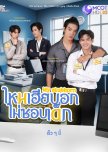
Boat and Oat’s affair to remember.
Have you ever watched a series that felt like it was written and produced purely for the leads’ love affair? That’s exactly what My Stubborn delivers.At its core, the story follows two very different individuals who could easily be called an “odd couple.” One is tall, reserved, and confident in his sexuality, while the other is shorter, loud, and confused . Watching their relationship evolve—and seeing how their personalities clash and then complement each other—is half the fun. The other half? The unapologetically explicit NC17 scenes that appear in almost every episode. Honestly, it felt like being transported back to my college days, and I couldn’t help but relate to some of their escapades.
Surprisingly, those intimate scenes never overshadowed the storyline. The leads’ chemistry was so strong that it was hard not to believe they had something going on off-screen. The way they looked at each other made it impossible not to root for them as a real couple by the end.
The production values aren’t as polished as other Thai BLs, but that’s not what this show is about. My Stubborn is about missed opportunities, about living vicariously through Boat and Oat’s journey.
I’ll admit, at one point I thought the frequent NC17 scenes might drag the story down—but in the end, I realized the series wouldn’t have been the same without them.
It’s a show I could easily rewatch: it’s cute, funny, sad, and ultimately satisfying when the leads finally end up together. A perfect recipe for a sweet, indulgent dessert. Because at the end of the day, this isn’t about the drama of life—it’s the Boat and Oat show.
Was this review helpful to you?
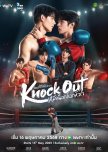
It didn’t know me out
I really wanted to like this series specially with with good looking male leads but I found their acting really weak, the chemistry between leads was lacking, and though the story initially had potential but it fizzled near the end. The ending was predictable which isn’t necessarily bad. I’m noticing it as a pattern with thai series when it comes to fight scenes specially in a boxing ring where the fight coordination is lacking authenticity. Personally I would like to see these two in another series and give them a chance, with a better script they have a potential to improve their chemistry.Was this review helpful to you?
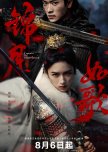
What if Joan of Arc were Chinese?
This is exactly how Mulan should have been told.
From the very beginning, the tension between the two leads sets up the story beautifully. The drama strikes a fine balance—adding layers of intensity without ever overwhelming the viewer. It’s never easy to convince an audience that a woman can believably take on a male role (with perhaps Barbra Streisand in Yentl being the rare exception). But Zhou Ye achieves it brilliantly, not by disguising herself to look like a man, but by embodying strength and commanding presence through her actions.
Ryan Chang, as the stoic general, delivers a remarkable performance—subtle, restrained, almost devoid of emotion, yet capable of softening when he is with Zhou Ye.
The fight choreography is nothing short of breathtaking—a martial arts ballet performed with precision and grace. The musical score deserves equal praise, heightening both the tension and the tender moments.
What truly elevates the series is the evolving love story. The chemistry between the leads feels genuine and compelling, keeping you invested from start to finish. The drama is paced just right—long enough to let both the plot and the characters’ growth unfold naturally, but never dragging.
At its heart, this series is about more than a warrior’s courage—it’s a celebration of women’s strength, love and determination. As the song goes, “I am woman, hear me roar.”
Was this review helpful to you?

The Double… and when the mask came off, I found Scarlett O’Hara
The series began with our Cinderella fighting her way out of poverty, facing her evil double, and constantly battling everyone who wanted her dead. Even her marriage was nothing more than a contract. But when the mask finally came off, I realized I recognized that face… or rather, the woman behind it. It’s Scarlett O’Hara from Gone with the Wind! Geez…A woman fiercely independent, controlling, manipulative, and seemingly incapable of recognizing the love standing right in front of her. Yes, she helped the pooor, and I won’t deny the good she did, but even that came with a purpose. Like so many people she encountered along the way, they became part of her plans, pawns in her chess game, means of achieving whatever goal she had set for herself. Somewhere between fighting for survival and gaining power, our Cinderella became so obsessed with controlling her own destiny that, unknowingly, she started controlling everyone else’s. Even her love story…
And what about Lu Zhuo? He played the perfect Rhett Butler, madly, almost obsessively in love with his Scarlett. Yet dspite being such a strong character himself, he was reduced to a supporting role from beginning to end. And that fire in the finale? Tell me it didn’t remind you of the famous burning scenes in Gone with the Wind! The similarities were difficult to ignore.
Here’s the irony. What I loved about this series was the strength and determination of A Chou/Wei Rao. What I disliked was that very same strength and determination becoming practically the sole driving force of the entire script. Just like Tian Xiwei’s knife-wielding butcher in Pursuit of Jade, our heroine was almost unstoppable. Her anger and thirst for vengeance never seemed to fade, and some of her more emotional performances felt a little overbearing. I was reminded of that scene in Pursuit of Jade when the neighbors were killed. Different drama, same overwhelming intensity.
And then there’s the storytellling. The rinse and repeat cycle eventually wore me down. Another enemy, another deception, another battle for our Wonder Woman to win. Then suddenly, toward the end, everything came crashing together like Marvel’s Avengers: Infinity War. Characters, revelations, and conflicts all arriving at once, as though the writers suddenly realized they were running out of episodes.
And TBH, the ending fell flatter than a pancake. No amount of crying or additional fighting could rescue it. After all that buildup, I expected an emotional explosion, something that would make the entire journey worthwhile. Instead, it lacked the intensity and emotional payoff I’d been waiting for. It was like having the most intense foreplay imaginable… only for everything to end in premature ejaculation. All that anticipation, and I’m left staring at the screen thinking… seriously, that’s it?
Ultimately, this was a story about a woman determined to gain control over her destiny, with everyone around her falling like chess pieces. Some sacrificed, some manipulated, some loved her unconditionally, but almost everyone served her journey toward power.
I started this drama expecting Cinderella and Prince Charming. I ended up watching Scarlett O’Hara conquer her world while Rhett Butler stood patiently in the background.
And that’s my biggest disappointment. This wasn’t really a love story… it was her story. Unlike Against the Current, which explored the life, love, and struggles of its heroine while allowing the people around her to have stories of their own, this drama seemed determined to make everyone else’s existence revolve around one woman.
I have no problem with a strong woman leading the story. I just wish the writers had remembered that even Scarlett O’Hara needed Rhett Butler to make Gone with the Wind unforgettable.
Was this review helpful to you?
The two faces of Janus
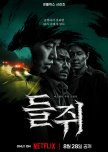
We live in a world where an entire identity can be stored inside a device small enough to rest in the palm of our hand and where a face can be altered into almost anything we desire. Mousetrap begins with stolen technology, money, and identity, but gradually digs into something far more disturbing: Who are we when our name, face, memories, and accomplishments may never truly have belonged to us?The series draws from the Korean folktale of a field mouse that eats a person’s fingernails and assumes human form. A rat lives in the shadows, survives on what others leave behind, and takes whatever it can steal. But how do you build a better mousetrap when the bait, the trap, the hunter, and the prey keep exchanging places?
Remember Keyser Söze? The Usual Suspects remains one of those rare movies whose final revelation nearly blew every brain cell I had left. Mousetrap gave me that same unsettling sensation not because it copies the film, but because it constantly manipulates what we think we know. It is like watching an elaborate shell game: every time you believe you have found the truth, another shell is lifted and another lie crawls out.
Who is Je Moon-jae? The mystery unfolds like a Russian nesting doll: each truth opens to reveal another lie within it.!Moon Jae begins as the victim of a man who has stolen his life, only for us to discover that he had already stolen someone else’s stories, memories, love, and eventually his entire existence. The man hunting the Rat was himself the original Rat. One thief simply built a better mousetrap for another.
Ryu Jun-yeol gives a remarkable performance, creating two men with the same face yet distinctly different souls. Sul Kyung-gu brings menace, humor, and some semblance of humanity to No Ja, while Lee KyuHyung adds another tragic layer to the story’s obsession with stolen names and displaced lives. The production is polished and atmospheric, but the real star is the highly intelligent and intricate script.
When we think we have finally found Keyser Söze, the series turns the glass around and reveals that we have been staring at him all along. Moon Jae may reclaim his name, his home, and his public identity, but he cannot reclaim the talent, memories, or humanity he stole from others. He escapes the physical trap only to become imprisoned inside the identity he created.
That is the brilliance of Mousetrap: the trap was never designed merely to catch the Rat. It was designed to make him remember that he was the Rat all along. And once that realization snaps shut, there is nowhere left to run, not even from himself.
Was this review helpful to you?
A Winter Sun Wakes the Wind in Spring Hills' Dream
2 people found this review helpful
The sun awakens in the end…
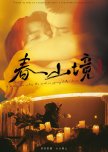
Every once in a while, a series or film comes along that reaches somewhere deep inside you and leaves a permanent imprint. For me, that was Audrey Hepburn in Breakfast at Tiffany’s. I suspect Liu Jingyu’s Changyang will be one of those characters for me.A Winter’s Sun Wakes the Wind in Spring Hill is a series I already know I will want to watch again and again. And somehow, “满纸长情” the song Kuma and Lyu sang together feels like the perfect musical metaphor just like “Moonriver”. Some stories simply stay with you.
The final episode, appropriately titled “Beholding,” may be the most beautiful expression of Changyang’s love. His joie de vivre, passion and emotional intensity make us wish that everyone could experience a partner who looks at them the way he does. For Changyang, there is only one person in his eyes. Gender becomes irrelevant. What he sees is the person, the soul he has chosen to behold.
And perhaps that is exactly what Zelia is trying to say.
The series feels like a commentary on China’s risk-averse attitude toward same-sex relationships. “The social divide between us” does not weaken their love; it seems to intensify it. If absence makes the heart grow fonder, then societal pressure makes their bond stronger. The more the world tells them what they cannot be, the more determined they become to simply be.
I was particularly intrigued by Zelia’s use of Venezuela’s brutal Hunter School as the antithesis to the social constraints surrounding homosexuality in China. Was this simply part of the story, or was Zelia deliberately creating a symbol of rebellion against rigid systems of control? The Hunter School represents one extreme of a society that attempts to reshape people through force. China’s social environment represents another kind of pressure, less physical, perhaps, but capable of controlling lives through conformity, shame and public judgment.
Then Zelia finally makes her own Hitchcockian cameo, appearing as Director Li. I translated the text message she sent and reads as follows:
“Mulan disguised herself as a man to join the army in place of her father. When a woman dresses as a man, it's called "leiwu satao" (a type of martial arts performance); when a man dresses as a woman, it's labeled "effeminate culture." Is this a case of cultural hatred towards women, or a societal lack of confidence in its own culture? Ultimately, it's only when humanity entered a patriarchal society that we fell into a social acceptance of male worship.
What does it matter if you're male or female? We're all just a shell containing a soul. Some retain their spirit, some lose their soul; some are clear-headed and blind, some can't distinguish right from wrong. When will humanity be able to let go of gender?”
And what she says after their film is criticized for being gay-centric may be the most direct statement of the series’ philosophy. Mulan can disguise herself as a man and be celebrated as a heroic cultural icon, yet when a man displays femininity, society is quick to condemn him. Zelia asks whether this is cultural hatred toward women or simply a society insecure about its own definitions of masculinity.
Her conclusion is even more provocative.
What does it matter whether we are male or female? We are all merely shells containing a soul. Some retain their spirit. Some lose it. Some remain clear-headed while others become blinded by convention. Some can distinguish right from wrong, while others simply follow what society tells them. And ultimately, she asks: When will humanity finally be able to let go of gender?
That, to me, is the real theme of this series. Love does not see gender first. Society does.
Zelia’s reference to Chinese netizens as moths dying in a flame could not have been more pointed. The frightening power of strangers to elevate, destroy or even ruin someone’s life through online judgment is a sobering commentary on modern society. Reputation becomes public property, and people who have never met you can decide who you are.
Shi Yu Hao’s redemption caught me completely off guard. But beneath that redemption, I also sensed something darker, the price people sometimes pay when they become trapped by the expectations of others. In a country where the entertainment industry has seen a disturbing number of young actors do not live beyond 45, the storyline carries an uncomfortable resonance about the cost of losing one’s way, one’s identity and ultimately one’s will to live.
Very few series know how to end on a high note. A Winter’s Sun Wakes the Wind in Spring Hill does.
It ends with a rising sun.
Not a declaration that everything has changed. Not a fantasy that society has suddenly become accepting. But a suggestion that change is possible. That love can survive the systems designed to contain it. That perhaps one day, China may look at same-sex love not as something that needs to be hidden, explained or condemned, but simply as love.
And that is why the final image stays with me. It reminds me of that lone man standing in front of the tanks in Tiananmen Square. One person standing against something vastly more powerful. He did not stop the tanks. But he made the world stop and look.
Perhaps that is what Changyang does. He simply stands there, loving the person he loves.
And asks us to behold.
Was this review helpful to you?
Disney’s 12 dwarfs fails again
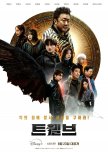
Just like its twelve characters, this show is struggling with an identity crisis. It can’t decide if it wants to be a comedy, an action piece, or a suspense thriller. With such a large ensemble, the real challenge is developing each character and their relationships—and here, it falls short.For once, I found myself rooting more for the antagonist than the leads. Ever since Crash Landing on You, many K-dramas seem stuck in a rut, especially under the growing influence of U.S. film studios. Some of my friends have already switched over to C-dramas for fresher storytelling.
Sorry Disney, but if you couldn’t save the Seven Dwarfs, there’s no saving these twelve disciples either
Was this review helpful to you?
Alice got lost in Bangkok traffic
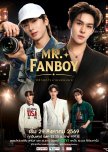
This is the story of Alice, who followed a rabbit down a hole and discovered Wonderland. What a beautiful premise for a BL series. We have the queens of spades and diamonds clawing at each other…so many queens indeed. Third is the Cheshire Cat, a chameleon at heart, and then there are Tweedledee and Tweedledum, always somewhere nearby stirring the pot.The series started with a strong and progressive story, but somewhere along the way it became messy. Alice lost her way, and Wonderland turned into Bangkok at rush hour. The acting was fine, and the intimate scenes were hot enough to raise the temperature, but the chemistry never fully landed for me. Wan was pure Alice…happy as a clam, sweet as a poodle you just want to hug. But sometimes the story needed a pit bull, and he could not quite carry that weight. There were poignant moments that stayed with me, only for the writing to throw something in and mess them up again.
Or maybe I am looking at it the wrong way. What if DMD intended this as a satire of its own industry? Not Alice in Wonderland, but Alice in Borderland…a messy world of fake chemistry, claws out, scheming, infighting, and backstabbing. In that case, it worked to a degree. But perhaps it needed fewer episodes. Eight episodes might have made it more intense, focused, and dramatic.
That is why I am still on the fence. DMD makes great series, but this one never quite found its footing. It was fun to watch, but in the end, not very memorable.
Was this review helpful to you?
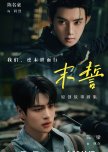
I am legend…a BL story
I am usually not a zombie show person. Making a love story during the end of the world is like finding the right man in the middle of Shibuya Crossing…there are too many people, too much chaos, and someone is probably trying to bite you. But The Last Oath started with a good idea. A virus has destroyed the world, Lin Zai is immune, and his blood may be the answer to saving everyone. A Lie is sent to capture him, but ends up protecting him instead.The music is great, the production is better than I expected, and the two leads made the story work. Chen Ming Hao gave A Lie a quiet sadness behind his hard face. Chen Liang made Lin Zai kind but not weak. Their chemistry was the real reason I kept watching. They slowly learned to trust each other, protect each other, and maybe want something more.
Some viewers were too busy complaining about the AI and CGI scenes. Yes, the effects were not perfect, but this is not The Last of Us with an HBO budget. I looked at the whole meal, not just the kitchen. The series tried something different for a BL, mixing zombies, action, survival, and romance. That alone made it worth watching. Even when the zombies had perfect eyesght, arrrows never ran out, and people came back from the dead with better tracking than Google Maps.
My problem was the middle of the story. The brothers’ story was meant to show the human side of searching for a cure, and I understood that. But it slowed everything down too much. The show began with a big question…can Lin Zai’s immunity save the world? Then it became more about saving one person. I wanted more danger, more zombie action, and more focus on the virus and the cure.
Still, A Lie and Lin Zai made me stay. In a world full of zombies, people fightng for power, and a lot of blood being taken from poor Lin Zai, their connection felt real. That was the heart of the series.
In the end, maybe this was never really about saving an already apocalyptic world. Maybe it was about finding love, holding hands, and walking toward the sunset together…because eventually, we all die anyway.
Was this review helpful to you?
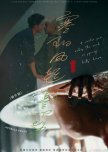
A Winter Sun Wakes the Wind in Spring Hills' Dream Extra
1 people found this review helpful
if only…
Zelia’s creative juices are on overdrive with only three episodes. We’ve seen the classic trope of traveling back in time to correct past mistakes, but her use of tea as a metaphor throughout the storyline gives this short series something more meaningful.If only…
In my opinion, this short series is how Zelia wanted to give viewers understanding and closure. If only we could talk to our younger selves, what advice would we give? If only we could say one final goodbye to a dearly departed brother, what would we say? And if only we could turn back time, would we really change anything?
Seeing QT brought back, both through memories and as the spirit of the mountains, stirred up so many emotions. For me, it was a chance to find closure. Not by changing the past, but by finally making peace with it.
We don’t need a full drama to tell us what grief feels like. Sometimes all we need is a little magic pill to heal those wounds we’ve carried for so long.
So Zelia… thank you for reminding us that sometimes we don’t need a second chance to change the past. We just need a chance to say goodbye. Am a cup of cha…
Was this review helpful to you?


