




 1
1


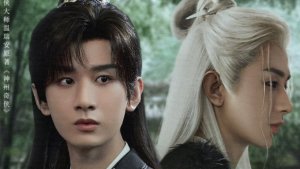 'The Journey of Legend' actress responds to her controversy, while C-netz await drama's release
 Once a spirited young man full of passion and justice, Xiao Ming Ming has grown disillusioned with reality and now lives a timid, unremarkable life, finding solace in writing martial arts novels online. When his company develops an immersive AI-based writing system that projects users into their own stories, he inputs a martial arts outline and becomes the protagonist, Xiao Qiu Shui. Within this virtual world, Xiao Qiu Shui faces betrayal, loss, and endless trials — from the deadly schemes of the Power Sect to the death of his sworn brother Tang Rou and the fall of his family. Through hardship and bloodshed, the once-fearful swordsman grows into a true hero upholding loyalty and righteousness, while Xiao Ming Ming’s fading heartbeat blurs the line between fiction and reality. (Source: kisskh) ~~ Adapted from the novel "Shen Zhou Qi Xia (神州奇侠) by Wen Rui An (温瑞安). Edit Translation
- English
- 中文(简体)
- ภาษาไทย
- Русский
Where to Watch The Journey of Legend

Subscription (sub)

Subscription (sub)

Subscription (sub)

Free (sub)

Subscription (sub)

Free
Cast & Credits
-
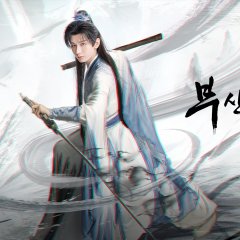
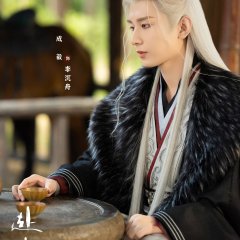
 Cheng YiXiao Qiu Shui | Li Chen Zhou | Xiao Ming MingMain Role
 -
 Gulnezer BextiyarXiao Xue YuMain Role
 -
 Eleanor LeeTang FangMain Role
 -
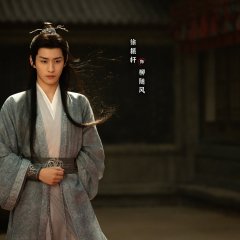
 Xu Zhen XuanLiu Sui Feng / Deputy Chief LiuMain Role
 -
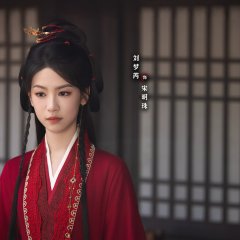
 Liu Meng RuiSong Ming Zhu / "Red Phoenix"Main Role
 -
 Li Jun YiDeng Yu Han [Qiu Shui's sworn brother] | Deng Zhe [Ming Ming's dormmate]Support Role
Reviews

This review may contain spoilers
A Mixed Bag of Brilliance and Disappointment
I wanted to give 9 stars, but the ending of the last episode took this 9th star away... I've just finished watching and I really don't know what I feel now. It's just a mix of disappointment and sadness. Anyway, I've already watched so many brilliant dramas with a richly deserved 10, I cannot give it here even a 9. 对不起。The story is about – well, what do you know? So surprising! – the triumph of good over evil. But for me, the deeper meaning is you cannot judge someone from your first impression, cause you can be mistaken about this person. Those who look vicious can turn out quite good and the other way around.
The whole drama is very uneven. There are some great episodes and some boring ones, where the action's moving so slow I was fast-forwarding... The first episodes were not something I'd expected. The plot twisted at the 32nd episode, making the drama go on in an interesting way. But the ending was not as joyful as probably most of the viewers expected.
I highly appreciate the fighting scenes. Cheng Yi is still irreplaceable in acting out martial arts in the best way. Even when he was injured while filming, he continued. I take my hat off to him.
On the character front, my feelings are mixed. Liu Sui Feng is a character I ultimately could not understand. He had potential, but finally turned out to be a monotonous figure with only one expression. Similarly, the main hero, Xiao Qui Shui, wasn't very interesting or surprisingly acted for me. This was in stark contrast to his second brother, who pretended to be calm, protective, and lovely, but turned out to be... well, you'll see for yourself ;)
Ultimately, my absolute favourite is Li Chenzhou. There's something very mystic in his composure, calm demeanor, and deep voice. (And that white hair... ;)) What I loved most was that his profound love for his wife never needed grand confessions—you could simply feel it in his every action and silent gaze. It leaves you wondering about the man behind the mystery: just how many years of life and loss are hidden behind that timeless, dignified presence?
Was this review helpful to you?

This review may contain spoilers
Righteousness Wins Over Profit in Jianghu
A bet set in the beginning of the show had its answer at the end. I wanted to watch a Wuxia but this had a lot of elements that didn't quite align with that. I knew the majority of the cast and they did a good job with what they were given. This time I won't write pros/cons but combine them.For starters the show got the rating it got for the awesome martial arts, the fact that other then the draggy family feud like episodes, it was in fact quite entertaining and out of the 3 CY characters my favorite was LCZ because he had a quiet grace along with his wife and theirs wasn't a showy type of love but as you watched, it resonated. Even theirs deaths were beautiful and fit the characters perfectly. I liked QS as he grew from a foolish youth to a moral driven young martial artist; his issues were that they literally gave him a VERSACE sized wardrobe fit for a runway while everyone else got a few (his brothers notwithstanding). Also that he gained his strength and whatnot not always from practicing martial arts nonstop but from a monk here, an invincible pill and spirit snake there, then a total of 8 masters infused him with their energies/legacies randomly before he himself started integrating everything. He used his smarts on other things. Least useful character was XMM, in fact that entire modern world AI transmigration with a stolen copyright by some government secrets selling senior was completely out of left field. It completely took away from the real Wuxia or storytelling portion of it.
Why couldn't it just be a happy family of 5 living their lives until trouble called? Who needed the senior jumping into XKY's body a la Agent Smith from the Matrix? First we were made to believe the power gang were the bad guys and ok we could go with that until it was no longer true and there was a 3rd evil loose in the world creating chaos so he could take over the world because how innovative was that? 🙄🤦🏻♀️ The power gang with LCZ as its chief (for whom other than him being a royal, we never got a back story), were essentially double agents; appearing bad to the world but really a collection of kings and other people sending money and clothing to the border to fight the northern westerlanders which were constantly threatening Daxi where they lived. But even there, there were traitors left and right; on both sides to this third side. You didn’t know who to trust.
While this was going on, the Xiao family has to escape to their Sword Manor because someone originally thought to be the power gang had infiltrated their ranks and is trying to get to a rare artifact saved for a general. The real culprits in poisoning the water (and later massacring everyone parents included) is some whistle gang run by a masked man who we all suspected to be XKY with LN (the senior) in his body but he also had 2nd child syndrome and a lifetime of jealousy of both of his brothers who were better then him because they were proficient in different things with a major crush on his adopted sister, whom he later tried to force to marry him and then when she tried to hurt him, killed her instead. I wasn't sure after which did he plan to sleep with her corpse (eww)? She did leave vital information that saved the world for QS at the cost of her life.
Continuing, he and his siblings and their disciples plus sworn brothers and friends run away leaving their parents behind one last time alive to find help only for QS to realize their few sources of help have betrayed them but before he could convince his older brother, he was framed so badly and crippled and still his older brother didn't believe him. I have a theory on the older brother's costume; throughout the entire series he only got one but he had plenty of screen time and I feel that that was because he never evolved; he was narrow minded, he never believed his own brother but believed strangers that either humiliated him or laughed in his face. He was one of those people that was totally fine when he was surrounded by his parents who were in charge, but when the massacre happened, everything fell in his lap and he did not know how to cope. Do I excuse his actions? Absolutely not, but I feel that because he never changed and stayed exactly the same and hurt QS so much without an ounce of apology or repentance until his dying moment at the hands of his second brother did Eureka 💡 happen is why he only got one costume for the entire series.
After family feud we got the game of faces GoT style with XKY wearing a mask where he could become become whomever he chose to become to trap people in order to kill them or have them make horrendous mistakes like in the case of LSF and the huge Sect's where he pretended to be LCZ and ordered the deaths of two monks; when that was found out obviously Power Gang was screwed but LSF was determined to make amends to the man who saved his life. This was another character with a very fragmented backstory where he misplaced his rage on one person when in reality that person being QS's father saved his life. And we never quite got to solving that entire issue. LSF also never made amends with any of the other people he killed without mercy, even though power gang only killed those that betrayed them to align with the enemy.
Another character that was a waste of time was the emperor who poisoned his own half brother "to keep him in check" because he was supposedly doing something wrong and being greedy when all LCZ did was provide for the border. But yet when the border is secure, something that the emperor doesn't even know or just found out that the general was kidnapped and he ordered LCZ to save the general and is informed that the border is secure and they have a victory and that the bad guys won't invade for 50 years. He says "everyone has to be rewarded including LCZ; bring him here!" is when he finds out that LCZ died already trying to rescue the general, and the emperor is all shocked and taken aback like he doesn't even understand how it could be possible; hello moron you have been poisoning him with wine ever so often that has basically rendered him all, but an invalid and you're surprised he's dead? On top of that he actually saw the fake mask that XKY brought him with the fake promise of truce with the northern enemies that he himself was leading and the emperor bought it hook, line, and sinker. It makes you think that considering how supposedly large his country is, isn't he supposed to have a broad spectrum of intelligence to tell him what's right and what's wrong instead of him just hastily making decisions without anything actual nor factual.
I have to say that my favorite fight out of all of them, and there were quite a few was the one at thunderdome where we met crazy Yan for the first time. Now talk about knowing how to enter an arena this dude showed up, screaming some bad guy's name like Drogon entering the Colosseum roaring. It was awesome! All the fights together were spectacular there and then naming QS as the world leader of martial arts in order to rescue the general and repel the northern enemy was also great. QS' two sworn brothers (as we lost the third very early on) were there from the beginning to the back in the mortal world. Crazy Yan turned out to be Xuyue's biological brother. Even those four thugs that just seemed so out of place did work and the two that QS met while searching for the abducted TF. It seemed that after his family and the disciples were massacred, he was determined to establish a sector with a rag tag family of his own. One of those people who became my second favorite was Prince Liang; this man had enough benevolence, empathy, and sympathy for both his half brother, LCZ to even attempt to stop the emperor from poisoning him to giving both quiet and physical strength to QS when he thought he had had lost absolutely everything, including that hug that I will probably remember when thinking about this series that no one in his actual family ever thought to give him. He was there for every strategy, for every fight and the way he treated QS seemed like one would treat his own flesh and blood; a brotherly love. It made you tear up quite a lot. Even though there were a lot of problems with LSF's character and his assistant/girlfriend with his storyline overall in the end, he finally understood that QS had won their bet of righteousness over profit, and he fought with the good guys and then left the celebration scene quietly with her vowing to meet again in the future on better terms.
Now let me give my thought process overall on how I thought things ended; I think that 2 out of 3CY characters did in fact die, and that part was obvious. If you look closely, you can see XMM shedding a tear as LN information was being told to him so he can hear them and then you slowly see his blood pressure start to go down and doctors racing into the room, but because it was so badly edited, you couldn't really tell what was happening as it kept fading to black, but I do not believe that he died as well because he did not flatline nor did he go into cardiac arrest. His blood pressure just went down and it was enough to signal the doctors that he was in distress. Distress does not mean death and is very much survivable. I do have to ask what was up with those weird fireworks that turned into colorful smoke that made you think that you were in a Bollywood film in the photo? As for people discussing which character it was that walked away with the Qin and the sword in the historical clothing toward the light, I think it's QS because it wouldn't make sense for a modern day person to walk toward the light carrying all of that and wearing all of that. So I do think that, even though this was an OE, XMM survived.
Would I recommend it? Only for fans of actors and if you want to be entertained. This is not a memorable story because the storyline was all over the place and that's the fault of production. So decide for yourselves.
Was this review helpful to you?
Recent Discussions
| Title | Replies | Views | Latest Post | |
|---|---|---|---|---|
 | Ming Ming / Qui Shui x System ( Magic Codex) by Cahane | 11 | 0 |  BL worshipper 12 days ago |
 | Character Relationship Chart by BaekhyunoonaID | 13 | 0 | BL worshipper 14 days ago |
 | The Journey of Legend Full OST with ENG SUBS + LYRICS by Peachey Blossom | 2 | 0 | Peachey Blossom Oct 23, 2025 |
 | The Journey of the Legend episode recaps by Cho Na | 1 | 0 | Cahane Oct 3, 2025 |
| Calendar (Official Airing Schedule) by BaekhyunoonaID | 33 | 0 |  Totoro888 Sep 26, 2025 |