Editorials


This review may contain spoilers
A Mixed Bag of Brilliance and Disappointment
I wanted to give 9 stars, but the ending of the last episode took this 9th star away... I've just finished watching and I really don't know what I feel now. It's just a mix of disappointment and sadness. Anyway, I've already watched so many brilliant dramas with a richly deserved 10, I cannot give it here even a 9. 对不起。The story is about – well, what do you know? So surprising! – the triumph of good over evil. But for me, the deeper meaning is you cannot judge someone from your first impression, cause you can be mistaken about this person. Those who look vicious can turn out quite good and the other way around.
The whole drama is very uneven. There are some great episodes and some boring ones, where the action's moving so slow I was fast-forwarding... The first episodes were not something I'd expected. The plot twisted at the 32nd episode, making the drama go on in an interesting way. But the ending was not as joyful as probably most of the viewers expected.
I highly appreciate the fighting scenes. Cheng Yi is still irreplaceable in acting out martial arts in the best way. Even when he was injured while filming, he continued. I take my hat off to him.
On the character front, my feelings are mixed. Liu Sui Feng is a character I ultimately could not understand. He had potential, but finally turned out to be a monotonous figure with only one expression. Similarly, the main hero, Xiao Qui Shui, wasn't very interesting or surprisingly acted for me. This was in stark contrast to his second brother, who pretended to be calm, protective, and lovely, but turned out to be... well, you'll see for yourself ;)
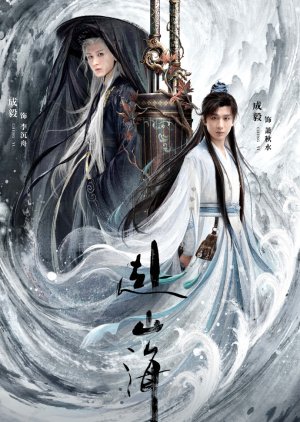
Ultimately, my absolute favourite is Li Chenzhou. There's something very mystic in his composure, calm demeanor, and deep voice. (And that white hair... ;)) What I loved most was that his profound love for his wife never needed grand confessions—you could simply feel it in his every action and silent gaze. It leaves you wondering about the man behind the mystery: just how many years of life and loss are hidden behind that timeless, dignified presence?
Was this review helpful to you?

 1
1This review may contain spoilers
Righteousness Wins Over Profit in Jianghu
A bet set in the beginning of the show had its answer at the end. I wanted to watch a Wuxia but this had a lot of elements that didn't quite align with that. I knew the majority of the cast and they did a good job with what they were given. This time I won't write pros/cons but combine them.For starters the show got the rating it got for the awesome martial arts, the fact that other then the draggy family feud like episodes, it was in fact quite entertaining and out of the 3 CY characters my favorite was LCZ because he had a quiet grace along with his wife and theirs wasn't a showy type of love but as you watched, it resonated. Even theirs deaths were beautiful and fit the characters perfectly. I liked QS as he grew from a foolish youth to a moral driven young martial artist; his issues were that they literally gave him a VERSACE sized wardrobe fit for a runway while everyone else got a few (his brothers notwithstanding). Also that he gained his strength and whatnot not always from practicing martial arts nonstop but from a monk here, an invincible pill and spirit snake there, then a total of 8 masters infused him with their energies/legacies randomly before he himself started integrating everything. He used his smarts on other things. Least useful character was XMM, in fact that entire modern world AI transmigration with a stolen copyright by some government secrets selling senior was completely out of left field. It completely took away from the real Wuxia or storytelling portion of it.
Why couldn't it just be a happy family of 5 living their lives until trouble called? Who needed the senior jumping into XKY's body a la Agent Smith from the Matrix? First we were made to believe the power gang were the bad guys and ok we could go with that until it was no longer true and there was a 3rd evil loose in the world creating chaos so he could take over the world because how innovative was that? 🙄🤦🏻♀️ The power gang with LCZ as its chief (for whom other than him being a royal, we never got a back story), were essentially double agents; appearing bad to the world but really a collection of kings and other people sending money and clothing to the border to fight the northern westerlanders which were constantly threatening Daxi where they lived. But even there, there were traitors left and right; on both sides to this third side. You didn’t know who to trust.
While this was going on, the Xiao family has to escape to their Sword Manor because someone originally thought to be the power gang had infiltrated their ranks and is trying to get to a rare artifact saved for a general. The real culprits in poisoning the water (and later massacring everyone parents included) is some whistle gang run by a masked man who we all suspected to be XKY with LN (the senior) in his body but he also had 2nd child syndrome and a lifetime of jealousy of both of his brothers who were better then him because they were proficient in different things with a major crush on his adopted sister, whom he later tried to force to marry him and then when she tried to hurt him, killed her instead. I wasn't sure after which did he plan to sleep with her corpse (eww)? She did leave vital information that saved the world for QS at the cost of her life.
Continuing, he and his siblings and their disciples plus sworn brothers and friends run away leaving their parents behind one last time alive to find help only for QS to realize their few sources of help have betrayed them but before he could convince his older brother, he was framed so badly and crippled and still his older brother didn't believe him. I have a theory on the older brother's costume; throughout the entire series he only got one but he had plenty of screen time and I feel that that was because he never evolved; he was narrow minded, he never believed his own brother but believed strangers that either humiliated him or laughed in his face. He was one of those people that was totally fine when he was surrounded by his parents who were in charge, but when the massacre happened, everything fell in his lap and he did not know how to cope. Do I excuse his actions? Absolutely not, but I feel that because he never changed and stayed exactly the same and hurt QS so much without an ounce of apology or repentance until his dying moment at the hands of his second brother did Eureka 💡 happen is why he only got one costume for the entire series.
After family feud we got the game of faces GoT style with XKY wearing a mask where he could become become whomever he chose to become to trap people in order to kill them or have them make horrendous mistakes like in the case of LSF and the huge Sect's where he pretended to be LCZ and ordered the deaths of two monks; when that was found out obviously Power Gang was screwed but LSF was determined to make amends to the man who saved his life. This was another character with a very fragmented backstory where he misplaced his rage on one person when in reality that person being QS's father saved his life. And we never quite got to solving that entire issue. LSF also never made amends with any of the other people he killed without mercy, even though power gang only killed those that betrayed them to align with the enemy.
Another character that was a waste of time was the emperor who poisoned his own half brother "to keep him in check" because he was supposedly doing something wrong and being greedy when all LCZ did was provide for the border. But yet when the border is secure, something that the emperor doesn't even know or just found out that the general was kidnapped and he ordered LCZ to save the general and is informed that the border is secure and they have a victory and that the bad guys won't invade for 50 years. He says "everyone has to be rewarded including LCZ; bring him here!" is when he finds out that LCZ died already trying to rescue the general, and the emperor is all shocked and taken aback like he doesn't even understand how it could be possible; hello moron you have been poisoning him with wine ever so often that has basically rendered him all, but an invalid and you're surprised he's dead? On top of that he actually saw the fake mask that XKY brought him with the fake promise of truce with the northern enemies that he himself was leading and the emperor bought it hook, line, and sinker. It makes you think that considering how supposedly large his country is, isn't he supposed to have a broad spectrum of intelligence to tell him what's right and what's wrong instead of him just hastily making decisions without anything actual nor factual.
I have to say that my favorite fight out of all of them, and there were quite a few was the one at thunderdome where we met crazy Yan for the first time. Now talk about knowing how to enter an arena this dude showed up, screaming some bad guy's name like Drogon entering the Colosseum roaring. It was awesome! All the fights together were spectacular there and then naming QS as the world leader of martial arts in order to rescue the general and repel the northern enemy was also great. QS' two sworn brothers (as we lost the third very early on) were there from the beginning to the back in the mortal world. Crazy Yan turned out to be Xuyue's biological brother. Even those four thugs that just seemed so out of place did work and the two that QS met while searching for the abducted TF. It seemed that after his family and the disciples were massacred, he was determined to establish a sector with a rag tag family of his own. One of those people who became my second favorite was Prince Liang; this man had enough benevolence, empathy, and sympathy for both his half brother, LCZ to even attempt to stop the emperor from poisoning him to giving both quiet and physical strength to QS when he thought he had had lost absolutely everything, including that hug that I will probably remember when thinking about this series that no one in his actual family ever thought to give him. He was there for every strategy, for every fight and the way he treated QS seemed like one would treat his own flesh and blood; a brotherly love. It made you tear up quite a lot. Even though there were a lot of problems with LSF's character and his assistant/girlfriend with his storyline overall in the end, he finally understood that QS had won their bet of righteousness over profit, and he fought with the good guys and then left the celebration scene quietly with her vowing to meet again in the future on better terms.
Now let me give my thought process overall on how I thought things ended; I think that 2 out of 3CY characters did in fact die, and that part was obvious. If you look closely, you can see XMM shedding a tear as LN information was being told to him so he can hear them and then you slowly see his blood pressure start to go down and doctors racing into the room, but because it was so badly edited, you couldn't really tell what was happening as it kept fading to black, but I do not believe that he died as well because he did not flatline nor did he go into cardiac arrest. His blood pressure just went down and it was enough to signal the doctors that he was in distress. Distress does not mean death and is very much survivable. I do have to ask what was up with those weird fireworks that turned into colorful smoke that made you think that you were in a Bollywood film in the photo? As for people discussing which character it was that walked away with the Qin and the sword in the historical clothing toward the light, I think it's QS because it wouldn't make sense for a modern day person to walk toward the light carrying all of that and wearing all of that. So I do think that, even though this was an OE, XMM survived.
Would I recommend it? Only for fans of actors and if you want to be entertained. This is not a memorable story because the storyline was all over the place and that's the fault of production. So decide for yourselves.
Was this review helpful to you?

The story is twisted. In my opinion. If you ask why, it doesn't follow a single plot. It gets very complicated. They've taken all the characters from the martial arts world. There are fight scenes with all of them. They're all presented separately, and they've united to form the Power Gang. This gang is initially portrayed as evil, but later we see that it's a very good gang. It works for the national good. So, can such a gang even exist? At least not a gang. He also poisons the men he employs. If he doesn't give them the pills, they die. He keeps his men under his control. So, you figure out the rest.
The real important thing is the relationships between the four siblings. The eldest brother is the heir, the second brother is neutral, the third brother is the daughter and stepbrother, but they're harmonious and affectionate, and they also have a medical background. The fourth character is the most intelligent and beloved. He's his mother's favorite. His father's secret favorite. His father and mother are murdered. This is how the conflict begins.
Now, the dominant character is the older brother; he takes responsibility, saying he knows everything and can do it. He's uncompromising and very narrow-minded, a naive character who can be easily deceived and convinced. He's a very honest person, but he can't stand anyone putting him in his place. The second brother constantly flatters him and says he's on his side. The female character tries to find a middle ground. The younger brother says he'll do it. He says, "Trust me." They don't listen to him, especially the older brother. They act like they're the younger ones, "How can we trust him?"
I tried to establish the characters here. To me, the second son seems implacable, naive, uninformed, and uncouth, far inferior to his brother in martial arts, yet uncertain in comparison. That's what we're shown. However, later, this character transforms into someone who rules the country. I didn't think it was appropriate for someone so naive, uninformed, uncouth, and ineffective in martial arts to be portrayed at this level. Let's say he took on certain things through a mask. Is he taking on the character as well? Is he taking on the mindset? While they're conveying martial arts, are they also conveying the mind? I didn't understand that. I couldn't make sense of it. There were many things I couldn't make sense of, but I'm saying it's clear.
Another issue I'm having trouble with is the Emperor poisoning the Power Gang Leader. Then he asks, "Where is this guy? Let's reward him. Call him. They say he's dead." He's surprised. I don't understand that at all. What's the point of meeting a man he poisoned himself with such shock and sadness? Did I misunderstand? I don't know. It was absurd. Why would the Emperor have his own country crushed and conquered? These were meaningless things. I couldn't understand those things at all. I couldn't grasp them. It didn't work.
Another incident involved the meaningless crowd around Cheng Yi, whom everyone agrees on. They don't contribute to the game. In other words, the casting choices were also flawed. I didn't like them. There could have been much better characters and actors suited to him. Some were simple, some were meaningless. We were torn between laughing and crying while watching. For me, the emotional scenes—the scenes of the mother and father's death, the brother's death, and the sister's death—were incredibly moving. Cheng Yi, with his red eyes, truly did justice to these scenes, crying. Some people wondered why he was crying, but even I was moved by the scenes. Beautifully shot, well-shot, good fight scenes, good production and direction. Good costumes. I liked it.
Cheng Yi carried the series single-handedly. Well done. A great performance. I found it successful. It makes you watch. I'm curious and looking forward to watching his next series. Why did Gulnezar Bextiyar, whom I found meaningless, appear in this series? She seemed to have no role. She was a meaningless character. This actress was unnecessary. I'm talking about Gulnezar. I wouldn't have played her. I liked Elenor Lee. A good performance. Xu Zen Xuan performed very well. Well done. Liu Meng Rui performed very well. Well done. I really liked Ding Xiao Ying. She suits the role very well. Well done. Johnny Zhang put in a lot of effort. He did justice to his role. Well done. Edward Zhang started badly but ended well. He made us feel the villain. He made us feel bad. Besides them, Xiao Yan, Ding Yong Dai, Hu Ke, Lu Yong, Zhang Yi Ge, and Julian Cheung were the actors who stood out to me. I was expecting a much better series. It didn't end well. Everyone died. Would I watch it again? No. Would I watch it if there was a sequel? Maybe.
Was this review helpful to you?

This review may contain spoilers
A recipe with too many ingredients
It’s a story packed with too many ideas, but the poor execution left me disappointed. Don’t get me wrong, there were definitely good elements, and it was entertaining in the beginning, at least until about halfway through. After that, it went downhill fast. It honestly felt like two different writers worked on the script. The first half was brilliant, while the second half was painfully bad. If I didn’t know the production spent 300 million on this project, I’d have thought it was a low-budget drama. The cinematography was average. The wardrobe was average too (some side characters literally wore one costume for the entire show). They would change XQS's hair in one scene and change again on the next without reason. The editing was sloppy. The saving grace of the show was the fight scenes and fight choreography.There are many more points I could bring up, but I’d have to rewatch episodes to fact-check, and I honestly have no interest in doing that, so I’ll leave those out. Here are the main thoughts that stuck with me:
First, I didn’t like how some of XQS’s greatest achievements, despite him being smart and quick-witted, ended up coming down to sheer luck: swallowing a 60-year power pill, being bitten by a mysterious white snake, receiving power from eight heroes, and so on.
Towards the end, I couldn’t understand why Chief Li knowingly drank the poisoned wine, then went back to the palace again fully aware he’d have to face the same poison and might not survive. He’s supposed to be one of the most powerful figures, yet he came across as utterly defeated. On top of that, the Emperor who gave him the poisoned wine acted surprised and even saddened when he learned of Chief Li’s death. It really makes me question the credibility of the writers.
A lot of questionable choices were made. Characters with strong martial arts skills and big entrances were introduced, only to be taken out by trivial things... Crazy Yan, Chief Li, Rong-er, etc. And just before the final fight between XQS and his second brother, why bother with the sand timer on General Wu instead of just killing him off directly?
The show also hinted at a love triangle between Tang Gege (LSF), Tang Fang, and Red Phoenix, then abandoned it, only to patch it up in the final episodes as if it were an afterthought. Honestly, I started losing interest once the story shifted direction and introduced a new villain, while suddenly making the old villains into “misunderstood good guys.” Their past crimes against the heroes were brushed aside and forgotten. For example, if it weren’t for the Power Gang, the Xiaos wouldn’t have been trapped in the safe house without water and would still be alive. But all was forgiven just because they preserved the bodies (of people they helped kill) as evidence and helped track down the killer. If I were XQS, I’d have held them accountable, maybe made them clean the graves every day for ten years or something.
LSF’s hatred of the Xiao family was so extreme that destroying them consumed his every thought. Yet he never truly got revenge on the person behind the massacre, nor did he apologize to the people he wrongly blamed, especially the Xiaos. He caused a lot of damage, but there was no “I’m sorry.” They just swept it under the rug. And with that, LSF’s purpose was lost. The feud between XQS and LSF disappeared without closure, and LSF ended up as a useless character. I’m sure I wasn’t the only one looking forward to their big showdown.
Another disappointing aspect was the lack of a strong sense of brotherhood. It was there, yes, and their friendship was solid, but within the trio, XQS shone brightly while the other two felt like dim little fireflies, simply existing in the background.
By the time the new villain came around, I had lost focus completely. He felt like just another bad guy I couldn’t care about, and I only kept watching to finish the story. There were still good moments here and there, but overall, the mishandling of the storytelling left me unsatisfied.
And a small rant: whoever invented that drinking cup/saucer design clearly intended half the drink to spill on the ground as an offering to ancestors, because otherwise it’s just a terrible design. The tea cups were perfectly fine. 😅 Okay, don’t come for me on that one, it was a joke.
Was this review helpful to you?
This drama is well executed and projected.
At first, the drama seemed a little light-hearted. As we watched it continuously, it got deeper and deeper not only picking the interest but touching the hearts of many. Very great drama with exceptional execution of the fight scenes and heartfelt acting. The drama set the bar high to me and I can't find any drama with such astounding fight scenes. (I am very particular when it comes to fight scenes because I love watching martial arts).I love how the story unfolded and I realized how difficult it is to be a hero, seeking righteous justice. The denouement broke my heart but it made me realize that no matter how painful the consequences are, if we're doing something for righteousness, we should accept the duty, responsibility and result. Too much for my soft heart but too good to be disregarded.
I love the osts here and hearing them from time to time pleases my ears.
This is the BEST drama I've ever watched despite its flaws. Congratulations to all who contributed to the success of this drama! Salute to you all!!!💙💙💙💙
Was this review helpful to you?

I didn't think I'd need my tissues papers for this drama but oh well.....
The first 12 episodes had quite a few flaws but everything after that was chef's kiss! The fight scenes, the acting and more importantly the story got soooooooooooooooooo much better!!! I really really enjoyed it until the last two episodes which made me bawl my eyes out😭. But those two episodes were done so beautifully! I would've given it a 9 but the sad ending just upset me too much so it's an 8 for now.Was this review helpful to you?

Strong in the first half, but becomes confused about the story it wants to be.
The Journey of Legend is a bit of a frustrating mess, in all honesty. I can’t say I didn’t enjoy watching it as there was a lot that I liked about it, yet I also can’t say I finished it feeling satisfied.You see, this show starts out to be an interesting adventure. Xiao Ming Ming ends up pulled into the AI written world of the martial arts online game he’s been writing for. He becomes the main character Xiao Qiu Shui and, in the traditional style of transmigration stories, has to find a way to work through the story whilst also working alongside the game world’s rules. He sets out on a journey to change the fate of those who end up suffering in the story, but slowly begins to loose himself more with the virtual world and the struggles faced within it against the powerful Power Sect.
The story carries a lot of potential within it and, for about the first half of the story, is rather engaging and interesting to follow. Yet I felt that as the show entered into the later stages it became confused as to what it was trying to tell. The Power Sect (and Xiao Qiu Shui’s adversary, Liu Sifeng) suddenly take a backseat while a bigger plot emerges, and the show decides to bring in a storyline that carries from Xiao Ming Ming’s outside life that … really feels as if it comes from nowhere with how late in into the series it’s introduced. I found myself asking somewhere in the 30’s episodes where Liu Sifeng’s plot had suddenly disappeared to, and why he was suddenly forgotten by the story. Other character storylines are either abandoned or wrapped up in ways that feel less than satisfying, and the main plot the story tries to settle on ending with feels rushed due to its late introduction to the story. In a nutshell, the story just becomes messy, as if a ball of wool had unraveled and upon trying to wrap it back up became tangled up.
The cast themselves do their very best. The characters themselves are intriguing and fun to follow, which is probably why I felt frustrated that their endings seemed as rushed as they were.
Unless you’re a fan of a particular actor or actress that stars in the show, The Journey of Legend is not a show I would recommend. There are other shows of the same genre that deliver a better and more satisfying story.
Was this review helpful to you?

Great ideas, sloppy execution... excellent fight choreo though
The Journey of Legend is about a modern day wuxia writer who transmigrates into a classic wuxia. He goes on to star in it unironically, making this entire show a classic wuxia itself. Unironically.Actually, at the beginning, it seems like they’re going in a different direction, some version of “modern boy out of his depth in historical realm, armed only with his knowledge of wuxia tropes, ha ha ha”. However, this phase is short-lived, and without much transition he becomes a rather strong fighter with lots of clever ideas.
The choppiness is a little jarring, but wasn’t a huge problem for me. It was, however, the first hint of the sloppy execution and lack of careful thought that ended up permeating the show.
As another example, the transmigration framework is completely irrelevant for large blocks at a time. Xiao Qiushui very quickly is all in, full emotional investment without a backward glance. You wonder why they even bothered with transmigration, until suddenly it rears its head in a big way.
For a hot second, I really loved how they gave his modern-day version an actual story and tied it in. That really shouldn’t be so rare in Cdramas. Unfortunately, the show doesn’t follow through properly and the transmigration fades into irrelevancy again. It’s a half-baked waste of a great concept.
As for the characters, I was excited at first to see many actors listed in leading roles, as I like a distributed focus and group efforts. But, it turns out this show is as hero-centric as it gets. There is only one real lead. Other characters might have their stories, but they all at some point or another disappear for large blocks at a time.
Xiao Qiushui is a classic wuxia hero, a warrior of justice and bastion of hope (etc). He’s a little obsessed with righteousness, but stops short of being annoying because he’s still fairly down-to-earth, has real emotions, and isn’t always right. But I also didn’t find him interesting enough for the entire show to be focused on him. At one point, there seems to be some attempt at character growth, but it didn’t really resonate with me because the “mistakes” he was growing from didn’t seem valid.
Even more, his hero story is kind of lame. He receives so many those “golden finger cheat codes” he kept wisecracking about at the beginning. Unironically. The show seems to believe its own (I thought joking?) proclamation that readers(audience) love cheat buffs. Let me tell you, I certainly did not. I’m here to watch him solve problems and build meaningful relationships, not instantly skyrocket his power and/or level up quickly through nonsensical means.
As for the other characters... I’ll just mention a few. Tang Fang starts out obnoxious, but I ended up really liking her. She is quite badass, and her heart is in the right place. Unfortunately, like everyone else, she’s not actually that important and disappears for large periods at a time.
I also rather liked Liu Suifeng, who for some time seems set up to be our resident antihero. However, his story is plagued on a small level by some mysteriously diehard loyalties, and on a bigger level by being dropped by the screenwriters halfway. He’s so important and then suddenly not. By the end, there are still gaps in his backstory, and while his main conflict does resolve, we never actually see him get closure. What kind of show starts building up a huge character arc and then forgets to finish it?
And then we have the eldest brother. Xiao Yiren is a particularly poorly written character, constantly acting beyond the realm of reason. The concept of his character and arc is actually not bad; it’s just so poorly executed with unbelievably ridiculous behavior, it’s very frustrating to watch.
There are also several “colorful” (silly/foolish) Jianghu characters who are perhaps meant to be comic relief. It’s not actually that funny, though. I was more amused by the little bit of wordplay (eg mojito, Xiao Donghuo), but overall there is very little humor in this show, which is a shame. The story is not fluffy at all- they are not afraid to kill off side characters, or throw Qiushui into devastating circumstances- and I think such depressing developments make a little bit of humor even more important.
On the villain side, we’re given a cookie cutter baddie early in, but things are soon revealed to be more than what they seem. It’s a constant game of peeling back layers to try to find the mastermind in the very back, guessing at who is a traitor in hiding. I felt on and off bad throughout this process, and not sure I liked that. It’s one thing to explore morally gray areas, and another to make you hate a character you were just feeling sorry for. Just doesn’t feel good.
By the way, there is no big romance in this show. I think that was the right choice; it would have felt unnecessary and forced.
Acting-wise, Cheng Yi does a good job. In a role that requires so much acting cool, he brings some down-to-earth energy. I also think his acting is very sincere. He really cries- his eyes get all red and everything- which I very much appreciate.
Actually, the other actors did well too, everyone was pretty good. But the show feels a little like it’s built around Cheng Yi.
The real highlight for me was the excellent fight choreography. It is flashy, creative, and all around fun to watch. It’s especially exciting to see great choreography for less common weapons like Xiao Xueyu’s flute, Song Mingzhu’s barbed whip, and Liu Suifeng’s fan.
I never felt nervous during the fight scenes, because none of these dangerous-looking moves are actually that dangerous. Anyone can survive anything as long as the screenwriters want them to, and nothing can beat the ultimate weapon: a big blast of chi. So I wouldn’t say the fights are meaningful, but they are still fun to watch.
They are also performed well. To be honest, I don’t think Cheng Yi is the best fighter- his stances are good, but his sword swings don’t have much substance behind them, and he hyperextends his shoulder a lot. Still, with so many fight scenes and so many acrobatics, he definitely put in a lot of effort, good job.
The rest of production is likewise well done. Cheng Yi gets a great fashion show with so many pretty costumes, and the sets are really nice- I especially love the waterways with its giant water wheels (are those real?). And the BGM is quite good and helps set the mood.
But why put so much energy into production and then be so sloppy about the plot? Eye candy is nice, but I am here first and foremost for the story.
ENDING – READ AHEAD ONLY IF YOU WANT TO KNOW, CONTAINS SPOILERS
The ending is somewhat depressing.
They start killing off important characters earlier than expected, like several episodes from the end, sometimes without much fanfare. With such an attitude, I expected everyone to die, so I was glad that didn’t happen. And the protagonists do defeat the villains and have a big celebration, so I guess that’s some closure.
But guess who doesn’t make it? Our main character. Xiao Qiushui’s death was somewhat unexpected, because it has no foreshadowing, but I can see how it’s fitting. Plus, they need to close off the transmigration somehow.
As for Xiao Mingming... he already chose long ago to give up his modern life, so I guess it’s fair to hold him to that. But I still thought it was so sad, especially when they showed his roommates.
Also, so unexpected. After all, there is that thing in the drama description that says “Afterwards, Xiao Mingming continues writing in his spare time”. Leaving everyone behind but still keeping them in his memories would have been a nice and bittersweet ending.
I saw somebody post online a list of deleted scenes near the end. A lot were scenes that would have helped explain things and/or stitch the story together (including some parts that previously had me rewinding back and forth in confusion... lol). But there was also a scene at the end with Xiao Mingming happy and alive. Hm... well, I guess the doctors could have saved him, I'll just believe that.
MORE MAJOR SPOILER AHEAD
Point 1: Xiao Second Brother as the end villain. At first I thought he was a well-written character, with a distinct and consistent personality. The way he started to go astray was sad but kind of relatable- some discontent, an accident, panic and more mistakes. And by the end he was a villain I could really hate.
But the link in between those two is missing. Is middle child syndrome and a random nasty weirdo in his head really enough to incite such villainhood? I would have liked it better if Li Na just showed up as the villain, and I don’t know why he didn’t just transmigrate the way Xiao Mingming did. Seriously, Li Na sort of just disappeared.
Point 2: Li Chenzhou and the emperor. What's going on? To the end I couldn’t quite figure out what either side is thinking. I think the concept of Li Chenzhou is really great- a “villain” who is revealed to actually be a true, self-sacrificing patriot, yet he does also believe in underhanded techniques. This makes him complex, realistic, and interesting.
But I really don’t see why he kept drinking that poison. Once again: great idea, poor execution. If only they had made it clear why drinking poison was the best and only way to save his country, that would have made the whole thing more meaningful.
Was this review helpful to you?
Worth a watch for martial arts drama fans.
I had really high expectations for The Journey of Legend since it was hyped as a big wuxia comeback and in some ways it does deliver. Cheng Yi’s fight scenes and martial arts sequences are impressive and the action choreography reminded me of the classic wuxia dramas I grew up with.The early episodes start off a bit light and comedic but once the story picks up, it gets more engaging with solid emotional arcs and some touching character growth.
The production issues are hard to ignore, the awkward wardrobe slips to uneven dialogue delivery, it’s clear the drama was rushed in places. The plot also feels inconsistent at times using tropes without adding much freshness and the pacing can drag in the early stretch. Considering these issues, it’s no surprise the drama has received mixed reactions, but it’s still worth checking out if you enjoy Cheng Yi and wuxia action offering moments of excitement and emotional depth for wuxia enthusiasts.
Was this review helpful to you?

 1
1This review may contain spoilers
The Journey of Xiao Ming Ming as Xiao Qiushui:
After watching 40 episodes, titular challenges faced by our male lead encapsulates the transformation of a well-venerated 1980 wuxia novel incorporating clumsy ham-fisted insertions of modern transmigration ideas not in the novel. End result is a half-smouldering rainbow millefeuille cake of badly-botched icing atop layers of horribly questionable decisions during production and post-production by directors, at least one main screenwriter, and the post-production team.Kudos to the choreographers for at least half the wuxia scenes which will naturally drain a gigantic portion of the budget, but could not save numerous issues plaguing this production, thus resulting in my heartfelt sympathies for the cast especially Cheng Yi.
For the first two episodes, camera work was languid, insufficiently varied, and insipid. These crucial episodes needed to convey a certain sense of unfamiliarity transformed into growing emotional intimacy and familial responsibility, exciting energy of the sect and household he found himself in, plus a sense of grandeur and urgency when the fight scenes with Feng Tianyi came in.
Xiao Ming Ming’s role is the most difficult and important to interpret for the first quarter of the drama, and certain nuances must be clearly conveyed through clever storytelling and intelligent editing. Specific directions needed to be given to the ML to nail the characterisation of a spoilt youngest son with notable inner workings eventually becoming the saviour of the pugilist world.
Scriptwriters and directors failed in these crucial aspects, which had me wondering why Cheng Yi was channelling at times Li Lianhua from “Mysterious Lotus Casebook” within the first five episodes of this drama. Xiao Qiushui needs to be wholly different from Li Lianhua for at least thirty episodes. A family meal demonstrating how Xiao Qiushui interacted with family members would give insight into good and bad aspects of his two brothers and save them from being one-dimensional victims of lazy writing, but also allow the ML to convey an inner monologue to the audience about a decision of recognising these strangers as people he will protect and honour as his own family and uphold their sect values for the sake of the pugilist world, even though this world confuses and unsettles him.
This would set a clear believable transition when Xiao Ming Ming from the modern era was not yet able to portray Xiao Qiushui as the leader he would eventually become, also helping viewers avoid the impression of Xiao Ming Ming unrealistically adapting without issues to a very different world.
These two crucial first episodes were further blighted by lighting and colour grading issues such as a flat midtone, resulting in green screens becoming obvious for certain types of scenes. Filters were overused, especially for Cheng Yi. The plot is not flowing coherently when one scene switches to a different scene. Too much music and unnecessary sound effects affected the emotional impact or energy or scenes. Main theme was overused until the final two episodes. Music cannot improve a problem with comedic execution eg episode 1, starting at 15:53.
Episode 3 is when Xiao Ming Ming’s arch-nemesis responsible for his fundamental emotional transformation enters the lives of the Shenzhou Sworn Brotherhood. Liu Suifeng’s story unfolds much more smoothly and strongly, in all its complex aspects and portrayal. Scenes not related to Liu Suifeng’s story demonstrate a fundamental problem of telling the audience what to know in a boring 1-2-3 manner or not having sufficient continuity, rather than creating an organic natural flow where one part of the story leads into the next stage with clear direction and purpose.
Characters needing more screentime were introduced and killed almost instantaneously or relegated to the sidelines, while certain characters should have their overall screentime reduced (Tang Fang and Qiushui’s two brothers). Reducing screentime does not mean a character’s complexity, importance and emotional connections to other characters cannot be conveyed.
This primarily depends on interactions with other characters and/or a specific short scene revealing a character’s motivations and values, to achieve similar objectives in clever storytelling and intelligent editing for the final results. There is also debate as to whether Xueyu, Tang Fang, Qiushui’s two brothers, and the Shenzhou Sworn Brotherhood should have been portrayed by different actors and actresses.
If I wanted a strong ensemble cast to match the stronger actors and elevate this drama, my answer is yes. However, given how poorly these characters were written and directed for this drama (unless you change all screenwriters plus directors early in the production stages or by the end of ten episodes), I do not want other actors and actresses to suffer what these actors and actresses did not deserve from critics for their hard-working efforts.
This drama does best when the transmigration elements are completely irrelevant.
Episode 18 was excellent. Emotionally rock-bottom after being wracked by all the losses he has had to witness and shoulder, Xiao Mingming realises the difficulty and responsibility of being Xiao Qiushui. No modern device or experience can prepare him for this episode. Qiushui has become completely fixated on Liu Suifeng in that kind of intense wuxia way (totally platonic) on a true rival and complete enemy. A vengeful unethical Liu Suifeng has poisoned him with unrelenting drive of zero mercy, playing a cat-and-mouse game to make Xiao Qiushui snap. Animosity and other emotions fuelling their duelling makes the excellent choreography even more unforgettable.
Cheng Yi is completely in his element throughout this episode. Embodying determination, rage, sorrow, despair, despondency, our hero does not have a single positive moment here. Your heartstrings will survive the melody of anguish triggered by his heartfelt understanding. Your neutrality won't survive until the end of this episode, if you must choose between Liu Suifeng and Xiao Qiushui.
Some wuxia concepts were thrown out the window within 21 episodes. Xiao Qiushui’s insufficient struggles in skill mastery plus incredible luck in obtaining the skills and power bestowed upon him made no sense. The all-powerful top pugilist Crazy Yan had once ingested the Infinite Pill. Despicable Shao Liulei possessing the Yang half of the Infinite Pill was introduced, only to be killed off quickly by a non-descript character after forcing Xiao Qiushui to swallow the Yang pill. Xiao Qiushui was saved from the effects of the Yang pill by the bite of a white serpent. Even though the "Yin" properties of snake venom is known in TCM (traditional Chinese medicine), that knowledge is not going to convince me Xiao Qiushui's woes from the Yang pill could be miraculously and permanently solved with one bite.
Once Shao Liulei was dumped from the drama in episode 21, I was convinced there were two MLs of equal importance: Cheng Yi and Xu Zhenxuan. ML levelling up with 60 years of internal energy and saved by a random snake bite was too much for me to swallow. In this same episode, we are introduced to Liu Suifeng's suffering and cause of loyalty, grounded in willingness to do anything and everything to get stronger and repay the debts to his benefactors. Engaging episode involving bad contrast decisions by the production team for the two MLs. The screenwriters, directors, and post-production team urgently needed to be replaced by this episode. This led to remaining episodes being put on hold, until enough episodes could be accessed together as a finish.
Episode 10 onwards is when Cheng Yi’s performance improved significantly, only to be continually plagued by unevenness of the first ten episodes whereby his portrayals of Xiao Ming Ming and Xiao Qiushui were not given crucial consistent directions needed from the Directors. Directors are responsible for fulfilling the creative vision of a drama or movie and in this case, there appears to be a disagreement during the process and at least one of them obviously had severe myopia. Xiao Qiushui’s character growth needed to be divided into four acts and Xiao Qiushui needed more scenes with specific characters such as Li Chenzhou included in this drama, which did not happen. Was Liu Suifeng originally supposed to have such an extensive role, and how does this extensive role benefit Fushanhai? Screenwriters, why did Liu Suifeng give up on his revenge? This change of mindset was not believable after episode 35, given the episodes that portrayed Liu Suifeng as an individual hellbent on his agenda and revenge for the sake of justice.
We have pugilist masters constantly channelling internal energy or skills to Xiao Qiushui. I could understand the Wudang and Shaolin masters doing so, given their plights. When it came to the eight pugilists transferring their skills to Xiao Qiushui in episode- Oh heck, I don’t feel like fact-checking this specific detail, because the story by this point was so uninspiring I could not care what happened to Xiao Qiushui, Tang Fang or any other characters in the drama including Crazy Yan. Xiao Qiushui’s fight with Crazy Yan was spellbinding, and Chi lam was under-utilised for this drama because his scenes also ended up on the cutting floor.
Episodes 34 to 40 are indescribable. I wanted Xueyu and Crazy Yan to have a story because they shared strong chemistry portraying a significant emotional connection in their few scenes together, only for them to be killed off in a lame fashion. Li Chenzhou and Zhao Shirong came to a sad end, which can also be interpreted as karma for all the evils carried out by the Power Gang. On one hand, I was touched to see Liu Suifeng and Song Mingzhu have a happy conclusion, but on the other hand I was puzzled as to why Liu Suifeng did not get retribution for all the evil things he had done. Why is the Power Gang excused for its evils by Xiao Qiushui? I am not even going to linger on the ultimate villain, because it is impressively mind-boggling as to how a noteworthy villain is rewritten into a generic forgettable character whose one standout factor is being icky to rouse your squash-the-predator-flat urge.
Too many production and post-production flaws from the crew result in one hyper-focusing on Cheng Yi, which means his ability to give a nuanced performance becomes unfairly lambasted in the scenes where the acting of his co-stars cannot rise to the criteria of a scene, such as the crying scene while Tang Rou was dying in episode 8.
Choppy editing and poor storytelling resulted in poor adaptation of the novel. A mess of subplots with too many loose ends and plotholes tying into the main plot lacking adequate deftness of interpretation and omissions from the screenwriters and directors delivered the overall fundamental and final blows to Cheng Yi’s Xiao Qiushui appearing inconsistent, including lines he had to deliver. Many of these lines were severely lacking in the richness and beauty of what could be conveyed in Mandarin from a wuxia novel. Seriously, find me something memorable or inspiringly noteworthy of his lines from the first twenty episodes in Mandarin. You'd have better luck fetching water with a sieve.
TJOL is literally the best showcase drama of how a ML’s portrayal of the key character and novel adaptation has been primarily botched by too many production issues and post-production decisions making me question the extent of the source material grasped by the screenwriters and directors, including the final choices of scenes to exclude or include for the drama.
By the time Cheng Yi walked off into the distance in peaceful white, I was relieved to see the end of this drama and him permanently free of an unsatisfactory ending. As to said ending, look at the scenes of Xiao Mingming before he finishes as Xiao Qiushui. “Vendetta of An” is a not-yet-aired drama that I believe will do justice to him, and I say this as someone who is not a fan of Cheng Yi but enjoyed seeing him alongside Joseph Zeng and Xiao Shunyao in MLC. I am also very relieved to stop seeing playing of the guqin being butchered by the likes of Sanchai.
All other criticisms pertaining to post-production issues being too numerous have already been touched upon, such as recycled costumes and too much applique on lightweight fabric resulting in cheap-looking wardrobes. All this, I place squarely on the shoulders of the production and post-production teams. Some people believe the cast is more important than the likes of directors, screenwriters and other crew members. I hold directors and screenwriters to be as important as the cast, which means I give them their due or otherwise.
Would I rewatch this? For the story of Liu Suifeng, yes. For the story of Xiao Qiushui and other characters? Only in the novel. In order to start and finish this series for maximum enjoyment, you have to know nothing about wuxia, or be a super-avid fan of one of the actors/actresses and/or watch everything while intentionally ignoring your inner critic.
That said, try watching this once. Any transmigration elements are alien to this world, the screenwriters were not up to the task in the writing of certain characters, and any irritating characters are part of Cheng Yi's journey to overcome as Xiao Mingming becoming Xiao Qiushui. There is always beauty to enjoy in a drama and despite flaws, you may find yourself inspired or thinking of details previously not considered.
If I were blunt about a title for this review? "Fifth Wall: How Cheng Yi's biggest obstacles in becoming Xiao Qiushui slammed into-"
This drama should have utilised the directors, screenwriters and teams of “Mobius”, “A Dream Within A Dream” or “The Tower of Whispers”. The camerawork and technicalities, storytelling, acting portrayals aided by excellent directing and riveting cinematography is much stronger in those dramas, and would have greatly benefitted this cast significantly needing strong specific directions for a very-complex plot and crucial characterisation layers.
For those who enjoyed this drama, that’s wonderful. For those who struggled to finish, I hope this summary helps you in trying for the finish line.
Was this review helpful to you?

The Journey of Legend - A Modern Wuxia Masterpiece
The Journey of Legend is a breath of fresh air in the wuxia genre, skillfully blending emotional depth, a compelling mystery, intense action, and a unique transmigration premise.The story starts deliberately slow, dedicating time to the internal journey of Ming Ming as he's thrust into the life and body of Qui Shui. This foundational pace is crucial, allowing us to witness his raw emotional resistance, his gradual, reluctant acceptance, and his eventual awakening into his new identity.
The heart of the drama lies in a mature exploration of morality: the battle between personal survival and the ideals of true chivalry. Our protagonist is far from a perfect hero; he is deeply flawed and human, constantly struggling between vengeance, self-preservation, and the pursuit of justice. The narrative successfully asks a powerful question: What does it truly mean to remain righteous when integrity is punished by the world?
Dual Roles and Masterful Tension
A gripping mystery thread runs through the entire series, complete with shifting loyalties and hidden agendas. This is amplified by a brilliant narrative choice: Cheng Yi delivers a masterclass in a dual role performance. He not only plays the deeply conflicted Qui Shui but also the cold, calculating antagonist, Li Chen Zhou. The contrast between these two characters is stunning yet grounded, and Cheng Yi's seamless transition between them dramatically elevates the entire tension of the show.
Production and Polish
The production values are elegant and focused rather than flashy. The fight scenes are notably tight, fast, and purposeful—every move serves the plot without being over-choreographed. The Original Soundtrack (OST) is perfectly selected, enhancing both the emotional beats and the action sequences. Strong cinematography, precise editing, and tasteful costume design round out a high-quality production.
A Victim of Malice, A True Success
It's necessary to address the fact that this high-quality drama has been the target of malicious review bombing and coordinated online hate, largely aimed at the male lead. Many of the low scores circulating ignore the actual narrative and driven instead by external fan agendas.
Despite this, "The Journey of Legend" is a certified success in China. It has consistently topped daily streaming charts and earned open praise from industry veterans for Cheng Yi’s dedication—accolades that are not easily given.
The Verdict
Forget the fast-burn idol dramas. The Journey of Legend is a slow-burn, emotionally rich wuxia tale that richly rewards viewers who appreciate nuance, character growth, and mature themes. If you’re looking for a sincere, intelligent, and heartfelt story that stands apart from the typical hype, make this your next watch.
Was this review helpful to you?

A Satisfying Journey
I really enjoyed this drama! I watched it straight through without skipping any scenes because I was so eager to follow the story. Although the ending feels somewhat open, I’m very satisfied with how the story unfolded.This review is purely from a viewer’s perspective since I haven’t read the original novel. Of course, no drama is perfect — it may have a few minor flaws, but they’re totally bearable. What truly stood out to me was the outstanding acting. Cheng Yi’s portrayal was so convincing that I almost forgot Li Chenzhou and Qiushui were played by the same actor! Every cast member delivered such strong performances that I found myself completely carried away by the emotions and the story.
Overall, it’s a captivating and well-acted drama that’s definitely worth watching! 🌟
Was this review helpful to you?