

 23
23 43
43 8
8 1
1 1
1 1
1 1
1 1
1 1
1 6
6 2
2 3
3 1
1 1
1 1
1 1
1 3
3 1
1 3
3


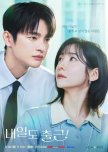
Office Romance 101, 404 Not Found
For seven years, Cha Ji Yun has been the kind of employee every company wishes they had. She is competent, dependable, and blessed with instincts that make even the toughest tasks look effortless. Yet beneath that polished image, both her career and love life have quietly reached a dead end. Forced to choose the lesser of two evils, she reluctantly joins forces with her notoriously prickly boss, Kang Shi Woo, a man who has the looks, discipline, and competence that anyone could admire, but unfortunately lacks the personality to match. What begins as an uneasy professional partnership slowly turns into something neither of them expects, proving that sometimes the person who gets under your skin is also the one who understands your heart the most.See You at Work Tomorrow feels like Office Romance 101. It introduces a familiar corporate setting where a hardworking employee crosses paths with an equally hardworking but intimidating manager, then lets their relationship develop from there. What immediately pulled me in was how relatable the workplace itself felt. As someone who also works in a corporate environment, I found myself laughing because I have lived through so many of the situations the drama portrays. Meeting irritating people before even reaching the office, dragging yourself to work while sick, watching your ideas get claimed by someone higher up, and countless other everyday frustrations all found their way into the story. It almost felt like the writers turned the shared suffering of corporate slave into comedy.
To my surprise, Shi Woo also felt strangely familiar. This may sound like an exaggeration, but he reminded me so much of my very first boss. His appearance, the way he carried himself, his encouragement, even the way he dressed all brought back memories. The only major differences were his height and the fact that my relationship with my boss was more like siblings or a mentor and mentee rather than anything remotely romantic. That personal familiarity made Shi Woo much easier for me to understand from the very beginning.
The first half does a solid job building their professional relationship. Ji Yun initially sees Shi Woo exactly as everyone else does, a difficult boss who demands too much. Naturally, she hesitates when he repeatedly tries to recruit her to his task force. Leaving the comfort of her current position is not an easy decision, but Shi Woo refuses to give up, and eventually she realises that their values and vision align. Taking that leap of faith becomes one of the stronger parts of the story. Once they begin working together, Ji Yun slowly discovers that Shi Woo is not the office devil people make him out to be. He is simply misunderstood. From there, the drama explores that familiar office romance progression where admiration quietly turns into curiosity, curiosity turns into denial, and denial eventually turns into something impossible to ignore. Both of them try to understand their own feelings while making sure those emotions never interfere with their work.
Unfortunately, this is also where my biggest issue with the romance lies. Ji Yun's emotional journey feels complete because the narrative consistently lets us see things from her perspective. We understand her past relationship, her disappointments, and every little step that gradually changes her feelings toward Shi Woo. Shi Woo, on the other hand, remains an enigma for far too long. We know he notices Ji Yun's capabilities. We know he finds her adorable. We know she makes him smile. That is practically the entire foundation of his side of the romance. The problem is that those pieces never quite answer the biggest question. Is this simply admiration for a capable employee, or is it something deeper? The story expects us to accept that he has fallen in love, but without showing enough of his own struggles, thoughts, or emotional growth, that confession never carries the weight it should have. Saying "she makes me smile" may be enough for some people, but it simply was not convincing enough for me because the drama spends too little time showing us who Shi Woo really is beyond his work persona.
The drama also leans heavily into classic romance clichés. If you enjoy those familiar moments that once made teenage hearts flutter, there is plenty to like here. Unfortunately, my current self no longer falls for them as easily. Because the office setting feels surprisingly grounded, every overly dramatic romantic moment made me question its realism instead of swooning. They were undeniably cute, but most of them only earned a lowercase "aw" rather than genuine butterflies.
Ironically, the person who made me swoon the most was not Shi Woo himself but Seo In Guk. The man has the abs, the fit physique, the broad arms, and enough natural charisma to make almost anything work. More importantly, I loved how he delivered those subtle lines that quietly hinted at Shi Woo's growing feelings. Those understated moments landed far better than the bigger romantic scenes. In fact, I genuinely think one of the biggest reasons I accepted Shi Woo as a romantic lead was because Seo In Guk played him. He has always been good at portraying cool, emotionally reserved characters, and his restrained expressions fit Shi Woo's personality well. The idea that someone so stoic only smiles because of one person could have been incredibly effective. Sadly, the writing never fully earned that emotional payoff even if Seo In Guk did everything he could with the material. He was already one of my biggest reasons for starting this drama, alongside the office premise, and he remained one of its strongest points until the very end.
Ironically, the moment Ji Yun and Shi Woo officially became a couple was when the drama began losing me. Looking back, I honestly think the story would have worked better as a shorter six episode series. Once the dating phase began, everything suddenly felt flatter. Shi Woo simply became more affectionate and smiled more, while Ji Yun's behaviour started feeling strangely forced. Before they got together, I genuinely enjoyed Park Ji Hyun's performance because Ji Yun felt natural and believable. Afterwards, however, her delivery came across as awkward and almost performative. I understand that Ji Yun was probably excited to experience love again after everything that happened with Cho Ga Eul, but the execution left me cringing more often than smiling. Park Ji Hyun is undoubtedly a capable actress, so I am inclined to think this was more of a writing issue than a performance issue. Either way, once they started dating, their chemistry lost the spark that had carried the earlier episodes.
The second half then shifts toward navigating office romance alongside how Ji Yun navigates through Shi Woo's past with his ex wife. Unfortunately, this part became painfully predictable. Every conflict, whether personal or professional, seemed to resolve itself far too conveniently, removing much of the tension. I eventually found myself watching the remaining episodes at double speed simply to reach the ending. When it finally arrived, I felt almost nothing. If anything, I was left wondering what Shi Woo's future even looked like because the drama never really gave me a satisfying answer.
The supporting cast also delivers mixed results. Most of them remain exactly what they are introduced as, supporting characters. Ironically, Cho Ga Eul's storyline ended up having more emotional depth than the central romance itself. Choi Kyung Hoon clearly benefited from having stronger material because his acting still feels like a work in progress. Yun No A and Lee Jae In's storyline never quite found its footing either. Kang Min Ah carried much of that pairing, while Won Gyu Bin still has room to grow as an actor. Meanwhile, Kang Gi Doong unexpectedly left the biggest impression on me despite having a supporting role. As Jeon Gi Tae, he consistently stood out whenever he appeared.
From a production standpoint, everything is simply... fine. The cinematography is pleasant enough without ever becoming visually striking. The OST serves its purpose by supporting the emotional beats but never leaves a lasting impression after the episodes end. My biggest complaint would be some of the scene treatments, particularly the flying sequence in the earlier episodes, which felt unnecessarily awkward. The CGI also falls somewhere in the middle. Not terrible, but certainly not memorable either.
In the end, See You at Work Tomorrow really does feel like a beginner's guide to office romance. The workplace humour, relatable corporate struggles, familiar clichés, and Seo In Guk's impressive arms carried me comfortably through the first half. Unfortunately, the second half loses its momentum with a romance that never fully convinces and a story that becomes increasingly predictable. By the time the credits rolled, I was not emotional, heartbroken, or even particularly satisfied. I was simply relieved that the workday was finally over.
Was this review helpful to you?
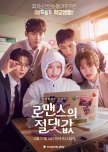
The Beautiful Absurdity of Being a Teenager
Absolute Value of Romance is the kind of drama that quietly sneaks up on you and suddenly has you reminiscing about all the silly, embarrassing, and questionable things you did back in high school. It captures that awkward stage of life where every emotion feels bigger than it actually is, every secret feels life altering, and every crush feels like destiny. Watching it often felt like opening an old yearbook and cringing at your younger self, but with a smile on your face.The story follows Yeo Eui Ju, a high school student by day and a BL web novel writer by night. Despite writing numerous novels, none of them have managed to gain much attention. Everything changes when a group of four handsome men moves into a house on her street. Eui Ju watches them on their balcony and, as any highly imaginative teenager might, immediately starts pairing them up in her head. The twist is that these men turn out to be the new teachers at her school: the aloof math prodigy Ga Woo Su, the gentle Korean literature teacher Yun Dong Ju, the warm but clumsy former athlete Jung Gi Jeon, and the mischievous Japanese teacher No Da Ju. At that point, Eui Ju's imagination practically enters overdrive.
Although she initially feels awkward about using her teachers as inspiration, the temptation proves too strong. Soon, she begins writing again, basing her characters directly on the teachers and even lifting some of their dialogue verbatim. It is honestly impressive how far a teenager's imagination can travel with the smallest amount of material. What makes Eui Ju so endearing is how human she feels. Anyone who has spent too much time daydreaming will probably recognize a bit of themselves in her. I certainly did. The only difference is that I was unfortunately not blessed with my own personal F4 of attractive teachers to inspire my fantasies.
To Eui Ju's surprise, her new novel becomes a huge success. Readers flock to it, downloads increase, and comments pour in. Naturally, she keeps writing. Things become even more complicated when Woo Su discovers what she has been doing. Initially confused and slightly weirded out by a genre that is completely foreign to him, he eventually decides to let her continue. As the story progresses, Eui Ju develops feelings for him after several moments where he ends up looking after her.
What I appreciate most is how carefully the drama handles this dynamic. Despite the premise, the relationship never feels like the type that would have people calling the popo. Instead, it is framed as what it really is: a student's innocent first crush on a teacher. From Woo Su's side, the narrative remains remarkably clear. He treats Eui Ju as a student and nothing more. He never encourages her feelings, never reciprocates, and never crosses any boundaries. There were moments when I found myself wondering whether he genuinely had no clue about her crush or whether he simply chose to redirect everything back into a teacher-student relationship. Either way, the drama never loses sight of where the line should be.
Beyond the romance, the drama shines in how accurately it captures the anxieties of adolescence. There are countless moments of secondhand embarrassment, both from Eui Ju's actions and from how much they reminded me of my own school days. The fear of having a secret exposed, the panic that follows every small mistake, the tendency to overthink every interaction, all of it feels surprisingly authentic. While the story never digs especially deep into its emotional arcs, it gives its characters enough depth to feel relatable. The conflicts remain relatively light, but they still resonate because they stem from experiences many people have lived through themselves.
One of the biggest questions I had while watching was how the drama would handle its ending. Teacher-student romance stories often walk a very delicate line, and I genuinely could not imagine an ending that would feel satisfying. Would they force a romance through with a time skip? Would they leave everything unresolved? Would they take the little sister route? Surprisingly, the ending ended up becoming one of the drama's greatest strengths.
Rather than turning Eui Ju's feelings into some grand, life defining romance, the story treats them as what they are: first love, puppy love, a fleeting crush that eventually becomes a cherished memory. It acknowledges the sincerity of her feelings without pretending they are meant to last forever. Most importantly, the teachers never play into those feelings. They continue treating their students as students, allowing Eui Ju to grow naturally and move forward. The resolution feels realistic, mature, and surprisingly touching. The snow symbolism in the final stretch adds just enough emotional weight to make the ending land beautifully.
In the end, Absolute Value of Romance is a cute, lighthearted coming of age drama filled with high school silliness, wild imaginations, and awkward memories. It delivers plenty of secondhand embarrassment, but it is the affectionate kind that makes you laugh while shaking your head at your younger self. More than anything, it reminds you of those fleeting moments from adolescence that seemed so important at the time. Looking back, they may have been ridiculous, but they were also undeniably precious.
Was this review helpful to you?
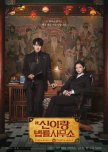
Verdict: Emotion Sustained, Logic Dismissed
Phantom Lawyer opens with a premise that sounds like it came straight out of a quirky 판타지 meets 법정 mashup. Shin Yi Rang is introduced as a kindhearted, almost too pure-for-this-world lawyer who keeps failing job interviews because of his father’s stained reputation as a corrupt prosecutor. With nowhere else to go, he opens his own law office, and this is where the drama quietly tells you to suspend logic. I could not help but side-eye his decision to rent a place that practically screams “haunted real estate discount.” One incense stick later, and Yi Rang gains the ability to see ghosts tied to talismans left behind by their loved ones. These spirits carry regrets, resentment, and unfinished stories, and Yi Rang becomes their unexpected counsel, helping them resolve what they could not in life.From there, the story settles into a case-of-the-week format. Each ghost client brings a new emotional thread, and Yi Rang handles them with unwavering kindness. The emotional angle is clearly the drama’s priority, often choosing heart over legal complexity. Cases tend to resolve a little too neatly, sometimes relying on convenient turns rather than solid groundwork. Early on, many of Yi Rang’s cases overlap with Han Na Hyeon, an elite lawyer with a flawless winning streak. While their rivalry is meant to create tension, the constant overlap feels more like coincidence doing overtime than organic storytelling. Some cases wrap up so quickly that they barely leave room for legal depth. Evidence appears just in time, confessions come easily, and loopholes that would normally spark debate are brushed aside for pacing. It feels less like a courtroom battle and more like a moral fable dressed in legal robes.
The structure does not do much to support a larger narrative either. Most cases exist in their own bubble, rarely tying back to a central conflict. Yi Rang’s father’s scandal is positioned as the emotional backbone of the story, shaping Yi Rang’s struggles and reputation. Yet, this supposed main conflict only truly takes center stage in the final stretch, and even then, it resolves within roughly one and a half episodes. The investigation feels rushed, the evidence conveniently detailed, and the resolution lands more on the comical side than the impactful one might expect. For a storyline that had been quietly looming since the beginning, it lacks the weight needed to deliver a satisfying payoff. The drama stays consistently light from start to finish, which is not inherently a flaw, but it does limit its potential for a memorable climax.
The final family dinner scene tries to pull everything together emotionally. The concept is touching, almost designed to be a tearjerker, but the execution does not fully land. Choi Won Young, as Shin Gi Jun, delivers a standout performance that adds genuine emotional depth. His presence elevates the scene, making you feel the weight that the script struggles to carry. Unfortunately, the rest of the ensemble does not quite match that intensity. Kim Mi Kyung plays the mother with a restrained expression that borders on flat, while Son Yeo Eun, playing the sister, shines in brighter moments but falters when the tone turns heavy. There is even a moment involving Yi Rang’s coma that feels unintentionally awkward due to the uneven emotional delivery. One small but nagging detail is Yi Rang’s niece, who never questions the bizarre situation unfolding around her, which feels like a missed opportunity for a more grounded touch.
Character writing is where the drama struggles the most. Yi Rang’s defining trait is his endless kindness, but it is written in a way that feels exaggerated, almost like a morality lesson aimed at children. Yoo Yeon Seok has proven in other works that he can portray warm and selfless characters with nuance, but here, he is boxed in by a script that leans too heavily into idealism. Han Na Hyeon undergoes a similarly jarring shift. Esom initially brings a sharp, charismatic edge to Na Hyeon as a win-at-all-costs lawyer, but after her sister’s arc, the character pivots into a softer, justice-driven persona who suddenly becomes shy and romantically inclined. The transition feels abrupt, like a switch flipped without enough buildup.
Yang Do Gyeong is perhaps the most confusing character of the bunch. His personality swings between intimidating, obsessive, comedic, and eventually sympathetic. At times he seems unstable, at others almost childlike, and by the end, he reveals a more grounded motivation tied to his desire for his father’s approval. There is an interesting idea buried there about pressure, resentment, and morality, but it never fully settles into a clear or consistent portrayal.
Then there is the question no one in the drama seems eager to answer. Does Yi Rang actually make money? Representing ghost clients is noble and all, but unless there is a living client willing to pay, the business model remains a mystery. It becomes one of those lingering thoughts you cannot quite shake, like a plot hole in a courtroom drama that refuses to be objected to.
To give credit where it is due, the drama does sprinkle in some enjoyable elements. There are playful references to Dr. Romantic and Hospital Playlist that feel like little winks to fans of Yoo Yeon Seok. The humor leans heavily into slapstick, but it does land more often than not, adding to the overall light tone.
In the end, Phantom Lawyer is best described as an easy watch that blends ghosts and law without digging too deeply into either. It prioritizes emotion over logic, warmth over realism. If you go in expecting a legal drama packed with intricate cases and sharp courtroom battles, this will feel like res ipsa loquitur gone wrong. But if you are in the mood for something light, occasionally funny, and gently emotional, it serves its purpose. It is not bad, but it does not quite leave a lasting impression either, like a case that is closed without ever truly being argued.
Was this review helpful to you?
This review may contain spoilers
To Match Her Freak
A Splendid Match is the kind of drama that knows exactly what it is from the very beginning. The premise itself is nothing groundbreaking. A noblewoman returns home, several men orbit around her life, and viewers are left waiting to see who ultimately becomes her “perfect match.” The answer is obvious almost immediately, but surprisingly, that never becomes a weakness. This drama is not interested in asking who gets the girl. It asks how two people become worthy of each other, and that distinction is what makes the story work.Gu Jin Zhao grows up exiled from her own family because of an old prophecy, yet instead of becoming bitter or fragile, she returns sharper, louder, and completely unapologetic about who she is. Raised with love by her grandmother rather than suffocated by aristocratic rules, Jin Zhao carries herself with a confidence that unsettles polite society. She refuses to indulge nonsense, refuses to tolerate injustice, and settles accounts immediately whenever she is wronged. Ren Min captures both her youthful charm and fiery stubbornness perfectly. Every time Jin Zhao stands up for herself, I found myself silently cheering like a proud sister watching family drama unfold at dinner.
What I appreciated most is that the story never turns Jin Zhao into a heroine waiting to be chosen. In true amor fati fashion, she embraces the life handed to her and bends it into something that belongs entirely to her. Marriage, for her, is not survival or social strategy. It is recognition. She wants someone who sees her fully without asking her to shrink, and among all four potential matches, only Chen Yan Yun truly understands that.
I am one of the minorities who liked how the narrative took time exploring Jin Zhao’s dynamic with every man in her life. While the male lead lacked (romantic) screentime in the earlier episodes, I thought the structure made sense. The first half focuses heavily on Jin Zhao and Ye Xian’s chaotic friendship, while the latter half gradually shifts toward Yan Yun and Jin Zhao’s partnership. It creates a natural emotional progression instead of rushing directly into romance.
Chen Yan Yun is, without question, her splendid match. Mature, wise, reliable, and quietly affectionate, he feels like the rare male lead who understands that loving a strong woman does not mean taming her. Ci Sha portrays him perfectly. The actor embodies the mature, manly, and reliable allure of his character. Chen Yan Yun never asks Jin Zhao to compromise herself for his comfort. Instead, he protects the space where she can continue being exactly who she is. Their relationship is built on mutual respect, trust, and admiration, which makes their romance feel deeply satisfying even within a fairly cliché setup. He may navigate political disasters effortlessly, but love clearly short-circuits his brain, and honestly, that made him even more charming.
Once they got married, this drama practically turned into a romantic buffet. The kisses, the hugs, the mirrored gestures, the teasing intimacy, everything delivered maximum flutter damage. I also appreciate that the production committed fully to their chemistry instead of hiding every kiss behind curtains, sleeves, candles, or strategically placed furniture like some historical dramas love to do. Their romance feels passionate because both characters themselves are passionate people. The physical affection supports the fiery nature of their relationship instead of existing purely for fanservice.
One of the strongest parts of the writing comes from how the drama handles emotional conflict after marriage. When Chen Yan Yun discovers the history between Jin Zhao and Chen Xuan Qing, the story wisely avoids the easy route of one dramatic argument followed by instant reconciliation. Instead, it lets Yan Yun sit with the discomfort. Of course it would hurt knowing your wife once actively pursued someone else, especially when that someone is your own nephew. The added realization that they may have ended up together had he not intervened makes the situation even more complicated. What made the arc work for me is that the drama allows Yan Yun to spiral through those ugly “what if” thoughts instead of pretending mature people instantly process emotions rationally. And true to Jin Zhao’s character, she refuses to lose herself trying to soothe him. Her “I won’t indulge him” line felt completely consistent with who she is. She loves deeply, but she refuses to abandon her own dignity in the process.
Ironically, Chen Xuan Qing’s storyline only further proves why he and Jin Zhao were never meant to be. He may have been her first love, but he fundamentally lacks the courage and conviction needed to stand beside someone like her. Jin Zhao is drawn to his worldview and gentleness, yet in the end, he mostly awakens her protective instincts rather than standing as her equal. When forced to choose between safety and love, he chooses himself. That decision defines his entire character.
I honestly think the writers did Xuan Qing dirty toward the second half. His character practically takes a full tragic opera turn into pathetic lovesick territory. Zuo Ye portrayed his restrained misery very well, but the writing reduces him into someone consumed entirely by resentment. It is understandable for him to feel jealous of Yan Yun and out of place with the Chen family, but at some point his bitterness becomes exhausting because the Chen family genuinely treated him with sincerity from the beginning. The drama wanted emotional collapse, and boy, did it commit to it.
On the other hand, Ye Xian ended up becoming one of the most interesting characters in the drama for me. At first, he is basically a spoiled manchild wrapped in pretty robes and family pressure. Winwin embodied that mischievous youthful energy perfectly while still hinting at the burden beneath it all. His relationship with Jin Zhao works wonderfully as friendship because they are too similar. Putting them together romantically would be like throwing two fireworks into the same box and hoping the house survives. They bicker, annoy each other, protect each other, and genuinely care deeply, but they would absolutely self-destruct as lovers.
Episode 28 genuinely hurt. The wedding procession crossing paths with the funeral procession was one of the strongest scenes in the entire drama. While Jin Zhao and Yan Yun move toward happiness, Ye Xian stands there grieving the loss of his own love story. The way he lowered his gaze and stepped aside felt devastatingly mature. It was acceptance, resignation, and heartbreak all folded into one quiet moment. That scene alone deserves applause.
I also appreciated Ye Xian’s eventual growth. Watching him choose responsibility over obsession was satisfying because it finally felt like he matured beyond simply chasing Jin Zhao. Him addressing Yan Yun as Jin Zhao’s “fujun” carried more emotional weight than any dramatic speech could have. At the same time, the battlefield storyline constantly filled me with dread because it felt less like heroism and more like a beautifully wrapped suicide mission. Yes, from a character perspective, it makes sense. A man with limited years left would rather burn brightly on the battlefield than fade slowly in bed. But emotionally, it still hurt to watch.
The scene where Yan Yun carried Ye Xian’s body covered by the Ye flag genuinely left me speechless. Alongside the wedding versus funeral procession, it became one of the most memorable moments in the drama for me. Jin Zhao’s devastation afterward also landed emotionally, even if some of the screaming leaned slightly too theatrical for my taste.
As for the rest of the cast, the ensemble adds so much charm to the viewing experience. The sidekicks bring excellent comedic timing, especially Chen Yan Yun’s sidekick compete over who can gather information faster. Unfortunately for him, nobody gathers gossip faster than women. The Ji family was largely lovable aside from one permanently irritated aunt, while most members of the Gu family existed solely to test my blood pressure. The Chen family sat somewhere in between chaos and sincerity, though I appreciated that many of the women in the household remained reasonable and supportive.
The overall atmosphere strangely reminded me of Bridgerton mixed with a classic chick flick romcom. The “searching for the perfect match” narrative, the playful romantic energy, and even parts of the soundtrack carried that same exciting first-love feeling. The production quality is admittedly inconsistent at times. Certain shots and color grading occasionally look a bit cheap or overly template-like, but the emotional core of the story remains strong enough that I stopped caring after a while.
My biggest issue ultimately comes from the ending. After all the suffering, heartbreak, political turmoil, and emotional growth, I desperately wanted one final peaceful moment for the main couple. A quiet meal together, stargazing, attending a festival, literally anything warm and comforting. Instead, the drama fully commits to its fire symbolism until the very end. I understand the intention. Jin Zhao and Yan Yun are intense people who love fiercely and burn brightly together. Still, after everything they endured, I wanted softness. I wanted peace. I wanted my splendid ending.
Even so, I genuinely enjoyed A Splendid Match. It is a cliché done right. The plot may follow familiar beats, but the sincerity of the characters, the emotional storytelling, and the chemistry between the leads make it incredibly engaging. Despite an ending that left me emotionally robbed, the journey itself was entertaining enough to make me laugh, cry, scream internally, and grow attached to nearly everyone along the way. Sometimes that alone is enough to make a drama worth remembering.
Was this review helpful to you?
This review may contain spoilers
The Man Who Bled Miracles
If you think you have seen every flavor of crime thriller, think again. Bloody Flower opens with a bang, or more accurately, a handcuff click. A man named Lee Woo Gyeom is arrested for kidnapping two people with disabilities. Simple enough, right? Wrong. As the investigation unfolds, it turns out he has been conducting human experiments and murdering people in the process. Seventeen victims. All with criminal records. All allegedly used as test subjects in his quest to cure incurable diseases.Lee Woo Gyeom is a medical school dropout who boldly claims he has developed a technology that can cure everything from common illnesses to cancer. The twist is deliciously dark. Patients step forward to testify that they have indeed been cured. He promises to reveal this miracle to the world, but only if he is exempted from punishment for his human experiments. If not, he threatens to take his own life, and with him, the cure that exists only in his mind. Standing at the crossroads are a desperate lawyer who needs Woo Gyeom alive to save his daughter with a brain tumor, and Prosecutor Cha Yi Yeon, who wants him sentenced to death for the seventeen lives he took. The question lingers like a stubborn echo. Is Lee Woo Gyeom a monster, or is he humanity’s forbidden savior?
What pulled me in from the very beginning was the morally grey battlefield. Seventeen murders are not a small number. But when those seventeen victims all had criminal records and slipped through the cracks of a lenient justice system, the narrative starts playing chess with your conscience. Humanism versus justice becomes the main dish, and we, the viewers, are forced to pick a side whether we like it or not. The dark allure of this premise had me glued to my seat. It felt like watching a philosophical debate disguised as a thriller.
Up until episode four, Lee Woo Gyeom remains an enigma wrapped in a lab coat. Is he a psycho doctor straight out of a horror manual? Perhaps. He does not seem to fully grasp the moral weight of taking lives, referring to his victims more as test subjects than as people. But here is the twist in my own heart. I believe he is good at heart. He does not kill for pleasure. He kills with purpose. Twisted purpose, yes, but purpose nonetheless. His journey into human experimentation did not begin with people. It started with plants, then a goldfish, then a cat, and only then humans. There is a strange, almost scientific progression there. Add to that the revelation that there is a specific pattern among his victims, and suddenly this is less random slaughter and more calculated vengeance or perhaps justice in his own warped dictionary. The mystery only deepens.
Then there is Prosecutor Cha Yi Yeon. As someone who usually champions strong female leads, I cannot believe I am saying this, but she tested my patience. For her, the world is black and white. You kill, you are wrong. End of discussion. She does not care about the lives potentially saved by Woo Gyeom’s research. She sees seventeen corpses and that is enough. I understand her need to prove herself, especially with her father looming in the background, but her inability to listen or empathize makes her feel robotic. Even her investigative arc feels oddly written. She has a whole team, yet she does most of the legwork herself while her subordinates hover in the background holding files that rarely add impact. Her sense of justice is textbook, rigid, and at times frustratingly tone deaf. Geum Sae Rok tries, but the character feels more like a plot device than a fully fleshed out person.
In contrast, Park Han Jun is the emotional anchor of the story. Portrayed by Sung Dong Il with the gravitas of a seasoned actor, he is a father first and a lawyer second. His daughter, Park Min Seo, is dying from a brain tumor. Suddenly, justice is not so simple anymore. This righteous man who once abided strictly by the law finds himself bending the rules to save his child. His partnership with Lee Woo Gyeom is one of the most compelling dynamics in the drama. They begin as reluctant allies. One is a convicted killer, the other a man of the law. Yet slowly, through shared desperation and quiet understanding, they form something resembling trust. Maybe even friendship.
When Lee Woo Gyeom rushes, injured, to save Min Seo and says he has to save her first, I was genuinely moved. For someone accused of being a heartless killer, his concern for his patients feels real. He even appears willing to defy court orders to help her. That mutual gratitude between him and Park Han Jun creates some of the drama’s most touching moments. It is a relationship built not on legality, but on humanity.
The plot thickens further when we learn that Woo Gyeom’s cure lies in his blood. Specifically, his rare RH null blood. But this miracle comes with a cruel limitation. The more blood he donates, the more his body regenerates new blood that lacks the same healing properties. In other words, he is not an infinite potion bottle in a fantasy RPG. He is human. Fragile. Exhaustible. This revelation made me nervous. If his blood is the key, what is stopping the world from turning him into a walking laboratory?
The backstory hits like a truck in the final stretch. Woo Gyeom was once just a brilliant kid with a loving mother. An accident and his rare blood type turned him into a prime target for Chaeum, the shadowy organization behind grotesque experiments. Not only was he experimented on, but his mother was silenced after discovering too much. Chaeum’s body count stands at 223 victims. Suddenly, Woo Gyeom’s seventeen does not look like madness. It looks like retaliation. Pain breeding pain. No wonder he took drastic measures. The real monster may have been hiding in a corporate lab all along.
The final confrontation reveals Chae Jeong Su as the true psychopath, obsessed with medical breakthroughs at the cost of human lives. Watching Woo Gyeom stab his eye felt both shocking and strangely satisfying. Justice, served with a sharp object. The climax escalates quickly. Police arrive. Cha Yi Yeon stands firm. Shots are fired. In one of the most touching moments, Park Han Jun steps in front of Woo Gyeom and takes a bullet for him. A former prosecutor shielding a wanted criminal. If that is not character development, I do not know what is. Woo Gyeom is eventually shot and jumps off a bridge. For a moment, it feels like tragedy has won.
The resolution wraps up corruption cases at lightning speed, almost too quickly, like the drama suddenly remembered it had a time limit. And then, the final twist. Just as Park Han Jun is about to discard the cure, Woo Gyeom calls. He is alive. I knew it. You cannot keep a Bloody Flower from blooming, can you?
Ryeo Un delivers an eerie yet magnetic performance as Lee Woo Gyeom. His large expressive eyes and deep voice make it easy to believe both the cold scientist and the wounded son. He walks a tightrope between psycho and prodigy, and somehow never falls. Sung Dong Il, as expected, brings weight and warmth to Park Han Jun, embodying a father pushed to his limits. The chemistry between these two is the heart of the drama. Their evolution from distrust to solidarity is memorable and deeply affecting.
Bloody Flower is not perfect. Some arcs feel rushed, and Cha Yi Yeon’s character may test your blood pressure. But if you enjoy stories that force you to question your moral compass, this one will keep you hooked. It asks a dangerous question. If a killer can cure the world, do you save him or condemn him? In the end, Bloody Flower does not hand you an easy answer. It simply lets the petals fall and leaves you to decide whether they are stained with blood or sacrifice.
Was this review helpful to you?
This review may contain spoilers
The Devil Wears Boudoir
The Art of Sarah follows the glittering yet slippery life of Sarah Kim, a woman who wants to embody luxury even if it means building it on a foundation of lies. Her name echoes through high society as the head of a high end brand’s Asia branch, but no one seems to truly know who she is. When she suddenly becomes the victim in an unidentified murder case, the illusion begins to crack. The person in charge of her case is Park Mu Gyeong, a sharp and persistent detective from the violent crimes unit, who starts tracing the footsteps of a woman who may not even exist. As he digs deeper, Sarah Kim unravels into multiple names, ages, jobs, and backgrounds. The question lingers like an expensive perfume in the air. Who is the real Sarah Kim, and what is she hiding beneath all that silk and satin?From the very first episode, I could not help but think of Inventing Anna. The premise, the social climbing, the audacity of it all, it gave me that same deliciously scandalous vibe. I kind of knew the general direction the story might take, but I was still curious to see how this version would paint its own portrait of deception. How exactly did Sarah Kim scam her way to the top of the social ladder? What made her tick? That curiosity was enough to keep me seated and sipping my drama tea.
Of course, we need to talk about Shin Hye Sun. She is, without exaggeration, one of the finest actresses in the Korean drama industry. She does not just act, she embodies. Every trembling breath, every flicker in her eyes, every tear that falls feels painfully real. When she cries genuinely, I cry. It is almost Pavlovian at this point. In The Art of Sarah, she plays a woman made of layers. Sarah lies, schemes, climbs, manipulates, feels anxious, frustrated, never satisfied. She is ambition wrapped in couture. Shin Hye Sun handles these layers beautifully. Even her fake crying scenes look convincingly fake, which is a talent on its own. You can see when Sarah is performing and when she is breaking, and that distinction is delicious to watch.
Opposite her is Lee Jun Hyuk as Park Mu Gyeong. Visually, he fits the drama’s glossy, high fashion mood. He looks like he walked straight out of a luxury magazine spread. As a detective, though, he feels a little too polished, too well put together. I kept thinking, do violent crimes detectives really have skin this flawless? But then again, this is not a gritty back alley crime thriller. This is a story about fashionable schemes and curated identities. In that sense, his clean and chic presence oddly works.
The ensemble cast is a mixed bag in a good way. The older, more seasoned actors truly shine. Their facial expressions alone could tell entire backstories. They look like they belong in this world of power lunches and silent rivalries. Some of the younger ensemble characters are fine, though they do not leave as strong an impression.
I will admit, episode one had me slightly confused. There were so many names flying around that I had to pause and mentally sort them out. Who was the dead victim again? Who got scammed? Who reported what? It felt like being invited to an exclusive party where everyone knows each other except you. Thankfully, things settle down as the story progresses.
When the drama reveals Sarah Kim’s past as Mok Ga Hui, the illusion shifts. Unlike the iconic Anna Delvey from Inventing Anna, Sarah is not painted as this endlessly complex social experiment. Mok Ga Hui was simply a woman stuck at the bottom of the social chain. No matter how hard she tried, she could not climb. So she burned her old life, faked her death, and resurrected herself as Sarah Kim. In essence, she is an impostor born from desperation and desire. A regular con artist with a designer handbag and a chip on her shoulder.
That said, she is not entirely average. Driven by poverty and the hunger to rise, she cons her way up while quietly exacting revenge. Her success with Boudoir becomes her masterpiece. It is the one thing she genuinely wants to protect. When she eventually turns herself in, I found her surprisingly smart. She defends herself skillfully, finding loopholes and gray areas in every accusation thrown her way. The moment Park Mu Gyeong threatens Boudoir, you just know everything is about to collapse like a house of luxury cards. And it does. She is willing to give up her identity as Sarah Kim if it means preserving Boudoir’s integrity. That choice says a lot about where her true loyalty lies.
Still, the investigation itself feels somewhat amateur. I was genuinely surprised that it took Park Mu Gyeong so long to figure out that Mok Ga Hui faked her death to start anew. Maybe we as viewers are given more puzzle pieces, or maybe the writing just makes the detectives a little slower than they should be. Either way, it lessens the thrill.
One oddly satisfying detail is the casual name dropping of real luxury brands like Hermès, Dior, and Prada. Usually dramas create fictional brands to avoid trouble, so hearing the real names feels almost rebellious. It adds to the authenticity of the high society fantasy.
However, for a drama that markets itself as a web of schemes, fraud, and shifting identities, it feels a bit surface level. I kept comparing it to Inventing Anna, and in that comparison, The Art of Sarah feels less layered. It hints at depth but does not fully dive in. At its core, Sarah Kim is portrayed as a woman driven by scrutiny and ambition to climb higher. That is a common motivation for crime, not exactly groundbreaking.
The ending left me with a shrug rather than a gasp. Sarah Kim is not a cold blooded killer. She feels guilt over Kim Mi Jeong’s death, and what she did was tied to protecting Boudoir. But what truly frustrated me is that we never get to know her real identity. If you want an open ending, fine. Leave some doors ajar. But withholding her true identity feels like locking the most important room in the house and throwing away the key. That revelation could have added real depth and emotional weight, yet it remains a mystery.
In the end, The Art of Sarah is glossy, stylish, and carried heavily by Shin Hye Sun’s powerhouse performance. It is a drama dressed in haute couture, whispering about ambition and reinvention. Just do not expect it to peel back every layer of the woman at its center. Sometimes, the art is beautiful. Sometimes, it is just well framed.
Was this review helpful to you?
All Roads Lead to Chaos
I watched Pull Strings on a whim. I knew practically nothing about it except that Ao Rui Peng was in it, which was enough reason for me to give it a try. I also heard that it was a comedy and that Ao Rui Peng seemed like he was barely acting because Chang Shou was basically himself. After watching it, I can confirm that the rumors were not entirely wrong. Pull Strings is a rather comical, unserious drama that happens to have a plot. It is not exactly a no-brainer because there is an actual story and some interesting ideas underneath all the silliness, but it is definitely a casual and easy watch.The story follows Li Chang Shou, a 30-year-old terminally ill man who dies after falling from his hospital bed and getting hit by the comic books he was reading. He is then reborn as a cultivator inside Primordial Investiture of Deities and finds himself in the Primordial World. His goal in this new life is surprisingly simple: stay alive and stay out of trouble. With a prophecy warning of an impending calamity, Chang Shou decides to play the long game. He keeps a low profile, avoids unnecessary relationships, prepares himself constantly, and relies more on schemes and strategy than brute force. Of course, the universe has other plans. Before long, the man who only wanted to stay out of trouble ends up quietly pulling strings behind the scenes and becoming involved in a much bigger game of power, ambition, karma, and destiny.
The biggest charm of Pull Strings is undoubtedly its comedy. The drama leans heavily into slapstick, silliness, exaggeration, and outright absurdity. My personal taste leans more toward dark, deadpan, witty, and satirical humor, so I would not say I found myself laughing very often. Still, I found the drama entertaining for the most part. It was the kind of show that could be left on when I wanted something light and unserious.
That said, sometimes the comedy tries a little too hard. There were scenes where the joke was pushed so far that it stopped being funny and started pulling me out of the story. Some plot choices had the same problem. The whole vampire situation, for example, felt particularly random in a Primordial World setting. I could suspend my disbelief for a lot of things in this drama, but that one made me wonder where exactly the writers were trying to take me. Something like turning people into puppets or flies, especially considering the demon's abilities, would have felt more fitting to the world.
Ironically, what I found more amusing than the actual comedy was the clash between modern and ancient culture. Chang Shou being a modern person reborn in an ancient cultivation world gave the drama some of its most enjoyable moments. Watching him apply modern ideas in completely inappropriate historical circumstances was genuinely fun. He turns his shoe into something resembling Siri, makes a firefly-shaped phone out of hay straw, and finds all sorts of ways to bring modern concepts into the Primordial World. Those moments felt more naturally funny to me because the humor came from the situation rather than from the drama desperately trying to make a joke. Chang Shou really shines as a fish out of water.
Ao Rui Peng owned this role. Watching Chang Shou felt like watching Ao Rui Peng get dropped into a cultivation drama. His naturally goofy personality fits Chang Shou perfectly, and he manages both the comedic and emotional scenes well. He does not need to force the humor because his expressions and mannerisms already do much of the work.
What I particularly liked about Chang Shou in the beginning was the contradiction within his character. On the surface, he is this seemingly incompetent, overly cautious guy who is constantly trying to avoid trouble and karmic repercussions. Underneath that, however, he is constantly training, preparing, calculating, and making sure he has a backup plan for his backup plan. That combination of cowardice, caution, intelligence, and hidden competence made him surprisingly charming. He was not trying to become the strongest person in the room. He was trying not to die, and somehow ended up becoming one of the smartest and most capable people there. That duality was, to me, the most interesting part of his character.
Unfortunately, I started losing interest when romance and heavier responsibilities became more prominent. I understand that these things are part of Chang Shou's character development and are important to the overall plot, but they did not work particularly well for me. The romance felt distracting and somewhat out of place, especially because the drama had already established such an entertaining character dynamic without needing to lean so heavily into it. What started as a refreshing story about a man trying to survive through careful planning gradually began to feel like another "all in the name of love" story.
I also missed the goofy Chang Shou once the plot became more serious. As the stakes increased, he became increasingly serious and emotional, and that shift made him feel strangely distant. I think the drama could have preserved more of his original personality even during the heavier moments. He could still mourn, struggle, and take things seriously while handling the situation with the same goofy and ridiculous persona we saw earlier. In fact, I think that contrast would have made the emotional scenes even more effective.
The character I actually wanted to see more of was Zhao Gong Min, played by He Wen Jun. This man had one of the funniest comedy styles in the entire drama. His completely straight face while doing the most absurd things was hilarious. There was something about the sheer seriousness with which he approached ridiculous situations that landed much better for me than some of the more exaggerated comedy. Unfortunately, he did not appear nearly enough. Every time he showed up, I found myself wishing the drama would give him more to do.
As a Xianxia comedy, Pull Strings does at least have a proper story. There is a journey, there are conflicts, there are schemes, and there is a larger narrative moving forward. The plot was actually quite interesting in the beginning, and I liked how clear the direction felt. However, somewhere around the second half, the drama started losing me. There were simply too many things happening at once, and the increasing absurdity began competing with the actual story for my attention. It started feeling as though more effort was being put into making things funny than into keeping the narrative focused.
That eventually left me feeling bored, distracted, and detached. The story itself was still there, but there was so much noise surrounding it that I found it increasingly difficult to stay invested. The sudden increase in romantic elements did not help either. What initially felt like a clever and entertaining cultivation comedy gradually became a little too busy for its own good.
Visually, however, the drama is quite pleasant. The scenery is beautiful, and whatever combination of green screen, animation, and 3D rendering they used generally worked well. The environments looked convincing enough and the overall visual quality was good. The weaker point was some of the larger creatures and monsters. Those gigantic sea creatures on the beach, for example, looked noticeably more artificial. It was not exactly disappointing because this is a comedy drama and I was not expecting visual effects on the level of a big-budget fantasy film, but there is certainly room for improvement.
I also liked the costumes. The different characters have distinct colors and styles that reflect their personalities and affiliations, which makes them easier to remember. The OST and background music were similarly fitting. Nothing particularly blew me away, but the music complemented the overall mood of the drama well.
The ending, on the other hand, was a different story. There was simply a lot happening, and the delivery felt rather chaotic. Even having watched several Xianxia dramas, there were still parts of the ending that left me confused. For someone completely new to the genre, I imagine it could be even harder to follow. The ending also clearly leaves the door open for a second season, but rather than making me excited for what comes next, it mostly left me thinking, "Well, that happened."
Overall, Pull Strings was a casual watch for me. I went in with practically zero expectations and ended up with exactly the kind of unserious, goofy Xianxia comedy I was told it would be. I personally prefer darker and more subtle comedy, so the slapstick humor did not always land. To me, the drama was less laugh-out-loud funny and more absurd, silly, and chaotic in an entertaining way. If you want something light, goofy, absurd, and occasionally clever to take your mind off things, Pull Strings can do the job. It is not a drama I would call memorable, but it was certainly a decent way to lighten the mood.
Was this review helpful to you?
This review may contain spoilers
All That for This?
The Husband started off on a surprisingly strong note. A marriage already hanging by a thread suddenly takes a dark turn when Ko Se Yun disappears, leaving her husband Kang Tae Ju caught between a murder accusation, a kidnapping, and a growing conspiracy. The early episodes had just the right amount of suspense. Nothing felt excessively dramatic, but there was enough mystery to keep me hooked. The identity of the kidnapper was kept under wraps, and that uncertainty made the whole situation creepier. I found myself making theories in my head, trying to figure out who was behind it and, more importantly, why Se Yun had been kidnapped. Unfortunately, that initial thrill did not last.The drama revealed No Man Hui as the mysterious kidnapper fairly quickly. During the kidnapping, Man Hui was framed as an almost psychopathic, manic figure who could raise the stakes whenever Tae Ju made the slightest mistake. At first, it worked. His gaze was creepy, his smile was creepy, and there was something genuinely unsettling about him. But the same cycle kept repeating. Tae Ju makes a mistake, Man Hui threatens him, the tension rises, Se Yun survives, and then we do it all over again. Eventually, I became numb to it. When your supposed thriller starts making you think, "Oh, here we go again," the suspense has officially clocked out. Still, I tolerated the repetitive kidnapping arc because I assumed there had to be a bigger payoff waiting. The kidnapping itself was only the surface, after all. Tae Ju's search for Se Yun was filled with obstacles, from Se Yun's parents to the police, and practically everyone seemed determined to make his life harder.
The police were especially frustrating. There are incompetent police officers in dramas, and then there is this. At some point, it stopped feeling like intentional characterization and started feeling like careless writing. They barely seemed interested in conducting a meaningful investigation, not even the kind of investigation that exists purely for show. The fact that nobody seemed particularly interested in checking computers and desktops for potentially crucial evidence was baffling to me. Is IT not part of the basic vocabulary of modern investigations? I thought that was basic protocol. By the end, I genuinely wondered what purpose the police served other than becoming another roadblock for Tae Ju.
To the drama's credit, Tae Ju's search did eventually lead somewhere. I had expected the kidnapping storyline to drag almost until the finale, so I was actually surprised when it wrapped up during the first half. The escape itself was one of those scenes where I had to temporarily suspend not just disbelief, but common sense. Tae Ju and Se Yun barely managed to hit Man Hui hard enough to keep him down, yet they immediately ran away. They even left a loaded gun right beside him. Naturally, Man Hui got back up and chased them. At this point, they were begging to be chased and captured.
This kind of thing happened too often. I can forgive characters making bad decisions when those decisions fit their circumstances or happen occasionally. But when the same kind of questionable decision-making keeps appearing, it stops creating tension and starts creating comedy. Some of the directing choices did not help either. There was even a moment when Tae Ju tried opening the car door with his right hand while his left hand was the one pushing the door. It was such a small thing, but after everything else, it became another accidental comedy moment.
Once the kidnapping arc was over, the drama shifted gears. The story focused on why Man Hui kidnapped Se Yun in the first place. This was where things became increasingly messy. The drama kept peeling back layers of conspiracy, introducing one revelation after another, as though it were determined to convince us that there was an enormous, intricate puzzle hiding underneath everything. The problem is that once all the layers were removed, the core of the story felt surprisingly simple. The complicated route did not lead to a complicated destination.
I can give the drama the benefit of the doubt and accept that some of the motivations may technically make sense. The problem is the buildup and storytelling. The reasons behind the kidnapping never felt strong enough to justify the elaborate chain of events surrounding it. The same goes for the explanation behind Tae Ju and Se Yun's broken marriage. There may be an emotional explanation for it, especially when grief and blame are involved, but the drama did not make me feel enough of that emotion for it to land naturally. As a matter of fact, I honestly don’t see the point of their divorce arc and how it’s important to the plot. There were simply too many variables in this drama. Too many people, motives, connections, secrets, and twists were piled on top of what should have been a relatively straightforward core story. The more the drama explained, the more loose ends seemed to appear.
The cast was another mixed bag for me. I have always enjoyed Nam Goong Min's acting, and I could see what he was trying to do with Tae Ju. His character is supposed to be a quiet, introverted, nerdy doctor who keeps most of his emotions buried, and Nam Goong Min's restrained expression works for that aspect of the character. He also tried to communicate through his eyes, which suited Tae Ju's personality. However, that restraint also made the character feel rather bland at times. Despite everything Tae Ju went through, I rarely felt emotionally connected to him. I could understand that he was under immense pressure, but I did not necessarily feel that pressure with him. The funniest part was probably his brief burst of panic when he saw his wife being drowned upside down. I am simply not used to seeing that kind of loud Nam Goong Min, and somehow it felt more comedic than terrifying.
Lee Seol was even more difficult for me to connect with as Se Yun. I am not sure whether the problem lies more with the character writing, the delivery, or both, but I found her character frustrating and emotionally distant. Whatever emotion she was trying to convey rarely landed for me. There were moments when I could understand what she was supposed to be feeling because the script, dialogue, and situation told me so, rather than because the performance made me feel it. That also affected the central marriage. I was never fully convinced by Tae Ju and Se Yun as a married couple. Their interactions often felt awkward in a way that did not seem intentional. Between the character writing, Nam Goong Min's occasionally awkward delivery, and Lee Seol's performance, their relationship never developed the emotional weight that the story seemed to expect me to accept.
The one actor who left the strongest impression on me was Kim Dae Myung as No Man Hui. After seeing him play such a warm and lovable character in Hospital Playlist, watching him become this creepy, mysterious figure was quite the transformation. His stare and smile alone were enough to make him unsettling. Unfortunately, that effect was strongest while Man Hui remained a mystery. Once his character and motivations became clearer, the creepiness faded and he felt more like a manic, desperate human being than the terrifying figure the drama initially presented.
The supporting cast also consisted of plenty of familiar faces, but that came with an unfortunate side effect. Some characters were cast or written in a way that made them suspicious almost immediately. Instead of making the eventual revelations feel like a shocking "Aha!" moment, it sometimes felt more like the drama was confirming what I had already suspected. When the audience can see the suspicious character standing under a giant neon sign saying "I AM IMPORTANT," the twist loses some of its magic.
Visually, the drama did not leave much of an impression either. Some scenes looked noticeably low effort, and there were moments where the use of generative AI stood out rather than enhancing the production. Whatever the reasoning behind those choices, the result made the drama feel cheaper than it should have. The OSTs were similarly forgettable. Nothing really stayed with me after an episode ended.
In the end, The Husband left me with the strange feeling that the drama was trying very hard to make me feel stupid. It wrapped a relatively simple story in layers of conspiracy, twists, and complications, only for the underlying motivations to feel much simpler than the journey suggested. The first few episodes gave me hope that I was in for a tense mystery thriller, but the good parts ended too soon. The suspense gradually gave way to repetition, then absurdity, and eventually accidental comedy.
There is nothing wrong with a complicated story, but complexity should serve the story rather than become the story. Here, I felt like I was constantly being handed another piece of a puzzle, only to realize that half the pieces belonged to a different box. Unfortunately, I cannot recommend this one. The beginning had potential, but the drama went downhill much earlier than I expected.
Was this review helpful to you?
Checkmate Has Never Been This Romantic
I went into Key to the Phoenix Heart with only one expectation: I wanted to see Hou Ming Hao play a feared and intimidating warlord. Thankfully, the drama delivered exactly that and then some. What I didn't expect was to become invested in a story filled with political maneuvering, hidden identities, layered conspiracies, self discovery, and what has become one of my favorite love triangles in a Chinese costume drama.Set in a kingdom where power changes hands as easily as loyalty, the story follows Xiao Wu Yi, the feared commander of the Beifu Army, and Xie Jia Yu, the clever and resourceful daughter of the Grand Tutor. Forced into a political marriage, they begin their relationship as strangers bound by circumstance rather than affection. Every interaction feels like a careful chess move, with trust being the rarest piece on the board. As the political schemes grow more complicated and long buried truths surface, what begins as an arrangement for survival slowly turns into a partnership built on mutual respect, unwavering trust, and genuine love.
The narrative starts at a brisk pace. The first few episodes throw a considerable amount of political information at the audience, and I will admit I nearly dozed off once or twice. Even so, everything was presented clearly enough that I never felt lost. For viewers who have watched several Chinese costume dramas, the politics are actually quite easy to follow. The drama does a good job of gradually connecting every scheme until the later revelations feel less like sudden twists and more like the final pieces of a carefully assembled puzzle.
Hou Ming Hao completely convinced me as Xiao Wu Yi. Despite being only around twenty three or twenty four years old in the story, Wu Yi carries himself with the confidence and maturity of someone who has spent his entire life on the battlefield. After his brother's accident, he becomes the heir of Prince Jing'an and shoulders responsibilities far heavier than his age suggests. Wu Yi is charismatic, intelligent, respectful, calm under pressure, and endlessly strategic. Watching him is like watching a seasoned chess player who is already three moves ahead before everyone else has even decided on their first. His loyalty to the people of Ye never wavers, even if it means allowing others to see him as the villain. Every time he appeared on screen, I had the feeling he already had another plan waiting in his sleeve.
His action scenes deserve special praise as well. I appreciated that the production did not constantly rely on camera tricks to hide the actor. Instead, it confidently showcased Hou Ming Hao performing many of the action sequences himself. It made Wu Yi look every bit as capable as the story claimed he was. Simply put, it was incredibly cool.
Ai Mi also made a memorable first impression as Xie Jia Yu. For her first leading role, I thought she performed remarkably well. Jia Yu is introduced as a determined, capable, and courageous young woman who refuses to stay silent in the face of injustice. She possesses extraordinary talent in craftsmanship and dreams of traveling the world freely rather than remaining confined by expectations. Ai Mi fully committed to every emotional scene, whether it required quiet vulnerability or full blown ugly crying. I could genuinely see the effort she put into making Jia Yu feel sincere.
Li Mao turned out to be a much more interesting character than I initially expected. He longs for a better kingdom, but he is also someone who has spent most of his life being used as a pawn by others. Even in his relationship with Jia Yu, it often feels like he shapes himself into the version she wants rather than asking himself what he truly wants. While Wang Yi Lun's portrayal never made Li Mao particularly intimidating, I actually think that works in the character's favor. Instead of feeling like a terrifying mastermind, he comes across as someone suddenly handed power before he has fully grown into it. His insecurity makes him appear petty and even pathetic at times, but those qualities also fit the role he plays in the larger story.
The beginning of Wu Yi and Jia Yu's relationship was one of my favorite parts of the drama. While investigating the faulty crossbows responsible for the deaths of thirty thousand Beifu soldiers, Wu Yi's search leads him to Jia Yu, the mysterious Young Master of Miraculous Craft. Meanwhile, Jia Yu only knows Wu Yi through terrifying rumors and has personally heard him executing corrupt officials, leaving her convinced he is a ruthless monster. When Wu Yi unexpectedly requests her hand in marriage, she naturally tries to escape and reunite with Li Mao.
Their first real interaction aboard the ship was both exciting and charming. Jia Yu attempts to fight while closing her eyes, and Wu Yi effortlessly eliminates the threat standing right in front of her before she even realizes what happened. That moment somehow managed to be adorable and incredibly attractive at the same time. More importantly, it quietly marks the moment Wu Yi falls for her.
The love triangle itself deserves its own applause because it avoids nearly every frustrating trope I expected. When Wu Yi discovers that his best friend and his future wife are in love with each other, he never resorts to manipulation, jealousy, or sabotage. He respects Li Mao as his closest friend, and more importantly, he respects Jia Yu's right to choose her own future. That, to me, became the true foundation of their relationship.
One of my favorite aspects of Wu Yi's character is that he never treats Jia Yu like someone who needs controlling. He trusts her to make her own decisions, even when she makes mistakes. Instead of preventing her from acting, he simply stands beside her and helps clean up the consequences if things go wrong. Whenever others try to decide Jia Yu's future for her, whether it is Li Mao or even her own mother, Wu Yi consistently reminds them that she is fully capable of deciding for herself. Give me a man like this.
One of the drama's greatest strengths is that the romance never overshadows the political storyline. Instead, both elements strengthen one another. The love story gains emotional weight because of the political conflicts surrounding it, while the political conflicts become more meaningful because we understand what the characters are fighting for beyond the throne itself.
I also appreciated how Li Mao never became the stereotypical obsessive second male lead. His journey ultimately becomes one of self discovery rather than romantic defeat. While his feelings for Jia Yu were genuine, they were never the center of his identity. His true desire was always to build a better kingdom, and by the end, he finally learns to pursue his own convictions instead of constantly following someone else's expectations. His relationship with his sister also remained one of the emotional anchors of his character, reminding us who had truly stood beside him through every hardship.
Another detail I genuinely appreciated was how grounded the drama remained. People who fell off cliffs actually died. The story even showed their bodies instead of pretending they would magically return twenty episodes later. It is surprisingly refreshing how often this drama chose logic over convenience.
Before watching, I was honestly curious about how the production would handle the romance because of the discussions surrounding the age difference between Hou Ming Hao and Ai Mi. I deliberately kept my expectations low, and I ended up pleasantly surprised. The drama wisely avoids relying on conventional romantic scenes to sell their relationship. Instead, it builds intimacy through lingering glances, body language, conversations, and quiet moments together. There is only one forehead kiss, achieved through careful camera work, and even the more intimate hugging scenes never felt uncomfortable. The real source of the romance is Hou Ming Hao's eyes. His expressions constantly shift from curiosity to admiration, tenderness, happiness, and complete devotion without needing many words at all. His eyes genuinely tell their own story. Ai Mi complements that beautifully by portraying Jia Yu's innocent love and heartbreaking grief with sincerity. Together, they completely convinced me of their relationship.
The political storyline also finishes on a satisfying note. While some of the later conflicts became predictable, the execution still managed to surprise me. One particular large scale scheme involved so many moving parts, so much sacrifice, and such careful planning that I could only applaud the writers once everything came together. Seeing a Crown Prince willingly give up the throne for the greater good also added emotional weight to the conclusion.
Of course, the drama is not flawless. I wish the Phoenix Heart Token had received more meaningful development because its importance was mostly explained through dialogue rather than demonstrated through the story itself. Once its mystery was finally explored, everything wrapped up far too quickly and felt somewhat anticlimactic. Xiao Yao suddenly being able to walk into the battlefield also felt abrupt, and I would have loved more closure regarding the Xiao family's future after everything was over.
Visually, the drama is solid even if it is not particularly groundbreaking. The final battlefield, however, deserves recognition. It looked appropriately chaotic, dirty, and terrifying, creating the atmosphere a war sequence should have. I also appreciated how the use of caltrop fireballs naturally concealed background soldiers, preventing the awkward sight of motionless extras standing around during large scale battles. Although the visual quality during Wu Yi's confrontation with the Eagle King occasionally had that overly smooth AI appearance, it never diminished my overall enjoyment. The soundtrack also deserves praise. Every piece fits the emotional tone of its scene remarkably well and constantly enhances the viewing experience without becoming distracting.
[SPOILERS]
I normally dislike memory loss as a plot device, but surprisingly, I had no issue with it here. First, it only happens at the very end. Second, Wu Yi regains his memories relatively quickly. Most importantly, it actually makes sense within the story. The Miracle Doctor essentially performs what we would consider surgery, making Wu Yi's temporary memory loss feel like a believable consequence rather than a random obstacle. Watching him recover his memories upon seeing Jia Yu was deeply satisfying. His final line about how it was not a dream felt like the drama reassuring the audience that yes, they truly found each other again, and yes, they really did earn their happy ending.
[SPOILER ENDS]
Overall, Key to the Phoenix Heart exceeded every expectation I had. I came for Hou Ming Hao's warlord and stayed for a story that successfully balanced romance, politics, war, and personal growth. It features one of the healthiest love triangles I have seen in a long time, a romance that succeeds through emotional sincerity rather than excessive physical intimacy, and political storytelling that remains engaging without sacrificing its heart. Despite a few flaws, I finished this drama feeling thoroughly satisfied, and that is probably the highest compliment I can give.
Was this review helpful to you?
Fragments of Memory, Flaws in Mystery
Vanished Name opens like a quiet whisper that slowly turns into an echo you cannot shake off. A hidden corpse surfaces just as Ren Xiao Ming tries to reclaim what was stolen from her, the copyright to a story her husband Liu Xiao Ran shamelessly plagiarized from her and Bai Shu’s diary. From that point on, the story spirals into a web of investigations, relationships, and long buried secrets tying together Xiao Ming, Bai Shu, Ren Mei Yan, and others. The opening sequence alone was interesting. A painting where the characters’ eyes and mouths are brushed over, paired with a melancholic instrumental, sets a haunting tone that lingers like a half remembered dream.What caught me off guard almost immediately was the narration. It feels poetic without trying too hard, descriptive yet easy to follow, almost like reading prose that breathes. Liu Xiao Ran’s opening lines, supposedly from his “new” book, establish the emotional and thematic core of the drama. The visuals complement this beautifully. The direction plays with lighting and framing in a way that feels simple but deliberate. A scene of two girls running through a forest stands out, not because it is loud, but because it quietly plants unease in your mind.
The structure leans heavily on flashbacks, and this is where the drama both shines and stumbles. The flashbacks do not function as clear clues for the investigation. Instead, they peel back layers of the characters, showing us how they became who they are. It is compelling in an emotional sense, but from a mystery standpoint, it feels like being handed puzzle pieces that do not seem to connect until the very end. Meanwhile, the present day investigation often feels like it is wandering in circles. Interviews lead nowhere, key details are overlooked, and some forensic conclusions raise more questions than answers. The most glaring example is the existence of the book itself, a giant clue sitting in plain sight, yet it takes far too long for Detective Li Meng to simply have her team read it. It is the kind of oversight that makes you want to shout at the screen.
Where the drama truly excels is in its portrayal of relationships, especially between mothers and daughters. Xiao Ming and Ren Mei Yan’s dynamic feels painfully real. Their love is undeniable, yet it is buried under years of resentment, poverty, and misunderstanding. Xiao Ming grows up feeling neglected and overshadowed, while Mei Yan struggles as a single mother who was never fully prepared for the role. Their interactions are explosive, but also deeply human. One small moment says everything: Mei Yan hanging her old, worn towel in a cramped space between her children’s neatly placed ones. It is such a tiny detail, yet it evokes frustration, guilt, and empathy all at once. They argue fiercely, never apologize, and somehow continue as if nothing happened. That cycle feels all too familiar.
Bai Shu and her mother Ge Wen Jun present a different kind of tragedy. Their relationship is rooted in control and psychological suffocation. Wen Jun’s obsessive tendencies manifest in strict rules, isolation, and a complete lack of privacy. It is unsettling in a way that makes you reflect on your own habits. Bai Shu, on the other hand, emerges as a surprising contrast, someone who radiates warmth despite the cage she grew up in. It raises a quiet question of how resilience takes shape in such conditions. The performance here can feel inconsistent, but the writing carries enough weight to make the dynamic impactful.
Some relationships, however, leave more confusion than clarity. Xiao Ming and Liu Xiao Ran’s marriage is one of them. It appears harmonious at first glance, but the emotional foundation is never fully explored. How they got there, what changed, and what truly connects them remain vague. Even the thread involving their child feels underdeveloped, like a story that was meant to matter more but got lost along the way.
Casting becomes another mixed bag, particularly with the transition from younger to older versions of the characters. The shift is abrupt and hard to adjust to. The younger actors bring such vivid energy and emotional clarity that they end up defining the characters more strongly than their older counterparts. Young Xiao Ming is portrayed with a frustrating intensity that makes her impulsiveness and anger feel authentic. Bai Shu’s younger version balances light and darkness beautifully. When the older versions take over, the emotional continuity weakens. The chemistry remains, but the connection feels thinner, like a copy of a copy.
The male characters suffer even more from this disconnect. Young Yu Qiong is charming to a fault, with a softness that draws you in effortlessly. His older version, however, lacks that same magnetism, making it difficult to stay invested. Zhang Fang’s older portrayal is another misstep, failing to leave any meaningful impression. It creates an imbalance where the past feels richer and more engaging than the present.
Interestingly, the drama offsets its heavy themes with an unexpected tonal balance. Bright, almost cheerful background music appears in scenes you would expect to be drenched in darkness. Instead of clashing, it creates a strange harmony that keeps the story from becoming overwhelmingly bleak. There are also moments of subtle comedy that land surprisingly well, like Xiao Ming casually presenting a document upside down before correcting it without a hint of embarrassment. Even serious conversations sometimes carry a sarcastic edge, making the dialogue feel dynamic rather than monotonous.
Unfortunately, the ending does not live up to the promise of its beginning. After building layers of mystery and emotional depth, the final revelations feel rushed and somewhat absurd. The investigation never quite earns its conclusions, and the resolution lacks the weight it should have carried. It leaves behind a sense of missed opportunity, especially for a story that started with such a strong grip.
In the end, Vanished Name is a drama that excels in atmosphere, character exploration, and emotional nuance, but falters in delivering a satisfying mystery. It is a journey worth taking for its performances, relationships, and storytelling style, even if the destination feels underwhelming. I found myself engaged, frustrated, and eventually speeding through the last stretch just to see how it all ends. It is not a perfect watch, but it is one that lingers, like a name you almost remember but cannot quite place.
Was this review helpful to you?
A Quiet Autopsy of the Human Heart
We Are All Trying Here feels like a quiet autopsy of the human heart. It dissects envy, failure, resentment, loneliness, and that unbearable feeling of watching everyone else arrive somewhere you have been trying to reach your whole life. Yet beneath all that emotional noise, the drama asks something much softer and far more difficult. What’s your purpose in life? More importantly, how do people continue living without letting bitterness consume them whole?At first, this drama was honestly difficult for me to watch. It felt like rubbing salt into old wounds. Every episode forces reality right in front of you and hits you with truths you would rather avoid. The story emphasizes life’s imperfections with such painful honesty that it almost becomes suffocating. But strangely enough, that is exactly what makes it beautiful. It understands the ugly parts of being human that most of us try desperately to hide under fake smiles and half-hearted compliments. Envy. Depression. Anxiety. Worthlessness. Loneliness. Comparison. The exhausting performance of pretending you are okay.
Hwang Dong Man is one of the most relatable fictional characters I have ever seen. He is an aspiring director stuck in limbo while everyone around him moves forward. During university, he formed The Eight Club with seven others who all shared a love for film. Years later, every single member has successfully debuted except him. That alone already says everything about the emotional landscape of his character. Dong Man exists in that strange space between hope and humiliation. He talks too much, dreams too loudly, repeats stories he has already told ten times, criticizes everyone’s work, and somehow still keeps going even after the world has quietly decided he is a failure. Sisyphus in sneakers, basically. What makes Dong Man fascinating is that his nonstop talking is not simply a personality trait. It is survival.
“Whenever I feel a rush of anxiety charging in all of a sudden, I get loud and talk my head off to chase it away. I’m afraid of silence. I’m afraid the truth might pop out of nowhere in the silence. When it’s quiet, I feel like a Gollum-like demon will appear and whisper in my ear. You are worthless.”
That line destroyed me. As someone with social anxiety, I deeply understood him. There is a specific kind of anxiety that comes from entering a room where you already know people do not take you seriously. They brush you off. They think you are unsuccessful. They think you are embarrassing. To cope with that, you either become extremely quiet or you yap your soul out. I am somehow both. If I stay quiet, I overthink that people find me boring and will never invite me again. If I talk too much, I spend the entire night replaying every sentence I said like my brain hired a full-time archivist. This drama understands that feeling intimately. Dong Man screams his own name on top of a hill whenever there is nobody left to talk to. It sounds absurd at first, but it becomes one of the most cathartic scenes in the drama. Like every ounce of desperation and pent-up emotion finally bursting out at once.
“All I want is to not feel anxious.”
“I’m not even hoping for success. I just don’t want to be miserable.”
Those lines left me speechless because somewhere along the way, many of us stop dreaming about greatness. We just want to breathe comfortably again.
One of the smartest things about the drama is how it constantly shifts perspectives. From Dong Man’s point of view, his nonstop talking feels understandable, even endearing. But from the perspective of the other Eight Club members, his blunt remarks can be exhausting and painful, especially when they are dealing with their own insecurities. The drama never paints anyone as entirely right or wrong. Everyone is hurting in different ways.
Park Gyeong Se, once celebrated for his successful debut work, spirals after public failure. Yet his greatest fear is not criticism itself. It is Dong Man. Because Dong Man represents what Gyeong Se could become. Worse, Gyeong Se’s success was partially built from Dong Man’s drunken stories. Dong Man unknowingly inspired many of the club members’ works while believing he himself had nothing worthwhile to say. That irony hurts. One of my favorite moments comes when Gyeong Se finally confesses the truth to fellow club member Park Yeong Su. Instead of anger or condemnation, Yeong Su simply says, “that was a beautiful confession.” I found that strangely liberating. Sometimes the things we hide the most end up poisoning us from within. We carry anxiety, shame, and fear because we assume confession will destroy everything. This drama quietly suggests otherwise. Sometimes honesty is not destruction. Sometimes it is relief.
Then there is Byeon Eun Ah, the drama’s sharp-tongued and emotionally guarded producer. She dissects scripts with surgical cruelty while silently carrying her own loneliness and abandonment trauma. As a child, she was left alone for an entire month because of her parents’ fight and divorce. What makes her trauma especially painful is how realistic it feels. Her mother belittles her pain instead of understanding it. The drama understands a harsh truth many people experience growing up. Nobody fully understands your trauma except yourself.
“What’s your purpose in life?” Jing Man asks her.
“I want to be a strong mom.”
That answer stayed with me for a long time. As we grow older, we begin understanding exactly what our parents lacked and what we wished they could have done better. Eun Ah does not dream of perfection or glamour. She wants to become someone who stays instead of running away.
Eun Ah and Dong Man are opposites when it comes to coping with anxiety. Eun Ah retreats into silence while Dong Man drowns silence out with words. Yet somehow they understand each other perfectly. On his way home after a terrible day, Dong Man meets Eun Ah at a railroad crossing while waiting for the train to pass. That brief interaction becomes strangely magical. Sometimes after an exhausting day, a simple “I heard you” or “I’m curious” is enough to keep someone going. I also loved the strange supernatural undertone involving Eun Ah’s nosebleeds. Whenever someone hurts her emotionally enough to trigger them, something bad eventually happens to that person. The drama never fully explains it, which somehow makes it even more intriguing.
What I adore most about Dong Man and Eun Ah’s relationship is how healing their conversations feel. Whenever Eun Ah’s nose starts bleeding, she calls Dong Man and asks him to tell her a fun story. And somehow, every conversation they share ends up healing the audience too. Park Hae Young writes Dong Man’s dialogue brilliantly. He tells stories in such dramatic, suspenseful ways only for them to end in something hilariously mundane yet strangely comforting.
“Like a small win. That’s what can change your mood.”
That line genuinely changed the way I look at life. Sometimes a good meal, finding money in your pocket, finishing a task you kept postponing, or simply getting enough sleep is enough to make life feel bearable again. Not every victory needs fireworks.
Hwang Jing Man, Dong Man’s older brother, might be the saddest character in the drama. A former poet whose life collapsed after what happened to his daughter, he carries depression like an empty room after everyone has already left. His pain feels quieter than the others. More worn down than explosive. There is a Korean saying that even mountains erode with time, and this drama understands that truth perfectly. People do not always break all at once. Sometimes they slowly wear down through regret, comparison, loneliness, and disappointment. Jing Man repeatedly attempts to end his life throughout the story, and those moments reveal the rawest side of Dong Man. Suddenly all his jokes feel desperate. Fake. Fragile. Watching him hold his brother’s hands, remove dangerous objects, beg him to keep living, and desperately try to cheer him up was heartbreaking.
“What’s your purpose in life?” Dong Man asks him.
“To live lightly. Letting go of everything I can, not forming deep attachments to anything, and living lightly.”
Another line that hit painfully close to home. This drama also contains one of the loudest and most sincere love confessions I have heard recently.
“I would've liked you even if you were a man, or even if you were a tree. And if you were the wind, I would've been nuts about you. You’re too precious to be held within such a small frame and a confined space. I want the whole world to be Byeon Eun Ah.”
Dong Man does not love Eun Ah for what she provides him. He loves her existence itself. Her soul, her mind, her humanity. Even if she became something entirely different, he believes he would still love her. That kind of love goes beyond romance. It feels closer to worship, or 추앙, which longtime fans of Park Hae Young’s writing will immediately recognize from My Liberation Notes. I also loved how the drama quietly carries emotional traces of Park Hae Young’s previous works. The deep emotional wounds reminiscent of My Mister. The worship-like love from My Liberation Notes. Even the grandmother-granddaughter dynamic brought a wave of nostalgia. And hearing Taeyeon’s voice in the OST instantly made everything feel even more emotional.
Performance-wise, I genuinely think the casting was perfect. Koo Kyo Hwan completely disappears into Dong Man’s eccentricity. He captures the exhausting mix of humor, insecurity, anxiety, bitterness, and sincerity so convincingly that I found myself simultaneously annoyed by him, inspired by him, and heartbroken for him. Go Youn Jung was equally incredible as Eun Ah. Her sharpness, loneliness, and emotional exhaustion all felt painfully real. I even appreciated how her complexion subtly changes throughout the story to reflect her emotional growth. Such a small but thoughtful detail. Even the ensemble cast leaves a strong impression. Park Hae Young somehow gives depth to everyone.
What makes We Are All Trying Here resonate so deeply is that it refuses easy redemption. Nobody becomes magically healed. No grand speech suddenly cures depression. The drama lingers in the uncomfortable truth that most people are simply trying their best while carrying invisible grief.
“What’s the point of all this? Everything disappears in the end anyway. So why are we living such hard lives as if we’ll never disappear?”
In another life, these characters might have loved each other better. In this one, they are simply trying to survive themselves. And maybe that is what makes this drama beautiful. Not because it offers hope in a loud cinematic way, but because it quietly insists that even wounded people continue forward. Even in pain, there is still life.
We Are All Trying Here ultimately becomes a story about embracing the imperfections of life and ourselves. While many may mistake it for a gloomy and depressing drama, I actually found it incredibly inspiring. In fact, I think this is the brightest among Park Hae Young’s slice-of-life works. It is deeply reflective, raw, emotional, cathartic, and strangely comforting all at once. This drama made me feel seen. Maybe we’re all still trying to figure it out. What’s your purpose in life?
Was this review helpful to you?
The Ink Was Richer Than the Story
Set against the turbulent backdrop of the mid Ming Dynasty, The Heir turns an ink-making empire into a battlefield of ambition, reputation, and survival. What begins with a tribute-ink scandal sends the once-revered Li family into decline and sets off a chain reaction that reshapes Huizhou's storied ink industry. From the ashes of a tarnished legacy rises Li Zhen, an underdog with talent to spare and grit to match, who rises from obscurity to become the industry's unexpected enfant terrible. Across the board stands Luo Wen Qian, a calculating heir determined to restore his family's fallen fortunes. As old rivalries simmer and new powers emerge, the two find themselves locked in a high-stakes game of strategy against the formidable Tian family. In a world where ink is power and reputation is currency, fortune favors not merely the bold, but the shrewd.One thing viewers should know before starting The Heir: do not come here expecting a romance-driven story. The real star of the show is the Ming Dynasty ink industry itself. The drama dives surprisingly deep into ink production, ink classifications, business practices, cultural traditions, and historical terminology. It even provides textual explanations throughout the episodes, making the viewing experience feel educational without becoming overly academic. In fact, learning about the ink industry became my favorite aspect of the drama. For a series centered on something as specific as ink-making, it manages to make the subject fascinating and accessible.
The opening episodes immediately pulled me in. The tribute ink competition serves as an effective introduction to both the industry and the Li family. During the event, young Li Zhen impresses everyone by helping determine the rightful winner, showcasing her natural talent and intelligence. The celebratory family banquet that follows cleverly establishes the family dynamics and personalities. It did not take long to realize that Aunt Tian Jiang Yue would eventually become a source of trouble, while Li Zhen's relationship with her seventh-branch grandmother Wang Ru Jun provided some genuinely heartwarming moments.
The child actors deserve special praise. The young actress portraying Li Zhen delivered one of the strongest child performances I have seen in a Chinese drama. She perfectly balanced intelligence, confidence, and youthful charm, giving the character an incredibly strong foundation. Young Luo Wen Qian also left a positive impression. While the character already showed hints of becoming someone who might frustrate me later, the young actor's affectionate gaze toward Li Zhen felt sincere and natural. The casting team truly struck gold with the younger versions of the leads.
The drama's first major tragedy arrives during the tribute ink delivery. Due to circumstances that appear connected to Li Zhen's father, the eighth branch becomes the scapegoat for the family's downfall. Watching Li Jin Shui punish his own son before the entire branch is expelled from the family was heartbreaking. The emotional weight lands particularly well because we have already seen how much the elderly patriarch values the family name. Not long afterward, Li Zhen loses her father, leaving her to grow up alongside her mother, grandfather, and older brother. The subsequent time skip marks the beginning of her journey into adulthood.
Adult Li Zhen remains hardworking, kind, and remarkably resourceful. She becomes well-liked throughout her community and frequently offers practical business advice to those around her. At this point, she is engaged to Tian Ben Chang, who initially appears to be a sincere and diligent young man. Unfortunately, that image quickly crumbles. Driven by greed and family pressure, Ben Chang manipulates Li Zhen's brother into handing over the Li family's secret ink recipe. The consequences are devastating, leading to Li Jin Shui being forced to swear that he will never touch ink again. Watching Li Zhen immediately break off the engagement after discovering the truth was immensely satisfying. It was one of the moments where her strength felt empowering rather than performative.
Another standout character is Luo Wen Song. Initially, I misunderstood him due to his involvement in acquiring the Li recipe, but he quickly redeemed himself through genuine remorse, thoughtful advice, and unwavering support for Li Zhen. His passion for developing new inks made him one of the most entertaining characters in the entire drama. Eccentric, knowledgeable, and endlessly curious, Wen Song injected life into every scene he appeared in. Ironically, he became my favorite adult character despite having relatively limited screen time. His eventual departure from the story felt abrupt and disappointing because he left such a strong impression.
The downfall of the Luo family should have marked the beginning of an incredible revenge arc. Political turmoil destroys everything Wen Qian once had. His father sacrifices himself, Wen Song is relentlessly hunted, and Ben Chang's resentment toward the Luo family escalates into outright madness. The sequence involving the burning house is one of the drama's most infuriating moments. Watching Wen Song perish while Wen Qian stood outside witnessing the tragedy generated exactly the kind of rage that fuels great character development. Unfortunately, this is where my problems with the writing began.
Prior to his family's downfall, Wen Qian was immature, carefree, and more interested in having fun than shouldering responsibility. The tragedy, combined with his years under Marshal Qi's army, seemed like the perfect recipe for transformation. I expected him to return as a sharper, more disciplined, and more formidable strategist. Instead, very little changed. Despite spending years training under Marshal Qi, Wen Qian rarely demonstrates meaningful growth. His plans are often underwhelming, his strategic thinking leaves much to be desired, and his pursuit of justice moves at a glacial pace.
What frustrated me most was how little impact he had on his own storyline. He repeatedly claims that he wants the Tian family to climb higher so their eventual fall will hurt more, yet he spends much of the narrative making minimal progress toward that goal. His screen presence is surprisingly limited for a male lead, and there were times when I genuinely forgot he existed. Even when opportunities arise for him to take control of the narrative, he stumbles through poorly executed decisions and impulsive mistakes. The story constantly tells us that he is important, but rarely shows us why. And then comes the biggest issue: Li Zhen ends up resolving almost everything.
I have no problem with female-centered dramas. Some of my favorite dramas feature strong women at the forefront. However, The Heir becomes so determined to portray Li Zhen as universally capable that it begins to undermine the story itself. The narrative repeatedly follows the same formula: someone underestimates Li Zhen because she is a young woman, she delivers an inspiring speech, proves everyone wrong, and saves the day. Once or twice, this works. After numerous repetitions, it becomes exhausting.
The problem extends beyond her personal victories. Li Zhen becomes the solution to nearly every conflict in the drama. Family disputes, business crises, industry challenges, and even Wen Qian's revenge arc eventually circle back to her. The Li family repeatedly mistreats her and her branch, yet she continually returns to help them whenever they ask. The cycle becomes predictable and frustrating.
This issue reaches its peak in the second half. What initially felt like a shared story between Li Zhen and Wen Qian gradually transforms into Li Zhen carrying the entire narrative while Wen Qian fades into the background. The decision to have her essentially resolve the conflict with the Tian family felt especially baffling because this was supposed to be the culmination of Wen Qian's journey. At one point, he barely even appears while Li Zhen bends over backwards to deliver justice on behalf of his family. I was genuinely flabbergasted.
The villains themselves are not particularly impressive either. Oddly enough, they are not infuriating because they are clever or terrifying. They are infuriating because they are pathetic. Aunt Tian's motivations stem largely from resentment. The Tian family embodies ingratitude at its finest. Ben Chang evolves into a deeply unstable man driven by jealousy and grudges. Yet despite their pathetic nature, the family drama and constant scheming still managed to raise my blood pressure more than a few times.
To the drama's credit, the production values are excellent. The cinematography is gorgeous, and the visual presentation immediately draws you into the world. The earthy browns and muted grays complement the ink-making theme beautifully while reinforcing the historical atmosphere. Every workshop, residence, and street feels carefully crafted. If aesthetics alone determined ratings, The Heir would score significantly higher.
The ending ultimately left me feeling indifferent. By that point, I had already grown numb to many of the writing decisions. The revelation surrounding the original sabotage felt unnecessary, the prolonged separation felt equally unnecessary, and the open-ended conclusion failed to provide the sense of closure I was hoping for. A simple wedding scene would have been far more satisfying than a series of interpretive text cards.
In the end, The Heir is a drama of two very different halves. The first half is engaging, educational, and rich with fascinating insights into the Ming Dynasty ink industry. The second half struggles under repetitive character writing, questionable narrative choices, and an overwhelming need to position Li Zhen as the answer to every problem. If you're a fan of Yang Zi, interested in learning about historical Chinese craftsmanship, or simply looking for beautiful cinematography, there is certainly value here. But if you're hoping for a tightly written story with balanced character development and a rewarding payoff, you may find yourself running out of ink long before the final episode.
Was this review helpful to you?
Love at First Arrow
War has a funny way of introducing soulmates. At the battle of Pingling, when Jinxiu Kingdom is one breath away from defeat, a red clad archer named Fu Yi Xiao lets her arrow fly and strikes Susha’s eldest prince, Feng Sui Ge, shifting the tide of war in a single heartbeat. Victory tastes sweet for about five minutes. Then she falls off a cliff, wakes up with zero memories, and lands right back in the orbit of the very man she almost killed.Rescued by the Ling family of Righteous Villa, Fu Yi Xiao finds herself face to face with her former enemy. Feng Sui Ge quickly pieces together that her amnesia might be tied to the same conspiracy that trapped him at Pingling. He decides to keep her close to uncover the truth. She decides to stick to him because survival in Yujing City is not a solo sport. One month ago they were mortal enemies. Now they are reluctant allies navigating assassins, political schemes, and their own inconvenient attraction. Between hatred, betrayal, secret longing, and the kind of fate that laughs at your plans, everyone is both chess player and chess piece. To survive the storm, Fu Yi Xiao and Feng Sui Ge must untangle the conspiracy, break free from destiny’s chokehold, and hopefully not betray each other in the process.
Now let me confess something. I am not a fan of memory loss plots. The moment this drama pulled the classic “she hurt him, she forgets, he keeps her close” card, I was hesitating to continue. But surprisingly, I stayed. Why? Because Fu Yi Xiao and Feng Sui Ge came out swinging. Their early dynamic gave major Mr. and Mrs. Smith energy, equal parts flirtation and attempted murder. Romantic, but make it lethal.
What I appreciated most was that Fu Yi Xiao, even without her memories, did not turn into a clueless lamb. She is cautious, observant, and constantly piecing together clues. She trusts no one, not even the man who saves her more than once. Meanwhile, Feng Sui Ge, after realizing she is close to uncovering the truth, does something rare for a male lead in this type of setup. He steps back. He protects her from the shadows and lets her arrive at her own conclusions. Their progression from enemies to reluctant collaborators, to partners with shared goals, and eventually to trust and respect, feels organic. It is not love at first sight. It is more like love at first sword fight. Li Qin and Chen Zhe Yuan both carry their roles with charisma and confidence. They understand the theatricality of this world. That said, their chemistry, for me, was decent but not electric. I did not squeal into my pillow. I simply nodded and went, yes, these two are in love. Approved.
Plot wise, the drama starts sharp and focused. Then somewhere along the road it decides subtlety is overrated and goes full soap opera. Twists pile up. Secrets explode in dramatic confrontations that are undeniably entertaining. The problem is that when you look beneath all the shouting and tears, many motivations feel shallow. The resentment that fuels half the chaos often boils down to wounded pride, spoiled heirs, and parents who indulged them too much. It becomes less about tragic villains and more about overgrown children playing politics. The mess truly escalates around Feng Xi Yang’s marriage arc. That is when the narrative begins to wobble. Feng Sui Ge trying to stop his sister from marrying the man she loves felt uncomfortable rather than protective. And his sister, bless her heart, tested my patience repeatedly.
Ironically, I found myself more invested in Xia Jing Yan and Feng Xi Yang’s storyline. Qin Tian Yu absolutely stole the show. He cycles through tyrannical, humorous, melancholic, and almost sympathetic with impressive ease. His smirks feel intentional, layered, and dangerous in a way that drew me in more than Chen Zhe Yuan’s sometimes overdone sneers. I would gladly sign a petition to see Qin Tian Yu and Xia Meng headline their own costume drama. Their chemistry? Infatuating. Delicious. A feast. Other ensemble characters did well, some to an extent. Xia Jing Shi started off as a rational antagonist, which made him interesting. But by the end, he crosses into irredeemable territory. Speaking of endings, I wanted Fu Yi Xiao’s revenge to be served piping hot by her own hands. Instead, it is largely executed by a man, which feels like a missed opportunity for a heroine who has proven she can literally change the course of war with one arrow.
The final stretch is exhausting. The political monologues about governance had me staring at the screen thinking, sir, please. Wrap it up. I nearly dropped the drama while waiting for the last four episodes. There are so many characters spiraling into obsession and madness that they might need a group therapy session more than a new ruler.
In the end, Fated Hearts is visually stunning, theatrical, and drenched in dramatic flair. It is full of smirks, secrets, and slow burn stares. The romance arc is convincingly built, even if it did not make my heart do backflips. The plot, however, eventually collapses under the weight of its own melodrama. Would I recommend it? If you enjoy enemies to lovers, chaotic palace politics, and beautiful people suffering poetically in candlelight, then yes. Just be prepared for a roller coaster that starts strategic and ends slightly unhinged. Consider it a tale of love, fate, and the fine line between epic and extra.
Was this review helpful to you?
This review may contain spoilers
The Sweetest Revenge Smells Like Jasmine
The First Jasmine is a drama about people carrying the weight of yesterday while trying to build a tomorrow worth living for. At first glance, it looks like another arranged marriage story between Ye Li, a young woman who descends from Lishan Mountain to marry the crippled Prince Ding, Mo Xiu Yao. At the same time, her younger sister Ye Ying marries Prince Li, Mo Jing Li, who was once betrothed to Ye Li and secretly schemes for the throne. Beneath these marriages lies a web of revenge, hidden identities, political conspiracies, old trauma, and long overdue justice. It sounds like a lot, but surprisingly, the drama never feels like it is juggling too many balls at once.One of the biggest strengths of The First Jasmine is its pacing. It feels like the writers actually knew how many episodes they had and wrote accordingly. Every conflict lasts exactly as long as it needs to. Nothing overstays its welcome, and nothing feels rushed. I eventually found myself predicting when a mystery would be answered or when a conflict would wrap up, and more often than not, the drama followed through. It was incredibly satisfying. Even the biggest misunderstandings were resolved without dragging endlessly. The balance between romance, politics, revenge, and character development is carefully maintained throughout. It is the kind of storytelling that quietly earns your trust.
The heart of the story is Ye Li. On the surface, she is cheerful, laid back, fearless, and almost carefree as she reenters society after years on Lishan Mountain. Underneath that smile, however, is someone carrying a revenge plan years in the making and a trauma so severe that even she does not fully understand it. Early on, she creates four straw dolls representing the four people she intends to destroy, and that alone tells you she is not your typical female lead. She is ruthless, meticulous, and incredibly patient. Watching her execute her revenge was immensely satisfying because she never acted recklessly. Every move was calculated to protect herself while bringing down her enemies. When she literally burned someone alive, all I could think was, "Atta girl." I rooted for her every step of the way.
What impressed me even more was how the drama handled her trauma. Instead of relying on the usual memory loss or simple hallucination trope, it explored the lasting psychological damage caused by overwhelming grief. Ye Li's mental struggles become one of the drama's biggest mysteries, and the eventual reveal adds incredible depth to both her character and the overall narrative. It is rare to see a costume drama approach mental health with this much nuance, and I appreciated how much time was dedicated to exploring it instead of simply using it as a plot device.
Mo Xiu Yao carries a different kind of wound. Once a brilliant general, he lost the use of his legs after battle. At the same time, his brother, the former Prince Ding, was falsely accused and executed, destroying his family and affecting thousands of loyal soldiers. Xiu Yao himself was imprisoned, delaying treatment for his injuries, surviving only because of the pastries a young Ye Li gave him after he once saved her life. Years later, he continues searching for evidence to restore his brother's name while living in a wheelchair.
I do wish the drama spent more time showing how his disability shaped his daily life and how he eventually came to accept it. By the time the story begins, he has already adjusted, so we miss much of that emotional journey. Still, the small moments showing his frustration were enough to leave an impression. Then, after his legs were finally healed, he immediately unleashed breathtaking martial arts that made me wonder whether he had been secretly practicing off screen all those years. Maybe muscle memory deserves an award. Whatever the explanation, Cheng Lei absolutely delivered. Every action sequence had my adrenaline soaring.
What makes Ye Li and Mo Xiu Yao such compelling protagonists is how they mirror each other. Both carry unbearable pain from the past. One develops deep psychological trauma while the other lives with a physical disability. Yet neither allows those wounds to define them. Instead, they slowly become each other's place of healing.
Long before their marriage, Ye Li had already fallen for Xiu Yao after he saved her life. Unable to meet him again, she could only thank him by giving him pastries as he was escorted through the capital as a prisoner. Those pastries ended up saving his life in prison. At the same time, Ye Li had made a promise to Xiu Yao's brother before his execution that she would heal Xiu Yao's legs, restore Prince Ding's honor, and seek justice for everyone who suffered. She spent years on Lishan Mountain preparing herself to fulfill that promise. So while everyone pitied her for marrying the crippled prince, she gladly accepted the marriage because she already loved him and had chosen this path long ago.
Their romance became one of my favorite arranged marriage relationships in costume dramas because of how naturally it unfolded. Xiu Yao begins cold and distant, even offering Ye Li a divorce not long after they marry. Ye Li simply refuses and continues living her life with that wonderfully relaxed energy that makes her so lovable. She teases him, plays with the servants, spends time with the children, goes jogging, gardens, manages her business, and slowly chips away at the walls around his heart. She never forces him, yet she never gives up either. Eventually, Xiu Yao realizes he has been watching all of her so called strange little habits the entire time.
Their first kiss, first night sleeping beside each other, and first cuddles all felt incredibly organic. The butterflies were not the giddy excitement of young love. Instead, they felt like watching two married people quietly discover that home had been sitting beside them all along. Many call it a slow burn, but to me, they became a couple emotionally long before the romance fully bloomed. Everything progressed at a pace that simply made sense.
The synopsis promised that Ye Li and Xiu Yao would join hands to defeat their enemies. Interestingly, that was not really what happened. Much of the revenge remained Ye Li's own journey while Xiu Yao focused on his responsibilities and often found himself doubting her. Surprisingly, I did not mind. It differed from my expectations, but I genuinely enjoyed watching Ye Li stand on her own instead of relying on her husband to solve everything.
The only arc that did not fully work for me was the almost divorce storyline. It sparked endless debates among viewers about who was right and who was wrong. Personally, I understood both sides. Xiu Yao had every reason to be devastated after learning that the missing edict, which ultimately led to his brother's execution, had been connected to Ye Li's family. Yet I appreciated that he did not immediately lash out in anger. He took time to process everything before approaching her gently despite his confusion.
Unfortunately, Ye Li's mention of the promise she made to his brother sent him spiraling into the mistaken belief that her love was nothing more than repayment for an old debt. It was heartbreaking because she had already made her feelings clear long before that conversation. Then came the moment that truly frustrated me. Burning the pastry wrapper, one of the most precious memories they shared, felt painfully impulsive. Writing the divorce letter felt even worse. Xiu Yao is far too intelligent for such tunnel vision. He had already promised never to leave Ye Li alone, and I believe he was perceptive enough to notice the hints surrounding her past on Lishan Mountain. This misunderstanding stood out because the drama had consistently handled conflicts so efficiently until then. It felt like an obvious narrative shortcut to bring them back to Lishan Mountain. Once he found Ye Li there, everything suddenly fell back into place a little too conveniently. Fortunately, what followed marked a beautiful new chapter in their relationship.
After Ye Li healed Xiu Yao's legs and restore his family’s honor, it became Xiu Yao's turn to help heal Ye Li's heart and mind. The tragedy at Lishan Mountain was absolutely devastating. Watching Ye Li become the sole survivor, carrying every body herself and burying everyone one by one, was one of the most heartbreaking sequences in the drama. Her trauma suddenly made perfect sense.
That said, I found myself frustrated by the people of Lishan. Their commitment to principles and moral righteousness ultimately cost countless lives. Ye Li wanted to leave the mountain to seek help and resources, yet she was repeatedly stopped because doing so would supposedly compromise their ideals. They believed Master Helai could cure everyone despite the disease spreading rapidly and resources running dangerously low. I understood their reasoning, but I simply could not sympathize with it. It felt like blind confidence disguised as virtue.
I also wish the drama had explained why Ye Li never became infected herself. She spent so much time caring for the sick while wearing only a thin cloth over her face, sometimes even removing it completely. The story never addressed it, so I ended up convincing myself that perhaps she simply had natural immunity. Maybe that is my love for the drama trying to fill in the blanks.
One of my favorite moments came much later when Xiu Yao comforted Ye Li as she struggled with her trauma. After all the promises about never leaving her that circumstances forced him to break, his words about death felt strangely beautiful.
"A'Li, I'm no longer afraid of death. When I think that as we grow old and die, we can be buried together, and I can still hold you like this even beneath the yellow earth, I'm not afraid anymore."
There was something deeply comforting about that scene. It felt like a warm blanket on a cold night. On that note, the quiet cuddles, her head resting on his lap, his gentle hand stroking her hair, those simple moments carried just as much emotional weight as any grand confession.
Beyond the main couple, I appreciated how much care was given to the supporting cast. Every important character received enough development and closure to make their journey meaningful. Rival brothers eventually found understanding. Some lovers found happiness while others learned to move forward after loss. Their stories never felt like distractions because they all strengthened the larger narrative.
The cast also deserves plenty of praise. Bai Lu delivered one of her strongest performances as Ye Li. She captured every side of this incredibly layered character, from her playful warmth to her cold ruthlessness and quiet emptiness. Some viewers felt she lacked emotion, but I thought her restrained performance perfectly reflected Ye Li's psychological state. Cheng Lei was equally impressive. His microexpressions deserve their own fan club. A slight smile, a lingering gaze, or the smallest twitch of emotion spoke volumes. He handled the political scenes, romantic moments, emotional breakdowns, and action sequences with remarkable consistency.
The supporting cast was equally memorable. Yang Shu Yi brought so much joy as Ye Ying and added welcome comedy to the story. Her peacock scene remains one of my favorites. I only wish the drama had explored more of why she loved Mo Jing Li so deeply. Cai Zheng Jie still has room to grow as an actor, but he performed well enough, and his action scenes genuinely surprised me. Zhang Shu Lun once again proved why he keeps catching my attention. Ever since Pursuit of Jade, he has had a natural charisma on screen, and Li Fei Bai became another standout role for him. Even the child actors left a lasting impression and made me wish they had even more scenes.
The final battle also delivered several pleasant surprises. Watching the gravely ill Duke Hua rise up, defeat a major enemy, and somehow survive had me cheering. Mo Jing Li's martial arts also exceeded my expectations, and Cai Zheng Jie handled those scenes surprisingly well.
The ending itself deserves praise simply because it allowed the story to breathe. Rather than rushing toward the finish line, it took time to give every major character proper closure. Although many viewers wished for more romantic scenes between Ye Li and Xiu Yao, I actually felt the amount was consistent with the drama's overall tone. More romance would certainly have been welcome, but the story was never solely about love. It was about healing, justice, and learning to move forward. My only lingering questions remain the same. Why was the edict hidden in the first place, and why was Ye Li immune to the disease?
Visually, The First Jasmine is relatively simple, but occasionally stunning. One detail I especially appreciated was how natural everything looked. Instead of smoothing everyone's faces beyond recognition, the drama allowed us to see skin texture, fabric texture, and all the little imperfections that made the world feel more real. Some of the visual effects also stood out, especially during Ye Li's battles as Master Zhu, where the presentation cleverly reflected both the action and her mental state.
The music deserves special mention as well. Both the OST and background score elevated almost every emotional moment. The songs blended seamlessly into the scenes, while the instrumentals often reminded me of the orchestral arrangements in Bridgerton. Hearing Bai Lu and Cheng Lei's songs transformed into playful instrumental versions was an unexpected delight that made many scenes even more immersive.
In the end, The First Jasmine became one of those dramas that made me impatiently wait for each new episode. Even with a few unanswered questions and a misunderstanding arc that frustrated me, I genuinely loved the journey. The chemistry felt effortless, the pacing was refreshingly well controlled, the performances were excellent, and the emotional beats landed beautifully. More importantly, every episode felt like it had purpose. It never rushed, never wandered, and always knew where it was going. The First Jasmine reminded me that good storytelling doesn't always need constant twists or endless cliffhangers. Sometimes, all it needs is confidence in its own pace. Like jasmine itself, the drama never overwhelms with spectacle. Instead, it quietly blooms, lingers, and leaves its fragrance long after the final episode ends.
Was this review helpful to you?

One Date Was All It Took
My Bias, My Boss is essentially every fangirl’s dream scenario with one important plot twist: you finally get accepted into your bias’s company, only to discover that your bias is no longer the person running the show.Nam Da Reum has been a fan of D.N.X for 12 years, with Lee Chan as her longtime bias. Chan co-founded APPELLO with his friend Kang Ha Gi, but by the time Da Reum joins the company, Ha Gi is the sole CEO while Chan is merely a director who only occasionally shows up. To make things even more complicated, Ha Gi initially suspects Da Reum of being a company spy, while she desperately tries to hide the fact that she is secretly Chan’s fangirl. From there, misunderstandings slowly turn into romance.
What got me interested in this drama was actually the opening script. Da Reum says, “It was his song that rescued me from my loneliness. Being a fan gave me friends when I was lonely. Most of all, I felt alive. But to him, I’m just another light among many.” As a fangirl myself, I felt seen. That line understood something that dramas about fandom do not always capture. Being a fan is not simply about liking a celebrity. Sometimes, it gives you a community when you have none, friendships when you feel alone, and something to look forward to when life feels a little dull. My Bias, My Boss understood that energy surprisingly well.
I especially liked that Da Reum started out as a loner but eventually found her best friends through the fan community, and those friendships lasted for years. There were plenty of fangirl moments, y/n moments, and little things that made me go, “Yep, that is so me.” In that sense, the drama felt like a small tribute to the fangirl life, and honestly, that was probably the part I enjoyed the most. That is why I was so curious about how the drama would handle its central dilemma. A fangirl, her bias, and her boss? That sounds like a recipe for delicious chaos. Unfortunately, this is also where the drama starts losing its footing.
The title promises a story about choosing between a bias and a boss, but there is barely any real competition between the two. From the beginning, it is obvious that Ha Gi is going to win. That alone is not a problem. We all know how romcoms usually work. The problem is that the drama gives us almost no reason to wonder what might happen in between.
Chan has very little going for him as a potential boyfriend compared to Ha Gi. Da Reum does give him a chance, but their first date quickly kills whatever romantic possibility there might have been. After that, she goes out with him almost half-heartedly and visibly uncomfortable. Even the fangirl spark seems to disappear. The drama basically cuts the cord between Da Reum and Chan before the love triangle has a chance to become a triangle.
I was hoping for the dilemma, the pursuit, the tension, the “Who will she choose?” moments. Instead, once Chan was out of the picture, the story shifted gears into a fairly standard office romcom. And because the outcome was so obvious and the journey lacked much conflict, things eventually became predictable and, unfortunately, boring.
Another issue for me was the emotional writing. I understood what the characters were supposed to be going through, but I rarely felt what they were feeling. Da Reum is introduced as an outcast, but the drama never really shows us why she became one. Was there something she did? Something she said? Was she simply singled out by the people around her? Being told that someone is lonely is not quite the same as making us understand their loneliness. I wanted to see the events that shaped her rather than simply being handed the label.
Ha Gi has also been abandoned by people around him, including his mother, but the drama often communicates this through absence rather than experience. People leave, we see that they are gone, and the script tells us that it hurt him. But the emotional aftermath is rarely explored deeply enough. As a result, his pain felt strangely bland despite supposedly being one of the foundations of his character.
Chan's struggles were even harder for me to understand. He seems hurt because he believes fans left him and D.N.X, because he has always felt like he loses to Ha Gi, and because he thinks Ha Gi does not treat him honestly as a friend. These could have been compelling emotional conflicts, but the drama never digs deep enough into any of them. His concerns are presented more like bullet points than wounds.
That became my biggest issue with the writing and directing. The drama often feels like it is saying, “So this happened, and then this happened, and then that happened,” without spending enough time on the whys and hows. I knew what was happening, but I did not always understand why it mattered. Even the visual style contributed to that feeling. The bright, low-contrast, dreamy visuals gave the drama a soft daydream quality. Instead of showing how events unfold, it was more like I was watching someone's memory or a brief summary of what happened. It was pretty, but it also created a certain emotional distance.
The casting itself was one of the more pleasant surprises, particularly Kim Hye Jun and Cha Woo Min. Kim Hye Jun playing Da Reum was a refreshing change. She has played fiercer or quirkier characters as a lead before, so seeing her as a slightly awkward, enthusiastic fangirl in a light romcom felt different. And she absolutely understood the fangirl assignment. Her reactions felt familiar enough that I could recognize myself in them. Unfortunately, some of her scenes eventually crossed into cringe territory. For me, that was more a writing problem than an acting problem.
Kang Hoon also did well as Ha Gi. He brought the young CEO energy to the character, and I could see why Da Reum would eventually fall for him. However, some of the more emotional scenes did not land for me. There was one scene where Ha Gi told Da Reum about what happened to his mother, and I found myself more aware of the acting and camera work than the heartbreak he was supposed to be expressing. His gaze stayed on Da Reum for so long that instead of feeling like I was watching someone process pain, I was wondering why he was staring at her nonstop. A few changes in gaze, facial expression, or camera angle could have done a lot more to communicate his heartbreak and the feeling of being genuinely touched by Da Reum's words.
As for Da Reum and Ha Gi, their relationship was... alright. I could tell when and why they started falling for each other, and their relationship was cute without becoming overwhelmingly sugary. But I never really got the butterflies. Most of the time, I felt either indifferent or slightly embarrassed for them. The accidental kiss scene was particularly painful. Romcoms can ask us to suspend disbelief, but even within the wonderfully unrealistic ecosystem of K-dramas, that scene felt too forced. Their other romantic moments were fine, but nothing that made me want to replay them.
Cha Woo Min as Chan, meanwhile, was a fun surprise. I never expected to see him play an idol, although I was not surprised that he could pull off the celebrity aura. He has the soft, smooth, slightly suave presence that works well for a superstar character, and his whispery voice adds to that image. Ironically, though, his idol life mostly exists at the beginning and end of the drama. In between, he spends more time being an actor and celebrity than actually being an idol.
The ending was pretty much what I expected. The drama tried to give its major characters growth and closure, and while it was not painfully rushed, it was definitely quick. Everything wrapped up neatly enough, but there was no real surprise or wow factor. By the time the curtains rolled, I was simply... there.
Overall, I enjoyed My Bias, My Boss most when it was being a drama about being a fan. Unfortunately, the drama eventually lost its grip on the premise that made it interesting in the first place. There was potential for something much more fun hiding underneath all that fluff, but the drama never quite found it. If you're a fangirl, My Bias, My Boss might still be worth checking out for the relatable fan moments and y/n energy. If you're not, it can still work as a light watch, provided you have a decent tolerance for cringe. Just don't expect your bias and your boss to fight very hard for your heart.
Was this review helpful to you?


