


 23
23 43
43 8
8 1
1 1
1 1
1 1
1 1
1 1
1 6
6 2
2 3
3 1
1 1
1 1
1 1
1 3
3 1
1 3
3


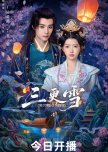
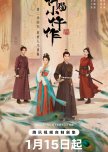
Surprisingly Entertaining!
After her family and life was destroyed by tyrant Jun Che, Lu Ying Ying got a second chance in life and was determined to change her fate. Upon being reborn before the tragedy begins and meeting Jun Che, who was then a slave, she bought him and attempted to get revenge. However, as they work together, love sprouts and new revelations came to light.This was a random watch on a slow afternoon. With no expectations, this is the type of drama that would surprisingly keep you engaged without needing your full unwavering attention or critical thinking skills. A light watch indeed! It is a cliché enemies to lovers story yet it would keep you seated to see how things unfold. The casting, although not perfect, was enough to bring the characters to life and portray each character's development and relationship throughout the drama.
It is definitely not the best short drama of its kind but enough to receive a rating of 7. This is an easy drama to watch when looking for an enemies to lovers plot without needing to think or fully commit your attention.
Was this review helpful to you?
This review may contain spoilers
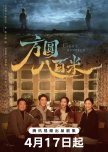
Duty Before Blood
Eight Hundred is, at its core, a story about limits. Not the kind you casually brush against, but the kind that force a choice out of you when there is nowhere left to run. Set in a late 90s mining town, the story begins with a seemingly straightforward case that quickly unravels into something far more personal. Police officer Chen Hong Bin notices glass fragments on a victim that point toward a banned drug, and what starts as a routine investigation slowly exposes a trafficking network embedded within the town. The real turning point comes when the shadow behind it all is revealed to be someone closest to him. From there, the drama shifts into something more intimate and painful, a moral tug-of-war between duty and blood.The premise already tells you how this will end. Not the exact details, but the direction. Once you understand Hong Bin’s rigid sense of justice, there is no illusion of a miraculous escape. The question is never if, but how heavy the cost will be. The drama plays this out as a prolonged cat and mouse game between Hong Bin and his son, Chen Hui. Hong Bin relentlessly pushes forward, following every lead with almost mechanical persistence, while Hui does everything he can to stay one step ahead. Hui’s descent begins with something almost understandable. Together with his girlfriend Gao Song Ge, he enters the drug trade to pay for her medical treatment. They are not framed as inherently bad people, just desperate and naive enough to believe they can control the scale of their actions. Like many tragedies, it starts with a small compromise that quietly snowballs into something irreversible.
That said, the execution of this cat and mouse dynamic can feel repetitive. The structure often loops: Hong Bin closes in, Hui narrowly escapes, and the story resets before building tension again. It works in maintaining suspense, but at times it feels like running on a treadmill rather than moving forward. Each near discovery could have shifted the stakes more meaningfully, but instead the narrative occasionally retreats into familiar territory. It is engaging in theory, but the impact softens when the progression does not match the intensity of the premise.
The investigation itself walks a fine line between satisfying and frustrating. There are moments where Hong Bin’s methods reflect a classic investigative mindset, such as when he painstakingly pieces together scattered styrofoam fragments. It echoes that old idea that no detail is too small. However, the narrative does not always justify why certain clues deserve that level of focus. When this reconstruction points toward Hui, it feels less like a solid breakthrough and more like a conclusion driven by suspicion. At times, it seems as if Hong Bin is working backward from a belief he already holds, rather than building toward it with airtight logic. It does not ruin the experience, but it does chip away at the credibility of the investigative process.
Where the drama truly finds its weight is in its characters and their choices. I found myself siding with Hong Bin, even knowing how unforgiving that stance is. He is a man who was a cop before he was anything else, and that identity defines every decision he makes. There is something both admirable and unsettling about how unwavering he is. He does not bend, not even for his own son. In a world that often negotiates with morality, Hong Bin feels almost anachronistic, like a relic of a stricter era that refuses to soften. What surprised me most was not that he pursued Hui, but how little hesitation he ultimately showed in doing so.
Hui, on the other hand, is a character who crosses lines one by one until there is nothing left to defend. At first, his actions feel redeemable within a certain moral lens. But the turning point comes when he chooses violence not out of desperation, but intent. His plan to kill Luo Yan, and later his involvement in orchestrating it through Huo Kai Ming, marks a shift into darker territory. The final nail is the death of Tian Jin Hai. What could have been self defense spirals into something far more brutal, and from that moment on, Hui becomes someone you can no longer excuse. Framing Liu Na afterward only deepens that fall. That decision feels particularly cruel, not just because of what it represents legally, but because of the personal betrayal behind it.
Episode 15 stands out for how raw it feels. It strips everything down to a simple but uncomfortable question: what do people choose when given the chance to do right or wrong? The drama does not dress this up with spectacle. It leans into the quiet tension of decision-making, and that is where it resonates most. It is less about plot twists and more about whether characters will make the right choice when it actually matters. In that sense, it reflects reality in a way that is almost unsettling. Crime here is not abstract, it is the direct result of accumulated decisions.
By the time the ending arrives, it does exactly what it promises. There is no dramatic escape, no last minute miracle. It stays grounded. Episode 20 is emotional not because it shocks you, but because it follows through. Watching a father send his own son to prison while still holding onto that bond is quietly devastating. Xu Kai delivers what is easily his strongest performance here. The moment Hui looks back at his parents while being taken away lingers longer than any plot twist could.
Visually, the drama does a commendable job capturing its setting. While some sets lean slightly theatrical, the overall aesthetic works. The costumes and makeup help sell the time period, and the attention to detail in the characters’ appearances adds authenticity. Hui’s tanned complexion and Song Ge’s frail, sickly look subtly reinforce their circumstances without needing explicit dialogue.
In the end, Eight Hundred is a compelling character study wrapped in a crime narrative. As an investigation drama, it falls short in consistency and progression. But as a story about choices, consequences, and the fragile line between right and wrong, it lands with impact. It may not be airtight, but it is thought-provoking in a way that stays with you after the final episode.
Was this review helpful to you?

This review may contain spoilers
A Bittersweet Tale of Love, Justice, and Revenge!
During one his attempts to uncover the truth behind the tragedy that befell his family, Xiao Wu Xia, who lives in hiding as Wei Zhao, met Jiang Ci who disrupted his plans. Wei Zhao then hurt Jiang Ci with a poisoned knife to silence her. After being saved and taken in by Pei Yan, Wei Zhao continues to keep an eye on Jiang Ci to make sure she does not reveal anything to Pei Yan. While staying with Pei Yan, Jiang Ci kept on disrupting Wei Zhao's plans as to her, he was the villain. It was not until she saw how people would sacrifice themselves for Wei Zhao that she realized his plans were for a great cause. From then on, Wei Zhao and Jiang Ci got closer as they work together to fight for justice. Love sprouts and enemies turned to lovers. By the end of the story, Wei Zhao, Jiang Ci, and Pei Yan unite against the Emperor to protect Yueluo City and achieve justice.Love of Nirvana is an example of extreme enemies to lovers trope, as well as lovers (or friends) to enemies trope. Wei Zhao is a selfless, just, and kindhearted character with a tragic past. Even though he is not necessarily a paragon of virtue, it is enough to say that Wei Zhao is a sheep in wolf's clothing. On the other hand, Pei Yan is a wolf in sheep's clothing although, he is not necessarily a bad guy. Being caught in between filial piety and his own values for justice ended up making him a villain. Wei Zhao and Pei Yan's love hate friendship and camaraderie throughout the drama was something to look forward to. In between these two is Jiang Ci. She is one innocent, naive, and free-spirited lady with a mysterious identity. It's very interesting to see how her relationship with the two male characters progresses. Jiang Ci went from enemies to lovers with Wei Zhao as they work together for the same cause, while her relationship with Pei Yan went downhill as he continuously chose the wrong path. Jiang Ci's relationship with the two male characters were mind-boggling for different reasons.
Despite Wei Zhao's attempts to kill Jiang Ci three times, they still manage to fall in love. Is it stockholm syndrome? Pretty sure it is. Even after they fell in love, Wei Zhao doesn't seem to feel guilty about it as he did it to protect a cause. Yes, he is not an "I'd let the world burn" male character. I still question why exactly Jiang Ci fell for Wei Zhao. To fall for someone who tried to kill you three times is worth a great reason. Is it because he is just and selfless? That doesn't make sense! However, this questionable stockholm syndrome plot was definitely masked over and put to rest when we Pei Yan's selfishness and possessiveness comes out. This change somehow made Wei Zhao shine and appear as a better option of the two. Jiang Ci's naivety masked over the notion of being grateful also irks me. Pei Yan was possessive, controlling, and often gaslights Jiang Ci. Despite seeing firsthand how selfish Pei Yan was, she still gives him chances under the reason of feeling grateful for saving her.
Although there were some things that could be improved, it is enough to say that this story was well-written and well-paced. As much as I understand the bittersweet and tragic ending, I do wish we could have had a better one. One where justice prevails! However, the ending managed to give me some closure as his legacy continues.
They did really well in casting Ren Jia Lun, Li Landy, and Jeremy Tsui as the three leads. Ren Jia Lun was perfect for the role of Wei Zhao as he exudes charisma, intelligence, righteousness, and a cold aura. Li Landy did great as the innocent, naive, and free-spirited Jiang Ci. Jeremy Tsui also did well at acting out the possessive, controlling, conflicted, and mature Pei Yan. The supporting actors were also scene stealers. Special mentions to both Wei Zhao and Pei Yan's sidekicks, as well as the Wei Zhao's Yueluo City friends and family!
All in all, this drama will leave you questioning, thinking, squealing, and definitely keep you hooked to see how everything unfolds. I have personally rewatched this drama more than 5 times, mainly to see the enemies to lovers trope. Love of Nirvana easily makes it to the top of my recommended Chinese drama list!
Was this review helpful to you?
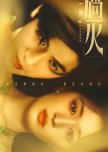
Overdone
Overdo was one of my most anticipated dramas of the year. With Zhang Ling He and Wang Chu Ran leading the cast, I walked in with expectations through the roof. In hindsight, that might have been my first mistake. The irony is almost poetic because, much like its title, everything about this drama feels overdone. It constantly tries to raise the stakes, only to end up feeling exaggerated instead of impactful.Set against the fading days of Republican-era Shanghai, the story follows Murong Qing Yi, a doctor whose life has been shaped by a cruel mistake made at birth. A chance exchange of letters leads him to Ren Su Su, an orphan carrying wounds just as deep as his own. Their relationship begins with quiet sincerity before fate tears them apart, leaving Qing Yi imprisoned under the belief that Su Su betrayed him while Su Su disappears without a trace. Three years later, she returns under a new identity, now engaged to his brother. Their reunion is fueled by resentment, misunderstandings, and buried truths, all unfolding as the nation inches toward war. On paper, it sounds like an emotional roller coaster filled with second chances, mistaken identities, and undying love. In execution, however, it often mistakes melodrama for emotional depth.
The problems start almost immediately with the cinematography and directing. The color grading, lighting, soft focus, and camera treatments constantly reminded me of a vertical drama. I have nothing against vertical dramas. I actually enjoy them. The issue is that I expected a high-budget long-form production, only to feel like I was watching one dressed up with a bigger cast and longer runtime. The directing only amplifies that impression. Many scenes feel unnecessarily dramatic, to the point where they become unintentionally funny.
The clearest example is the scene where Qing Yi jumps into the water to save Su Su. Instead of diving naturally, he launches himself flat into the water with his hands stretched forward, looking less like someone rescuing another person and more like someone accidentally participating in a belly flop competition. It completely took me out of the moment. If Zhang Ling He was unable to perform a proper dive, there were plenty of alternatives. He could have simply run into the water or jumped normally. Sometimes the simplest solution is the smartest one. Instead, the final result became comedy when it should have been life or death.
The use of AI in certain scenes also does not help. AI itself is not necessarily a deal breaker if it blends naturally into the production. Unfortunately, scenes like the airplane sequence look noticeably artificial, making it difficult to stay immersed. There are many moments throughout the drama where everything feels just a little too exaggerated, reinforcing that same vertical drama energy.
That said, not everything misses the mark. There are genuinely beautiful scenes scattered throughout the series, and several supporting actors deliver surprisingly strong performances. Li Bo Ze, Hai Tang Qing, and several other major supporting characters leave a positive impression. The drama also deserves credit for attempting to create morally layered characters. Li Rong Zhang, for example, is presented as both an abusive father and a patriot willing to sacrifice himself for the nation. That contradiction could have been fascinating, but the writing never explores it deeply enough. Rather than feeling like a complicated human being, he simply came across as confusing. Complexity only works when the audience is given enough time to understand it.
As for Zhang Ling He and Wang Chu Ran, they are easily among the drama's biggest strengths. Both actors maximize every opportunity they're given and deliver convincing performances despite the material. Unfortunately, they become victims of weak directing and increasingly outrageous plot twists. Qing Yi and Su Su are constantly trapped between personal desires and external responsibilities, which could have been compelling. Instead, their relationship becomes an endless cycle of misunderstandings, separation, reconciliation, love, hatred, and then back to misunderstanding again. I normally enjoy these kinds of tropes, but there is a difference between using them as seasoning and making them the entire meal. By the end, their relationship feels emotionally exhausting rather than heartbreaking.
One thing I cannot complain about, though, is the styling. The costumes, hairstyles, and makeup absolutely delivered. Everyone looked stunning, and the visual presentation of the cast deserved praise even when the script did not.
Ironically, the first half of the drama gave me hope. The early mysteries surrounding Su Su and Qing Yi immediately pulled me in. I especially found Su Su's past involving the women and the Huo family intriguing. The drama explores dark subjects including human trafficking, prostitution, and violence, and despite Chinese censorship, it presents these themes with surprising rawness. Some scenes are genuinely disturbing in ways that effectively capture the brutality of that world. Qing Yi's own mysterious past also kept me invested.
Unfortunately, once these mysteries are resolved around the middle of the series, the drama changes gears completely. Instead of building naturally upon what had already been established, it veers into increasingly dramatic territory filled with makjang-style twists and a storyline involving biochemical virus terrorism. It feels as though the writers kept asking, "How can we make this even bigger?" without asking whether it actually made the story better. Sometimes less really is more.
The ending perfectly reflects this issue. I actually prefer tragic endings for stories like this, but tragedy only works when it feels earned. Here, it often feels manufactured for the sake of making the audience cry. Certain sacrifices and plot developments seem unnecessary, and everything becomes so chaotic. Someone is gravely ill, then suddenly recovers. A terrorist incident appears out of nowhere. An entire village ends up paying the price. I found myself trying to justify the characters' decisions by assuming they simply had no better options under such desperate circumstances, but the story never fully convinces me that this was truly the only path available.
Overall, Overdo became an emotional graph that never quite stabilized. I started disappointed, became genuinely invested once the mysteries unfolded, then found myself disappointed all over again as the story spiraled into increasingly excessive territory. Thankfully, the short episode runtime made it easy enough to finish.
This is one of those dramas that I cannot confidently recommend, even if there are parts I appreciated. Whether you enjoy it will depend heavily on your tolerance for exaggerated melodrama, constant emotional whiplash, and makjang storytelling. If that sounds like your cup of tea, you may find much more to love here than I did. As for me, Overdo lived up to its title a little too well.
Was this review helpful to you?
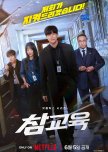
A Taste of Your Own Medicine
In a world where teachers have lost their grip on the classroom and discipline has become little more than a polite suggestion, the government launches a bold solution: the Educational Rights Protection Bureau (ERPB). Na Hwa Jin, a no-nonsense inspector is tasked with restoring order where chaos reigns supreme. Armed with unprecedented authority, Hwa Jin and his team are dispatched to troubled schools across the country, confronting unruly students, broken systems, and the uncomfortable truth that respect cannot be legislated into existence. Part school drama, part social commentary, Teach You a Lesson asks a timeless question: when the old rules no longer work, how far should society go to write new ones?What makes the drama stand out is how it broadens its lens beyond the usual school bullying narrative. It explores conflicts in all directions, from student against student to teacher against parent, and even the misuse of legal systems. Each case reveals a different layer of dysfunction, making the story feel less like a simple revenge tale and more like a commentary on accountability. The ERPB’s approach is simple but striking. They make perpetrators experience the consequences of their own actions, giving them a taste of their own medicine. Violence is met with violence, manipulation with manipulation, and abuse of law with the law itself. It is harsh, but in the context of the drama, it feels like a twisted form of justice that is oddly satisfying to watch.
The emotional backbone of the story lies in its origin. The bureau was created by Minister Choi Gang Seok after the tragic death of his daughter, Choi Ga Yun, who was also Na Hwa Jin’s fiancée. Her death at the hands of a student becomes the catalyst for everything that follows. Despite their grief, both Hwa Jin and Gang Seok carry forward Ga Yun’s belief that teachers should not live in fear of their students. This shared loss adds a quiet weight to the narrative, grounding all the action and retribution in something deeply personal.
Na Hwa Jin himself is easily the highlight of the drama. As a former special forces operative turned inspector, he brings a commanding presence that is both intimidating and charismatic. His methods are ruthless, but his personality remains surprisingly laidback and even playful at times. There is a clear distinction in how he handles different perpetrators. With students, he holds back, keeping his punishments relatively restrained. With adults, however, he shows no mercy. This contrast not only reinforces his moral code but also makes his character more intriguing. Kim Mu Yeol fully embodies Hwa Jin, delivering a performance that is both magnetic and intense. The action sequences, especially, are executed in a way that keeps the adrenaline high and the tension sharp.
Structurally, the drama follows a case-by-case format, with each episode focusing on a new school or conflict. However, it never feels disconnected. Episodes often reference previous cases, creating a sense of continuity that ties everything together. The formula is familiar but effective. We are shown the problem, the ERPB steps in, and the lesson is delivered. While the bullying, violence, and abuse can be difficult to watch, they serve a purpose. They build emotional weight so that when the punishment finally comes, it lands with full impact. The satisfaction comes not just from seeing justice served, but from seeing it served in a way that mirrors the crime.
Interestingly, the drama also manages to keep the viewing experience enjoyable rather than stressful. From early on, it establishes the ERPB as highly competent, capable of navigating both physical confrontations and political maneuvering. This creates a sense of security for the audience. Instead of worrying about whether the protagonists will succeed, you find yourself anticipating how they will turn the tables. Even moments that seem like setbacks often reveal themselves as calculated moves. This approach makes the show incredibly bingeable, as each episode delivers a sense of closure along with anticipation for what comes next.
Given its webtoon origins, it is no surprise that the drama occasionally leans into exaggerated or comical elements. Some cases feel almost over the top, with characters that seem larger than life. The Guun High School storyline, in particular, stands out for its almost cartoonish energy. At times, the logic may not hold up under scrutiny, but that is part of the charm. This is not a drama that asks to be taken too seriously. It thrives on its boldness and its willingness to push boundaries. That said, not every character lands perfectly. Im Han Rim, played by Jin Ki Joo, can feel a bit overbearing at times. Her tendency to shout and her somewhat awkward delivery make her character harder to connect with, especially compared to the more grounded performances around her. It is a noticeable contrast, though it does not detract too heavily from the overall experience.
On the technical side, the drama delivers as expected. The visuals are polished, and the cinematography enhances the intensity of key moments. The action sequence at the end of episode two is particularly memorable, combining dynamic action sequence with sharp camera work. The soundtrack also deserves a mention, with its hip and energetic tracks that perfectly match the tone of the series. It is one of those rare cases where the opening and closing themes are worth watching every time.
In the end, Teach You a Lesson is a highly engaging and binge-worthy drama that knows exactly what it wants to be. It may not always be realistic, but it is consistently entertaining and thought-provoking in its own way. At its core, it delivers a simple yet powerful idea: actions have consequences, and sometimes the most effective lesson is the one you experience yourself. With a standout performance from Kim Mu Yeol and a narrative that balances action with social commentary, this is a drama that leaves a strong and lasting impression.
Was this review helpful to you?

Listen Up, Babylon
A Shop for Killers Season 2 picks up where the first season left off, but instead of constantly throwing us into a maze of flashbacks and survival games, it spends more time asking a different question: what happens after you survive? Jung Ji An is no longer simply the girl trying to stay alive inside Murthehelp. With Jung Jin Man back in the picture, she has to figure out what kind of life she wants, what Murthehelp means to her, and whether there is any way for the Jung uncle and niece duo to exist without Babylon breathing down their necks.The season begins by filling in the missing pieces of what Jin Man was doing while the events of the first season were unfolding. We see what happened to him and his team before eventually arriving at his reunion with Ji An. From there, the story moves more firmly into the present, following their lives after that reunion. Compared to the first season, which was packed with action and flashbacks designed to build the mystery around Murthehelp, the second season feels more invested in the future. The first season kept me at the edge of my seat. The second season, meanwhile, made me more curious about where these characters would go next. And honestly, I enjoyed both seasons almost equally, just for different reasons.
After reuniting with Jin Man and the Murthehelp team, Ji An initially chooses to walk away. She spends three years trying to live a normal life in a small seaside town, working with the grandmas making fishing nets. On paper, it sounds peaceful. In reality, this girl is basically living like a paranoid cat. She keeps her profile low, sets traps around her house, and carries the psychological scars of everything she has been through. Even in a quiet village by the sea, she never truly feels safe.
I actually appreciated what this arc was trying to do, even though I think it went on longer than necessary. It gives us a glimpse of the life Ji An could have had if she were allowed to simply be a normal young woman. The problem is that the moment she finally warms up to the town and gets close to a local boy, her identity is discovered. Predictable? Absolutely. When it happened, I felt almost nothing emotionally. The chase itself gave me an adrenaline rush, but the emotional beats, especially the boat scene, did not land as strongly as the drama seemed to want them to. It also took three whole years for Ji An to finally open herself up to the people there, only for everything to be destroyed because the enemy's investigation happened to lead them to the village. Still, I can accept the arc because it functions as a giant "what if?" scenario for Ji An. What if she could really leave Murthehelp behind? What if she could live an ordinary life? The answer, unfortunately, is that her past is not done with her.
Meanwhile, Jin Man spends much of the season trying to get Babylon off their backs. His goal is surprisingly reasonable for someone running a deadly shopping mall: coexist peacefully. Babylon, naturally, says no. So Jin Man and his team resort to threatening them with classified information taken from Babylon's own server. Their efforts were genuinely fun to watch. The strategizing, infiltration, escapes, and cat-and-mouse games kept me invested, even if they rarely made me genuinely worried about whether Jin Man and his team would survive. I always had the feeling that they would find a way out somehow.
The action is a mixed bag. So Min Hye and Pasin continue to be absolute beasts. Their movements are agile, clean, and satisfying to watch, and their action scenes gave me exactly the kind of adrenaline rush I wanted. Bale is also entertaining thanks to his manic, almost psychotic presence. That man's ability to stare without blinking deserves its own award.
Jin Man, however, is a different story. I can see Lee Dong Wook's age through some of the action sequences, and the drama seems very aware of it too. A lot of Jin Man's fights are presented through dark environments, night-vision POVs, unusual camera angles, or heavy editing. The intention is obviously to make him look cool, but sometimes it felt less like stylish filmmaking and more like the camera was helping him pass the physical exam. The 360-degree corner angle used during his fight with Bale in the first episode amplified my migraine. I understand what they were going for, but I found it more nauseating than impressive.
That is not to say Jin Man himself loses his cool factor. In fact, the drama cleverly shifts his strength away from raw physicality. His real weapons are his experience, intelligence, equipment, and ability to escape situations that should be impossible to escape from. He looks like a man who has been doing this for decades, and that works for the character. Visually, Lee Dong Wook still looks ridiculously good as Jin Man, with a buff and fit physique that suits the role. More importantly, his performance sells the uncle part beautifully. There is awkwardness, guilt, innocence, protectiveness, and love in the way he looks at Ji An. Their relationship feels surprisingly realistic, especially for two people whose family bonding activities include guns, traps, and escaping assassins.
Kim Hye Jun's Ji An is also solid. I would not call the performance extraordinary, but there is nothing particularly wrong with it either. She genuinely feels like a niece trying to navigate the bizarre and dangerous world that her uncle has dragged her into. My biggest complaint is that I wanted more growth and charisma from Ji An. She has some genuinely cool moments, particularly when she dresses up and confronts Babylon herself, as well as during her martial arts and gun training with Jin Man's team. Those scenes gave her plenty of aura. Unfortunately, when she starts sitting at the table and strategizing with the experienced players, she sometimes feels like a kid trying to play chess with grandmasters.
That said, I cannot complain too much about that characterization because it makes sense. Jin Man and the others have spent years surviving in this industry. Ji An is still the newcomer. What matters is that her plans work, and watching her gradually take the reins of Murthehelp is satisfying. She may not yet have the presence of the big players, but she is learning how to become one.
The Babylon characters are another mixed bag. Kusanagi Jin, Q, and J from Babylon's East Asia Branch all leave very different impressions. Kusanagi Jin, played by Jung Yun Ha, is probably the one who annoyed me the most, which is also a compliment to the actress. She is manic, narcissistic, obsessed with hygiene, and generally the kind of person who makes you want to slap the screen. Jung Yun Ha commits to the psychotic energy so intensely that I genuinely wanted to throw something at her. At times, though, the character feels a little too cartoonish.
Q, played by Lee Hyun Ri, is much more interesting in terms of morality. She has her own principles and does not seem particularly interested in killing innocent people. She can show mercy, spare people who do not harm her, and has strong big-sister energy toward J. There is also a little spark between her and Jin Man, which I enjoyed. Unfortunately, her characterization does not go much further than that. I did not become deeply attached to her, although her pursuit of Ji An in the village was excellent. She was like a leech with a mission. Once she locked onto Ji An, good luck getting her to let go.
J, meanwhile, left an impression almost entirely because of Okada Masaki. I'm just a girl after all. Kidding. J is Q's younger brother and Kusanagi Jin's secret lover, and he is a very straightforward character. He follows orders and does what he is told without much fuss. Yet Okada Masaki gives him such expressive facial reactions that I found myself watching him whenever he appeared. His face practically speaks in full sentences. I became a fan.
Q's crew also adds some much-needed flavor, particularly Marco, who provides the comedic touch in an otherwise deadly cast. These little character dynamics help prevent the drama from becoming too grim and give the team a sense of personality beyond simply being people who are very good at killing other people.
The visuals, unfortunately, are where the drama sometimes tries a little too hard. There are plenty of genuinely good-looking scenes, but some of the camera work seems determined to remind us that the director owns a camera. The action between Jin Man and Bale in the first episode is the biggest example for me. The 360-degree treatment was technically interesting but physically unpleasant to watch. Other Jin Man action scenes use darkness or obstructive angles in ways that make it difficult to appreciate his actual movements.
Meanwhile, the action scenes involving So Min Hye and Pasin are allowed to breathe. We can clearly see their movements, which makes them feel more impressive rather than less. That contrast made me wonder whether Jin Man's camera treatment was partly designed to mask Lee Dong Wook's movement. If that was the intention, it worked. If it was not, then the coincidence is doing some heavy lifting.
Still, the drama has plenty of visual highlights. One of my favorite moments is when Kusanagi Jin walks past a room where clients are being killed. The scene has this unsettling, almost casual brutality that fits the world of A Shop for Killers perfectly. It understands that sometimes you do not need explosions to look cool. Sometimes a psychopath casually walking past a room full of dead bodies does the job.
And then there is the music. The OST, background music, and sound effects absolutely slay. The music is one of those things that can instantly elevate a scene from "pretty cool" to "damn, that has aura." The tracks are well chosen and woven naturally into the action, making the fights, confrontations, and dramatic moments feel much bigger. There were several moments when I found myself enjoying the music almost as much as the actual scene.
By the end, I did feel that some deaths were unnecessary. A few characters I liked were killed off, and while their deaths can be justified within the brutal logic of this world, I still found myself thinking, "You really could have let them live." Sometimes realism is not the same thing as satisfaction. There were also some loose ends about certain supporting characters.
The ending is probably the best example of the season's overall approach. If I had to describe it in one word, it would be smart. From an entertainment perspective, I found it anticlimactic. I wanted something bigger, louder, and more explosive. But from a storytelling perspective, Ji An's solution makes sense. It is the result of planning rather than brute force, and I cannot really argue with a plan that works simply because I wanted a bigger fireworks display.
It is also a very convenient ending, but perhaps that is what makes it smart. If A Shop for Killers ends here, the second season provides a conclusion that works. If the drama decides to continue with a third season, there is still enough room to move forward. The biggest question for me is what happens after the ceasefire. Will Jin Man and Ji An continue running Murthehelp together? Will they finally walk away from it? Can Murthehelp even exist peacefully after everything that has happened? I honestly would not mind either direction.
Overall, A Shop for Killers Season 2 is just as fun and entertaining as its predecessor, although it scratches a slightly different itch. The first season had the stronger sense of mystery and urgency, while the second season feels more like watching the surviving pieces of the chessboard figure out their next move. There are predictable story beats, unnecessary detours, questionable deaths, and camera work that occasionally made my head hurt more than the villains did. But the cast is fun, the action can be excellent, the uncle and niece relationship remains the heart of the story, and the soundtrack knows exactly how to make everything feel cooler than it already is.
It is not perfect, but neither does it need to be. A Shop for Killers remains a stylish, bloody, entertaining ride, and the second season does enough to make me glad I came back to Murthehelp.
Was this review helpful to you?
This review may contain spoilers
3 O’Clock Snack
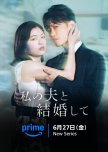
Kanbe Misa has spent most of her life playing the understudy in her own story. She puts everyone else first, trusts the wrong people, and keeps choosing kindness even when life gives her every reason not to. Then, in 2025, she discovers that her husband, Hirano Tomoya, is cheating on her with her so-called best friend, Esaka Reina. Before she can even process the betrayal, she is murdered by the very people she trusted. What makes the scene especially disturbing is that they actually have a moment when they could stop. They could rethink it. They do not and so Misa dies.The opening immediately sets the tone for what kind of adaptation this is. Like the Korean version, Marry My Husband begins with Misa's miserable first life before sending her ten years into the past. But while the Korean drama went for explosive emotions and high-octane thrills, the Japanese version feels much quieter, more cinematic, and almost psychotic in its restraint. I personally preferred Park Min Young's portrayal of Kang Ji Won during the original's opening because the anger and rage came through so strongly. Here, Koshiba Fuka's Misa feels more stunned by the sheer absurdity of what happened, especially when she realizes the insurance money is part of the plan. Somehow, that makes the whole thing feel even more unsettling.
One of my favorite transitions comes when Misa falls to her death and an orange falls at almost the same time, as though someone witnessing the scene was startled enough to drop it. Then Misa wakes up in 2015, with an orange sitting beside her. Having watched the Korean version first, I immediately understood what the scene was doing, but I still loved the visual storytelling. It is such a simple detail, yet it connects her death and rebirth, as well as who has always been there, without needing a single line of exposition. And from there, Misa gets what every wronged protagonist dreams of: a second chance. Except this time, she is not planning to be the nice girl who sacrifices herself for everyone else.
The core story and most of the major events remain very similar to the Korean version, but the differences become much more interesting when it comes to the characters. Misa gradually grew on me. She may not have left the same immediate impression as Park Min Young's Kang Ji Won, but I really appreciated how determined she was. She is not a love fool, she does not suddenly forget her plans because a handsome man walks into her life, and she does not spend her second chance waiting for someone else to save her. She knows what she wants and, for the most part, gets to work herself.
That said, Misa has one habit that nearly sent me into another dimension: she says her thoughts out loud. There were moments when I was practically hiding behind my screen from secondhand embarrassment. It is funny because she is otherwise so composed and calculating, only to suddenly verbalize her entire thoughts. It did make her feel oddly endearing, though, and perhaps that is part of why she became more lovable as the story progressed.
Then there is Suzuki Wataru, and honestly, this is where the Japanese version won me over. Satoh Takeru's Wataru is simply excellent. Compared to Na In Woo's Yoo Ji Hyeok, Wataru feels quieter, more natural, and more like an actual person rather than a perfectly engineered male lead. His charisma does not come from dramatic declarations or grand gestures. It comes from the way he listens, observes, and quietly shows up. The drama also takes the time to explore his own story, giving him an identity beyond simply being Misa's second-chance love interest.
And I definitely preferred the chemistry between Misa and Wataru here. The Korean version has that polished, romantic-drama chemistry, complete with love bombing and dramatic directing. The Japanese version feels much more natural. There are no fireworks every time they look at each other. No constant "I would do anything for you" energy. Instead, their relationship develops through small moments, hesitation, trust, and mutual understanding. It feels less like watching two characters fall madly in love because the script says so and more like watching two adults slowly realize that they have found someone they can rely on.
What I appreciate most is that Wataru never becomes Misa's shortcut to changing her fate. Misa still carries out her plans herself. Wataru is there to support and protect her if she falls, not to do all the heavy lifting for her. Even better, both of them are careful about confirming their relationship and feelings before they have actually come close to changing their respective fates. There is something satisfying about that restraint. Their romance does not distract from Misa's journey of taking control of her own life. If anything, it complements it.
The antagonists are another area where the Japanese version feels noticeably different. Esaka Reina is particularly fascinating because she is not simply a Japanese copy of Jung Su Min. Both occupy the toxic best friend role, but they are toxic in very different flavors. Su Min is the kind of toxic best friend who hides the poison under sweetness. Reina wears the poison on her face. You can practically smell the toxicity coming from her.
Reina is more complicated and, in some ways, more disturbing. I was genuinely surprised when she noticed Misa and Wataru becoming close and decided to go after Wataru herself. It made me feel that Reina's obsession is less about controlling Misa and more about beating her. Su Min's fixation was largely about Park Min Hwan and making sure Ji Won remained isolated and dependent on her. Reina feels more like someone who cannot stand the idea of Misa having something she does not. She wants to one-up her. Shiraishi Sei plays that instability well, especially if the transparency of Reina's emotions was intentional. Either way, she manages to make Reina feel openly toxic, disturbed, and difficult to look away from.
Hirano Tomoya, meanwhile, is almost impressive in how pathetic he is. Yokoyama Yu portrays him with such cluelessness and spinelessness that I found myself looking down on him almost immediately. Park Min Hwan in the Korean version has a sly, almost comedic stupidity to him. Tomoya feels more naive, easily influenced, and completely incapable of standing on his own two feet. He is the kind of man who makes you wonder how someone could possibly reach adulthood and still function like this.
Where this adaptation truly shines, though, is in its visual language. I loved the quiet and muted atmosphere. The color grading is easy on the eyes, the compositions are beautiful, and the camera work rarely feels like it is trying too hard to announce how beautiful a scene is. The directing has a very grounded quality to it. Even when something dramatic happens, the drama often lets the characters react like actual human beings instead of relying on exaggerated expressions, sound effects, or visual gimmicks.
There are so many small production choices that I appreciated. I loved how the sky gradually becomes darker when characters spend a long time in one scene, subtly reflecting the passage of time. I loved how surprise is often shown through genuine facial reactions rather than dramatic effects. The scenery of Japan adds another layer of comfort, while the food shots bring their own subtle flavor to the story. Pun absolutely intended. The result is a drama that feels cozy even when the plot itself is anything but cozy.
The OST was also a pleasant surprise. I kept recognizing Korean voices, only to discover that the drama's Korean and Japanese production collaboration extends into its music as well. While I would not say that any particular song stayed with me after finishing the drama, the OST did its job well. It enhanced the scenes without constantly demanding attention.
Then the ending arrives and suddenly the drama changes costumes. What began as a quiet revenge story with cozy suspense gradually turns into something closer to a psychotic crime thriller. Normally, this is the sort of genre shift that could have made me nitpick the entire ending. Surprisingly, I did not mind it as much as I expected. The directing maintained that same grounded, almost cozy quality even while everything around the characters descended into chaos. That consistency helped the final stretch feel more believable within the world the drama had established.
I especially liked how the ending brought the taxi detail back. It is a small thing, but I always appreciate when a drama remembers its own visual breadcrumbs instead of throwing them away after they have served their initial purpose. The ending also gives closure to the major characters, and more importantly, brings everything back to one of the story's central ideas: your life is yours to live. Misa's second chance is not simply about making her enemies suffer. It is about finally understanding that she does not have to keep living according to everyone else's expectations.
In the end, I enjoyed this version about as much as I enjoyed the Korean one, perhaps even a little more. The Korean drama still has the advantage when it comes to explosive emotions and that addictive, larger-than-life melodrama energy. But the Japanese version won me over with its natural chemistry, restrained directing, beautiful visuals, and quieter approach to storytelling. It feels less interested in shouting that a moment is important and more interested in letting the moment speak for itself.
Marry My Husband ended up being a surprisingly good gateway into Japanese dramas for me. It took a story I already knew and gave it a different texture, like hearing the same song performed acoustically after being used to the full studio version. The melody is familiar, but suddenly you notice different things. And after finishing this, I definitely want to see what other Japanese dramas have to offer.
Was this review helpful to you?
This review may contain spoilers
How Dare You!? Fool Me Like That!
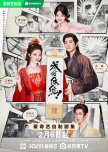
I kept putting off How Dare You!? because I simply was not in the mood for another comedy. Then because of Cheng Lei, I finally gave in, fully expecting a lighthearted palate cleanser. Instead, the drama pulled off one of the biggest bait and switches I have seen in a while. It dresses itself in comedy, only to slowly reveal that beneath all the jokes, fourth wall breaks, and ridiculous situations lies a surprisingly tragic story.The story follows workplace rookie Wang Cui Hua, who suddenly wakes up inside the pages of a novel as the infamous demonic consort Yu Wan Yin. There, she discovers she is not the only transmigrator. Emperor Xia Hou Dan is actually Zhang San, someone from the modern world who has been trapped inside the novel for nearly a decade. Like two chess players who unexpectedly realize they are on the same board, they rely on their knowledge of the story to outwit dangerous enemies, survive ruthless palace politics, and challenge a prophecy that insists only one of them can live to see the peaceful future they are trying to build.
The first episode was pure fun. Watching Cui Hua and Zhang San awkwardly test whether the other was also from the modern world while trying to navigate an unfamiliar fictional setting was endlessly entertaining. I find it brilliant to use “how are you? I’n fine thank you, and you?” to find out who’s a transmigrator. Their modern references, chaotic teamwork, and shameless glances at the camera gave the drama a playful charm. Then came the second and third episodes, and suddenly tragedy barged in without knocking. Characters started dying. Violence became more frequent. The stakes grew heavier. Yet somehow the comedy never disappeared. Instead, it became a coping mechanism. The laughs never erased the pain, but they made the journey easier to carry. Of course, the tragedy itself was obviously intentional. It felt comical and somehow highlights that they are in a novel. As the political conflicts became more serious, the drama balanced its darker themes with enough humor to keep everything surprisingly digestible. I did find some palace politics scenes dragging a little, but they ultimately gave the story much more depth.
Wang Cui Hua was an absolute delight. She was bright, loud, vibrant, and completely unapologetic about bringing her modern personality into a historical world. What I appreciated most was that she never tried to become the person who knew better simply because she came from the future. She embraced living as Yu Wan Yin, sympathized with the people around her, and genuinely wanted to help clean up corruption and endless power struggles. She carried herself with so much personality that even the way she walked became memorable. Her first entrance into the Emperor's chambers with that confident, flirty swagger instantly became iconic. Whether casually sitting with her legs wide open or gracefully walking through the palace in breathtaking costumes, Wang Chu Ran completely owned both Cui Hua and Wan Yin. She balanced flirtiness, humor, determination, vulnerability, and heartbreak effortlessly. It certainly helps that she looked absolutely stunning throughout the entire drama. I lost count of how many screenshots I took of her costumes despite knowing I will never wear them.
Then there is Zhang San, easily one of the most tragic characters in the series. Imagine entering a novel as a teenager, growing up entirely inside its world, and slowly forgetting your real life. After nearly ten years, Zhang San had become Xia Hou Dan in every sense of the word. He mastered court politics, learned to survive endless schemes, and even perfected the act of pretending to be an incompetent puppet emperor just to fool the Empress Dowager and Xia Hou Bo. When Cui Hua finally appeared, he was no longer just relieved to find another transmigrator. He had finally found someone who understood the loneliness of existing between two worlds.
Cheng Lei once again reminded me why I keep watching his dramas. His greatest strength has always been his facial expressions. He can deliver the smallest, softest emotions just as convincingly as explosive anger, grief, or comedy. His performance made Zhang San's internal conflict feel believable. There were moments when he admitted he had deliberately drawn information from Cui Hua to help himself survive, and instead of making him feel manipulative, it made him feel painfully human. Survival had become second nature. Yet despite his own motives, his feelings for Cui Hua never felt dishonest. When he told her, "In you I found home," it became one of the sweetest lines in the entire drama. There was one small detail that felt inconsistent, though. Since he had spent nearly a decade living entirely as Xia Hou Dan, hearing him casually mention needing a CT scan, even when Cui Hua was not around, felt oddly out of character. By that point, modern vocabulary should have come much less naturally.
The chemistry between Cui Hua and Zhang San was one of my favorite parts of the drama. They were lovers, partners, best friends, and fellow survivors all at once. They respected each other, trusted each other, and always found their way back to each other no matter how dangerous things became. Their relationship never relied on possessiveness or misunderstandings for drama. Instead, it was built on quiet support and mutual understanding. Some of my favorite scenes were simply the two of them eating hotpot together. There was something wonderfully hilarious about watching modern souls happily enjoying hotpot while dressed in elaborate historical costumes. Their planning sessions, complete with occasional looks straight into the camera, were equally entertaining. Beneath all the laughter, though, was the bittersweet reality that they were the only two people who truly understood each other's circumstances. They were wandering souls who finally found home in one another.
One of this drama's greatest strengths is how memorable its supporting characters become. Xie Yong Er completely surprised me. At first, I was convinced she was another transmigrator from the modern world. Later, I became convinced she had come from the future. I was wrong twice. The reveal that she was actually a fictional character who had transmigrated into another fictional story genuinely made my brain short circuit. It was such a clever twist. I loved her friendship with Cui Hua, their girls' moments together, and seeing her happily sharing hotpot and dumplings with everyone. That only made her tragic fate hurt even more. I was rooting so hard for her happiness, especially with Xiao Tian Cai.
The tragedy did not stop there. Xu Yao's death came shockingly early and signaled that nobody was safe. Then came the scholars, whose unwavering loyalty to justice turned them into one heartbreaking sacrifice after another. After the first scholar died, I should have realized what the drama was preparing me for, yet every subsequent death still landed. The series did an excellent job developing even its supporting characters enough that losing them genuinely hurt.
The death that broke me the most was Bei Shu's. He was far more than Xia Hou Dan's loyal protector. He became the father figure Zhang San never had during all his years trapped inside the novel. Watching Zhang San lose the one constant source of unconditional support was devastating. Even knowing the narrative reasons behind his sacrifice, I still cannot shake the feeling that it was unnecessary. Seeing him lying inside the casket genuinely broke my heart alongside Zhang San's. Cui Yi and Fan Siu Wong portrayed Bei Shu with so much warmth that his absence left a lasting void.
As for the villains, Xia Hou Bo and the Empress Dowager were thoroughly detestable. Xia Hou Bo had the classic tragic backstory of an abused child growing into a resentful adult, but his suffering never excused his actions. Manipulating Yong Er, using her love, and forcing her into such cruel circumstances made him absolutely disgusting. Tang Xiao Tian played him remarkably well because I spent most of the drama wanting someone to punch him. The Empress Dowager was equally infuriating. Power mattered more to her than anything else. She manipulated Xia Hou Dan, isolated him from everyone he cared about, and remained determined to control him even after he saved her life.
Visually, this drama was absolutely gorgeous. Normally I find overly polished historical dramas a little too artificial, but here the dreamy aesthetic actually worked. The costumes were easily one of the production's biggest strengths. Yu Wan Yin's wardrobe was simply breathtaking, while Xia Hou Dan's elegant robes and hairstyles perfectly complemented both his character and Wang Chu Ran's glamorous appearance. Together they looked like they had stepped straight out of an illustrated fairytale. The soundtrack also grew on me. At first, it barely registered. By the end, the songs had quietly settled into my head and refused to leave.
The ending may not satisfy everyone, but I appreciated what it tried to do. The fictional world wrapped up much like a classic novel with hope after overwhelming hardship, even if a few threads remained unresolved. The sudden return to the modern world happened so quickly that I barely had time to process it, but given the limitations, it was probably the closest thing to a satisfying closure. What I appreciated most was that the drama addressed the exact question I had been asking myself. Were Cui Hua and Zhang San only in love because they happened to be the only two modern people trapped inside the same novel? Would they still choose each other back in the real world? Zhang San's quiet reassurance that they would was enough for me. I may still have my doubts, but sometimes closure does not need certainty. Sometimes hope is enough.
Overall, How Dare You!? turned out to be so much more than I expected. It tells a solid story filled with lovable characters, heartbreaking sacrifices, palace intrigue, beautiful visuals, dreamy costumes, and a soundtrack that slowly sneaks into your playlist. Most importantly, it understands that laughter and grief are not opposites. They often sit at the same table, sharing hotpot while pretending everything will be okay.
Was this review helpful to you?
Worth the Loop
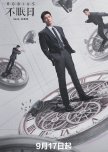
I have to admit, I only started Mobius because I saw Bai Jing Ting wearing a black t-shirt. That alone was enough to get me through the door. Thankfully, the drama turned out to be much more than just good visuals.Mobius follows Detective Ding Qi, a detective with a rather unconventional advantage. Every so often, he can rewind time and relive the same day up to five times, turning each loop into another chance to crack cases that would otherwise remain unsolved. But when a mysterious killer known only as squid announces a murder in advance, Ding Qi realizes he's no longer the only player bending the rules of time. What begins as a battle of wits soon spirals into something far more unsettling, with a shadowy genetic research group at the center of an ever growing web of secrets. As allies become suspects and those closest to him are pulled into the storm, Ding Qi finds himself trapped in a Mobius strip of fate where every answer leads to another question, and escaping the cycle may be the hardest mystery of all.
As someone who almost never watches sci fi dramas, especially those involving time loops, I found Mobius surprisingly approachable. This is not the kind of show that gives you a headache trying to connect twenty different timelines with red strings on a corkboard. The story presents its concepts in a very digestible way. It constantly moves between the past, the present, and Ding Qi's five possible loops, but the structure is so consistent that it never feels overwhelming. Almost every episode opens with flashbacks before returning to the current timeline or current loop, allowing the audience to slowly piece everything together. By the time you reach the first half of the drama, you already have a solid understanding of what is happening without feeling like you just attended a crash course in quantum physics.
The mystery is strongest in the first half. Watching Ding Qi carefully navigate each loop to solve cases kept me genuinely invested. The second half does become more predictable, and there is a good chance you will figure out the identity of Squid before the reveal. Strangely enough, that never became a problem for me. The fun shifted from asking "who" to asking "how." I was curious to see how everything would unfold and how the drama would connect all the pieces together. It still managed to sprinkle in enough light twists to keep things engaging even when the destination became easier to see.
The drama also deserves credit for never taking itself too seriously. One of its biggest strengths is how naturally it blends comedy into an otherwise suspenseful story. Whether through Ding Qi's unexpectedly ridiculous actions, witty dialogue, or perfectly timed background music, the humor lands remarkably well without disrupting the tension. Even the romance works as a nice breather between the intense investigations.
Then there are the product placements, which somehow became some of my favorite scenes. The drink advertisement was already funny, but the iQIYI product placement completely caught me off guard. Imagine a serious moment suddenly turning into Ding Qi talking about iQIYI subscriptions and Detective Conan before they start humming the Detective Conan theme. It felt so shameless that it looped right back into being hilarious. That is probably one of the very few product placements I genuinely enjoyed watching.
Of course, Bai Jing Ting carries a huge part of the drama's charm. He completely nailed Ding Qi. His action scenes were clean, polished, and incredibly satisfying to watch. Maybe a little too polished because every punch somehow looked effortlessly cool. His comedic timing, however, completely stole the show. His raised eyebrows, awkward body language, facial expressions, and line delivery were comedy gold. On top of that, the styling team clearly knew what they were doing. The hairstyle, the outfits, the toned physique... the man practically had smell o vision. I could almost smell the perfume through the screen.
One thing that pleasantly surprised me was hearing different dialects throughout the drama. I am not a native speaker, but it was interesting noticing the variety in how people spoke. Bai Jing Ting attempting the dialect was especially hilarious, while some supporting actors looked like they were fighting for their lives trying to switch between accents. It added an unexpected layer of fun and pain to the viewing experience. The other cast did a solid job overall, especially Janice Man. I was also pleasantly surprised by Li Qing Kuan as Fang Lu. Her English sounded remarkably natural, even more convincing than another character who was supposedly raised in America.
Visually, the drama is quite good. The action sequences are well shot! I also notice that the production uses lots of bold blue, pink, purple, and green lighting, particularly during scenes inside the laboratory, which made the scenes look more stylistic than immersive. The soundtrack and background music fits the atmosphere nicely, complementing both the suspense and the lighter moments without becoming distracting.
Still, the ending left some things hanging. There are also some logical leaps here and there. By the end of the drama, I was left with a couple of unanswered questions, one of which is how could something done to one person cause a time loop that affects everyone? Then again, if you examine every time travel rule under a microscope, you will probably find cracks. But Mobius is not trying to be the final boss of time loop fiction. It keeps things simple, entertaining, and easy to follow. Sometimes, that is exactly what a story needs.
Overall, Mobius was an enjoyable sci fi thriller that balanced mystery, comedy, action, and just enough romance to keep the pacing fresh. I came for Bai Jing Ting in a black t-shirt, stayed for Bai Jing Ting being effortlessly funny, and ended up having a genuinely entertaining time along the way. Sometimes the shortest route to enjoyment is not a straight line. It is a Mobius strip.
Was this review helpful to you?
This review may contain spoilers
A Beautiful Misunderstanding
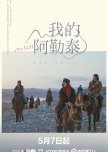
To the Wonder feels less like a drama and more like a season of life that you happen to inhabit for a while. In an era where most stories are propelled by urgency, whether through career ambitions, romantic endgames, or carefully engineered conflicts, this series moves at the pace of wind crossing a grassland. It is interested not in what happens next, but in what it means to pay attention. Nothing dramatic appears to be happening, and yet everything is. Dreams, ambitions, loss, longing, belonging, and difficult choices unfold not through spectacle but through observation. The result is an immersive viewing experience that quietly settles into your emotions and stays there long after the credits roll.Adapted from Li Juan's celebrated prose, the drama follows Li Wen Xiu, a young Han Chinese woman who returns to her hometown in Altay after professional setbacks derail her literary aspirations. On paper, the premise sounds deceptively simple. In practice, it unfolds with the depth and patience of a literary novel. Rather than rushing viewers from one plot point to another, the series invites us into a state of heightened perception. Faces, silences, weather, animals, and landscapes all become part of the storytelling. It asks us to linger, observe, and gradually learn to see the world as Wen Xiu herself begins to see it.
Wen Xiu is one of the most quietly compelling protagonists I have watched. At the beginning, she measures her worth through the unforgiving standards of urban success. She is awkward, insecure, and uncertain of where she belongs. Returning home initially feels like a retreat, but it slowly becomes an opportunity. Through her spirited mother, her growing connection with the Kazakh herder Batay, and her immersion in nomadic life, she transforms from someone desperately trying to write about life into someone learning how to live it. Her journey is not about becoming extraordinary. It is about becoming present.
The drama is also a subtle reflection on creativity itself. Wen Xiu dreams of becoming a writer, but the series never treats writing as a matter of talent alone. Instead, it suggests that writing begins with attention. Before one can tell stories, one must learn how to see. The grasslands become Wen Xiu's greatest teacher, and her artistic growth becomes inseparable from her personal growth. She becomes a writer not by escaping life, but by witnessing it more fully.
Many viewers approach To the Wonder expecting a romance, and certainly the relationship between Wen Xiu and Batay provides some of the drama's most luminous moments. Yet this is far more than a simple love story. The deeper romance is between Wen Xiu and existence itself. One line from the drama stayed with me: "Men seni zhaksy koremin, I see you clearly." The locals believe that love and friendship begin with being seen, and that idea quietly becomes the emotional foundation of the entire series. Batay is not merely a love interest. He is a doorway into another way of being. He moves through life with an ease that seems inseparable from the grasslands themselves. Wen Xiu's attraction to him is intertwined with her fascination with the world he represents. At times, he almost feels allegorical, as though the landscape itself had taken human form.
Some of my favorite moments come from their conversations. When Wen Xiu looks at a horse skull hanging from a tree and remarks that it resembles witchcraft, Batay gently corrects her: "There's no witchcraft, only nostalgia." He explains that horses are companions, and when one dies, its memory remains in places people frequently pass. It is such a simple explanation, yet it reveals an entire philosophy toward grief. Loss is not hidden away. It becomes part of the landscape. In another scene, Batay explains that Saykhan means "splendid" in Mongolian, while in Mandarin it sounds like "rainbow." He then smiles and calls it "a beautiful misunderstanding." That line perfectly captures their relationship. They come from different worlds, yet beauty often emerges through those differences.
Their romance is tender, playful, and refreshingly sincere. The teasing, the small nudges behind her grandmother's back, Batay's nervous hesitation before trying to kiss her, and the vulnerability hidden beneath his confidence make their connection feel achingly real. One moment that particularly stayed with me was when Batay, caught between family expectations and his own desires, quietly asks Wen Xiu, "Will you still like me?" The uncertainty in his voice could disarm even the most committed anti-romantic. Yet what makes To the Wonder remarkable is that it never reduces itself to whether these two people end up together. Instead, it consistently returns to a larger and more profound idea: the freedom of accepting our own smallness.
Contemporary culture constantly insists that we must become exceptional, visible, and unforgettable. To the Wonder proposes something quieter. When Wen Xiu asks her mother, "Although I'm clumsy, I'm still useful, right?" Her mother replies, "What do you mean by useful? Did I give birth to you so you can serve others? Look at the trees and grass on the grassland. They are useful if people eat and use them. But if no one uses them, it's perfectly fine for them to simply exist. They are free, aren't they?" There is something deeply comforting in that philosophy.
While Wen Xiu searches for meaning, her mother already possesses an intimate understanding of life's unpredictability. She knows that plans fail, money disappears, and people disappoint, yet she continues forward with humor, resilience, and grace. In many ways, she embodies the drama's central belief that life does not need to be perfect to be beautiful. Compared to city life, where achievement often becomes a measure of worth, Altay offers a radically different proposition. The mountains do not care about your résumé. Horses do not ask for credentials. The wind grants no awards. Nature's indifference becomes a source of comfort. Freed from the exhausting need to prove herself, Wen Xiu gradually discovers a more durable sense of belonging.
I know the ending has divided viewers, but I find myself among those who appreciate it. My initial reaction mirrored many others. The tonal shift felt abrupt. However, the more I sat with it, the more essential it became. Until that point, viewers can still lean into a somewhat romanticized vision of the grasslands. The landscape is beautiful. The people are resilient. Batay is charismatic. Even hardship arrives wrapped in poetry. Then Snowshoe's death shatters that illusion. Altay ceases to be a pastoral fantasy and becomes something more honest. Nature is beautiful, but it is also indifferent. Love exists, but so do consequences.
Batay's impossible split-second decision is not a choice between love and companionship. It is a choice to do what is right in a terrible circumstance. Snowshoe is not merely a horse. He is a companion, partner, and extension of Batay's life. The drama spends enough time establishing that bond that the tragedy lands with devastating force. What struck me most was not only the loss itself, but the immediacy of Batay's response as he ends Snowshoe's suffering in front of everyone, including Wen Xiu. From that moment onward, nothing can return to what it was before.
The hardest part is that nobody is truly at fault. Wen Xiu never intended harm. Batay never wanted to lose Snowshoe. Snowshoe did nothing wrong. Yet tragedy happens anyway. In a more conventional drama, there would be a villain to blame. To the Wonder is interested in something less comforting but more truthful: sometimes lives change because people are imperfect, distracted, inexperienced, or simply unlucky.
What makes the ending so impactful is the aftermath. Snowshoe's death is not merely an accident. It is a sacrifice. The question is not whether Wen Xiu is guilty, but whether she can live with the knowledge that her actions contributed to a loss she never intended. Whether Batay blames her or not becomes almost irrelevant. Grief settles between them like an unspoken presence. What remains is not resentment, but irreversibility. Some experiences cannot be undone. No apology can bring Snowshoe back. No explanation can restore the innocence that existed before. Their relationship now contains a ghost. Not a ghost of blame, but a ghost of memory. Every glance carries the knowledge of what happened. Every interaction carries the absence of what was lost.
For me, this becomes a catalyst for Wen Xiu's growth. She learns that you can love someone and still hurt them. You can mean well and still cause damage. One small mistake can alter another person's life forever. Snowshoe's death shatters her romantic idealization of the grasslands and transforms her from a visitor into someone emotionally entangled with this place and its people. The cost of loving something is that its suffering eventually becomes part of your own story. That is why the ending feels mature rather than tragic. It understands that some wounds do not heal cleanly. They become part of who we are, like scars. It also understands that the purpose of love is not always permanence.
While some viewers wanted more romance, more happiness, or a cleaner resolution, I think the ending beautifully dismantles the fantasy of closure. After everything that happens, the story focuses on what truly matters: Wen Xiu's ability to appreciate, witness, and be present. Batay is never reduced to a romantic reward waiting at the end of her journey. He remains fully himself, with a life that extends beyond the heroine's narrative. The tragedy is not that Wen Xiu loses him. The tragedy is realizing that some beautiful things cannot be kept without destroying the very qualities that made them beautiful in the first place. This is why I do not consider the ending sad, even though it carries melancholy. Sadness wants reality to be different. Melancholy accepts reality while grieving its beauty. The Portuguese word saudade comes to mind: a longing for something precious that is absent, accompanied by gratitude that it existed at all. The ending exists in that emotional space.
The visuals deserve special praise. The landscapes are breathtaking, but the cinematography never treats them as postcards. The camera understands that beauty is not something to admire from a distance but something to live within. You can almost feel the chill of the morning air, hear livestock moving across the plains, and sense the immense silence stretching beyond the horizon. Even the controversial sequence in the final episode impressed me. The shift in color, atmosphere, and expression creates an emotional weight that lingers long after it ends.
The casting is equally outstanding. Every actor feels completely at home in this world. Yu Shi, in particular, disappears into Batay. His dedication is visible in everything from his command of the local language and dialect to the physical demands of the role. The horseback riding, dancing, singing, and stunts never feel performative. They feel lived in. What I loved most, however, were the tiny details: the awkward laughs, the soft chuckles, the thoughtful hums. Those small moments make Batay feel like a real person rather than a character. The local actors are equally memorable, bringing a lived-in realism that grounds the entire drama.
In the end, To the Wonder is a poetic, introspective, and deeply immersive experience. It shifts one's perspective from the relentless pursuit of achievement toward gratitude for life, presence, and even smallness. It encourages us to see clearly, to pay attention, and to appreciate what is right in front of us. I came for the romance and the beautiful scenery, but I left with something much harder to articulate. After watching it, the world feels a little larger, a little quieter, and infinitely more worth noticing.
Was this review helpful to you?
Autopsy Ever After
If season one was about sparks flying in the courtroom and the autopsy room, season two is about what happens after the “I do.” The Imperial Coroner Season 2 follows the married life of the ever composed Prince An, Xiao Jin Yu, and the brilliant imperial coroner Chu Chu. Now juggling careers, marriage, and rising responsibilities, they team up once again with the young talents of the Three Judicial Offices to crack mysterious cases and maintain peace in the Tang Dynasty.Right from episode one, the drama makes it easy to slip back into its world. The recap is short, clear, and genuinely helpful, even giving a quick refresh on the characters without dragging. Still, not everyone makes a strong re entrance. Xiao Jin Yu, Jing Yi, and Leng Yue feel a little muted at first, while Chu Chu ends up standing out the most. She feels noticeably more mature this season, from her calmer demeanor to her more refined tone of speech. It is a subtle shift, but it works. That said, I cannot lie, I do miss her iconic bangs.
As the story settles, the dynamics start to shine again. Leng Yue wastes no time reminding us why she is that girl. Her fight scenes flow so smoothly they almost feel effortless. Now married to Jing Yi, their relationship is equal parts adorable and hilarious. She leads with quiet authority while he happily clings along, and somehow it just works. In fact, this season flips expectations in a fun way. The women are strong, decisive, and career driven, while the men take on a more supportive, occasionally clingy role.
The show also keeps many of its signature elements, which is a huge plus. The reenactment role play scenes are back, still dramatic and slightly theatrical in the best way. The autopsy graphics remain clear and engaging, making each case easy to follow. Even the POV narration at the start of episodes returns, adding a familiar storytelling rhythm. Solving cases with this team feels a bit like playing a mystery simulation game, where every clue is laid out just a little too perfectly. Sometimes a bit too perfectly, like that oddly flawless footprint early on.
Romance, however, takes a different route this time. Since the couples are already married, the tension that made season one so exciting is mostly gone. At first, it feels a little flat. Sweet, but predictable. Yet as the episodes go on, the charm slowly creeps back in through smaller, quieter moments. A simple act like Jin Yu washing Chu Chu’s feet, then gently washing hers right after, becomes unexpectedly endearing. By the time we get to his drunken hug, it is hard not to smile. It may not give butterflies, but it gives warmth.
What truly strengthens their relationship is the trust they have in each other. Even when rumors try to stir trouble, neither of them wavers. The real conflict comes not from jealousy, but from their roles and responsibilities. When Jin Yu removes Chu Chu from a dangerous case, it initially feels frustrating and even unprofessional. Their reactions seem off, and the tension lingers awkwardly. But once Chu Chu’s perspective becomes clear, everything clicks into place. She is not upset about the danger itself, but about being treated as someone to protect rather than someone capable. That shift adds depth to their relationship and makes their reconciliation all the more satisfying.
Among the male characters, Jing Yi quietly steals the spotlight. There is something about his mix of competence, loyalty, and slightly clingy husband energy that makes him incredibly appealing. Yang Ting Dong brings a charm to the role that feels both playful and dependable. Xiao Jin Yu, portrayed by Wang Zi Qi, remains solid and composed, but the writing does not give him as many standout moments this time. It feels less like an acting issue and more like a missed opportunity in the script.
Then comes You Chen An, a character who adds intrigue the moment he appears. His presence brings a layer of unpredictability that keeps things interesting. You are constantly wondering where he stands. Zhang Chen Xiao does well in key moments, especially when leaning into the character’s darker side, though his performance still feels like it is finding its footing. The character itself has a tragic and compelling background, but the buildup is not quite strong enough to fully support his role as the main antagonist.
The emotional beats of the story are a mix of impactful and rushed. Wu Jiang’s death feels both heartbreaking and unnecessary, while Chu He’s journey takes a surprising turn. He starts off frustrating, almost like a walking headache, but ultimately redeems himself in a deeply tragic way. His sacrifice hits hard, especially knowing it was driven by love and loyalty. The connection between him and You Chen An also carries a certain warmth that could have been explored more. There are also moments of unexpected humor that keep things light. One scene in particular, where Jing Yi is left hanging upside down while everyone else calmly investigates, feels so absurd that it becomes genuinely funny. It is these small, chaotic touches that give the drama its personality.
That said, the flaws become more noticeable as the story progresses. Some emotional scenes lack impact, particularly from Su Xiao Tong, who excels in portraying Chu Chu’s intelligence but feels more restrained in heavier moments. Certain arcs, like the surgery storyline or Xiao Jin Li and Luo Yan’s relationship, carry strong ideas but feel rushed in execution. The biggest issue lies in the overall structure. This season does not quite feel like a full sequel. The central conflict lacks weight, and when the main villain’s plan finally unfolds, the payoff feels underwhelming. The resolution comes too easily, almost as if the tension built up over many episodes dissolves in an instant. Even the ending for the main characters feels surprisingly basic, especially after everything they have been through.
And yet, despite all these shortcomings, the drama remains an enjoyable watch. It may not fully pull you into its world, but it keeps you entertained enough to stay. It is the kind of show you turn on when you want something light, familiar, and just engaging enough without demanding too much attention. In the end, The Imperial Coroner Season 2 feels less like a grand continuation and more like an extended chapter. Not as impactful as the first, but still charming in its own way.
Was this review helpful to you?
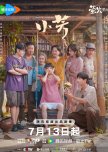
Monkey Carrying a Speaker
Xiao Fang is one of those dramas that quietly sneaks up on you. It welcomes you with bright colours, lush greenery, cozy homes dressed in warm earthy browns, and a peaceful rural atmosphere that feels like a comforting cup of tea. Then, it throws you straight into one of the most frustratingly realistic portrayals of family, gossip, and societal expectations.As Yang Xiao Fang and Qi Xiao Wei return to their rural hometown for the Spring Festival, the radio announces that a monkey carrying a loudspeaker is running loose around the village. It sounds ridiculous at first, almost comedic, but as the story unfolds, it becomes one of the drama's most brilliant recurring motifs. Xiao Fang arrives home pregnant, her engagement hanging by a thread, and before she can even settle in, rumours spread through the village faster than that monkey carrying a speaker. Every neighbour suddenly becomes a judge, every conversation becomes public property, and everyone seems convinced they know what is best for her.
That is where the drama immediately won me over. It never romanticizes rural life. Instead, it presents a community that is warm yet suffocating, loving yet intrusive. The gossip feels painfully authentic because it reflects how quickly a person's private life can become public entertainment. Watching Xiao Fang remain calm through all of it was almost unbelievable. Either way, her quiet composure became one of the most admirable parts of her character.
Then there is Xiao Wei. He is Xiao Fang's childhood friend, the father of her baby, and someone who genuinely wants to protect her. Unfortunately, every ounce of sympathy I had for him disappeared almost immediately. Unlike Xiao Fang, who chooses to face problems head on, Xiao Wei allows every piece of gossip to crawl under his skin. It certainly does not help that he comes from an exhausting family. His father is incredibly stingy, manipulative, controlling, patriarchal, and somehow always manages to make every situation worse. His mother is equally realistic in a different way. She pushes back just enough to show she has opinions of her own, but inevitably folds under her husband's authority. Their family dynamic is frustrating precisely because it feels so believable.
The moment that completely destroyed Xiao Wei's image for me was when both families were arguing and he blurted out, "Xiao Fang was the one who liked me first!" It sounded exactly like something a child would say after getting caught. Rather than taking responsibility, he shifted the attention onto Xiao Fang. It gets worse.
The painting incident was the point of no return for me. Rumors spread that Xiao Wei had painted a nude portrait of Xiao Fang, creating another public scandal. When everyone gathered to uncover the truth, Xiao Wei stumbled through lie after lie before finally admitting he had copied an existing famous painting. But what truly made my blood boil was his excuse. Out of embarrassment, he snapped that if Xiao Fang had not been kissing him that day, he would have finished painting instead. That sentence genuinely shocked me. Once again, he shifted responsibility onto Xiao Fang for something they had both participated in. The logic behind his excuse felt disturbingly similar to victim blaming, and from that point onward, I simply could not see him as a suitable partner or father, regardless of how much character development the drama tried to give him later.
Ironically, that is also why Xin Yun Lai deserves a lot of praise. He plays pathetic men incredibly well. I hated Xiao Wei so much because Xin Yun Lai portrayed every ounce of insecurity, immaturity, and cowardice with remarkable conviction. I had a similar impression of him in In Between, where he also excelled at playing a loser who constantly fumbles through life. Interestingly, I feel he struggles much more with cold, charismatic roles like the one he played in The Glory, where his expressions often felt too restrained. If anything, this drama proves he has found a niche that suits him perfectly, although I would still love to see him challenge himself with more expressive characters outside of that comfort zone.
One storyline I found surprisingly fascinating revolved around the bride's price, or cai li. Watching the Yangs and the Qis negotiate over it causes more misunderstandings as it revolves around money, pride, tradition, family honour, and ego. As the misunderstandings, lies, and arguments pile up, the gap between them becomes impossible to ignore. Xiao Fang handles every challenge with remarkable maturity. She refuses to view her pregnancy as a weakness, stays confident in her own decisions, and carefully considers how every choice affects not only herself but also her child and both families. Xiao Wei, meanwhile, remains trapped inside his own insecurities. Even when trying to solve problems, his solutions usually create even bigger ones because they revolve around protecting his own pride rather than understanding Xiao Fang's perspective.
Their biggest argument became one of the most memorable scenes in the entire drama. When Xiao Fang questioned his decisions, Xiao Wei exploded, telling her to stop making him feel like a fool and to change her attitude. Her quiet response, "But you said you never wanted me to change," broke me. That conversation became Xiao Fang's wake up call. The following day, she publicly announced through the village loudspeaker that she no longer loved Xiao Wei and was calling off the marriage. That was the exact moment I fell in love with her character.
She knows what she wants, draws clear boundaries, and refuses to sacrifice her own happiness simply because society expects her to. She is calm without being passive, kind without being naïve, confident without being arrogant, and mature without losing her youthful energy. Wang Ying Lu captures every side of Xiao Fang beautifully. She effortlessly balances her tomboyish charm with the softer changes that come with pregnancy and motherhood. Her naturally deep voice also gives the character an unexpected sense of charisma that makes Xiao Fang feel incredibly memorable. Every performance I have seen from Wang Ying Lu has impressed me.
After the breakup, the story shifts its attention away from romance and focuses instead on family. Rather than chasing an unnecessary reconciliation, the narrative explores how both families adapt to Xiao Fang's decision, and this is where the drama truly shines. The Yang family quickly became my favorite part of the entire series. They perfectly capture the beautiful contradictions of many Asian families. They argue constantly, interfere with each other's lives, make decisions that nobody asked for, and somehow still become each other's strongest source of support when it matters most. One minute they are shouting at one another, and the next they are standing shoulder to shoulder against anyone threatening one of their own. Every member leaves an impression, especially her dad, her first aunt, her cousin Dan Dan, and her grandma.
Yang Fan Hu may not have been the perfect husband, but he strives every single day to become the father Xiao Fang deserves. He supports his daughter without controlling her choices. Rather than telling her what to do, he simply reminds her that he will always be there if she falls. Yang Fan Yan, the eldest aunt, was the character I related to the most. Beneath her strong personality lies years of pressure, resentment, and exhaustion from always feeling responsible for everyone else while believing she had to work harder than her siblings for everything she achieved. As a fellow eldest daughter, her struggles hit especially close to home.
Dan Dan completely steals every scene he appears in. The contrast between this thoughtful, emotionally intelligent child and the unbelievably immature Xiao Wei is hilarious in the best possible way. Then there is Grandma Qu Man Xia, played wonderfully by Wu Yan Shu. She is simply iconic. Every time she puts on those black sunglasses, she instantly becomes the coolest grandmother in the village. Despite belonging to an older generation, her outlook is refreshingly progressive. She encourages Xiao Fang to value herself first and constantly reminds her daughters not to let men dictate their lives. Xiao Fang’s second aunt, Yang Fan Mei, and uncle, Yang Fan Zhu, also left a strong impression.
Even after Xiao Fang gives birth, I appreciated that the story refuses to reduce her entire identity to motherhood. One of my favourite details is how she dislikes being referred to only as "Bi Te's mother" because she still wants people to call her Xiao Fang. That small detail speaks volumes. Becoming a parent should not erase who you are as a person.
I also appreciated that the drama does not trap Xiao Fang within motherhood after giving birth. Instead of spending every waking moment caring for Bi Te, she continues pursuing her ambitions, builds her business, and allows herself to remain her own person. Fortunately for her, that works because she has both families and Xiao Wei sharing the responsibility of raising the child. I really liked that perspective. Parenting is often portrayed as one person sacrificing everything, but Xiao Fang suggests something healthier. When parents continue loving themselves, pursuing their dreams, and growing as individuals, they are also able to love their children without resentment or regret.
Visually, Xiao Fang is a beautiful drama. The natural colour grading, bright lighting, lush greenery, and warm wooden interiors create an atmosphere that feels incredibly comforting. Every frame captures the charm of rural life without making it feel overly idealized. The soundtrack deserves praise as well. The songs and background music fit the countryside setting perfectly and always seem to arrive at the right emotional moments without overpowering the scenes.
The ending tied up its loose ends in a satisfying way. Xiao Fang's business is thriving, she has established a stable life for herself and Bi Te, and Xiao Wei decides to leave town to pursue his own dreams. As someone who spent almost the entire drama hating him, I honestly felt relieved that he was leaving. More importantly, it was the right decision for both of them. They needed space to grow into better versions of themselves.
Objectively speaking, their farewell was beautiful. I appreciated how carefully the drama handled co-parenting. Rather than forcing a romantic reunion, the drama allows them to become supportive co-parents and genuine friends. It acknowledges that some people make better partners as parents than as lovers. Xiao Wei stood behind Xiao Fang when she chased her dreams, and now Xiao Fang stands behind him as he leaves to chase his. One of my favorite moments is when Xiao Fang and little Bi Te see him off from afar and recreate one of their old inside jokes together. It is such a small detail, but it reflects how carefully the writers remembered the little moments that shaped their relationship. Those callbacks made the ending feel all the more rewarding.
I also appreciated how naturally the drama redeemed Qi De Yao. His growth never felt forced because it came from experiences that genuinely challenged his perspective. The narrative gave him understandable reasons to change, making his transformation feel earned. As he changed, the atmosphere within the Qi family became noticeably brighter. Seeing the two fathers slowly move from lifelong rivals to friendly fellow grandfathers was another touching payoff that felt completely believable.
The drama closes by returning to the monkey carrying the speaker that was introduced in the very first episode. As Xiao Fang's business bus travels down the road, it comes across a loudspeaker abandoned in the middle of the street. Looking at it with a smile, she simply says that the monkey is now free. To me, the monkey carrying the speaker symbolizes a person weighed down by constant noise. Not literal noise, but the endless chatter of gossip, judgement, expectations, and the desire for validation. Once the monkey lets go of the speaker, it no longer carries everyone else's voices. It no longer feels the need to broadcast itself or live according to society's expectations. It is finally free.
That perfectly mirrors Xiao Fang's journey. Throughout the story, she is constantly surrounded by people telling her what she should do, who she should marry, how she should raise her child, and what kind of woman she should become. By the end, she has learned to let go of all that noise. She chooses herself without becoming selfish. She embraces motherhood without allowing it to define her entire identity. She loves the people around her while still protecting her own peace. In many ways, the drama quietly suggests that freedom begins the moment we stop carrying everyone else's expectations.
Overall, Xiao Fang is a beautiful yet frustratingly realistic slice of life drama set in rural China. It is warm without being naïve, emotional without becoming melodramatic, and honest about the complicated relationships between family, tradition, love, and independence. The writing made me feel genuinely connected to its characters, whether I was cheering for them, crying with them, or wanting to scream at Xiao Wei through my screen. By the time the credits rolled, I realized that this was never just a story about an unexpected pregnancy. It was a story about learning to live for yourself, even when the whole world keeps trying to speak over you.
Was this review helpful to you?
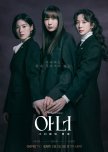
This review may contain spoilers
Objection, Your Honour… Justice Is Complicated
Friendship, secrets, and justice walk into a law firm. What could possibly go wrong?Honours follows three women who have been friends for roughly twenty years. Yun Ra Yeong, Kang Sin Jae, and Hwang Hyeon Jin first met as university students in their twenties. Two decades later, life has brought them to the same destination: L&J Law Firm, a place that specializes in defending female victims of crime.
Among the trio, Yun Ra Yeong is the star. She is a well known television personality, a celebrity lawyer with hundreds of thousands of followers who can charm an audience as easily as she dismantles an argument. Kang Sin Jae is the commanding force of the group, a lioness in a suit whose negotiation skills and intimidating charisma make people fold like cheap umbrellas in a monsoon. Hwang Hyeon Jin is elegance wrapped around fire, a lawyer who prefers action over paperwork and never hesitates to challenge anything that goes against her principles.
From the outside, they look like an unstoppable trio of brilliant lawyers and loyal friends. But beneath the polished surface lies a secret they have carried for twenty years. When a new case begins to unravel a large prostitution ring, the shadow of their past resurfaces. Old wounds reopen, buried truths claw their way out, and the three women must decide whether their friendship is strong enough to survive what comes next.
Right from episode one, the drama hooks you like a good legal thriller should. The story opens with a disturbing rape case involving a minor, Jo Yu Jeong, and an actor named Kang Eun Seok. At first it feels like a standalone case, but the breadcrumbs quickly lead to something much bigger. A prostitution ring operating through an app called Connect In begins to surface, and suddenly the scale of the story expands from one crime to a whole system of exploitation. Naturally, my inner detective woke up and immediately started wondering who the mastermind was. My money was already on corrupt officials because the way the law gets maneuvered in this show screams power and privilege.
One of the drama’s biggest strengths is the chemistry between the three leads. Their friendship feels lived in. They share the same office, the same lounge, and an easy comfort that only comes from years of knowing someone’s worst habits. Watching them banter made me think, wow, I wish I had a best friend group like that. At the same time, it becomes clear early on that their passion for defending sexual violence victims might come from personal scars. Something happened in the past, and the drama keeps teasing that mystery like a dangling carrot.
Then there is Hwang Hyeon Jin and her complicated personal life. The revelation that she cheated on her husband, Koo Seon Gyu, with her ex Lee Jun Hyuk was honestly disappointing. I kept hoping maybe it was just a kiss, but nope. That whole storyline made me feel bad for the husband, who is basically walking around with a giant green flag above his head. Meanwhile Hyeon Jin spends a good chunk of the early episodes spiraling in panic as her detective husband investigates her ex’s murder case. Out of the three friends, she definitely came across as the most frustrating character at the beginning. Her emotional reactions sometimes made her feel less like a composed lawyer and more like someone who misplaced their common sense.
Still, one thing I genuinely loved was how open the three friends are with each other. Their transparency feels rare. In many dramas, even close friends hide information with the classic “I’ll tell you later” trope. Here, they lay things out on the table, even when it hurts. That level of honesty made their bond feel stronger and more believable.
As the episodes roll on, the Connect In case becomes darker and deeper. Victims like Han Min Seo and Jo Yu Jeong reveal just how cruel the system is. One scene that stuck with me was when Han Min Seo arrives at a client’s house and casually asks whether they want to do “it” one by one or all together. The way she delivers that line shows just how emotionally numb she has become. It is chilling. The drama does a good job portraying how exploitation can hollow someone out from the inside.
The mystery around the past also slowly unfolds. Eventually we learn that the man now known as Park Jae Yeol is actually tied to a traumatic incident from the women’s university days. He attempted to assault Yun Ra Yeong, and during the struggle Hwang Hyeon Jin struck him in the head, leaving him with lasting damage. Instead of reporting it, the women hid the incident. That decision comes back to haunt them twenty years later when Park Jae Yeol resurfaces as both a judge and the mastermind behind Connect In. Talk about karma doing a dramatic U turn.
There are many twists along the way. Some work brilliantly. Others make you raise an eyebrow. The revelation that Han Min Seo is actually Yun Ra Yeong’s daughter was predictable but still gasp worthy. It adds a tragic layer to their relationship because Min Seo spent her life suffering in the very system her father built, while blaming the mother who gave her up. If Shakespeare wrote legal thrillers, this would probably be one of his plotlines.
Another fascinating character is Baek Tae Ju. At first he appears to be a mysterious ally, then slowly reveals himself as the creator of the Connect In app. His motivation stems from revenge connected to an old case involving Seo Ji Yoon. In theory he is a morally grey character who believes justice requires blood. In practice, the drama pushes him into full psycho mode near the end, and the shift feels a bit abrupt. The camera work and his sudden intensity made those scenes feel slightly out of sync with the earlier tone of the show.
The story also has a few logic gaps that made me scratch my head. The three lawyers spend more time investigating crimes themselves than actually practicing law. Court scenes are surprisingly rare for a legal drama. At one point they even leave a crucial witness alone in their supposedly sacred evidence room, which naturally leads to missing evidence. Watching that unfold felt like yelling at a horror movie character not to open the creepy basement door.
Despite these issues, the show keeps you entertained with constant twists. Episode after episode delivers revelations about corrupt VIP clients, buried cases from the past, and the uncomfortable reality that powerful people rarely face consequences.
The casting deserves praise. Lee Na Young, Jung Eun Chae, and Lee Chung Ah bring distinct personalities to their characters, making the trio feel balanced and believable. Newcomer Jeon So Young also delivers a convincing performance as Han Min Seo. As for Yeon Woo Jin, he shines in the early episodes with his mysterious charm, but once his character goes full villain the performance becomes a bit too exaggerated for my taste.
The ending is perhaps the most realistic yet frustrating part of the drama. Justice is messy. Some villains escape punishment thanks to power and corruption. The protagonists continue fighting rather than celebrating victory. Yun Ra Yeong and Han Min Seo are still awkward with each other, Kang Sin Jae is struggling to rebuild her family’s law firm, and Hwang Hyeon Jin is simply trying to hold her marriage together. It is not the triumphant finale people might expect, but it mirrors reality in a way that feels honest.
In the end, Honours is an entertaining ride filled with suspense, emotional trauma, and plenty of twists that keep you glued to the screen. The early and middle episodes are gripping, even addictive. The final stretch loses some momentum with convenient evidence and a slightly messy focus shift, but the overall experience remains engaging.
It is not a perfect drama, but it definitely keeps you on the edge of your seat. And sometimes that is exactly what you want from a late night binge session.
Was this review helpful to you?
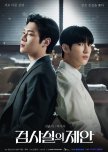
Where Chemistry Wins the Case
Going into The Prosecutor's Proposal, I honestly had one goal. I wanted to see the romance. This is also my very first BL, so I'm reviewing it purely on its own merits rather than comparing it with other series in the genre. Everything I say here comes purely from my experience watching this drama as it is. Safe to say, it was a surprisingly enjoyable introduction to the genre.The story begins fifteen years after the murder of a powerful casino mogul, a tragedy that forever changed the lives of two boys. Fate reunites them as adults, one becoming Prosecutor Ju Tae Seon while the other, Lee Chae Ha, works as a Senior Assistant in the Fine Collection Division before eventually becoming Tae Seon's investigator. Together, they find themselves digging into a conspiracy that stretches far beyond a single murder, reaching into a powerful corporation and even the prosecution itself. At its heart, however, this is less about solving a mystery and more about two people carrying opposite burdens. Chae Ha lives with guilt while Tae Seon carries resentment. Justice, revenge, and forgiveness constantly pull them in different directions, making them each other's greatest weakness and, at the same time, their only source of hope.
The first episode does a really good job establishing Chae Ha's character. He comes across as quiet, gentle, and almost painfully meek. At the same time, those qualities makes me question his past as an ex-police officer. Anyway, his gloomy home life, his dependence on sleeping medication, and the nightmares about his father immediately hint that there is a much deeper wound beneath his calm exterior. Then comes his first encounter with Tae Seon during lunch. Even with just a few exchanged words, there is already tension between them. Their first crime scene together only amplifies that feeling as Tae Seon constantly challenges Chae Ha while Chae Ha quietly tries to do his job. It becomes even more interesting when Chae Ha sincerely admits that he respects Tae Seon as a thorough prosecutor, only to be unexpectedly assigned to work under him the following day. From there, their dynamic becomes the driving force of the entire drama.
I was already excited to see a “your dad murdered my dad” trope. Without question, the chemistry between Chae Ha and Tae Seon is this drama's greatest strength. Chae Ha is soft spoken, patient, and often lets himself be led by others. Considering the guilt and doubt he has carried from the past, it makes sense that he naturally keeps a low profile. Tae Seon, meanwhile, is commanding and often controlling. His lingering anger from the past gives every interaction between them an extra layer of intensity. Watching them together somehow awakened my teenage fangirl self all over again. Their dynamic, with Tae Seon often taking the lead while Chae Ha quietly holds his ground, the constant tension, and the longing hidden beneath every confrontation all worked surprisingly well for me. Every romantic scene had enough electricity to make me smile without even realising it.
Kim Yoon Shik deserves special praise for his portrayal of Ju Tae Seon. His performance shines the brightest during the romantic moments. His eyes and even the smallest movements of his lips communicate emotion without needing lengthy dialogue. He also fits the cool and aloof image of Tae Seon naturally. There were a few emotionally expressive scenes outside the romance that felt a little awkward, but whenever the story leaned into quiet yearning or restrained affection, he absolutely delivered.
I also appreciated that the drama actually tried to tell an engaging crime and mystery story instead of using it as mere background decoration. Going in, I honestly had very few expectations for the plot because I was mainly interested in the romance. Still, I found myself invested in uncovering the conspiracy. It is not the kind of mystery that constantly leaves you scratching your head, and most of the major reveals are fairly easy to predict. I had already guessed who the mysterious figure and the main villain were long before the reveal. Even so, it remained entertaining enough because the emotional stakes between the two leads carried the narrative.
Unfortunately, the production has a few noticeable flaws. Scene transitions occasionally feel awkward. The overall story remains understandable, but the editing makes these jumps difficult to ignore. There are also a few logic gaps and plot holes scattered throughout the series, though none of them were significant enough to ruin my enjoyment.
Visually, the drama sits comfortably in the middle. Nothing particularly stood out as spectacular, but nothing looked bad either. I actually liked the cool, gloomy colour grading because it matched the emotional weight of the story. On the other hand, the AI generated scenes were distracting and felt unnecessary. The final scene also switches to an extremely bright sunset palette that almost feels like the drama is making a statement. I understand the intention, but the heavy saturation clashes with the otherwise subdued visual style. A low contrast bright ending could have worked just as well to maintain the atmosphere established throughout the series.
The soundtrack, however, was genuinely nice. The OSTs create the perfect emotional backdrop and elevate many scenes. They are the kind of songs I would happily listen to even without revisiting the drama, which is always a good sign.
The ending itself feels a little rushed. Once the story reaches its climax, events unfold at an unexpectedly fast pace, especially regarding how quickly the villain is dealt with. The climax is also more subdued than exciting, making it feel slightly anticlimactic. Strangely enough, I was not disappointed because my expectations were never centred on the mystery. I came for the relationship between Chae Ha and Tae Seon, and that aspect remained satisfying until the end. Despite the rushed pacing, the story still manages to wrap things up in a reasonably satisfying way.
Overall, The Prosecutor's Proposal was a wonderful start to the genre. It certainly has its share of logic gaps, plot holes, inconsistent scene transitions, and questionable use of AI, but none of those outweighed what the drama did best. The chemistry between the leads is undeniably its strongest asset, and I appreciate that the writers still put genuine effort into crafting a mystery that complements rather than overshadows their relationship. Like a courtroom where the evidence may not be flawless but the final verdict still feels right, The Prosecutor's Proposal won me over where it mattered most.
Was this review helpful to you?

Like Sitting Beneath a Tree on a Sunny Afternoon
Meet Yourself begins with grief, but it never uses grief to manipulate the audience. Xu Hong Dou loses her best friend, resigns from the hospitality job she dedicated a decade of her life to, and travels to Yun Miao Village near Dali, a destination they had once planned to visit together. Some viewers may find the first episode difficult because of how heavy it feels. Interestingly, the drama never relies on lengthy flashbacks or exaggerated tragedy to make us mourn. Instead, it quietly reminds us that life should not be postponed until "someday." As someone who also feels trapped in the endless cycle of work, that message struck home. There is nothing wrong with chasing success, but it also asks a simple question. What is the point of working so hard if we never allow ourselves to enjoy the life we are building before it is too late?What follows feels like going on a long vacation yourself. Imagine sitting beneath the shade of a tree with someone who enjoys silence just as much as you do. Nobody feels pressured to fill the quiet. Somehow, simply sharing the same space becomes comforting enough. That is exactly how Meet Yourself made me feel. I deliberately watched it slowly because every episode felt like something to savor instead of binge. It made me smile, occasionally brought me to tears, yet never resorted to dramatic emotional whiplash. The pacing is calm and steady, the conflicts feel grounded, and every character is given room to breathe. Rather than chasing huge plot twists, the drama finds beauty in ordinary days, reminding us that even simple stories can carry remarkable depth.
One detail I especially loved was Hong Dou's decision to document everything she experienced in Yun Miao Village. Every place she visited, every meal she ate, every memory she made became something she was living for both herself and the friend who never got the chance. It was heartbreaking, yet incredibly inspiring. There was something liberating about watching someone set aside the noise of the world and spend three months simply experiencing life. Then reality kicked in and I remembered Hong Dou had ten years of savings while I am... broke.
The village itself quickly became one of my favorite characters. What starts as a guesthouse filled with strangers slowly transforms into a community where everyone knows and cares for one another. The friendships Hong Dou builds with Damai, Na Na, the locals, and the other guests became just as important as the romance.
Damai was the character I resonated with the most. We are both writers, introverts, and socially awkward people. Watching her spend an entire day socializing only to immediately bury herself under the blanket afterward felt painfully relatable. Work has forced me to become a functioning introvert, but my social battery still sends me invoices after every gathering. One line from Damai stayed with me long after I finished the drama: "We're often trapped in all kinds of judgments from others. But actually we need to understand this. When the flood rushes toward you, you feeling overwhelmed is not your fault."
That quote comforted me because it never tries to invalidate fear with empty optimism. It simply acknowledges that being overwhelmed is a natural response when life crashes into you like a flood. Eventually, the water recedes, or perhaps we simply learn how to swim. Either way, the script chooses compassion over forced positivity, and that felt refreshingly honest.
Na Na's story also resonated with me in a very personal way. Like her, I create content for a living. It is surprisingly easy to become the target of strangers hiding behind screens. Even reading hostile comments can leave you anxious, so I could only imagine the nightmare of having your personal information exposed, strangers calling your phone, and people showing up at your doorstep. The drama captured that fear remarkably well. What moved me most was not simply her trauma, but the unwavering trust her friends showed once they learned the truth. They stood beside her without hesitation. Having people who choose to believe you instead of the rumors is a rare blessing. Watching Na Na slowly reclaim her courage and step back into the world became one of the drama's most rewarding journeys.
Then there is Xie Zhi Yao, arguably the busiest man in Yun Miao Village. After leaving behind a successful corporate career, he returns home determined to revitalize his hometown through sustainable tourism. Whether it is investing in the guesthouse, building a horse ranch, opening businesses, or helping every villager solve their problems, everyone seems to have "Call A'Yao" permanently saved in their mental speed dial. Despite carrying so much responsibility, he never loses his warmth or humility.
His relationship with Hong Dou is easily one of the most natural romances I have seen. It is the definition of a slow burn, not because the writers artificially delayed it, but because two emotionally mature adults naturally took their time. Everyone leaned on Zhi Yao whenever they needed help, yet Hong Dou became the person he leaned on in return. He trusted her with his worries, while she found someone who quietly listened to her grief without trying to erase it. They supported one another not by solving every problem, but by simply being present. Their chemistry never relied on grand romantic gestures. Instead, it grew through conversations, shared meals, comfortable silences, and countless little moments.
Their biggest obstacle was also wonderfully realistic. Hong Dou would eventually return to Beijing while Zhi Yao could not abandon the village he had devoted everything to. When his friends suggested convincing her to stay, his response completely won me over: "Since it's impossible for me to go with her, what right do I have to ask her to stay for me? Why do men take it for granted that women should make more sacrifices and compromises for love, while men only need to offer a verbal promise: I'll treat you well forever."
That single line speaks volumes about his character. Love, to him, is not asking someone else to sacrifice what you cannot. Instead, he chooses to find ways to bridge the distance himself, even joking that he could use his grandmother's savings for his future marriage to frequently visit Hong Dou. Green flag? More like an entire bamboo forest.
His confession later became one of my favorite confessions in any drama. It was not dramatic or desperate. It simply laid his heart bare, expressing gratitude for meeting her while wishing her happiness regardless of the outcome. There was no pressure, no expectation, and no emotional bargaining. Just sincere love spoken against the backdrop of the sea, the breeze, and the evening sunset. I cried because it felt so genuine. Zhi Yao's understanding of love is beautiful. Loving someone does not always mean possessing them. Sometimes it means cheering for them as they walk toward the life they truly want. Hong Dou's simple "thank you" in response somehow made the moment even more perfect.
Of course, no discussion about this drama would be complete without mentioning the real MVP, Granny Xie. Wu Yan Shu absolutely steals every scene she appears in. She is wise, endlessly supportive, hilariously mischievous, and surprisingly ready to grab whatever object is nearby to discipline her grandsons when necessary. Seeing her rush over with a toy sword to defend Hong Dou was both hilarious and oddly heroic. She became everyone's emotional anchor while simultaneously serving as the couple's biggest wingwoman. Gangster granny deserves her own fan club.
The performances across the board were excellent. Liu Yi Fei perfectly captured Hong Dou's quiet resilience. There is something incredibly soothing about her gentle voice that made every conversation feel comforting. Li Xian effortlessly embodied the dependable village heartthrob without making the character feel idealized or larger than life. He remained charming because he always felt human. Ma Meng Wei and Hu Bing Qing were wonderful as Damai and Na Na, while Dong Qing and Tu Song Yan also delivered memorable performances. Even the four neighborhood children completely stole my heart whenever they appeared.
Visually, the drama understands that sometimes less is more. The cinematography itself is fairly straightforward, but Yun Miao Village hardly needs embellishment. The scenery speaks for itself. Every frame invites you to slow down and breathe. The soundtrack deserves equal praise because every song perfectly complements the atmosphere. I even found myself searching for the OST after finishing the drama. The calm acoustic tracks made peaceful moments even warmer, while the playful romantic songs added so much charm to Hong Dou and Zhi Yao's flirtatious scenes.
I also appreciated the ending. It was predictable, but in the best possible way. Rather than showing everyone magically reaching their final destination, the drama simply lets us see the direction each character chooses to walk toward. Hong Dou decides to build a new life in the village after careful consideration, both families finally meet, everyone gathers together, and the story quietly closes with warmth instead of spectacle. It felt less like saying goodbye and more like waving at old friends, knowing they would continue living happily after the credits rolled.
After taking my time and savoring every cozy moment, saying goodbye to Meet Yourself felt bittersweet. It was like finishing a peaceful holiday and reluctantly packing your bags to return home. This drama reminded me that healing rarely arrives with fireworks. More often, it comes through ordinary conversations, shared meals, meaningful friendships, and learning to slow down long enough to truly live. It comforted me, reassured me that I am not alone in my struggles, and gently reminded me that sometimes the life we are searching for only reveals itself after we stop running. If you are looking for a relaxing, heartwarming slice of life that feels like sitting beneath a tree with someone who understands the beauty of silence, Meet Yourself is an easy recommendation.
Was this review helpful to you?


