


 23
23 43
43 8
8 1
1 1
1 1
1 1
1 1
1 1
1 6
6 2
2 3
3 1
1 1
1 1
1 1
1 3
3 1
1 3
3



This review may contain spoilers
Healing Is Loud in a Silent House
Set in 2007, Reborn follows sixteen year old Qiao Qingyu and her family as they flee their small county town of Shunyun and resettle in the provincial capital, Huanzhou, after cruel rumors surrounding the death of her older sister, Qiao Beiyu. Determined to reclaim some sense of normalcy, Qiao Qingyu, with the support of her classmate Ming Sheng, uncovers what truly happened to Qiao Beiyu. As fragments of the truth slowly surface, Qiao Qingyu is forced to confront the injustice her sister suffered and finds herself walking a painful path toward truth, reckoning, and justice.Reborn opens quietly, almost deceptively so. The Qiao family’s move from Shunyun to Huanzhou is framed not as a fresh start full of excitement, but as a fragile hope stitched together by exhaustion and grief. Their faces are tight, the music subdued, and right away the drama makes its promise clear. This is not a story about forgetting the past. It is about carrying it, surviving it, and maybe, if luck allows, healing from it. Loss hangs in the air, societal pressure presses down from all sides, and yet there is still a soft glow of hope flickering beneath the sadness.
From early on, it is not hard to guess that Qiao Beiyu’s story is darker than the rumors suggest. The “pretty sister who took her own life” narrative feels too convenient, too cruelly simplified. The details remain hidden, but the unease is enough to keep you glued. As the Qiao family settles into Huanzhou, each member grieves differently. They try to perform normalcy, but it is painfully obvious that none of them have truly moved on. Qiao Qingyu, especially, lives permanently in her sister’s shadow. Even in death, Qiao Beiyu’s name follows her everywhere. As a teenager burdened by rumors about her sister suffering from AIDS and moral corruption, Qiao Qingyu becomes an outcast without ever doing anything wrong. Her blank stares and quiet stillness speak volumes. She feels numb, like someone who has already endured too much and no longer knows how to react.
School becomes both a relief and another source of anxiety. I genuinely held my breath when Qiao Qingyu first stepped into her new classroom, bracing myself for bullying or worse. Thankfully, her first day goes relatively smoothly, accidental pool fall included. What struck me most was how stoic she remains in situations that would have sent me spiraling. It feels like she has already survived worse back in Shunyun, so everything else barely registers. That emotional numbness becomes one of the most heartbreaking aspects of her character.
Then there is her mother. A walking textbook of conservative Asian parenting, complete with taboo views on sex education and an unhealthy obsession with reputation. Watching her scribble over a school issued sex ed book was infuriating. The moment Qiao Qingyu fires back that maybe Qiao Beiyu would still be alive if she had been given sex ed was cathartic in the most painful way. Boom. The family’s tendency to cover up what happened to Qiao Beiyu only adds another layer of suffocation. And yet, despite all that, the parents are not portrayed as monsters. Small moments of care, like immediately checking on Qingyu after she breaks bowls at the restaurant, remind us that love exists here, just deeply warped. Qiao Qingyu’s bond with her brother Jinyu is a rare pocket of warmth. They bicker, they conspire, they protect each other. The kind of ride or die sibling energy that makes everything hurt a little less.
Then there is Ming Sheng, wrapped in mystery and soft menace. His connection to Qiao Beiyu, his childhood history with Qiao Qingyu, the piano, the dance, all of it feels like pieces of a puzzle deliberately scattered. I will admit, something about him teasing Qiao Qingyu and dangling clues about her sister’s death felt infuriating and thrilling at the same time. It is a familiar trope, the boy who toys with curiosity before realizing he has crossed a line. Episode three confirms it when Ming Sheng reflects on his actions, guilt written all over his face. That quiet remorse gave me flutters.
As the story progresses, Qiao Qingyu’s mother becomes increasingly volatile, reacting to anything Qiao Beiyu related with anger or avoidance. Beneath that fury lies guilt so thick you can almost taste it. It keeps you seated, waiting to see when it will finally spill over. The drama does an excellent job showing how trauma mutates into control, especially in the way Qiao Qingyu’s mother polices her daughter’s every move while simultaneously criticizing her for being a loner. The irony would be funny if it were not so painful.
Ming Sheng’s world is not much brighter. His fractured family dynamic, marked by parental selfishness and misdirected blame, explains much of his guardedness. Watching him slowly realize that adulthood means responsibility, not just resentment, is quietly satisfying. His attempts to make amends with his father are awkward, understated, and incredibly human. Bonus points for him playing accidental cupid and saving his dad from a medical dispute like an overachieving king.
Qiao Beiyu’s story, however, is where Reborn truly tightens its grip around your heart. Revelation after revelation paints a picture of a girl starved of love, raised in a toxic family system that favored sons, protected abusers, and blamed victims. Her relationship with Qiao Jinrui is exposed not as romance but as betrayal on a systemic level. The dinner table confrontation after Qiao Qingyu learns the truth is one of the most rage inducing scenes I have watched in a long time. Every adult at that table fails her. Her father avert his eyes, elders rewrite history, and the family that should have protected Qiao Beiyu becomes complicit in her destruction. It is sickening, and it is devastatingly realistic.
The camcorder in episode nineteen delivers the final blow. Qiao Beiyu speaking directly to us, recounting her life with quiet honesty, was both beautiful and unbearable. From being unwanted at birth to being taken away from her parents, to believing she deserved abandonment and abuse, her words linger long after the episode ends. The cruel irony that her AIDS diagnosis finally earned her parents’ undivided love is something I still cannot fully process. I was not crying. I was just sitting there, stunned.
Amid all this darkness, the relationships between the younger characters shine like small lanterns. Qiao Qingyu’s friendship with Wang Mumu is tender and honest, built on shared wounds rather than competition. Ming Sheng’s friendships feel equally grounded, full of unspoken loyalty. And then there is Ming Sheng and Qiao Qingyu. Their relationship unfolds with a realism that feels almost rare. He teases before he understands his feelings, cares without making a spectacle, protects without grand declarations. The bike rides, the borrowed shoes, the quiet defenses, the pouting jealousy, it all feels soft and earned. Their connection is less about fireworks and more about warmth slowly spreading through frozen fingers.
The later episodes shift in tone, and while the brighter atmosphere is welcome, it does feel abrupt. Conflicts resolve quickly, parents soften almost overnight, and the narrative leaves several questions hanging in the air. The romance takes center stage, sometimes at the expense of the heavier themes that made the earlier episodes so powerful. The reunion is sweet, but restrained. For a couple built on so much longing and pain, one hug and one kiss feels criminal. We deserved more.
Still, despite its imperfections, Reborn is a drama that lingers. It is messy, frustrating, tender, and painfully human. It speaks about justice, family, gender, and societal cruelty without sugarcoating the damage they cause. It reminds us that healing is not linear, that love often arrives late, and that sometimes rebirth is not about starting over, but about finally being seen.
I came for a mystery. I stayed for the ache. And I left with a heart that felt heavier, but somehow fuller too.
Was this review helpful to you?

This review may contain spoilers
A Love Story With Missing Pages
Born as the daughter of a concubine, Yan Xing grows up under the guidance of the Ministry of Justice’s chief inspector, sharpening her mind and developing skills for uncovering truths hidden within evidence. After successfully passing the examination to become a female official, she sets her sights on exposing criminals and defending justice. Her plans take an unexpected turn when her third sister escapes an imperial marriage arranged by the Empress Dowager, forcing Yan Xing to step in as the bride to protect her family. Her reluctant husband turns out to be Shen Du, the feared and formidable head of the imperial guard. As strange cases begin to plague the capital, the two are drawn into working together. Through danger, investigation, and reluctant partnership, their bond slowly deepens as they uncover a massive conspiracy threatening the peace of Xiang’an City.Right from the very first episode, Shen Du commanded attention. Dark, aloof, cold, intimidating, and honestly kind of terrifying. Pair that with Yan Xing, who lives and breathes investigations, got me hooked. This was exactly my kind of setup. A scary man with secrets and a girl who refuses to stop asking questions. Even better, I am a certified fan of the bad guy good girl trope, and this pairing delivered that vibe immediately. Shen Du treats Yan Xing with ice cold indifference at first, and I loved it. Their energies clash in the best way. On the surface, they feel like night and day. He is quiet, shadowy, and sharp edged. She is bright, stubborn, and driven by justice. But the more you watch, the more you realize they are strangely alike. Both are loyal to a fault, emotionally guarded, and shaped by their pasts and experiences.
Speaking of the past, this drama teases us with a shared childhood connection. Yan Xing remembers. Shen Du does not. Yan Xing probably sees him as an old friend, maybe even a source of comfort from her younger days. Shen Du, on the other hand, seems to have buried those memories somewhere deep. I always felt like Yan Xing was a light during his darker years, and that feeling lingered even when he forgot her. I was actually glad he only remembered after he had already fallen for her. That made the love feel earned, not something fueled by childhood nostalgia. Still, this past connection is one of those tropes that gets mentioned early, disappears for ages, and then suddenly comes back like a dramatic surprise guest.
The first half of this drama was genuinely entertaining. The chemistry between Yan Xing and Shen Du carried the story. I loved their cold bickering slowly turning into concern, jealousy, and affection. Watching intimidating Shen Du get worried and jealous over Yan Xing was extremely satisfying. Yan Xing taking care of Shen Du felt natural and sweet, because kindness is one of her core traits. Then came the second half. And oh boy. I hated it. I absolutely hated the fake divorce plot. It was unnecessary, frustrating, and drained all the momentum from the story. What made it worse was how easily Yan Xing forgave Shen Du at the end. After everything that happened, it felt rushed and undeserved.
I think the biggest mystery for me is when did these two fall in love. I am not joking when I say this question still lives rent free in my head. One moment they are agreeing to stay married for three months and then divorce. The next moment, they are deeply in love. Where was the turning point. Where was the moment. I could not find it. I do not think Yan Xing fell for Shen Du when they were young. She probably saw him as a friend. Shen Du probably fell for her back then, but since he did not remember, that should not count. So when did it happen. The fact that I cannot pinpoint it oddly irritates me, even after multiple rewatches.
Now let us talk about Yan Xing, because girl. I was honestly annoyed. I admire her passion and courage, but she acts first and thinks later way too often. She throws herself headfirst into danger without considering the consequences, and if Shen Du was not constantly there to save her, she would have died very early on in this drama. Her strong personality was not the issue. It was the repetitive cycle of reckless investigation followed by needing rescue that drove me up the wall.
Shen Du himself started off with so much potential. He was introduced as this dark, charismatic, and intimidating presence. But as the story progressed, that edge slowly disappeared. Suddenly he was being teased by Yan Xing’s friends and even a random kid. His darkness just melted away. I tried to give the drama the benefit of the doubt and tell myself this was the classic she changed me plot. But honestly, I wish he had stayed closer to his original characterization. That intimidating aura was one of his strongest charms. Not to mention, his night blindness. I know I should not overthink it, but I did. Yan Xing easily figures out a solution involving consuming some truly disgusting things. Are we supposed to believe Shen Du never tried that and just decided to live with all the lights on forever. It felt either careless or clearly written just to serve the plot.
The ensemble cast was a mixed bag. Lu Chui Chui was entertaining at first, and her relationship with Lai Luo Zhi was intriguing when he was still the mysterious masked man in the graveyard. Once he revealed himself, his personality did a complete turn. He became obsessive and confusing. He clearly had feelings for Lu Chui Chui, yet rarely showed them in front of others and mostly acted indifferent. I could not tell if this was bad writing or intentional characterization. I liked Lu Chui Chui’s bubbly personality early on, but her naivety became irritating later. Still, I was glad she got a happy ending.
Ding Yuxi and Deng Enxi delivered strong performances and undeniable chemistry. Even if the writing did not always do their characters justice, they worked beautifully together on screen. Ding Yuxi nailed Shen Du’s intimidating and dark traits, while Deng Enxi brought Yan Xing’s intelligence and warmth to life. Her eyes were especially captivating. And thanks to Yan Xing constantly calling his name, Shen Du has officially become one of those unforgettable Chinese drama character names.
Despite all its flaws, unanswered questions, and my endless complaints, this is a drama I genuinely enjoyed. I have rewatched it multiple times, although I stop before the story goes downhill. That probably says everything.
In the end, Melody of Golden Age is messy, frustrating, charming, and addictive. Just like many dramas we complain about but still cannot let go of.
Was this review helpful to you?

Logged In for the Cast, Logged Out for Sanity
Fresh out of college, Gu Xun and Qian Ling unexpectedly cross paths again when they land jobs at the same gaming company. Qian Ling is bright, sweet, and has been quietly crushing on Gu Xun for years, so when she finally gathers the courage to confess, his blunt rejection hits hard. What she does not know is that Gu Xun is already smitten with someone else, a sharp-tongued, fearless female gamer known online as Nuo Mi Xiao Ma Hua. The twist? That legendary gamer is actually Qian Ling herself, living her boldest, sassiest life behind a screen. As the lines between the virtual world and real life start to blur, Gu Xun is about to discover that the girl he admires most has been right in front of him all along.Everyone Loves Me is one of those dramas that hooks you with a cute premise and gaming romance, then slowly tests your patience with character choices that make you want to pause the episode and talk to the screen.
Let’s start with Qian Ling. I genuinely liked her feisty side, especially when she is in her gamer persona, confident, sharp, and unapologetic. Unfortunately, that energy barely exists in her real life at the beginning. Watching her relentlessly pursue Gu Xun after he has repeatedly made his disinterest clear was painful. The secondhand embarrassment was real. The public rejection alone should have been enough for her to draw a hard line and walk away, yet she folds almost instantly. The moment she softens because he is building a dog house in the rain had me going, girl, be serious. Her inability to hold a grudge and how quickly she caves to Gu Xun made her character frustrating despite her otherwise likable traits.
Gu Xun did not help matters. He treats everything far too lightly, especially emotions that deserve more care. He pushes Qian Ling away without explanation, humiliates her with a public rejection, and then seeks forgiveness in a way that feels more whiny than sincere. Instead of owning his mistakes, he skirts around them, hides behind half truths, and continues concealing his identity so he can remain her emotional safe space. When the truth finally comes out, he still pressures her to forgive him instead of putting in real effort. It often felt like he expected grace without earning it.
That said, one thing I appreciated about Gu Xun was his professionalism at work. No matter how messy his personal feelings were, he stayed focused and competent on the job. This grounding quality gave his character some much needed charm and honestly made the drama more watchable. If he had been careless professionally too, the experience would have been unbearable.
In terms of acting, Lin Yi’s performance felt a little flat at times. His expressions rarely shifted, which made emotional moments fall short. Zhou Ye, on the other hand, is very expressive, but her delivery occasionally tipped into cringe territory, especially when she spoke in an overly demure tone or softly called out names. It clashed with the stronger sides of her character and pulled me out of scenes more than once.
The drama also struggles with tone. Episode 18’s “Marry Me” moment was peak cringe, whether intentional or not. It did not land the way it should have and instead felt awkward and overdone. The final conflict was another weak point. Dropping it so late in the story made it feel unnecessary, and the way it was resolved only added to the awkwardness. Even knowing Gu Xun was scheming, the reveal and Qian Ling’s reaction still made me cringe rather than feel satisfied.
Despite all this, the drama is not without its charms. The gaming elements, workplace setting, and flashes of strong chemistry keep it afloat. While the ending could have been handled better, at least every character received closure, which softens the blow.
Overall, Everyone Loves Me is a mixed bag. It has a fun concept and moments of genuine charm, but it is weighed down by frustrating character dynamics, excessive cringe, and conflicts that did not need to exist. If you can tolerate secondhand embarrassment and a female lead who forgives far too easily, you might still find it an entertaining watch.
Was this review helpful to you?
A Classic!
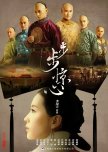
Loved the Korean adaptation and definitely enjoyed the original Chinese version as well!I was bored and suddenly thought of Moon Lovers: Scarlet Heart Ryeo. Since I've rewatched the Korean adaptation a lot of times and was also bored of Korean dramas, I remembered that it was an adaptation of a Chinese drama. I decided to watch Scarlet Heart with no expectation and ended up finishing it in 2 days.
Released in 2011, the production quality was definitely outdated. The story, however, was well-written to the point that it kept me hooked even if I already know, more or less, how it goes as I've watched the Korean adaptation first. I do have to applaud the actors though. Honestly, the only ones I was most familiar with were Liu Shishi and Li Gengxin. However, as expected from seasoned actors, everyone did an incredible job and exceeded my expectations. Nicky Wu and Kevin Cheng definitely left a lasting impression on me. Nicky Wu's charismatic aura as the fourth prince and Kevin Cheng's portrayal of quite strength and vulnerability just got me so immersed. Liu Shishi also did an amazing job at portraying the cheerful and bubbly Maertai Ruoxi turned weak, apathetic, and helpless. Li Gengxin was also great at portraying the loyal, kindhearted, and affectionate fourteenth prince. All the actors definitely did an amazing job! I have to say, their use of older actors, the men especially, for the main characters gives the characters a different sense of charismatic, manly appeal compared to newer costume drama these days.
That said, this drama is definitely worth watching, especially if you've watched the Korean adaptation. I wish we could see more new costume dramas featuring older, seasoned actors like this one.
Was this review helpful to you?

This review may contain spoilers
Promising Start, Disappointing End
Why was Jing Tao Hua so stylish, with a full hairdo, even after she went through a disaster?!I started this drama due to the hype and arranged marriage plot and I admit, the first half was promising. The actors did well in acting out their roles and the story kept me hooked, up until the leads were chased and ended up going to that village.
Okay, I gave it a chance and continued watching because maybe that part is needed for the plot and for character development. However, amnesia?! I’ve aways hated and felt disturbed whenever there’s an amnesia plot and that did not change in this drama. The amnesia plot was definitely unnecessary.
Now comes my next ‘huh’ moment.. In episode 31, the characters went through a disaster, the explosion and debris kind of disaster, yet while all the other characters were dressed simple covered with dusts and debris, Jing Tao Hua had full on makeup, hairdo, and a stylish dress. The only thing that lacked color was her lips because she was supposed to be low on energy lmao. Girl, please.. that was cringe.
Due to these questionable moments that built up towards the ending, the open ending did not really affect me as I already had no hope for this drama. However, although the second half of the drama was not for me, others might still find it amusing. So give it a try!
Was this review helpful to you?

What Is Going On?!
I may need to give this another try but based on what I’ve seen so far, I’m dropping it for now.The actors were great, especially Liu Xueyi in the first few episodes. He was captivating as Murong Jinghe. However, I got so confused at the story and thought it was just not for me. After giving it a chance, I decided to stop in the middle of episode 25 because.. what is going on?!
Was this review helpful to you?
Down Bad Dynasty
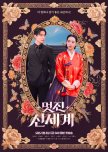
My Royal Nemesis is a rom-com that puts a delightfully chaotic spin on fate, reincarnation, and second chances. When the spirit of Shin Seo Ri, a notorious Joseon-era seductress sentenced to death centuries ago, awakens in the body of a struggling actress, she finds herself navigating a world completely different from the one she once knew. Armed with the confidence, wit, and cunning that helped her survive in the past, Seo Ri crosses paths with Cha Se Gye, a cold chaebol whose life becomes increasingly entangled with hers. What follows is a romance filled with bickering, longing, and enough sparks to light up a palace.Unfortunately, this is one of those dramas that started incredibly strong only to lose momentum as it went on. The first half gave me a kind of rom-com euphoria that I have not felt in a long time. Every episode left me excited for the next one, and I genuinely looked forward to seeing where the story would go. Then came the second half. The excitement slowly faded, the pacing began to drag, and I found myself losing the motivation to immediately continue watching after each episode.
A huge part of what kept me invested was Cha Se Gye. Heo Nam Jun once again proved why he is one of the rising actors constantly catching my attention. His portrayal of Se Gye was ridiculously charming. His eyes, his smiles, the way he delivered his lines, and even his ad-libs were enough to make me blush. Sure, there were moments when his expressions carried a slight "he knows he's handsome" energy, but his performance was so charismatic that I could hardly complain. Some of Se Gye's lines would honestly sound cheesy on paper, yet Heo Nam Jun somehow delivered them in a way that made my heart flutter instead of cringe. Special mention must also go to his bath and shower scenes because, well, the man clearly did not skip upper body day.
As a character, however, Se Gye is fairly straightforward. He is essentially a typical chaebol with a backstory attached to him. While his personal struggles serve their purpose, I never found them particularly intriguing because they felt familiar and predictable. Seo Ri, on the other hand, was the character wrapped in mystery. After surviving death as Kang Dan Shim in Joseon and awakening as Shin Seo Ri in the modern era, she becomes determined to live differently. Rather than allowing herself to be defined by love or sacrifice, she wants to prioritize herself for once.
One of the lines that perfectly introduced her character was:
“I am filled with profound gratitude simply to be alive thus, rather than dead. No, this is not a curse. Let me think of it as a rebirth. Not a punishment, but a second chance. It may be wretched, but I survived. So in this life, I shall live as I please. And consider this a reward.”
That monologue immediately made me interested in her journey. Im Ji Yeon was completely convincing as both the Joseon-era Kang Dan Shim and a Joseon woman reborn in the 21st century. Her speech patterns, mannerisms, and line delivery felt natural throughout. However, I do think the drama missed a golden opportunity with Seo Ri's adjustment period. We get glimpses of her fascination with modern life, but the drama rushes through most of it. I would have loved to see her learning how to use a phone, reacting to elevators, figuring out modern fashion, or dealing with countless everyday things that would seem like sorcery to someone from Joseon. Instead, the story quickly skips ahead and presents a version of Seo Ri who has already adapted surprisingly well. The few Joseon touches that remain are entertaining, but I cannot help feeling there was a lot of comedy and character development left on the table.
The writing also suffers from a few inconsistencies. Early on, the drama establishes that Seo Ri possesses an ability to sense impending misfortune, showing examples from both her past and present lives. Yet after she saves Se Gye from the mannequin that crashes onto his car, that ability practically vanishes from the narrative. It felt like the writers introduced an interesting concept only to quietly forget about it later.
As for the romance, it is both one of the drama's strengths and one of its frustrations. The dynamic between Seo Ri and Se Gye is undeniably cute. I enjoyed watching Se Gye openly pursue her while Seo Ri remained determined to focus on herself rather than immediately jump into a relationship. In a genre filled with emotionally constipated male leads, Se Gye was refreshingly honest. He never hid his feelings, never played games, and never hesitated to admit how much he loved Seo Ri. The man was down bad, and he wore it like a badge of honor.
One of my favorite aspects of their relationship was how respectfully Se Gye treated Seo Ri's unusual circumstances. He never mocked her when she failed to understand modern concepts. Instead, he patiently explained things to her and even embraced her traditional way of speaking. Seeing him call himself "서방님" was both hilarious and adorable. More importantly, his affection never felt possessive. He showered Seo Ri with love, but it always came across as sincere rather than overwhelming. Even lines like "I will never let you go" felt less like a threat and more like a promise that he would remain by her side as long as she wanted him there. The wrist kiss scene deserves its own mention. To me, it felt like the final request for consent before taking the next step, which made the moment surprisingly sweet and memorable. Green flag enthusiasts, this one is for you.
My biggest issue with the romance lies with Seo Ri's side of the relationship. Initially, I liked that she remained firm in her decision not to pursue love. It aligned perfectly with her second chance philosophy. The problem is that this internal conflict dragged on for far too long. Seo Ri constantly moved one step forward and two steps back. Every heartwarming moment seemed to be followed by her distancing herself again due to worries she created in her own mind. After a while, it became frustrating rather than compelling. There were moments when it genuinely felt like Se Gye loved Seo Ri far more than Seo Ri loved Se Gye.
The historical storyline also had mixed results. Since the drama constantly shifts between past and present, the early episodes can feel somewhat confusing. Over time, the timeline becomes easier to follow, though some questions remain. An example is how I never fully understood how Dan Shim's journey from servant to concubine unfolded so quickly. If the King had already cast aside the Grand Prince, what exactly was the purpose of making Dan Shim a concubine? Certain motivations felt underexplained.
For most of the drama, I assumed the past and present storylines were connected in a very specific way. Then came the twist. While I appreciate the attempt to surprise viewers, the execution left me with more questions than answers. The reveal felt like information being dumped all at once rather than something carefully woven into the story through breadcrumbs and subtle hints. Because of that, the twist landed more as confusion than revelation. Once everything was exposed, I found myself becoming even less invested because the ending became fairly easy to predict. Personally, I think the story could have comfortably wrapped up in 12 episodes instead of 14.
Beyond the leads, Jang Seung Jo deserves praise for his performance as Choi Mun Do. Although his performance was great, unfortunately, the writing did not do his villain role justice. He felt like an average, so-so villain who's one bad day away from completely snapping. He is sometimes infuriating and sometimes I just felt indifferent. His schemes felt predictable. That said, I occasionally questioned why he spent so much time personally staking out Seo Ri's home instead of simply sending his people to do it. Even villains deserve better time management. The other supporting cast was generally solid, though a few emotional moments failed to resonate with me. Seo Ri's grandmother's final bus scene, for example, felt like it was trying very hard to be moving, but I personally felt very little while watching it.
One area where the drama consistently impressed me was its visual presentation. Some of the visual effects were genuinely creative and charming. I loved how the lights behind Se Gye transformed into heart shapes while he read Seo Ri's poem. I also adored the transition from the candle scene to Se Gye's adorably annoyed expression, where the candles appeared reflected in his eyes. Small touches like these gave the drama personality and elevated many scenes beyond what was written on the page.
In the end, My Royal Nemesis is a drama that perfectly demonstrates how important consistency is. It began with a fascinating premise, lovable leads, strong performances, and enough romantic tension to keep me hooked week after week. Heo Nam Jun and Im Ji Yeon carried the story with undeniable chemistry, while Jang Seung Jo added weight whenever he appeared on screen. Yet despite all its strengths, the latter half struggled to maintain the same momentum, introducing pacing issues, frustrating character decisions, and a twist that felt underdeveloped. Even so, the drama never completely loses its charm. If you enjoy reincarnation romances, persistent green-flag male leads, and a heroine determined to rewrite her fate, there is still plenty to enjoy here. It may not stick the landing perfectly, but the journey, especially in its first half, was enjoyable enough to make the ride worthwhile.
Was this review helpful to you?
A Killer App in Every Sense
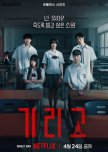
Would you dare trade your life for a wish that comes true, no fine print except the ultimate cost? That is the Faustian bargain at the heart of If Wishes Could Kill, a high school thriller that spins temptation, fear, and friendship into one very bloody cautionary tale. It all begins at Seorin High School, where five close friends stumble upon an app called Girigo. The pitch is simple and dangerously alluring: make a wish, and it will be granted. The catch is even simpler. You will die soon after. Cue the moral dilemma, the paranoia, and the slow unraveling of a friend group that was already hanging by a thread.Before the app even enters the picture, the story quietly sets up a web of secrets and unspoken tension among the five. Yu Se Ah is secretly dating Kim Geon Woo, fully aware that Im Na Ri has feelings for him. Geon Woo plays the classic “I see nothing, I know nothing” card, even though he probably does. Na Ri keeps chasing him anyway, while also judging Hyeong Uk behind his back for his otaku interests. Hyeong Uk, for his part, carries that insecurity like a shadow. Then there is Kang Ha Jun, silently liking Se Ah despite her relationship. It is less “best friends forever” and more “recipe for disaster,” just waiting for a spark. Girigo becomes that spark, and then some.
When Hyeong Uk uses the app to ace a math test, nobody takes it seriously at first. It feels like your typical urban legend, the kind you would laugh about over instant noodles. That disbelief shatters the moment the curse reveals itself through his chilling death. His final moments are unsettling enough to send shivers, and credit goes to Lee Hyo Je for making that descent into something eerie and memorable, even with such limited screen time. His death hits the group hard, though not uniformly. Se Ah is deeply shaken, especially as she witnesses it firsthand, triggering memories of her parents’ death. Geon Woo and Ha Jun are left reeling from the sheer horror of it. Na Ri, however, feels like a question mark from the very beginning. The nail biting, the restless eyes, the fact that she was not there when things went south. Something about her screams “there is more to this story.” That is where casting does some heavy lifting. Having Kang Mi Na as Na Ri adds a layer of assurance. The role demands a careful balance of vulnerability and secrecy, and she delivers that quiet tension convincingly. While many of the younger cast are relatively new faces, her presence anchors the emotional undercurrent, especially when the narrative starts peeling back its layers.
As the stakes rise, the story expands beyond the school setting. In an attempt to save Se Ah after she makes a wish, Ha Jun brings her to his sister Ha Sal’s secluded mountain home. Ha Sal, or Haetsal, is introduced as a powerful shaman figure, someone so overwhelmed by her own abilities that stepping outside her domain could literally kill her. It is a compelling concept on paper, but the execution feels undercooked. Despite Jeon So Nee having proven her range in other works, Ha Sal ends up feeling more like a plot device than a fully realized character. The gravitas you would expect from someone holding that kind of power just is not quite there, and the writing does her no favors. Interestingly, the character who leaves the strongest impression is not one of the central five, but Bang Wool. Played by Noh Jae Won, Bang Wool walks in with charm, comedic timing, and just enough eccentricity to steal scenes without trying too hard. He brings a refreshing energy into an otherwise tense narrative, like a splash of color in a grayscale world. There is something oddly endearing about him, to the point where emotional investment sneaks up on you. It does make you wish the script had explored his backstory and the mystery around him a bit more, because there is clearly untapped potential.
Back at the core group, the performances are a mixed bag. Jeon So Young as Se Ah shines more in darker, emotionally heavy moments than in lighter scenes. There are times when her expressions feel a bit restrained, which, combined with the writing, makes her presence as the central lead less impactful than it could have been. Visually though, there is a moment during her search for the phone where her look oddly echoes Usagi, which is a fun little déjà vu for fans of survival thrillers. Baek Sun Ho fits Geon Woo’s archetype perfectly, the handsome, devoted high school boyfriend who only has eyes for one person. With limited screen time, he still manages to convey Geon Woo’s loyalty and affection convincingly. Hyun Woo Seok as Ha Jun, on the other hand, struggles to leave a strong impression. Part of it is the writing. Ha Jun is impulsive, loud, and often frustrating, the kind of character who feels like a ticking time bomb but not always in a compelling way. There is a particular moment involving a very questionable decision that might make you want to yell at your screen. You will know it when you see it.
Structurally, the drama starts strong. The first half builds tension effectively, pulling you into the mystery of Girigo and the race against time. It is less about the gore and more about the suspense, the constant feeling that something is about to go very wrong. Even if you are not a fan of horror, the show has a way of keeping you hooked. The jump scares are there, and while most are predictable, they still serve their purpose. You brace yourself, and then it happens anyway. The second half, however, feels like it loses some of that momentum. There is an entire episode dedicated to explaining the origin of the app and the curse. While the intention is clear, the execution feels oddly anticlimactic compared to the buildup. Instead of a slow drip of revelations, the story opts for a full info dump, which does not quite match the tone established earlier. The ending follows a similar pattern. It feels rushed, leaving several threads dangling and raising more questions than it answers. If you are the type who enjoys neat resolutions, this might test your patience.
On the production side, the drama initially gives off a modest, almost web drama vibe. But as it progresses, the quality of editing and CGI stands out in a good way. The visuals, especially during the more intense sequences, are polished enough to elevate the experience. The soundtrack and sound effects also do their part, sometimes even sneaking in a bit of unexpected humor amidst the tension.
At its core, If Wishes Could Kill is not reinventing the wheel. The cursed app concept has been explored before, but what keeps it engaging is the interplay between desire and consequence, wrapped in a suspense driven narrative. It is the kind of show where you do not overanalyze every detail. You sit back, let the tension do its thing, and enjoy the ride, plot holes and all. In the end, it is a quick, gripping watch with enough thrills to keep you entertained, even if it does not stick the landing perfectly. A solid 7.5 feels just right.
Was this review helpful to you?

The Bourne Paternity
Some pasts fade with time. Others wait patiently for the perfect moment to strike. Manager Kim has spent years trading covert missions for a quiet life as a bank employee and single father, believing he had finally escaped the shadows of his former life as a top spy. But when his daughter, Min Ji, disappeared, fate calls his bluff. To save her, Kim must dust off the skills he buried long ago and face the enemies who never forgot his name. After all, old habits die hard, especially the dangerous ones.Agent Kim Reactivated tells a story that is as familiar as comfort food. The "my dad is secretly a cool spy" premise is hardly original, but it is one that I almost always enjoy unless it is executed terribly. What immediately separates this drama from many others is its cast. It gathers some of Korean drama's most iconic ahjussis, and watching them share the screen is already half the fun. The narrative constantly shifts between the present and flashbacks, gradually revealing who Manager Kim used to be. It first introduces him as an incredibly patient and ordinary man who works at a bank. He swallows his pride, apologizes to unreasonable people, and even accepts punches if it means avoiding unnecessary conflict. Watching him repeatedly lower his head while doing his best to provide for Min Ji is honestly painful. It almost feels like watching a tiger willingly pretend to be a house cat.
Min Ji's life is no easier. Because she and her father move frequently for reasons she does not understand, she struggles to build lasting friendships. She quietly endures being used by her only friend at school and eventually becomes the target of school bullying after catching the attention of a boy who happens to be the bully's crush. She continues to stay silent until the insults begin targeting her parents. That is the breaking point. The bullying escalates, both families are called to school, and Manager Kim kneels to apologize for something that was never Min Ji's fault simply because he desperately wants to stay unnoticed and keep a low profile. It is a heartbreaking moment, made even worse by Min Ji's disappointment in him. Things spiral even further when the bullies violently attack Min Ji, leaving behind nothing but bloodstains and uncertainty. The moment Manager Kim discovers that blood on the ground, the quiet bank employee disappears. Agent Kim is officially reactivated.
Because the first episode spends so much time showing us an almost powerless and passive father, his transformation into the ruthless agent carries incredible weight. Those opening episodes are absolute fire. They are thrilling, intense, and packed with adrenaline. Agent Kim tears through everyone standing between him and his daughter without hesitation. At the same time, the flashbacks slowly reveal his past, making the action feel even more meaningful.
We learn that Agent Kim endured brutal training in North Korea, earned the code name 73, and later inherited the prestigious code name 66 after the death of his closest friend, Park Yeong Gwang. On that same day, he surrendered to South Korea and became a double agent. Eventually he fell in love, married, and desperately wanted to leave that life behind. It was only after his wife died giving birth to Min Ji that he finally forced the SMD to release him. Some of the most touching moments are not the action scenes but the quiet flashbacks of Kim learning how to become a father. They are simple yet incredibly warm. I only wish the drama had explored his relationship with his wife a little more. It did not need an entire subplot, but even a few scenes showing how they met, how she reacted to learning about his past, or how they built their relationship would have added another emotional layer. The drama functions perfectly fine without it, but it leaves behind a few unanswered questions.
The action itself rarely slows down. Blood flies, bones crack, knives slash, fists land, and the fights just keep coming. So Ji Sub was perfectly cast as both Agent Kim and Papa Kim. One detail I particularly appreciated was how his body actually reflected the scars and wear of someone who had lived through countless battles instead of looking unrealistically pristine. His action style also felt very recognisable. I am no martial arts expert, but his movements reminded me a lot of Mercy for None. The way he handled firearms and coordinated every situation carried an effortless charisma that made every action sequence enjoyable. Yet despite all that, he was equally convincing as an awkward father who unintentionally guilt trips while somehow mastering that uniquely Korean dad energy that is both frustrating and oddly comforting.
Fortunately, Agent Kim is never alone. His two former special forces friends, Seong Han Su and Park Jin Cheol, are easily among the highlights of the drama. Choi Dae Hoon and Yoon Kyung Ho bring both excellent action and perfectly timed comedy. Choi Dae Hoon continues proving that he is one of Korea's true chameleon actors. Every role he takes somehow feels completely different, and Han Su is no exception. His calm personality, sharp intelligence, and subtle comedic timing constantly made me laugh. Yoon Kyung Ho perfectly complements him as the loud and energetic Jin Cheol, whose solution to almost every problem seems to involve overwhelming punches and firepower. His exaggerated reactions, constant bickering with Han Su, and surprisingly solid action scenes made him endlessly entertaining. Together with Agent Kim, the three create a wonderfully loyal trio.
I loved that all three have now settled into ordinary lives as fathers who wear glasses and work regular jobs. One runs a bank, another teaches taekwondo, and the third works as a security guard. Yet beneath those peaceful lives remain soldiers who instinctively trust one another with their lives. Their yearly reunion unintentionally exposes Kim's survival, drawing the attention of both South and North Korea. Since Kim had faked his own death to disappear, both sides now consider him a threat, creating multiple groups chasing him while he continues searching for Min Ji. It turns the story into complete chaos in the best possible way.
The problem is that the more the drama expands its world, the more its logic begins asking for blind faith. I found myself wondering whether Min Ji could realistically recover so quickly after suffering such severe injuries without proper treatment. I also kept asking why none of the pursuers thought about targeting Han Su's or Jin Cheol's children much earlier if their goal was to reach Agent Kim. Eventually I decided this was simply not the kind of drama that benefits from overthinking. Sometimes you have to switch off the analytical part of your brain and let the adrenaline do the driving. Even when I could predict almost every twist, my heart still raced during the action scenes. It is like riding a roller coaster you have memorised. You still know exactly when the drop is coming, but it remains fun anyway.
That said, I do think the pacing could have been tighter. For a ten episode drama, it introduces quite a few characters and moving pieces that never fully justify their existence. Joo Sang Wook's Ju Gang Chan initially appears to be an intimidating major villain, but by the end he feels surprisingly underused. His downfall happens so quickly that he loses much of the menace he spent the early episodes building. Characters like Golden Teeth also feel less like complete individuals and more like narrative tools used to amplify someone else's cruelty. Similarly, Kim Sung Kyu's role as Park Gang Seong kept me anxious throughout the chase, but once everything concluded, I found myself questioning how necessary his character really was. The drama is filled with talented veteran actors, all of whom perform well, while the younger cast, especially the actresses playing Min Ji and Ju Hye Ri, also leave strong impressions.
Personally, I think the main conflict could have wrapped up around episode seven before jumping to the heartwarming ending. Much of episodes eight through the beginning of ten feels like additional conflict for the sake of extending the runtime. Instead of repeating similar confrontations, I would have preferred the drama using that time to explore its characters further or answer some of the lingering questions.
Visually, there is nothing particularly groundbreaking, although the action scenes occasionally receive stylish comic book inspired touches that fit the tone beautifully. One of my favourite shots was an overhead silhouette sequence during a fight, along with a night vision perspective from an NPC. Some viewers thought certain sequences looked AI generated, but honestly I was too invested to notice. The cinematography successfully captured the intensity of every fight, while the soundtrack consistently elevated the tension.
The final episode mainly focuses on tying up loose ends. It delivers exactly the ending I expected because this drama was never trying to fool anyone. It was always heading towards a happy ending. Even the subplot involving Han Su's and Jin Cheol's children finally appears only at the very end, almost as if the drama remembered it had one last card left to play. Since it arrives so late, it feels more like comedic relief than genuine suspense. I think introducing that conflict earlier would have made the final stretch significantly more impactful.
The climax itself remains highly predictable. It is obvious that Manager Kim and his friends will eventually outsmart Ju Gang Chan together, and thankfully the drama fully commits to giving everyone a clean and satisfying ending. The father and daughter moments in the finale genuinely touched me. When Min Ji says that her father is just an ordinary ahjussi until someone messes with her, it perfectly captures the entire heart of the drama. It is both funny and surprisingly emotional. Watching how far Kim is willing to go for his daughter also left me strangely bittersweet because it made me think about my own relationship with my father.
The ending does introduce one mysterious new character whose overwhelming influence left me both curious and confused. As someone who has never read the webtoon, I could only wonder why someone capable of bringing down Ju Construction so easily never entered the picture earlier. I assume the favour Kim owes him will eventually involve contract killing or another dangerous mission, but that remains speculation. Even the ending raises a few logical questions, but by then I had already accepted that logic was never this drama's strongest weapon.
In the end, I enjoyed Agent Kim Reactivated for exactly what it is. The story is simple, predictable, and occasionally careless with its details, but the combination of charismatic veteran actors, exhilarating action, hilarious comedy, and heartfelt father and daughter moments makes it incredibly entertaining. It made me laugh, got my adrenaline pumping, and occasionally made me scratch my head in confusion. Sometimes that is more than enough. Not every drama needs to reinvent the wheel. Sometimes it just needs to put the wheel on fire and let So Ji Sub drive it.
Was this review helpful to you?
The Long Way to Love
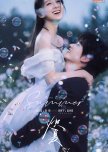
I have a love hate relationship with Never Ending Summer. At first glance, it looks like another sunshine girl meets midnight rain bad boy romance, a trope I will happily sign up for every single time. Instead, the drama takes a different route. Zhou Wan is an eighteen year old girl carrying responsibilities far beyond her age. Faced with her grandmother's mounting medical bills and abandoned by her estranged mother, she resorts to getting close to Lu Xi Xiao, the rebellious son of the man her mother is about to marry, hoping to pressure her mother into helping. What begins as a desperate plan slowly turns into genuine love, setting the stage for a story overflowing with longing, sacrifice, and heartbreak.The problem is that this heartbreak often feels self inflicted. I understand why Zhou Wan makes many of her decisions. She grew up learning to rely only on herself, afraid of burdening others and terrified of being abandoned again. Her entire world revolves around saving her grandmother, so it makes sense that she loses sight of everything else. But there were so many moments where honesty could have solved half the problems. Xi Xiao despises his future stepmother just as much as Zhou Wan does, and he clearly cares deeply about her, yet she keeps choosing the most complicated path possible. It almost feels like the drama follows the philosophy of "why take the easy road when the scenic route has more suffering?" The result is misunderstanding after misunderstanding, with Zhou Wan fighting battles alone while Xi Xiao spends most of his time trying to piece together what she refuses to tell him.
That is what makes the angst so exhausting. The drama stacks angst on top of angst until it starts feeling less like emotional storytelling and more like a factory assembly line. In theory, repetitive misunderstandings can still work if each one raises the emotional stakes, but here many of them feel entirely preventable. Even stranger, the emotional consequences rarely linger. Xi Xiao is remarkably forgiving, Zhou Wan softens rather quickly, and the relationship often recovers faster than the drama itself suggests it should. It creates this odd disconnect where the journey feels painfully drawn out, but the aftermath barely leaves a mark.
Just when I thought the story had finally found its footing after Zhou Wan's biggest burden was lifted, the drama pulled out another classic card: a ten year separation. Honestly, that part was fine. Xi Xiao gets hurt because of her, his family wants her gone, she leaves out of guilt. It is textbook melodrama, and I had already accepted it. What completely caught me off guard was their reunion. After ten years apart, I expected plenty of emotional push and pull before any reconciliation. Instead, they practically skipped to the kissing. I genuinely had to pause and ask myself, "Wait... what just happened?" Oddly enough, it also felt believable. These were two people who had never truly stopped loving each other, so perhaps the years never mattered to them. Even so, something about the transition into their adult relationship left me feeling strangely uncomfortable, though I still cannot fully explain why.
Ironically, I found the adult conflicts more reasonable than the high school ones. Unfortunately, their buildup felt incomplete. It almost seemed as though the drama simply needed an excuse to make Zhou Wan live with Xi Xiao without making either of them look like walking red flags. Xi Xiao initially forces her to stay with him as a condition for joining his team, only to later tell her she can leave because he does not want her staying out of guilt or pity. I understand the emotional reasoning behind it, but the execution made me scratch my head more than once. After being apart for a decade, they settle into domestic life almost immediately, acting like a young married couple who simply forgot to renew their marriage certificate. The adult romance is undeniably sizzling. Those kiss scenes deserve all the applause, and yes, I never expected to see a Spider Man style kiss in a Chinese drama. But as enjoyable as those moments are, the surrounding context never fully convinced me.
The final conspiracy surrounding Xi Xiao's father also felt random and unnecessary. Zhou Wan's pursuit of justice lacked the emotional impact I expected, making the climax feel more like another obstacle than a satisfying payoff. However, I did appreciate the revelation that Zhou Wan had loved Xi Xiao long before he ever fell for her. It completely reframed her decision to use him in the beginning. It was never manipulation born from malice. It was desperation from someone forced to sacrifice the person she loved most in order to save the person who raised her. That revelation added a layer of tragedy that I wish had been emphasized earlier.
Jiang Yan is another character who feels like wasted potential. He is Zhou Wan's childhood friend who quietly loves her, yet the drama barely explores those feelings. Most of what we see is him getting jealous whenever Xi Xiao is around, but because Xi Xiao is also his half brother, it becomes difficult to tell whether his frustration comes from romantic feelings, sibling rivalry, or both. He ultimately feels less like a fully realized character and more like a convenient plot device. Even the moment where he accidentally reveals Zhou Wan's location while drunk exists mainly to move the story forward and earn him hate from viewers.
Despite all my frustrations, credit where credit is due. The romance itself delivers. The runaway arc captures that exhilarating feeling of first love beautifully. Those scenes are filled with youthful energy that made me smile from ear to ear. The adult romance is equally memorable, just in a very different way. The chemistry between Zhou Wan and Xi Xiao never disappeared, no matter how questionable the surrounding circumstances became.
The performances also helped keep me invested. Bao Shang En was excellent as Zhou Wan. Despite her soft and beautiful appearance, she carried herself with remarkable maturity, independence, and quiet resilience. Her slightly deeper voice suited the character perfectly, and both her emotional breakdowns and crying scenes landed with genuine impact. She also looked fantastic throughout the drama, with hairstyles and outfits that complemented every stage of Zhou Wan's journey. Zhou Ke Yu was more of a mixed bag. He excelled in the playful, aloof, and romantic moments, and his height certainly worked in his favor whenever he stood opposite Zhou Wan. However, during the more intense scenes, particularly when Zhou Wan's life was in danger, his expressions occasionally looked as though he was trying not to smile. It unintentionally weakened the tension in moments that should have felt far more desperate. The rest of the cast performed their roles well enough.
Visually, the drama is gorgeous. The cinematography is crisp, the production quality is polished, and several sets stand out, especially the hide and seek sequence, which remains one of my favorites. Above everything else, though, the soundtrack is the true MVP. The OSTs are memorable, emotional, and the kind of songs that easily find a permanent place on your daily playlist.
In the end, Never Ending Summer is a drama I enjoyed more for its romance than its storytelling. The cute moments, heartfelt chemistry, beautiful visuals, and outstanding soundtrack kept me watching long after the plot started testing my patience. Unfortunately, when it came to the actual writing, many of the conflicts felt unnecessarily complicated, making it difficult for me to fully sympathize with the characters. Like its title, this summer certainly felt never ending. Whether that is a compliment or a warning depends entirely on your tolerance for preventable angst.
Was this review helpful to you?

The Rise and Fall of My Expectations
I picked up Love Beyond the Grave out of pure curiosity rather than genuine interest in its premise. The pairing of Dilraba Dilmurat and Chen Fei Yu sounded intriguing on paper, almost like a “what if” experiment you don’t quite trust but still want to see unfold. The story introduces us to He Si Mu, a sovereign Ghost King who has lived through centuries, and Duan Xu, a young general whose presence immediately feels suspicious. Their initial encounters carry a quiet tension, like a chess match where both players are pretending not to know the rules. There is curiosity, restraint, and a hint of danger. For a moment, it feels like the drama knows exactly what it is doing.Unfortunately, that sense of intrigue fades too quickly. The mystery surrounding both characters is revealed early on, cutting off what could have been the drama’s strongest hook. Once the “who are you really” question is answered, the story struggles to replace it with anything equally compelling. What follows is a sequence of events that feels oddly stitched together: mortal world meetings, battlefield clashes, a detour into the void, separations, reunions, and then more separations for good measure. It reads like a grand epic on paper, but in execution, it lacks emotional weight. I kept waiting for a moment that would anchor me, but it never quite arrived.
One of the more unique elements is Si Mu’s inability to experience human senses and her reliance on Duan Xu to “borrow” them. The early arc where she experiences touch is genuinely charming. There is a childlike wonder in the way she reacts, and it gives Dilraba room to show both elegance and vulnerability. But as the story moves on to other senses, the magic wears thin. The arcs become shorter, less impactful, and sometimes feel like filler. The logic also raises questions. For someone who has never smelled anything, Si Mu somehow identifies scents with surprising confidence. And when Duan Xu loses a sense temporarily, the rules seem flexible at best. It is one of those “don’t think too hard” situations, except the drama quietly invites you to think about it anyway.
The worldbuilding adds another layer of confusion. Spirits, demons, and supernatural events appear frequently in the mortal realm, yet the humans barely react. It creates a strange disconnect, like watching a fantasy unfold in a world that refuses to acknowledge it. I kept wondering if I had missed an explanation somewhere, but the drama never really addresses it. Instead, it moves forward as if everything makes perfect sense.
If there is one aspect that genuinely impressed me, it is the early battle sequences. After the rather underwhelming action in Pursuit of Jade, this drama delivers a battlefield that feels alive. The scale, the smoke, the chaos, even the background soldiers all contribute to a sense of realism that is rarely seen. Chen Fei Yu shines the most in these moments. He throws himself into the action without hesitation, unafraid to look battered and raw. There is a particular infiltration scene that stands out as one of his best moments in the drama. Ironically, as the story shifts its focus toward romance, this sharp and compelling side of his character slowly fades.
Duan Xu as a character suffers from inconsistent writing. He starts off as a cautious and capable general, someone grounded by duty and suspicion. Then, almost overnight, he transforms into a lovestruck figure whose decisions revolve entirely around Si Mu. His transition feels abrupt, like a switch flipped without warning. The drama tries to sell his devotion as romantic, but it often comes across as excessive and, at times, awkward. It does not help that his role as a general becomes increasingly sidelined, stripping away the authority and presence he initially had.
He Si Mu, on the other hand, remains one of the more consistent characters. She carries herself with quiet authority, balancing power with an undercurrent of loneliness. Dilraba portrays her with a convincing mix of restraint and curiosity, especially during moments where Si Mu experiences the world in new ways. Visually, she fits the role of a ghostly sovereign almost too well. There is an ethereal quality to her presence that makes her feel distant, almost untouchable. Ironically, this works against the central romance. When paired with Chen Fei Yu, the gap between them feels more pronounced, not just in characterization but in overall aura. It becomes difficult to see them as equals within the same emotional space.
Chemistry is, unfortunately, another weak point. Despite the narrative insisting on their deep bond, I struggled to feel it. Their interactions often lean into forced intimacy rather than something that grows naturally. Oddly enough, Si Mu’s brief dynamic with Xue Chen Ying, played by Fu Bo Han, feels more genuine. There is a warmth and simplicity in those moments that the main pairing never quite achieves.
Then there is Yan Ke, played by Wei Zhe Ming, who initially steals the spotlight. His introduction is magnetic, with a commanding presence that perfectly complements his role as Si Mu’s right hand. The way he looks at her says everything without needing dialogue, and for a while, it feels like the drama is quietly setting up something more compelling than the main romance. But as the story progresses, his character leans heavily into obsessive territory, losing the balance that made him interesting in the first place.
Visually, the drama is a mixed experience. It leans into a gothic, eerie aesthetic that suits its premise, and some elements, like the void, look surprisingly majestic. The battlefield effects are particularly well done. However, other CGI moments feel dated and overly noticeable, pulling you out of the immersion. The purple jellyfish-like creatures, while unique, end up being more distracting than meaningful.
The music follows a similar pattern. The opening feels underwhelming, lacking a strong identity, while the ending themes and OSTs are far more memorable. They do a good job of enhancing the mood, even when the story itself falls short.
By the time I reached the end, the outcome felt predictable. Given the title alone, a fully happy ending would have been wishful thinking. Still, knowing what to expect does not necessarily make the journey more satisfying. In this case, it simply reinforces the sense that the story was always heading somewhere I was not emotionally invested in.
In the end, Love Beyond the Grave became one of those dramas I finished out of obligation rather than enjoyment. It has moments of brilliance, particularly in its action and initial character setups, but they are overshadowed by inconsistent writing, weak emotional grounding, and a romance that never quite convinces. I stayed until the final episode, though I am still not entirely sure why.
Was this review helpful to you?

Game of Pretend
Ashes to Crown takes a familiar rebirth premise and places it in the middle of court politics, military ambition, and the pursuit of a second chance. Chu Zhao, armed with memories of her previous life, refuses to be a victim of fate. Instead, she actively reshapes her future, stepping into the center of political turmoil rather than running from it. Along the way, she crosses paths with Xie Yan Lai, an overlooked illegitimate son whose life has been defined by neglect and limitations. Together, they rise through the ranks of power and influence, making this a story that promises both personal growth and political intrigue. Unfortunately, the execution never quite lived up to that promise for me.From the very beginning, the drama felt more like a high-budget short drama than a full-length historical production. There is nothing wrong with short-form dramas, but Ashes to Crown often carries that same rushed, dramatic energy despite its longer runtime. The visuals contribute to that feeling. The palace set is drenched in shades of red to the point where it feels more like a carefully arranged studio backdrop than a living imperial court. Add to that the heavy beauty filters that leave everyone's skin looking porcelain-smooth and doll-like, and the overall presentation becomes more stylized than immersive. At times, I felt like I was watching an expensive wallpaper come to life rather than a historical drama.
The political storyline was where the cracks became impossible to ignore. Nearly every major political figure looks like they belong to the same graduating class, which made the court feel less like a seat of power and more like a group project gone terribly wrong. More importantly, the political logic often bends according to whatever the plot needs at a given moment. Characters frequently change their stance, goals, and beliefs based on personal feelings rather than consistent motivations.
One example perfectly captures my frustration. Chu Zhao leaves the young Emperor in the middle of a palace filled with enemies so she can visit her father, trusting Xie Yan Lai to protect him. Shortly afterward, Yan Lai abandons his post, hands an important token to his scheming brother, and runs off to protect Chu Zhao instead. The Emperor is essentially left unattended in what is supposed to be a deadly political environment. Moments like these made it difficult for me to take the political stakes seriously.
The drama also loves schemes. Normally, that would be a positive because I enjoy a good battle of wits. The problem is that Ashes to Crown stacks schemes on top of schemes until every setback eventually reveals itself to be part of Chu Zhao's master plan. After a while, every failure, every danger, and every apparent loss starts feeling like another inevitable reveal waiting around the corner. What should feel clever instead becomes repetitive and increasingly ridiculous. By the final episodes, I found myself rolling my eyes rather than feeling impressed.
The romance fares slightly better but still suffers from weak development. Xie Yan Lai's feelings for Chu Zhao are understandable. She changes his life, believes in him, and gives him opportunities no one else would. Chu Zhao's side of the romance, however, feels much less convincing. Her feelings seem to appear rather than develop naturally. One moment she is focused on securing her political position as Grand Princess, despite swearing not to marry or have children while holding the title, and the next she is openly flirting with Yan Lai to keep him by her side. The transition from strategic partnership to genuine love never feels properly earned.
Even the romantic scenes themselves often feel disconnected from the surrounding story. A typical sequence goes something like this: political conflict, dramatic confrontation, music stops, one character stands alone, the other approaches, they share a cute moment, and then everyone immediately returns to political chaos. Instead of feeling woven into the narrative, these scenes often resemble bonus clips inserted between plot developments. The chemistry is cute, but chemistry alone cannot replace emotional buildup.
The war sequences left me with similar feelings. Visually, they are beautiful. Narratively, they are surprisingly hollow. Battles feel brief, clean, and heavily staged. Sacrifices happen suddenly, characters appear exactly where they need to be, and resolutions often arrive through convenient plot developments. Even the final conflict loses much of its impact because events unfold in a way that feels more convenient than earned. The production clearly invested effort into making the battles look grand, but spectacle can only carry so much weight when the storytelling underneath feels thin.
That said, credit where credit is due: the soundtrack is fantastic. Almost every OST left an impression on me, and Liu Yu Ning's contributions were especially memorable. Long after finishing the drama, the music remained the one aspect I genuinely wanted to revisit.
In the end, Ashes to Crown was a drama that required determination and a generous amount of 2x speed for me to finish. The production places enormous emphasis on beauty, aesthetics, and presentation, but often neglects the logic, context, and narrative foundation needed to support them. Even as someone who enjoys romance, I cannot wholeheartedly recommend it on that front because the relationship itself lacks the buildup necessary to make it truly compelling.
For me, this was a classic case of style over substance. Beautiful to look at, pleasant to listen to, but far less satisfying once you start asking the story to make sense.
Was this review helpful to you?
The Clues Made Sense, The Choices Didn’t
Five years after the haunting “8/17 Case” went cold, Sunsets Secrets Regrets wastes no time pulling us back into the shadows. New evidence surfaces by the Tong River, and with it comes Zhou Jin, a determined investigator carrying both duty and grief, and Professor Jiang Han Sheng, a criminal psychology expert who looks like he walked straight out of an academic daydream in his collared shirts and glasses. Alongside them, though often from a distance, is Jiang Cheng, the undercover officer who has spent years buried deep within the criminal world. What begins as a fragmented puzzle slowly reveals a larger, more intricate picture involving the elusive Old Scorpion and a network of buried truths.I would be lying if I said the beginning was easy to follow. The early episodes feel like flipping through scattered case files without tabs, leaving you slightly disoriented and struggling to connect the dots. It is not until around episodes eight to ten that the narrative finally clicks into place. Suddenly, everything starts to make sense. The cases intertwine, the history gains weight, and the mystery becomes genuinely gripping. From there, the drama finds its rhythm, though not without some bumps along the way. The investigations themselves are a mixed bag. At their best, they are sharp and exhilarating, driven by clever psychological analysis that makes you feel like you are solving the case alongside the characters. At their weakest, they drag, wander, and occasionally lead nowhere, testing your patience. Still, watching Han Sheng break down criminal behavior is undeniably one of the show’s highlights, and yes, the man makes profiling look stylish.
The undercover storyline, which should have been a major pillar, feels strangely detached from the main investigation. Jiang Cheng’s years of infiltration do peel back layers of the criminal organization, but when you step back, his contributions to solving the central mystery feel surprisingly minimal. The police, armed with new evidence and Han Sheng’s analysis, could have reached similar conclusions without him. His arc ends up serving less as a narrative engine and more as emotional fuel, particularly for the drama’s heavy focus on love, regret, and what could have been.
And that brings us to the romance, which is as central to the story as the crime itself. The relationship between Zhou Jin and Han Sheng is a slow burn that occasionally forgets it is supposed to simmer and instead jumps straight to boiling. Their sudden marriage, sparked by a life or death moment, feels absurd when you think about it. Agreeing to marry someone after only a handful of dates, without even remembering your shared childhood, is the kind of decision that makes you pause and go, really? Yet somehow, once the dust settles, their married life becomes one of the coziest parts of the drama. There is something almost slice of life about the way they navigate their relationship. Han Sheng, for all his intelligence, turns into a clingy, affectionate partner who just wants to be close to her, while Zhou Jin slowly learns how to open her heart. Their quiet domestic moments, filled with hugs and soft interactions, feel like warm sunsets after long, chaotic days.
Of course, the sweetness comes with its own layer of unease. Han Sheng’s long standing habit of silently watching over Zhou Jin, both as a child and as an adult, sits in a gray area between devotion and creepiness. It is framed as concern, especially given the danger surrounding her, but if you think too hard about it, it does raise questions. Even more puzzling is how Zhou Jin, as a trained police officer, remains largely oblivious to this behavior. Logic occasionally takes a backseat here, but if you are willing to let it slide, their chemistry makes it easier to accept.
The love triangle adds another layer of complexity, though not always for the better. Jiang Cheng’s reappearance brings tension and emotional weight, especially as his past with Zhou Jin resurfaces. At first, his jealousy and internal conflict are compelling, even a little addictive to watch. But as his story unfolds, the character becomes increasingly frustrating. He is both consistent and inconsistent in a very human way, having pushed Zhou Jin away in the past only to later reveal lingering feelings at the worst possible time. His actions blur the line between self sacrifice and self sabotage. While his pain is undeniable, much of it stems from his own choices, which makes it harder to fully sympathize. Over time, what started as an engaging dynamic turns into a cycle of regret that feels repetitive. Still, there is something satisfying about the eventual resolution, with Zhou Jin choosing Han Sheng and Jiang Cheng stepping back, finally accepting his place in her life.
The cast does a lot of heavy lifting in making these characters work. Jing Bo Ran brings a charming balance to Jiang Han Sheng, blending intelligence, awkwardness, and emotional vulnerability into a character that could have easily come off as overbearing. Instead, he feels oddly endearing, even when his traits lean toward possessive. Cai Wen Jing delivers a decent performance as Zhou Jin, capturing her inner conflict, though the character itself can be frustratingly naive and inconsistent. Meanwhile, Qin Jun Jie makes Jiang Cheng far more compelling than the writing allows. His portrayal, especially during the undercover segments, adds depth to a character that might have otherwise faded into the background.
Unfortunately, the ending does not quite stick the landing. After a strong and engaging middle, the final stretch feels rushed and oddly underwhelming. Key confrontations lack emotional impact, and certain scenes border on the absurd. The rooftop sequence, in particular, feels like it belongs in a different drama altogether, with its questionable logic and diminished stakes. What should have been a tense, high risk moment ends up feeling strangely hollow. The resolution of key characters, including Qi Yan and Jiang Cheng, is left ambiguous in a way that feels less like intentional mystery and more like unfinished business.
Despite its flaws, Sunsets Secrets Regrets remains an enjoyable watch. It is a drama of contrasts, confusing at the start, gripping in the middle, and uneven at the end. While it may not rank among the best in the crime thriller genre, it offers enough intrigue, emotional depth, and character driven moments to keep you invested. Think of it as a sunset that is not perfectly framed, a little hazy at the edges, but still beautiful enough to make you stop and watch until the very end.
Was this review helpful to you?
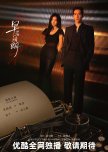
This review may contain spoilers
Endless Leaps of Faith
Fresh out of university, Shang Zhi Tao steps into the cutthroat world of advertising and immediately finds herself under the watchful eye of Luan Nian, a boss whose favorite way of motivating her seems to be telling her to quit. What begins as an antagonistic workplace dynamic slowly turns into attraction, then a relationship, then a cycle of love, hurt, separation, and reconciliation. Years later, fate brings them together again, with Zhi Tao living a quieter life back home and Luan Nian still carrying the unfinished business of their past.On paper, The Early Spring has all the ingredients for an addictive romance. Two capable but emotionally complicated adults, an unequal workplace dynamic, undeniable sexual tension, old wounds, misunderstandings, and a second chance at love. In practice, however, there are plenty of layers on screen, but the story rarely takes the time to examine what is actually between them.
The attraction between Zhi Tao and Luan Nian is obvious from the beginning. In fact, perhaps too obvious. They are burning for each other, and once they cross that line, it becomes almost impossible for them to stay away from each other. The physical chemistry is probably the most convincing part of their relationship. For a Chinese drama constrained by censorship, the intimacy scenes are surprisingly effective at creating heat without actually crossing the line. Fans understandably had plenty to scream about. The problem is that the emotional chemistry never quite catches up.
Zhi Tao's attraction is easy enough to understand. She is drawn to Luan Nian's looks almost immediately, and after their first night together, it is clear that the physical attraction has a very strong hold on her. Luan Nian is more difficult to read. The drama tells us that his curiosity and interest in her gradually grow, but it does not show enough of the journey. One moment he is this rude, intimidating boss, and the next he is deliberately waiting to drive this new employee home. Later, we learn that he worried when she got lost in the mountains, was touched when she saved him, and gradually became emotionally invested in her. Those pieces are there, but the connective tissue is missing. It makes their romance feel less like falling in love and more like falling into bed, then figuring out the feelings afterward.
This is especially unfortunate because Luan Nian is potentially the more interesting character. He is arrogant, condescending, rude, capable, well connected, and seemingly experienced with women. Yet underneath that intimidating exterior is someone who apparently does not actually date around and is surprisingly inexperienced when it comes to real emotional intimacy. He can be the knight in shining armor one moment, helping with investments, finances, career problems, and all sorts of practical matters, then turn around and say something so cruel that I wanted to reach through the screen and confiscate his mouth. And yes, Jing Bo Ran is a huge part of why any of this works.
Jing Bo Ran does not simply play Luan Nian. He becomes Luan Nian. The arrogance, the condescension, the quiet jealousy, the intimidating boss energy, and especially that ridiculous amount of masculine charisma are all there. He somehow manages to make a man who says the worst possible thing at the worst possible moment look devastatingly attractive while doing it. That is a dangerous skill.
His wardrobe was another visual treat. Considering Jing Bo Ran's reputation as a fashionista, it was hardly surprising that many of Luan Nian's clothes, accessories, and shoes came from his own wardrobe. Most of the looks worked beautifully for the character, although there were a few details I would have happily edited out. His presence alone explains a significant portion of my willingness to keep watching. Unfortunately, even Jing Bo Ran's face could not completely redeem Luan Nian for me.
There is a difference between a flawed character and a character who repeatedly crosses the line into being unpleasant. Luan Nian's mouth gets him into trouble far too often, and some of the things he says to Zhi Tao are genuinely degrading. The worst comes when he lashes out and essentially reduces her to being cheap, obedient, young, inexperienced, docile, and whatever else he can throw at her in anger. Those words are especially cruel because they hit directly at insecurities she already carries. He is her talented, powerful boss while she is the inexperienced newcomer trying to prove herself. His words reinforce every fear she already has about how he sees her and the imbalance between them. What frustrated me even more was how quickly Zhi Tao forgave him.
Their relationship becomes a strange loop of intimacy, conflict, breakup, reconciliation, intimacy, conflict, and another reconciliation. At first, the push and pull is entertaining. Eventually, it becomes exhausting. The drama seemed to be rage-baiting me into asking the same question over and over again: why are these two still together?
Zhi Tao is not innocent in this dynamic either. She is actually a surprisingly complicated and sometimes hypocritical character. From the beginning, she is presented as career driven and determined to put her work first. Yet she quickly gives in to Luan Nian despite knowing the company has rules against office relationships and despite the obvious power imbalance between them. She knows she is playing with fire, and Luan Nian is standing there enthusiastically adding gasoline.
She is not a completely passive woman. She knows Luan Nian cannot get enough of her, and she knows exactly how to push his jealousy buttons. She can handle him better than most people can. But when it comes to him, she repeatedly sacrifices the boundaries she seems to value everywhere else. That contradiction could have made her character fascinating if the drama had explored it more deeply. Instead, it often feels like Zhi Tao simply cannot resist the Luke allure.
Every reconciliation seems to follow a familiar choreography. He gets close, touches her, stares closely at her face, the tension rises, and suddenly we are back to physical intimacy. At some point, I started wondering whether their relationship had any other language. The drama tells me they love each other, but it rarely gives me enough emotional evidence to actually feel it.
Their relationship is also oddly ambiguous. They move back and forth between situationship and relationship for so long that I sometimes felt the drama itself was unsure what exactly they were. Given the nature of their relationship in the novel and the restrictions of Chinese drama censorship, I cannot help wondering whether this was simply a messy adaptation. If the writers intentionally wanted to preserve that ambiguity, I wish they had used it to explore the emotional confusion rather than mainly turning it into another source of sexual tension.
Sun Qian's performance as Zhi Tao was a mixed bag for me. I have enjoyed her in other roles, and she does well with Zhi Tao's happier, innocent, hardworking, and more passive moments. However, the heavier emotional scenes did not always land. Her crying scenes in particular often amounted to a few tears and a hand partially covering her face. Her fights and breakups with Luan Nian were serviceable, but rarely devastating. The biggest disappointment was Sun Yuan Zhu's death.
Yuan Zhu is presented as someone who has a significant place in Zhi Tao's life, so I expected his death to leave a substantial emotional scar. Instead, the grief felt strangely brief. I understand that people grieve differently, but I simply could not feel the weight of the loss from Zhi Tao. The following episode immediately moving into her promotion made the whole thing feel even more bizarre.
I also found Yuan Zhu's death unnecessary. Liu Xiao Bei did a wonderful job portraying him, especially the character's hidden struggles, quiet affection, longing for family, and depression. I genuinely felt sorry for him and understood the pain underneath his calm exterior. That made his ending feel even more frustrating because the drama did not seem interested in giving his death the emotional space it deserved.
Afterward, the grief mostly disappeared, with Sun Yu being the one person whose pain I could really feel. Even Luan Nian suddenly going from being jealous of Yuan Zhu to talking about how he was a wonderful person and how he should thank him felt almost comical. If the purpose was to give Yuan Zhu closure or follow the novel, then the drama needed to build toward that ending properly. Otherwise, simply allowing him to move on from Zhi Tao and acknowledge that he could not have her would have been more meaningful.
The drama's symbolism, however, is something I appreciated. There is clearly more thought behind the visual language than the actual storytelling sometimes suggests. Jing Bo Ran mentioned that Luan Nian's early outfits were more buttoned up, often closed with a scarf or tie, representing how guarded he was. As he becomes closer to Zhi Tao, the clothes gradually open up. There are also recurring symbols involving the typewriter, fish tank, and other elements associated with control and barriers. These details give the drama an additional layer that I wish the writing had matched.
Visually, The Early Spring is generally beautiful. The medium contrast, soft color palette, slight grain, camera angles, and settings create a polished and easy-on-the-eyes aesthetic. When the story stays in China, the drama looks particularly good. Then comes Phuket.
The Phuket arc was where both the visual quality and editing started to fall apart for me. The studio shooting was painfully obvious, and the editing became increasingly choppy. For such a short storyline involving Alex's resignation, employee scouting, and its consequences, the company trip to Phuket felt unnecessary. The same plot could have happened in Beijing or somewhere else in China without losing anything important. If the production really wanted Phuket, then they needed to either commit to the location properly or smooth the editing. As presented, it sometimes felt less like a meaningful story setting and more like an excuse to manufacture another intimate scene. There are several other scenes like this where I found myself wondering, "Why are we here?"
The scene with Zhi Tao and Kitty reporting their work in Donny's hotel room simply ends without proper continuation. There are also various continuity issues and abrupt transitions that made me wonder whether scenes had been cut or rearranged. If episode cuts were responsible, the remaining scenes needed to be chosen more carefully. If they were not, then the writing and editing have some explaining to do. Either way, the result is the same: the narrative often feels jumpy when it should feel seamless.
And then we arrive at the grand ultimate breakup, the arc that fans had been waiting for. Unfortunately, this was another letdown.
I expected the breakup to feel like the culmination of everything that had been building between them. Instead, the reason felt like yet another misunderstanding, enough for a major sulk but not quite enough to convince me that this was truly the end. Zhi Tao never really felt like she exploded after years of accumulated hurt. Given how often she had already swallowed Luan Nian's behavior, the breakup almost felt like the drama simply pressed the reset button.
Luan Nian's devastation afterward was also underwhelming. He calls Zhi Tao's inactive number, apologizes, begs her to come back, and generally behaves like someone who has just discovered that actions have consequences. Yet when people tell him to say those things to her face, he refuses because she has cut him off.
When they reunite, Zhi Tao staying cold toward him makes perfect sense. What does not make sense to me is how Luan Nian chooses to pursue her. He goes to her parents and repeatedly forces his way into her home. I know many viewers will find this romantic, but I found it intrusive. There is no meaningful evolution in his approach. He does not seem to learn how to communicate better, respect boundaries, or rebuild trust. Instead, he simply resumes the same old routine and hopes proximity will do the emotional work for him. It feels less like pursuing her and more like playing house until she remembers she still loves him. And she does.
That is perhaps my biggest frustration with the ending. Zhi Tao's character does not seem to have grown much either. She tries to be cold, but the moment Luan Nian gets close enough, the attraction takes over again. Sun Qian herself mentioned in an interview that Zhi Tao was initially drawn to Luan Nian because of his looks and their physical intimacy, and honestly, the drama reflects that very clearly. Perhaps too clearly.
The ending then tries to patch everything up by finally giving us Luan Nian's perspective. We learn more about his first impression of Zhi Tao, when he fell for her, and why he gave her certain things. These explanations provide some useful context, but I wish we had gotten them earlier. Keeping Luan Nian mysterious can work, but mystery needs enough breadcrumbs for the audience to understand the character. Otherwise, he spends most of the drama looking like a walking red flag, only for the finale to say, "Actually, he was just bad at dating." That is not quite the same thing as character development.
The L necklace was another moment that completely missed me. I understand why viewers might find it romantic, especially with the symbolism of the L representing love and tying back to the beginning of their relationship. But after watching the entire drama, my brain could not stop interpreting it as Luan Nian putting a collar on Zhi Tao. It felt restrictive rather than romantic, which is probably not the reaction the scene was aiming for.
Ultimately, the ending feels more like a leap of faith than genuine growth or closure. The drama does not convincingly show that Luan Nian has overcome his arrogance and inability to communicate, nor that Zhi Tao has learned to establish boundaries, communicate openly, or compromise. They simply choose each other again.
Oddly enough, I still appreciate that The Early Spring does not completely sugarcoat them. Luan Nian and Zhi Tao are messy, contradictory, insecure people, and people like them absolutely exist in real life. Their relationship is toxic in ways that feel recognizably human. My problem is not that they are flawed. My problem is that the drama introduces all these flaws and then rarely digs deep enough into them.
The Early Spring started with the kind of fluttery excitement that makes you understand why people become obsessed with a couple. It had the looks, the chemistry, the fashion, the tension, and Jing Bo Ran being Jing Bo Ran. But somewhere along the way, the story became a loop of sexual intimacy, fights, breakups, makeups, and another round of the same emotional problems. What was initially addictive eventually became exhausting.
Still, one thing refuses to leave me even after the credits roll: the OST. Liu Yuning and Li Changgeng's songs are beautiful, memorable, and probably more emotionally consistent than the relationship itself. I especially enjoyed how certain songs became almost like emotional signposts. The moment a particular OST started playing, I already knew what kind of scene was coming. Sometimes the music understood the characters better than the script did.
In the end, what lingers is Jing Bo Ran's face, a handful of beautiful visual details, some genuinely memorable intimate moments, an OST that refuses to leave my head, and, unfortunately, my rage.
Was this review helpful to you?
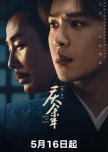
The Emperor’s Chessboard
Joy of Life Season 2 picks up right where the first season left off, in the most convenient and, frankly, ridiculous way possible. I remember thinking, what are the odds that belt would actually come into play? Yet somehow, it worked. I missed the crew, I was entertained, so I’ll take it. That pretty much sets the tone for the season. Joy of Life knows when to be clever, when to be absurd, and when to simply ask us to go along with it.If the first season was more character driven, with Fan Xian trying to balance his desire for a simple life against the expectations placed upon him, the second season leans more heavily into the plot. Fan Xian is now deeper in the game, fighting corruption, injustice, and an increasingly tangled web of political schemes. Many storylines from the first season continue to unfold, but the biggest elephant in the room is undoubtedly Fan Xian and Lin Wan Er.
The cat is finally out of the bag, and honestly, it hurt. There are so many things standing between Fan Xian and Wan Er that I sometimes wondered how these two could possibly make their relationship work. Yet this is one of the things Joy of Life does exceptionally well. It can move from comedy to something genuinely heartbreaking without making either feel out of place. The emotional moments hit because the story actually gives them room to breathe. There were deaths and sacrifices that genuinely made me cry, and when that happens, you know the drama has done its job. At the same time, I was very happy that the characters I desperately wanted to survive actually survived.
The second season also retains the series' signature way of wrapping depth in humor. This is not necessarily the kind of comedy that makes you laugh until your stomach hurts. It is more the kind that makes you shake your head with a smile and think, genius. The wit, sarcasm, ridiculous situations, and perfectly timed delivery constantly kept me entertained. Even when the story became politically dense, Joy of Life somehow managed to make it digestible. It is basically a bowl of complicated political noodles served with comedy on the side.
And at the center of all this remains Fan Xian, still one of the most likable protagonists around. He is witty, sarcastic, mischievous, clever, and just the right amount of troublesome. Zhang Ruo Yun also came back looking noticeably leaner, fitter, and more toned, and I have to admit, I loved the new look. His appearance in the first season was cute and charming, but this version of Fan Xian carries more gravitas. He looks like someone who has survived enough political nonsense to know exactly how much trouble he can cause.
Interestingly, there are fewer action scenes compared to the first season, but I did not mind. It actually fits the direction of the story. This season is more concerned with political maneuvering, relationships, and the consequences of decisions than with constant displays of martial arts. When the action does arrive, it feels more meaningful because the drama has spent time building up to it.
I particularly enjoyed Fan Xian's interactions with the Emperor. Watching these two challenge, test, and outmaneuver each other was fascinating. Honestly, I applaud Fan Xian, Chen Ping Ping, and every official in the room because I would have developed vertigo trying to figure out what the Emperor was actually thinking. The entire Qing court feels like the Emperor's chessboard, with everyone else moving according to rules they do not fully understand. There are schemes on top of schemes, plots on top of plots, and twists that somehow lead back to the Emperor's will. At some point, I just wanted to tell him, whatever you want, Your Majesty!
The political side of the story is also surprisingly fun because Fan Xian continues introducing modern concepts into ancient China. Treasury bonds, banks, intellectual property rights, and other ideas are explained so naturally that it feels like getting a free 101 course disguised as a historical drama. And somehow, I found myself getting excited whenever a modern-looking item appeared in ancient China. Oh, what this drama does to me.
Among Fan Xian's relationships, his friendship with the First Prince, Li Chen Ru, was probably my biggest surprise. I expected another difficult prince, but instead, the two actually get along rather well. They bond over their sense of righteousness, their connections to the same people, and, apparently, their ability to throw hands. I really enjoyed their friendship. Meanwhile, Fan Xian's relationships with the Crown Prince and Second Prince remain as complicated and politically charged as ever. Yet even these complicated dynamics are presented with enough humor and personality that they never became exhausting.
Wang Qi Nian also remains one of the highlights. His loyalty to Fan Xian is just as entertaining as ever, and I love this duo. Deng Zi Yue from the First Bureau is a welcome addition to Fan Xian's little crew too. He has a cute energy that fits nicely into the group.
But if there is one thing that made this season especially warm, it is the Fan family. Fan Jian and Liu Ru Yu continue to be wonderful parental figures, while Ruo Ruo remains adorable and proudly Fan Xian's number one fan. I also enjoyed seeing her learn medicine and surgery, especially because those skills eventually became useful. I am particularly interested in where her story with Wu Zhu will go, and I suspect that is something the third season will explore further. Fan Si Zhe also gets some interesting character development. He remains the cute younger brother, but there is more to him this season than comic relief. I am genuinely enjoying his growth and, more importantly, I hope the Fan family stays as warm and close as they are now.
The scene at the dock was especially meaningful to me. The revelations toward the end were not exactly surprising since the first season had already planted plenty of clues and, unfortunately, spoilers are everywhere. What I was more worried about was where those revelations would leave Fan Xian emotionally and where he would stand with his family. Seeing him reassure his parents on the dock completely got me. That Fan family hug was one of the happiest and most touching moments of the season, and yes, I cried. I am glad Fan Xian made that choice. As Wang Qi Nian would say, Fan Xian never disappoints.
One character I desperately wish had more screen time is Wu Zhu. Somehow, he appears even less than in the first season, yet he still manages to make me worry whenever he does show up. His story toward the end, together with the continued mystery surrounding the Divine Temple, brought back that same sense of curiosity I had in the first season. There is clearly something much bigger hiding behind all of this, and I am very much looking forward to seeing where it goes in Season 3.
Visually, the drama remains faithful to its established style. Some of the CGI is noticeably rough around the edges, but overall, the production still feels authentic and grounded. The color grading is soothing and easy on the eyes, the compositions are often pleasing, and the camera work is thoughtfully done. I especially enjoyed Wu Zhu's action sequence toward the end. The directing continues to be one of the show's strengths.
And then there is the music. The OST, background music, sound effects, and overall score add so much flavor to the drama. I genuinely enjoyed listening to it throughout the season. Even the use of yodeling somehow works. There were plenty of moments where I found myself completely absorbed in a scene simply because the music elevated it so well. Joy of Life understands that sometimes the soundtrack can be the secret ingredient that turns a good scene into a memorable one.
The ending is also very Joy of Life. Like the first season, it does not make a huge fuss about delivering a traditional grand finale. Instead, it simply keeps moving at its own pace and lets the story end where it naturally needs to end. Thankfully, unlike the first season, it does not leave me staring at the screen in existential despair because of a cliffhanger. There are still plenty of loose ends, but the season wraps things up neatly enough while teasing the next chapter in a straightforward, playful, and witty way. And honestly, I am ready. There are clearly many more stories to tell, so please speed it up!
In the end, Joy of Life Season 2 is just as witty, twisty, clever, layered, hilarious, poignant, and thrilling as its predecessor. It may shift from character driven storytelling toward a more plot heavy narrative, but it never loses the personality that made the first season so special. I enjoyed it just as much as Season 1, and now I am left with only one problem: waiting for Season 3.
Was this review helpful to you?


