


 25
25 46
46 8
8 1
1 1
1 1
1 1
1 1
1 1
1 6
6 2
2 3
3 1
1 1
1 1
1 1
1 3
3 1
1 3
3


Spilling the Tea on Glory
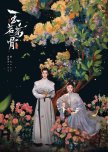
Lu Jiang Lai is a rising star magistrate whose spotless reputation comes crashing down when an old wife-murder case resurfaces. Implicated and pursued by enemies, his desperate escape ends with a fall off a cliff and a serious head injury. When he wakes up, his memory is completely gone. His unlikely savior turns out to be Rong Shan Bao, the sharp-minded daughter of the powerful Tea King and someone who once stood on the opposite side of him.
Instead of revealing his true identity, Shan Bao keeps him in the Rong mansion under close watch, unsure whether he is a threat, a liability, or something potentially useful. Assigned to stable duties mainly so she can keep an eye on him, Lu Jiang Lai does not resist. Even without his memories, his sharp instincts remain intact, and he decides that staying put is the safest option until he can piece together the truth. As the Rong family dives into a tense and competitive search for a suitable son-in-law, hidden motives and quiet power plays abound. In the middle of it all, Lu Jiang Lai and Shan Bao engage in a constant chess match of words and wits, one that slowly shifts from mutual suspicion into an unexpectedly heartfelt connection.
One of the biggest highlights of Glory is hands down its female lead. Rong Shan Bao is not written as “strong” in name only. She is decisive, ruthless when needed, and genuinely protective of her people. The moment she willingly sacrifices herself and walks straight into danger just to investigate the disappearance of her workers sets the tone for her character. This is not a woman who waits to be saved. She steps into the fire first and deals with the consequences later.
She is also refreshingly unapologetic. When she discovers her so-called man toy cheating, there is no drawn-out angst or messy back-and-forth. She cuts him loose immediately and, in a move that perfectly sums up her character, gives the other woman a job instead. No petty catfights, no misplaced blame. Just clean, efficient problem-solving. Honestly, that scene alone solidified her as a top-tier baddie.
On the flip side, Lu Jiang Lai can be a little hard to swallow at times. While his intelligence never really disappears, his constant kiss-up behavior toward Rong Shan Bao can get irritating. It is understandable to a point, given his situation and amnesia, but there are moments where it feels excessive and undercuts his supposed sharpness.
That said, Hou Minghao deserves credit. He absolutely excels at playing shameless, layered characters who know exactly when to act sincere and when to perform within a performance. Watching him switch between survival mode, flirt mode, and strategist mode is genuinely entertaining and one of the drama’s stronger points.
The drama is not without technical hiccups either. One oddly specific but unforgettable moment is in episode 7 around the 03:14 mark, where the background music cuts off so abruptly that it completely pulls you out of the scene. It is minor, but once you notice it, it is hard to un-notice.
My biggest gripe, however, lies with the way the male characters orbit the female characters, especially Rong Shan Bao. While her wealth and power explain some of the attention, the sheer level of obsession from characters like Yang Ding Chen and He Xing Ming feels overdone. Nearly every male character seems ready to bow at the feet of the women, and instead of feeling empowering, it starts to feel oddly indulgent. At times, it raises questions about whether the writer leaned a little too hard into a very specific fantasy, which unfortunately breaks immersion.
Overall, Glory thrives when it focuses on sharp character dynamics, power plays, and a genuinely formidable female lead. It stumbles when its admiration turns into exaggeration. While I can appreciate what the drama was trying to do, it ultimately was not my cup of tea. I found it boring, repetitive, and increasingly annoying, making it a difficult watch despite its strengths.
Instead of revealing his true identity, Shan Bao keeps him in the Rong mansion under close watch, unsure whether he is a threat, a liability, or something potentially useful. Assigned to stable duties mainly so she can keep an eye on him, Lu Jiang Lai does not resist. Even without his memories, his sharp instincts remain intact, and he decides that staying put is the safest option until he can piece together the truth. As the Rong family dives into a tense and competitive search for a suitable son-in-law, hidden motives and quiet power plays abound. In the middle of it all, Lu Jiang Lai and Shan Bao engage in a constant chess match of words and wits, one that slowly shifts from mutual suspicion into an unexpectedly heartfelt connection.
One of the biggest highlights of Glory is hands down its female lead. Rong Shan Bao is not written as “strong” in name only. She is decisive, ruthless when needed, and genuinely protective of her people. The moment she willingly sacrifices herself and walks straight into danger just to investigate the disappearance of her workers sets the tone for her character. This is not a woman who waits to be saved. She steps into the fire first and deals with the consequences later.
She is also refreshingly unapologetic. When she discovers her so-called man toy cheating, there is no drawn-out angst or messy back-and-forth. She cuts him loose immediately and, in a move that perfectly sums up her character, gives the other woman a job instead. No petty catfights, no misplaced blame. Just clean, efficient problem-solving. Honestly, that scene alone solidified her as a top-tier baddie.
On the flip side, Lu Jiang Lai can be a little hard to swallow at times. While his intelligence never really disappears, his constant kiss-up behavior toward Rong Shan Bao can get irritating. It is understandable to a point, given his situation and amnesia, but there are moments where it feels excessive and undercuts his supposed sharpness.
That said, Hou Minghao deserves credit. He absolutely excels at playing shameless, layered characters who know exactly when to act sincere and when to perform within a performance. Watching him switch between survival mode, flirt mode, and strategist mode is genuinely entertaining and one of the drama’s stronger points.
The drama is not without technical hiccups either. One oddly specific but unforgettable moment is in episode 7 around the 03:14 mark, where the background music cuts off so abruptly that it completely pulls you out of the scene. It is minor, but once you notice it, it is hard to un-notice.
My biggest gripe, however, lies with the way the male characters orbit the female characters, especially Rong Shan Bao. While her wealth and power explain some of the attention, the sheer level of obsession from characters like Yang Ding Chen and He Xing Ming feels overdone. Nearly every male character seems ready to bow at the feet of the women, and instead of feeling empowering, it starts to feel oddly indulgent. At times, it raises questions about whether the writer leaned a little too hard into a very specific fantasy, which unfortunately breaks immersion.
Overall, Glory thrives when it focuses on sharp character dynamics, power plays, and a genuinely formidable female lead. It stumbles when its admiration turns into exaggeration. While I can appreciate what the drama was trying to do, it ultimately was not my cup of tea. I found it boring, repetitive, and increasingly annoying, making it a difficult watch despite its strengths.
Was this review helpful to you?


