

 23
23 43
43 8
8 1
1 1
1 1
1 1
1 1
1 1
1 6
6 2
2 3
3 1
1 1
1 1
1 1
1 3
3 1
1 3
3


What Got Me Addicted to Chinese Dramas
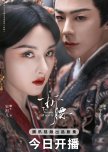
Enemies to lovers and arranged marriage, two tropes that never fails to catch my attention. Although the plot is cliché, the delivery was perfect. The story was well written and perfectly paced, leaving no plot holes or unanswered questions. The actors brought their respective characters to life.Liu Yuning flawlessly portrayed Wei Shao as the sharp and kind leader of the Wei family who grew up bearing a grudge and heavy responsibilities after being betrayed by the Qiao family. While Song Zuer was made for the role of Qiao Xiao as the beautiful, kind, and strategically smart daughter of the Qiao family who was never afraid to stand up for her family.
I particularly like how wise Wei Shao was. Despite his grudge towards the Qiao family, he always puts the people first. Although Qiao Xiao’s beauty caught his attention at first glance, as the leader, he was not blinded by it. He remains steadfast in his resolve to care for the people. I also like how despite her beauty, Qiao Xiao was also a smart, strong, and independent woman, who like her grandpa said, could lead the family if only she was a man. Even as she falls for Wei Shao, she was not lovestruck and she still has her family in the back of her mind.
The OSTs, set, color grading, all gave the right ambience to this drama. One thing worth mentioning is the ending. I would say that it’s not so often a Chinese drama would have that perfect ending, but this one definitely does. The ending gave the closure I need after watching the whole story.
Lastly, I would like to thank Wei Shao’s advisor because without him, the drama could’ve ended by episode 1.
Was this review helpful to you?
Bloom Once, Explain Never
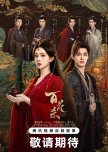
Blossoms of Power is a tale where revenge blooms in the unlikeliest of gardens. After surviving the massacre of the Gu family, Gu Qing Zi returns under the identity of Shen Xi He, the Princess of the Northwest, trading innocence for steel and resolve. Across the political chessboard stands Crown Prince Xiao Hua Yong, physically frail yet always several moves ahead of everyone else. As ambition collides with loyalty, the two form a formidable alliance, navigating a court where every smile conceals a dagger and power belongs to those willing to outplay fate itself.The opening immediately grabbed my attention. Watching Qing Zi orchestrate her own death to frame another family already tells you everything you need to know about her. She is intelligent, calculative, ruthless when necessary, and always thinking several steps ahead. Her death also leaves Prince Xin, her husband, devastated. Forced to oversee the Gu family's massacre despite wanting to spare her, he is left helpless as she chooses death on her own terms. Then, almost immediately, the story shifts to the real Shen Xi He, a gentle and refined princess travelling to the capital for an arranged marriage. She falls into the water after an assassination attempt by one of her own maids, a mysterious double moon appears, and suddenly everything changes. That is also where my biggest issue with the drama begins.
Considering China's restrictions on resurrection, transmigration, and time travel stories, I was genuinely curious about how the drama would handle this premise. Instead of explaining it, however, the narrative simply leaves everything hanging. There is also a three year gap between Qing Zi's death and Xi He falling into the water, making the situation even more confusing. My own interpretation is that the double moon temporarily opened some kind of path between souls. Qing Zi's body had already died while her soul remained in limbo, whereas Xi He's body was still alive but somehow inherited Qing Zi's memories, skills, and personality while retaining her own memories. That explanation at least allows me to believe Xi He herself never truly disappeared. It makes the situation feel less unfair than having her body completely stolen.
The problem is that this is only my interpretation because the drama never confirms anything. It asks viewers to fill in the blanks themselves. Even stranger, Xi He wakes up with almost no confusion whatsoever. There is no existential crisis, no struggle adapting to a completely different life, and barely any reaction to such an unbelievable supernatural event. She simply wakes up and continues living as the fierce strategist we knew as Qing Zi. The people around her notice her dramatic personality change, but those concerns are brushed aside almost comically. Even her father and brother eventually conclude that the capital simply changed her. It almost feels as though soul swapping is just another Tuesday. For the rest of this review, I will simply refer to both Qing Zi and Xi He as Xi He.
Unfortunately, this habit of withholding explanations continues throughout the drama. Blossoms of Power often drops important details in passing or hides context within blink and you'll miss it shots. It almost feels like the drama is challenging viewers to solve a puzzle rather than simply telling its story. Sometimes that is rewarding, but other times it becomes frustrating because missing one tiny detail can leave an entire plot point feeling incomplete.
After Xi He survives her fall, Crown Prince Xiao Hua Yong discovers her unconscious and gives her a rare medicinal plant that he had risked his own life obtaining. He could have used it to treat himself, but instead chooses to save a woman he has just met. It sounds like love at first sight for Hua Yong. As he accompanies her journey to the capital, his admiration and respect only grows. He quickly recognizes Xi He's intelligence and strategic mind, seeing her as someone who can stand beside him rather than behind him. He is then determined to make her his Crown Princess. Now, Hua Yong deserves his own paragraph because shameless might as well be his middle name.
This man has absolutely no concept of subtlety. His flirtation is direct, relentless, and almost weaponised. Every other episode had me shrinking into my chair from second hand embarrassment because of another cheesy line or another overly confident romantic gesture. At first I genuinely questioned whether I could survive dozens of episodes of this. Strangely enough, somewhere along the way, I became desensitised. I ended up reacting exactly like Xi He herself, smiling, shaking my head, and quietly accepting that this hopeless romantic was simply being himself. Like eating overly spicy food, eventually your tongue gives up resisting.
That said, the drama occasionally mistakes exaggeration for spectacle. The most absurd example has to be Hua Yong climbing an icy mountain to retrieve another medicinal plant for Xi He. As an isolated romantic moment, it certainly looks impressive. In context, though, it made me question every law of physics. His experts fail to find the plant, naturally he succeeds, and then he somehow jumps off a cliff only to throw a rope back onto the very same cliff and climb it again. Unless I completely misunderstood the geography, I spent more time wondering why he did not simply climb down normally than appreciating the romance. It felt less like survival and more like an opportunity to farm aura points. Younger me probably would have swooned. Current me just stared at the screen wondering what exactly I had witnessed.
Despite Hua Yong's overwhelming devotion to Xi He, I was pleasantly surprised that his character never became one dimensional. I usually find characters whose entire world revolves around their love interest rather shallow, but Hua Yong avoids that trap. Before becoming Xi He's biggest supporter, he is first and foremost someone worthy of becoming Emperor. He genuinely cares for his people, takes his responsibilities seriously, and possesses intelligence equal to Xi He's. His playful exterior hides someone remarkably capable, which gives his character far more depth than his endless flirting initially suggests.
Ironically, despite all that effort, I never fully bought into the chemistry between Hua Yong and Xi He. Throughout most of the drama, Xi He remains emotionally guarded while Hua Yong does almost all the emotional heavy lifting. Their relationship often felt less like two people falling in love together and more like one person running a marathon while the other politely walks behind. Even after marriage, when they finally became more affectionate, I still found myself appreciating them more than actually feeling butterflies. Hua Yong's affection is certainly entertaining, but it often felt so excessive that I struggled to fully believe it as genuine love.
Ironically, the supporting couple completely stole the show for me. Bu Shu Lin and Cui Jin Bai had the chemistry I was searching for all along. Shu Lin disguises herself as a man in order to inherit her family's position, and Fan Shuai Qi absolutely sells the role. She is easily one of the most convincing female crossdressers I have seen in a Chinese costume drama. What begins as a scheme involving Jin Bai slowly develops into genuine affection, with Jin Bai hilariously questioning his own identity long before discovering Shu Lin is actually a woman. Their relationship develops naturally, their interactions feel believable, and by the time romance finally blossoms, I was fully invested. It is just unfortunate that censorship noticeably limited their romantic scenes, especially during the latter half of the drama.
The supporting cast in general is one of the drama's strongest assets. Lai Wei Ming was fantastic as Prince Lie and honestly had me wishing his character received a happier ending. Xu Zheng Xi once again proves that yearning is practically his speciality. Ever since Love of Nirvana, it feels like he has mastered the art of looking emotionally exhausted. It suits him extremely well, although I also hope future roles allow him to showcase different sides of his acting. I also have to give special praise to Lin Zi Ye as Tian Yuan. Every expression he made whenever Hua Yong unleashed another shameless line was comedy gold.
The main cast, however, is more of a mixed bag for me. I still cannot decide whether I actually liked He Yu's performance as Hua Yong. There are moments where he fits the role perfectly, but there are just as many where something feels missing. I actually preferred him in previous roles where he played colder and more reserved characters. Here, he strangely gives off supporting male lead energy rather than carrying the screen as the main lead. Outside of Hua Yong's outrageous flirting, I never felt especially emotionally attached to him, particularly during scenes that required heavier emotional delivery.
Meng Zi Yi left me similarly conflicted. Her naturally doll like appearance suits Xi He's composed and calculating personality beautifully. Unfortunately, that restraint also carries into scenes requiring stronger emotional expression. Her emotional breakdown near the end particularly disappointed me. Without the context of the scene, I genuinely might have mistaken it for someone rolling around in the snow with severe stomach cramps. Crying scenes need messy expressions. Furrowed brows, trembling lips, strained muscles, anything that convinces me the character is breaking apart. Instead, she often looks more concerned about maintaining a flattering camera angle than completely letting herself go emotionally. I actually enjoyed her performance in Blossom, but Princess Gambit simply did not work as well for me.
Visually, Blossoms of Power clearly aims for elegance. While certain locations such as the East Palace flower garden are genuinely beautiful, along with the colorful fireworks sequences, the overall presentation never feels particularly groundbreaking. Most of the cinematography falls into familiar territory. Even so, the production consistently looks polished and luxurious enough that I still appreciated the effort. The soundtrack also deserves praise. None of the songs have stayed on my playlist afterwards, but within the drama itself they always elevate the mood of each scene perfectly.
As the story approached its conclusion, however, the writing once again fell back into its old habit of leaving important questions unanswered. Prince Xin became the biggest emotional roller coaster in the entire series. I disliked him, sympathised with him, hated him again, then somehow liked him once more. While his final revelation attempts to tie everything together, it ultimately feels more convenient than convincing. It almost seems as though the writers decided his redemption at the last minute simply because every major character needed closure. The Emperor, on the other hand, genuinely surprised me. He feels remarkably human, and saying anything more would spoil one of the better aspects of the story.
[SPOILERS]
The ending itself also feels like the writers handing viewers a neatly wrapped gift while quietly hoping nobody asks too many questions. I appreciate that the drama chose a happy ending, I really do, but it never fully explains what actually happened to Hua Yong. His future after his son becomes Emperor also remains rather vague. Perhaps the bedtime story he tells his son reflects his desire to live peacefully among ordinary people while continuing to care for them from afar. That interpretation makes emotional sense, but practically speaking, I still have many questions. Is he simply going to remain inside the palace while pretending politics no longer exists? Your guess is honestly as good as mine.
[SPOILERS END]
Overall, Blossoms of Power is a decent watch that had me alternating between smiling, cringing, and scratching my head. One episode had me hiding behind a pillow from second hand embarrassment, while the next had me pausing to question the logic of what I had just watched. Watching it as an ongoing series with one or two episodes each day probably helped smooth out some of those frustrations. At the end of the day, this is neither an outstanding masterpiece nor a disappointing failure. It sits comfortably somewhere in the middle. If you're willing to embrace its shameless romance, overlook a few logic gaps, and accept that not every mystery will receive an answer, Blossoms of Power still offers an entertaining journey. Sometimes a flower blooms beautifully even when its roots are a little messy.
Was this review helpful to you?
This review may contain spoilers
Behind Every Great Man Is a Woman With a Strategy
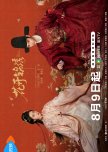
Born with little more than ambition and a good heart, Zhao Ling has no intention of staying at the bottom of the ladder. His life takes an unexpected turn when he crosses paths with Fu Ting Yun, a noblewoman whose reputation is shattered by a scandal she did not cause. What begins as a desperate escape slowly turns into a partnership. Against family grudges, political intrigue, and the whims of fate, Zhao Ling and Fu Ting Yun learn that love is sometimes less about finding the right person and more about choosing the same road, even when it leads straight into the storm.The Road to Splendor was one of the good dramas I’ve watched this year. In a year where some productions have started leaning heavily on AI and shortcuts, this drama felt refreshingly authentic. You can see the effort behind it. From the locations to the cinematography, costumes, performances, and even the way certain scenes were staged, there was a sense that people actually cared about what they were putting on screen.
The drama opens with a wedding procession colliding with a funeral procession, which is already one hell of an introduction. Instead of immediately explaining everything, it takes us back to show how we arrived at that moment. And honestly, what happened to Ting Yun was heartbreaking. It is difficult to watch a woman live in a world where chastity and reputation can outweigh her own voice, especially when her own family treats her as something that can be sacrificed for their standing. Ting Yun was essentially raised to become a bargaining chip for the Fu family, protected and groomed so that she could make a "good marriage" and bring power to the family. Then, when a scandal she did not cause destroyed her reputation, the same family that had raised her simply abandoned her.
The funeral procession arranged for her was therefore much more than a dramatic scene. With Zhao Ling's help, Ting Yun arranged a wedding procession that collided with the funeral procession prepared by the Fu family. To me, that collision symbolized the death of her old life. The girl who had lived under the protection and expectations of the Fu family was gone. Her youth, sheltered ideals, and belief that she could simply follow the path chosen for her were buried there. What remained was a woman who had to stand on her own feet and decide where she wanted to go. That opening also gave the story a strong emotional foundation. Ting Yun's journey was not simply about revenge or proving everyone wrong. It was about reclaiming ownership of her own life. And this was where Deng En Xi really impressed me.
Fu Ting Yun might just be the most impressive role Deng En Xi has taken to date. She did not merely play Ting Yun. She became her. There is an elegance and charisma to her performance, but also an underlying sharpness that makes Ting Yun feel like someone who can walk into a room and quietly take control of it. A lot of that comes from her expressions and delivery rather than the script itself. What I especially appreciate is that Ting Yun was not written as an invincible woman empowerment poster. She is intelligent, strategic, and capable, but she is also confused, vulnerable, explosive, and sometimes wrong. She fails as much as she succeeds. That balance makes her feel human. Empowerment is much more convincing when the character is allowed to struggle instead of winning simply because the script says she is strong.
One scene that really demonstrated both the drama's willingness to be raw and Deng En Xi's commitment to the role was when Ting Yun was poisoned. Zhao Ling arrives at just the right moment and helps her induce vomiting with his fingers in her mouth. Even that alone felt unusually visceral for a Chinese drama. But then Ting Yun tries to induce vomiting herself by eating rain-soaked leftover noodles. I have a weak stomach, so I was genuinely speechless watching that scene. It was probably the most impressive and well-performed scene in the entire drama for me. I haven't seen any behind-the-scenes footage of how they filmed it, but that scene alone speaks volumes about Deng En Xi's dedication. I don't know how she managed to stomach it, but respect.
Then there is Zhao Ling. Zhao Ling is a salt trader, or depending on how you look at it, a bandit. He is not book smart, but he is street smart. Beneath his rough exterior, though, is a ridiculously sweet heart. Ding Yu Xi plays that duality beautifully. His puppy eyes can make Zhao Ling look almost harmless, but the moment his expression sharpens, you immediately remember that this man can be ruthless. I especially like that the drama does not try to sanitize him. When he cares about someone, he cares with complete sincerity. When someone hurts the people he loves, his ruthlessness has very few boundaries. He can simply pull out a knife and kill someone on the spot. And somehow, both sides of him feel believable.
His journey with Ting Yun is where the drama really shines. They become partners in the truest sense. Ting Yun brings intelligence, strategy, and the ability to see several moves ahead. Zhao Ling brings strength, street smarts, instincts, and the ability to handle situations that cannot be solved with a clever plan. They complement each other beautifully.
After they encounter the Crown Prince, who will later become Emperor, Ting Yun encourages Zhao Ling to join the army and aim for officialdom. She also tells him that she wants to marry him and will continue helping him. Of course, Ting Yun is not completely altruistic about this. His success benefits her too. But I like that their relationship is built on mutual interest that gradually grows into genuine loyalty. They head to Ganlin in the northwest, with Ting Yun taking her mother's surname, Xie, and becoming Zhao Ling's fiancée. Zhao Ling joins the army and tries to climb the ranks while Ting Yun manages things from home.
Ganlin was probably my favorite arc. It is where Zhao Ling's character development and his relationship with Ting Yun felt the strongest. You get to see them build a life together, face problems together, and gradually become the kind of couple who can trust each other with their backs turned. As partners, they absolutely slay. As lovers, though, I did not feel much sparks. The chemistry between Zhao Ling and Ting Yun is strong when they are working together, but as a romantic couple, they did not give me as much spark as I wanted. And honestly, I blame the writing. Both Ding Yu Xi and Deng En Xi have proven that they can deliver romantic expressions. If anything, their performances are doing a lot of heavy lifting here.
Zhao Ling's feelings were easier for me to see. His affection develops quietly but convincingly. He starts treating Ting Yun like a precious gem. He knows she is strong enough not to break, but he still does not want her to get scratched or fall to the ground. There are little moments where he is caught off guard by something she says or does, and you can see him slowly developing that soft spot. Ting Yun, however, was harder for me to read romantically. She clearly cares about him. She trusts him. She considers him someone she can walk through life and death with. But for most of the drama, she felt more like she had found her ride-or-die partner than the man she was romantically falling in love with. The circumstances and writing simply did not give her enough room to show romantic tension. The only time I genuinely felt Ting Yun's completely loving gaze was during the final swing scene.
One particular line from Zhao Ling stayed with me: "I saved you from Biyun Nunnery, not to let you end up in another one." That line basically defines their relationship. When Zhao Ling eventually comes to Ting Yun with poison, she does not react with huge surprise. It feels more like she is thinking, "So it has come to this." Somewhere in the back of her mind, she had always been prepared for the possibility that even Zhao Ling could become another person who would determine her fate. She accepts the poison because the choices she made were hers. She chose the marriage. She chose the capital. She chose this road. She does not regret it.
Then Zhao Ling takes the poison for her. That is when she is genuinely shocked. Because Zhao Ling has always wanted the best for her. He started this journey because of her, and somewhere along the way, he developed ambitions of his own. But underneath all of that, it was still about giving her the life she deserved. As partners, they are excellent. As a romantic couple, I just wish the drama had allowed them to breathe a little more. Zhao Ling literally says he wants to marry for love, yet somehow I did not always feel that love on screen as strongly as I wanted to.
The Ganlin arc itself eventually started leaning into more familiar tropes too. My biggest disappointment was Yu Jing Xiu. He was much more interesting when he was simply trying to fight against his parents and make a name for himself. I also enjoyed him more when he schemed against Ting Yun because his mother liked her and because she admired his mother. Once he started falling for Ting Yun because she saved him, then putting her on a pedestal as some goddess who had broken free from her family's shackles, his character became another typical obsessive and possessive second male lead. He went from interesting to predictable.
After Ganlin, the story takes Zhao Ling and Ting Yun to the capital. Zhao Ling earns an official position and becomes one of the Emperor's men, while Ting Yun takes charge of the Xie family business and continues supporting him with strategy and handling matters from the women's side. I actually enjoyed the first half of the capital arc. Watching them navigate court politics together was fun, especially because their strengths remained complementary. They really felt like a power couple in the practical sense. Although at some point I was just sitting there thinking, can you two please get married already? There are so many people hovering around them that I just wanted them to make things official.
The family and political conflict were also entertaining, especially watching the Zhao and Yu families clash through their respective women. Behind every powerful man is apparently a woman who listens to his problems and then quietly whispers the strategy he should use. I also appreciated that Madam Yu was not written as completely black or white. She knows when to attack and when to retreat. Ironically, her greatest victim might actually have been her own son, Jing Xiu. It was wild watching the Yu couple sacrifice their son so easily and claim it was for the family when it often felt more like they were protecting their own pride and saving their own skin.
Then came episode 31. For me, that was the emotional climax of the drama. By that point, I had become accustomed to the drama's misleading previews, ruses, and convenient last-minute solutions. Whenever something looked disastrous, I had started assuming there would be some trick around the corner. By the end, I was basically trained to think, "It's fine. Everyone will survive." However, episode 31 was different. There was no convenient ruse to soften the blow. It was simply the Emperor finally acting with the authority and responsibility of an Emperor. What happened was heartbreaking, made even more painful because the sacrifice could have been avoided. I was emotionally drained after that episode. Ironically, the actual finale did not affect me nearly as much.
The ending was steady, predictable, convenient, and ultimately anticlimactic. I was not angry with it, but I wanted to feel the victory of the leads more. After everything Zhao Ling and Ting Yun had endured, I wanted that feeling of finally making it through the storm. I did not need an explosive finale. I just wanted the emotional payoff to match the journey. The resolutions for the supporting characters were mostly decent, though some were much more satisfying than others.
Fan Ya Ke's ending felt liberating. I was genuinely happy for her, and I appreciated that the drama did not force her into the cliché of simply returning to parenting her son. Instead, it connected her ending back to the beginning, with her following in her father's footsteps and becoming a teacher. The Yu family's ending was where I felt the drama dropped the ball.
I did not need everyone to be beheaded, but I wanted the wins and losses to feel more tangible. Yu Guo Dong dying by accident was especially disappointing. After everything he had done and everything the story had built up, reducing his death to an accident felt anticlimactic. I would have found it much more satisfying if Jing Xiu had intentionally killed him, or if the Emperor had given him a severe punishment.
Madam Yu's ending was also surprisingly mild. For all the things she did, her punishment felt like a very chill layoff in modern terms. It's sad, but she'll live. I think the ending would have had more impact if we had actually seen more of her devastation and the consequences of losing everything. Instead, it felt rather lukewarm. The drama even had Ting Yun verbally explain that becoming a commoner was worse than death for Madam Yu, almost as if the script needed to convince both Ting Yun and the audience that this was a satisfying punishment.
As for Jing Xiu, his ending did not really feel like a defeat. If anything, it felt like he finally escaped his parents' cage. So perhaps it was less a punishment and more a gift. Still, I do appreciate that the drama gave closure to all the major characters and showed us where everyone ended up. Ting Yun and Zhao Ling's ending, especially that final swing scene, was beautiful.
One of the drama’s greatest strengths is the visuals. I loved how much effort went into the locations and cinematography, especially during the Ganlin arc. Rather than relying entirely on AI, green screens, and the familiar Hengdian setups, the production actually went out and filmed in different locations. The desert scenes were gorgeous. The autumn trees by the lake were gorgeous. There was a sense of scale that made the journey feel like an actual journey.
The color grading was also lovely. Warm golden tones made the happier and more splendid scenes feel warmer, while cooler tones were used for sadness and isolation. The camera angles, foreground elements, composition, and blocking were often thoughtfully done. I usually have a love-hate relationship with all the drapes in costume dramas, but this drama actually knew how to use them. The framing often felt aesthetic without becoming obviously obsessed with being aesthetic.
And the costumes, hair, and makeup were beautiful. They genuinely made me appreciate the fashion of the era more than I expected. The OSTs were another pleasant surprise. I still hear some of them in my head even after finishing the drama, which is usually a good sign.
Overall, The Road to Splendor is a drama I enjoyed very much, even though I cannot call it perfect. Its strongest points are its leads, production effort, cinematography, and costumes. Despite the parts where the drama stumbles, I would still recommend it. There is effort here. There is personality here. There are performances worth watching. There are scenes that genuinely surprised me. There are beautiful locations, gorgeous costumes, strong cinematography, and characters who are more nuanced than they initially appear. Most importantly, The Road to Splendor feels made rather than assembled. And in an era where you can sometimes feel the shortcuts behind the screen, that authenticity is worth something.
Was this review helpful to you?

The Road Was Worth Every Detour
Sometimes the road to success begins with a detour. Returning to her hometown, Ph.D. student Lin Wan Xing unexpectedly takes a job as a high school sports equipment custodian, only to find herself rebuilding a forgotten football team alongside her mysterious tenant, Wang Fa, a former youth football coach from the UK. What starts as an uphill battle gradually becomes a story about resilience, healing, and finding purpose again. It reminds me of the Japanese saying nana korobi ya oki, fall seven times, stand up eight. Road to Success carries that spirit from beginning to end, showing that true victory is not measured by the final score, but by the courage to keep moving forward.One thing I appreciated from the very beginning is that this drama knows exactly what kind of story it wants to tell. It is not a heavy character study that lets every emotional conflict simmer for several episodes, nor does it aim to dissect every issue down to its deepest layers. Instead, it chooses to tell many stories, giving almost every character their own moment to shine before naturally moving on to the next. Surprisingly, I never found this disappointing because the pacing is handled remarkably well. The narrative always feels clear with a proper beginning, middle, and end for each arc. It knows when to slow down and let emotional moments breathe, and when to pick up the pace without making the story feel rushed. As a comfort drama, it never overwhelms me with exhausting conflicts, yet it still made me genuinely invested. There were even several moments that caught me off guard emotionally and left me tearing up. I found myself sincerely rooting for these characters every step of the way.
Lin Wan Xing is easily one of my favorite parts of the drama. She feels like a ray of sunlight peeking through a crack in a closed window. Burdened by painful memories and lingering regrets, she returns home intending to live quietly, following her grandfather's wishes to simply exist without carrying the weight of ambition anymore. She plans to do only what her job requires, perhaps even less. Yet kindness has a funny way of refusing to stay hidden. Despite her reluctance, she slowly builds genuine connections with the football team and begins helping them understand not only the game, but also themselves. I especially loved how the drama incorporated her psychology background into her interactions with the students. Many of the methods she introduced felt surprisingly practical, and I even found myself wanting to apply some of them in real life.
Yu Shu Xin did a wonderful job portraying Wan Xing. I know her naturally cute mannerisms tend to divide audiences, but personally, I don’t find it distracting. In fact, I think it fits Wan Xing's personality perfectly. Her warmth, optimism, and occasional adorableness are exactly the qualities that slowly pull Wang Fa out of his shell. If I had one criticism, it would probably be her wardrobe. Her outfits are undeniably beautiful, but I occasionally wondered whether they were appropriate for someone working at a school. Maybe school regulations in China are different, but from my perspective, some outfits felt more suited for a fashion shoot than faculty attire. I also think that she sometimes appear distant or too indifferent with the team but I’m not familiar with teacher student relationship enough for me to judge.
Wang Fa, also known as Winfred Wang, initially comes across as the classic emotionally distant man carrying unresolved regrets. As he spends more time with Wan Xing and the football team, he gradually smiles more, opens up, and rediscovers his passion for coaching and life itself. As a romantic lead, I absolutely adored him. The progression from suspicion to admiration and eventually love feels believable because the drama takes time showing him quietly observing Wan Xing's kindness, intelligence, positivity, and unwavering care for others.
As a legendary football coach, however, I have mixed feelings. The story tells us how capable and famous he is, and there are certainly moments where his expertise shines through, but they never left a lasting impression on me. More often than not, he quietly stands on the sidelines until Wan Xing encourages him to step in or acts whenever he sees her in distress. Ironically, Wen Cheng Ye sometimes came across as the better strategist and coach. Chen Jing Ke was also somewhat hit or miss for me performance wise. Sometimes his expressions felt too restrained, almost as if he was trying a little too hard to look cool, while other scenes landed perfectly. Objectivity aside though, the man is ridiculously handsome. Every time he appeared on screen, I found myself reaching for the screenshot button more often than I probably should have.
Before watching, I had heard people describe this as a "she fell first, he fell harder" romance, so that was what I expected going in. To my surprise, it is almost the complete opposite. Wan Xing is emotionally guarded because of her past and far too occupied with her football team to spend much time thinking about romance. Wang Fa, meanwhile, slowly finds hope again through her presence. Since he spends so much time quietly observing her, it makes perfect sense that his thoughts gradually become filled with her while hers remain focused almost entirely on her students. Watching him shamelessly pursue her while she stays wonderfully oblivious was incredibly entertaining. Their relationship grows naturally, and when Wan Xing finally reveals every painful part of herself, expecting rejection, Wang Fa simply tells her that she is wonderful exactly as she is. It is one of the sweetest moments in the entire drama. And of course, because this is still a romance drama, we also get the classic rich guy fantasy of renting an entire theme park just to confess without expecting anything in return. Their relationship is gentle, healthy, and undeniably adorable.
As much as I loved Wang Fa himself, I think the real treasure is actually the Wang family. They might honestly be one of my favorite families in any Chinese drama. Papa Wang is hilarious with his cheerful rich dad energy, but beneath that playful personality is someone incredibly capable who resolves Wan Xing's family issues with surprising efficiency. Mama Wang only appears briefly, yet immediately leaves a strong impression as a brilliant, charismatic professor. Wang Fa's sister is equally impressive as a confident businesswoman helping manage the family company. What makes this family so refreshing is that despite their wealth and influence, they never look down on others. They warmly accept both Wan Xing and Yu Bo without hesitation. By the end, I almost felt like Wang Fa was simply the bonus package that came with this wonderful family.
Although the romance is charming, the Hongjing football team is undeniably the true heart of the story. The students quickly became the emotional anchor that kept me invested until the very end. I love that I could remember all eleven team members by face, even though not every player received an equally developed storyline. Wen Cheng Ye and Fu Xin Shu understandably receive the deepest arcs, while Qin Ao, Lin Lu, and Chen Jiang He each get memorable moments of their own. Even those with smaller roles still felt like part of one family rather than forgettable background characters. I have such a soft spot for these kids. They simply want to play football together, yet constantly face rejection because the school has little faith in them. Watching them slowly earn trust through perseverance made every small victory feel rewarding. I also appreciate that the drama never sells unrealistic positivity. Success is earned through failures, disappointments, and repeated setbacks, making every achievement feel much more meaningful. The young actors deserve plenty of praise because they brought so much sincerity and energy to their performances.
Visually, the drama is also quite pleasing. Beyond the crisp cinematography, I like how the lighting and framing subtly enhance the emotions of each scene. It is not flawless, of course. There are a few moments where certain camera angles are clearly chosen more for convenience than realism, especially during some of Wang Fa's football demonstrations. The early episodes also contain slightly choppy editing that occasionally left me wondering how one scene suddenly transitioned into the next. Thankfully, these issues become much less noticeable as the series progresses. The soundtrack is another highlight. Every song feels perfectly chosen for the drama's atmosphere, and several tracks happily continued living rent free in my head long after I finished watching.
The ending stays true to the overall tone of the series. It neither aims for an explosive climax nor settles for an anticlimactic finish. Instead, it provides enough closure for most of the major characters while leaving some details to the imagination. I do wish we had learned what became of each football team member, even if it had only been through a brief narration or text epilogue. Ju Li's conclusion also felt rather random, as if becoming a band's vocalist suddenly appeared out of nowhere. To be honest, I never fully understood her purpose in the story beyond acting as a harmless romantic distraction or teasing a possible female crush on Wan Xing. I also would have loved seeing more of the supporting cast during the final episode. Still, while the ending is not particularly memorable, it remains satisfying enough and fits the drama's comforting nature.
Overall, Road to Success became exactly the kind of drama I hoped it would be. It is warm without becoming shallow, emotional without becoming exhausting, and optimistic without pretending that life is easy. It reminds us that success is rarely a straight road. Sometimes it comes after taking the long way around, stumbling countless times, and finding people willing to walk beside us until we are ready to stand again. It may not be the deepest sports drama or the most unforgettable romance, but it has a sincerity that quietly works its way into your heart. Long after the final whistle blows, I found myself missing these characters, this team, and the comfort they brought me. That alone feels like a victory worth celebrating.
Was this review helpful to you?
This review may contain spoilers
The Math Adds Up. The Romance Doesn't.
I went into Genius Girlfriend with quite a bit of anticipation, partly because of its cast and partly because of the reuters. Unfortunately, the drama ended up being one of those cases where the ingredients sound better on paper than they taste on the plate.At its core, Genius Girlfriend follows Lin Zhi Xia, a girl who is brilliant with numbers but supposedly awkward with people. She crosses paths with Jiang Yu Bai, the charming golden boy who initially seems like he could be her academic nemesis. I was honestly expecting an enemies-to-lovers setup when Yu Bai paid attention to Zhi Xia being the school's top scorer. Instead, we got something much sweeter. Yu Bai was actually nervous when he met her, and rather than treating her as an enemy, he genuinely wanted to be her friend and compete with her fairly. Their friendship gradually becomes the emotional foundation of the story, and eventually Yu Bai realizes that what he feels for Zhi Xia may be more than friendship.
I actually liked Yu Bai's competitiveness quite a lot. His decision not to team up with Zhi Xia for the math competition made sense to me, despite some criticism from other viewers. Sometimes being friends with someone much better than you at something can quietly chip away at your confidence. Wanting to compete against her from another group was, in a way, his attempt to stand beside her rather than behind her. It was less about beating her and more about proving to himself that he could be on the same level. That's probably one of the healthiest portrayals of academic competitiveness I've seen in a youth drama. Hu Yi Tian played Yu Bai well enough. Nothing particularly mind-blowing, but he wasn't bland either, which suited the character. I also didn't have much of an issue with him playing a high school student. He didn't look so old that I was constantly pulled out of the story.
Tian Xi Wei also did well as Zhi Xia. The character is described as socially awkward, but I honestly didn't see much awkwardness in her. She is simply extremely logical and inexperienced in navigating the more irrational parts of human interaction. Give her one socially capable person who accepts her for who she is and explains how the world works, and she'll be perfectly fine. I have socially awkward friends, and Zhi Xia doesn't really strike me as one. Still, I enjoyed watching her grow. Tian Xi Wei gave Zhi Xia a cute, innocent, and naive quality during her school years, while her adult portrayal showed someone who had gained a better understanding of the world without losing her conscience and convictions. That consistency in her core personality was one of the stronger aspects of the drama.
Unfortunately, I couldn't feel the romantic chemistry between Zhi Xia and Yu Bai beyond friendship and an adolescent crush. And this is especially painful for me because I am a sucker for slow burn romance. I love slow burns. Give me lingering gazes, tiny gestures, emotional intimacy, accidental hand touches, and all those crumbs that make viewers scream into their pillows. I don't need endless kissing scenes to believe two people are in love. Romance isn't measured in lip-to-lip contact. The problem here is that I didn't even feel the slow burn.
The drama kept their high school relationship remarkably innocent for a very long time, which I understand. Chinese coming-of-age dramas often handle teenage romance with a certain restraint, and I don't necessarily need them to start dating in high school. But if the intention was to keep things innocent, there still needed to be more subtle sparks. The friendship itself was convincing. The romance was not. By the time they finally became romantic, they felt more like two best friends who had collectively decided, "Well, I suppose we're dating now." Even the romantic gazes and supposedly intimate moments didn't quite reach me. This becomes even more complicated when Shen Fu Xuan enters the picture.
Fu Xuan is lonely, intelligent, quiet, and much more similar to Zhi Xia than Yu Bai. Interestingly, he is also attracted to Zhi Xia because of her intelligence. In fact, the timing of his interest creates a giant "what if" hanging over the entire story. What if Zhi Xia and Fu Xuan had met first? What if Fu Xuan had been given the same amount of time Yu Bai had to understand her? What if both men had started from the same position?
That is not necessarily a bad thing for a love triangle, but the drama didn't give me enough reason to dismiss those possibilities. Many viewers may argue that Yu Bai understands Zhi Xia better, but I kept thinking that perhaps Fu Xuan could have understood her just as well if circumstances had given him the same opportunity. Once a drama makes me start doing alternate timelines in my head, the romance has already lost some of its footing. It also doesn't help that Lai Wei Ming is incredibly charming here and portrays Fu Xuan well. So now I have both a believable alternative and an actor making me wonder about the road not taken.
Ironically, the relationship I cared about the most was not Zhi Xia's romance at all. It was her relationship with her older brother, Lin Ze Qiu. Ze Qiu is almost suspiciously perfect. He is a thoughtful son, a caring brother, and only one year older than Zhi Xia, yet he worries about her. They bicker like normal siblings, but the moment Zhi Xia comes home late, he is ready to lose his mind and call the police. He even asks their parents to get her a cellphone when he doesn't have one himself.
One of my favorite details was his initial reluctance to let people at school know that Zhi Xia was his sister. I assumed it was because she was so academically brilliant that he didn't want people comparing them. Nope. It was because he was worried that people would discover her brother wasn't as smart as she was and that she would feel embarrassed. That tiny reveal told me so much about how deeply he cared about her. I also loved the scene where he initially refuses to walk to school with her, only to change his mind when she looks distressed. Once he notices that she needs him, he immediately switches into protective big-brother mode and doesn't let her out of his sight. Their conversations have that lovely sibling combination of genuine affection and slight awkwardness. They clearly care about each other deeply, but neither of them is particularly good at saying it directly.
Wu Jia Kai deserves credit here. Despite playing someone only a year older than Zhi Xia and being even younger than some of his co-stars in real life, he brought a surprisingly mature presence to Ze Qiu through his expressions, delivery, gait, and body language. Visually, the transformation was more convincing during the school arc, where he looked more mature than the other students. As an adult, he actually looked younger than much of the cast, but his mature styling helped sell the character.
Jin Bai Hui was another character I found interesting, although mostly because I kept wondering what happened to her character development. She starts out as the typical Asian daughter with demanding and controlling parents. Her first encounter with Zhi Xia is unpleasant, and she sees her as a rival. Bai Hui is guarded, competitive, and at times mean enough that I genuinely wondered whether she might be responsible for some of the things happening to Zhi Xia. Then suddenly, she warms up to Zhi Xia and joins her band. I understand that teenage conflicts can sometimes be resolved quickly, but this transition felt like someone had skipped a chapter. I needed a bridge between "I see you as my rival" and "let's be friends." Bai Hui's writing is probably the most inconsistent among the main supporting characters. Her songwriting and singing hobby also felt underused, which was a shame because it could have given her character more depth.
The drama practically announces that Bai Hui and Ze Qiu will have a relationship too, especially with the way the camera focuses on Ze Qiu when she first performs on stage. But by then, I was already far too invested in the Lin siblings to care much about romance. Still, I have to admit that Ze Qiu and Bai Hui's relationship ended up being one of the romantic arcs I enjoyed more. The other was Tang Ting Ting and Duan Qi Yan.
These two are childhood friends, and somehow they managed to show more romantic chemistry throughout high school than the actual leads did. Qian's gaze, Ting Ting's behavior, their little interactions, the way they reacted to each other... everything quietly screamed "something is blooming here." This was the innocent adolescent romantic buildup I was looking for with Zhi Xia and Yu Bai. Nothing needed to be explicit. It was simply there. Their adult dynamic worked well too, although Qi Yan's angry outbursts still had the energy of a child throwing a tantrum. Li Jia Qi and Xia Hao Ran both did a good job with their characters, and their confession scene genuinely made me giggle. The same goes for Ze Qiu and Bai Hui's confession. Both scenes felt natural to the relationships that had been established, which made them land much better for me. Ironically, the romance that had the most screen time was the one I felt the least invested in.
The narrative itself takes a fairly episodic approach. Each episode introduces a different conflict involving Zhi Xia or one of the supporting characters, then explores how she navigates it. Most of these side conflicts are resolved within an episode, with some being referenced later. Fu Xuan's unrequited love and Bai Hui's conflict with her parents are among the longer-running threads. I appreciated the variety, but the execution wasn't always convincing. Continuity was one of the drama's weaker points, particularly with Bai Hui's sudden change in attitude. There were also moments where the logic made me pause. Yu Bai's debt situation, for example, left me wondering how exactly he was able to repay everything without the financial struggle the story seemed to imply for years. These aren't necessarily deal-breaking problems individually, but they accumulate and make the story feel less polished. And then there is the biggest structural issue: the high school arc is simply too long.
The drama spends so much time in high school that by the time the romance finally begins to properly bloom, there are only around three to five episodes left for the romantic relationships to develop. That is a particularly strange choice for a drama called Genius Girlfriend. The title made me expect romance to be a major part of the story, but the actual romance feels like it arrived late to its own drama. If the writers wanted to keep the high school portion innocent, that's completely fine. But then they needed to use that time to establish stronger emotional intimacy. Give me more romantic, fluffy moments. Instead, the story waited until the final stretch to turn the friendship into romance, and by then it felt like a switch had been flipped.
The funny thing is that the final stretch proved the drama could do romance quite well when it actually tried. Ze Qiu and Bai Hui's confession worked. Ting Ting and Qi Yan's confession worked. I genuinely giggled during both. Zhi Xia and Yu Bai's romantic scenes also worked better for me than their confession scene. Their confession felt a little too grand for the emotional buildup they had received, but their romantic interactions were cute. I was especially amused by how straightforward Zhi Xia was once romance finally entered the equation, while Yu Bai was the one trying to restrain himself and be considerate. That dynamic was adorable and felt very fitting for them. I just wish I had gotten more of it.
Visually, the drama was another disappointment. Everything looked almost too clean and polished. The constant focus on the subject with heavily blurred backgrounds, the pristine school sets, certain lighting choices, and the overall artificial quality made the drama feel less lived-in than it should have. At times, I wondered whether AI had been used heavily in the production. I don't have a problem with AI when it blends naturally into the work, but here, the artificiality stood out to me.
The one visual element I consistently liked was Zhi Xia's drawings and sketches. They felt much more tangible and personal, and I liked how they were used to summarize what she had experienced in each episode. They gave the drama a little bit of personality that some of the overly polished visuals lacked.
The OSTs are pleasant too, although none of them really stayed with me after the scenes ended. They did their job of elevating the emotional moments, but they weren't the kind of songs that made me immediately want to add them to a playlist.
Ultimately, Genius Girlfriend became a 2x-speed drama for me surprisingly early on, and that probably says everything about my level of enjoyment. I wasn't suffering through it, but I also wasn't exactly counting down the minutes until the next episode.
There are things I genuinely liked. Zhi Xia's growth was pleasant to watch. Yu Bai's competitiveness and friendship with her were thoughtfully portrayed. Fu Xuan was an interesting alternative that created some genuinely intriguing possibilities. The supporting relationships, particularly Ze Qiu and Bai Hui and Ting Ting and Qi Yan, gave me some of the romantic moments I actually enjoyed. But above all, the Lin siblings left the strongest impression on me. Their relationship had warmth, personality, and emotional credibility that I wish the main romance had possessed.
So, do I recommend Genius Girlfriend? Honestly, it depends on what you're looking for. If you enjoy wholesome youth dramas with academic themes, friendship, family dynamics, relatively innocent romance, and a generally positive atmosphere, you may find this charming. If not, then you should manage your expectations. This drama spends a long time solving everything except the equation that matters most: how to make me believe these two people are in love.
For me, Genius Girlfriend wasn't terrible. It was simply too bland, too polished, and too safe to leave much of an impression. I finished it with a mild sense of "that was nice" rather than the emotional devastation or excitement I had hoped for. Sometimes a drama doesn't need to be bad to be disappointing. Sometimes it just needs to promise you one thing, take its sweet time getting there, and then arrive when you're already halfway out the door.
Was this review helpful to you?
Everyone Needed Someone to Be Guilty
The Scarecrow feels like the kind of crime thriller that understands the most terrifying thing about violence is not the blood itself, but the memory of it. The way it lingers long after the crime scene is cleaned up. The way it quietly reshapes everyone who came too close. Inspired by true events, the drama moves with the cold patience of an old wound reopening itself. It is less interested in cheap shock value and far more obsessed with guilt, obsession, fear, and the unreliable nature of truth itself.At the center of the story is Kang Tae Ju, a retired criminal profiler dragged back into a case he thought time had already buried. There is something deeply unsettling about a serial killer demanding the presence of the very man who once hunted him, insisting he will only confess after Tae Ju recounts his story of what happened in 1988 Kangseong City. Then there’s Cha Shi Yeong, an ambitious prosecutor tied to Tae Ju through a fractured relationship that clearly never healed properly. Their dynamic gives the drama its emotional voltage. Every conversation between them feels less like dialogue and more like a courtroom cross examination layered with resentment, guilt, and unresolved history. Nobody fully trusts each other, yet everyone is forced into proximity to catch the scarecrow, even if their reasons for doing so are completely different.
What makes this drama compelling is that it is not really structured like a traditional whodunnit. The mystery matters, but the story is more interested in exposing how flawed, outdated, and deeply frustrating investigations were in late 1980s Korea. The pressure placed on investigators is constant, and you can see how desperation leads to rushed conclusions, violence, and irreversible damage. The parallels to the Hwaseong murder cases are impossible to miss. Countless suspects investigated, innocent people destroyed, reputations buried alongside the truth. The Scarecrow painfully illustrates how institutions meant to protect people can become the very thing that ruins them instead.
Ironically, Kang Tae Ju is a good person but not necessarily a good detective. His tunnel vision becomes one of the most frustrating parts of the series because his desire for justice repeatedly blinds him to other possibilities. Park Hae Soo portrays him brilliantly as a man whose outdated methods and rigid instincts slowly sabotage the very justice he wants to uphold. At the same time, Tae Ju keeps giving Cha Shi Yeong chance after chance, almost relying on old friendship and personal morality to correct itself somehow. That trust becomes increasingly difficult to watch.
Cha Shi Yeong, meanwhile, is probably the most fascinatingly hypocritical character in the drama. Lee Hee Joon captures his instability with frightening precision. Shi Yeong is torn between finding the correct suspect and living up to expectations placed upon him, both professionally and personally. The more pressure mounts, the more he resorts to violence, intimidation, and forced confessions. What makes it worse is how normalized all of it feels within the system around him. Innocent until proven guilty barely exists here. Instead of proper profiling, deduction, or evidence, people are beaten until a confession appears. The realism of it becomes genuinely maddening.
The first half of the drama keeps its grip through uncertainty. The question of who the real killer is hangs over every episode like cigarette smoke trapped inside an interrogation room. Earlier episodes focus heavily on character dynamics, especially the uncomfortable victim bully relationship between Tae Ju and Shi Yeong. At times, it was difficult to watch and I kept wondering whether certain aspects were truly necessary or simply there for additional dramatic weight. Still, their frenemy relationship becomes important to understanding the emotional collapse surrounding the 1988 case. Misunderstandings, fear, regret, and traces of genuine friendship all bleed together until it becomes impossible to separate sincerity from manipulation.
The title itself is clever. A scarecrow is designed to resemble a person without actually being one. Human, but not humane. A decoy pretending to be alive. That symbolism quietly infects the entire narrative because almost everyone in this drama hides behind constructed identities, selective memories, or false certainty. The deeper the investigation goes, the more the line between hunter, witness, and suspect begins dissolving into something morally indistinguishable. Persona non grata everywhere.
The second half expands the story in a way that makes everything feel heavier and far more tragic. Seeing events unfold from different perspectives adds tension while exposing how cruelty exists on both sides of the investigation. Surprisingly, the killer’s evil becomes less terrifying than the hypocrisy of the people chasing him. Different motives, same madness. Watching how far people are willing to go while disregarding the collateral damage left behind becomes one of the drama’s strongest points. Once the killer is revealed, it becomes obvious that the drama intentionally spent episodes misleading viewers through carefully planted clues and assumptions. Looking back, many scenes feel entirely different in retrospect. The timeline jumps between past and present already hint at wrongful prosecutions, so the real mystery becomes less about who committed the murders and more about why the truth was allowed to remain buried for so long.
Seo Ji Hye also delivers one of the most emotionally memorable performances in the series as Kang Sun Yeong. One particular scene in a dimly lit setting stayed with me long after the episode ended because the emotions felt painfully raw and restrained at the same time. Kwak Sun Yeong was equally enjoyable as Seo Ji Won, Tae Ju’s journalist friend, who honestly would have made a far better investigative partner than the endless parade of yes men surrounding him. Tae Ju desperately needed someone willing to challenge his thinking instead of simply following it. Unfortunately, he keeps brushing her off. The unnecessary family drama, however, was one element I could have done without entirely.
What makes The Scarecrow linger is that the narrative is not simply about revisiting an old case. Tae Ju is excavating his own memories along with it. Thirty three years may have passed, but the past here never truly stays buried. It festers. Nietzsche once wrote, “He who fights with monsters should be careful lest he thereby become a monster,” and this drama feels completely fascinated by that slow moral corrosion. Not through exaggerated theatrics, but through the quiet erosion caused by staring into violence for too long while convincing yourself you remain untouched by it.
By the end, The Scarecrow creates this suffocating late night atmosphere where everyone looks exhausted and every truth arrives carrying collateral damage behind it. The mystery itself matters, but what lingers afterward is the heavier question underneath everything: how much of our identity is built upon the stories we choose to believe about ourselves? The drama understands that truth, especially in old cases, is rarely clean. Trauma distorts memory. Institutions protect themselves. People rewrite history to survive it. Sometimes the scariest possibility is not that the monster escaped justice, but that everyone involved needed the wrong person to be guilty.
The ending itself leans into a kind of realism that is hard to ignore. There is a quiet acceptance that not everything can be fully resolved, especially when time has already done its work. Statutes of limitation, buried truths, and cases that slowly fade out of reach all come into play, leaving behind a sense of justice that feels partial rather than complete. It reflects a reality where justice is often only possible for what can still be fought for, not for what has already been lost to time. In that sense, it feels painfully aligned with real life cases as well, where answers do not always lead to closure, and accountability sometimes arrives too late to matter in the way we expect.
Bleak, intelligent, and deeply atmospheric, The Scarecrow feels less like a conventional thriller and more like being trapped inside a long winter with people who have spent decades lying to themselves. Veritas filia temporis. Truth is the daughter of time. But this drama also suggests that time can make the truth almost impossible to survive.
Was this review helpful to you?
Dedicated to Us, As We Set Out Once More
Bloom Life feels like a love letter to Kashgar and to the people who are still trying to figure out where “home” truly is. Set against the breathtaking landscapes and vibrant culture of Xinjiang, the drama follows three young women, Xia Zi, Minawar, and Laili, as they navigate adulthood, love, grief, family expectations, and the quiet fear of wasting your life. Despite only having eight episodes, the drama manages to feel both intimate and expansive at the same time. It is soft and comforting on the surface, yet underneath all the warmth lies a deeply reflective story about identity, freedom, and growing into someone you can finally live with.The drama opens with Xia Zi in Shanghai, and honestly, that was the quickest way for the story to emotionally grab me. She is not some glamorous heroine chasing impossible dreams. She is just an ordinary young woman stuck in a repetitive corporate life, surviving more than living. As someone also trapped in the “wake up, work overtime, sleep, repeat” cycle, I immediately connected with her. Her situation becomes even heavier after losing money to a runaway property developer and carrying unresolved guilt over her father’s death. The scene where her father waits for her to come home while the seasons quietly change absolutely shattered me. Bloom Life understands that grief is not always loud. Sometimes it just sits there like untouched tea growing cold on the table.
When Xia Zi returns to Kashgar after her father’s passing, the drama slowly changes color both literally and emotionally. Shanghai is painted with colder blue tones that perfectly capture isolation and exhaustion, while Kashgar glows in warm earthy shades that feel alive with family, memory, and belonging. It is one of the most visually thoughtful dramas I have watched recently. Every alley, mountain, marketplace, and sunset feels like poetry without trying too hard to be poetic. Watching this drama genuinely made me want to book a flight to Kashgar and wander through its old city while its soundtrack plays in the background like my own coming of age movie.
Xia Zi’s relationship with Zhou Heng Zhi is also one of the most comforting romances I have seen in a while. They meet at a low point in their lives, both carrying disappointments from the big city, and slowly become each other’s safe place. Their connection feels natural because it grows through conversations about work, burnout, money, and the terrifying question of whether we are living for ourselves or just surviving for the next paycheck. Heng Zhi is the type of character who would usually frustrate me because he is almost too understanding, but somehow his calmness felt liberating instead. The way he pauses to appreciate life, take in the scenery, and breathe through hardship feels like the drama itself whispering “hakuna matata” to every exhausted twenty-something watching.
Their ending was honestly beautiful. Xia Zi nervously preparing to tell him she found a job outside Kashgar while he stays behind to manage the inn could have easily become a dramatic breakup scene. Instead, Heng Zhi simply buys a ticket for her and tells her to go chase her dreams while he waits for her at home. Sir, the bar is now somewhere in the mountains of Xinjiang.
Minawar’s story hit me just as hard, if not harder. Unlike Xia Zi, who returns to Kashgar searching for healing, Minawar desperately wants to escape it. She loves her hometown, but she also feels trapped by it. Freedom, to her, means independence, opportunity, and the ability to choose her own future. What I found especially compelling was her relationship with Xia Zi. Their friendship is full of love, but also quiet envy and unspoken competition. Minawar sees Xia Zi as someone who already has everything she longs for: education, career, independence, and the freedom to leave. The drama handles this tension so delicately. There is no villain between them, only two women trying to make peace with the different cards life handed them.
Ironically, both women end up discovering freedom through what initially feels like failure. Xia Zi loses her job. Minawar’s marriage collapses. Yet neither story feels tragic. Instead, they feel like redirection. Bloom Life captures that terrifying phase in adulthood where your carefully planned future suddenly falls apart and you are forced to ask yourself whether that future was ever truly yours to begin with. I only wish the drama spent more time exploring Minawar’s life after leaving Kashgar because her arc starts incredibly strong but feels rushed near the end. By the finale, we understand that she is liberated, but not necessarily who she becomes afterward.
Laili’s storyline, meanwhile, explores gender expectations within a conservative family structure. Compared to the other two girls, she initially seems the most carefree, but her struggles run deep. She simply wants recognition from her father and the right to inherit the family pottery business despite being a daughter. Her relationship with Parhat was probably my favorite romance in the drama. Their awkwardness around each other feels straight out of an old school romcom, complete with shy glances and soft smiles that somehow say more than words. I do think the emotional buildup between them could have been stronger because the drama relies more on dreamy chemistry than actual development, but they were still incredibly charming together.
What touched me most about Laili’s arc was how it eventually became a story about being seen. Her father slowly realizing that capability is not determined by gender felt incredibly rewarding, especially after everything she sacrificed trying to earn his approval. The moment he encourages her to explore the world and learn more about pottery before returning home felt like the drama finally opening a locked door for her.
Still, the heart of Bloom Life is not romance. It is friendship. Xia Zi, Minawar, and Laili feel less like best friends and more like sisters who have grown up sharing the same heartbeat. Their bond feels messy, raw, and real. They argue, keep secrets, misunderstand each other, then somehow find their way back every single time. I especially loved the grandmother character because she quietly anchors their friendship with warmth and wisdom. Watching the three girls together honestly made me a little jealous in the best way possible. Everyone deserves friendships that feel this genuine.
For such a short drama, Bloom Life accomplishes a lot emotionally, though its pacing becomes noticeably rushed toward the end. There are sudden time skips, unresolved questions, and moments that clearly needed more room to breathe. Some scenes also felt oddly out of place, particularly the overly dramatic motorbike sequence and the Bollywood-inspired dance moment. While cute, those scenes disrupted the otherwise grounded and reflective atmosphere. I would have preferred that screen time be used to provide more closure for the characters instead.
That said, the drama’s strengths far outweigh its flaws. The cinematography is stunning, the music makes every moment feel alive, and the cast fully embodies their characters. Li Landi perfectly captures the exhaustion and emotional numbness of a young woman lost in city life, while Mukerrem Qeyser brings so much depth and beauty to Minawar. Qiu Tian also makes Laili effortlessly lovable with her mix of cool charm and vulnerability. Even the supporting characters, especially the family members and grandmother, feel incredibly warm and lived in.
In the end, Bloom Life feels like a gentle journey back to yourself. It is a drama about loss, love, family, responsibility, and the courage to choose your own path even when you are terrified of where it leads. More than anything, it feels like a warm vacation to Kashgar, one filled with music, food, laughter, heartbreak, and healing. It is both an emotional feast and a visual feast, quietly reminding us that growing up is less about finding perfect answers and more about learning how to keep moving forward.
As the drama says in its final moments: “Dedicated to us, as we set out once more.”
And honestly, that line alone stayed with me long after the credits rolled.
Was this review helpful to you?
He Kept His Oath, She Kept the Pain
Zhou Sheng Chen, a prince raised within the palace yet forged on the battlefield, grows into a loyal and formidable general devoted to protecting the realm. Cui Shi Yi, born into the prestigious Cui family, is promised to the Crown Prince from birth, but her fate shifts when political tides turn and her betrothal is reassigned. Stripped of her voice after a childhood trauma, she returns to a capital simmering with unrest, where power struggles dictate every move. To ease tensions between their families, Zhou Sheng Chen takes Shi Yi in as his disciple and brings her to his estate in the Western State. Within the quiet walls of the manor, a tender bond begins to form between master and pupil, but their connection is constantly restrained by duty, loyalty, and the ever tightening grip of palace politics.Right from the start, One and Only sets the mood with tension so thick you could slice it with a butter knife. It practically whispers, “This is going to hurt,” and somehow still lures you in like a moth to a very tragic flame. The opening political maneuver involving Shi Yi’s broken engagement already adds weight to the story. It is the kind of move that makes you sit up and think, oh, we are not playing around here. And just like that, I was hooked. Shi Yi’s childhood arc is where things feel a little shaky. Her transition into muteness after her father’s sudden departure feels more like a dramatic shortcut than a fully earned emotional breakdown. The setup had potential, but the execution lacked depth. The young version of Shi Yi, played by Liu Qi Qi, was expressive and did her part well, which makes it feel more like a writing issue than an acting one. The moment itself felt rushed, almost like the drama pressed fast forward on what should have been a slow emotional spiral. Then enters Zhou Sheng Chen, portrayed by Ren Jia Lun, and suddenly everything feels heavier in the best way possible. His introduction on the battlefield is commanding, setting him up as both a protector and a potential threat. A prince who could easily claim the throne yet chooses loyalty instead? Classic recipe for pain. His oath to never marry or have children is the kind of decision that screams future heartbreak, and I felt that anxiety settle in immediately.
When Shi Yi, now played by Bai Lu, arrives at the Western State, the story slows into something softer, almost deceptively peaceful. Their dynamic as master and disciple is both heartwarming and quietly amusing. Zhou Sheng Chen, a brilliant general, suddenly feels like a clueless teacher, while Shi Yi is proactive and earnest. Their interactions are gentle, filled with curiosity and an unspoken pull. That said, I could not help but question a few things during this phase. Everyone somehow understands Shi Yi’s sign language flawlessly, which felt a bit too convenient. And for a student teacher setup, there was surprisingly little teaching going on. It almost felt like the whole arrangement existed purely to let their relationship bloom, which, to be fair, it did beautifully. The timeline, however, can get a bit confusing. The frequent flashbacks blur the sense of progression, especially when it comes to their emotional development. After spending what feels like a relatively short time together, their reunion after 19 months carries the emotional weight of a long lost romance. It left me wondering if I missed a few chapters somewhere. But then again, distance makes the heart grow fonder, or in this case, absolutely wrecked.
And wrecked I was.
The ending of One and Only is not just tragic, it is soul crushing. Zhou Sheng Chen, a man who spent his life protecting others, meets his end not in glory but in unimaginable cruelty. Accused of treason and subjected to brutal torture, his fate feels deeply unjust. I was beyond frustrated, the kind of frustration that makes you want to argue with fictional politics. Shi Yi’s reaction is where the emotional damage truly peaks. Bai Lu delivers a performance that is nothing short of devastating. Her silent grief, the kind that does not scream but suffocates, hits harder than any dramatic outburst. And when she finally makes her choice at the end, it feels both inevitable and painfully justified. That final moment broke me in ways I did not sign up for.
The strength of this drama lies heavily in its emotional restraint and the performances of its leads. Ren Jia Lun brings a quiet charisma to Zhou Sheng Chen, embodying a man who loves deeply yet chooses duty every single time. His affection is subtle, expressed through small gestures rather than grand declarations, which somehow makes it even more impactful. He is the definition of “if he wanted to, he would,” except he will not, because he cannot. At the same time, his unwavering selflessness can be frustrating. There were moments where I wanted to shake him and say, please, just be selfish for once. His refusal to seize power, even when it could have prevented so much suffering, feels noble yet painfully naive. It is a character flaw that adds depth, even if it tests your patience. Bai Lu, on the other hand, surprises with her portrayal of Shi Yi. Known for stronger and more assertive roles, she fully transforms into someone soft, timid, yet emotionally resilient. Shi Yi’s love is quiet but unwavering. She does not fight fate, she walks alongside it, accepting her role while holding onto her feelings. There is something incredibly refreshing about a character who does not try to rewrite destiny but instead finds meaning within it. Their chemistry is, simply put, magic. No grand romance, no excessive physical affection, yet every glance feels loaded with emotion. Their relationship is built on restraint, which makes every moment they share feel precious. It is the kind of love story that lingers, quietly haunting you long after it ends.
The supporting cast adds warmth and dimension to the story. Zhou Sheng Chen’s disciples bring a sense of found family that balances the heavier themes. Their bond with Shi Yi is endearing, like protective older siblings rallying around their little sister. Among them, Xiao Yan, played by Zhou Lu La, stands out with his calm and playful presence, adding a touch of lightness to an otherwise heavy narrative. On the darker side, the villains leave a strong impression. Qi Zhen Zhen, portrayed by Liang Ai Qi, is as unsettling as she is effective, while Liu Zi Xing, played by Wang Xing Yue, is a walking bundle of anxiety. His character feels like a ticking time bomb, unpredictable and deeply disturbed. While his obsession with Shi Yi raises some questions, his presence undeniably heightens the tension.
Visually, the drama is stunning. The cool toned color palette enhances the melancholic atmosphere, making every scene feel like the calm before an inevitable storm. While the CGI occasionally breaks immersion, the overall aesthetic remains pleasing. The OST complements the story well, with tracks that linger in your mind long after the episode ends.
In the end, One and Only is not just a love story. It is a story about restraint, sacrifice, and the kind of love that exists even when it cannot be fulfilled. It hurts, it frustrates, and it stays with you. This is the kind of drama that does not just break your heart, it keeps the pieces as a souvenir.
Was this review helpful to you?
A Visual Feast of a Dark and Suspenseful Story
My Journey to You is a dark, visually appealing, and suspenseful Wuxia that follows Yun Wei Shan, a covert agent who yearns for freedom and enters the Gong residence under the guise of a mission. Within the dark and perilous walls of the Gong household, she discovers unexpected bonds of love and friendship. As she navigates danger and intrigue, Yun Wei Shan begins a journey of self-reflection and finds the resolve to choose her own path. Alongside the defiant young noble Gong Zi Yu, the two evolve and come of age through the trials they face together.The true strength of the drama lies in the Gong family dynamics and the secret they are sworn to protect. Each lineage bears immense responsibility, making Gong Zi Yu's sheltered upbringing a point of resentment. While the mystery and pacing occasionally falter—especially with a late, anticlimactic antagonist reveal—the interconnected plots remain engaging. The ensemble cast is the standout, filled with eccentric, layered, and memorable characters that often overshadow the main storyline.
Romance exists but is not the focus, and viewers expecting a conventional love story may be disappointed. Gong Shang Jue and Shangguan Qian's tense, morally gray relationship is far more compelling than the main couple, as Yun Wei Shan remains intentionally elusive, making it harder to emotionally anchor the narrative. Still, this choice allows the ensemble to shine, with strong performances across the board. Visually, the drama excels: striking cinematography, elegant action scenes, and Guo Jing Ming's signature aesthetic elevate the experience. Despite some narrative flaws, My Journey to You remains a visually stunning, character-driven Wuxia that rewards viewers who appreciate atmosphere and ensemble storytelling.
I’d say this drama serves as a breakthrough for its cast.
Esther Yu as Yun Wei Shan
Known for portraying cute and bubbly characters, Esther Yu was a pleasant surprise as the mysterious and elusive Yun Wei Shan. This role marked a complete 180 from her usual image. Instead of her signature high-pitched voice and cheerful demeanor, she exuded elegance, charisma, aloofness, and quiet intensity. Her action scenes were especially impressive—while I knew she was flexible and skilled in dance, this was my first time seeing her handle fight choreography so well. Credit goes to the choreographer, as Yun Wei Shan’s fight scenes were beautifully designed, flowing with an elegance as fluid as water.
Her costumes and hairstyles were stunning—easily among the best female styling I’ve seen in costume dramas. Credit also goes to her lower-toned voice dubbing. Despite her naturally high voice, she managed to keep it restrained and fitting for the character, with only occasional slips that didn’t significantly affect the viewing experience.
That said, while Esther delivered a strong performance, I do wish Yun Wei Shan had been written better. She was a promising character with great potential, yet she often felt bland and emotionally distant. At times, she nearly faded into the background if not for her striking visuals and captivating fight scenes. In fact, the second female lead often felt more memorable. For Esther Yu’s first “badass” role, this performance was both a hit and a miss—successful in execution, but limited by writing.
Zhang Ling He as Gong Zi Yu
Visually, Zhang Ling He was undeniably attractive as Gong Zi Yu. He portrayed Gong Zi Yu’s mischievous, immature nature well, while also conveying the weight of unexpected responsibility placed upon him. His expressive acting—both playful and serious—captured the character’s growth convincingly. While I wasn’t a fan of his hairstyle, his costumes complemented his tall, well-built figure nicely.
Yun Wei Shan & Gong Zi Yu’s Chemistry
Their chemistry was hit or miss. Their first encounter wasn’t impactful enough to justify Gong Zi Yu’s love-at-first-sight devotion—it felt like he could have fallen for almost anyone under similar circumstances. His unwavering, unconditional love for Yun Wei Shan sometimes came across as cringe-worthy due to the lack of emotional buildup. Given their personalities, the relationship didn’t feel sufficiently developed to fully convince me as a viewer.
As the main couple, their story didn’t quite live up to the drama’s title, My Journey to You. That said, the “only you understand and believe in me” trope and their visuals helped compensate somewhat. While they didn’t shine as a couple, both actors were memorable individually. Their chemistry wasn’t a complete miss—it just could have been much better.
Cheng Lei as Gong Shang Jue
Cheng Lei was an absolute standout as Gong Shang Jue. Charismatic, cold, and mysterious, he embodied the role effortlessly. His mastery of micro-expressions—softened gazes, subtle smiles, and restrained emotions—made his performance incredibly compelling. His character was far more intriguing than the main male lead, remaining principled and selfless throughout. I especially appreciated that Gong Shang Jue never sought power for himself, but only wanted someone truly capable of bearing responsibility. His final decision regarding Shangguan Qian was fitting and satisfying.
Lu Yu Xiao as Shangguan Qian
Lu Yu Xiao was perfectly cast as Shangguan Qian. She balanced innocence and seduction beautifully, delivering a strong femme fatale performance. Her voice, expressions, and emotional control elevated the character, making her another undeniable scene stealer.
Gong Shang Jue & Shangguan Qian’s Chemistry
This pairing easily stood out. Gong Shang Jue’s cynicism and Shangguan Qian’s mystery created a compelling slow-burn dynamic that kept me invested. Compared to the main couple’s fast-paced romance, their relationship felt more layered and engaging. While they didn’t completely overshadow the leads, they left a far stronger and more lasting impression.
Another debatable aspect is the ending and its epilogue. While I found the epilogue intriguing and mind-blowing, the open ending left me wanting more—especially without any confirmation of a Season 2. If the story had proper continuation, this would easily be a perfect 10. Even so, the drama’s strengths far outweigh its flaws, and I’m happy to rate it 9.5/10.
Was this review helpful to you?
This review may contain spoilers
Crowned by Hype, Dethroned by Writing
Perfect Crown was one of those dramas that had everyone seated long before the premiere even aired. A cast lineup led by IU and Byeon Woo Seok already sounded like a recipe for success, and adding Gong Seung Yeon and Noh Sang Hyun into the mix only raised expectations higher. The premise itself also sounded promising: a modern Korea still ruled by a constitutional monarchy, where noble blood determines opportunities, status, and power. It had all the ingredients for a layered political romance with emotional depth. Unfortunately, this drama became a reminder that a strong cast and an interesting premise cannot fully save weak execution.The story centers around Seong Hui Ju, the illegitimate daughter of Korea’s wealthiest conglomerate family. Ever since she was young, Hui Ju grew up painfully aware that she would never be treated equally simply because she lacked noble status. At school, noble students were given privileges she could never access. At home, she constantly compared herself to her father’s legitimate son and resented the cold treatment she received. Those experiences shaped her into someone fiercely self reliant, ambitious, and desperate to prove herself. She builds her success through hard work and eventually becomes the CEO of Castle Beauty, but beneath all her confidence is still a girl trying to compensate for years of feeling lesser than everyone else.
Hui Ju is introduced as someone narcissistic and media obsessed, constantly showcasing her achievements and luxurious lifestyle. At first, I honestly struggled with IU’s portrayal of the character. Not because she is a bad actress, but because this type of role feels outside her natural forte. IU shines brightest in emotionally wounded characters with quiet vulnerability, so seeing her act coquettish, flashy, and almost arrogant felt awkward at times. Still, the more the story progressed, the more I understood that Hui Ju’s personality itself was meant to feel performative. Her confidence is basically designer armor. She challenges the status quo at every opportunity, whether through her words or by boldly showing up to a palace banquet in a striking red modern outfit while everyone else stayed within tradition.
That same banquet introduces Grand Prince Yi An. Much like Hui Ju, Yi An quietly rebels against the rigid royal expectations surrounding him. His untied hunting costume and melancholic demeanor practically turned his entrance into Byeon Woo Seok’s personal runway show. Visually, their first meeting as adults was stunning. Fire sparks flying, Yi An noticing Hui Ju standing confidently in red, the slow motion eye contact. Blandly beautiful is honestly the best way I can describe it. The drama looked expensive, but emotionally, I felt very little.
Flashbacks later reveal that Hui Ju and Yi An actually attended the same school, with Yi An being her senior. Their first interaction at the archery range was genuinely cute. Hui Ju openly voices her resentment toward the inequality between nobles and commoners while still respecting his royal position, and Yi An immediately becomes intrigued by her. Like every classic drama cliché, the prince falls for the girl who dares to challenge him. The problem is that the drama never develops that fascination into anything deeper. We are constantly told Yi An has loved her for years, but the writing barely explores why beyond “she’s different.” Did he ever try to know her better? Did he admire her resilience? Did he understand her loneliness? The emotional depth simply never arrives.
The turning point comes when Hui Ju’s father begins arranging marriages for her with wealthy commoners. Feeling insulted and cornered, Hui Ju decides that the only way to secure her future is to obtain noble status herself. Naturally, her eyes land on the kingdom’s most untouchable bachelor: Grand Prince Yi An. I actually enjoyed watching her desperately try to secure a meeting with him. Yi An ignores every request until she addresses herself as his 후배, the title he always used for her. It was obvious the writers wanted that word to become Perfect Crown’s signature romantic phrase, but the execution lacked impact. By the end, it never carried the emotional weight the drama clearly intended.
Yi An also faces pressure from the palace. Queen Dowager Yun Yi Rang arranges his marriage to someone she can control in order to maintain political influence over him. Refusing to become her puppet, Yi An accepts Hui Ju’s proposal for a contract marriage instead. From there, the drama focuses on palace politics, public image management, fake relationship tropes, and of course, the inevitable transition from fake love to real love.
The issue is that Hui Ju and Yi An’s romance never truly convinced me. Their relationship felt surface level from beginning to end. Yi An’s love mostly came across as fascination, while Hui Ju’s feelings seemed built from proximity and repeated moments of nonchalant love bombing. Yes, they had cute scenes. Yes, they had emotional scenes. But it often felt like the drama was stitching together random romcom moments without properly building the emotional foundation underneath. A collection of pretty scenes does not automatically create a memorable romance. At times, I felt more chemistry from the lighting department than from the actual couple.
Ironically, the relationships surrounding the leads carried far more emotional depth. Prime Minister Min Jeong Woo, played by Noh Sang Hyun, completely stole my attention. Jeong Woo’s feelings for Hui Ju felt believable because the drama actually showed his quiet care and long standing admiration. Noh Sang Hyun portrayed yearning so well that every glance toward Hui Ju carried emotional weight. I genuinely found myself rooting for him instead. When Hui Ju revealed her marriage to Yi An was only contractual, his visible relief honestly gave me peak second lead syndrome. Him telling her to marry him instead if she only wanted noble status? Sir, I understand you completely.
Another unexpectedly compelling relationship was between Yi An and Queen Dowager Yi Rang. Before their history was revealed, their scenes carried a strange mixture of political tension and unresolved emotional intimacy. The hotel scene where Yi Rang barges into Yi An’s room after spotting a woman’s bag while Yi An casually appears in an untied bathrobe practically screamed unresolved tension louder than the OST itself. Yi Rang ended up becoming one of the drama’s strongest characters. Once a bright young woman with dreams of her own, she sacrificed everything under her father’s greed to maintain her family’s legacy as producers of queens. Her guilt over the late king’s death, her complicated bond with Yi An, and her desperation to maintain control all gave her layers the main romance lacked. Gong Seung Yeon was phenomenal here. She carried herself with such commanding elegance that she genuinely felt like royalty.
The political side of the story also had potential but suffered from rushed writing. Yi An spends most of his life stepping aside for his weak older brother because tradition dictates the eldest must rule. Even after his brother, the late king, secretly wished for Yi An to inherit the throne instead, Yi An continues suppressing himself for the sake of peace. But after repeated assassination attempts and Hui Ju getting hurt because of palace schemes, he finally decides to ascend the throne himself. I was genuinely excited to see where the story would go from there. Then the drama immediately pulled the rug out from under everything.
Yi An’s very first decision as king is abolishing the monarchy entirely. Excuse me? That twist felt painfully underdeveloped. If dismantling the monarchy was always the endgame, the story should have planted those ideological seeds much earlier. Instead, it felt like the writers suddenly realized they needed a clean ending where everyone could conveniently move on. Hui Ju gets to continue her business life without dealing with royal restrictions, Yi Rang gets closure, and Yi An becomes a romantic hero who destroys the system for love. It sounds poetic in theory, but in execution, it felt shallow.
Jeong Woo’s downfall frustrated me too. His sudden villain arc because Yi An “wouldn’t let Hui Ju go” felt inconsistent with how passive he had been throughout the story. If he truly loved her that deeply, why did the drama barely show him actively fighting for her before the final stretch? Even his exposure was anticlimactic. One conveniently recorded conversation suddenly destroys him, and after his final confrontation with Yi An, he practically disappears from existence. The drama simply forgets to address what happened to him afterward. Plot hole kingdom, your crown is slipping.
Toward the end, the relationships that emotionally worked best for me were actually the family dynamics and the side characters. Hui Ju’s relationship with her family slowly reveals itself to be far more loving than it initially appears. Early on, her father and brother seem cold, manipulative, and hostile. But later episodes reveal that much of their harshness came from wanting Hui Ju to survive in a ruthless world. Her father’s fury after she gets hurt and her brother risking his own reputation to protect her genuinely moved me. I would also like to formally apologize to Sir Brother for doubting him.
The secretaries unexpectedly became my favorite source of romance. Aide Choi Hyeon and Secretary Do Hye Jeong had more natural chemistry in a few scenes than the main couple had across the entire drama. Their relationship progression actually made sense. Watching them slowly bond after work and awkwardly show interest in each other was adorable. Also, that kiss scene? Not a camera angle trick. Not a dead fish kiss. A real REAL kiss. Thank you for your service.
Visually, Perfect Crown is undeniably beautiful. The cinematography, palace sets, and costume styling were all impressive. The OST lineup, especially songs by Sam Kim and RIIZE, was also pleasant to listen to. However, the music rarely blended memorably into the scenes themselves. I also remained deeply confused by the drama’s worldbuilding choices. One episode gives us traditional palace banquets in hanbok, the next gives Disney prince cosplay energy mixed with modern suits and gowns. Sometimes it felt elegant, other times it felt like the costume department spun a roulette wheel before filming.
In the end, Perfect Crown is a drama filled with beautiful ideas but lacking emotional depth. Beneath the luxurious cinematography and star studded cast is a story that constantly settles for clichés without fully exploring them. The romance feels underdeveloped, the political arcs feel rushed, and many character motivations remain frustratingly surface level. Still, despite all my complaints, I kept watching every week. Not because I was deeply attached, but because the drama remained an easy watch with enough pretty moments to keep me entertained. If you go into Perfect Crown without overthinking the logic or expecting layered storytelling, you may still enjoy the ride. Just do not expect the crown to fit perfectly.
Was this review helpful to you?
Second Time’s the Charm
At 27, Zhong Xiao Xiao gets an unexpected second chance at being 17 when a class reunion and an old DV recording somehow send her back to high school. There is one particularly strange catch: time only seems to move normally when she is around Xu Yang, the aloof academic star she once had a crush on. As she gets closer to him, the supposedly untouchable genius gradually reveals a softer side, and fate makes things even more interesting when Xu Yang ends up under the same roof as her. From there, it is a familiar mix of youth drama, awkward situations, buried secrets, and second chances.The biggest thing to know about Back to Seventeen is that it is best watched with your brain switched off and logic politely left at the door. The time travel premise is easily the elephant in the room. Xiao Xiao travels back because of the DV, but the why and how are never properly explained. Time apparently just decided to do its own thing, and we are expected to accept it. The ending follows the same philosophy. It is pretty, neat, and almost fairy-tale-like, but it does not bother too much with explaining the mechanics behind what happened. If I stopped to question it, I could probably write an entire thesis on the plot holes. Instead, I chose peace.
Thankfully, the drama does not really need its time travel mechanics to work as a fluffy youth drama. Once the story settles into high school life, it becomes a familiar and easy watch. The themes are nothing particularly groundbreaking, touching on friendship, romance, growing up, regrets, and the things we may only understand properly with hindsight. There is some depth and conflict here and there, but the drama mostly scratches the surface rather than digging deep enough to leave a lasting impression. It feels more like a light snack than a full meal, which is not necessarily a bad thing.
The characters also follow the classic Chinese high school drama formula. You have the bubbly girl and the cold academic boy, essentially sunshine and midnight rain in human form. Xiao Xiao is more interesting to me because she is technically 27 while inhabiting her 17-year-old self. I liked that the drama actually lets this maturity show instead of making her completely revert to teenage brain. She is not easily smitten, she sees 17-year-old Xu Yang as exactly what he is, a boy, and there are little details that remind us she has already lived another decade. Even her drinking occasionally feel like a funny reminder that she is not quite the teenager everyone else thinks she is. Honestly, mature Zhang Miao Yi suits me more.
Zhang Miao Yi is very much in her comfort zone as Xiao Xiao, carrying the bubbly and straightforward side of the character naturally. I did, however, find myself wondering why Xiao Xiao still wore the exact same dress to the reunion despite knowing, or at least dreaming, that she would end up looking like one of the waitresses. At 27, surely that should have triggered at least a tiny wardrobe crisis.
Fang Xiao Dong is cute as Xu Yang, and his aloofness works well. His quieter expressions and cold exterior fit the character, although his smiles and more cheerful moments sometimes look a little robotic. Still, the chemistry between the leads works. It is not explosive or the kind that makes you stare at the screen in disbelief, but the script gives them enough moments to establish a believable connection. The romance is fluffy without becoming unbearably fluffy, which I appreciated.
The supporting characters mostly stay in their lanes. The narrative is very much centered on Xiao Xiao and Xu Yang, while everyone else remains part of the supporting cast rather than getting extensive individual arcs. Given the drama's short runtime, I think this was a sensible choice. There simply is not enough time to build an entire ecosystem of characters without making the story feel even more rushed.
Visually, Back to Seventeen looks exactly like the kind of youth drama you would expect it to be, and I mean that as a compliment. The color grading is fresh, bright, and easy on the eyes, while the composition and camera angles are decent. The OST and background music also fit the youthful atmosphere nicely. There were a few sound effects that occasionally pulled me out of a scene, but thankfully not enough to become a serious annoyance.
By the time the ending arrived, I had already made peace with the drama's approach to logic, so I simply accepted it for what it was. It is essentially the frosting on the cupcake: pretty, sweet, and designed to leave you with a pleasant feeling rather than answers. It gives you the textbook fairytale ending and expects you not to ask too many questions about how we got there. Fair enough.
Overall, Back to Seventeen is a nice, short, fluffy watch that works best when you are looking for something uncomplicated. It is not a drama I would recommend for someone searching for a deeply layered time travel story or characters that will haunt their thoughts long after the credits roll. But if you need something light to squeeze in between heavier dramas, during spare time, or even while life is busy, this one does the job. Just remember: brains off, logic off, enjoy the cupcake.
Was this review helpful to you?
I’ll Jump with You, Even Without the Sun
Had I Not Seen the Sun (Part 1) is not an easy watch, and it never pretends to be. It is raw, dark, and emotionally heavy, weaving together love, hope, trauma, and violence in a way that can feel almost too real at times. Consider this a gentle warning, because some moments are deeply triggering. But if you are willing to sit with discomfort, the story offers an immersive experience that lingers long after the credits roll.The drama opens with a striking premise. Li Jen Yao turns himself in, calmly confessing to being the infamous Rainstorm Killer. He recounts his crimes in chilling detail, yet refuses to explain why he did them. He then agrees to an interview with journalist, Chou Pin Yu. Their initial encounter is unforgettable. A simple glance between them becomes charged with tension and curiosity, almost like time pauses just to let that moment breathe. Tseng Jing Hua brings a quiet magnetism to Jen Yao, balancing a smirky charm with something warmer underneath, while Chiang Chi’s wide-eyed, searching gaze makes Pin Yu instantly compelling. That first meeting alone was enough to keep me seated.
From there, the narrative begins to blur lines between reality and something more elusive. After meeting Jen Yao, Pin Yu starts experiencing vivid dreams and unsettling visions involving him and a mysterious schoolgirl. These sequences are eerie and intentionally disorienting. The lighting choices, often tinted in pinks and purples, feel a bit dated and occasionally take you out of the moment, but they still contribute to the overall sense of unease. Some of her visions, especially the more intimate ones, are strange to watch, yet they reinforce the central mystery. You are not always comfortable, but you are always curious.
As the story shifts further into the past, the emotional weight deepens. Jen Yao’s life is defined by chaos and pain. His father’s gambling addiction and violence cast a long shadow over his childhood, while his mother clings to false hope that things will change. You can feel his frustration, his helplessness, and the quiet desperation of wanting to escape a life that offers no light. And then Chiang Hsiao Tung enters, almost like sunlight breaking through a storm. Played with effortless charm by Moon Lee, she embodies warmth, innocence, and possibility. Her presence softens Jen Yao’s world, giving him something he has never truly had before.
The drama leans heavily on symbolism, particularly through the imagery of moths, butterflies, and the sun. Hsiao Tung, like a butterfly, represents freedom and lightness, moving through life with joy and curiosity. Jen Yao, like a moth, is driven by intense emotions, drawn to light even if it risks burning him. Between them is the sun, a symbol of hope and purpose, something bright enough to guide them both. It is a simple metaphor, but the drama uses it effectively to deepen their connection.
Their relationship unfolds with a tenderness that feels almost fragile. The closer they get, the more you start to worry about what might happen next. And that sense of dread is not misplaced. When Ouyang Ti enters the picture, the tone shifts sharply. His obsession and cruelty push Jen Yao into a corner, forcing him into situations that are difficult to watch. By this point, the drama becomes emotionally exhausting in the best and worst ways. It demands your attention, but it also tests your limits.
A brief escape to Taipei introduces a quieter chapter, where Jen Yao, Hsiao Tung, and Lai Yun Chen share moments that feel like a pause before everything falls apart. Yun Chen is a complicated presence. Her coldness toward Jen Yao can be frustrating, but it gradually reveals itself as a form of protection, rooted in her own pain and her love for Hsiao Tung. This arc feels almost peaceful, yet there is an underlying tension that makes it clear this calm will not last.
Episode 8 marks a turning point that is both beautiful and devastating. The intimacy between Jen Yao and Hsiao Tung is portrayed with such care that it makes what follows even harder to bear. When Hsiao Tung confronts Ouyang Ti in an attempt to help Jen Yao, her courage is heartbreaking because it is also naive. What happens next is brutal. Even within the limits of censorship, the drama does not hold back. The violence is depicted in a way that feels disturbingly real, leaving a lasting impact not just on the characters, but on the viewer as well.
What lingers even more are the quiet moments that follow. Jen Yao walking Hsiao Tung home, her refusal to blame him, and the minimal words exchanged between them carry an emotional weight that is hard to describe. It is in these small, restrained scenes that the drama truly shines. The aftermath is just as difficult, especially in how Hsiao Tung’s parents respond. Their reactions feel misguided and frustrating, adding another layer of pain to an already devastating situation.
Despite everything, the story finds moments of fragile comfort. One of the most striking comes when Hsiao Tung admits she once considered ending her life. Jen Yao’s response is simple yet profound. He does not try to stop her or offer empty reassurances. Instead, he tells her that if she jumps, he will jump with her. It is not a solution, but it is companionship in its most absolute form. In a drama filled with darkness, that line feels like a small, flickering light.
The ending of Part 1 is bittersweet in the most painful way. Jen Yao spends years in juvenile detention, missing a promise that meant everything. Yet Hsiao Tung keeps her side of it, leaving behind traces of a love that refuses to fade. It is a quiet, devastating conclusion that feels both complete and incomplete at the same time.
This drama took me a long time to finish, partly because I needed breaks to process what I was watching. It is not something you casually binge. It demands emotional investment and, at times, emotional endurance. Saying that I enjoyed it does not feel quite right. But I can say that it moved me, unsettled me, and stayed with me. If you are looking for something light, this is not it. But if you are drawn to stories that explore love and trauma with unflinching honesty, Had I Not Seen the Sun (Part 1) is an experience worth having.
Was this review helpful to you?
Survived Earthquakes but Not a Conversation
Fireworks of My Heart brings us the classic tale of love rekindled after years of separation, set against the backdrop of high-pressure careers in the fire and medical fields. The story follows Song Yan and Xu Qin, once high school sweethearts who were torn apart by their families' disapproval, only to be reunited a decade later in their adult lives as a fire chief and an emergency doctor. It's the kind of drama that promises emotional fireworks, with a sprinkle of nostalgia, but does it really ignite all the right sparks? Let’s dive in.From the get-go, the drama’s premise feels like a Cinderella fairytale, except here, the “prince” is a firefighter with emotional baggage and the “princess” is a surgeon who’s more conflicted than her scalpels at times. Their reunion is full of tension, yet the path to rekindling their romance is as fiery as the very fires Song Yan fights daily. There’s undeniable chemistry between the leads, Yang Yang and Wang Chu Ran, but some parts of their story feel a little too rushed or underdeveloped, especially in the early stages.
The most glaring issue for me was the narrative’s inconsistency. For instance, in episode one, when the fire team heads out for a rescue mission, Xu Qin, the emergency doctor, conveniently appears with zero explanation about why she’s not in an ambulance. Sure, it’s a plot device to get these two back on screen together, but come on – where’s the logic? As much as I want to suspend disbelief, that moment had me questioning the writers' dedication to realism. It's like everyone just happens to be in the right place at the right time for the sake of the reunion.
And speaking of that reunion, let's talk about Song Yan’s backstory. I get that he has deep feelings for Xu Qin, but the reasoning behind his persistent attachment is a bit murky. Was it really love at first sight, or was he just in a constant state of puppy-dog confusion? The flashback scenes don’t do much to flesh out his initial infatuation, leaving me scratching my head about why he clung to her for a whole decade without more tangible reasons. For Xu Qin, her gradual fall for Song Yan feels more believable, especially given how much effort he puts in, but for him? Not so much. The emotional build-up could have been written stronger to make us feel more invested in his 10-year wait.
The family drama, too, doesn’t always add up. The Meng family’s influence feels like the stuff of legends—so powerful, yet they send Xu Qin to a school where she meets Song Yan, a guy from a different social stratum. It feels like the drama wants to have it both ways, making the Meng family seem impossibly controlling and influential but still letting their daughter mingle with people from "lower" social statuses. And let's talk about Xu Qin’s decision to break things off with Song Yan. I get it: she's a realist, and she doesn’t want to jeopardize her position in the Meng family. But the execution of that decision leaves much to be desired. The way she cut him off without a word? Ouch.
In terms of character growth, I was surprised at how much I ended up rooting for Xu Qin. She begins as this timid, somewhat naive character, but by the time we get to episode 10, it becomes clear that she’s been living for Song Yan all along. Her transformation from viewing surgery as just a job to realizing it’s a calling is one of the best arcs of the show. And when she chooses to leave Song Yan to save another patient, you can feel the weight of that choice. She’s grown into someone who understands her professional responsibilities and isn’t just a love-struck woman trying to keep her man. That scene really hit me hard—like, yeah, she’s a surgeon now, not just someone playing a part in someone else’s story.
On the other hand, Song Yan’s character is a bit of a paradox. He has all this pride, but his actions often speak to a guy who’s terrified of abandonment. You can see the signs early on: his father’s sudden death, his mother’s abandonment, and of course, Xu Qin’s unexplained departure from his life. It makes sense that he holds a grudge, but the back and forth with Xu Qin becomes almost exhausting. Their "will-they-won’t-they" dynamic could have been cut down a bit, because honestly, after a while, you just want them to get together already. But once they do, it’s like the floodgates open. The chemistry between them finally bursts forth in passionate (yet awkward) kisses. And, let’s be real, Fireworks of My Heart has a way of making even the smallest kiss seem like a grand spectacle.
As for the secondary characters, some are more fleshed out than others. Jiang Yu and Zhai Miao are both delightfully endearing sidekicks, providing much-needed humor and support to our main leads. Meanwhile, characters like Ye Zi and Meng Yan Chen are more divisive. Ye Zi’s presence brings a sense of anxiety and distrust to the plot, especially when she tries to manipulate people around her. I get why the drama put her in the story, but she’s the classic "villain" who stirs up unnecessary drama. Meng Yan Chen, on the other hand, provides a bit of grounding, even though his relationship with Xu Qin is tested by the ever-looming threat of the Meng family’s control.
Now, let’s address the elephant in the room: the overall pacing. There are moments that feel a bit too slow, especially in the middle episodes when nothing much is happening except for emotional push and pull. The focus on the relationship dynamics sometimes overshadows the action, like when the rescue operations take a backseat to the love story. It's great that Song Yan and Xu Qin are deep in their emotions, but I wish the show had balanced that with more urgency around their jobs. These two are professionals, after all.
By the time we reach the finale, all the pieces come together, and I’ll admit, I was satisfied with the closure. Sure, there were some hiccups, especially with character motivations and the way the family drama resolved itself, but overall, the ending felt earned. After all, this is a show about overcoming personal and familial obstacles to find happiness, and when it finally happens, it’s worth the wait—despite all the missteps along the way.
To sum it up: Fireworks of My Heart delivers the emotional beats you want, but the execution isn’t always perfect. Although their expressions could have been improved, the chemistry between Yang Yang and Wang Chu Ran is undeniable. Unfortunately, the plot sometimes sacrifices logic for dramatic moments. Still, for fans of epic love stories that overcome the odds, this one hits enough of the right notes to keep you invested through all the fiery ups and downs. Just be prepared to roll your eyes every now and then.
Was this review helpful to you?
This review may contain spoilers
Oh. My. Dragon.
Betrayed and dismembered by the woman he once loved, the ancient dragon Tianyao is reborn with one goal: collect his scattered body parts and take back what was stolen from him. His heart protection scale ends up inside Yan Hui, a seemingly ordinary but spirited girl who unknowingly becomes the key to breaking his seal. Tianyao approaches her with a plan to use her, retrieve his bones, and exact revenge. Yan Hui, sensing danger, tries to run but fate has other plans. As they travel together, secrets unravel, truths about Yan Hui’s origins surface, and somewhere between revenge and survival, love quietly grows.Three episodes in, I was like, okay… this is decent. Not the kind of drama that grabs your collar and screams “YOU MUST BINGE ME,” but also not the type that makes you scroll your phone mid episode. It held my attention just enough. A comfortable start, like dipping your toes into dragon fire and realizing it is warm, not scalding.
Hou Minghao and Zhou Ye carried those early episodes on pure charisma. Hou Minghao as Tianyao exudes this quiet, mature power. He is charismatic without trying too hard, restrained yet intense. Not shameless like Ji Bozai, not a love fool like Lu Jiang Lai. This dragon king is composed, aloof, and surprisingly simple minded in emotional matters. He feels deeply but guards it like national treasure. Zhou Ye as Yan Hui is the perfect contrast. She is loud, bright, skilled in martial arts, and yet there is that “I am just a girl” softness in her expressions. They complement each other beautifully. Also, her dry hair ends distracted me a little at first, but that is a minor battle in a war of dragons.
Baby dragon Tianyao is ridiculously cute. Hou Minghao switching from dignified Dragon King to jealous baby dragon is range. His big eyes, his expressions, the subtle difference in styling between adult and baby dragon forms were well done, though the chin makeup could have been cleaner in some shots.
The CGI is a 50 50 situation. Some scenes are stunning, others feel like the green screen is waving hello. But the costumes? Chef’s kiss. I especially love how the spirits retain animal features on their heads. It gives off Disney Halloween energy and I mean that in the best way possible.
The fox incense arc in episodes 5 and 6 had me nervous. Love potion plots can easily spiral into frustration city. I was worried Yan Hui would fall in love under a spell and we would be stuck in that loop for ten episodes. Thankfully, the drama said nope. The resolution was quick, clear, and digestible. Wang Peng Yuan explained everything with Tianyao present, antidote delivered, spell broken before my anxiety could fully bloom. I appreciate a drama that knows when to exit a trope.
Then comes Dragon Valley. Oh. My. Dragon. This was peak fangirl territory for me. The little elves, especially the tiny girl, Yan Hui bickering with them, Tianyao’s soft gaze as if he adopted a whole kindergarten overnight. It felt like one big found family. The set design was adorable and matched Tianyao’s charming aura. The jealousy threads were delicious too. Bai Xiaosheng playing cupid, then regretting it. Bai Xiaosheng falling for Yan Hui. Tianyao being quietly jealous. It was chaotic, fluffy, and I was seated with popcorn.
There was one hair brushing scene in Dragon Valley that could have been smoother. A leaf falls on Yan Hui’s hair, Tianyao removes it, she panics, he brushes her hair and she says in her world only husbands can brush their wives’ hair. I understand the intention, but the leaf setup made it feel awkward. Still, that payoff later in episode 27 when he repeats the line and she kisses him? Butterflies activated. When Yan Hui hugged him and repeatedly confessed “ wǒ xǐhuān nǐ,” I was giggling like a teenager. Their chemistry was chemistrying.
Bai Xiaosheng deserves appreciation. A gray character done right. He starts as cupid for his own gain, falls in love with the girl he tried to push toward someone else, and ends up risking everything to keep her alive. Even placing her under the control of the Lord of Dark Aura to save her life. The fact that Yan Hui does not hate him for it shows her emotional maturity. She understands intention. Also, her slapping the Lord of Dark Aura’s head repeatedly for hurting her heart was comedy gold. Our girl stays bright even in darkness.
Now we need to talk about the heart stab. When Tianyao forcefully took back the heart protection scale and stabbed Yan Hui, I was speechless. The betrayal mirrored what Suying did to him. I was angry. Yes, the scale was originally his. Yes, he wanted to save his elves and avenge innocent lives. But communication, sir. A simple explanation might have changed everything. The fact that he did it when they were already close made it worse. If he had done it in the early episodes, I would have shrugged. But at that stage? Emotional damage.
What satisfied me though was how the aftermath was handled. Yan Hui did not magically forgive him overnight. She was scared. Truly scared. Not cold on the outside but secretly longing. She was traumatized. That felt real. And Tianyao did not force forgiveness. He apologized, realized the depth of her fear, and stepped back. He helped her quietly, gave her space, and even considered playing cupid for her and Bai Xiaosheng if that meant her freedom from the Lord of Dark Aura. That maturity is so rare in male leads. Growth king behavior.
The marriage plot for the Ghostly Eulogy translation gave me mixed feelings. I am not a huge fan of forced proximity when the emotional wounds are still fresh. Tianyao looked delighted. Yan Hui treated it as an act. It felt slightly unfair to her. I would have preferred if the marriage happened after she willingly opened her heart again. That said, Tianyao preparing dowries and taking it seriously was very on brand for his sincere nature.
The logic surrounding the nine stars, heart protection scale, and dark flower magic was confusing at first, but I will give the drama credit. Just when I thought there was a plot hole, the next scene usually clarified it. Tianyao giving Yan Hui his nine stars to redirect fatal damage to himself, planning ahead for her safety, softened my anger toward him. Again, communication could have saved everyone a lot of tears.
The antagonists shift throughout the drama. I initially thought Suying would be the ultimate villain, but then we get the Lord of Dark Aura and Chanlang. The transition felt a bit like two dramas stitched together. Suying’s obsession with Lu Musheng remains questionable to me. For such a powerful Taoist, she is unbelievably obsessed over Lu Musheng for reasons that do not feel proportionate to what we were shown. A brief childhood rescue and a thermal jug reunion does not justify world burning madness. Her revival arc later felt unnecessary and anticlimactic.
The Taoist clan frustrated me more than any demon. Hypocrisy levels were high. Watching them corner Yan Hui without listening was infuriating. I was especially disappointed in Lingxiao. Which made it incredibly satisfying when Yan Hui mastered the Ghostly Eulogy, became the Lady of Dark Aura, and casually overpowered everyone at Chengxin.
As for the ending, I have mixed feelings. The scale of Yan Hui sacrificing herself to eliminate the Lord of Dark Aura was grand, but the execution felt rushed. The villagers following her to Misty Village did not add much. Tianyao slicing air dramatically while she did the heavy lifting was… a choice. And then the final minutes. Everyone else gets closure and screen time. Yan Hui appears briefly, offers Tianyao baozi, and that is it? I needed more. Do they remember everything? What changed? Give me answers, not just buns.
Despite the uneven CGI, the questionable villain arcs, and an ending that left me with more questions than the Ghostly Eulogy itself, this drama grew on me. It made me laugh. It made me anxious in a good way. It gave me a mature male lead who understands space and accountability, and a female lead who does not forgive just because love exists. Their chemistry is chemistrying. Dragon Valley lives rent free in my head.
Back From the Brink may not be perfect, but it gave me butterflies, baby dragons, and a heroine who slaps dark lords in the head. And honestly, that is already entertaining in my book. This drama is messy at times, but its emotional core is strong enough to carry it.
Was this review helpful to you?

This God Really Said “Let the World Burn”
Born into the immortal realm, Shen Li is a formidable general who refuses to be bartered away in a political marriage. Her escape goes wrong, leaving her injured and trapped in her phoenix form, tumbling straight into the human world. There, she is unexpectedly purchased at a market by Xing Yun, a sickly yet sharp minded man whose quiet life is anything but ordinary. What begins as a strange cohabitation slowly ties their fates together. As love blooms across realms, ancient evil stirs, betrayal cuts deep, and Natural Law itself is challenged. With the balance of the Three Realms at stake, Shen Li and Xing Yun must decide whether love is their greatest strength or the one taboo that could destroy everything.The drama wastes no time pulling you in. It opens with Shen Li on the run from a forced marriage, and right away you understand who she is. Powerful, independent, adaptable, and carrying the weight of responsibility like second nature. Her inner monologue as a phoenix is both revealing and hilarious. Watching a mighty general struggle with the daily inconveniences of being a bird is comedy gold. Enter Xing Yun, gentle, strategic, witty, and looking like a stiff breeze might knock him over. The fiery phoenix and calm human pairing is a classic combo, and here it works like magic. That early mortal realm arc had me fully seated, snacks forgotten.
As the story moves forward and Shen Li regains her body while Xing Yun completes his mortal tribulation and returns as Xing Zhi, the last surviving ancient God, the romance levels up. One thing I genuinely love about this drama is how mature it feels compared to many Xianxia stories. These are not impulsive teenagers playing at destiny. Shen Li is a demon general, Xing Zhi is a God burdened with maintaining balance across the Three Realms. Duty is not a suggestion, it is the rulebook. Xing Zhi is forbidden from worldly attachments, and Shen Li understands this better than anyone. Instead of manufactured misunderstandings, their main conflict comes from responsibility, restraint, and knowing exactly what loving each other could cost.
Their push and pull is delicious. Shen Li keeps trying to shove Xing Zhi out of her life for his own good, and he keeps calmly, persistently finding his way back in. She radiates independent woman energy, yet he somehow coaxes out her softer side without ever undermining her strength. The vibe is very much “I know you can do it, but let me do it for you.” Xing Zhi’s deadpan humor deserves its own fan club. He regularly leaves Shen Li flustered or speechless, and I found myself laughing out loud more than once. The humor fits perfectly, dry, understated, and never forced.
Li Geng Xin brings a quiet charisma to Xing Zhi that really elevates the character. His godly, mature visuals help, yes, but it is his control and expressions that sell the role. His biggest strength as a character is his emotional impulsiveness when it comes to Shen Li. Unlike other godly protagonists who talk big but hesitate, this man is absolutely willing to let the world burn if it means saving her. Heaven’s wrath be damned. Shen Li, on the other hand, is often the cautious one, which makes it even more impactful when she finally goes “screw it” and boombayah with him, even when she knows better. Their existential crisis flavored romance is tension inducing in the best way, never exhausting.
Zhao Li Ying is perfection as Shen Li. Her glittery round eyes and petite frame do nothing to diminish her presence as a demoness and general. This was my first time watching her and Li Geng Xin together, and their chemistry is seriously tight. It feels natural, layered, and earned, easily one of the drama’s biggest strengths. The ensemble cast also deserves praise. Each supporting character has a purpose, whether for comedy, emotional support, or romantic complications, and none of them feel out of place or annoying. They add flavor without overpowering the main dish.
Visually, this drama is a feast. The sets are beautiful, the special effects are dreamy, and Xing Yun’s mortal realm house is honestly iconic. The CGI can lean a bit cartoonish at times, but it still works within the fairytale tone. Costumes and makeup are heavenly, pun fully intended. The ending was as sweet as dessert too, giving us a full episode of much needed closure.
Overall, I went into this drama out of boredom and came out completely in love. The Legend of Shen Li has officially earned its spot as my favorite mature Xianxia drama to date. If you like seasoned characters, restrained but powerful romance, and a love story that challenges fate without screaming about it, this one is absolutely worth your time.
Was this review helpful to you?


