

 23
23 43
43 8
8 1
1 1
1 1
1 1
1 1
1 1
1 6
6 2
2 3
3 1
1 1
1 1
1 1
1 3
3 1
1 3
3


Drafted to Die, Revised to Love
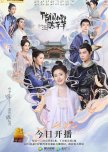
The Romance of Tiger and Rose opens with a delightfully chaotic premise. Aspiring screenwriter Chen Xiao Qian finally sells her script, only to have the male lead actor question her entire story. Determined to prove herself, she dives back into revisions. But fate, or perhaps karma from overworking, has other plans. After dozing off, she wakes up inside her own script as Third Princess Chen Qian Qian, a side character destined to be killed off in episode three by the male lead, Prince Han Shuo. Armed with insider knowledge of every plot twist, she makes one simple vow: survive at all costs and find her way home.
My first impression? Everyone looked like they walked straight out of a porcelain doll factory. Han Shuo’s makeup in particular was so thick and immaculate that it almost took away from the realism. Not bad, just very… glazed donut chic. It took a while to get used to, but thankfully the story quickly pulls you in.
On the surface, the plot is light, basic, and unapologetically comedic. Enemies to lovers? Check. Political rivalry between Huayuan City and Xianhu City? Check. A romance that screams Romeo and Juliet with a C drama twist? Absolutely. Yet surprisingly, beneath all the fluff lies actual depth. What starts as a fluffy idol drama slowly reveals layers about loyalty, power, gender roles, and choice.
Let’s talk about Zhao Lusi because wow. Zhao Lusi absolutely carried this drama on her back and did it in style. Her Chen Qian Qian is hilariously entertaining from start to finish. The facial expressions? Elite. She can deliver an exaggerated comedic look without tipping into cringe territory. That balance is rare. I especially love that she is never afraid to look “ugly” for the sake of comedy. Minimal makeup, distorted expressions, high pitch squeals, she commits fully. Yet somehow, she still shines. It helps that she dubbed herself, and her voice fits Chen Qian Qian perfectly.
Chen Qian Qian as a character is such a breath of fresh air. After time traveling, she inserts modern logic into an ancient matriarchal society in the most chaotic way possible. She refuses to fold easily for Han Shuo, even trying to set her sister up with him at one point to save her own life. Watching her slowly, genuinely fall in love instead of instantly melting makes the payoff so much sweeter. She is charming in a way that sneaks up on you. Before you know it, you are fully seated and emotionally invested.
Now onto Han Shuo, played by Ding Yuxi. Cakey makeup aside, he delivered a solid performance. His expressions may not be perfect, but unless you are actively nitpicking, you will not be too distracted. Beneath the doll like exterior, his sharp features and composed demeanor give Han Shuo a quiet intensity. His martial arts skills and intelligence make him more than just a pretty face.
Han Shuo’s central dilemma, choosing between his city and his love, is where things get messy in a good and frustrating way. On one hand, his loyalty to Xianhu City is admirable. On the other, the constant back and forth about attacking Huayuan City started to feel repetitive. The green light, red light political tension was dragged out to make room for romance development, and sometimes it felt a little too obvious. Up until mid series, I genuinely wondered how this man could possibly secure a happy ending without becoming either a love fool or a cold tyrant.
And then he chose her. When Han Shuo declared that if Chen Qian Qian did not love him, he would keep trying, but if he hurt her mother or her city she would never forgive him, I felt that. The growth. The clarity. The emotional maturity. Sir, you dropped this: your crown.
Their relationship may be cliché, but it is cute enough to melt cynicism. Starting with poisoning, manipulation, and mutual scheming, their love burns with an almost hungry intensity once they finally surrender to it. Chen Qian Qian brings the comedy, Han Shuo brings the brooding seriousness, and together they radiate chaotic young love energy. After her confession, their dynamic softens into something almost puppy like. They cling to each other every chance they get, and even their sidekicks add to the adorable chaos.
One thing I genuinely appreciated was the portrayal of the Empress, Chen Qian Qian’s mother. In a city where women dominate and can practice polygamy, she still allows her daughters to choose their own husbands freely. No forced political marriages, no emotional blackmail. That freedom felt surprisingly refreshing for a royal setting.
The villains are, frankly, annoying. Their schemes, motives, and expressions sometimes make you want to yell at the screen. But what I appreciate is that the drama does not drag their evil masterplans for ten episodes straight. Most of their tricks fail quickly thanks to our leads or their loyal sidekicks. Ironically, the most successful manipulations are usually the ones Chen Qian Qian and Han Shuo pull on each other.
Comedy is where this drama truly shines. The absurdity is intentional and gloriously embraced. Normally, I am not a fan of overly ridiculous scenes that make a show feel stupid. But here, the absurd humor works. It makes you laugh, shake your head, and immediately replay the scene. There are too many hilarious moments to list individually, but trust me, your cheeks will hurt.
Thematically, the drama explores gender equality and women empowerment in a surprisingly thoughtful way. Huayuan City is matriarchal, Xianhu City patriarchal, yet by the end, both sides are nudged toward mutual respect. It is particularly amusing that even in male dominated Xianhu, husbands are still low key afraid of their wives. The conversations between Han Shuo and his father about women are oddly wholesome and funny.
Now, I will admit, the second half tosses logic out the window a few times. Certain developments feel inconsistent, and some scenes exist purely for emotional effect rather than narrative coherence. But because the drama never takes itself too seriously, it is easier to forgive. You are here for fun, romance, and chaotic energy, not a political dissertation.
The ending surprised me in a good way. For a story built on the concept of being trapped inside a script, it actually gives proper closure. We get ample reunion scenes in the modern world, allowing Chen Qian Qian and Han Shuo to meet again and acknowledge each other. Many dramas with similar premises leave you hanging, but this one lets you exhale. Even if some of the symbolic scenes leading up to it felt random, the emotional payoff was satisfying.
All in all, this drama is a genuinely fun ride. It is light, hilarious, absurd, occasionally illogical, yet still layered with depth and heart. It delivers its message about gender roles and empowerment without feeling preachy. Just remember one thing: do not overthink it. Sit back, relax, and let the chaos of Huayuan City sweep you off your feet.
My first impression? Everyone looked like they walked straight out of a porcelain doll factory. Han Shuo’s makeup in particular was so thick and immaculate that it almost took away from the realism. Not bad, just very… glazed donut chic. It took a while to get used to, but thankfully the story quickly pulls you in.
On the surface, the plot is light, basic, and unapologetically comedic. Enemies to lovers? Check. Political rivalry between Huayuan City and Xianhu City? Check. A romance that screams Romeo and Juliet with a C drama twist? Absolutely. Yet surprisingly, beneath all the fluff lies actual depth. What starts as a fluffy idol drama slowly reveals layers about loyalty, power, gender roles, and choice.
Let’s talk about Zhao Lusi because wow. Zhao Lusi absolutely carried this drama on her back and did it in style. Her Chen Qian Qian is hilariously entertaining from start to finish. The facial expressions? Elite. She can deliver an exaggerated comedic look without tipping into cringe territory. That balance is rare. I especially love that she is never afraid to look “ugly” for the sake of comedy. Minimal makeup, distorted expressions, high pitch squeals, she commits fully. Yet somehow, she still shines. It helps that she dubbed herself, and her voice fits Chen Qian Qian perfectly.
Chen Qian Qian as a character is such a breath of fresh air. After time traveling, she inserts modern logic into an ancient matriarchal society in the most chaotic way possible. She refuses to fold easily for Han Shuo, even trying to set her sister up with him at one point to save her own life. Watching her slowly, genuinely fall in love instead of instantly melting makes the payoff so much sweeter. She is charming in a way that sneaks up on you. Before you know it, you are fully seated and emotionally invested.
Now onto Han Shuo, played by Ding Yuxi. Cakey makeup aside, he delivered a solid performance. His expressions may not be perfect, but unless you are actively nitpicking, you will not be too distracted. Beneath the doll like exterior, his sharp features and composed demeanor give Han Shuo a quiet intensity. His martial arts skills and intelligence make him more than just a pretty face.
Han Shuo’s central dilemma, choosing between his city and his love, is where things get messy in a good and frustrating way. On one hand, his loyalty to Xianhu City is admirable. On the other, the constant back and forth about attacking Huayuan City started to feel repetitive. The green light, red light political tension was dragged out to make room for romance development, and sometimes it felt a little too obvious. Up until mid series, I genuinely wondered how this man could possibly secure a happy ending without becoming either a love fool or a cold tyrant.
And then he chose her. When Han Shuo declared that if Chen Qian Qian did not love him, he would keep trying, but if he hurt her mother or her city she would never forgive him, I felt that. The growth. The clarity. The emotional maturity. Sir, you dropped this: your crown.
Their relationship may be cliché, but it is cute enough to melt cynicism. Starting with poisoning, manipulation, and mutual scheming, their love burns with an almost hungry intensity once they finally surrender to it. Chen Qian Qian brings the comedy, Han Shuo brings the brooding seriousness, and together they radiate chaotic young love energy. After her confession, their dynamic softens into something almost puppy like. They cling to each other every chance they get, and even their sidekicks add to the adorable chaos.
One thing I genuinely appreciated was the portrayal of the Empress, Chen Qian Qian’s mother. In a city where women dominate and can practice polygamy, she still allows her daughters to choose their own husbands freely. No forced political marriages, no emotional blackmail. That freedom felt surprisingly refreshing for a royal setting.
The villains are, frankly, annoying. Their schemes, motives, and expressions sometimes make you want to yell at the screen. But what I appreciate is that the drama does not drag their evil masterplans for ten episodes straight. Most of their tricks fail quickly thanks to our leads or their loyal sidekicks. Ironically, the most successful manipulations are usually the ones Chen Qian Qian and Han Shuo pull on each other.
Comedy is where this drama truly shines. The absurdity is intentional and gloriously embraced. Normally, I am not a fan of overly ridiculous scenes that make a show feel stupid. But here, the absurd humor works. It makes you laugh, shake your head, and immediately replay the scene. There are too many hilarious moments to list individually, but trust me, your cheeks will hurt.
Thematically, the drama explores gender equality and women empowerment in a surprisingly thoughtful way. Huayuan City is matriarchal, Xianhu City patriarchal, yet by the end, both sides are nudged toward mutual respect. It is particularly amusing that even in male dominated Xianhu, husbands are still low key afraid of their wives. The conversations between Han Shuo and his father about women are oddly wholesome and funny.
Now, I will admit, the second half tosses logic out the window a few times. Certain developments feel inconsistent, and some scenes exist purely for emotional effect rather than narrative coherence. But because the drama never takes itself too seriously, it is easier to forgive. You are here for fun, romance, and chaotic energy, not a political dissertation.
The ending surprised me in a good way. For a story built on the concept of being trapped inside a script, it actually gives proper closure. We get ample reunion scenes in the modern world, allowing Chen Qian Qian and Han Shuo to meet again and acknowledge each other. Many dramas with similar premises leave you hanging, but this one lets you exhale. Even if some of the symbolic scenes leading up to it felt random, the emotional payoff was satisfying.
All in all, this drama is a genuinely fun ride. It is light, hilarious, absurd, occasionally illogical, yet still layered with depth and heart. It delivers its message about gender roles and empowerment without feeling preachy. Just remember one thing: do not overthink it. Sit back, relax, and let the chaos of Huayuan City sweep you off your feet.
Was this review helpful to you?


